|
Daily Transportation News
August 5, 2026
| | | |
IATR 39th Annual Conference Early Bird Pricing Until Aug 15!
AV City: Autonomous Mobility
Las Vegas, Nevada | September 14–17, 2026
Vdara Hotel at ARIA | 2600 W Harmon Ave, Las Vegas, NV
Early-bird pricing extended until August 15
Hotel room block available through August 14 – availability limited
Sponsorship opportunities available until August 14
| | Rideshare Unions Are Spreading Fast: What the Growing Uber and Lyft Driver Movement Means for Riders | |
|
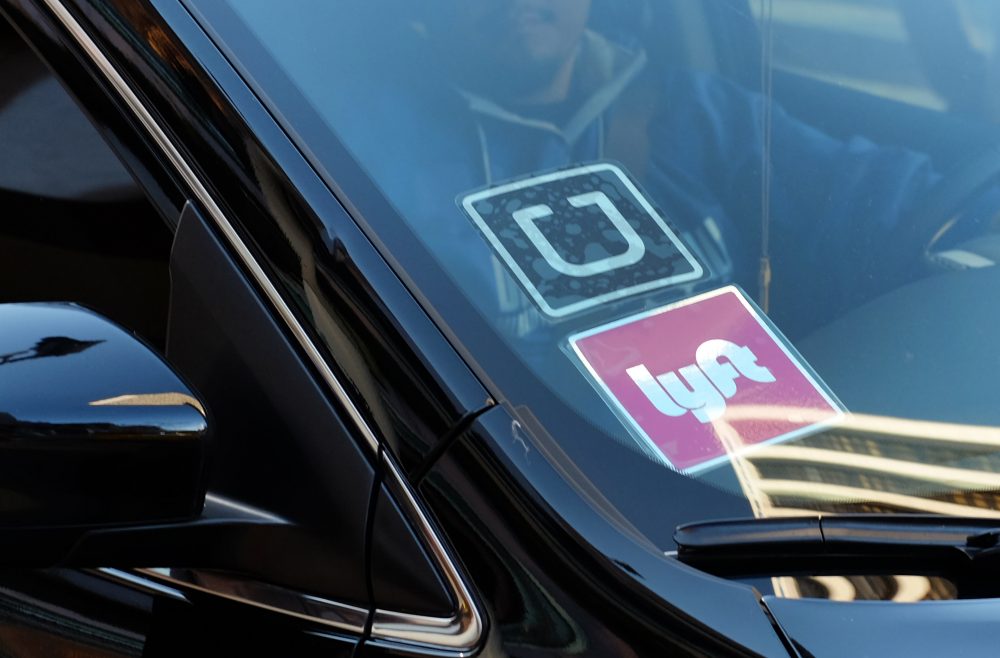
A wave of state laws allowing Uber and Lyft drivers to unionize is spreading across the country, marking one of the most significant shifts in labor rights for gig workers since ride-hailing apps first launched more than a decade ago.
Massachusetts became the first state to open the door to rideshare unionization in 2024, when voters approved a ballot measure creating a framework that lets drivers organize and bargain collectively while remaining classified as independent contractors rather than employees. California followed in January, giving an estimated 800,000 rideshare drivers in the state the right to form a union. Illinois became the third state to pass such legislation on June 1, extending similar rights to the state's roughly 100,000 Uber and Lyft drivers.
The movement reached a major milestone this spring when Massachusetts drivers organized what labor advocates are calling one of the most significant labor wins for independent workers in decades. The certification, made possible under the state's 2024 framework, could ultimately represent nearly 70,000 drivers statewide through the newly formed App Drivers Union.
For drivers who backed the effort, the moment carried deep personal significance. Jean Fredo, who has driven for Uber for more than seven years, said he hopes the union will bring better pay, stronger protections against sudden deactivations and greater overall stability for drivers. "With the union, it will not feel like we're working for nothing," Fredo said, speaking through a translator.
Fellow driver Alfred Potter, who took part in organizing efforts, described the years-long push toward unionization as "still no more than a dream" for much of the process, reflecting how long the effort took to reach certification after the 2024 ballot measure passed.
In California, the nation's second state to grant rideshare drivers union rights, organizing is still in its early stages, with the earliest possible vote on unionization set for May. Sangar Khan, who drives for Uber and Lyft out of the Bay Area, said he believes unionization could benefit drivers financially. "I think the union is good for drivers, and maybe they pay more," Khan said, describing frustration with what he sees as a large gap between what riders pay for trips and what drivers ultimately take home.
Source: International Business Times
Click Here to Read More
| | David Do Presents Green Rides and Congestion Mitigation Case Study at NCSTS | |
David Do, former Commissioner and Chair of the New York City Taxi and Limousine Commission | |
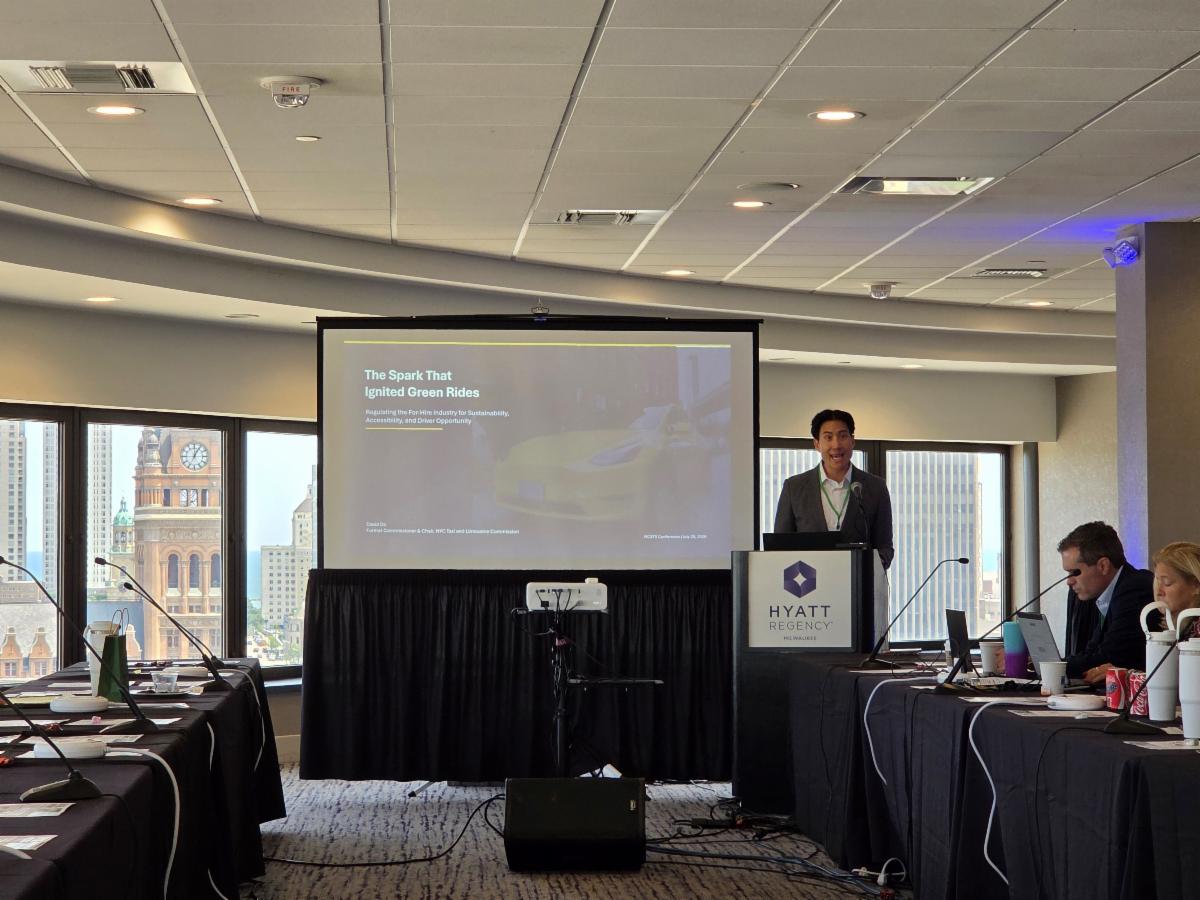
David Do, former Commissioner and Chair of the New York City Taxi and Limousine Commission, addressed the National Conference of State Transportation Specialists (NCSTS) Annual Conference on July 28 in Milwaukee, Wisconsin, presenting a session titled "Green Rides: The Spark That Ignited Regulation." David's talk walked regulators through the design and early results of New York City's high-volume-for-hire-vehicle electrification mandate, the Green Rides Initiative, framing it as a case study in converting a market signal into an enforceable public-interest rule.
NCSTS, founded in 1959, is a state-based organization focused on transportation regulation. The organization serves an operational role in federal hazardous materials and carrier registration programs: it is affiliated with the Alliance for Uniform Hazmat Transportation Procedures, and under the Unified Carrier Registration Act of 2005, NCSTS recommends five of the fifteen members of the Unified Carrier Registration Plan Board of Directors. This year's conference, held at the Hyatt Regency Milwaukee, drew state regulators and industry sponsors including GenLogs, Evans Transportation, and Tyler Technologies, and covered topics ranging from household goods tariffs to cargo theft and rail safety alongside David's session on TNC electrification.
David traced New York's rule from a modest EV share of high-volume trips in 2023 to a phased compliance ratio climbing to 100 percent by 2030, structured around reporting, fines, and corrective-action plans rather than a blunt cap. He credited the design with measurable results: zero-emission trips rose from 157,000 in January 2023 to 1.08 million in January 2024, EV trips reached 2.46 million monthly by July 2025, and the city saw a corresponding buildout of fast-charging infrastructure, from Port Authority airport investments to new capacity from Revel, Gravity, and Tesla-affiliated networks. The rule protected accessibility and driver economics alongside emissions goals, with over 8,000 wheelchair-accessible for-hire vehicles and 90 percent of WAV riders waiting ten minutes or less.
David positioned the New York experience as a direct application of IATR's Guiding Principles for Mobility Policy & Congestion Mitigation. The IATR’s 2023 framework is built from workshops, member surveys, and a review of U.S. and international practice. It identifies vehicle growth from TNCs and e-commerce, private car dependence, and post-pandemic modal shift from transit as root causes of urban congestion, and lays out solution-focused principles including fair road pricing, expansion of EV infrastructure, maximizing vehicle utilization, and promoting equity and accessibility – paired with explicit cautions against blunt tools such as blanket vehicle caps or unstructured congestion fees. David's session showed those principles operating in practice: a phased, measurable target tied to accountability and infrastructure investment, rather than a cap or an unstructured mandate.
David tied the New York experience back to the broader regulatory community, noting that the case illustrates IATR's core position that regulators can shape markets toward public outcomes before those markets harden in the wrong direction.
| | |
What Texas Rideshare Drivers Need to Know About Vehicle Choice and Insurance Coverage
Driving for Uber or Lyft looks simple from the passenger seat: open an app, accept a ride, drop someone off, repeat. But behind that simplicity sits a set of decisions most new rideshare drivers in Texas never think through until something goes wrong, starting with the car they drive and the insurance policy behind it. Texas is one of the busiest rideshare markets in the country, with Houston, Dallas-Fort Worth, Austin, and San Antonio all logging heavy driver volume. More volume means more time on the road, more exposure to Texas’ aggressive traffic, and more chances for a routine shift to end in a collision. For drivers weighing whether rideshare work is worth it, vehicle choice and insurance coverage are the two variables that matter most.
Click Here to Read More
Waymo Opens Driverless Rides to General Public in Dallas
Waymo has officially opened its driverless ride-hailing service to the general public across Dallas, ending the waitlist that had regulated passenger access since the company’s commercial launch earlier this year. According to an announcement released by the company on Tuesday, August 4, anyone in Dallas can now download the Waymo app and request a fully autonomous ride without needing an invitation. Company officials reported that nearly 150,000 residents participated in the phased rollout through an interest list since initial operations began in February. The shift to full public availability allows both local residents and visitors to hail rides around the clock in Waymo’s fleet of fully electric Jaguar I-PACE robotaxis across the designated Dallas service area.
Click Here to Read More
Editorial | Bringing Order to E-Bike Chaos on NYC Streets
Just steps away from City Hall, a 17-year-old boy riding an e-bike deemed too dangerous to legally own and operate in New York died in a collision with an SUV last week. The fatal crash at the corner of Centre and Chambers Streets that claimed Gabriel Nacato’s life seemed to be a wake-up call for the City Council, which on Tuesday unveiled a slate of new bills designed to bring order to the chaos of illegal or unlawful e-bike operation on the city’s streets.
Click Here to Read More
| |
Drug Impairment Is the Leading Factor in Road Deaths in Canada
The Traffic Injury Research Foundation (TIRF), with sponsorship from Desjardins Insurance, released a new fact sheet, Drug Use in Fatal Collisions in Canada | 2000-2023. Key findings from an analysis of TIRF’s National Fatality Database reveal the presence of drugs has overtaken alcohol as the leading factor in motor vehicle deaths, highlighting a growing risk for Canadian drivers.
Click Here to Read More
Canada’s Rail Renaissance
Canada is embarking on one of the most ambitious transformations of its transportation infrastructure in generations. Long known for the vast railways that helped unite the country, Canada is once again looking to rail as a solution to modern challenges, including sustainability, economic competitiveness, intercity connectivity, and population growth. Recent developments suggest that passenger rail is entering a new era, with significant federal investment in cleaner locomotives and growing momentum behind a proposed high-speed rail corridor linking some of the country’s largest cities.
Click Here to Read More
Airdrie-Calgary Transit Integration Set to Help Commuters Save Big
Commuters between Calgary and Airdrie could be saving big, thanks to both municipalities taking early steps towards integrating their respective transit systems. “That would be the greatest news ever. If this comes up, it would be great and it would help me save a lot of money,” said Airdronian Evelyn Onwuka, who commutes into Calgary for school.
Click Here to Read More
| |
Toyota and Uber Sign 10-Country Car, Finance and Insurance Deal
Toyota has signed a major supply agreement with Uber across 10 European countries. The partnership involves the manufacturer providing Uber drivers with a complete mobility package that includes preferential terms for both new and used Toyota and Lexus vehicles, as well as finance, leasing and usage-based insurance options. Ride-hailing drivers will be able to source both hybrid and battery‑electric cars, following Toyota’s multi‑pathway powertrain approach to reduce emissions.
Click Here to Read More
Self-Driving Robotaxis Given Licence to Operate in London in Major Victory for Autonomous Cars
Self-driving robotaxis have been granted licences in London to operate in the capital ahead of an autonomous revolution that could generate billions of pounds for the economy. British technology firm Wayve announced that it has been awarded private hire vehicle licences from Transport for London for its range of autonomous vehicles. The autonomous Ford Mustang Mach-E vehicles are understood to have been given permission to ride on London's roads and operate as an autonomous service. Uber is set to make use of the self-driving fleets, noting that 100,000 people have already expressed their interest in going in a robotaxi.
Click Here to Read More
Uber Tightens Vehicle Rules for Comfort, Exec and Lux in the UK
Uber is updating the vehicle eligibility requirements for its Comfort, Exec and Lux products in the UK, with drivers adding new vehicles to these tiers facing stricter criteria from this summer. The updated rules apply to any new vehicle added to a driver’s account for these three products from 1 August 2026 in London, and from 19 October 2026 across the rest of the UK. According to Uber, the changes will assess vehicles based on factors including age, brand, model and vehicle type, with eligibility also depending on whether the model appears on Uber’s updated eligible vehicle list.
Click Here to Read More
| |
Incat Ships Battery-Electric Ship to South America
Australian shipbuilder Incat has loaded its battery-electric vessel, Hull 096, onto the semi-submersible heavy-lift ship Black Marlin for transport to South America. The loading operation on the River Derwent involved Black Marlin ballasting down until its cargo deck was submerged, allowing Hull 096 to be carefully manoeuvred into position. The heavy-lift vessel was then refloated, gradually raising Hull 096 out of the water before it was secured for the ocean voyage.
Click Here to Read More
Changi Airport Rolls Out Autonomous Wheelchairs for Transit Passengers in Terminals 2 and 3
Changi Airport has introduced autonomous wheelchairs in the transit areas of Terminals 2 and 3 to help passengers with reduced mobility move between gates independently. The airport and its ground handling partner SATS said on Tuesday (Aug 4) that the wheelchairs aim to reduce transit passengers' reliance on one-to-one staff assistance. Nine autonomous wheelchairs are deployed in each terminal's transit area in this first phase, though they cannot yet travel between terminals.
Click Here to Read More
Bengaluru Bike Taxi Crackdown: Karnataka Seizes Nearly 260 Two-Wheelers
The Karnataka Transport Department on Wednesday intensified its crackdown on unauthorised bike taxi services, seizing nearly 260 two-wheelers across Bengaluru in a city-wide enforcement drive. The department constituted special enforcement teams that carried out inspections at multiple locations, targeting bike taxis allegedly operating without valid contract carriage permits. The latest action comes even as the Karnataka government has challenged a January 2026 Karnataka High Court ruling before the Supreme Court. The High Court had held that motorcycles cannot be denied contract carriage permits merely because they are two-wheelers, paving the way for bike taxi operations in the state.
Click Here to Read More
| | Las Vegas Sheriff Kevin McMahill to Provide Opening Keynote Remarks at IATR Annual Conference | |
Las Vegas Sheriff Kevin McMahill | |
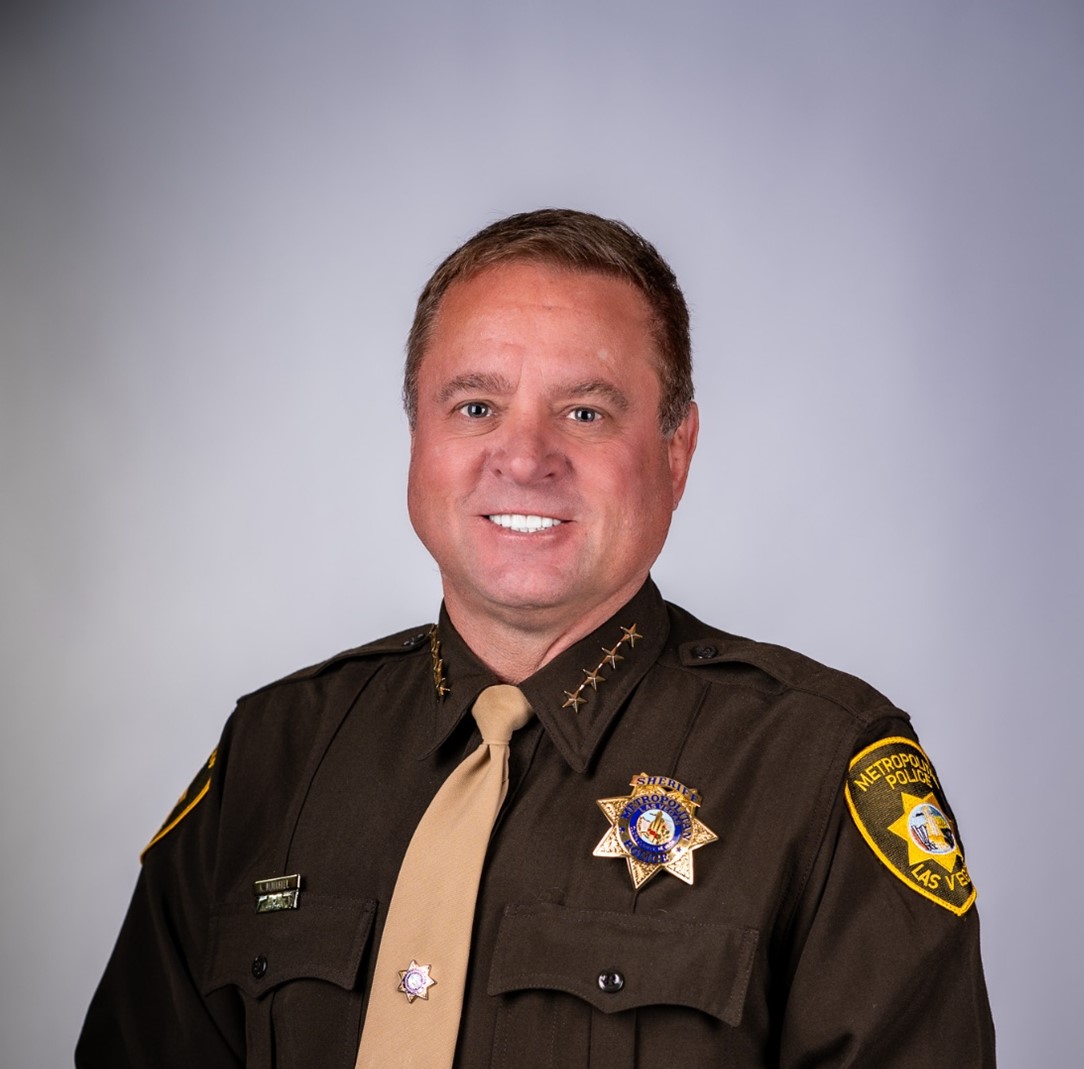
IATR President Matt Daus said, “We are pleased to welcome Las Vegas Sheriff Kevin McMahill as the keynote speaker opening the 39th Annual IATR Conference on Tuesday, September 15th, at 9:30 a.m. A veteran and leader in law enforcement and community affairs for more than 35 years, Sheriff McMahill understands the importance of safe multimodal mobility in supporting economic growth and thriving neighborhoods.”
Sheriff Kevin McMahill became the eighth sheriff of the Las Vegas Metropolitan Police Department on Jan. 2, 2023.
McMahill has built a distinguished law enforcement career over more than three decades, serving at every level of the Las Vegas Metropolitan Police Department (LVMPD). During his six years as undersheriff, he provided steady leadership through some of the community’s most significant challenges.
After three years in the United States Army, McMahill joined Metro in 1990 as a patrol officer and later served as a field training officer and academy training staff member. He was promoted to sergeant in 2001, with assignments in Patrol, Training, and Internal Affairs, and to lieutenant in 2006, serving in Patrol, Narcotics, and the Homeland Security Bureau.
In 2010, McMahill became captain of the Bolden Area Command in West Las Vegas. Building on the Safe Village initiative, he formed nontraditional partnerships with the Southern Nevada Regional Housing Authority, faith leaders, nonprofit organizations, activists, and other community stakeholders. These efforts reduced crime in every category, including a 40% drop in overall violence, and marked the first time an area command ended the year with reductions across all categories. LVMPD later received the prestigious Webber-Seavey Award, the highest honor for excellence in community policing, in recognition of the program’s success.
In 2011, McMahill was appointed deputy chief of the Patrol Division, overseeing eight area commands. He helped expand the community policing programs he began at Bolden Area Command across the valley, which led to the creation of the Office of Community Engagement in 2015 to strengthen community relationships.
McMahill was promoted to assistant sheriff in 2013 and in 2014, former Sheriff Doug Gillespie promoted McMahill to undersheriff, where he served for six years as second-in-command under former Sheriff Joe Lombardo.
| |
|
Message from IATR President Matthew W. Daus
At the International Association of Transportation Regulators (IATR), our regulators are at the forefront of addressing both the challenges and opportunities facing the mobility paradigm. Our IATR members, partner organizations, and regulated industries will continue on our shared quest to fulfill the mission of our non-profit educational organization - to bring about Multi-Modal Mobility Innovation for All! This mission can best be accomplished through information sharing, collaboration, identifying and promoting best practices, and educating our membership. These educational updates and electronic media clips are affectionately known as “IATR snips” and endeavor to cover all aspects of mobility around the globe - especially news and developments involving safety, technology innovation, multi-modal integration, automation, sustainability, electrification, accessibility, regulatory modernization, and equity.
If you would like more information about the IATR, you can visit our website at www.iatr.global. Current members can renew their memberships when you log in to your IATR portal on the top right-hand side of our website, or click here. If you forgot your membership password, please email our Membership Director, Eric Richardson, at erichardson@iatr.global.
| | | | | |
|
RENEW YOUR MEMBERSHIP FOR 2026:
Weekly news snippets
Access to the membership database
Videos and files from recent conferences
Discounted rates for future conferences, and more!
Renew your membership at http://www.iatr.global or email info@iatr.global for any questions!
| | | | |