|
Daily Transportation News
August 17, 2026
| | | Rideshare and Taxi Assaults—What We Know About Safety and Efforts to Improve It | |
Image: Government Accountability Office | |
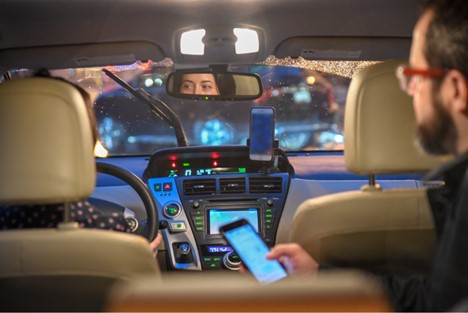
According to a U.S. GAO report, pursuant to Congress' direction in 2023's Sami's Law, data from major ridehailing companies reveals that serious physical and sexual assaults are statistically rare - occurring in roughly 1 in 500,000 rides according to data from major rideshare providers like Uber and Lyft. The Los Angeles and Chicago police departments found that approximately 0.3% of verified and reported assaults occurred in a ridehail or taxi vehicle.
Ridehail companies have adopted features to make customers feel safer, including allowing customers to request a female driver. Rider-verification programs and in-app video recording are examples of solutions designed to improve driver safety. Taxi operators report that they prefer driving in vehicles with partitions and cameras; however, the expense is a factor in their adoption.
Source: Government Accountability Office
Click Here to Read More
| | New National Study Identifies Hidden Duty-of-Care Gaps in Business Travel Ground Transportation | |
Brett Barenholtz, President of the NLA | |
The National Limousine Association (NLA) and the University Transportation Research Center at The City College of New York (UTRC) have unveiled preliminary findings from a national study of illegal and unlicensed ground transportation operators across the United States.
Presented at the Global Business Travel Association (GBTA) Convention in Chicago, the findings point to a hidden duty-of-care risk for business travelers. Illegal operators use professional websites, social media and private messaging groups to mimic licensed professional private car service providers. Airports, hotels, convention centers and major events are recurring hotspots, while off-app and unlicensed trips can create gaps in commercial insurance, traveler tracking, driver verification and emergency response.
"Duty of care does not end when an employee leaves the airport terminal," said Brett Barenholtz, President of the National Limousine Association. "Companies need confidence that the provider, vehicle and driver transporting their people are safe, properly licensed and fully insured. As illegal operators become more sophisticated, verification must keep pace."
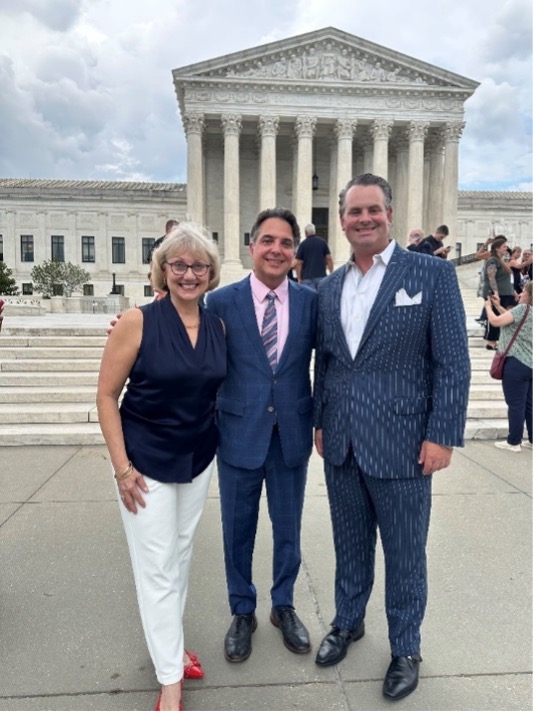
| From Left: Suzanne Neufang, CEO of GBTA; Matt Daus, IATR President; and Matt Assolin, co-chair of the NLA Legislative Committee on the steps of the U.S. Supreme Court. | |
Led by Matthew W. Daus, IATR President, the study examines 17 major aviation and business travel markets: Atlanta; Boston; Charlotte; Chicago; Dallas/Fort Worth; Detroit/Fort Wayne; Denver; Houston; Las Vegas; Los Angeles; Miami; Minneapolis/St. Paul; New York; Orlando; Phoenix; San Francisco; and Seattle.
Preliminary Findings
The study's early findings include:
- Illegal for-hire activity is evolving from street solicitation into organized, technology-enabled networks.
- Airports, hotels, conventions and major events are recurring hotspots, and off-app trips may fall outside standard insurance and platform protections.
- Passengers may be transported without verified driver screening, vehicle inspections or reliable trip records.
- Illegal operators avoid licensing, insurance, tax and airport-access costs required of legitimate providers.
- Fragmented enforcement can produce unclear jurisdiction and inconsistent penalties.
The preliminary legal review also identified at least seven states with laws expressly criminalizing rideshare or transportation network company driver impersonation: California, Colorado, Connecticut, Florida, North Carolina, South Carolina and Tennessee.
"Illegal transportation is no longer only a curbside problem," said Daus. "It is a technology, jurisdiction and public-safety issue requiring coordinated enforcement, verification tools and updated laws."
Source: StreetInsider
Click Here to Read More
| | |
Sitka Assembly Postpones Conversation on Taxi Code Overhaul
Sitka, Alaska legislators voted to continue to accept public input on a proposed commercial transportation ordinance until November 24. The move is in response to pushback from local taxi operators. The proposal would replace meters with flat-rate zones and prohibit taxi cab drivers from offering tour, limousine or shuttle services. Drivers voiced concerns that these strict regulations would threaten their livelihoods amidst rising costs and competition.
Click Here to Read More
Trump Administration Safety Approach Varies Widely from Past Strategies
The USDOT released an updated National Roadway Safety Strategy that reduced agency initiatives by two-thirds. The strategy shifts emphasis towards rural communities, while moving away from previous evidenced base solutions such as lower speeds, protected bike lanes and camera enforcement.
Click Here to Read More
Waymo Is Eating into the Ride-Hailing Market in Some Cities. The Fallout for Human Drivers Stays Fuzzy.
Data shows Waymo robotaxis now capture roughly 15 percent of ride-hailing bookings within its operating zones in major cities like San Francisco, Los Angeles, and Phoenix. Experts predict the impact on professional drivers won't show up as sudden layoffs, but rather reduced driver utilization, longer wait times between rides, and lower overall earnings.
Click Here to Read More
| |
Pediatricians in Canada Warn of 'Exponential Rise' in Childhood E-Scooter Injuries
A survey of Canadian pediatricians found that e-scooters pose a risk to children due to their ability to travel at high speeds, including fractures, head trauma, and potentially fatal collisions. Of the 800 pediatricians surveyed, 4% (34) reported treating an e-scooter injury resulting in a hospital stay, ICU admission, or death.
Click Here to Read More
Ontario Court of Appeal Says Ford Can Rip Out Toronto Bike Lanes
The Court of Appeal for Ontario has ruled that Premier Doug Ford’s government can proceed with removing 19 kilometers of protected bike lanes on key Toronto streets. Overturning a lower-court ruling from 2025, the three-judge panel decided that the province has no constitutional obligation to regulate road usage in a specific way, despite concerns raised by cycling advocates and municipal leaders.
Click Here to Read More
Feds Invest in 22 EV Infrastructure and Education Initiatives Across Canada
The Canadian federal government announced $10.9 million for 22 electric vehicle projects across the country. Nearly $9 million will support installing almost 400 new chargers via the Zero Emission Vehicle Infrastructure Program. Additionally, $2 million will fund 13 education and awareness initiatives, helping Canadians comfortably transition to electric vehicles while driving economic growth and clean energy leadership.
Click Here to Read More
| |
As Europe Gets Hotter, Its Transportation Systems Struggle to Cope
Europe’s aging transportation infrastructure is struggling to adapt to rising summer temperatures. Rail lines face severe disruptions as extreme heat warps tracks, droops overhead power lines, and creates dangerous conditions inside un-air-conditioned train cars. Meanwhile, roadways are cracking and asphalt is melting on major highways across the continent. High adaptation costs and competing national funding priorities leave governments relying largely on temporary, low-cost fixes.
Click Here to Read More
Bristol Private Hire Driver Caught with Marked Banknotes after Accepting Illegal £30 Street-Hail Journey from Police Posing As Passenger
A private hire driver was denied their licence renewal after a plainclothes police test-purchase operation indicated they accepted an unbooked £30 cash fare, as evidenced by marked banknotes.
Click Here to Read More
ÖBB Postbus and Otokar Launch SAE Level 4 Autonomous Bus Pilot
Austria's ÖBB Postbus is launching a pilot project using Otokar’s fully electric, Level 4 Autonomous e-Centro bus. Capable of carrying 32 passengers, the vehicle will first operate during the European Forum Alpbach before deploying to Campus Wolfurt to connect the industrial park with the S-Bahn network. Due to current Austrian legislation, a trained safety driver will remain on board throughout operations.
Click Here to Read More
| |
Kenyan Lawmakers Push for Safer Roads With New Cycling and Pedestrian Rules
Kenyan lawmakers have passed new legislation requiring dedicated cycling lanes and pedestrian walkways on all new national road developments. Aiming to reduce traffic fatalities and protect vulnerable road users like pedestrians, cyclists, and motorcyclists, the bill also encourages retrofitting existing infrastructure. The project will be implemented in phases, prioritizing high-traffic urban areas, with pledged government funding under review.
Click Here to Read More
Delivery Drivers Will Get Minimum Wage in Australia’s ‘World-First’ Deal: Is It Fair – and Will Uber Eats Cost More?
Australia’s Fair Work Commission has established a landmark agreement with platforms like Uber Eats and DoorDash, introducing minimum earnings standards of $31.30 for delivery cyclists and $32 per active hour for food delivery drivers. Rather than receiving a fixed hourly wage, platforms will top up earnings over 21-day periods if trip payouts fall below the threshold, though waiting time between orders remains unpaid.
Click Here to Read More
China Exports 1 Million Automobiles in a Month ... Twice
China has exported over one million vehicles in a single month for the second consecutive month. A major driver of this surge is the rapid growth in new plug-in models, which account for more than half of all total Chinese automobile exports during the period.
Click Here to Read More
| | |
A robotaxi stops awkwardly in traffic. A Waymo gets confused near a construction zone. A child runs into the street and is struck. A fleet of empty autonomous cars circles a residential neighborhood. A self-driving vehicle passes a stopped school bus. The incident becomes a headline, then a symbol, then a warning: See? The robots are dangerous. But this is exactly where skepticism is needed. What if, despite the headlines, driverless cars actually make fewer mistakes, and less deadly mistakes, than human drivers?
Human driving is not a gold standard but more of a mass-casualty system we have normalized. The National Highway Traffic Safety Administration (NHTSA) reported 39,254 traffic deaths in the United States in 2024, with a fatality rate of 1.19 deaths per 100 million vehicle miles traveled. Its early estimate for 2025 was 36,640 deaths, still a staggering number. Distracted driving alone killed 3,208 people and injured an estimated 315,167 in 2024.
Those numbers are so large that they are hard to fathom. A human driver drifts across the centerline, runs a red light, texts through an intersection, falls asleep, or drives home drunk—tragic but familiar. A robotaxi makes a mistake, and it becomes a referendum on the future of the technology.
So, the question isn’t really whether driverless cars are perfect, but whether they are safer than us. The human driver is the control group.
Source: Skeptic
Click Here to Read More
| |
|
Message from IATR President Matthew W. Daus
At the International Association of Transportation Regulators (IATR), our regulators are at the forefront of addressing both the challenges and opportunities facing the mobility paradigm. Our IATR members, partner organizations, and regulated industries will continue on our shared quest to fulfill the mission of our non-profit educational organization - to bring about Multi-Modal Mobility Innovation for All! This mission can best be accomplished through information sharing, collaboration, identifying and promoting best practices, and educating our membership. These educational updates and electronic media clips are affectionately known as “IATR snips” and endeavor to cover all aspects of mobility around the globe - especially news and developments involving safety, technology innovation, multi-modal integration, automation, sustainability, electrification, accessibility, regulatory modernization, and equity.
If you would like more information about the IATR, you can visit our website at www.iatr.global. Current members can renew their memberships when you log in to your IATR portal on the top right-hand side of our website, or click here. If you forgot your membership password, please email our Membership Director, Eric Richardson, at erichardson@iatr.global.
| | | | | |
|
RENEW YOUR MEMBERSHIP FOR 2026:
Weekly news snippets
Access to the membership database
Videos and files from recent conferences
Discounted rates for future conferences, and more!
Renew your membership at http://www.iatr.global or email info@iatr.global for any questions!
| | | | |