View as Webpage

X Share This Email
LinkedIn Share This Email

nhsManagers.net

24th August 2026

What you need to know and what you need to think about - all in one place - for free!


News and comment from

Roy Lilley


Righter...

_____________

Short on time? Get yer ears-on and listen to Roy Lilley read this morning's eLetter... free!

Virtual… pronounced…


/ˈvəːtʃʊəl/


An adjective… defined as;


'...almost or nearly as described, but not completely or according to strict definition…'


In English; 'close but no cigar'.


… which makes it clear, there can be nothing virtual about care.


The consultation might be remote. The monitoring might be digital.  The bed might be notional, but…


… care itself is real.


Which makes virtual-care almost an oxymoron… a conceptual paradox or a modern irony, driven by technology.


The NHS has become very good at inventing new ways of doing what obviously needs doing.


  • Hospitals are full… build more hospitals.
  • A&E is overwhelmed… create urgent treatment centres.
  • Community services are weak… invent neighbourhood health.
  • Not enough doctors… create new clinical roles.
  • Beds are scarce… create virtual wards.
  • Outpatients are overwhelmed…


… create an entire virtual hospital. 


Oh yes…


… the new Online NHS Trust was established in June. It has a board and plans up to 8.5m appointments and assessments in its first three years.


It may be a perfectly good service. That isn't the point. The point is… what problem are we solving?


Russell Ackoff, the great systems thinker, warned about organisations becoming;


'... increasingly proficient at doing the wrong things righter.'


The NHS risks becoming a case study.


Its central problem is that demand is growing faster than our capacity and money to deal with it. Yet, policy is about finding another way, another place or another person to service the demand.


NHS Online illustrates it perfectly.


Its own description says; care will start with a primary-care consultation. Tests, scans and procedures will still happen locally. So, the consultation may move. The work doesn't necessarily disappear.


Nor, necessarily, does the cost.


The new trust's board papers say an initial budget and medium-term financial plan have already been developed.


How much? Dunno…


… the figure isn't disclosed in the public papers I can find.  Bitcoin, maybe?


Trusts and ICBs have told NHSO they still want clarity about commissioning and payment models and whether its activity will be additional or substitutional.


If it is additional, it adds cost.


If it substitutes for existing services, which existing staff, clinics and costs are going to disappear?


Otherwise, we have simply invented another way of doing the same work.


It's like virtual wards.


Yer granny can be treated on Ward 6, or in her sitting room. If she needs assessment, medication, blood tests, monitoring or a visit...


... somebody still has to go and knock on her door.


Care is never virtual.


Moving care is not reducing demand. It’s relocating it. This is where NHS policy starts at the wrong end.


The biggest opportunity lies not in finding increasingly ingenious ways to look after people...


... it's stopping them getting there.


Particularly the growing number of older people where predictable deterioration, avoidable escalation and expensive acute care are concentrated.


Get to yer granny earlier…


  • Before the fall.
  • Before the dehydration.
  • Before the confusion.
  • Before the medicines become unmanageable.
  • Before the carer collapses.
  • Before the infection becomes an ambulance ride.


That requires nothing virtual. It needs real…


  • GPs with time.
  • District nurses.
  • Community matrons.
  • Pharmacists.
  • Rehabilitation.
  • Falls prevention.
  • Social care.
  • Continuity.
  • People who know yer granny and notice when something changes.


This year's entire additional investment in the GP contract is £485m...


The annual price tag for the virtual hospital?


My guess; operating at scale, maybe £100m a year. Quite possibly nearer £200m...


... before we get into who pays for the tests, scans and procedures it generates.


Curiously, the VH's own pathway starts with primary care.


So, before we build another national provider there's a more important question.


What would £150m do if we spent it stopping them reaching the front door in the first place?


It's a lot of district nursing, community matrons, pharmacists, therapists, care coordinators and GP time... the biggest prize is prevention.


The best care is the care that means, eventually, no care is needed at all.


The question is not; 'where else can we put the patient?'


It is; 'what are we prepared to spend to stop them becoming one?'


Otherwise we'll simply become better and better…


… at doing the wrong things, righter.

In one of the most controversial clinical decisions of recent times, the UK National Screening Committee has ruled against the mass screening of men for prostate cancer. 


In their latest podcast

Niall and Roy

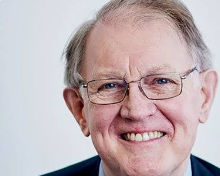
question the committee’s Chair,


Sir Mike Richards...


...and seek to understand a decision which has been challenged by former Prime Ministers, high profile patients with prostate cancer and a host of celebrities.


The committee even rejected the idea of screening black men who have double the risk of developing prostate cancer, men with a general family history, & even some with certain genetic factors.


While Richards supports the idea that men who want to have a PSA test should be allowed to have one, he argues that, based on current evidence, a screening programme would do more harm than good.  


This is a complex area which is developing all the time & he concedes that as our understanding grows & as treatment and testing develop, the case for screening may be made.


He is also adamant that this is not one of those clinical decisions based on cost.


If you are with or without a view on this topic, do join Niall, Roy and Mike, & like men all over the country, make up your own mind as they explore this delicate & difficult topic.  


It’s a great listen – find it here now or wherever you find your podcasts. 

What does

Andy Burnham

really think about health and social care?

LISTEN TO THIS PODCAST... FOR FREE!

For all the previous

In the Loop

podcasts with

----

Bill Kircup

Why he pulled out of the Amos Report

Jonathan Asworth

Former MP and now a stroke victim.

Dr Ian Higgson

President of the

Royal College of

Emergency Medicine.

Prof Jim Blair

Learning Disability expert

Andy Burnham

Mayor of Greater Manchester

Nichola Ranger

ChEx Gen Sec RCN

Tom Dolphin

Chair BMA

David Gregson

founder of BeeWell

Dr Charlotte Refsum

Tony Blair Institute

Rob Webster

ICB CHEx

Sarah Woolnough

CEO of the King's Fund

Sir Jim Mackey

Dame Jennifer Dixon

Lord Darzi

Professor Tas Qureshi

Dr Penny Dash,

chair NHSE

Richard Meddings,

former chair NHSE,

Sir Jeremy Hunt,

Sir Andrew Dilnot,

Paul Johnson

IFS

CLICK HERE


-oOo-


Probably, the most listened to

Podcast in the NHS!

FREE!

Want to contact Roy Lilley?

Please use this e-address

roy.lilley@nhsmanagers.net 

-----------

Know something I don't

email me

in confidence.

Leaving the NHS, changing jobs - you don't have to say goodbye to us!

You can update your Email Address from the link you'll find right at the bottom of the page,

up-date-your-profie,

and we'll keep mailing.

----------

GDPR

We don't sell or give access to your email address to any third parties.

You can unsubscribe at any time.

Click on the link right at the bottom of the page

---------

Disclaimer

... yes, 60 countries listen

to Roy Lilley's podcast, free.

You can, too.

Just click here

Dr Paul Lambden


Alopecia


'... It is normal to lose between 30 and 100 or more hairs a day as part of that natural process and the total number of hairs stay the same. At the extremes, many people retain their hair well into old age whilst others start losing hair at the end of their teenage years...'

News and Other Stuff

---

>> New guidelines for prostate testing - the GP has to agree.

>> NHS 10-Year Plan - Risks ‘Patient Harm at Unprecedented Scale’.

>> Trust group unravels - it was never going to work.

>> Northern Lincs governors and local GPs say FT should leave group with Hull - another one bites the dust.

>> NHS warned not to sacrifice patient care - on 'altar of net zero'

Visual Aid for Heart Sparing in Breast Radiotherapy


This is what I'm hearing, unless you know different. In which case, tell me, in confidence

__________


>> I'm hearing - The number of drug shortages has increased by nearly 50% since January, that's according to the MIMS drug shortages dashboard.

More News

...

>> When evidence isn’t enough - BMJ opinion piece.

>> NICE Supports Routine NHS Funding and Access to Ex-Situ Machine Perfusion - a Major Step Forward for Liver Transplantation.

>> Welsh Researchers Identify Ways to - Cut Medical Technology Waste.

>> Health Minister drops Medical Council in a right political pickle - more news from NZ.

Twitter  
Managers Logo