Weekly update from the National Housing Conference | | News from Washington | By Brittany Webb | | |
A bump in ROAD
U.S. Speaker of the House Mike Johnson (R-La.) said he will transmit the bipartisan, bicameral 21st Century ROAD to Housing Act to the White House following a meeting with President Trump on Thursday. Once the bill is transmitted it triggers a 10–day period for the President to sign the bill, veto it, or allow it to become law without his signature.
Speaker Johnson’s announcement came after President Trump abruptly halted the bill's enactment by canceling a planned signing ceremony just hours before he was scheduled to sign it into law. The legislation passed both chambers with overwhelming bipartisan support—the House by a vote of 358-32 and the Senate 85-5. The President took to social media calling for a delay in signing ROAD until Congress takes up the SAVE America Act, a controversial elections bill.
Speaker Johnson’s decision to transmit the bill has revived housing groups and advocates’ hopes that the measure will soon become law. Democratic and Republican members of Congress have publicly remained strongly supportive of the housing legislation and expressed frustration with the President’s sudden change of course. Most members believe the bill will still be signed or allowed to become law, though a veto remains a possibility until the ten days expires.
White House Press Secretary Karoline Leavitt had previously called the bill “one of the most significant pieces of housing affordability legislation in American history,” and that the “historic bill signing is another promise made, promise kept.”
| |
Nearly 700 housers gather at NHC’s 2026 Housing Visionary Awards Gala
The National Housing Conference (NHC) welcomed nearly 700 housing leaders, advocates, policymakers, and industry partners from across the country to its 2026 Annual Housing Visionary Awards Gala at The Anthem in Washington, D.C. The annual event celebrated outstanding leadership in strengthening the housing finance system, advancing public service, and expanding access to homeownership, while also recognizing a landmark moment for the housing community following Congress’s passage of the 21st Century ROAD to Housing Act. Attendees came together not only to honor this year’s award recipients, but also to celebrate the bipartisan progress represented by the legislation and its potential to expand housing opportunities nationwide.
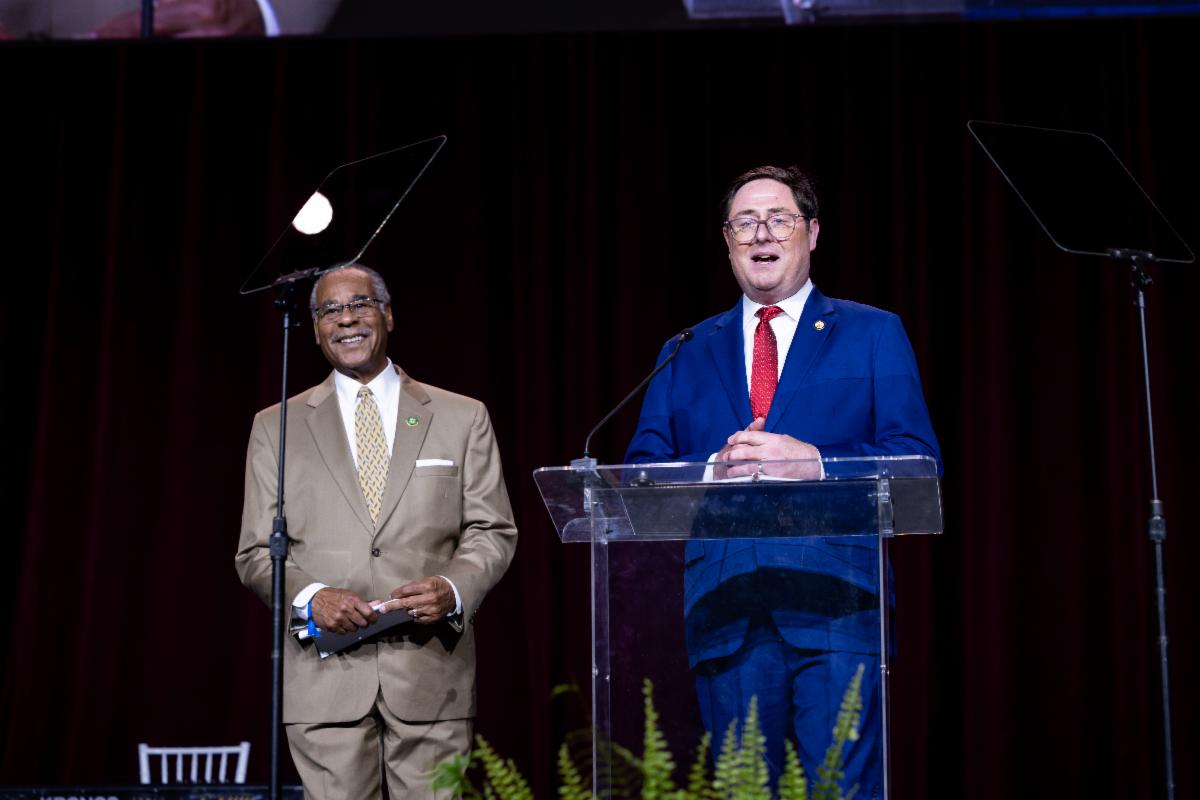
This year’s Housing Visionary Award was presented to Bill Emerson, Board Member of Rocket Companies, and Debra W. Still, CMB, retired CEO and Vice Chair of Pulte Financial Services. The Carl A.S. Coan, Sr., Lifetime Achievement Award for Public Service was awarded to House Financial Services Housing and Insurance Subcommittee Chairman Mike Flood (R-Neb.) and Ranking Member Emanuel Cleaver II (D-Mo.).
Emerson was honored for his leadership in guiding one of the nation’s largest housing finance companies through periods of significant growth and economic uncertainty while maintaining a steadfast commitment to innovation, organizational culture, and community impact. Still was recognized for more than four decades of leadership at both Pulte Financial Services and the Mortgage Bankers Association, where she helped shape a more inclusive, responsible, and resilient mortgage industry. Together, Emerson and Still exemplify the visionary leadership needed to strengthen the nation’s housing system for generations to come.
“Our mission is to help everyone [own a] home. Not some people. Everyone. And the brand tagline is, own the dream,” said Emerson. “Because you know what? Owning a home is still the bedrock of the American dream. And the work that needs to be done to continue that, we all know, is monumental.”
“Both during my 42 great years at Pulte as a business operator and in collaborating with policymakers in Washington, my focus has always been on helping individuals and families achieve the joy of homeownership,” said Still. “Being able to contribute to this noble work has been without a doubt a privilege.”
Chairman Flood and Ranking Member Cleaver were recognized for their bipartisan leadership on the HOME Reform Act and their longstanding commitment to addressing the nation’s housing challenges. Their work has advanced thoughtful reforms that expand housing opportunities and help more Americans access safe, affordable homes.
“I was raised by two Democrat parents, and I've always been a strong Republican conservative, but there's no reason we can't work together to find solutions,” said Chairman Flood.
“Most Americans, those of you here, I guarantee you that most of the people you know are good and decent people who would like for Congress to work together for them and to do good things. And we've been able to work together,” said Ranking Member Cleaver.
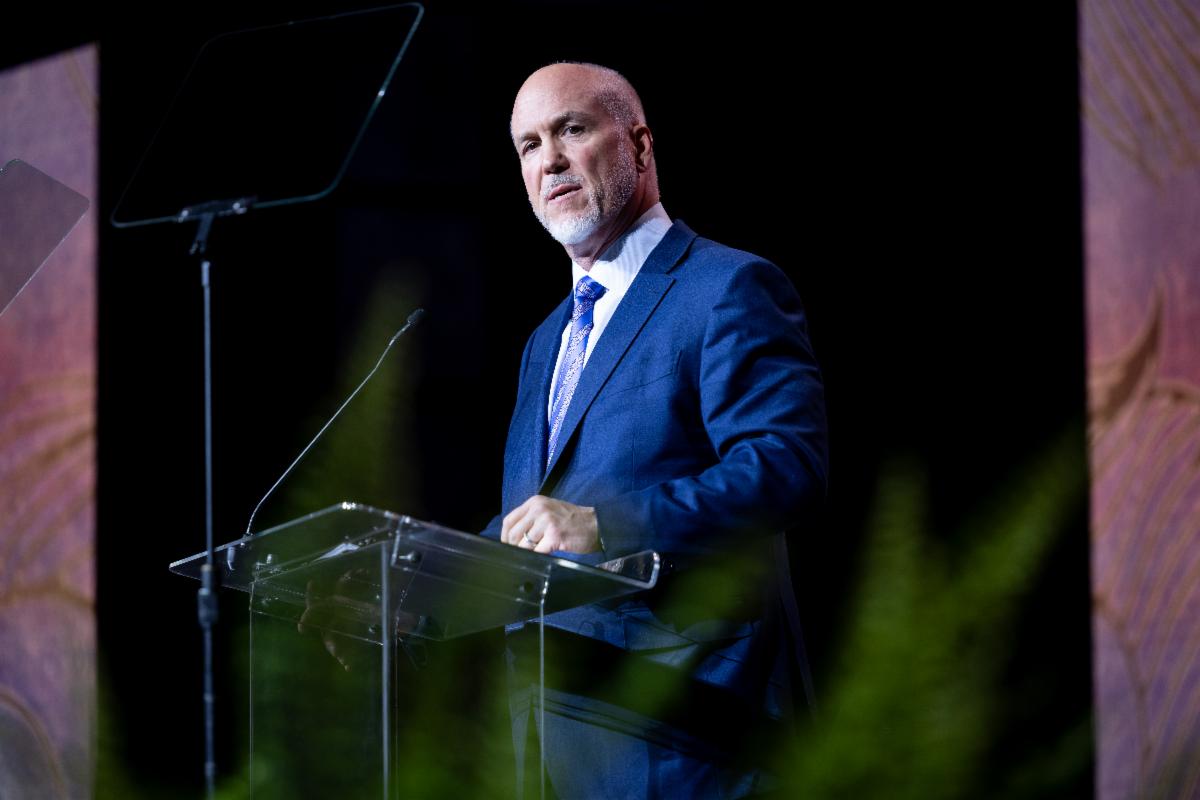
The evening concluded with remarks from House Financial Services Committee Chairman French Hill (R-Ark.), who thanked NHC and the housing leaders, advocates, and industry partners in attendance for their role in shaping and advancing the bipartisan 21st Century ROAD to Housing Act. Calling the legislation the culmination of years of bipartisan collaboration, Hill highlighted its more than 40 housing and banking policy reforms. He urged attendees to continue their advocacy through the final stage of the legislative process, stating, "I need you to support this process to the finish line, and the finish line will [be] when Donald J. Trump signs into law the most significant housing reform in a generation."
NHC extends its sincere thanks to the sponsors whose generous support made the 2026 Housing Visionary Awards Gala possible. We are especially grateful to our Host Sponsor, Rocket Companies; Premier Sponsor, JPMorganChase; Presenting Sponsor, Wells Fargo; and our Leader Sponsors: Airbnb, the Council of Federal Home Loan Banks, Mortgage Bankers Association, Navy Federal Credit Union, and Truist.
We also thank our Advocate Sponsors: the National Apartment Association, the National Association of Realtors®, Pennsylvania Housing Finance Agency, and VantageScore; our Champion Sponsors: Bilt, Federal Home Loan Bank of San Francisco, Freedom Mortgage, and the National Multifamily Housing Council; and our Opportunity Sponsors: Capital One, CohnReznick, National Association of Affordable Housing Lenders, National Council of State Housing Agencies, Pennymac, Pulte Financial Services, and Prosperity Now.
| | | |
Chairman Mike Flood and
Ranking Member Emanuel Cleaver
| | | |
FHFA proposes Duty to Serve changes
The Federal Housing Finance Agency (FHFA) published a proposed rule to revise the Duty to Serve framework for Fannie Mae and Freddie Mac (the Enterprises), opening a short 30-day public comment period. Duty to Serve requires the Enterprises to support three underserved markets named in statute: manufactured housing, rural housing, and affordable housing preservation. FHFA’s proposal would maintain the three-year planning cycle and public comment process but remove the current list of statutory and regulatory activities, minimum activity requirements, and evaluation guidance that has shaped Enterprise plans in past years.
The proposal would place new emphasis on manufactured housing chattel loans, which finance the home but not the underlying land. FHFA cited data showing approximately 70–80% of new manufactured homes are titled as personal property, and that denial rates and interest rates for chattel loans are significantly higher than for site-built home loans. The proposal would move chattel lending away from being treated as an “extra credit” activity and instead encourage Fannie Mae and Freddie Mac to develop more robust approaches to the market.
Other proposed changes include amending the definition of high-needs rural regions, removing the definition of high-needs rural populations, and shifting rural market activities from a focus on high-needs rural areas to rural areas more broadly. FHFA would also replace the current evaluation approach with a numeric 1–5 rating scale and add Low-Income Housing Tax Credit preservation activities as eligible for Duty to Serve credit.
Comments are due by July 24.
| | | |
HUD streamlines FHA programs
The U.S. Department of Housing and Urban Development (HUD) announced 14 policy changes to its Federal Housing Administration (FHA) Single Family mortgage insurance program intended to lower costs, reduce regulatory burdens, and improve access to FHA-insured mortgages. The changes span mortgage origination, servicing, and quality control, including updates to appraisal field review requirements, Limited 203(k) Rehabilitation Mortgage Insurance Program draw requests, mortgagee approval and quality control policies, closing forms, and loss mitigation requirements for trial payment plans.
“Every unnecessary regulation comes with a cost, and too often homebuyers pay the price,” said HUD Secretary Scott Turner. “If a policy does not protect taxpayers, improve affordability, or expand opportunity for Americans, we should rethink it. As we recognize National Homeownership Month, these FHA actions reflect that commitment by eliminating barriers to expand homeownership opportunities.”
HUD said the appraisal field review changes alone are expected to save industry partners approximately $3.3 million annually by reducing quality control requirements that average $425 per field review. The Department also said the changes will make FHA financing more efficient for homebuyers and lenders, while improving alignment with other programs. Industry stakeholders broadly described the updates as limited but constructive, with the Mortgage Bankers Association saying it continues to support HUD’s efforts to streamline programs, cut red tape, and make homeownership and renting more affordable.
| | | |
Renters face widening affordability barriers
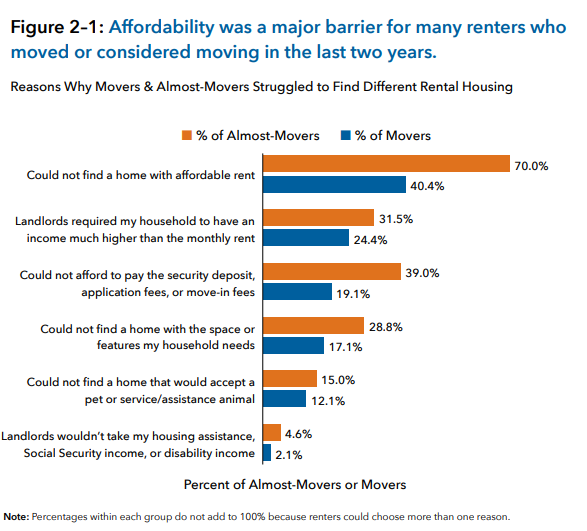
The National Low Income Housing Coalition released its 2025 National Renter Survey, providing a broad look at renter experiences, affordability barriers, and housing search challenges across the country. According to the data, 70% of almost-movers and 40% of movers said they struggled to find a home with affordable rent. The second most common barrier was landlords requiring household income far above the monthly rent, cited by 31.5% of almost-movers and 24.4% of movers. Upfront costs were also a major issue, with 39% of almost-movers and 19% of movers saying they could not afford the security deposit, application fees, or move-in fees. The data suggests that many households are being squeezed by a combination of rent levels, income requirements, upfront fees, and limited housing options.
| | |
The U.S. Government Accountability Office (GAO) published a letter requesting HUD’s personal attention regarding disaster recovery and manufactured housing. In 2025, the GAO identified 10 priority recommendations that would focus HUD on improving Community Development Block Grant-Disaster Recovery service delivery and collect data to inform overall recovery outcomes, in addition to expanding implementation for increased financing options for manufactured homes. As of 2026, GAO reports that the priorities remain to be implemented and enter high-risk issue areas that would have direct implications for broader efficiency and effectiveness efforts.
Politico reported that the Treasury’s Community Development Financial Institutions Fund (CDFI) has yet to allocate $1 billion in funding, some of which is due to expire on September 30. Congress appropriated the funds to support the work of small banks, credit unions, lenders, and other organizations that provide direct support to underserved areas. This includes $500 million pending for a bond guarantee program and a delay in congressionally appropriated funds to CDFI’s for fiscal year 2025.
The Harvard University Joint Center for Housing Studies published a blog post diving further into its recently released State of the Nation’s Housing report to discuss the impact of declining immigration on urban and rural communities. According to data, the natural change in population growth has fallen below average and is projected to turn negative nationally by 2030. This demographic projection is expected to shift trends for housing demand and could potentially have disinflationary or deflationary effects on home prices over the long term.
| | The National Housing Conference is a diverse continuum of affordable housing stakeholders that convene and collaborate through dialogue, advocacy, research, and education, to develop equitable solutions that serve our common interest. | | Defending Our American Home since 1931 | | Copyright © 2024. All Rights Reserved. | | | | |