|
Sonoran Resorts
August 2023 Newsletter
| |
|
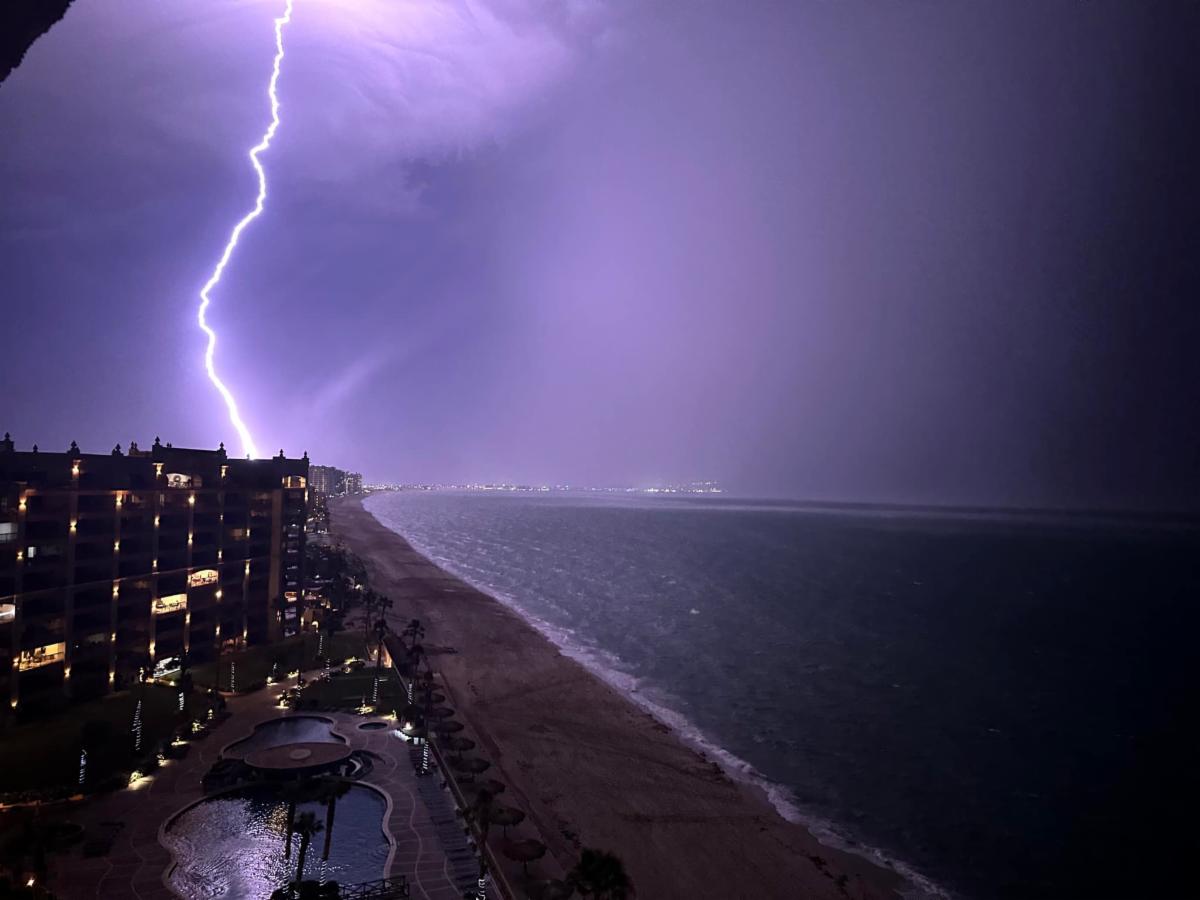
Welcome to August - and the humidity that comes with this time of year. We had quite a light show on Sunday night as a storm passed through (see photo below). Lots of lightning and thunder made for some great photos and probably sent all the animals in town scurrying for cover. The storm came with some rain, but not a lot, and there was no damage that I have heard about. Power went out for a few hours, but aside from resetting the clocks on the appliances, it didn’t cause any real inconvenience.
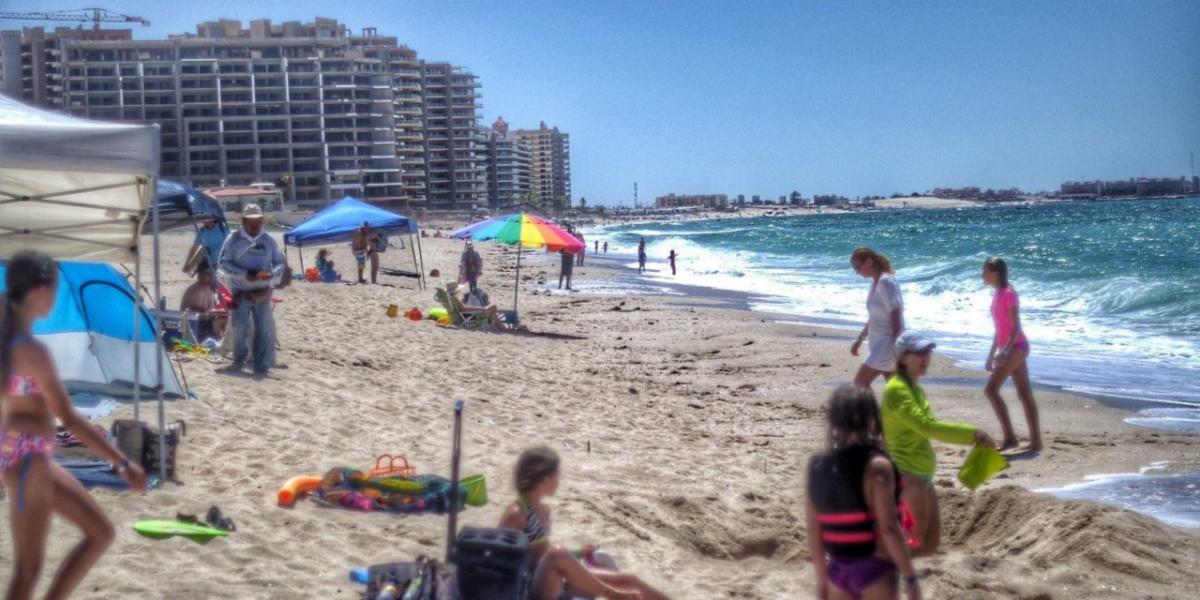
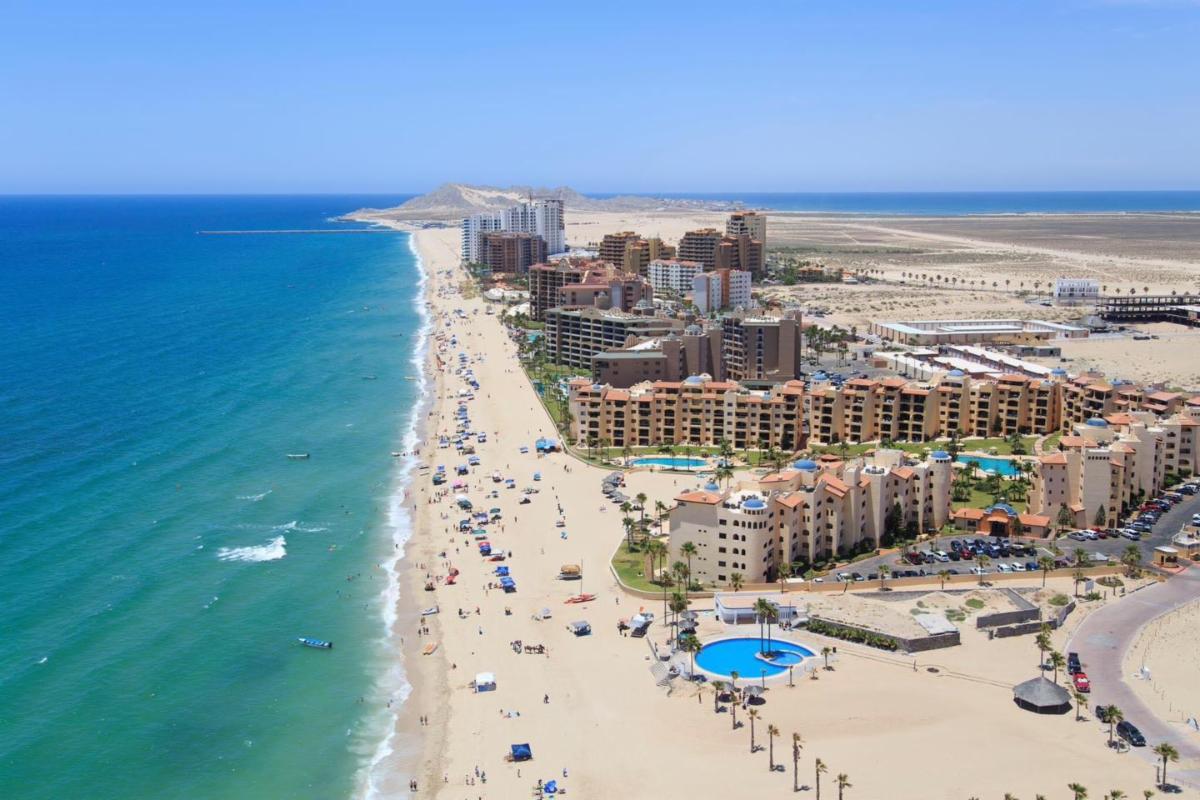
July and August in Rocky Point are always hot and humid. So is September for that matter, but the town always stays very busy on the weekends anyway, and both sales and rentals have been doing very well. The beaches are active and the outside restaurants and shops all seem to have people so it would seem that the heat and humidity don’t bother many visitors. Of course, there is no shortage of A/C in the condos, restaurants, bars, and businesses around town and along Sandy Beach as well. And, of course, there are the pools and we do happen to have the Sea of Cortez right here so that you can always jump in to cool off. So, there's really no reason not to come enjoy the summers here. Obviously, a lot of people agree with me.
Another thing that August brings are business closings for business owner/employee vacations. Traditionally, a good percentage of local businesses close for part or all of August. Sometimes they use the time off to remodel, but I suspect that more often, people head to cooler climates for a bit. As the number of summer visitors has increased over the years, the percentage of businesses that close has decreased, but don't be surprised if your favorite restaurant or bar is closed when you come to visit this month. Not to worry though, by next month, it will be business as usual again.
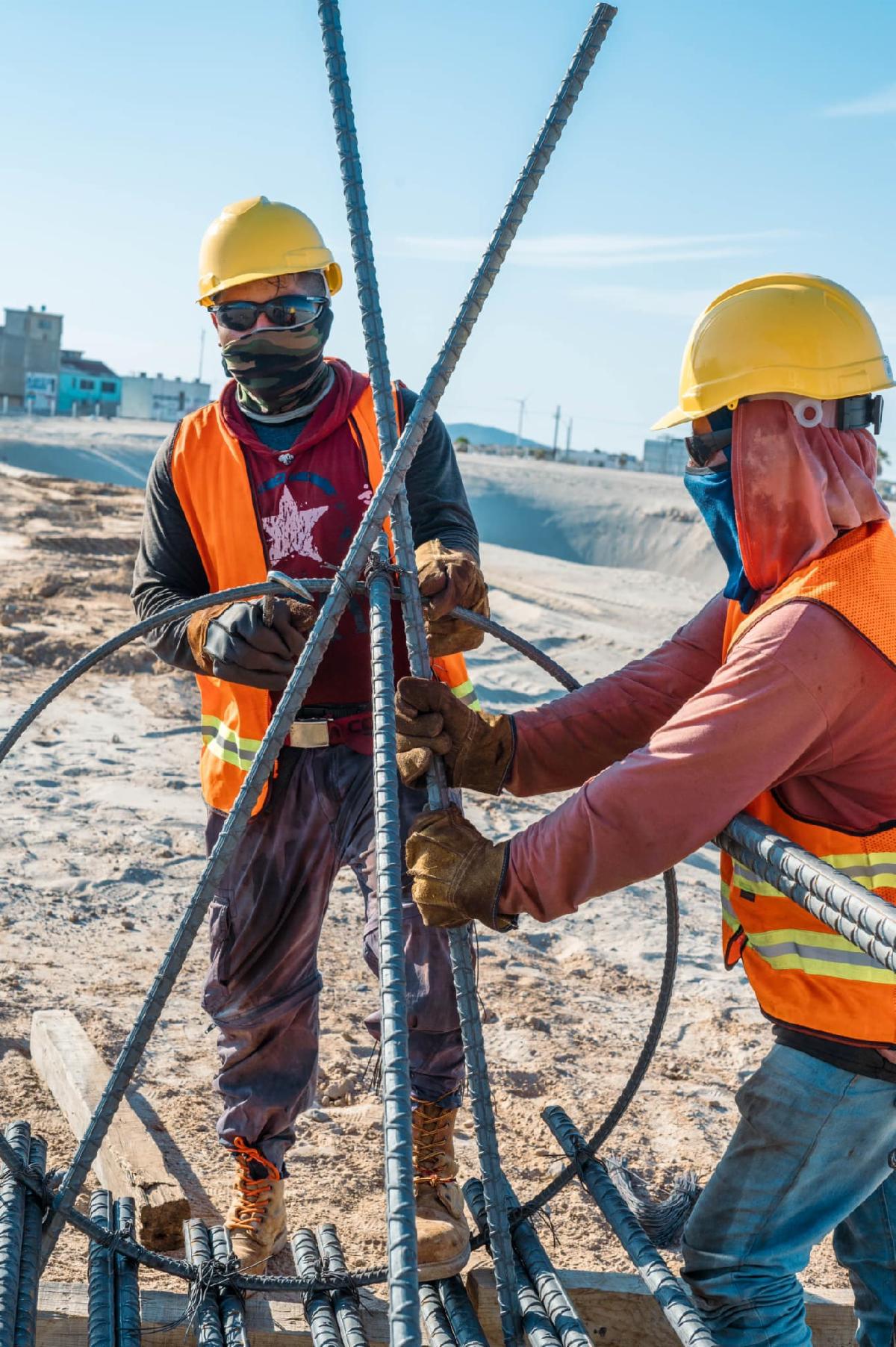
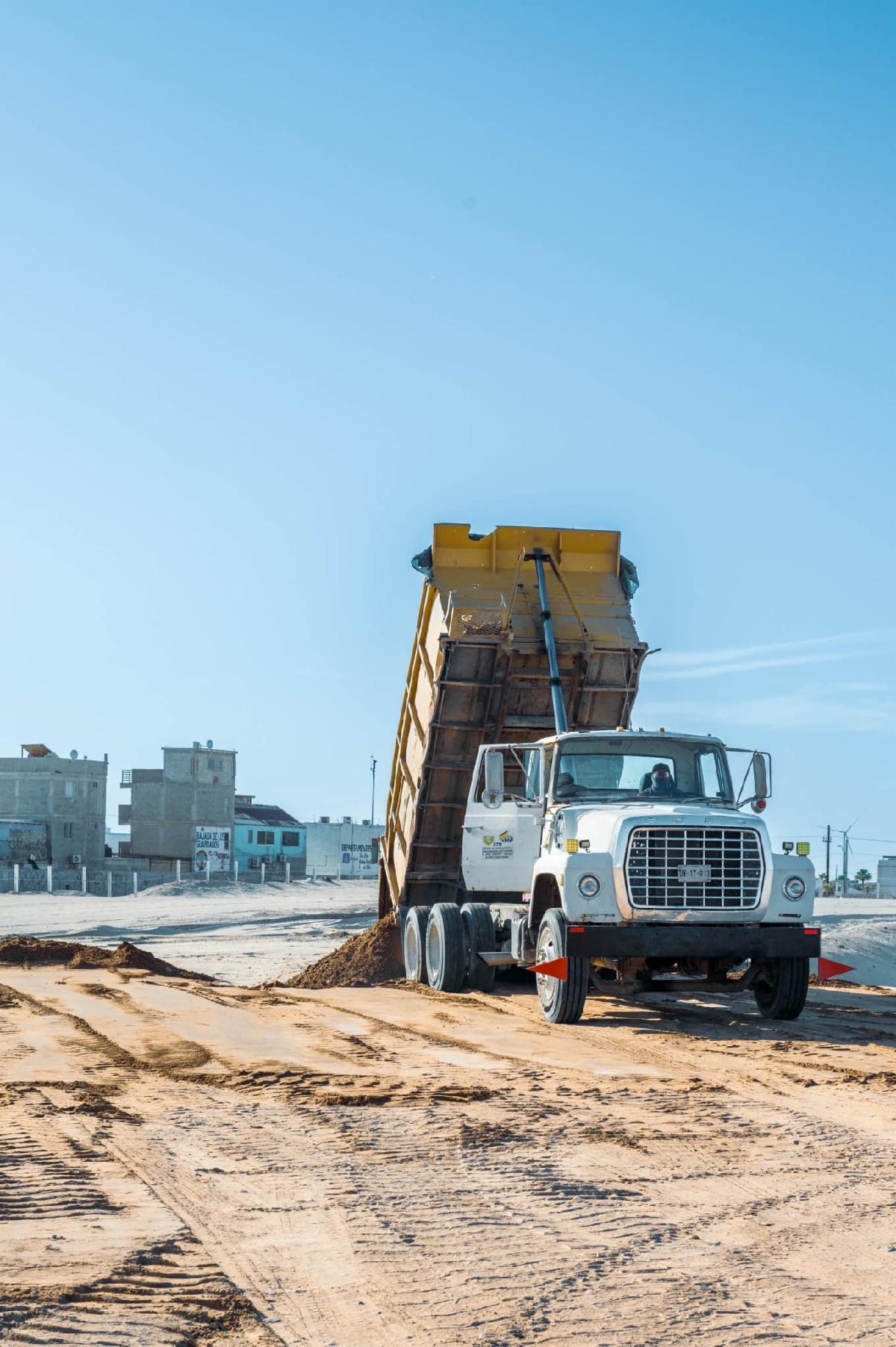
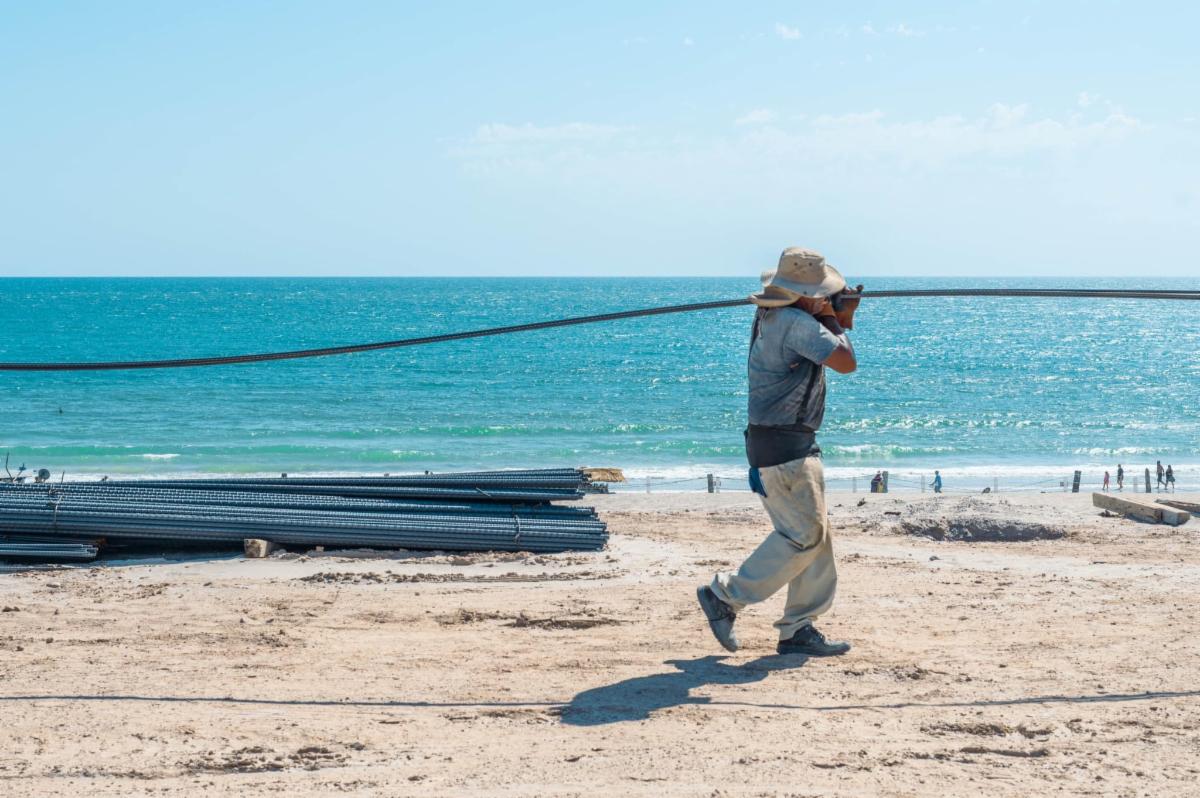
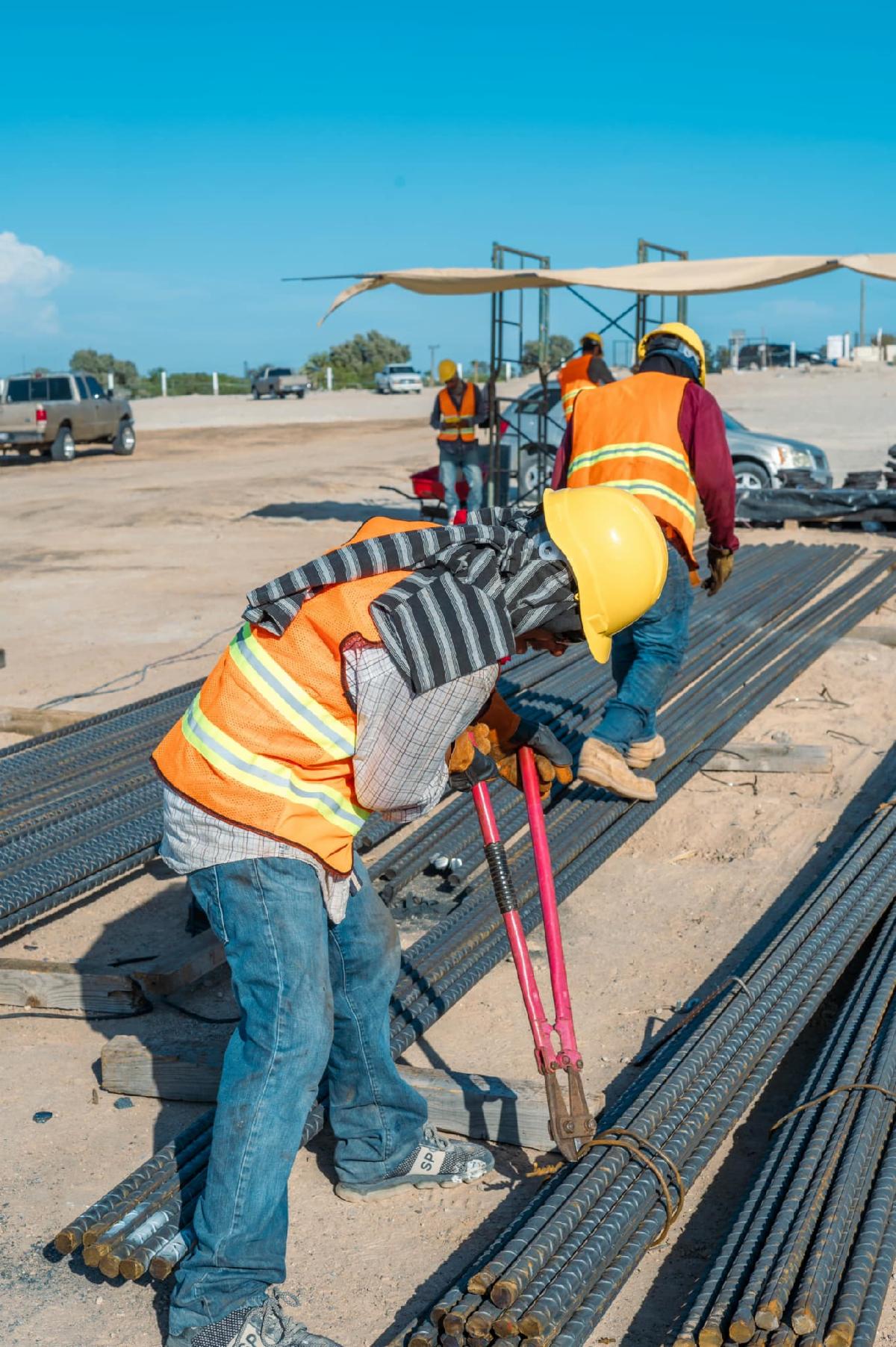
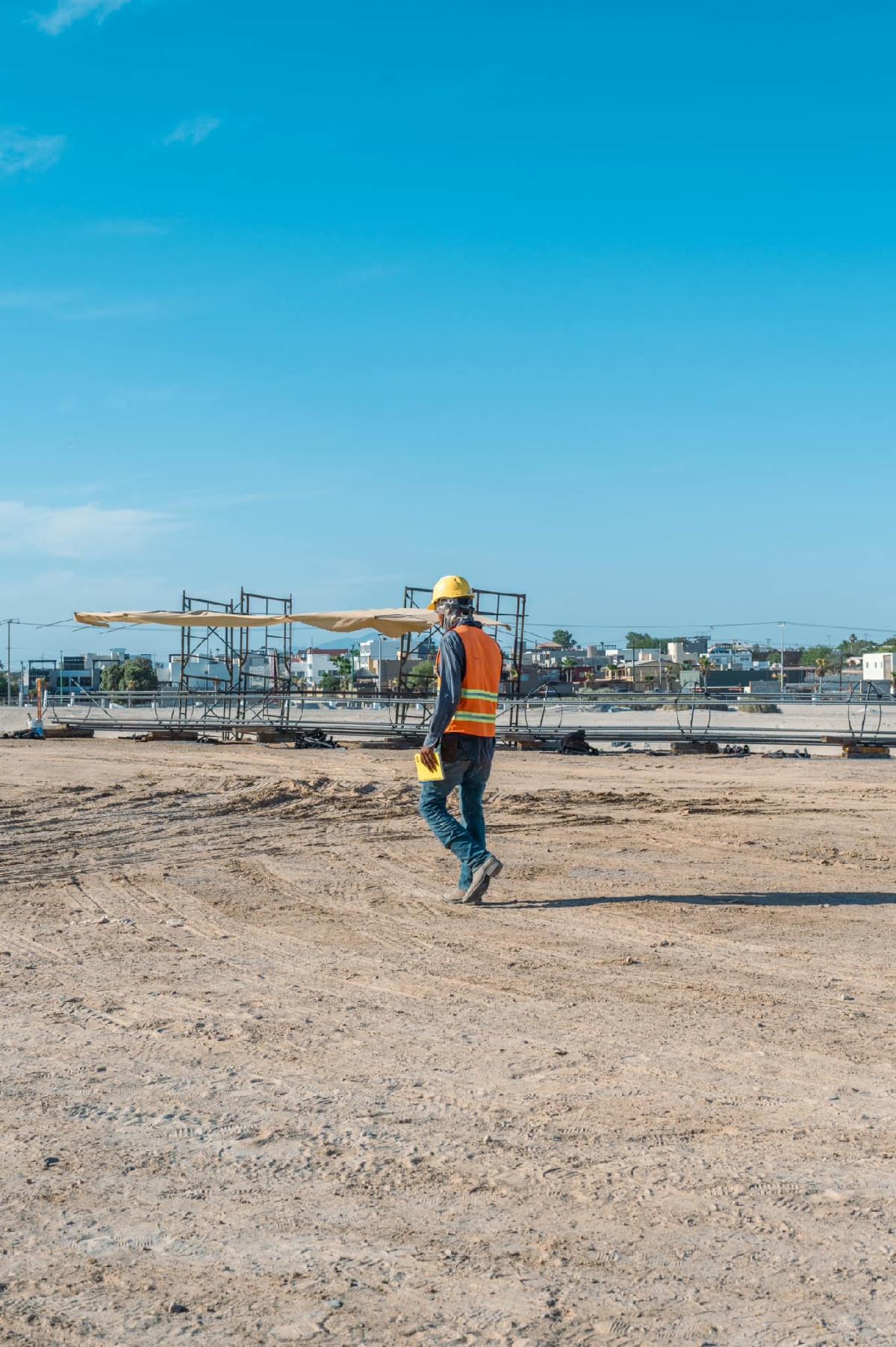
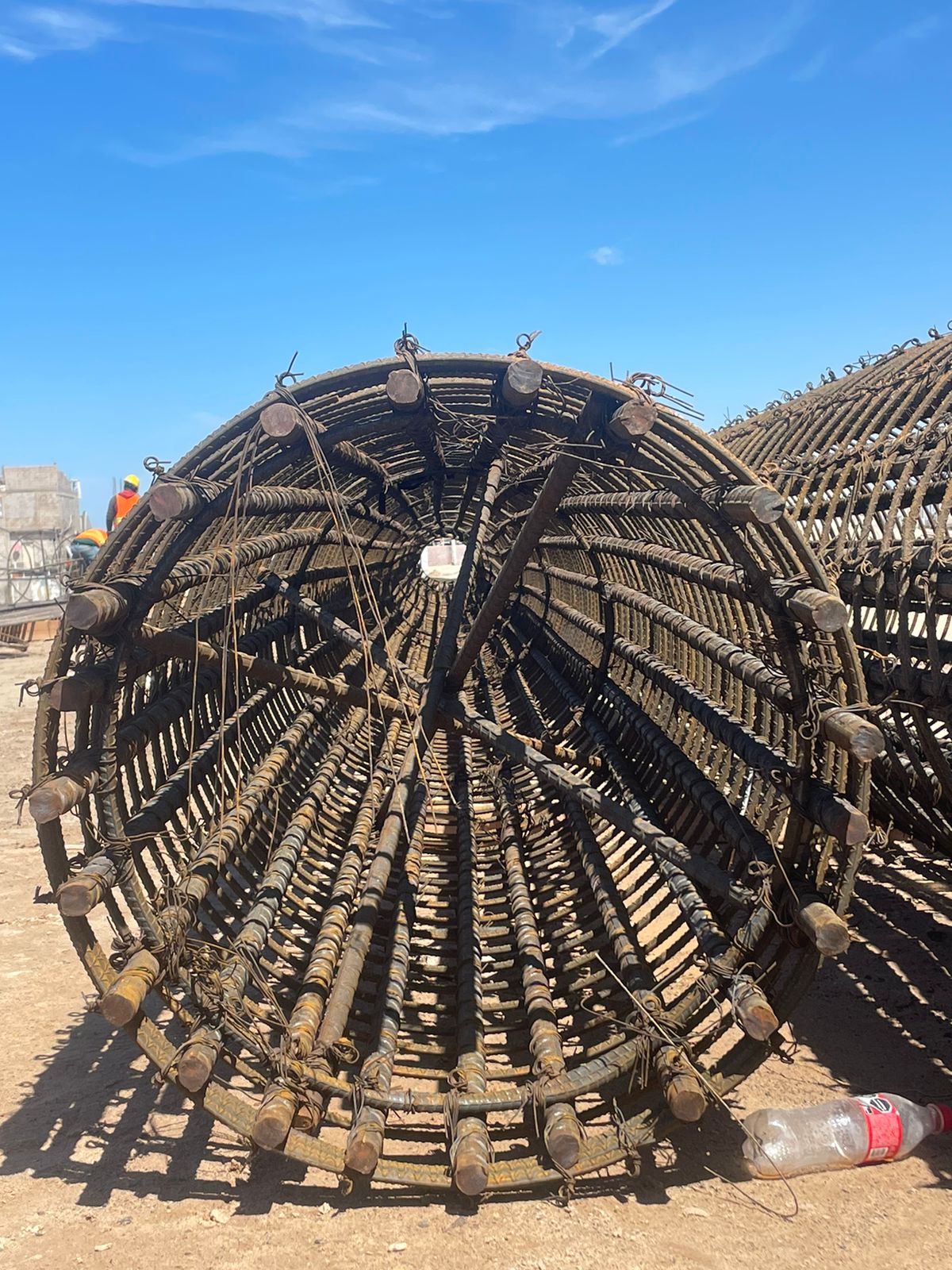
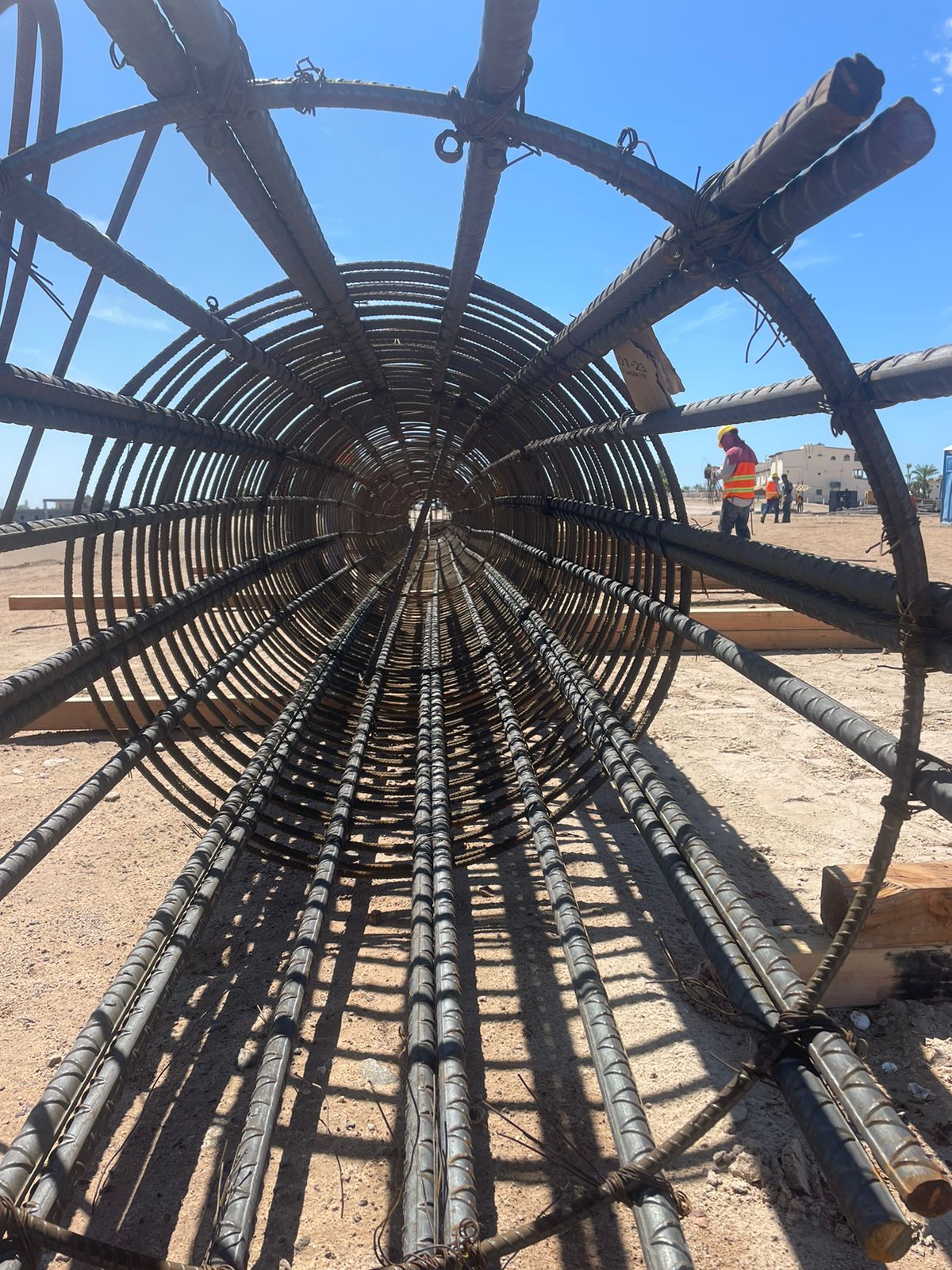
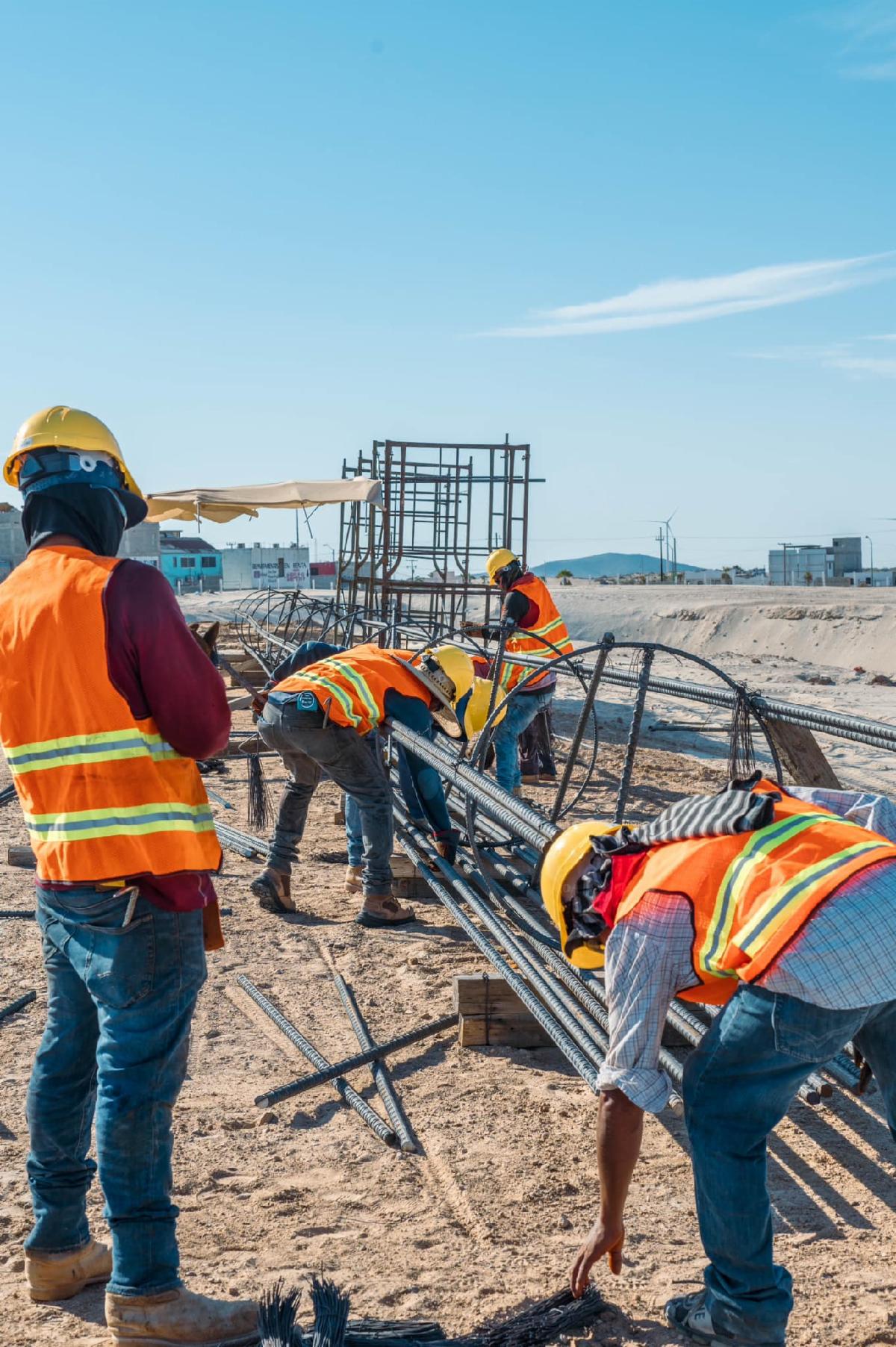
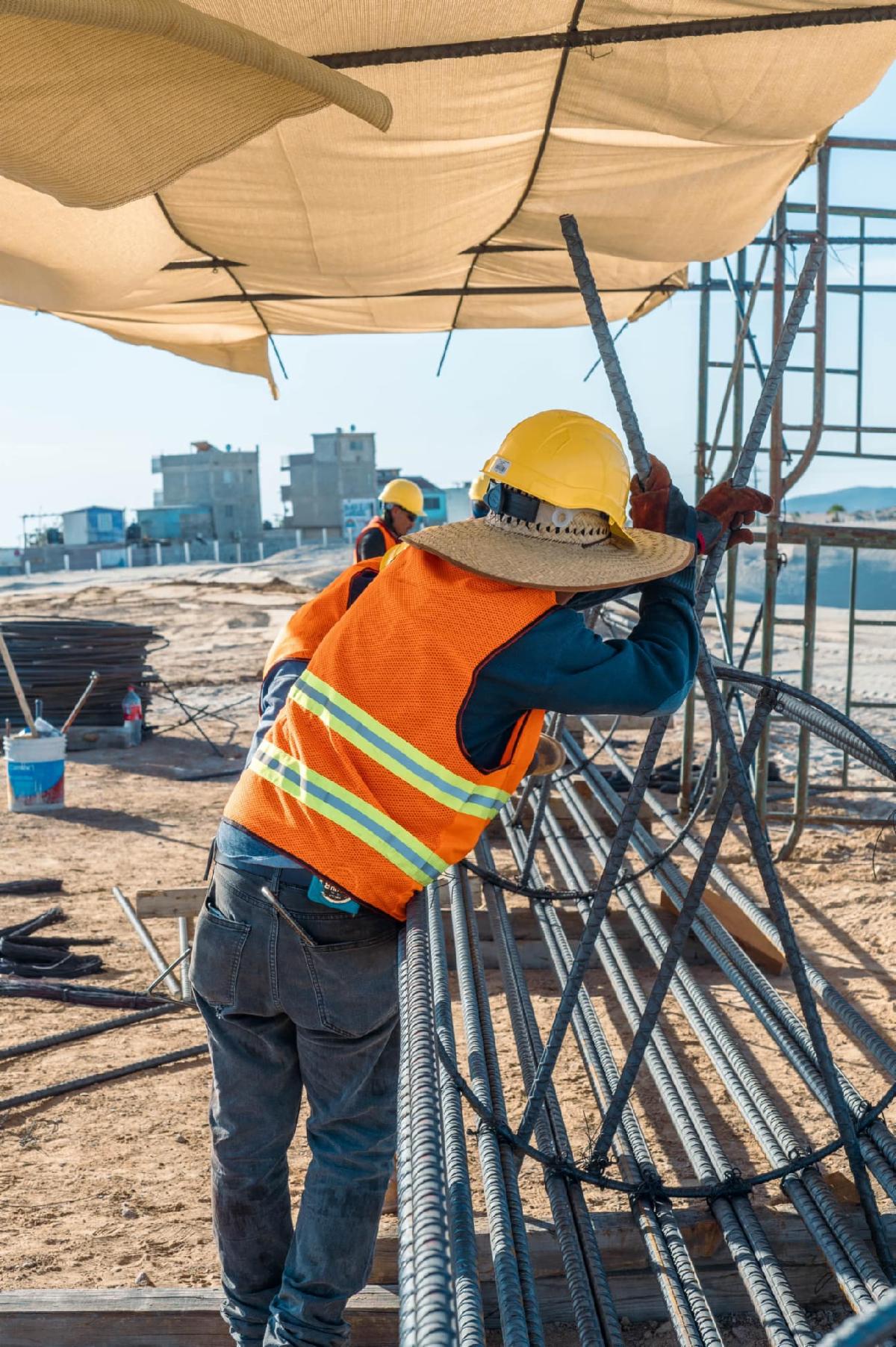
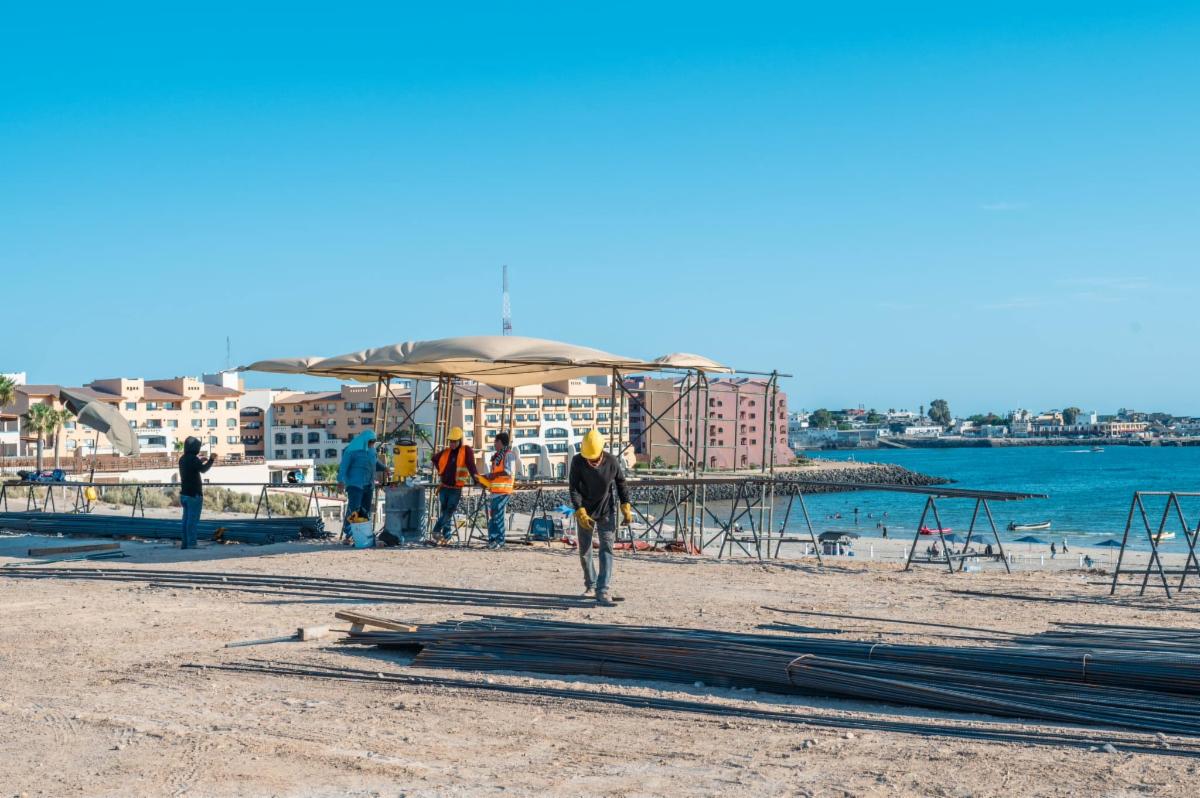
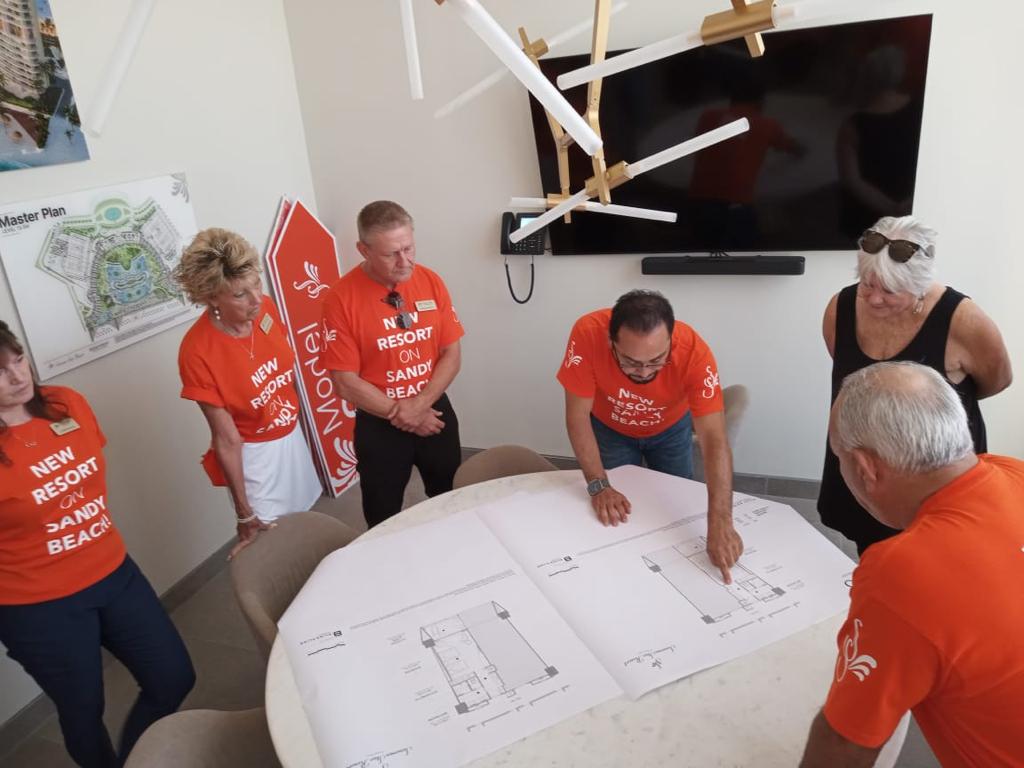
Last, but certainly not least, the Sonoran Star construction is well under way. Most of the work is still going to be on foundation and infrastructure for a few more weeks, but before you know it, we will start seeing tower #1 going vertical. If you haven’t stopped by our sales office/model yet, please do so. We’ll be happy to walk you through our beautiful 2-bedroom model and take you on the 2 minute ride up to the site on one of our CanAms so that you can see what’s going on for yourself. Sometime in the near future, we plan to install a live camera so that you will be able to watch the progress every day. Building one is 90% sold out now so please stop by if you want to buy in the first building that will be delivered.
Enjoy this beautiful month, come to Rocky Point if you can, and if you need anything don't hesitate to ask. Let me put my experience and expertise to work for you, and remember, as always, I've been here full-time for over 15 years and I am more than happy to help you with whatever you need, whether Sonoran Resorts related or not.
Just give me a call or send me an email any time and I will do my very best to help you. If I can't help you myself, I'm sure that I can point you in the right direction and help find you someone who can.
Besides the links below, you can our listings at the following:
www.sonoranstar.com
www.sonoranresorts.mx
www.sonoranresortsresales.com
AMPI Puerto Penasco MLS
Point 2 Agent Multinational MLS
Pick up a handout at any of our Sonoran Resorts
Scottsdale Barrett Jackson Show
Various Real Estate and Trade shows in AZ, NV, and CA
| |
|
IMPORTANT: Some email providers cut this newsletter off before the end. If that happens on yours, please scroll to the bottom of this email and click "View Entire Message" to see the entire newsletter.
Sincerely, Jim Ringquist
Broker/Sales Director
Sonoran Resorts Spa - Sea - Sun - Sky - Star (coming soon)
602-476-7511
rockypointjim@gmail.com
www.SonoranResorts.mx
President/Volunteer
Tourist Assistance Unit Advisory Committee (Tourist Assistance Police)
602-774-1777
www.touristassistancerockypoint.org
touristassistancerockypoint@gmail.com
I hope that you enjoy my newsletter and continue to recommend it to your friends. Please feel free to give me thoughts, suggestions, or ideas for future newsletters. Puerto Peñasco is my home and I love to share the news and goings-on with you.
I do get email requests each month asking me to add someone to my list. While I certainly don't mind doing so, all you really need to do is click Sign-Up for Newsletter below, add the email address, and it will happen automatically. Not to worry - I will not spam you or share your email address, and you will only receive one email-newsletter each month on the 1st.
|  | |
|
Exclusively Serving the Sonoran Resorts
Buy & Sell Direct and SAVE!
23 Years Experience on Sandy Beach
Four Fully Completed Beachfront Resorts
We Have Earned Our Stellar Reputation
Your Only Logical Choice when Buying
or Selling a Sonoran Resorts Condo!
| | | |
Resale Listings at the Sky, Sun, Sea, Spa | |
Progress Continues on the New Sonoran Star Resort! | |
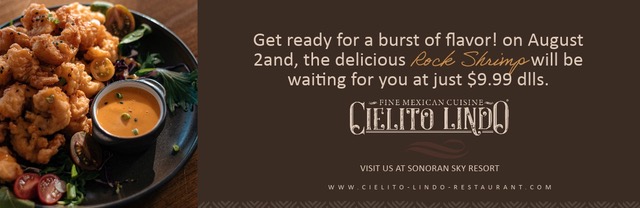
Food and Drink at the Sonoran Sky Resort:
| |
Well-Loved Founder of Puerto Peñasco Dog Rescue Dies at 70; Staff Continues her Mission | 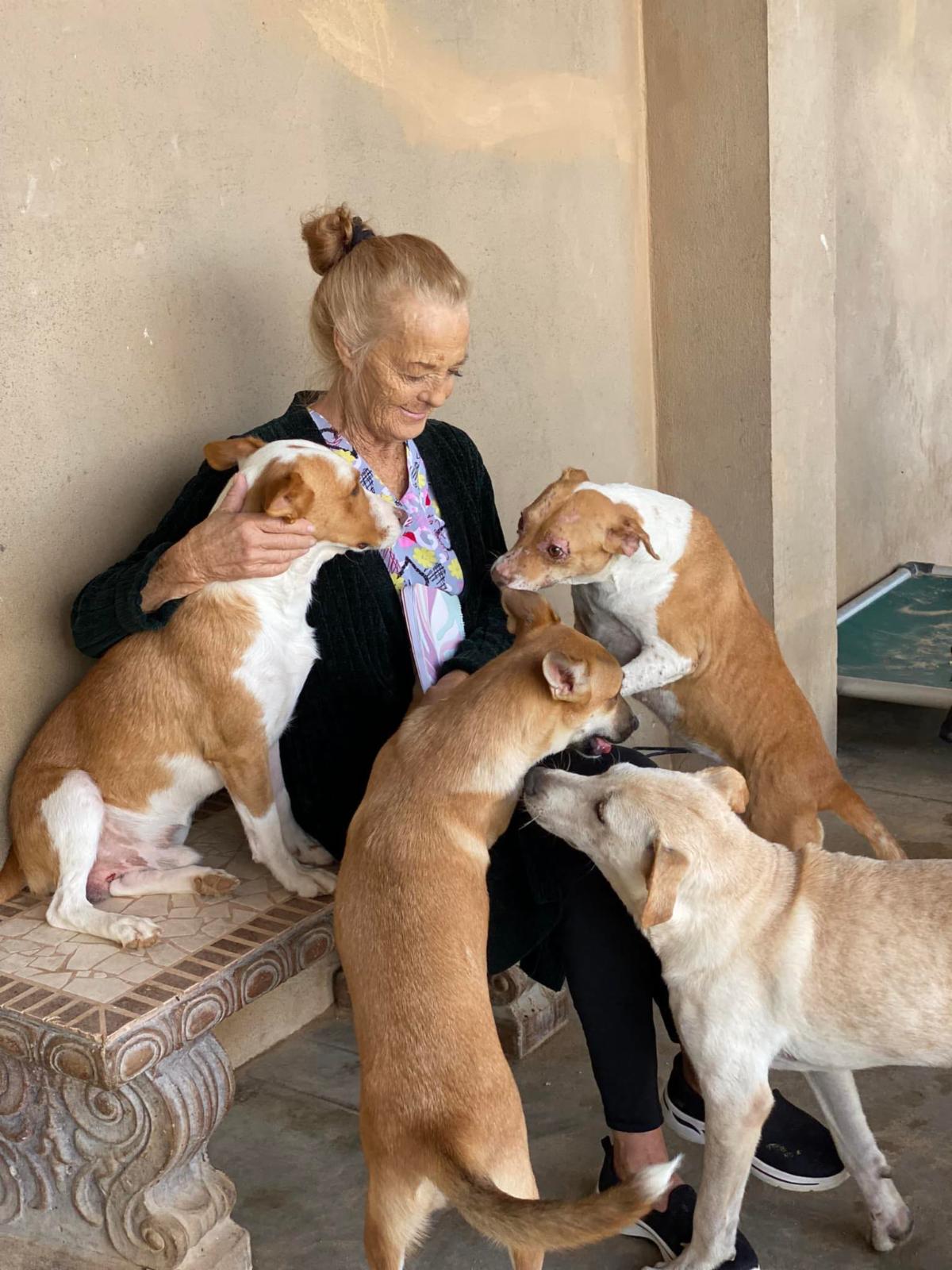 | |
Barbara Mumaugh, a beloved member of the Puerto Peñasco community and founder of Barb's Dog Rescue, passed away June 29 at the age of 70 in Phoenix after suffering complications from an illness.
She lived in Puerto Peñasco with her dogs, her house was the rescue… she started with 10 dogs and now there's over 400 there at any given time. Last year they adopted out over 2,000 dogs, so she saved thousands and thousands of dogs." – Kim Fletcher
Originally a Phoenix resident, Mumaugh felt compelled to make the drastic move to Puerto Peñasco in 2001 for her newfound mission to save the helpless street dogs in Mexico. Her desire to begin anew stemmed from tragedy: "Barb's daughter was hit by a drunk driver on her 21st birthday, and when she passed, Barb didn't want to live anymore," Fletcher said. In an attempt to make her feel better, Mumaugh's friends took her on a vacation to Puerto Peñasco. Unexpectedly, that turned into a life-changing trip for her.
When Mumaugh saw all of the street dogs in Mexico, she knew what she had to do: rescue them. She immediately started a small house for 10 dogs, but that wasn't enough for her. Her daughter was a huge animal lover, and Mumaugh found her purpose again through the dogs.
She wanted to honor her daughter, and the dogs gave her a purpose to live again.
Mumaugh was determined to help as many dogs as possible—she would spend every dime on food for them even if that meant she didn't eat herself. Every bit of money she earned went toward helping the dogs, even though it was often difficult to find food or medicine for them at first.
Slowly, Mumaugh's rescue gained notice from locals and visitors alike who wanted to help out with her mission. The community supported her 100%, and slowly but surely Mumaugh's small house turned into a huge dog-filled facility currently holding up to 400 dogs at any night and managed by more than 20 staff members and a board of directors.
From the beginning years up till now, dogs are accepted from animal control and from locals and visitors who find stray dogs. When they are taken into the facility, they are fully vetted and transported to a medical center if necessary. Then, they live in the rescue and are ready for adoption. Mumaugh also partnered with many rescues and transported dogs up to Phoenix to be adopted.
Mumaugh never wanted any dogs to be left behind and made sure all dogs were welcomed and cared for, according to Fletcher. Because of this, some dogs in the facility are feral and utilize the rescue as a sanctuary where they can live out the rest of their lives.
When any dog taken in died, Mumaugh would grieve them as if they were all her own, Fletcher said.
"People called her Mother Teresa of the dogs and an angel on earth," Fletcher said. "The sacrifices that she made were incredible ... She did everything for the dogs. She lived for the dogs."
As for continuing Mumaugh's legacy, Mumaugh's sister and board of directors are prepared to continue the rescue in honor of her and her commitment to helping the stray dogs.
If you wish to honor Mumaugh, Fletcher and the rescue ask the public to search through the catalog of adoptable dogs and adopt one, make a monetary donation, bring canned food to the shelter, and volunteer to help the dedicated staff take care of the dogs.
| |
|
A Message from Barb's Dog Rescue:
Promises Made. Promises Kept. Help Still Needed
| |
 | |
Eighteen years ago, Barb Mumaugh saw the number of stray dogs wandering the streets of Rocky Point and thought she could make a difference in one or two of their lives. So, she began to take them into her home, one-by-one. And so, the Rescue began. It didn’t take long before every room in her home was filled with strays, and she promised herself she wouldn’t stop until every street dog had water, food and shelter. Eighteen years later, Barb’s Dog Rescue provides daily care for 350+ dogs and finds homes for more than 2,000 each year. Against incredible odds, Barb’s promise to herself has resulted in an improbable success story. Literally thousands of dogs are living lives filled with love and care because of the lady who continues to pledge that “Rescue Never Stops!”
Four years ago, a good Samaritan found a litter of puppies in a garbage can in Caborca and brought them to Barb’s. They couldn’t have been more than a couple of weeks old. They were severely dehydrated and lucky to be alive. Miraculously, the puppies survived under Barb’s care, and ultimately five of the six were adopted. Only Pepe, with his just-got-out-of-bed-hair look, remained at the Rescue. A staff and volunteer favorite, it was assumed he would become a permanent resident of the shelter like so many others that aren’t adopted. We promised Barb that if Pepe were still available once our aging pets passed, we would return for him.
Last month we were able to keep that promise. If you are wondering about the adaptability of a dog who has spent much or all of his or her life at the shelter, Pepe’s transition has been nothing short of amazing. He made a 1300 mile car trip like he was a born road-warrior. He took to walking on a leash as if he’d been leash-walked daily all his life. He loves to cuddle and has become an avid TV watcher. While we are certain he misses his friends at Barb’s, he has become a loving and integral part of our family, and we are so blessed to have him.
Yes, We Still Need Your Help
For those of you wondering where your donations go, it costs $1000 per week just to feed our 350 dogs. On average, we will have seven mama dogs with litters and an additional 30 puppies without mamas that require special attention. Sixty dogs will need medication, and three will require surgery. Twenty pups will be spayed or neutered, and 40 pups will receive one of the four shots required to make a legal border crossing.
June through September are the most difficult months at the Rescue. Most of the city’s visitors are here for a long weekend or a week at the most and less likely to visit the shelter. With the intense summer heat, our utilities quadruple. Our water supply becomes unreliable, so we have to truck in supplemental water to keep our dogs hydrated and the laundry operating.
Most of you know that Barb’s does not charge an adoption fee. We operate solely on donations. If you have already donated, thank you. If you can donate, please do. If you are visiting and want to learn more about Barb’s Dog Rescue, please visit us daily between 10 a.m. and 2 p.m.
Please visit us online at:
http://www.facebook.com/BarbsDogRescue
or our website: barbsdogrescue.org
or Barb's Mexico cell: (638)114-1659 or US cell: (602)774-1578
Email: barbsdogrescue@gmail.com
| |
|
Potpourri!
Short Shorts of All Sorts!
Sometimes so much is going on in our little slice of paradise by the sea that we can't address the many short subjects with proper attention. To handle the hodgepodge of dangling subject matter, we invented the Potpourri Page. Here are a few "short shorts" to keep you up to date.
| | |
|
|
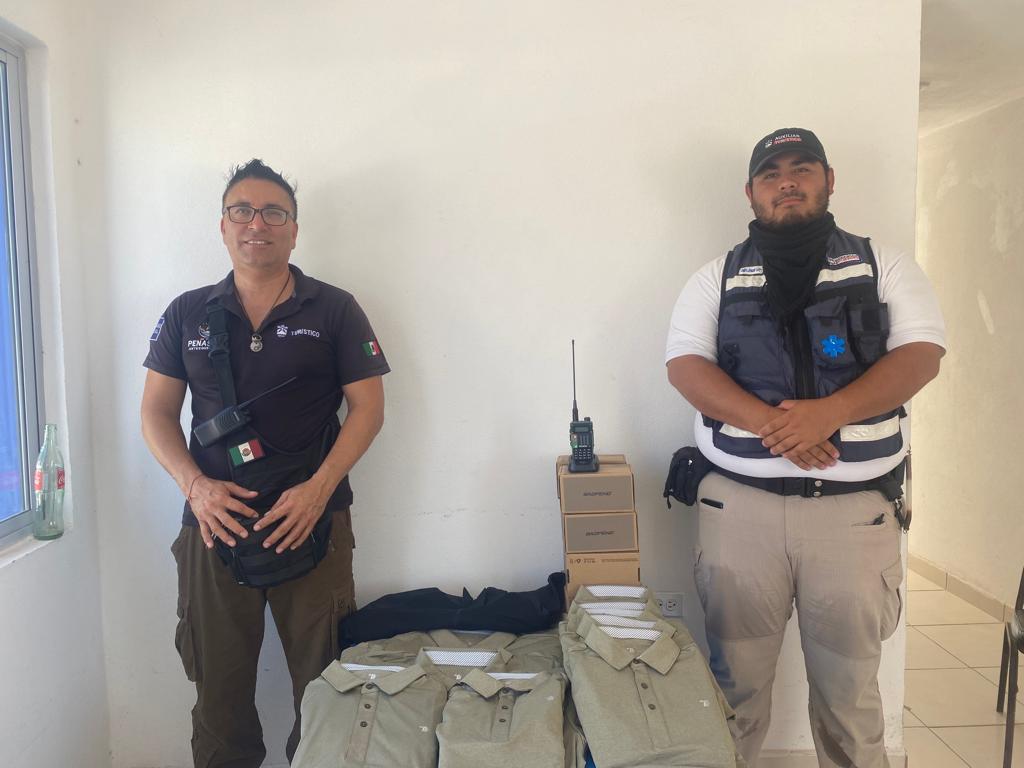
The TAU once again received a very generous donation of police radios and uniform shirts from the Roger Clyne camp via Greg Ross, road manager for the popular musical sensation.
The TAU has worked with Roger Clyne over the last few years, assisting at his shows and events in Puerto Penasco. Roger and his people have repaid the favors by donating much needed supplies and equipment to the TAU.
| |
TAU Continues to Ensure Safe and Pleasant Vacations | |
|
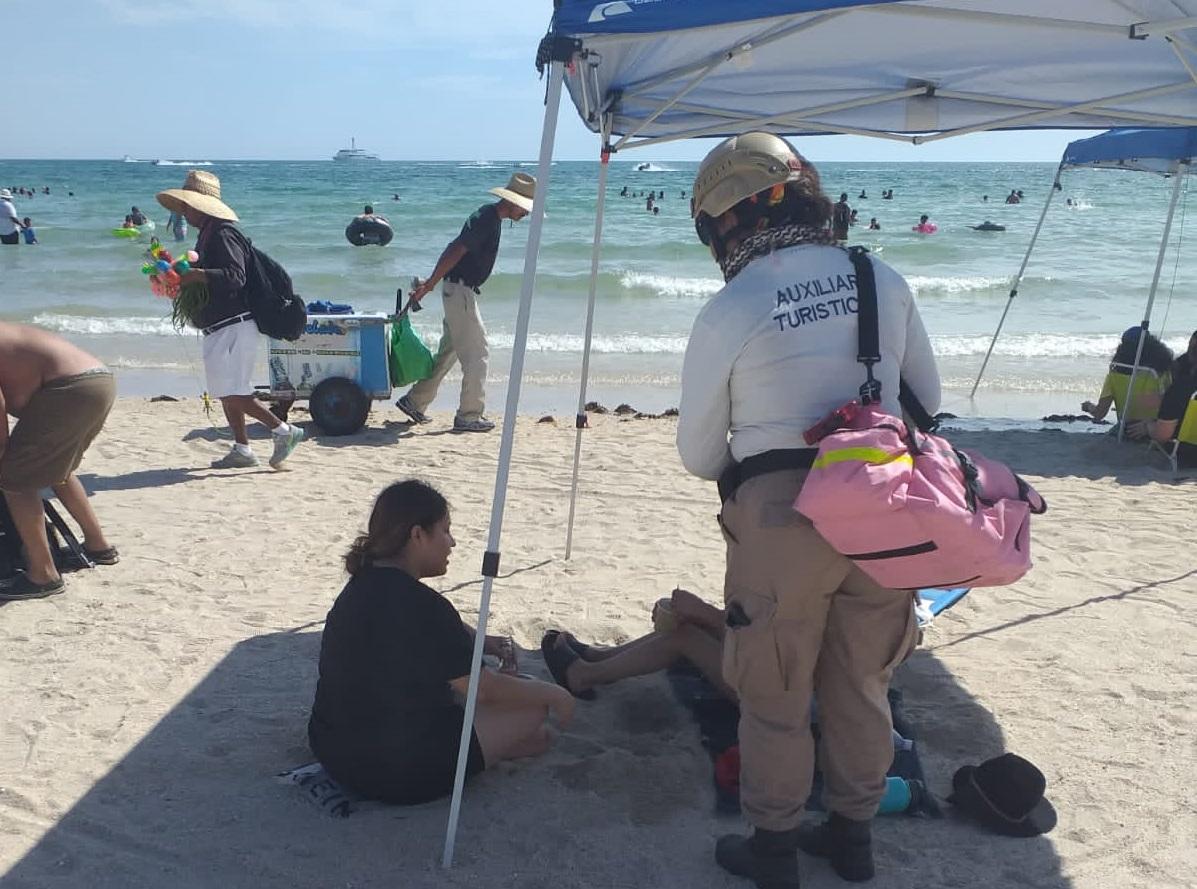
We’re proud to report that the Tourist Auxiliary Unit has been working diligently to ensure that Puerto Peñasco is a safe and fun destination for all tourists, locals, and disabled persons.
Last weekend alone, 2,185 glass bottles were confiscated at the beach in accordance with the local regulations. This is just one example of how much work goes into ensuring that our guests enjoy a safe and pleasant vacation experience.
Each week, the TAU attends several victims of ATV and UTV accidents along the beach and in the areas of the dunes. Most involve minors driving the vehicles and those impaired by alcohol.
7 prehospital services were attended this weekend—one of which required ambulance transfer—and 5 people used the amphibious chair, allowing disabled people to enjoy the Sea of Cortez. They also lent out the chair 10 times to individuals to help 15 people with disabilities access the beach safely.
| |
Near Drowning of Child on Sandy Beach | |
|
An 11-year-old girl was rescued from drowning in the Sea of Cortez, in a mishap in the Sandy Beach area.
The little girl who lived to tell the tale and is, fortunately, out of danger, was identified as Ailín G., originally from Tijuana, Baja California.
An official report states that at 8:30 p.m. on July 21, 2023, a female underage person was reported drowning in the beach area, in front of Las Palmas condominiums.
Mrs. María Virginia G., 55 years old, originally from Bácum, Sonora, notified the authorities that she and her family were on the shore of the beach with her daughter named Ailín G., 11 years old.
Around 8:00 p.m., already getting dark, the woman entered the condominium they rented and left little Ailín on the seashore, but upon returning 10 minutes later she called out for help when she could not find her where she left her daughter.
After that, she looked for her along the seashore without finding her, for which she asked for the support of one of the Las Palmas condominium security workers, named Jorge Daniel, 24 years old, who supported her to look for the girl.
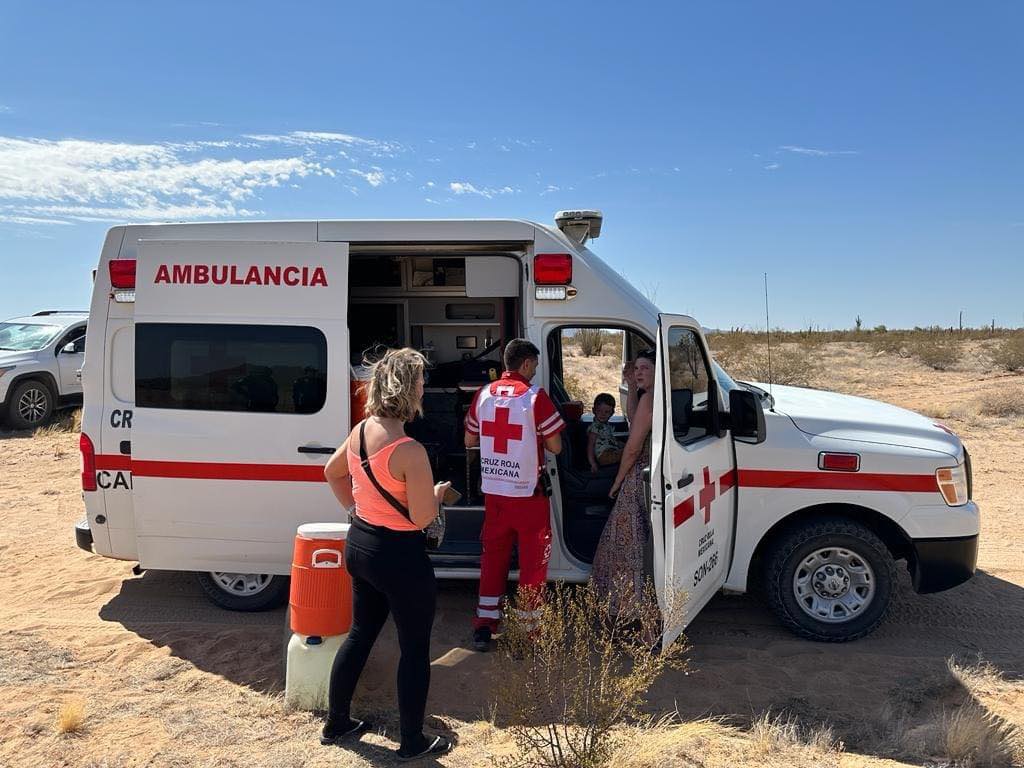
A Red Cross ambulance arrived at the scene, whose lifeguards gave first aid to the minor and determined that she was uninjured and out of danger, so she did not need to be transferred to a hospital.
| |
Family Rescued on Unpaved Road Between Puerto Penasco and Sonoyta | |
|
The Caborca government issued a warning to the entire population that the Juan Álvarez - Sonoyta dirt road is not safe.
It has been known that the "Maps" application is sending tourists along that route, and in recent weeks more than 15 Americans and 9 vehicles that have had problems caused by driving on the sand and dirt road.
According to information from Civil Protection, Firefighters, Red Cross, Municipal and State Police routinely help people stranded on the road, and the most instance was when a group of tourists was rescued by police officers who carried out a rescue operation between Juan Álvarez ejido and Sonoyta after a report was made by someone who saw them passing through this place on their way to the border.
The rescue operation took place at night and various agencies were deployed to rescue 6 adults and 2 children who were beginning to show signs of dehydration requiring medical attention after being stranded on the unpaved road after being stuck in the sand.
The missing families had left Puerto Peñasco heading towards the border town of Sonoyta on their way back to the USA. They had seen the road on their GPS system and thought it a fun new way to make a trek to the border. The cities of Caborca and Puerto Penasco warn that people should stay on the paved roads between Sonoyta and Puerto Penasco.
| |
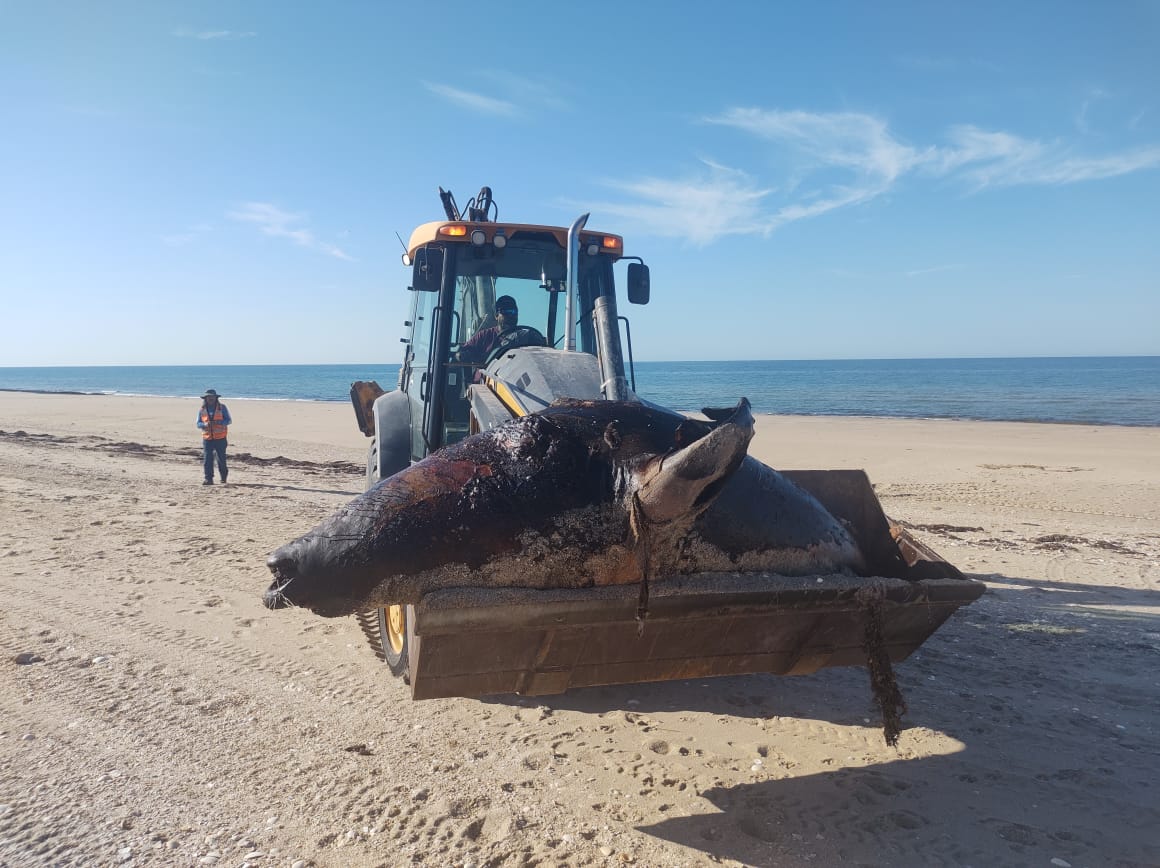
Huge Dead Sea Lion Removed from Beach | |
|
A huge sea lion was found dead and in an advanced state of decomposition, so the situation was addressed and the removal and burial of the animal was coordinated to avoid contamination.
The director of the Federal Maritime Terrestrial Zone (Zofemat) Luis César García González said that the specimen of marine mammal was located in the vicinity between Miramar beach and Encanto beach, in front of the Luna Blanca complex, about 30 kilometers northeast of Puerto Peñasco.
He explained that it was a sea lion weighing about two tons, which had been washed up by the tide, so after corroborating its death and state of decomposition, the event was immediately reported to Profepa. The corpse of the huge sea lion arrived in an advanced state of decomposition and its cause of death is unknown, he said.
Work was carried out at all times in adherence to the protocols for stranded and deceased marine mammals, in coordination with Profepa and the Secretary of the Navy, which authorized the removal of the sea lion from the area where it has washed up.
| |
Fourth of July Weekend Brings 36,000 Visitors | |
|
In the first six months of the year, Puerto Peñasco received over one million tourists, which allowed it to surpass economic benefits of 2 million dollars. The weekend of the 4th of July was celebrated in Puerto Penasco by 36,000 visitors.
"This is a successful weekend for us," said Lizette Ibarra, director of the Convention and Visitors Bureau of this port. "We have noticed that a large number of tourists have come from Arizona and California." In addition to national tourism, there has been an increase in Canadian tourism due to summer vacation season beginning early in that country.
According to Ibarra, the weekend was one of the busiest weekends for them this year with 36,000 people visiting our city. The majority of these visitors were from Arizona and California but they also received Canadian tourists who were also taking advantage of their summer vacation season starting early this year because Canada celebrates their independence day on July 1st.
It's no secret that Peñasco has been on a roll this year in terms of tourism and economic growth, and here are the numbers to prove it:
According to figures released by the OCV, Peñasco experienced a 17% increase in tourist influx over last year—and an 88% hotel occupancy during the weekend of the 4th. This translates into more than 2 million dollars in income, which at today's exchange rate is around 45 million pesos. These numbers are great for small, medium and large companies in town!
When we look back at this first semester of 2023, we see that there were more than one million visitors, with an estimated economic benefit of 67 million dollars and an average hotel occupancy of 39%. These numbers show that this first half of the current year has been better compared to the first half of 2022, when Peñasco received 970,000 tourists with an economic benefit of 53 million dollars and a hotel occupancy of 34%.
| |
Is the Peso About to Peak? | |
|
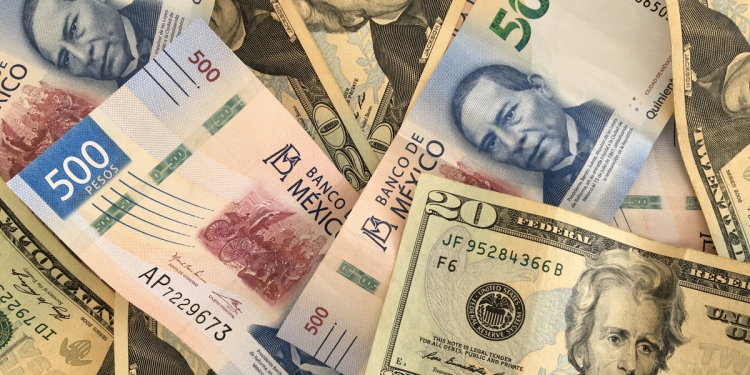
Whether you love it, or are feeling the pain of it, it’s hard to ignore the impact of such a dramatic strengthening of the Mexican peso versus the US dollar.
On Friday, the peso strengthened to 16.62, an almost 8-year high. Year-to-date, the peso has strengthened nearly 15%, and is now almost 25% stronger than levels hit just 18 months ago. Yesterday’s further appreciation was partly due to cooling U.S. inflation, likely indicating that the Federal Reserve might be done with interest rate hikes.
There might be a clue in – of all places – Chile. Chile’s central bank lowered its interest rates by 100 basis points (1.0%) on Friday. A cut of 100 basis points is a very big one (the Federal Reserve tends to move in 25 basis point increments).
This was the first decrease in years, was larger than expected, and a unanimous decision. The move follows a recent cut by Uruguay earlier in the month and leads analysts to believe that this is the start of Latin American countries – which were even more aggressive than the United States in increasing interest rates – to start cutting them.
Mexico increased its rates in the current economic cycle by a whopping 700 basis points (7%) to a current level of 11.25%, before recently pausing. Given that the country’s headline inflation rate has been coming in consistently lower – the most recent reported level was near 4.79% – Mexico’s central bank (Banxico) might be ready to take action to lower these rates. Stay tuned on Aug. 10, when they will hold their next meeting, as this might signal the peak of the peso’s rise against the US dollar.
Monetary policy and exchange rates are not a perfect science, and rarely easy to predict, but the lowering of interest rates in Mexico could begin to slow the peso’s appreciation.
Of course, currency moves depend on many other factors like the relative levels and trends of both interest rates and inflation of other countries, but a reduction in Mexican interest rates could be a game changer. However, the overall trends of nearshoring and economic strength in Mexico will likely keep the peso from a significant weakening.
| |
The Difference Between Tequila, Mezcal, and Pulque | |
|
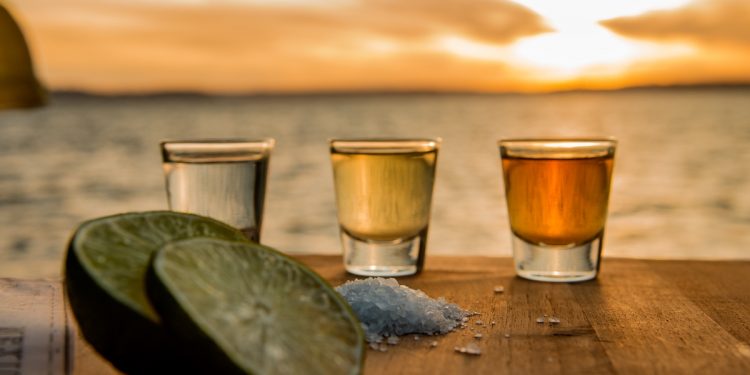
Tequila, Mezcal, and Pulque are traditional Mexican drinks made using agave succulent plant varieties—but each beverage is distinct and offers different taste experiences.
Tequila
Tequila is Mexico’s national drink and one of the icons synonymous with the country. The ‘Tequila’ marque is now protected world-wide and production of the drink is tightly regulated: only a handful of Mexican states have production rights, and the best Tequilas emanate from Blue Agave grown in the rich volcanic soils situated in the state of Jalisco.
Tequila is made by harvesting the hearts (known in Spanish as piñas) of the Blue Agave (ah-gah-veh) plant, slowly baking them in large ovens, and then pressing the pulp into a sweet liquid that is passed through a prescribed distillation process. Afterwards, the Tequila is transferred into specially-prepared wood barrels and left to age. The precise process, barrel type and aging time determines the Tequila’s classification, and strict labeling regulations enable buyers to know what type they are paying for.
The highest quality Tequilas are made from 100% agave, whereas less expensive varieties use a mixture of agave and sugar cane. Tequila can be enjoyed straight or mixed into a variety of cocktails, the most of popular of which is the Margarita.
Mezcal
Mezcal is distilled using a similar production process to tequila but the tastes and nuances of the final blend are distinct. Mezcal, once a semi-obscure cousin to tequila, has recently gained widespread popularity and so the Mexican government acted to regulate its production, helping to improve the quality of mass-produced varieties and thus giving confidence to the wider market.
As with Tequila, Mezcal is produced by baking the hearts (piñas) of the agave; but unlike Tequila, which is made exclusively from Blue Agave, Mezcal may be produced from nearly 30 different varieties of agave. Most Mezcal is produced using the espadín agave, although distillers also blend different varieties of the plant with the intention of creating unique flavors. The drink undergoes an aging process and, like Tequila, an aged Mezcal feels more robust and often smoother on the palate than the younger alternatives. The best Mezcal —like the best Tequila— is made from 100% agave; and like Tequila, less expensive varieties use cane sugars and contain other flavorings.
Mezcal has a distinctively smoky flavor which for many is an acquired taste. Purists assert that Mezcal doesn’t lend itself to being mixed in cocktails, although there are plenty of Mezcal cocktail recipes to try out. Traditionally, Mezcal is taken straight with a pinch of sal de gusano: a condiment made by grinding together dried larvae, chiles, and salt. Mezcal may also contain a ‘worm’ (larvae) at the base of the bottle—this is a ploy concerned only with the product’s marketing and does not alter the taste. Tequila never has a ‘worm’ in the bottle.
Pulque
Pulque is an ancient beverage dating back to Mesoamerican times. Like chocolate in that era it was an élite beverage employed in ritualistic ceremonies and was later used by indigenous tribes as a form of medicinal tonic. While Pulque is also made from the agave succulent (distinct agave and maguey varieties exist), in any case the plant is not baked and distilled; instead, the plant’s sap is fermented.
The sap is extracted by cutting a cavity into the heart of the agave, and the sweet liquid that comes out is called aguamiel (honey water). Once extracted, the sap is fermented to create a milky-colored and viscous beverage which creates a slight foam when it’s poured. Its taste is often likened to fermented oatmeal with a yeast undertone.
Pulque can be taken straight, but is more often served as a long drink —termed ‘curado‘ in Spanish— prepared by blending the fermented sap with any combination of fruit pulps, nuts and spices, or sweeteners. Connoisseurs assert that the blend should only be taken fresh and that you should ask the vendor whether the batch you are being served was prepared today.
Pulque is a low-alcohol beverage (typically 2-6%), whereas Tequila and Mezcal distillations typically contain around 40% alcohol. Beware: notwithstanding its low alcohol content, Pulque can creep-up on you, and a long afternoon whiled away taking this ancient beverage with your companions can leave your head clear and your legs confused when you eventually stand-up to walk.
| |
EU Says It Will Invest in Plan Sonora Renewable Energy Initiative | |
|
The European Union will make a formal decision to invest in Mexico’s Plan Sonora renewable energy initiative, the EU’s ambassador to Mexico said Wednesday.
Gautier Mignot said that investment in the Plan Sonora project, which includes the development of a massive solar park in Puerto Peñasco, will be approved at the EU-CELAC summit to be held in Brussels, Belgium which is being held this Monday and Tuesday.
“A list of investment projects on which we will commit to work together will be approved at the summit. The investment agenda will include Plan Sonora,” Mignot said at a Foreign Affairs Ministry event at which officials presented the renewable energy initiative to over 80 European companies.
The EU ambassador said that President López Obrador and Sonora Governor Alfonso Durazo presented the project to European Commission President Ursula von der Leyen during her visit to Mexico last month.
He said that the initiative — another aspect of which is planned lithium extraction in Sonora — is congruent with the European priority to provide “support for sustainable development and the green transition” in Mexico.
Mignot didn’t say how much the European Union would invest in Plan Sonora or which European firms would participate but noted that EU and Mexican teams are in contact “to define concrete projects.”
Deputy Foreign Affairs Minister Carmen Moreno said that recently appointed Foreign Affairs Minister Alicia Bárcena intended to meet with European leaders in Brussels next week and that she was sure they would talk about Plan Sonora, among other projects.
She noted at the SRE’s Plan Sonora information session that the EU is Mexico’s third largest trade partner and that Mexico is the EU’s second largest trade partner in Latin America.
The renewable energy initiative is “designed to transform Sonora and Mexico into a prosperous and sustainable place as well as improve the conditions … so that more companies expand their operations and investments here”, Moreno said, acknowledging that some firms partially base investment decisions on the availability of renewable energy and the host country’s climate credentials.
Former foreign affairs minister Marcelo Ebrard announced late last year that Mexico would collaborate with the United States to double its capacity to produce renewable energy.
Governor Durazo met earlier this week with Germany’s Ambassador to Mexico Wolfgang Dold, who traveled to Sonora with business-sector representatives to learn more about Plan Sonora.
The business leaders represent more than 2,000 German companies that operate in Mexico, Durazo said, adding that the “objective” of their visit was to “get to know the potential” of Plan Sonora with a view to investing in the state.
Dold said that many German companies are looking to expand their operations in Mexico for a variety of reasons, including the country’s proximity to the United States and the availability of qualified labor.
He also said that the supply of reliable and renewable energy from the Puerto Peñasco solar park, the first section of which began operations earlier this year, was a draw for German companies. Germany has made significant efforts to generate more renewable energy; in the first half of 2023, 57.7% of the country’s electricity generation was renewable energy, a record, according to Germany’s Fraunhofer Institute for Solar Energy Systems.
| |
Local Bread Shops, Neighbors, and Nostalgia | |
|
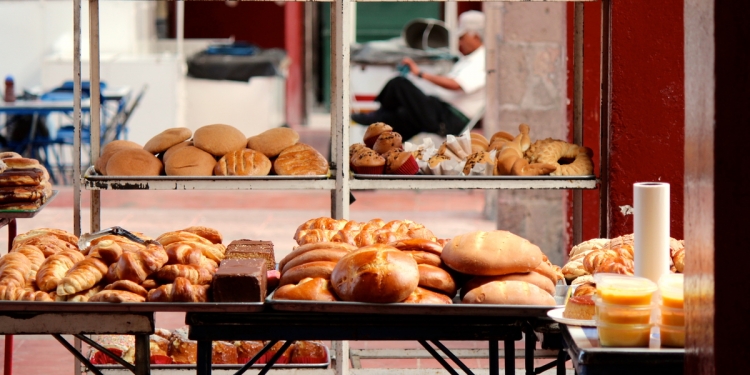
An important part of Mexico’s past and present are its bread shops, which are found on many busy corners of its towns and cities. When you’re hungry, there’s nothing quite as enticing as the smell of fresh baked bread wafting out from the local panadería.
It’s not unusual to see people hanging around inside the shop, metal tray and tongs in hand, waiting for the next batch of hot rolls —oval-shaped bolillos or flat teleras— to be wheeled out from the ovens and tossed into the bins.
Then there are the shelves organized with a large variety of pan dulce —sweet bread— each piece with its own particular name. Among the most popular are chocolate or vanilla coated conchas (shells), the sugar-covered bigotes (moustaches) or moños (bows), the plain mantecadas (cup cakes), ear-shaped pastries called orejas (ears), and the inevitable cuernos (croissants).
Then there are the crumbly cookies called polvorones in various colors, the long, glazed pastries known as banderillas, and chinos, largish pieces of cake baked in wads of thick grease-proof paper, usually sprinkled with small pieces of walnut.
In an era gone-by, the local panadería would often be the focal point of a bustling street corner, and in more innocent times than these, an evening meeting place for young lovers, particularly among the working classes. This was so common that the expression “¿a qué horas vas al pan?” (What time are you going for bread?) became a joke as a chat-up line.
A common and natural next-door neighbor to the bread shop is the small neighborhood grocery store —tienda de abarrotes— selling cold cuts, canned foods, soft drinks and liquor.
Some of these scenes have been replaced over the years by the proliferation of multi-purpose supermarkets with their own bakeries, particularly in the cities, and a number of the old traditional bread shops have closed. Some are unable to compete with the variety of fancy doughnuts, and the slick presentations, or the price advantages of buying in bulk enjoyed by the large chains; and many, if not most of the them, have lost their charm.
| |
The Pastry War’s Costly legacy: Debts and Loss of Mexican Territory | |
|
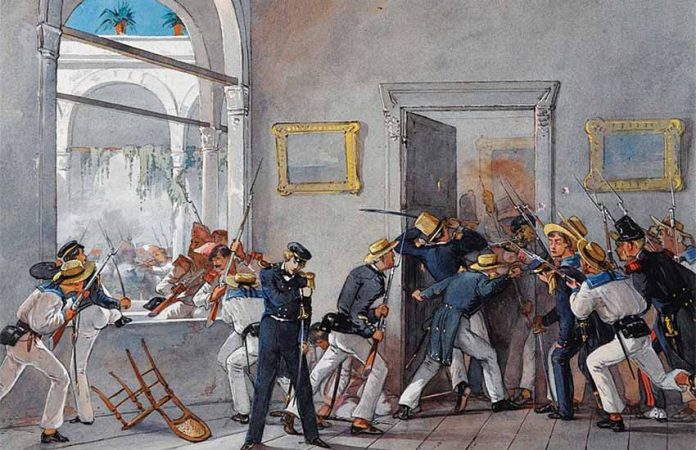
Though usually played down in Mexican historical narratives in light of the era's more dramatic events, the Pastry War was a sign of things to come in Mexico's difficult nineteenth century. (François d'Orléans, prince de Joinville, "Mexique 1838, Combat de Vera Cruz")
Though the name “Pastry War” may evoke images of bakers hurling eclairs and ganache at each other, it was actually something much more serious: the first French intervention in Mexico.
Called the Guerra de los Pasteles by Mexicans and the Guerre des Pâtisseries by the French, it was a minor episode in the long history of Mexico but one that had serious consequences.
The first fleet sent by Louis Philippe was defeated by yellow fever; it was a second, stronger fleet, led by Rear Admiral Charles Baudin, that actually attacked Veracruz in November 1838. (Théodore Gudin, Expedition of Vice-Admiral Baudin to Mexico [1839])
The Pastry War was short-lived, lasting approximately five months, from November 1838 to March 1839. But it began with an incident that occurred 10 years earlier. By 1828, Mexico had sunk into chaos following independence from Spain in 1821.
The capital had become lawless, with rioting and looting rampant. Elections were fraudulent, and the government was corrupt and in turmoil as presidents came and went abruptly, ousted by coup d’etats and executed or sent into exile.
The Mexican War of Independence was quite destructive, leaving up to half a million dead and greatly weakening the country’s productive capacity. The independence factions were also bitterly divided, making the 1820s and 1830s a time of major political upheaval and civil unrest. In Mexico’s first 20 years of independence alone, the position of head of state switched hands more than 20 times.
The treasury was in shambles, and Mexico had longstanding debts to a number of European countries, including France.
Capturing the Mexican officers Santa Anna and José Mariano Arista was one of the central goals of the French force that stormed Veracruz on the morning of December 5, 1838; they caught Arista, but Santa Anna escaped. (Petros Pharamond, “French troops assault a Mexican convent, attack on the house of Arista”)
In 1828, a man identified by history only as “Monsieur Remontel” demanded reparations from the Mexican government, claiming that drunk military officers had looted and destroyed his pastry shop in Tacubaya, at the time a quiet town on the outskirts of Mexico City.
Unable to secure compensation from the government, Remontel appealed to the French charge d’affaires, who took his case to King Louis-Philippe I in 1837, along with the grievances of other French citizens.
Although historical accounts focus mainly on the pastry shop episode, tensions were already running high between France and Mexico in the 1830s over a series of abuses committed against French citizens in Mexico, including French merchants having had their businesses destroyed in the Parián Riot of 1828, in which a mob of 5,000 attacked and looted a cluster of luxurious shops in Mexico City’s Parián market in the Zócalo main square.
The name “Pastry War,” coined by Mexican and European journalists at the time, conceals this context; historian Javier Torres Medina writes that it gives “a sense of ridiculousness and absurdity to a diplomatic conflict that was in fact very serious and complex.”
The French king took the opportunity of addressing his subjects’ grievances to demand that Mexico finally repay its debt to France. Louis-Philippe issued an ultimatum to then-President Anastasio Bustamante y Oseguera, demanding 600,000 pesos in reparations. Bustamante ignored the demand; Mexico could not afford to pay it anyway.
The French monarch insisted on payment and sent warships to blockade the port of Veracruz, Mexico’s main Gulf port, to force Mexico’s hand. Negotiations began, and at one point, Mexico offered to pay the 600,000 in installments, but refused France’s other demand: that France have access to retail markets in Mexico, something not allowed at the time.
After months of diplomatic efforts broke down, in November, France’s fleet began shelling the fort of San Juan de Ulúa, which guarded the entrance to Veracruz. Mexico declared war and sent troops, but the French captured the city.
This defeat created an opportunity for one of the major players of the time: Mexico’s former president Antonio López de Santa Anna. Held responsible by the Mexican public for the loss of Texas in the Texas Revolution (1835-1836), Santa Anna had been living out his retirement in disgrace. He rushed to Veracruz to lead defensive troops. The Mexicans lost the battle, but Santa Anna emerged as a national hero. The leg he lost in the fighting was buried with full military honors.
With its major port out of commission, Mexico was forced to smuggle goods out of Corpus Christi in the Republic of Texas, which hadn’t yet been incorporated into the United States. Distrustful of Mexico and wanting cordial relations with France, the United States sent the USS Woodbury — a 120-ton topsail schooner — to join the blockade.
When Mexico then sent soldiers to Corpus Christi Bay to secure their supplies, Texas raised a large militia and repelled them.
After several months of poorly funded battle, Mexico finally relented and, through British diplomatic channels, agreed to pay France’s 600,000 pesos in installments. In March of 1839, the French withdrew from Veracruz.
Soon afterward, Bustamante’s government collapsed, and Santa Anna — his prestige and prominence restored during the war — assumed the presidency in the interim before the next election could be held; it was his fifth time serving in that office.
Though relatively brief, the Pastry War was financially costly for Mexico. It added another 600,000 pesos to Mexico’s mounting debt with France, and the government had to fund the rebuilding of the Veracruz harbor. It had lost months of tariff revenue from its most important port, further weakening the country financially before the Mexican-American War (1846-1848). This lack of money forced the government during that war to accept a peace compromise in which it ceded half of its territory to the United States.
Mexico’s debts and diminished stature would also eventually make it a target for a second French intervention — which culminated in France installing Archduke Maximilian of Austria as the Emperor of Mexico in 1864 — giving France a foothold in the Americas and access to Latin American markets, until Mexico executed Maximilian in 1867 and drove the French out for good.
| |
Meet the Sonoran's Family of Beachfront Resorts | |
Mexico’s Mighty Nopal is a Prickly Culinary Delight | |
|
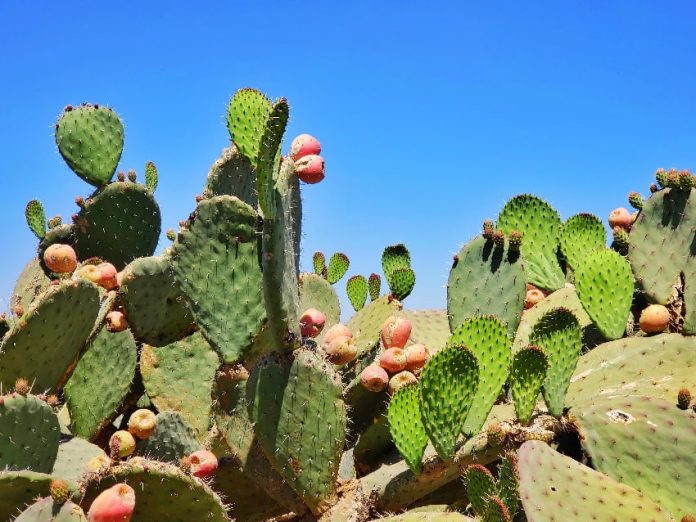
For centuries, the nopal cactus – of the opuntia genus, also known as prickly pear – has symbolized resilience and adaptability, much like the Mexican people. In exploring the wisdom behind Mexican cuisine’s tapestry of seemingly modest ingredients, the mighty nopal is not to be missed!
Indigenous civilizations revered the cactus, recognizing its nutritional value and healing properties. It was also considered a sacred plant, appearing famously in the legend of the founding of Tenochtitlan by the Mexica (or Aztecs). The story says that an eagle devouring a snake while perched on a nopal was the sign that the Mexica were seeking to know where to build their city, and the image became the national coat of arms.
What is nopal’s nutritional profile? The nopal’s composition is primarily water, giving it a refreshingly light and crisp texture. With a low caloric value of a mere 27 calories per 100 grams, it also boasts minimal digestible carbohydrates, making it a low-glycemic index food.
Nopal pads are also rich in soluble fibers, like pectins, gums, and mucilage. As a result, consuming nopal has been associated with a sensation of satiety, which aids in weight management and curbs excessive food intake. But wait, there’s more! The nopal’s fiber content can also contribute to regulating blood glucose levels.
The use of nopal in Mexican cuisine stretches back to pre-Columbian times, when it served as a dietary staple for the ancient Mesoamericans. Its versatility and abundance made it a vital ingredient, contributing to the sustenance and survival of these communities.
Fast forward to the present day, and the nopal’s culinary prowess has only grown stronger. In kitchens across Mexico, from bustling taquerías to high-end restaurants, the nopal is celebrated as a versatile and unique ingredient. Its tender pads, stripped of their spines, are sliced, diced, grilled, and sautéed to create a myriad of culinary delights.
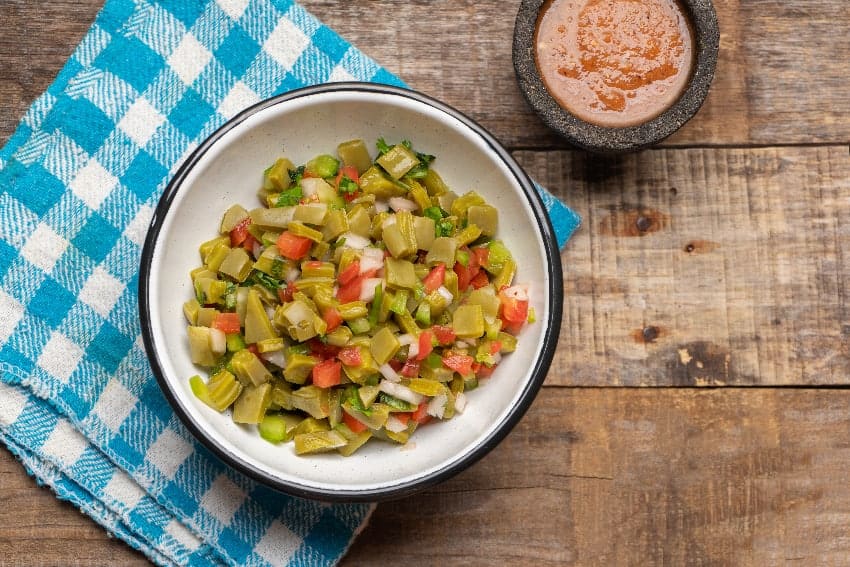
The quintessential dish of nopalitos is a chilled salad made of cooked chopped nopal, tomatoes, onions and cilantro that is especially welcome during hot summer months.
Salvador Novo, in his fascinating book “Cocina Mexicana o Historia Gastronómica de la Ciudad de Mexico” published in 1967, writes about the nopal, which is translated below:
“Let’s think about the nopal. Let’s approach the contemplation of this strange desert plant that seems to greet passersby, or show them the path. It was born who knows how: sticking out its flat hands, an oval flat face from which one more sprouts, and another from this one, and another. All defended by sharp thorns geometrically installed on thick pads, and yet they are smooth under the numerous violent needles.
Nobody waters it, nobody cultivates it. It sips vital juices from the driest earth, from its rock throne. And one fine day, small red fingers sprout from those broad, flat hands: prickly pears, red as men’s hearts; sheltered, wrapped in the peel, where they briefly repeat, like a soft rhyme, the hostile geometry of their cradle’s thorns, their sustenance.”
So, my friends, let us (carefully) embrace the prickly nopal, and allow it to lead us to a delicious world of good health.
| |
|
Recipe:
8 medium-sized tender nopal pads
1/2 white onion
4 small tomatoes
1 bunch of fresh cilantro
1 tablespoon of apple cider vinegar or fresh lime juice
1 teaspoon of salt and 1 teaspoon of pepper for seasoning
Cut cactus pads into 3/4-inch pieces. Rinse them 2-3 times under running water.
Place the nopal pieces in a medium saucepan with enough water to cover them and a tablespoon of salt. Bring to a boil. Reduce heat to a simmer and cook uncovered for 20 to 25 minutes or until tender but still crisp.
Drain and let cool.
Place the cooked nopalitos in a large bowl, add diced tomatoes, chopped onion, cilantro, a pinch of dried oregano, salt, and pepper. Mix to combine all the ingredients. Add a tablespoon of lemon juice or apple cider vinegar and mix evenly.
Refrigerate for at least 2 hours to allow the flavors to blend. Serve chilled.
| |
The Five Vowel Sounds in the Spanish Language | |
|
One thing that makes Spanish conversation quite easy for the beginner is that there are basically only five vowel sounds
Vowels don’t change their sound in Spanish. By themselves, Spanish vowels never really alter their sound, unlike English vowels, which, to the native Spanish speaker can be quite baffling. Pronunciation of words like determine, waffle, sausage, and names like Ian and Graham, as well as wind (the kind that blows) and wind (as a watch), read (present) and read (past), and differences in the pronunciation of words such as rough, bough, though, thought and thorough, are almost anathema to the logical Spanish mind.
Vowels joined together. Even when two vowels together join to make a single sound, that sound is essentially a combination of the two vowels’ individual pronunciations.
Here are some examples:
Amainar —to wane or diminish— has the regular ‘a’ sound, (a as in cat) in the first syllable, while the ‘ai‘ is pronounced like the long i in English, as in high.
If you join the short ‘a‘ and the Spanish i (pronounced as the long ‘e’ in English—like the first ‘e’ in Peter) you get a sound very similar to the English long i. It requires a bit of squashing them together as two vowels are made to fit the space of one, but the basic sounds are kept.
The ‘au‘ in Spanish is pronounced like the ‘ou’ in the English ‘out’ and is a similar combination of the Spanish ‘a’ sound and the Spanish ‘u’ – which is like the English ‘u’ in flute.
The ‘o’ in Spanish is pronounced as the short ‘o’ in dog. The ‘o’ combined with ‘i’ or ‘y’ is pronounced as the ‘oy’ in boy, and presents little difficulty.
‘Ou’ in Spanish only occurs in foreign words —for example ‘voucher’— and its pronunciation is usually as close as possible to that of the foreign word. the Royal Spanish Academy, the Real Academia or RAE, actually spells it ‘váucher.’ More common in Spanish is cupón or vale.
This holds true for other combinations of strong and weak vowels joined to form a single syllable.
The ‘sharp’ E in Spanish. There is, however, one subtle variation in the sound of the Spanish ‘e’, which is slightly sharper at the end of a word than at the beginning or in the middle.
While the correct pronunciation of the Mexican currency —the peso— is closer to PE’-soh than PAY’-soh, the sound of the ‘e’ at the end of a word (i.e. not followed by a consonant) is slightly closer to ‘ay’ without being quite the same. Here are some other examples to illustrate the point:
Perderé — (I will lose) – is approximately pair-de-RAY’.
Depende — (it depends) – roughly de-PEN-day.
Impenetrable — EEM-pe-ne-TRA-blay.
| |
Sonoran Sales Group - The OFFICIAL sales team for Sonoran Resorts!
We are Rocky Point's one and only exclusive and dedicated team who have always, and will always, sell Sonoran Resorts and ONLY Sonoran Resorts!
If you are looking for a team of real professionals who specialize in Puerto Penasco's best family of "True Beachfront" resorts, you've found us, and we are here to serve you.
Whether Buying or Selling, no one can serve you better when it comes to the Sonoran Resorts. We have been here since the beginning, and we will be here for you when you need us.
Our In-House closing team will make things happen quickly and professionally and we will save you money. Our attorneys are on salary and no additional attorney fees are charged to our clients. Loyalty to the Sonoran Resorts Sales Team is both appreciated and rewarded!
We don't just sell the Sonoran Resorts, we ARE the Sonoran Resorts. We work directly with the Developers, the HOAs, and the Rental companies.
We really can help you in ways that no one else can.
| |
Just for the fun of it... | |
Jim Ringquist
rockypointjim@gmail.com
| | | | |