|
Sonoran Resorts
January 2024 Newsletter
| |
|
Happy New Year to everyone! - From myself, our new Sonoran Star Resort, our sales staff, and the entire Sonoran Resorts family. We wish you all the best in the New Year! And, just where did 2023 go? It seems like just yesterday that I was trying to get used to putting that new year on everything and now it's time to change it again. I say it often, but I guess that time flies when you're having fun :)
We had another very good year in 2023 and I have no doubt that this year will be even better. Rocky Point continues to attract new admirers and the Sonoran Resorts continues to stay very busy and always on top.
There is a lot to talk about this month. Obviously, the closure of the Lukeville border is a big inconvenience and it has made this normally slow time of the year even slower. News and social media, as usual, beat us up, presumably for attention and ratings, but please never believe everything that you read. There are quite a few people who have gone through Yuma and San Luis, and though it takes longer, the drive is not bad. I know because I did it myself before Christmas. It sounds like the migrant problem is being “handled” so with any luck, the Lukeville border will be open again sooner than later. If you are a proactive lover of Rocky Point, PLEASE contact your local, state and federal representatives to demand that they open the border ASAP.
I always try to look at a situation in a positive light, and in this case, my take is that the closure happened during the slow tourist season – much better than happening during the high season. And, the work on the border crossing upgrade and the addition of the SENTRI lane on the Mexican side are progressing much faster than they would have if there was border traffic. This will make crossing back to the USA easier in the future. I did look into getting a SENTRI pass, and it sounds like it can take 10-12 months, so it might be a good idea to get started now if you’re a regular Rocky Point visitor.
On the not so good side of things, the businesses and the local population here are really starting to suffer. This town lives on tourism and even during the slow season things are usually much busier than they are since they closed the border. Already, some restaurants and businesses have closed and others have had to reduce their staff. Tourism money that comes into town spreads through the entire economy and population here, so when tourism slows, everyone feels it. That said, we will bounce back better and stronger than ever in the near future. I have total faith in this beachfront town – and I love living here.
The Sonoran Star construction progress continues and is well ahead of schedule. We are finally finished with the extensive foundation work and from now on things will go vertical at a good pace. Just so you know, that lit up crane on the beach is our new Sonoran Star Resort. Right now it is about 5 stories high and within the next week or so, it will be going up to more than 10 stories high. Then, you’ll definitely see it from all over town. Please stop by to check out our fabulous new resort. You will be impressed, I promise!
Our Food Drive has officially ended and we will be delivering the donated food within the next couple days. Unfortunately, we didn’t have many people this year so we didn’t have many donations. But, thank you to everyone who donated. Whale watching season is here again and the tours will be going out soon. Shrimp season is over, but there are still plenty of delicious shrimp to be enjoyed.
Other than the cold front, and some heavy rain coming through a couple weeks ago, this winter has been very mild. Of course, mild for us means temps in the 60's or 70's. Some may consider that downright balmy when comparing the sub-zero temps that much of the USA sees every winter. Well, all I can say is that you can come here whenever you've had enough of those cold winters where you're living now. Puerto Penasco will be happy to have you and you'll be glad that you made the move. I moved here about 16 years ago and have never regretted it for a minute.
Enjoy this beautiful month, come to Rocky Point if you can, and if you need anything don't hesitate to ask. Let me put my experience and expertise to work for you, and remember, as always, I've been here full-time for 16 years and I am more than happy to help you with whatever you need, whether Sonoran Resorts related or not.
Just give me a call or send me an email any time and I will do my very best to help you. If I can't help you myself, I'm sure that I can point you in the right direction and help find you someone who can.
Besides the links below, you can our listings at the following:
www.sonoranstar.com
www.sonoranresorts.mx
www.sonoranresortsresales.com
AMPI Puerto Penasco MLS
Point 2 Agent Multinational MLS
Pick up a handout at any of our Sonoran Resorts
Scottsdale Barrett Jackson Show
Various Real Estate and Trade shows in AZ, NV, and CA
| |
|
IMPORTANT: Some email providers cut this newsletter off before the end. If that happens on yours, please scroll to the bottom of this email and click "View Entire Message" to see the entire newsletter.
Sincerely, Jim Ringquist
Broker/Sales Director
Sonoran Resorts Spa - Sea - Sun - Sky - Star (coming soon)
602-476-7511
rockypointjim@gmail.com
www.SonoranResorts.mx
President/Volunteer
Tourist Assistance Unit Advisory Committee (Tourist Assistance Police)
602-774-1777
www.touristassistancerockypoint.org
touristassistancerockypoint@gmail.com
I hope that you enjoy my newsletter and continue to recommend it to your friends. Please feel free to give me thoughts, suggestions, or ideas for future newsletters. Puerto Peñasco is my home and I love to share the news and goings-on with you.
I do get email requests each month asking me to add someone to my list. While I certainly don't mind doing so, all you really need to do is click Sign-Up for Newsletter below, add the email address, and it will happen automatically. Not to worry - I will not spam you or share your email address, and you will only receive one email-newsletter each month on the 1st.
| |
|
Exclusively Serving the Sonoran Resorts
Buy & Sell Direct and SAVE!
24 Years Experience on Sandy Beach
Four Fully Completed Beachfront Resorts
We Have Earned Our Stellar Reputation
Your Only Logical Choice when Buying
or Selling a Sonoran Resorts Condo!
| | | |
Resale Listings at the Sky, Sun, Sea, Spa | |
Progress Continues on the New Sonoran Star Resort! | |
Food and Drink at the Sonoran Sky Resort:
| |
Lukeville/Sonoyta Border Crossing Closed for Nearly a Month |  | |
On December 4th, the U.S. Customs and Border Protection (CBP) announced the indefinite closure of the Lukeville port of entry, the main crossing for Rocky Point. This decision, prompted by the need to redirect agents to handle the growing influx of migrants, led Arizonans to seek alternative entry points, resulting in longer journeys. The closure sparked immediate controversy, with some interpreting it as evidence of a mismanaged Southern border.
The closure's impact reached beyond inconvenience, prompting responses from various quarters. News channels covered the lines of migrants near Lukeville, and political figures, including Governor Katie Hobbs and Senators Mark Kelly and Kyrsten Sinema, issued a joint statement denouncing the closure as an "unacceptable outcome." They highlighted the destabilization of the border, risks to communities, and disruptions to trade and tourism, ultimately harming the economy.
With a population of around sixty thousand, Rocky Point draws two million visitors annually, many from Arizona. The Lukeville crossing is also vital for students and workers living on both sides of the border. Nélida Barajas, the executive director of CEDO, an environmental nonprofit in Puerto Peñasco, emphasized the intricate economic and social ties between border communities, expressing shock at the closure.
The situation underscores broader issues of understaffing at CBP. Despite an ever increasing number of migrant encounters, the number of agents has remained constant. The reassigned agents from Lukeville make up less than one percent of the Border Patrol agents assigned to the Tucson sector, raising questions about the effectiveness of the decision.
As of now, the reopening date for the border crossing remains uncertain. Ongoing talks between the Mexican and U.S. governments offer hope for resolution soon. Despite the challenges, the closure occurring during Rocky Point's slow season mitigates its immediate impact. Additionally, it accelerates the implementation of a SENTRI lane on the Mexican side, offering a positive outlook for future travelers. The expectation is that Rocky Point will swiftly recover upon reopening, with the closure becoming a distant memory by the upcoming high season.
| |
Rocky Point Seeks Emergency Petition | 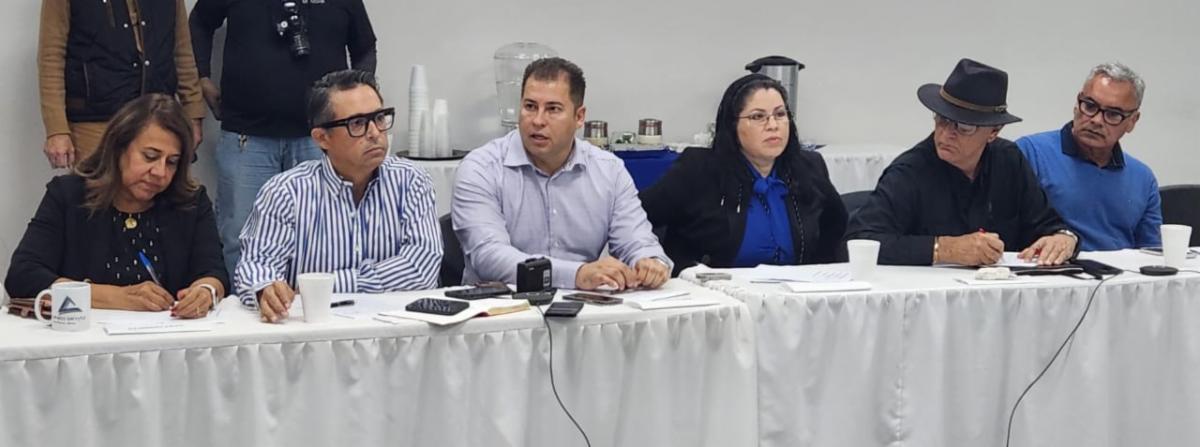 | |
It is estimated that after more than three weeks of the Sonoyta-Lukeville border port being closed, Puerto Peñasco has had an economic loss estimated at 34 million dollars, that is, around 578 million pesos, and for this reason the city will request a declaration of economic emergency for the municipality.
This was agreed in a meeting including representatives of various organizations and the Municipal Government, in which it was also decided to continue pushing for the reopening of the border since more than 80,000 people from Sonoyta and Puerto Peñasco are being affected.
Present at the meeting were the directors of the Convention and Visitors Bureau, the Sonora Hotel and Motel Association, the Mexican Association of Real Estate Professionals (AMPI), the National Chamber of the Restaurant Industry (CANIRAC), the National Chamber of Commerce (CANACO) and Mayor Jorge Pivac Carrillo.
Héctor Vásquez del Mercado, director of the OTC, stated that, from December 4 to date more than 14 million dollars from the tourism industry have been lost, and among all sectors more than 20 million dollars have been lost.
He explained that this destination has 7,500 rental rooms (of which less than 5% are rented) which affects 2,700 direct jobs and 10,800 indirect jobs, representing a direct impact of nearly 70% of the population of this city.
Óscar Palacio Soto, vice president of the Sonora Hotel and Motel Association, stated that what was thought to be a closure of hours or days at the Sonoyta-Lukeville port has escalated to the point that it is causing real harm to the people of this city. He stated that this means a severe economic crisis that is affecting not only tourism entrepreneurs, but each and every one of the sectors of Puerto Peñasco, as demonstrated by the figures presented in less than one month of closure.
Precisely for this reason, he said, he is considering submitting a request to declare an economic emergency for the municipality of Puerto Peñasco to generate fiscal and other help from the three levels of government, while continuing to insist on the reopening of the border.
| |
Final Scenes of new Movie "Malcolm" Filmed in Rocky Point |  | |
Phillip Penaza posted on social media:
What an amazing experience. There are too many to thank, but let me start by thanking the town of PUERTO PENASCO as well as its Mayor, Jorge Pivac Carrillo who was more then helpful and made time for me as well as my crew, all during the time when the border had just closed and his main objective was to get it reopened.
Rocky Point is a hidden jewel. The people are more than kind and helpful. The food is amazing and the accommodation is reasonable. I truly fell in love with this place a long time ago. While filming for this intense feature it took me to unbelievable locations, like Atlanta Georgia, Las Vegas, Phoenix Arizona, Palm Springs California, Augsburg Germany, Saudi Arabia Dubai and Abudabi.
I concluded the film here right here in Mexico. It made me not only happy but proud. Mayor Jorge Pivac Carrillo and Phillip Penza will work together in bringing The Red Carpet Event to Rocky Point Mexico 1st.
That is a promise from me Phillip Penza
| |
Rocky Point Streets Recover after Challenges from Wind, Rain, and Cold Front |  | |
The impact of rain and wind resulting from cold front #19 on December 22nd prompted emergency efforts to restore public services and address the flooding of main streets and avenues in Rocky Point.
According to an official statement, the Puerto Peñasco government, involving entities such as Civil Protection and Firefighters, Municipal Public Security, OOMAPAS, Public Services, Zofemat, Auxiliary Tourism Unit, and others, actively responded to the contingency and continued to do so throughout its duration.
To address the flooding, temporary closures of affected streets and avenues were implemented to facilitate drainage and desilting work. Additionally, reinforcement of containment walls had taken place in low-lying areas, particularly in the Brisas del Golfo neighborhood where the most flooding occurred.
High-water levels prompted supervision and work at the main pumping station, while preventive patrols were conducted in key neighborhoods and city roads. Fortunately, no individuals or families seeking shelter at the Fire Station were reported.
Access roads to Rocky Point, particularly on the Puerto Peñasco-Caborca highway, experienced flooding at crossings, urging caution for drivers. The Puerto Peñasco-Golfo de Santa Clara highway was temporarily closed due to rain as well.
| |
RCPM January Jam will be Postponed | |
|
Hello Peacemakers!
Thanks all for your patience while we've worked through options regarding the border. Today, we're announcing the postponement of January Jam. We're also announcing a Save the Date for President's Day Weekend, to be held February 15-18, 2024.
Why? Several reasons. While we understand Puerto Penasco is OPEN for business with two border crossings available at San Luis and Nogales, most of the feedback received from ticket buyers over the last 8 days state the Lukeville crossing is essential to attending the event.
Another reason is that there are property management companies that have a 30-day cancellation policy which only allows credit for cancellations within 30 days. With this announcement, those who have made reservations can cancel and get 100% of their money back before the 30-day deadline early next week.
Lastly, there is a lot of disinformation surrounding this issue. We're hoping this decision allows the focus to be on the issues related to the closing and not speculating on this, that and the other. Many have expressed writing leadership on both sides of the border - we think that's a good place to start.
What will February look like? Just like January but with this current mess hopefully behind us and even more fun. We'll confirm band lineups once we're able to hear back from everybody but plan on kicking off Thursday, February 15 at JJ's Cantina with RCPM and partying our way through the holiday weekend. Tickets will go on sale as soon as we hear the news of the re-opening.
Thanks in advance for your support.
RCPM
| |
The January 6th Mermaids Market has also been cancelled, but will return on January 20th and the normal dates for the future. Much to see and do there and if you have not been, you definitely need to go. | |
New City Landfill Construction to Begin This Month | |
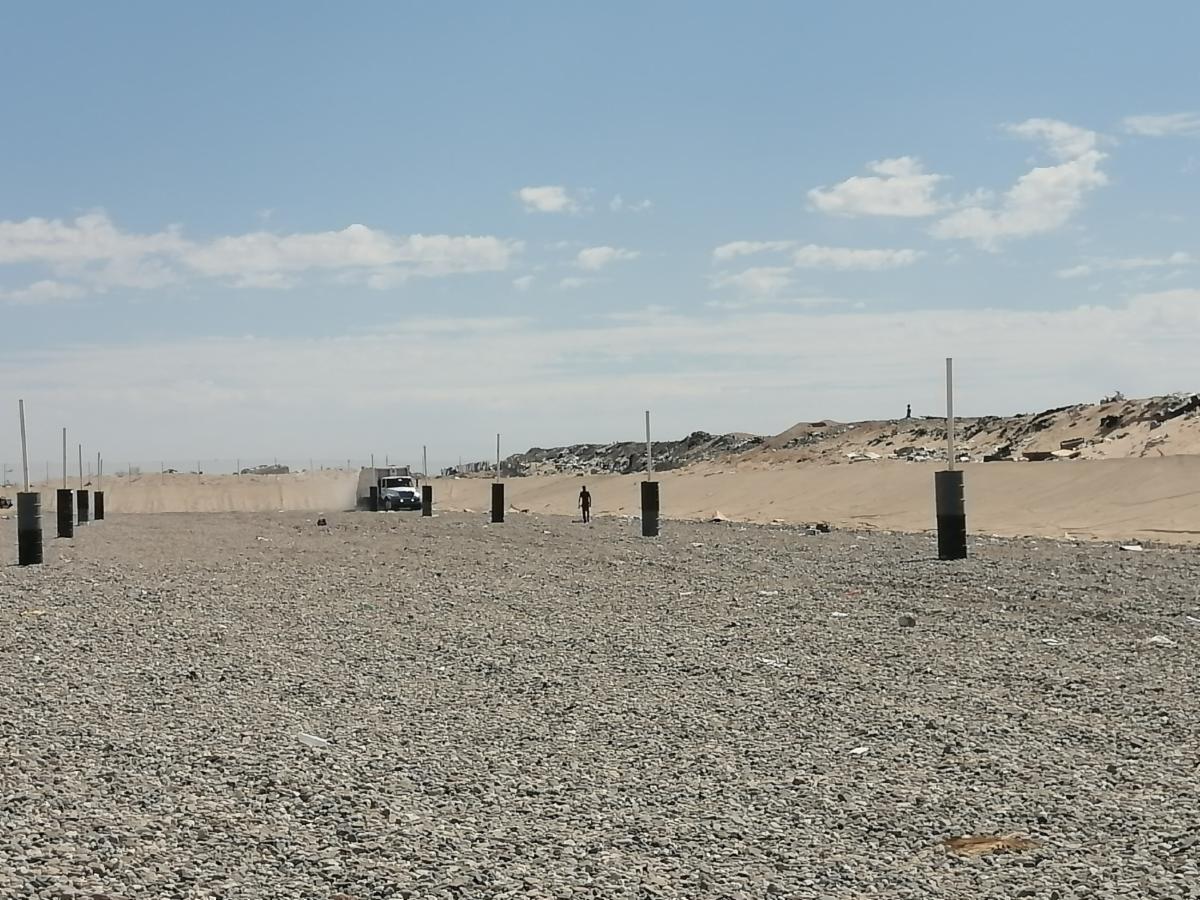 | |
The construction project for a new sanitary landfill in Puerto Peñasco has been successfully approved, and work is set to commence this month, according to Jorge Pivac Carrillo.
The Municipal Mayor emphasized the excellent coordination between the municipal government, the state government, and private initiatives to initiate work on the city's new waste disposal site promptly. The project involves an investment of just over 30 million pesos.
Pivac Carrillo noted that the documentation for the project is nearly finalized, with only a study pending. This study was requested by the Commission of Ecology and Sustainable Development of Sonora (CEDES) concerning the bird population in the vicinity, and as the landfill will be located near the airport.
Pivac Carrillo highlighted that the City Council has already allocated and donated 20 hectares of land for the new landfill, situated 10 kilometers from the city.
Since mid-August, the new waste collection cell has been operational, minimizing the risks of fires, and the closure and encapsulation of the old open-air dump are well underway. The completion of the new landfill aims to provide a final solution for the proper disposal of daily generated waste.
Pivac Carrillo affirmed the commitment to expedite actions to ensure the appropriate disposal of garbage generated by Puerto Peñasco, avoiding the previous practice of leaving waste in the open, which led to issues like fires and inconveniences for the citizens.
| |
How You Can Help Barb’s Dog Rescue While the Border is Closed | |
 | |
The closure of the Lukeville port of entry is significantly impacting businesses and property owners in Rocky Point, bringing tourism to a standstill. While it's still possible to drive to the beach town, the detours now take longer.
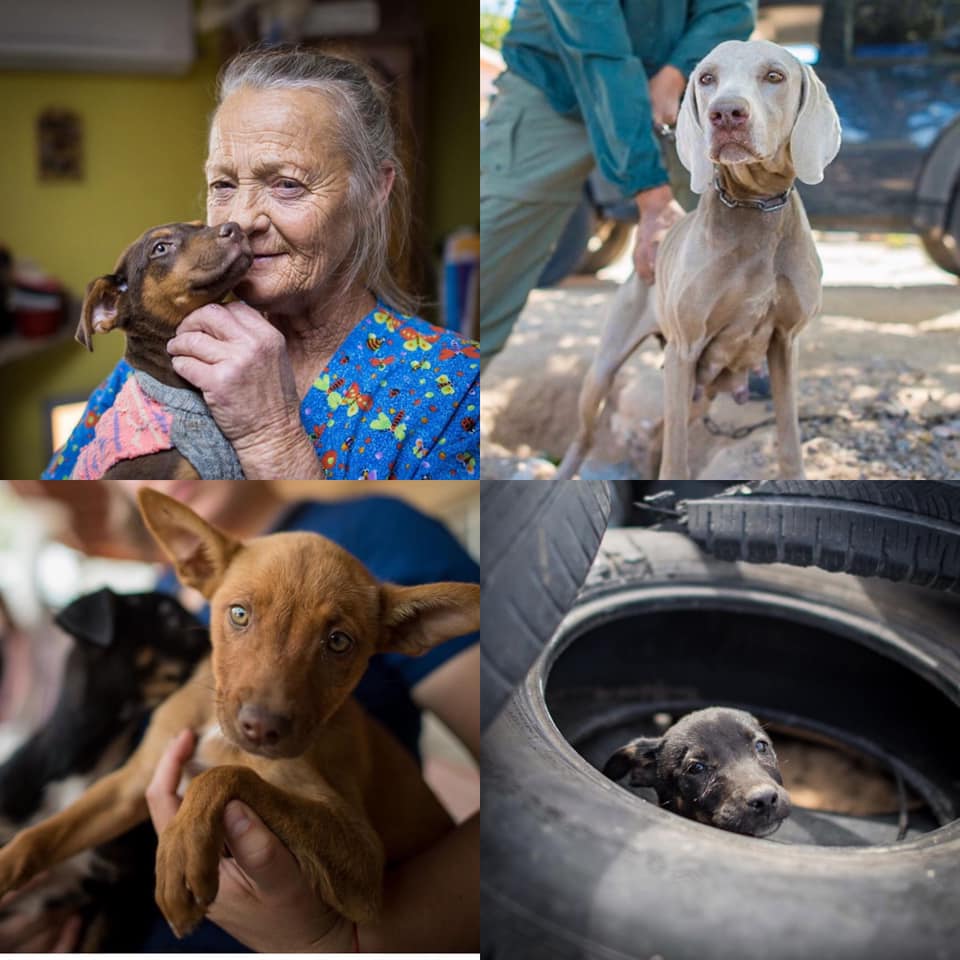
One affected entity is the non-profit organization "Barb’s Dog Rescue," long known for helping rescue dogs in Rocky Point. The organization was started by Barbara Murmaugh many years ago. Unfortunately Barb has passed away, however, and staff and volunteers are continuing her mission.
Gina Benner, the current CEO, expressed major concerns, particularly about the dwindling supply of dog food. Most of the non-profit's donations come from tourists passing through the town of Why. Benner mentioned a significant drop in daily drop-offs, and the organization is now in urgent need of food.
Additionally, Benner highlighted the challenge of finding homes for the dogs, as tourists are the primary adopters. Currently, they are overcapacity with about 450 dogs, while the shelter is designed for around 300. The rescue reported no adoptions over the weekend on its Facebook page.
Barb’s Dog Rescue collaborates with Arizona rescues, such as Halo Animal Rescue, which typically takes in around 30 dogs a month. However, this has been put on hold until the Lukeville crossing opens.
"I’m heartbroken," Benner expressed. "We have to get through this. We don’t have a choice. We will come out on the other side of this, and we will be OK, but my heart hurts for the staff. My heart hurts for the dogs who are so used to having visitors."
For those willing to help, Benner recommends making monetary donations online to facilitate purchasing dog food in Mexico. Donations can be made by visiting their website: https://www.barbsdogrescue.org/donate.
If you're driving to Rocky Point through Yuma, you can also pick up food at ReMax Territory located at 1706 S. 4th Avenue in Yuma, open Monday through Friday from 8 a.m. to 5 p.m.
| |
Target Rumored to be Coming to Mexico |  | |
Heard any rumors about Target opening in Mexico? They’ve been swirling the past few weeks, ever since the U.S. retail giant posted six new job listings for positions in Mexico on LinkedIn.
The advertised roles, all based in Mexico City, suggest “a strategic push into the Mexican market,” according to Mexico Business News, which noted that the positions suggest Target is working on “establishing connections with national and local businesses before physical store openings.”
The positions are labeled as “on-site” and most involve finding, sourcing and managing vendors and manufacturers. “As Senior Responsible Sourcing Manager, you will be part of the team that is developing the responsible sourcing oversight function that allows us to be a progressive force for good,” reads one job description.
The potential move by Target comes amidst a nearshoring boom in Mexico, with companies relocating to Mexico to be close to the United States market.
For Target, establishing a distribution center in Mexico could streamline international supply chains, reduce import and export costs, and enhance speed and efficiency in product delivery, Mexico Business News noted.
Target posted the want-ads three weeks ago and listed only “Mexico City Metropolitan Area” as the job location, but the store hasn’t confirmed anything or issued any further clarifying information.
Target is “one of the great attractions for Mexican tourists who go shopping” in the United States, the newspaper Milenio wrote. “From stationery to clothing, it offers a wide assortment of products.”
Target was founded in Minneapolis, Minnesota in 1962 and is the No. 6 retail brand in the United States. All of its 1,956 stores are in the United States, after a 2013 attempt to expand into Canada with over 100 stores went belly up by 2015. The stores in Canada were often outside favored shopping areas and didn’t match the customer experience in the United States, according to Harvard Business Review.
| |
Recycling is Alive and Well in Rocky Point | |
|
In November 2009 a team of 3 people, a scale, and a car to transport recyclable materials was the beginning of actively recycling in Rocky Point. Though most people still do not know that the company exists, they have been growing steadily year by year. The main collection materials are cardboard and plastic (PET specifically). The company is Soporte Ambiental Reciclados de Puerto Peñasco.
As the small company became known in the Municipality and surrounding areas, they began to collect other plastics and materials. The need to expand the team was recognized and the company grew as needed in order to keep up.
In February 2010, an agreement was established with the Local City Council and the Department in charge of garbage collection of the Municipality to begin the purchase of recyclable material from the Sanitary Landfill. With this achievement it was possible to offer jobs to 10 more people working in collection and separation of the materials from the landfill.
Today a wider range of materials are collected, including Cardboard, Paper, Various Plastics, as well as Metals and Scrap. There is an internal work team of 9 people, 3 pressing machines, 2 cars, 1 cargo truck and 3 trailers for the transfer of materials, ENVIRONMENTAL SUPPORT is the source of employment for more than 30 people who are dedicated to the collection and separation of material in the Municipality and its surrounding areas.
What started as a small project is currently a solid and stable company, which is advancing little by little with great enthusiasm and always putting environmental responsibility first. Please consider donating your recyclable materials to them directly.
They can be found at Blvd. Josefa Ortiz de Dominguez #285 Col Luis Donaldo Colosio, Puerto Peñasco, Mexico, 638 102 0097, or email soporteambientalpp@hotmail.com
| |
The Sweet Rosca de Reyes, a Flavorful Dive into Mexican Traditions | |
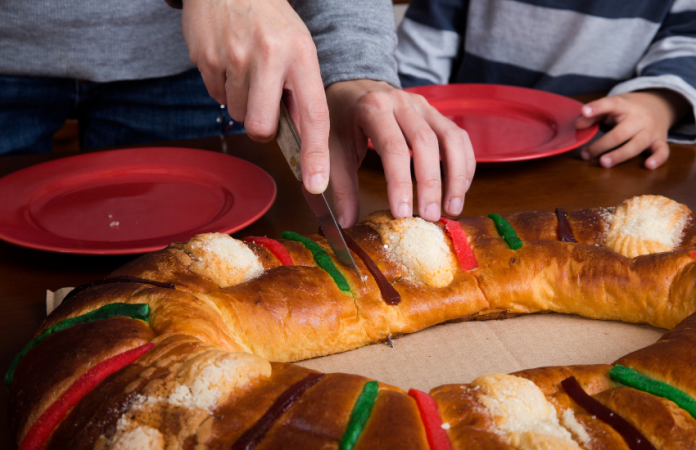 | |
There’s no better way to understand a country than by biting into its holiday foods. In Mexico, that means sinking your teeth into the sweet, symbolic goodness of the Rosca de Reyes, Latin America’s answer to king cake in Louisiana and Quebec’s gâteau des rois. Its layers of tradition, candied fruits and hidden surprises make this pastry a wonderful reason to gather and celebrate with family and friends.
This iconic bread takes center stage during Día de los Reyes Magos on Jan 6, the Christian feast day known in English as the Epiphany or Three Kings’ Day, commemorating the Magi’s visit. According to the Gospel of Matthew, the three Wise Men known as Gaspar, Melchor and Balthasar traveled following a bright star to meet the baby Jesus in Bethlehem, bringing with them gifts of gold, frankincense and myrrh.
The evening of Jan. 5 marks the twelfth night of Christmas and is when figures of the three Magi are added to the nativity scene. In Mexico, as in many other Latin American countries, it has traditionally been the Wise Men, not Santa Claus, who bring gifts on Christmas.
What are the origins of the Rosca de Reyes tradition?
The roots of the Rosca de Reyes tradition extend deep into history and are believed to originate with the Roman year-end agricultural festival of Saturnalia. That celebration included eating cake with a coin or other small token hidden inside that bestowed symbolic kingship for a day to the lucky person who bit into the treasure.
This custom evolved in medieval Europe when the Rosca became associated with Epiphany. Whoever found a hidden fava bean in their slice of cake was obligated to treat all the attendees to a round of drinks. The edible treasure was eventually replaced with porcelain to prevent the finder from hiding their responsibility in their belly.
What does the Rosca de Reyes symbolize?
In modern Mexico, the Rosca de Reyes is always oval, symbolizing the infinite circle of God’s love. Candied fruits, such as figs, quince, and cherries, are baked as toppings and symbolize the jewels in the crowns of the Three Wise Men. Hiding the baby Jesus in the bread represents the time when the Holy Family was fleeing from the Massacre of the Innocents – the execution of Bethlehem’s male infants ordered by Herod I.
The excitement on Jan. 6 is tangible as friends gather around a lively table with the Rosca de Reyes at its center. Hot cocoa, milk and coffee add to the delight. The anticipation in the room is palpable as the host slices into the bread. The air is thick with the sweet aroma and every slice is a roll of the dice. Who will be the fortunate guest to choose the slice with a hidden treasure? The room holds its breath while everyone takes a bite. When the figurine emerges, cheers erupt and the party begins.
If you are the one to find it, congratulations! In Mexican tradition, the person who finds the figurine of the baby Jesus becomes responsible for hosting a tamal feast on February 2, Día de la Candelaria or Candlemas Day, commemorating the infant Jesus’ presentation at the Temple in Jerusalem. This makes everyone look forward to gathering again and sharing another delicious meal one month later.
How is Rosca de Reyes made?
The traditional preparation of the Mexican Rosca de Reyes involves a blend of ingredients that contribute to the richness of this holiday bread. The dough is crafted from all-purpose flour, sugar and milk. Butter and eggs create a luscious spongy texture similar to brioche bread. The Rosca’s aroma is enhanced by adding vanilla extract and the zesty brightness of orange blossom water or orange peel.
Topping the Rosca is a combination of softened butter and sugar, creating a sweet and slightly crumbly crust that envelopes the golden bread. The vibrant candied fruits add to the visual feast and all ingredients combine to create a delightful and culturally significant treat.
It is estimated that more than 4 million Roscas de Reyes are sold nationwide every year. The National Chamber of the Baking Industry (Canainpa) indicates that Rosca de Reyes sales generate more than 2.25 billion pesos or 20% of this industry’s annual income.
For expats, embracing the Rosca de Reyes tradition is an invitation to celebrate with neighbors. So next Sunday, seek out the best bakery near you, gather amigos, bite into sugary tradition, and savor the taste of Mexico.
| |
Mexico is Now the 12th Largest Economy in the World | |
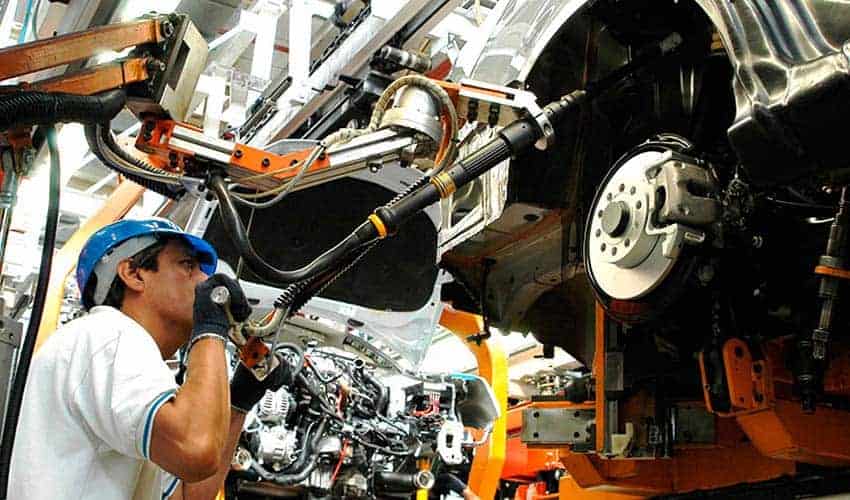 | |
Mexico is now the 12th largest economy in the world, according to International Monetary Fund (IMF) GDP projections for 2023, an improvement of two positions compared to last year.
The IMF updated its nominal GDP forecasts earlier this month, and is now predicting that Mexico’s economic output will be US $1.81 trillion this year.
Based on that projection, Mexico is the 12th largest economy in 2023 behind the United States (No. 1), China, Germany, Japan, India, the United Kingdom, France, Italy, Brazil, Canada and Russia.
Mexico’s nominal GDP was $1.47 trillion last year, making it the 14th largest economy in the world. This year, it passed South Korea and Australia to become the 12th largest economy, according to the IMF data.
The federal government highlighted the improvement in a post to its official account on the X social media platform on Thursday.
“Mexico is among the 20 largest economies in the world. We are ranked 12th and moved up two places with respect to last year,” the post said.
Contradicting that comment, the post included a graph that said that Mexico had moved up four places compared to 2022, as was widely, albeit erroneously, reported.
The Mexican economy has had a better than expected year in 2023. The national statistics agency INEGI reported Friday that the economy grew 3.5% in annual terms between January and October.
The OECD predicted in November 2022 that the Mexican economy would grow by just 1.6% this year, but is now forecasting that GDP will expand 3.4% in 2023.
Exports and investment in Mexico – both from abroad and within the country – have spurred the economy this year. The latter, which includes government spending on infrastructure projects, has been a particular boon for Mexico’s construction industry.
Foreign investment, which totaled almost $33 billion in the first nine months of the year, is expected to increase in coming years as more companies move into the country as part of the nearshoring phenomenon. Foreign companies announced investments in Mexico totaling US $106 billion in the first 11 months of the year, with that money expected to flow into the country in the next two to three years.
The publication of the IMF data showing that Mexico had become the 12th largest economy in the world came five months after President López Obrador noted that the country was forecast to become one of the world’s top 10 economies in the coming decades.
Professional services firm PricewaterhouseCoopers predicted in 2017 that Mexico will be the 7th largest economy in the world in 2050.
The Washington D.C.-based financial agency is forecasting that Mexico will pass Russia to become the 11th largest economy next year and remain in that position in 2025, 2026, 2027 and 2028.
Mexico’s nominal GDP is projected to reach $1.99 trillion in 2024, $2.08 trillion in 2025, $2.17 trillion in 2026, $2.26 trillion in 2027 and $2.36 trillion in 2028.
| |
Is This the Mexican Moment? US $106B of Investment Announced | 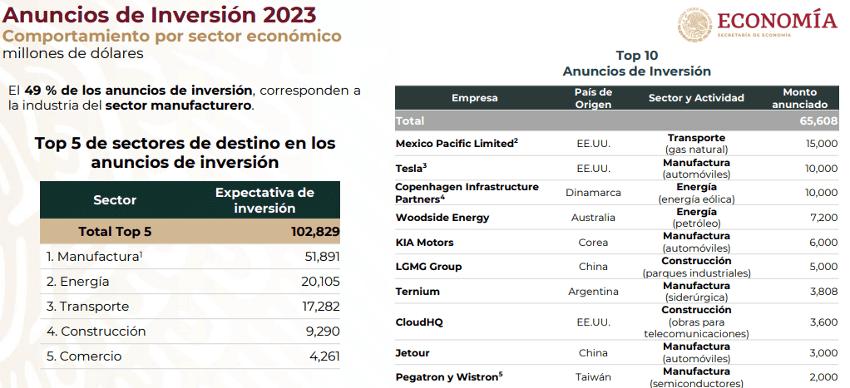 | |
Over US $100 billion in investment is expected to flow into Mexico in the next two to three years based on announcements made by foreign companies in the first 11 months of 2023.
The Economy Ministry (SE) said in a new report that 363 investment announcements were made between Jan. 1 and Nov. 30. The total of the combined investment announced in the period was just under $106.42 billion, the SE said. “It’s expected that said amount will enter the country in the next two or three years,” the ministry added.
The SE said on the X social media platform that the 2023 investment announcements could lead to the creation of almost 227,000 new jobs. It also said that the combined investment amount is equivalent to 6.4% of Mexico’s GDP in 2022.
The announcements made by the foreign companies “confirm the #MexicanMoment for relocation,” the ministry said, referring to the growing nearshoring phenomenon.
Which companies made the largest investment announcements in 2023?
The Economy Ministry lists the top 10 investment announcements this year, as well as the recipient sectors. (SE) The ministry used estimates in some cases as the companies themselves haven’t confirmed how much they intend to invest in their Mexico projects.
1. Mexico Pacific Limited
This United States company is set to invest $15 billion in a natural gas pipeline and liquefaction plant in Sonora. The SE noted that the monetary figure comes from the office of President López Obrador.
2. Tesla
The SE listed a $10 billion investment for the U.S. electric vehicle manufacturer’s gigafactory in Nuevo León, although it acknowledged that the government of the northern border state has estimated a $5-10 billion range. Construction of the first phase of the project will start in early 2024, according to Tesla CEO Elon Musk.
3. Copenhagen Infrastructure Partners (CIP)
This renewable energy-focused Danish investment firm intends to invest $10 billion in a green hydrogen plant in the Ishtmus of Tehuantepec region of Oaxaca. López Obrador cited the $10 billion figure last month, although he didn’t specifically mention CIP at the time, only calling it a “Danish fund” and a “Danish company.”
4. Woodside Energy
The Perth, Australia-based company said in June that it would contribute $4.8 billion to a project to develop a large Gulf of Mexico oil field it jointly owns with Mexico’s state-owned oil company Pemex. Woodside, Australia’s largest oil and gas producer, said that the forecast total capital expenditure to develop the ultra deepwater field is $7.2 billion. The SE listed that figure in its report.
5. Kia Motors
The South Korean automaker is set to invest $6 billion in Mexico. The company has a plant in Nuevo León, and the governor of that state, Samuel García, has mentioned a $6 billion investment to expand it.
6. LGMG Group
In a statement in October, this Chinese construction machinery company revealed plans to invest $5 billion in the development of a 10-hectare industrial park in Nuevo León.
The park is slated to have three clusters of activity: processing and manufacturing; warehousing and logistics; and business support services.
7. Ternium
The Argentine steel manufacturer announced in June that it would build a new steelworks and cold rolling facility in Nuevo León. The company’s total investment will be just over $3.8 billion, according to the SE.
8. CloudHQ
This United States IT company intends to invest $3.6 billion in a data center project in Querétaro.
9. Jetour
The Chinese state-owned automaker announced in April that it was planning to invest around $3 billion in a plant in Mexico. “The plant will be in a strategic place, maybe the Bajío [region] or Aguascalientes. There are several options, it’s not decided yet,” the company’s Mexico director said at the time.
10. Pegatron and Wistron
These two Taiwanese electronics companies intend to invest $2 billion in Mexico, according to the SE.
Collectively, the companies listed above are planning to invest $65.6 billion in Mexico, the Economy Ministry said. That amount represents 61% of the total investment announced by foreign companies in the first 11 months of the year.
| |
Meet the Sonoran's Family of Beachfront Resorts | |
Will the ‘Super Peso’ Weaken in 2024? | |
 | |
The Mexican peso traded below 17 to the US dollar on last week, but the currency will weaken significantly in 2024, according to the results of a recent survey of more than 30 banks, brokerages and research organizations.
After starting 2023 at around 19.5 to the dollar, the peso strengthened significantly due to a range of factors including the vast difference between the official exchange rates in Mexico and the United States, strong incoming flows of investment and remittances, and healthy tourism revenue.
The national currency has been dubbed the “super peso” on various occasions during the year, including when it strengthened to a near eight-year high of 16.62 to the dollar in July.
But the peso’s superpowers will wane in 2024, according to all 33 banks, brokerages and research organizations consulted by Citibanamex for its most recent “expectations survey.”
In a survey report published Dec. 19, the bank said the consensus forecast is that the USD:MXN exchange rate will be 18.65 at the end of 2024, an election year in both Mexico and the United States. The latter forecast represents a 9.3% depreciation for the peso compared to the 16.91 rate it reached last Wednesday morning.
Masari Casa de Bolsa, a Mexican brokerage, made the most pessimistic prediction for the peso, anticipating a USD:MXN exchange rate of 19.70 at the close of 2024. While none of those surveyed predicted that the peso will be below 17 to the dollar at the end of 2024, five entities – BNP Paribas, HSBC, Multiva, Natixis and Vector – forecast that it will be below 18. Vector, a Mexican brokerage, made the most optimistic forecast, predicting a 17.40 rate at the end of 2024.
Citi Global Wealth, an investment division of Citigroup, noted in its “Wealth Outlook 2024” report earlier that “inflows of foreign capital associated with U.S. nearshoring” drove a 20% appreciation of the peso to 16.62 to the dollar in July. “As electoral uncertainty picks up ahead of the June 2, 2024 general elections, this longer-term [nearshoring] trend should at a minimum continue to provide a floor under the peso,” Citi said. Later in the report, Citi said that it views a USD:MXN exchange rate in the 19.00 area “as much closer to fair value.”
However, “[we] fully recognize that the strong nearshoring flows could keep this currency relatively overvalued for some time to come,” the bank added.
Foreign direct investment in Mexico reached a record high of almost US $33 billion in the first nine months of the year, while foreign companies made investment announcements totaling more than $106 billion between January and November. That money is expected to flow into Mexico in the next two to three years.
| |
Take Your Chilaquiles from Good to Great | 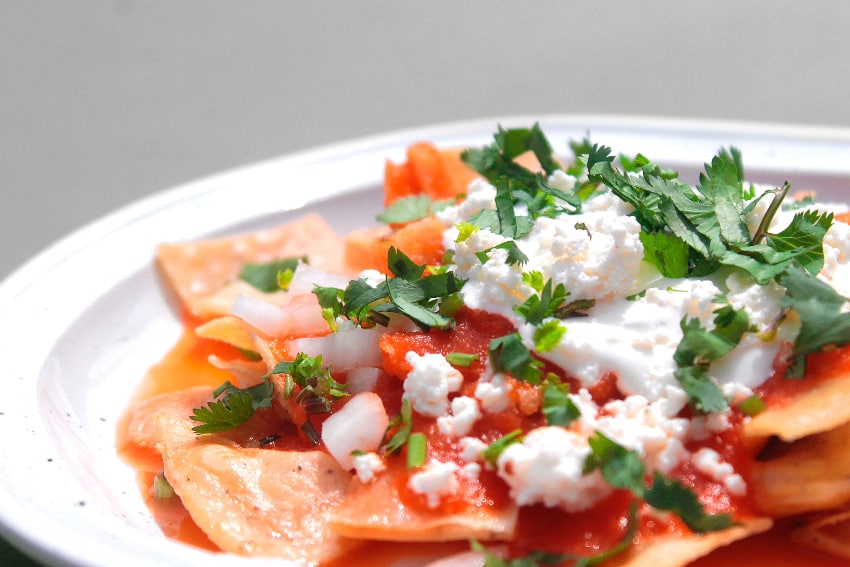 | |
Chilaquiles—or “breakfast nachos,” as some like to call them—seem like such a simple thing to make. Grab a handful of chips, add a protein (a couple of fried eggs, leftover grilled chicken, or a spoonful of refried or whole beans), some melty cheese, pour some salsa on top, and stick the whole thing in the toaster oven for a few minutes. Voila!
The word “chilaquiles” is a Náhuatl word meaning “submerged in chili sauce.” Some folks like the chips to be drenched or soaked in salsa; others like ‘em crisp. Either way, they’re delicious.
Making your own tortilla chips is one of those little steps that takes any dish from basic to supreme, common to memorable, ho-hum to wow. It’s why you can’t resist ordering them at certain restaurants even though your rational mind is screaming that it’s too much money for a pile of tortilla chips on a plate. It’s a professional chef’s secret that’s easy to incorporate into your home kitchen repertoire and will make your friends and family talk about your like they were really something special. And they will be.
Not that a great salsa, creamy guacamole, charred poblano strips, spicy crumbled chorizo, or any number of fantastic add-on ingredients won’t also up your chilaquiles game; they will. (The recipe below includes a delectable smoky guajillo chile salsa.) But the chips are the foundation, and you want them to be the best they can be.
Most assume that tortilla chips have to be deep-fried to be any good. Well, that’s not true. If you want to make ‘em that way—in a deep pot with 2-4 inches of hot oil at just the right temperature—go right ahead. But it’s not necessary. Sautéed in just enough hot oil or fat to cover, your corn chips will be fantastic.
Here’s how to do it: Cut corn tortillas into the shape you want, either strips or triangles. Old, stale ones are OK and in fact, some say they work the best. You want the pieces to be flat, so don’t use any tortillas with curled edges or that have gotten bent. (If you were deep-frying the tortilla pieces this wouldn’t matter.)
Pour about ¼ -inch of oil into whatever size non-stick frying pan you’re using. Heat the oil on medium-high until it’s hot: shimmering but not smoking. Carefully place the tortilla strips or pieces into the oil, being careful not to crowd them or the oil will lose too much heat too fast and they won’t cook properly.
Over high heat, cook for a few minutes, watching carefully, until the edges begin to brown a little. Carefully flip the pieces and cook the other side. They will continue to cook after you remove them from the oil so don’t let them get too dark. Lift out with a slotted spatula and place on a paper towel-lined plate to drain and cool. Sprinkle with salt and serve immediately.
Quick ‘n’ Easy Chilaquiles for One
Ingredients:
About 2 cups of fresh-made tortilla chips (see above)
Salsa of choice
Cooked or refried beans
Protein of choice: fried eggs, chorizo, grilled chicken
1 cup shredded Chihuahua, Jack or other meltable cheese
Toppings: crumbled queso fresco, minced cilantro, sliced avocados or guacamole, crema, pickled jalapeños
Mound chips on small baking tray. Add salsa, beans, chorizo or chicken and melting cheese. Broil in toaster oven for 5-8 minutes till cheese melts and salsa bubbles. Remove, add eggs or toppings, and serve.
Sheet-Pan Chilaquiles with Guajillo Salsa
6 Roma tomatoes, quartered
1 small yellow onion, quartered
3 garlic cloves, halved lengthwise
1 jalapeño, stemmed, halved lengthwise
1¼ cups chicken broth
5 dried Guajillo chile peppers, stemmed, seeded and torn into large pieces
¼ cup canola oil
2 tsp. salt
½ tsp. ground coriander
8 oz. corn tortilla chips (about 4-5 cups)
4 cups shredded rotisserie chicken (from 1 whole chicken)
Toppings: Chopped onion, avocado or guacamole, crumbled queso fresco, crema, chopped cilantro and pickled jalapeños
On a sheet pan, combine tomatoes, onion, garlic, and jalapeño; broil (at about six inches from heat source) until lightly charred around the edges, turning occasionally, about 10-15 minutes. Transfer to blender.
Meanwhile, in a small saucepan combine broth and dried chiles. Bring to a boil, stirring occasionally. Remove from heat and set aside. To the blender add the rehydrated chiles with broth, oil, salt, and coriander; purée until smooth.
Heat oven to 425F (220C). On the same sheet pan (no need to wash), toss chips with 2 cups of salsa and then spread in an even layer. Toss chicken with remaining salsa and arrange on top of chips. Roast until warmed through, about 5 minutes. Garnish with preferred toppings and serve
Provecho!
| |
Mexico’s Relationship with Alcohol | |
 | |
Mexico never had a “Prohibition” like the U.S., but its current reputation as a drinking and partying haven is not entirely accurate either.
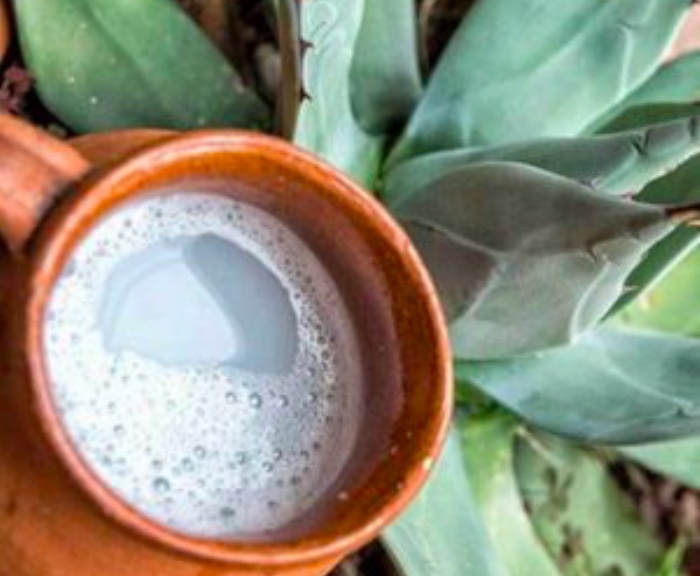
The history of alcohol usage in Mexico is a mix of restrictions and tolerance, but their bases have varied depending on the social and cultural landscape. One constant is the dominating role of the country’s many agave species, beginning in pre-history and continuing to the present day.
Agave, Mesoamerica and religion
The longest-documented alcohol in Mexico is pulque, the fermented sap of certain agave (magüey) plants prevalent in the central Mexico highlands. The plant has its own goddess, Mayahuel (depicted with her own vessel of pulque in the Laud Codex). But the drink also appears in a story about Quetzalcoatl, who committed a sexual transgression while drunk, and was eventually banished, effectively a morality story against wanton consumption.
The records also indicate that its consumption was highly restricted by both social rank and ceremonial purposes for aged and pregnant women and was also used as a kind of “reward” for great deeds. Breaking these rules was heavily punished and could mean death even for high-ranking priests.
Colonial period
The Spanish and the rest of the old order swept away all these prohibitions. This meant pulque was not banned for the general public, but it did become stigmatized as something only for the most marginalized segment of society – which remains to this day.
To replace it, the Spanish quickly introduced crops to create the beverages they knew – sugar cane, apple, grains and grapes for wine.
Under pressure from wineries in Spain, the Crown forbade all alcoholic beverage production in 1595. This prohibition (and its avoidance) shaped Mexico’s drinking habits.
Only the very rich could afford imported alcohol, and the edict had its intended effect on alcohol made from cultivated crops. Beer and coconut wine disappeared. Cider and rum nearly did. As it was necessary for communion, wine production for the Church was allowed – one reason why Casa Madero, Mexico’s oldest winery, survived in Coahuila. But in general, there would be no commercial wine production in Mexico until the late 20th century
That left agave. Growing wild in just about all of Mexico, it became the basis of almost all alcohol production – legal and illegal – to this day. Pulque survived, but more importantly, the cactus would be used for distilled spirits of various names – the most common of which is “mezcal.”
Authorities could not eliminate the plant, nor the basic distillation technology required to ferment it. Colonial records show a mix of suppression (prosecution) and tolerance (tax collection), but their accuracy is questionable given the industry’s clandestine nature and bribery of local officials.
Post-Independence
Social reorganization hit Mexico again during the struggle for independence in the early 19th century, but the mass importation or production of non-agave alcohol would not immediately follow.
Modernization and Europeanization efforts by the Porfirio Díaz dictatorship of 1884-1910 is responsible for one major change – the rise of beer.
The symbol of progress during the late 19th century was the railroad. Lines connected Mexico City to haciendas in the provinces, allowing the very profitable shipping of perishable pulque into the capital.
Its consumption among the lower classes became visible, leading to a backlash from more elite sectors of society. A crusade against pulque began, blaming it for the social ills of the lower classes, including their perceived resistance to “modernization.” Pulque was also accused of being a health issue, with claims that feces were used in its production.
Simultaneously, German and French brewers reintroduced beer to Mexico on a large scale. As with all things European, it was embraced by the same elite who had shunned pulque, and makers took advantage to promote beer as the civilized alternative. Breweries appeared in various parts of the country. Today, modern brands like Montejo and Tecate hearken back to these breweries.
What remained of the pulque industry that had survived the bad press and the Mexican Revolution collapsed shortly after, when the new government dismantled the hacienda system.
Northwest “moonshine” and smuggling
The Revolution had one other significant effect on Mexican alcohol consumption – the rise of “moonshine” in the west/northwest.
The years that followed the revolution marked the height of temperance movements in the West. Mexico never had a national “Prohibition,” but northern Revolution-era generals were aware of them and were sympathetic to the ban across the border.
Pancho Villa was particularly anti-alcohol, keen to promote military readiness and general social welfare. This forced several regional spirits – bacanora in Sonora, sotol in Chihuahua and raicilla in Jalisco underground yet again. Their suppression would not fully end until the 1990s.
This may seem odd given that northern Mexico took advantage of US Prohibition to make and smuggle whiskey and set up bars all along the border. But “Mexican moonshine” was produced by and for the most marginalized, making them vulnerable to large-scale crackdowns by regional rulers.
Modern era
Marketing expert Ricardo Pico and master distiller don Eduardo Arrieta share a NocheLuna mezcal, which they produce by traditional methods in Chihuahua (credit Leigh Thelmadatter)
The past decades have been far kinder to Mexican alcohol makers, both economically and culturally.
Bars along the border introduced Americans to tequila, and by the mid-20th century, the drink was internationally known. Tequila and the tourism industry would open the door for other drinks, notably commercial beer (like Corona) in the 1980s and mezcal in the 2000s.
New beverages are being introduced, including whiskeys featuring Mexico’s heritage corn varieties and a craft beer industry that is now coming into its own.
All this comes with social and legal blessings because alcohol is highly profitable and Mexico now takes pride in products that conserve its heritage and promote its agriculture. This newfound “prestige” means that more people, from more strata of society are getting involved.
Pulque remains a very niche market, but that is due to its highly perishable nature. But major cities in and near pulque-producing areas have seen the rise of “neo-cantinas” where younger drinkers can congregate, and this has helped the drink to remain relevant, even in the 21st century.
| |
Sonoran Sales Group - The OFFICIAL sales team for Sonoran Resorts!
We are Rocky Point's one and only exclusive and dedicated team who have always, and will always, sell Sonoran Resorts and ONLY Sonoran Resorts!
If you are looking for a team of real professionals who specialize in Puerto Penasco's best family of "True Beachfront" resorts, you've found us, and we are here to serve you.
Whether Buying or Selling, no one can serve you better when it comes to the Sonoran Resorts. We have been here since the beginning, and we will be here for you when you need us.
Our In-House closing team will make things happen quickly and professionally and we will save you money. Our attorneys are on salary and no additional attorney fees are charged to our clients. Loyalty to the Sonoran Resorts Sales Team is both appreciated and rewarded!
We don't just sell the Sonoran Resorts, we ARE the Sonoran Resorts. We work directly with the Developers, the HOAs, and the Rental companies.
We really can help you in ways that no one else can.
| |
Just for the fun of it... | |
Jim Ringquist
rockypointjim@gmail.com
| | | | |