Another month has flown by. Rocky Point is still super busy, Sonoran Resorts are still super busy, and our sales team is still super busy. It has been a really good year. Summer is here and the temperatures have been going up, as has the humidity. Still very comfortable, but the change over the past week or so has been very apparent. Summer is here.
June brought many fun events and a ton of people to town. Circus Mexicus was the highlight and, as always, the event sold out just about every condo on Sandy Beach. Fun was had by all once again and after so many years of the event in Rocky Point, it still continues to get bigger and better every year. Roger Clyne and crew are going strong and we all look forward to his next show in town. If you have never been to Rocky Point during Circus Mexicus, add it to you list of things you have to do. You will be glad that you did.
Today marks my 11 year anniversary with the Sonoran Resorts. It's hard to believe that I have been with this company so long, but it has been a wonderful experience and I hope to stick around for a long time to come. Much has changed in eleven years as well, one big change being the Real Estate market. When I started with the Sonoran Resorts on July 1, 2010, we were almost at the very bottom of the recession and things were hard for many people here. The market was depressed and sales were slow. My how time can change things! Prices have risen, sales are brisk, and this town is hopping. Rocky Point is popular again! Definitely a change for the better and everyone from local residents to tourists reap the benefit of the good economy and resurgence of the area. It definitely makes me happy to see the movement.
Las Vegas Night - Many people look forward each year this month to our fun-filled charity casino night, but as I've mentioned in recent newsletters, this year will bring something a bit different. The date has been changed to sometime in the fall, and there is sure to be some exciting surprises in store for everyone as well. I promise that it will be worth the wait. Stay tuned for more information in next month's newsletter :)
Enjoy this beautiful month, come to Rocky Point if you can, and if you need anything don't hesitate to ask. Let me put my experience and expertise to work for you, and remember, as always, I've been here full-time for over 13 years and I am more than happy to help you with whatever you need, whether Sonoran Resorts related or not.
Just give me a call or send me an email any time and I will do my very best to help you. If I can't help you myself, I'm sure that I can point you in the right direction and help find you someone who can.
Besides the links below, you can our listings at the following:
www.sonoranresorts.mx
www.sonoranresortsresales.com
AMPI Puerto Penasco MLS
Point 2 Agent Multinational MLS
Pick up a handout at any of our Sonoran Resorts
Barrett Jackson Show - Scottsdale and Las Vegas
Various Real Estate and Trade shows in AZ, NV, and CA
Our listings are also shared with the following:
|
|
IMPORTANT: Some email providers cut this newsletter off before the end. If that happens on yours, please scroll to the bottom of this email and click "View Entire Message" to see the entire newsletter.
Sincerely,
Jim Ringquist
Broker/Sales Director
Sonoran Resorts Spa - Sea - Sun - Sky
602-476-7511
rockypointjim@gmail.com
www.SonoranResorts.mx
President/Volunteer
Tourist Assistance Unit Advisory Committee (Tourist Assistance Police)
602-774-1777
www.touristassistancerockypoint.org
touristassistancerockypoint@gmail.com
I hope that you enjoy my newsletter and continue to recommend it to your friends. Please feel free to give me thoughts, suggestions, or ideas for future newsletters. Puerto Peñasco is my home and I love to share the news and goings-on with you.
I do get email requests each month asking me to add someone to my list. While I certainly don't mind doing so, all you really need to do is click Sign-Up for Newsletter below, add the email address, and it will happen automatically. Not to worry - I will not spam you or share your email address, and you will only receive one email-newsletter each month on the 1st.
|
|
Exclusively Serving the Sonoran Resorts
Buy & Sell Direct and SAVE!
20 Years Experience on Sandy Beach
Four Fully Completed Beachfront Resorts
We Have Earned Our Stellar Reputation
Your Only Logical Choice when Buying
or Selling a Sonoran Resorts Condo!
|
|
Jorge Pivac Wins Mayoral Election of Puerto Penasco |
|
With a total of 6,263 votes, Jorge Pivac became the elected municipal mayor of what will be the XXIV H. Town Hall of Puerto Peñasco, Sonora .
In a party like atmosphere, supporters of the winning team gathered to celebrate the victory, after a margin of victory of only of 3% set him apart from the competitors.
“We are celebrating, the citizens took the next step through Puerto Peñasco. With a lot of desire to work, to fulfill my commitments and projects that we have made known during the electoral contest, ”said Jorge Pivac.
Jorge Pivac, who will be the mayor of Puerto Peñasco for the next three years for the 2021-2024 triennium, said he was very grateful to the community for giving him the vote of confidence, “I really appreciate everyone's support, I know that the commitment It is great, but, as I said in the campaign, today as the winner of this contest I reaffirm my word and I am going to fulfill each and every one of the commitments I made, ”he remarked. He also thanked those who gave who have given all their effort and work during this electoral process.
"The victory was felt in the streets, in the colonies, Peñasco knew that our proposals are the most viable, and they confirmed it, democracy won, Puerto Peñasco won, we all won, and we are all going to take the next step".
Jorge Pivac, assured that he will not wait to sit in the chair of the municipal building to start fulfilling promises for Peñasco, "from tomorrow I will start working, I will not feel like a winner, until I have fulfilled them," he said.
|
|
Celebrating 5 years of the Tourism Auxiliary Unit |
By Rocky Point 360 STAFF
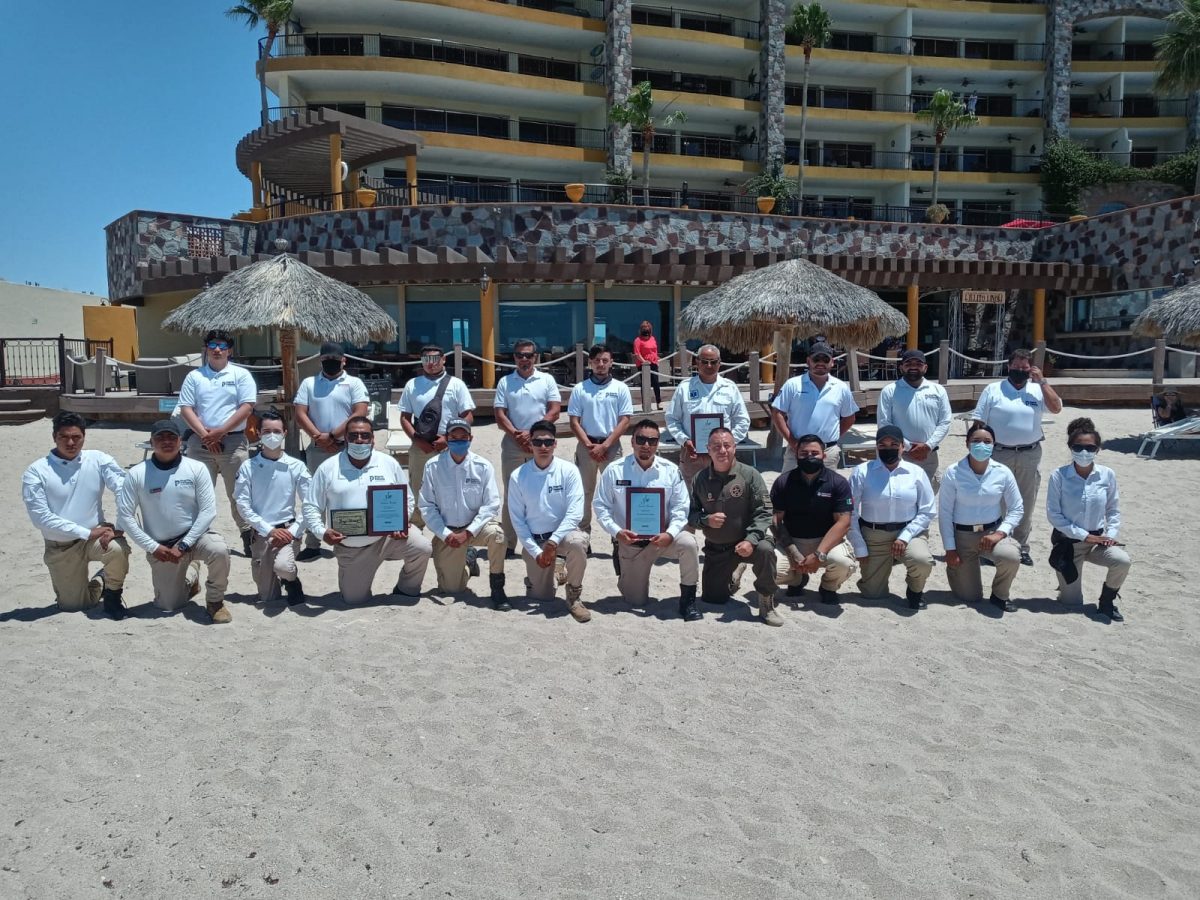
On June 3rd, a simple yet moving ceremony honored the 5th anniversary of Puerto Peñasco’s Tourism Auxiliary Unit (TAU), created in 2016 to assist and guarantee the safety of visitors.
A celebratory breakfast, held at Cielito Lindo of Sonoran Sky, praised the work of the 23 current members of the Auxiliary Unit. Together with Puerto Peñasco mayor Kiko Munro, Fernando Anaya and Jim Ringquist of Sonoran Resorts presented special acknowledgments to three of the TAU’s founders: Commander Carlos Bravo Martinez, Francisco Leyva Montijo, and Jorge Daniel Gómez Contreras.
Mayor Kiko Munro highlighted the well-deserved moment, honoring five years since the TAU’s creation. He stressed this is something Puerto Peñasco needed to strengthen overall attention to tourism. When at one-time people did not know where to go, or who to turn to, he remarked, the work and efforts of the Tourism Auxiliary Unit has created a better image for the destination as a whole.
Fernando Javier Anaya Millán, General Director of Sonoran Resorts, together with Sonoran Resorts Sales Director Jim Ringquist, noted the importance of providing a time to honor members of the Tourism Auxiliary Unit. Anaya Millán remarked the idea to create such a Unit had been presented for quite some time, and finally became a reality in 2016. He expressed the Tourism Auxiliary Unit project has been successful, is strong, and should continue.
Inaugurated in the Spring of 2016, Puerto Peñasco’s Tourist Auxiliary Unit (TAU as frequently called in English) carries out multiple functions in town, including at times that of first responders. The agents, who can be found in various high tourism spots throughout the year, have all received first-aid training in order to help address emergencies. Commander Carlos Bravo details the TAU can also respond to assist with taking blood-pressure checks in tourism areas, as well as other needs such as applying shots.
The Tourist Auxiliary Unit can be reached at 382 8413 or by dialing 911, which will also connect directly to the emergency system. Their offices are located at the Peñasco EXPO Convention Center on Blvd. Rodger & Jeanette Clifton (extending from the “Rodeo Drive” curios market).
|
|
Food and Drink at the Sonoran Sky Resort:
|
|
Pollutants in the Oceans Put Marine Flora and Fauna at Risk |
A call to help prevent the pollution of the beaches and ocean with plastics and other inorganic was recently released by the Department of Ecology of the Directorate of Urban Development.
Now that the summer season has begun, it is once again necessary to remind tourists and other visitors to the beaches that everyone must work together and contribute efforts to curb the pollution of the oceans and the beach, said the head of Ecology , Mariana Molina Parra.
“To avoid throwing this waste on the beach, people can bring their own garbage and in general simply avoid throwing beer cans, wrappers, glasses or paper, among other items that are taken out each year by tons after the tourists leave ”, he commented.
She recalled that unfortunately, the amount of waste that remains on the beaches after the visit of vacationers is very evident and, worse still, it is mostly disposable or single-use plastic bottles, bags and containers, which means that will take many years to degrade.
These are the greatest pollutants in the oceans today as they end threatening the life of hundreds of marine species and birds, many of them already in danger of extinction, she lamented.
In addition, she explained that the micro-particles of plastics that damage marine flora and fauna and birds also end up in the food we consume, so it is necessary to raise awareness in order to help offer a better quality of life to the inhabitants of the planet, now and for the generations to come.
|
|
Potpourri!
Short Shorts of All Sorts!
Sometimes so much is going on in our little slice of paradise by the sea that we can't address the many short subjects with proper attention. To handle the hodgepodge of dangling subject matter, we invented the Potpourri Page. Here are a few "short shorts" to keep you up to date.
|
|
4 Mexican Wines Among Gold Medal Winners at Spanish Competition |
Wines from Guanajuato, Querétaro and Baja California were selected from 1,692 entries
Four Mexican wines have triumphed at a Spanish wine competition, taking home gold medals.
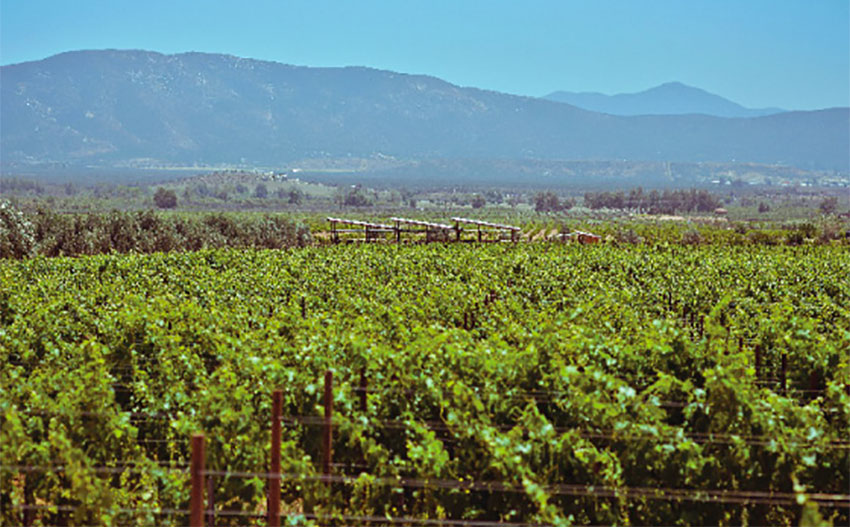
Producers from Guanajuato, Querétaro and Baja California were on the list of 32 gold-medal winners, which excelled among 1,692 entries. Bacchus Wines 2021 saw 83 international experts take part in blind tasting sessions, which ended Thursday in Madrid.
From Baja California two Ensenada vineyards were awarded gold medals: a 2017 tempranillo from Finca La Carrodilla and a 2019 chardonnay from Chateau Camou.
From Dolores de Hidalgo, Guanajuato, a 2019 nebbiolo-sangiovese from Tres Raíces vineyard took home the prize, as did the 2019 Tío Neto from Parque Enológico Puerta del Lobo in Querétaro.
Thirteen countries were represented at the competition, which predominantly featured still white and red wines, as well as sparkling wines, rosés, dessert wines and vermouths, among others.
Mexico made news on the international stage in 2019 when two vineyards won grand golds at the Concours Mondial de Bruxelles, a wine contest often referred to as the United Nations of Fine Wines.
|
|
Adopt-a-Classroom Fundraiser July 4th |
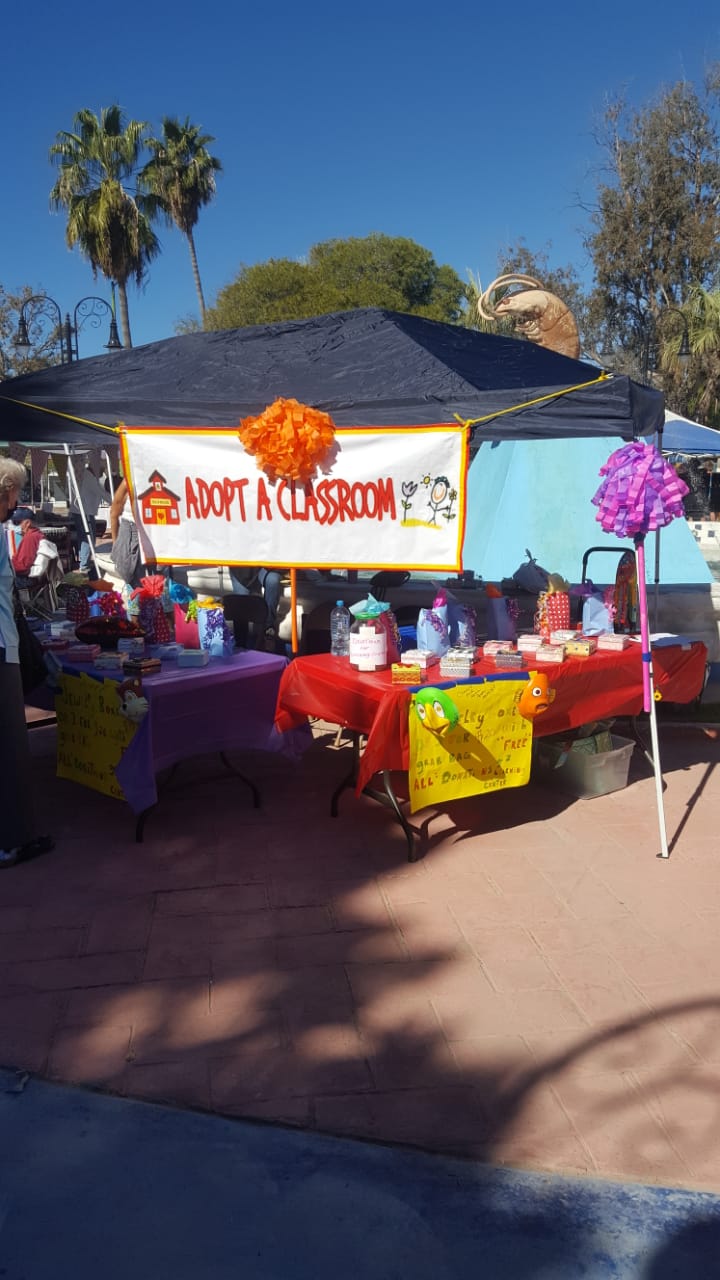
Adopt-a-Classroom will be at Manny's Beach Club in the Mirador from 10 - 3 on July 4th for a raffle/ silent auction/ jewelry grab bag. Please join them at Manny's for the fun and support the schools here in rp . All proceeds stay here in Penasco to help our schools. They will also be happy to collect school donations. You can also make donations to help reboot the programs trough PayPal: Barbara Olszewski, rpbarbo@gmail.com or rockypointnextgen@gmail.com, or make a check donation to Barbara Olszewski, mail checks or school supplies to P.O.Box 695, Lukeville, az 85341
Thank you so much for the help for our local school programs.
|
|
City to Open New Landfill "Cell" |
Mayor Ernesto “Kiko” Munro recently announced at a press conference a plan to create a new landfill in order to at last address the longstanding problems that have been associated with the existing landfill that have been ongoing for years. These problems included frequent fires, insect infestation, and general unsafe and unsanitary conditions.
This new landfill “cell” will meet current standards and should help to alleviate the problems. The property is large enough to add an additional 4 “cells” as well, so the solution should last for some years to come. The project is scheduled to start sometime in July and will take approximately 4 months to complete.
|
|
Malecon Upgrade and Rehabilitation |
Mayor Kiko Munro announced the project accompanied by César García, director of the Federal Maritime Terrestrial Zone (ZOFEMAT), Rogelio Valenzuela, director of the Municipal Planning Institute (IMPLAN), and David Zazueta, in charge of works. He remarked that the projects is a part of a total of 5 which had already been authorized for a total expenditure of approximately 30.9 million pesos.
The rehabilitation and upgrade of the Malecon will include the repair of benches (wood and concrete), construction of a planter-bench, rehabilitation of existing lights, placement of decorative paving stone on the base of flagpole, relocation of security cameras, removal and replacement of bollard type floor lamps, fisherman statue light and center statue. In addition, it will include replacement of luminaires in pillars, rehabilitation of the ramp for the disabled, placement of information modules, placement of recycling stations, and replacement of lights on the ramp for the disabled.
Additionally, rehabilitation and maintenance of existing pergola, construction of modules for the relocation of street vendors, rehabilitation of public toilets, construction of public drinking fountains, repair of the drainage channel, incorporation of a 1.2m wide cycle path between the street and sidewalk, installation of bike racks, and repair and maintenance of public toilets.
|
|
Still Hope for the Homeport? |
|
New Governor-elect Durazo wants to finish the Homeport of Puerto Penasco.
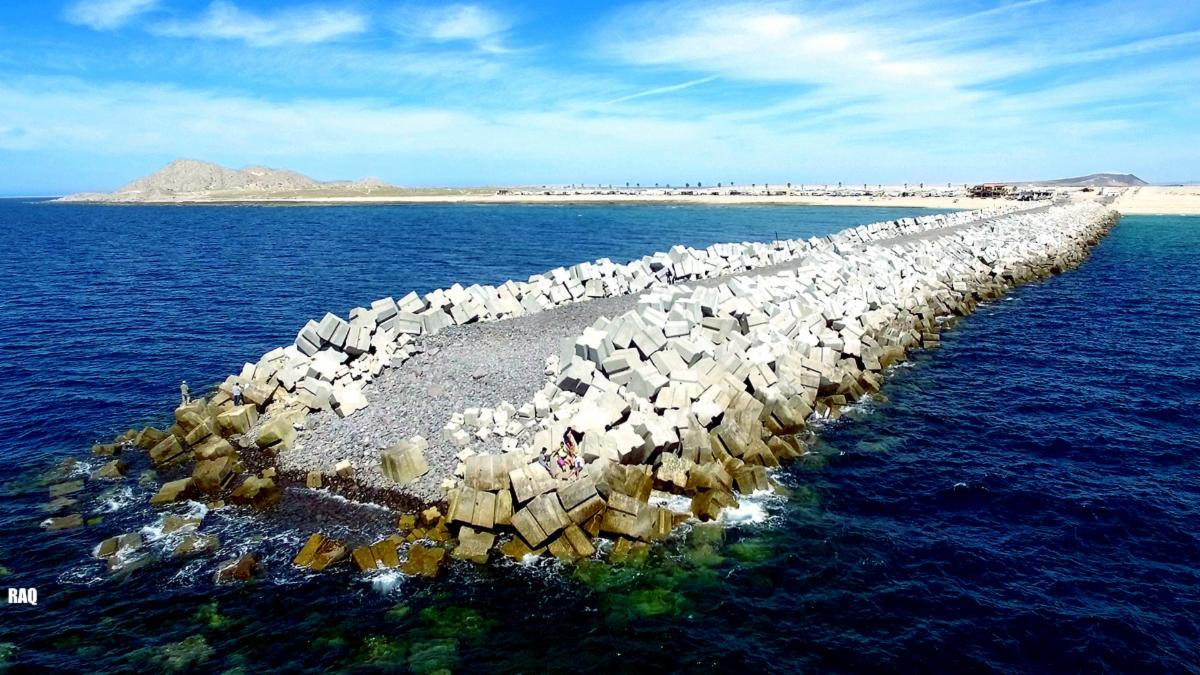
Alfonso Durazo was very encouraged by his recent meeting with the head of Sectur, Miguel Torruco Marqués, with whom he agreed to a plan to resume the Puerto Peñasco home port project in order to enable the arrival of cruise ships, and encourage the sought-after flights from Phoenix and Hermosillo to the mostly unused International airport just outside of Rocky Point.
With the “home port” –or port of arrival–, the effort supported by the Secretary of the Navy and the governments of Baja California, Baja California Sur and Sinaloa, would specify the announced cruise route of the Upper Gulf of California, a stage area Unique in the world.
The "home port" was originally planned for Guaymas, but later the plan was moved to Puerto Peñasco. The project was begun, but during its development it was modified several times, delayed several times, and eventually suspended due to alleged political corruption and greed. It may be difficult to restart the project though due to existing litigation that the current government surely must have inherited.
|
|
Sea of Cortez: Saving the World's Aquarium |
|
For decades, the Gulf of California was revered as one of the world’s most incredible marine ecosystems. Also known as the Sea of Cortez, the 700-mile-long gulf is home to nearly a thousand fish species, 5,000 types of invertebrates, as well as a variety of rare marine mammals and sea turtles. But for all its beauty, the Gulf of California is an ecosystem in decline.
The variety and abundance of sea creatures have made the Sea of Cortez a very lucrative fishery. In fact, fishing is one of the key drivers of the local economy. The commercial shrimp fishery alone is responsible for 37,000 Mexican jobs. Tourism, with the sportfishing industry as its main driver, generates around $500 million in expenditures each year.
On the flip side, the fishing industry has arguably become too reliant on the resource. This has led to overfishing across the sea and pushed many native creatures to the brink of extinction. As commercial fishing continues and tourism expands, pollution is likely to impact even the deeper waters of the gulf.
The Aquarium of the World
The Sea of Cortez, one of the most biologically diverse bodies of water on Earth, is also among the world’s youngest. The gulf was formed some 4–5 million years ago, thanks to a tectonic rift between Baja California and the North American Plate. To this day, the sea separates Baja California from mainland Mexico.
Who lives here?
The Gulf of California is home to an astounding number of sea creatures. Almost a thousand resident and migratory fish species swim in these waters, many of them endemic. In fact, one in 10 of these fish live here and nowhere else on the planet!
One of these is the critically endangered vaquita, a porpoise whose numbers have diminished drastically over the last couple of decades. Recent estimates say that there are only 12 of these creatures left!
The gulf is home to a wide range of game fish. From various types of Tuna and Billfish, to Sharks, Groupers, and Snappers, this place is an angler’s paradise. There’s also a variety of Rays, as well as Lobsters, Sardines, Squid, and others.
And it’s not just fish. The Sea of Cortez also houses thousands of invertebrates, as well as a wide range of rare marine mammals. As many as 36 species of marine mammals inhabit the gulf. To put that into perspective, the entire coast of the state of Alaska has 29 such creatures.
Goliaths like the Humpback, Killer, and Sperm Whale often migrate to the Sea of Cortez to feed and reproduce. On occasion, the gulf is even visited by the largest creature in existence, the Blue Whale. And some, like the Fin Whale, have made this sea their permanent residence.
With all this in mind, it’s easy to see why French explorer Jacques Cousteau famously dubbed the area “The Aquarium of the World.”
The diversity of wildlife is not the only thing that makes the Gulf of California special. These waters are home to many oceanic processes that normally occur in very different locations. This makes the Sea of Cortez even more interesting to marine biologists and researchers.
A Gourmet Dining Table
As it usually happens in nature, thousands of sea creatures didn’t come to call the Sea of Cortez home by accident. Thanks to a number of oceanic processes, the gulf consistently serves up a feast of nutrients for its resident sea creatures.
Fifty years ago, the Gulf had a steady influx of nutrients and minerals from the Colorado River. Nowadays, the river has diminished significantly, but the Gulf continues to produce its food. How is this possible?
The Tides
The Gulf of California holds an immense amount of water. When Pacific tidal movements happen, the waters move in and withdraw in a massive movement. So massive, in fact, that the northern part of the gulf sees an incredible 32′ tidal range!
This colossal movement results in waters mixing at depths as deep as 1,500 feet, thus creating a strong continuous current. When water from the surface moves away from the coastline, it is replaced by “new” water from below. This is called an upwelling. Upwelling doesn’t just bring new water; it brings huge amounts of nutrients, as well.
These nutrients attract crustaceans and small fish, which, in turn, attract larger fish, birds, and sea mammals.
The Mangroves
The edges of the Sea of Cortez are dotted with mangrove forests. Providing shelter and nutrients, these forests serve as feeding and nursing grounds for a variety of fish species. In fact, a recent study has shown that mangrove forests are strongly associated with the number of fish landings in the Gulf of California.
Sadly, mangrove forests have come into grave danger in recent years. With the aggressive expansion of the tourist trade, more and more mangrove forests are being cut down in favor of resort areas and boat launches. Worse still, the government fails to realize the ecological and existing commercial value of these coastal areas, often selling them for pennies on the dollar.
A Whole Other World
Due to its position between two shifting tectonic plates, the Sea of Cortez has seen its share of remarkable geological occurrences. Perhaps most bewildering is the fact that the Baja Peninsula still hasn’t stopped moving away from mainland Mexico. Every year, the 800-mile strip of land moves another 2 inches towards the Pacific, expanding the Sea of Cortez.
For the world below the water surface, this means a lot. For instance, recent diving expeditions in the Gulf have uncovered astounding new lifeforms that thrive in the harshest of environments.
While exploring hydrothermal activity, researchers from the Schmidt Ocean Institute found large venting mineral towers reaching over 75 feet in height. These towers not only came in an incredible array of colors, they featured what you could only describe as “upside-down burning mirror-pools.” If that sounds a little out there, that’s because it is.
As SOI Chief Scientist Dr. Mandy Joye puts it: “Hydrothermal vents are caused by magma beneath the Earth’s surface heating water that has seeped into the rocks on the seafloor. As the water gets hot, it rises, and shoots out of the seafloor into the ocean.”
Scientists also found patches of seabed oozing with methane gas. What’s even more impressive is that there are organisms that not only survive in these volatile conditions, they thrive. Understanding these organisms can help science, medicine, and technology for years to come.
If they’re still there, that is. On their dives, SOI researchers often found plastic bags and other human-created debris lying on the sea bottom. For all the beauty the bottom the Sea of Cortez offers, one can’t help but feel disheartened by the piles of rubbish on its seabed.
A Golden Goose
For decades, the Sea of Cortez was one of Mexico’s prime sources of income. Be it from commercial fishing, sportfishing, or tourism, these waters were a treasure trove for the local economies. After years of unregulated fishing however, Mexico is dangerously close to losing its golden eggs.
Commercial Fishing
With an annual $260 million in landings, shrimping is Mexico’s most important fishing industry. Shrimping is also the largest contributor to employment in the Gulf area, with 37,000 direct jobs and 75,000 indirect ones. Boasting the single largest fishing fleet of 711 bottom trawlers and about 16,000 small-scale vessels, commercial shrimpers bring in a whopping 40,000 tons of shrimp annually.
At the same time, the commercial shrimping industry is one of the most ecologically detrimental fisheries in the Gulf of California. For years, industrial bottom trawlers have decimated the seabed, gulping up century-old corals, fish, and anything else in their path. For every pound of shrimp caught, the trawlers pulled out 40 pounds of bycatch!
This meant that tens of thousands of tons of marine creatures were needlessly killed off. Fortunately, in 2006, Mexico introduced a fishery improvement plan, reducing the fleet by 50% and implementing new gear requirements to lower bycatch levels. Before a longterm stock assessment, we won’t know just how effective the initiative was. Still, after decades of almost unregulated fishing, this was a step in the right direction.
Smaller scale artisanal fishing, on the other hand, is much harder to regulate. For example, illegal gillnetting for the endemic Totoaba has all but wiped out the species. Totoaba, namely its swim bladder, is a prized delicacy in China, and there’s a large smuggling industry behind it. After years of overfishing, the Totoaba is now on the IUCN Red List of Threatened Species.
To make matters worse, Totoaba gillnetting has proven to be the primary cause of death for the already critically endangered vaquita porpoise. Today, even with the regulations in place, there’s a strong feeling that there is nobody to enforce them. If poaching continues to devastate the gulf, it’s safe to say that the vaquita’s days are numbered.
Recreational Fishing and Tourism
Sportfishing in the Gulf of California has always been a popular activity. For all the bounty it’s known for, the Sea of Cortez boasts a fraction of the abundance it once had. With fewer small fish around, there’s less food for big game predators. Even the birds are fewer these days. Seasoned fishermen claim that today’s catches wouldn’t even make it to the boat 30 years ago. A week’s bounty was just a two-day effort back then.
It’s Not Too Late
The Sea of Cortez is a unique treasure trove of marine wildlife. From exciting goliaths to intriguing microorganisms, the Gulf of California provides sustenance for thousands of sea creatures. Not only that, but the expanding body of water is also home to some of the most remarkable natural phenomena we’ve ever seen.
Sadly, the Sea of Cortez is not what it once was. Through overfishing and poaching, many fish species have become critically endangered. Years of industrial trawling have ravaged much of the seabed. With no food to find, thousands of sea creatures have either migrated or perished.
For years, the Mexican government has tried to curb these dangers. Regulations are now in place, but enforcing them is not easy. Large scale commercial fishing is finally hitting sustainable levels, but illegal fishing is still raging unchecked. However, there is still hope.
Through better enforcement, illegal fishing can be stopped. The manpower will cost money, but as Gandhi once famously said: “Action expresses priorities.” Tourism, the gulf’s lifeline, will still be able to flourish through watersports and sportfishing in unprotected areas.
For all the hardship it has endured, the Sea of Cortez has proven to be a remarkably resilient ecosystem. Like a poker player pulling an ace at the last moment, life in the incredible gulf has survived almost everything we have thrown its way. Hopefully, this will buy us just enough time to save it.
|
|
Steps of Love Announces Packs of Love for Students |
|
Fortunately, students in Rocky Point will be returning to in-person classes in the fall. Unfortunately, more local students than ever will not be able to afford a backpack and the long list of school supplies required for them to start the school year.
With a record number of students depending on us we need your help!
During this pandemic we have grown from supporting 588 students to more than 800 students. These young people and many others in the community were reminded of the kindness of others when you helped us provide thousands of local families with emergency food support.
Now, they are depending on your continued kindness and generosity for the resources they need to return to in-person classes.
Here are 3 ways you can help us provide local students with backpacks and school supplies:
1) MAKE A DONATION TO OUR ‘PACKS OF LOVE CAMPAIGN’ - Your donation will help us provide students with the resources they need to return to school prepared for success. You can make a tax deductible donation to fund one or more backpacks filled with school supplies at www.stepsoflove.org/school-supplies.
2) BRING DONATIONS OF BACKPACKS AND SCHOOL SUPPLIES TO ROCKY POINT - If you are a regular visitor you can bring down donations of backpacks and school supplies for our students and drop them off at several popular local businesses. Below is a list of supplies needed and drop-off locations.
3) DROP-OFF DONATIONS IN CENTRAL PHOENIX - Our good friends at Esperanca have generously offered to collect donations for us at their Phoenix warehouse. You can drop-off backpacks and school supplies from the list above at 1911 W. Earll Dr. in Phoenix from 8:30 – 4:30 Monday -Thursday and 8:30 – 12:30 on Fridays. We will deliver all donations they receive to students in Rocky Point before the beginning of the school year.
MUCHAS GRACIAS!
www.stepsoflove.org
|
|
Fishermen, Mostly from El Golfo de Santa Clara near Rocky Point, send 40 Thousand Tons of Jellyfish to China |
|
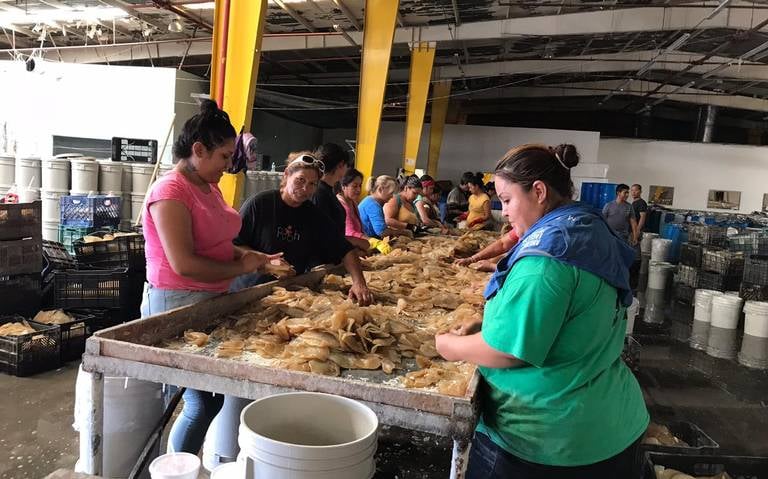
The total production of aguamala, or cannonball jellyfish, goes directly to the Asian market, specifically to China, so the fishermen can be confident in selling their catch, because they know that this market has been assured for many years. There is no local market as there has been no use found for them which would entice buyers from Mexico or the USA to purchase the product.
According to sources from the Fisheries Office in the Gulf of Santa Clara, 40 thousand tons of cannonball jellyfish have been captured, more than double what was achieved in 2020, which was 19 thousand tons. They said that all this product goes almost exclusively to the Chinese market, since there they consume the aguamala.
They also expressed that despite the fact that they have not been able to fish every day, mostly due to bad weather, the price of the product has not fallen and remains at 3.90 pesos per kilo. It was feared that with the increase in product this year, the price would drop to less than 2 pesos, but it has not been the case.
“There has been a lot of aguamala in the sea and each panga on average brings 3 tons per trip; on a good day, it can bring in almost 10 tons of the product ”. They commented that the idea is to reach the historical goal of 60 thousand tons and at the rate they are going, it is very possible that they will achieve it.
|
|
Training and Inspections for Proper Pool Care Increase During Summer Months |
|
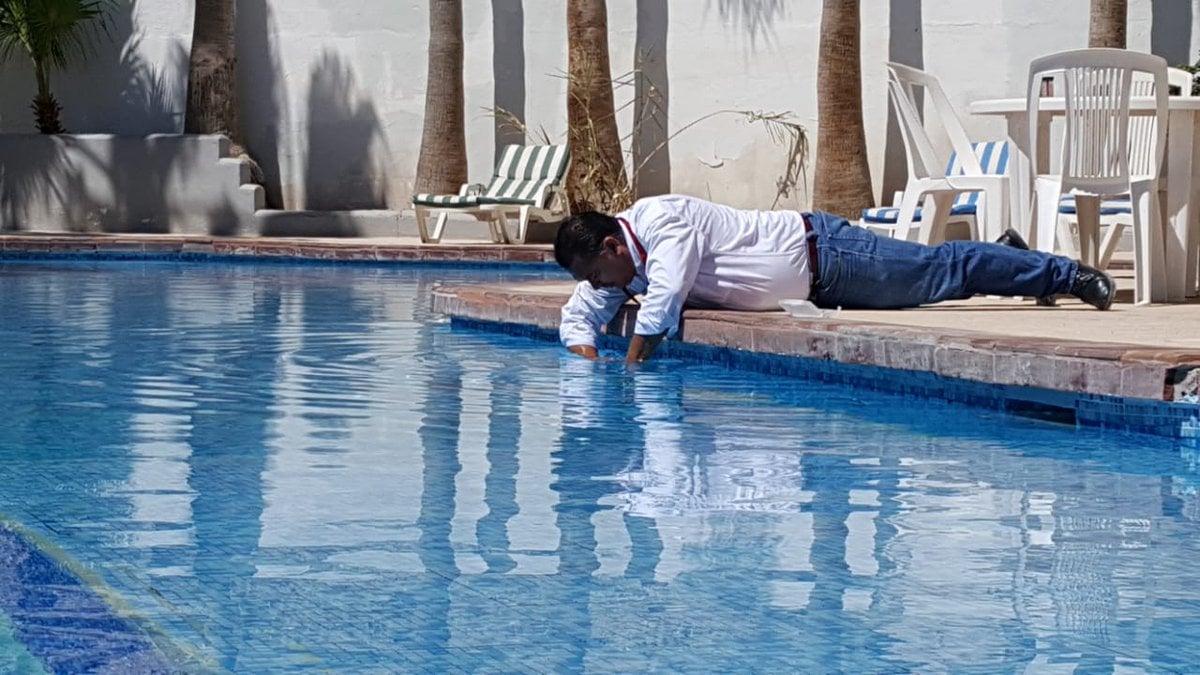
The training for the owners and HOAs of private and public pools has begun after the suspension of the teaching of courses due to the Covid-19 pandemic. Last month and year they resumed with the training practice so important and necessary for this area, especially during the summer when there are the greatest number of tourists using the pools.
The head of the Sanitary Control Unit, Lic. Carlos Decina Torres, reported that the entire process is taught, verified, and inspected, from maintenance, chlorination, care of pool water bodies, to specifications such as pool depth, clothing, railings - everything that guarantees safety and care for the health of the swimmer based on the different health regulations and laws which aim to preserve people's health.
"Sanitary Verifications pursue compliance with health laws and regulations, the mission is to protect the health of residents and tourists, and to ensure that everything is working correctly."
He stated that there are approximately 32 out of 70 pools verified and training courses will be given to managers and pool owners, throughout the summer through digital portals (not in person), since it is an essential requirement before being able to use and open them to the public, in addition to having their health license renewal.
“Due to the high tourist influx in our city during this season, random reviews are made to all the establishments of this sector, we visit them either in facilities, machine rooms, sampling the bodies of water to guarantee that they are free of Amoeba de la Vida Libre (AVL); we arrive without prior notice ”.
|
|
Mexican Supreme Court Allows Recreational Consumption of Marijuana for Adults Only |
|
With eight votes in favor and three against, the Supreme Court of Justice of the Nation (SCJN) annulled the prohibition of the recreational and recreational use of cannabis, but it will only be for people of legal age and cannot be consumed near minors or third parties who do not allow it.
With a qualified majority, the highest court declared general unconstitutionality of five articles of the General Health Law that prevented the Ministry of Health (Ssa) from delivering permits for recreational and recreational consumption of marijuana.
“It is appropriate to declare the invalidity, with general effects, of the regulations provided for in the General Health Law that absolutely prohibit the Ministry of Health from issuing authorizations to carry out activities related to the self-consumption of cannabis and tetrahydrocannabidol (THC) for recreational purposes, considering them to be in violation of the fundamental right to the free development of personality,” the approved resolution states.
This comes after the Congress of the Union did not reform articles 235, 237, 245, 247, 248, as requested by the highest court, because the legislators did not reach an agreement. This is despite the fact that they had three extensions by the SCJN.
Minister Norma Lucia Piña Hernandez, who presented the bill, recalled that the extensions ended on April 30 of this year without the Legislative Branch overcoming the problem of unconstitutionality of these sections.
After the approval of the project, the minister explained that as long as the Congress of the Union does not legislate on this issue, the Ministry of Health must give authorizations only to adults knowing the acquisition, planting, cultivation, possession and transport of cannabis.
Meanwhile, Cofepris must establish the guidelines and modalities for the acquisition of the seed “and take all necessary measures to give cause to the protected right without the authorization including in any case the permission to import, trade, supply or any act that refers to the disposal or distribution of marijuana.”
The minister said that the use of cannabis for recreational and recreational purposes in no case should be done affecting third parties, so it cannot be consumed in front of minors or in public places where third parties are not authorized, nor will it be allowed to drive vehicles under the influence of these substances or perform any activity that may put at risk or harm third parties.
In addition, the SCJN urged the Congress of the Union to legislate regarding the right to recreational self-consumption of cannabis and THC “in order to generate legal certainty for users and third parties, as well as the conditions of information necessary to do so responsibly.”
The general declaration of constitutionality shall take effect upon notification of the resolution to the Congress of the Union without retroactive effect.
|
|
How to Block Spam Calls in Mexico |
|
What is the REUS?
The REUS is a portal where you can register not to receive advertising via telephone or email of the financial products and services offered by Financial Institutions.
Remember! This portal does not exempt you from the calls you receive for collection services, political purposes, charity, or telephone surveys.
The data you register is safeguarded in accordance with the provisions of the Data Protection Law.
How does it work?
The CONDUSEF has 3 registration modalities in the REUS:
Registration via internet
Filling out the registration application before the REUS with all the requested data Sign up here
In-person registration
Present the interested party to any CONDUSEF service office from Monday to Friday, within the working hours established by the National Commission itself.
Telephone registration
By calling the CONDUSEF Call Center at
01 800 999 80 80.
Registered User Notice
The National Commission will receive in any of its sub-delegations, at the established times or via the internet, notices from the registered user (Annex 2), after 45 calendar days from the date of registration, by registered users. registered in the REUS or of those who have given notice to a Financial Institution of not receiving, by any means, advertising of the financial products and services it offers. Click to see the registered user notice format
Mandatory:
Name, as it was provided to the National Commission at the time of registration in the REUS and, where appropriate, the reference given by the Financial Institution, when you directly expressed your desire not to receive publicity from it, regarding of the financial products and services it offers;
Simple copy of official identification (voter’s credential, passport, driver’s license or professional card);
Name of the Financial Institution that is presumed to have made the call or sent you advertising;
TP or TT number, or CEP or CET address to which you were contacted;
Date and time of the phone call, or email that received the advertisement;
Financial product or service offered to you, and
Description of the telephone message from the Financial Institution or document of the advertising material sent, by email, containing your data.
Optional:
Name of the person who called you.
Telephone number of the Financial Institution or service provider hired by it that called you or the electronic address of the Financial Institution that sent you advertising or marketing material.
Legal framework
1. Law for the Protection and Defense of the User of Financial Services.
Article 8 ° The National Commission, with the information provided by the competent authorities and the Financial Institutions, will establish and keep updated a Registry of Financial Services Providers, in the terms and conditions indicated in this Law. The foregoing, without prejudice to the other records that correspond to take to other authorities. Likewise, the National Commission will establish and keep updated a database of commissions that are reported to it and that will include only the current commissions that are actually charged, which will be made known to the general public, through the means of dissemination that the National Commission consider pertinent. The National Commission will establish and keep updated, a Register of Users who do not want their information to be used for marketing or advertising purposes. Financial Institutions are prohibited from using information related to their clients’ database for marketing or advertising purposes, as well as providing advertising to clients who have expressly expressed their wish not to receive it or who are registered in the registry to which it is registered. The previous paragraph refers to. The Financial Institutions that are the object of publicity are jointly responsible for the management of their Clients’ information when such advertising is sent through third parties. Users may register for free in the Public Registry of Users, through the means established by the National Commission, which will be consulted by the Financial Institutions.
2. REUS rules.
a) REUS initial rules (Published in the DOF on November 1, 2013)
b) Current REUS rules (Published in the DOF on May 9, 2014)
c) Reforms to the REUS Rules (Published in the DOF on July 19, 2016)
|
|
Alfonso Durazo Wins Race, Becomes Governor-Elect of Sonora |
|
The State Electoral Institute (IEE) delivered the proof of majority and validity of the election as governor-elect Alfonso Durazo Montaño for the period 2021-2027.
The candidate of the alliance “Together We Will Make History”, made up of Morena-PT-PVE-NA, obtained 496,651 votes corresponding to 51.81% of the total vote. His closest competitor of the alliance “Va por Sonora” integrated by PRI-PAN-PRD, obtained 339,139 votes, or 35.38%.
After the formal act of delivery of the majority certificate by Guadalupe Taddei, president of the IEE, Alfonso Durazo offered a press conference where he thanked the people of Sonora for their support at the polls. He reported that he will meet with the President Andrés Manuel López Obrador in Mexico City, where he will present to the president of the nation, an overview of the state and its proposal to transform the reality of Sonora, where an ambitious highway infrastructure program is contemplated, as well as the concession of the Ciudad Obregón airport in favor of the government, among others. He will also meet with other governors-elect to discuss the mission they will have regarding the party’s guidelines.
He called on the people of Sonora to leave behind ideological differences to move forward together, since the pandemic has aggravated the conditions of the state, so the sum of all efforts is essential. He added that his government will be simple, transparent, will work with people at ground level, without fuss or superficialities.
Given the favorable condition of the local Congress where Morena and allies will have a qualified majority, he stated that he will seek significant and gradual savings to the government budget, starting with 5 billion the first year. First, he said, the challenge is to stabilize finances and start organizing to gain budgetary solvency to meet campaign commitments and the historical demands of Sonorans.
|
|
The Difference Between Tequila, Mezcal, and Pulque |
|
Tequila, mezcal and pulque are three traditional Mexican drinks that are all made from the agave succulent, but deliver different taste experiences
Tequila
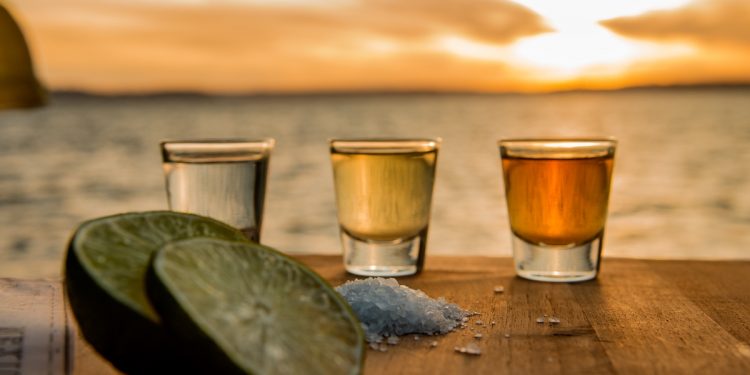
Tequila is Mexico’s national drink and one of the icons synonymous with the country. The ‘Tequila’ marque is now protected world-wide and production of the drink is tightly regulated: only a handful of Mexican states have production rights, and the best Tequilas emanate from Blue Agave grown in the rich volcanic soils situated in the state of Jalisco. Tequila is made by harvesting the hearts (known in Spanish as piñas) of the Blue Agave (ah-gah-veh) plant, slowly baking them in large ovens, and then pressing the pulp into a sweet liquid that is passed through a prescribed distillation process. Afterwards, the Tequila is transferred into specially-prepared wood barrels and left to age. The precise process, barrel type and aging time determines the Tequila’s classification, and strict labeling regulations enable buyers to know what type they are paying for. The highest quality Tequilas are made from 100% agave, whereas less expensive varieties use a mixture of agave and sugar cane. Tequila can be enjoyed straight or mixed into a variety of cocktails, the most of popular of which is the Margarita. You can find tequila cocktail recipes on the Mexican Bar here on Mexperience.
Mezcal
Mezcal is distilled using a similar production process to tequila but the tastes and nuances of the final blend are distinct. Mezcal, once a semi-obscure cousin to tequila, has recently gained widespread popularity and so the Mexican government acted to regulate its production, helping to improve the quality of mass-produced varieties and thus giving confidence to the wider market. As with Tequila, Mezcal is produced by baking the hearts (piñas) of the agave; but unlike Tequila, which is made exclusively from Blue Agave, Mezcal may be produced from nearly 30 different varieties of agave. Most Mezcal is produced using the espadín agave, although distillers also blend different varieties of the plant with the intention of creating unique flavors. The drink undergoes an aging process and, like Tequila, an aged Mezcal feels more robust and often smoother on the palate than the younger alternatives. The best Mezcal —like the best Tequila— is made from 100% agave; and like Tequila, less expensive varieties use cane sugars and contain other flavorings. Mezcal has a distinctively smoky flavor which for many is an acquired taste. Purists assert that Mezcal doesn’t lend itself to being mixed in cocktails, although there are plenty of Mezcal cocktail recipes to try out. Traditionally, Mezcal is taken straight with a pinch of sal de gusano: a condiment made by grinding together dried larvae, chiles, and salt. Mezcal may also contain a ‘worm’ (larvae) at the base of the bottle—this is a ploy concerned only with the product’s marketing and does not alter the taste. Tequila never has a ‘worm’ in the bottle.
Pulque
Pulque is an ancient beverage dating back to Mesoamerican times. Like chocolate in that era it was an élite beverage employed in ritualistic ceremonies and was later used by indigenous tribes as a form of medicinal tonic. While Pulque is also made from the agave succulent (distinct agave and maguey varieties exist), in any case the plant is not baked and distilled; instead, the plant’s sap is fermented. The sap is extracted by cutting a cavity into the heart of the agave, and the sweet liquid that comes out is called aguamiel (honey water). Once extracted, the sap is fermented to create a milky-colored and viscous beverage which creates a slight foam when it’s poured. Its taste is often likened to fermented oatmeal with a yeast undertone. Pulque can be taken straight, but is more often served as a long drink —termed ‘curado‘ in Spanish— prepared by blending the fermented sap with any combination of fruit pulps, nuts and spices, or sweeteners. Connoisseurs assert that the blend should only be taken fresh and that you should ask the vendor whether the batch you are being served was prepared today. Pulque is a low-alcohol beverage (typically 2-6%), whereas Tequila and Mezcal distillations typically contain around 40% alcohol. Beware: notwithstanding its low alcohol content, Pulque can creep-up on you, and a long afternoon whiled away taking this ancient beverage with your companions can leave your head clear and your legs confused when you eventually stand-up to walk.
|
|
Researchers Find Cancer-Fighting Agent in Pulque, Drink of the Gods |
|
An acid in the drink can prevent the proliferation of colon cancer cells by up to 40%
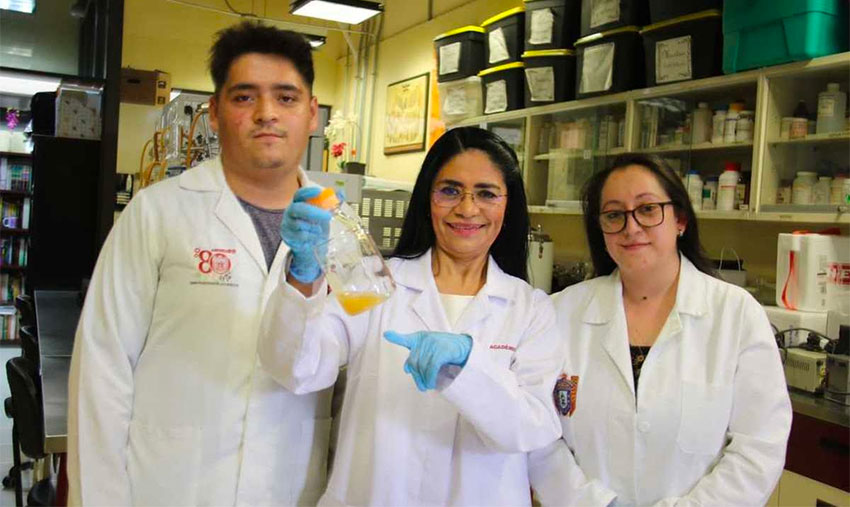
Pulque, an alcoholic drink from fermented agave, contains a cancer-inhibiting probiotic, researchers have found.
The finding indicates that a lactic acid bacteria found in the drink called Lactobacillus brevis prevents the proliferation of colon cancer cells by up to 40%.
Mexican and French scientists made the discovery in a joint study of Mexican fermented beverages by the National Polytechnic Institute (IPN) and France’s National Institute for Agricultural Research (INRAE).
Researchers isolated 20 strains of Lactobacillus brevis from pulque sediment to test their ability to block the proliferation of tumorous cells, and found that the strain which is endemic to Nanacamilpa, Tlaxcala, to be most effective.
The two research institutions have obtained a patent for the discovery, and detailed information has been shared with experts in the United States, Canada and the European Union.
Dr. María Elena Sánchez Pardo, an IPN researcher, attested to the value of the acid to fight cancer. “Lactobacillus brevis has an effect similar to that of the drug 5-fluorouracil, without causing any adverse effects on healthy cells … This is a very important scientific achievement that opens the possibility of having an innocuous treatment against colon cancer,” she said.
Tests were also carried out on an animal model of colon cancer, which provided further evidence of the anti-cancerous effect.
Dr. Pardo added that the discovery motivated the research team, and that their work would continue to search for other beneficial properties of fermented Mexican drinks.
Pulque is known as the drink of the gods as it was considered sacred in pre-hispanic Mexico. It is a milk-colored drink with a yeast like taste.
|
|
Meet the Sonoran's Family of Beachfront Resorts |
|
Pulque is a traditional alcoholic beverage native to central Mexico which has a history extending back hundreds if not thousands of years. Pulque is a cloudy, slightly alcoholic drink made from the sweet sap of cacti such as Maguey or Agave.
In the native tongue of the Nahuatl, the plant is called Metl. There are many rumors as to how Pulque is made in villages near Vera Cruz, it is rumored that the drink was made by chewing on the root of the cactus and spitting the sweet juice into a bowl.
It is said that Pulque also is valued for its tradition. This recipe is a far cry from REAL Pulque, but it is a delightful Agave Syrup based alcoholic beverage. And it doesn't involve any saliva in the ingredient list.
Also, this version of "Pulque" is organic with standard B Grade or Dark Agave Syrup. Make sure that there are no admixtures in your agave syrup. It should be pure, and preferably organic.
Basic Pulque Ingredients and Recipe:
4 Gallons Spring Water or Filtered Water
8 1/2 Pounds Dark Agave Nectar
1/2 Ounce dried Coriander Seeds
1 pack Champagne Yeast
Water is one of the most important ingredients in brewing, so it is always suggested that water used be spring water or filtered to remove chlorine, fluoride, and any other nasty chemicals which could throw off the taste of the brew or support bacteria. Make sure your yeast is primed and ready to go in a sterile jar before the brew day. It is wise to make the yeast starter 1-2 days beforehand.
On brew day, prepare and sanitize your primary fermenter while the four gallons of pure water is coming to a boil. Once the boil has started, it is time to give the coriander seeds a rough crushing, to facilitate the release of their flavors. Next, remove the brew pot from heat and add the Agave syrup. Stir well. Next, add the crushed coriander seeds and boil for 20 minutes, stirring occasionally. Leave the coriander seeds in the brew for the entire life of the beverage even up to consumption. The Coriander adds a really delightful lemon citrus floral aroma and taste to the brew, which compliments the tang and sweetness of the agave syrup refreshingly.
Coriander is the seed of the cilantro plant, a plant commonly used in food from many reaches of the earth, including Mexico. Cilantro can be described by those who do not like it as tasting "like soap", but for most people, the intensely green and slightly astringent taste makes most food feel more fresh in the mouth, especially salsa. The seed of the cilantro plant has a much different taste than the leaves, however. Coriander is an ingredient in some Belgian Wheat beers, along with orange peel, to add a citrus character.
Once the wort has cooled, pour it into a primary fermentation vessel, along with the coriander seeds, and pitch the yeast. This drink ferments rather quickly for a non-malt based beverage, and something about the viscous quality of the agave helps to keep the carbonation suspended in the brew. The fermentation should be racked after two to three weeks, and then after another week, tested for remaining sweetness, carbonation, and general taste. The drink is typically served from pitchers and not botteled. The thought is that the bottles might build up too much pressure if they were not drunk within two weeks, due to the complex sugars in the brew. One would have to either pasteurize the bottles, or wait until the fermentation is complete before bottling.
The best way to enjoy this drink is over ice, with a slice of lime on a hot day. Cheers!
|
|
Out of Order, Useless—or Both? |
|
In Mexico there are two ways of letting people know that something isn't working properly; they are interchangeable, with some exceptions
No sirve, from the verb servir, literally means “it doesn’t serve,” or properly translated “it’s no use,” and;
no funciona, that means it’s not functioning, or is out of order.
Often in Mexico people will say —or scrawl on a piece of card— no sirve, when they probably ought to say or write no funciona—for example when a soft-drinks machine is taking money but not dropping the cans into the hatch, or a ticket-dispensing machine says it gives change but doesn’t, or an ATM asks you to try again later.
But when it comes down to it, if it’s out of order then it’s no use—at least for the purpose at hand.
No funciona is also the same as no sirve if what doesn’t work is the proposed solution to a problem, because if it doesn’t work now, it won’t ever.
So, with some possible exceptions, no funciona and no sirve are more or less interchangeable, and the difference is either academic, or depends on how you want to look at it.
Mexicans aren’t particularly fussy about such grammatical minutiae, and generally don’t waste time on it, unless there’s a practical reason for bothering, like the legislator who vehemently denied being asleep during the debates. I was not asleep —dormido— but sleeping —durmiendo— the offended representative clarified.
|
|
Sonoran Sales Group - The OFFICIAL sales team for Sonoran Resorts!
We are Rocky Point's one and only exclusive and dedicated team who have always, and will always, sell Sonoran Resorts and ONLY Sonoran Resorts!
If you are looking for a team of real professionals who specialize in Puerto Penasco's best family of "True Beachfront" resorts, you've found us, and we are here to serve you.
Whether Buying or Selling, no one can serve you better when it comes to the Sonoran Resorts. We have been here since the beginning, and we will be here for you when you need us.
Our In-House closing team will make things happen quickly and professionally and we will save you money. Our attorneys are on salary and no additional attorney fees are charged to our clients. Loyalty to the Sonoran Resorts Sales Team is both appreciated and rewarded!
We don't just sell the Sonoran Resorts, we ARE the Sonoran Resorts. We work directly with the Developers, the HOAs, and the Rental companies.
We really can help you in ways that no one else can.
|
|
April 2021
Let me know if you would like links to any of the earlier ones. (Almost 10 years worth)
|
|
Just for the fun of it... |
|
Jim Ringquist
rockypointjim@gmail.com
|
|
|
|
|
|
|