Summer is coming and we have been busy! Welcome to June! The weather is beautiful, our resorts have been very full, and everyone has been having a great time. Memorial Day weekend saw a huge influx of tourists and there were so many great activities around town that people just couldn't attend them all in such a short time. Talk about coming back to life after a rough 2020.
Sales have been very strong this year as well - in fact, this year-to-date, we are quite a bit ahead of where we were over the past few years - and those were good years as well. Prices continue to slowly move up and the best deals now seem to sell almost as soon as they hit the market. Times are good in Rocky Point.
With the big recent increase in tourism, especially at times like this past holiday and weekends, most of us are painfully aware of the possible wait at the border - in both directions these days. Having a wait coming into Mexico is something that most of us are not accustomed to seeing, but there have certainly been times recently with a backup of cars on the US side waiting to cross.
The wait after a weekend, going back into the USA has become a given and most people either try to avoid it by leaving super early or staying an extra day. Those that don't have that option have just learned that it is a small price to pay for being so close to such a wonderful place to visit. Just remember that both sides of the border are doing what they do to keep everyone safe and help to prevent illegal items or substances from crossing. It's their job and the vast majority of the time, they are friendly and very accommodating.
After the Memorial Holiday weekend, the US side had all 5 lanes open as well as one of the inbound lanes being used as an outbound lane for part of the day. I am told that at the peak travel times, the wait to get across was up to 3 hours long. For me, that's enough incentive to get up early to go, or more likely, to stay another day. Luckily, living here full-time usually allows me the luxury of heading back at more convenient times.
This year is an election year in Mexico. The City of Puerto Penasco has a Mayoral race and the State has a Governor's race. Both will be determined by a vote to be held on June 6th. This year is not a Presidential election year. The Mayor is elected every 3 years and the Governor and President, every 6 years. Elections in Mexico are almost always held on Sundays.
Another thing that happens in Mexico during an election is the banning of alcohol sales during that day. That idea is not nearly as popular as the Sunday voting one, but people do tend to take it in stride and, as long as you remember to buy what you're going to drink ahead of time, you probably won't even notice the difference. Just plan ahead if you're going to be here with the plan to consume any alcoholic beverages. This ban also includes bars and restaurants and they are not allowed to serve during that time.
This month is chock full of activities as well so if you're in town, you will have the choice of attending the many fun events, or just relaxing on the terrace of your oceanfront condo. Maybe a bit of both would be the ticket. Circus Mexicus is the big one for June and you can be sure that this town will be packed with fans for the shows and events.
Meeting new people, especially first time Rocky Point visitors, just never gets old. And, it never gets old hearing them say "WOW! I had no idea that this place would be so nice!". Playing tour guide can be a lot of fun and hearing how people found out about us and where they are from is fun and sometimes pretty amazing too. It can be very surprising, as we are seeing more and more people from all over the world. Still mostly from Arizona, but things have changed and the word is definitely spreading about our little paradise.
Enjoy this beautiful month, come to Rocky Point if you can, and if you need anything don't hesitate to ask. Let me put my experience and expertise to work for you, and remember, as always, I've been here full-time for over 13 years and I am more than happy to help you with whatever you need, whether Sonoran Resorts related or not.
Just give me a call or send me an email any time and I will do my very best to help you. If I can't help you myself, I'm sure that I can point you in the right direction and help find you someone who can.
Besides the links below, you can our listings at the following:
www.sonoranresorts.mx
www.sonoranresortsresales.com
AMPI Puerto Penasco MLS
Point 2 Agent Multinational MLS
Pick up a handout at any of our Sonoran Resorts
Barrett Jackson Show - Scottsdale and Las Vegas
Various Real Estate and Trade shows in AZ, NV, and CA
Our listings are also shared with the following:
|
|
IMPORTANT: Some email providers cut this newsletter off before the end. If that happens on yours, please scroll to the bottom of this email and click "View Entire Message" to see the entire newsletter.
Sincerely,
Jim Ringquist
Broker/Sales Director
Sonoran Resorts Spa - Sea - Sun - Sky
602-476-7511
rockypointjim@gmail.com
www.SonoranResorts.mx
President/Volunteer
Tourist Assistance Unit Advisory Committee (Tourist Assistance Police)
602-774-1777
www.touristassistancerockypoint.org
touristassistancerockypoint@gmail.com
I hope that you enjoy my newsletter and continue to recommend it to your friends. Please feel free to give me thoughts, suggestions, or ideas for future newsletters. Puerto Peñasco is my home and I love to share the news and goings-on with you.
I do get email requests each month asking me to add someone to my list. While I certainly don't mind doing so, all you really need to do is click Sign-Up for Newsletter below, add the email address, and it will happen automatically. Not to worry - I will not spam you or share your email address, and you will only receive one email-newsletter each month on the 1st.
|
|
Exclusively Serving the Sonoran Resorts
Buy & Sell Direct and SAVE!
20 Years Experience on Sandy Beach
Four Fully Completed Beachfront Resorts
We Have Earned Our Stellar Reputation
Your Only Logical Choice when Buying
or Selling a Sonoran Resorts Condo!
|
|
Ready for Circus Mexicus? The Time is Near |
|
Fireworks have been ordered, tequila has arrived, guitars are tuned and beer will be ice cold soon! Roger Clyne & The Peacemakers are ready for Circus Mexicus. 30 other bands are ready too. Are you?
Here are a few tips to get you ready.
Discounted advance purchase tickets are on sale through Wednesday, June 9th at www.circusmexicus.net but increase at the door beginning June 10th. Get yours now!
Please plan to leave as early as possible! The Border hours remain 6:00am - 8:00pm sharp going both directions. Expect lines to enter Mexico Thursday and Friday. Leaving early will ensure you're there in plenty of time.
Beach chairs are encouraged Friday and Saturday nights at the Cancion Main Stage but not at any of the other events. Local protocols remain in place such as masks at entry, temperature checks and hand sanitizer. There is no longer a curfew!
Please try to carpool, walk or taxi to the Friday and Saturday concerts at the Cancion Main Stage located behind Banditos. Let's just say the event is not known for parking.
Viva Mexico y hasta pronto!
|
|
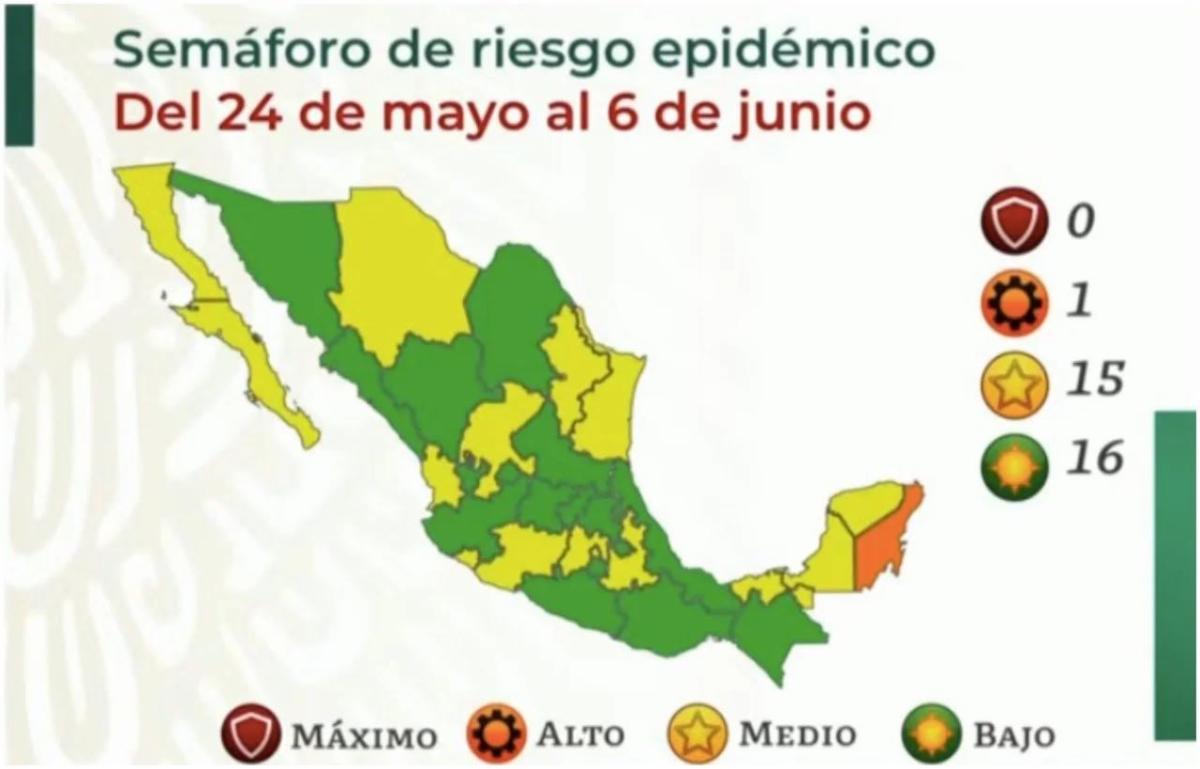
Covid Traffic Light Map Shows 16 States, Including Sonora, in Low Risk Catagory |
Health authorities recently updated the epidemiological traffic revealing that Quintana Roo is the only state to remain the a medium/high risk category for Covid-19. This current map is valid for 15 days before a new one will be created with the updated information received.
For the past nine months the stoplight system risk estimation has had 10 indicators. Prior to that, there were only four.
Here are the indicators used for the mapping system
* Actual reproduction rate of COVID-19
* Incidence rate of estimated active cases per 100,000 inhabitants
* Weekly percentage of possibility of the SARS-CoV-2 virus infections
* Up or down trend of COVID-19 syndrome cases per 100,000 inhabitants
Hospitalization indicators
* Rate of hospitalized cases per 100,000 inhabitants
* Percentage of general beds occupied in the hospitals of the hospital network for the care of Respiratory Infections and intensive care
* Percentage of beds with ventilators occupied in the hospitals of the SARI Network
* Trend of hospitalized cases per 100,000 inhabitants
Death indicators
* Mortality rate per 100,000 inhabitants
* Trend in the mortality rate per 100,000 inhabitants.
Puerto Penasco and Sonora have been in the Green, low risk, category for several update periods.
|
|
Food and Drink at the Sonoran Sky Resort:
|
|
Cuauhtémoc, Navy Training Ship, Receives Warm Welcome in Puerto Penasco |
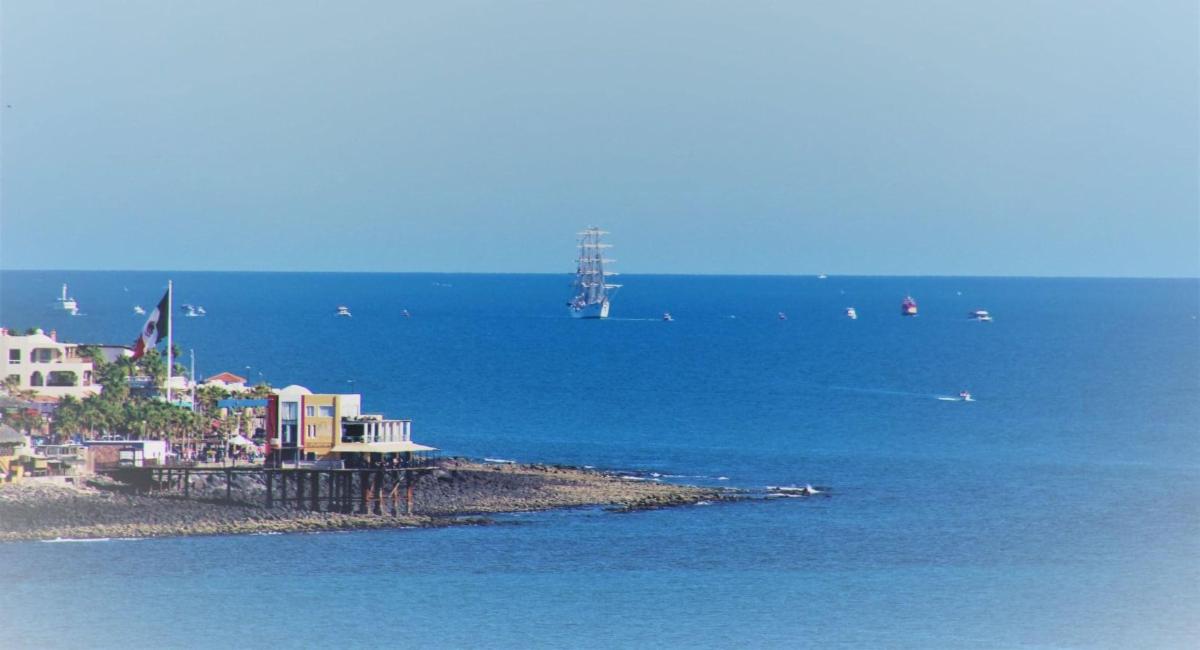
Puerto Penasco and Sonora are popular with tourists and bring visitors from all over the world. Rocky Point is the jewel of Sonora when it comes to tourism and both local and state government representatives work to promote the area in an ongoing basis. The popularity of the city by the sea encourages and allows multiple event, both large and small, throughout the year. One such occurance happened on Friday, May 21st, with the arrival of the School Ship of the Cuahtémoc Secretariat of the Navy.
The coordinator of the Commission for the Promotion of Tourism, (Cofetur), recognized the importance of the visit of this ship, since in addition to the significance of it being a flagship of the Mexican Navy, it arouses the interest of both local, national, and international populations.
Governor Claudia Pavlovich is very active in promoting our destinations, so she recognizes the Secretary of the Navy coming Puerto Penasco as a very significant event, knowing that the school ship receives much attention in each of the different ports in Mexico which it visits.
During a tour aboard the ship with the commander of the Puerto Penasco naval sector, Daniel Escobedo, the head of Cofetur recognized the commitment of the Secretary of the Navy for their work and the support they provide to the Sonoran and Mexican coastal cities which have become stops for the majestic ship.
"I want to thank them for the professionalism and commitment that they have always shown, it is always important to work in coordination between all levels of government, their institutions and corporations for the good of the population," said Núñez Noriega.
Rear Admiral Escobedo explained that the Mexican Navy has existed for 200 years and continues to serve the country and populations proudly. On April 5 the ship sailed from the port of Acapulco, Guerrero, to start the Bicentennial Instruction Cruise in which it is scheduled to visit 11 Mexican ports in the states of Baja California, Baja California Sur, Chiapas, Colima, Guerrero, Jalisco, Oaxaca, Sinaloa and Sonora.
He said that currently the Cuauhtémoc ship sails with 58 Cadets from the Heroic Naval Military School Generation 2016-2021, as well as for the first time with 20 Third Year students from the Mercantile Nautical Schools of Mazatlán, Tampico and Veracruz.
Núñez Noriega highlighted the work carried out by the Puerto Penasco tourist infrastructure and the business sector in continuing to positioning this destination as one of the visitors' favorites, in addition to the promotional activities carried out by the Convention and Visitors Bureau.
|
|
Potpourri!
Short Shorts of All Sorts!
Sometimes so much is going on in our little slice of paradise by the sea that we can't address the many short subjects with proper attention. To handle the hodgepodge of dangling subject matter, we invented the Potpourri Page. Here are a few "short shorts" to keep you up to date.
|
|
Rocky Point Fire Department Receives Generous Donation of Equipment |
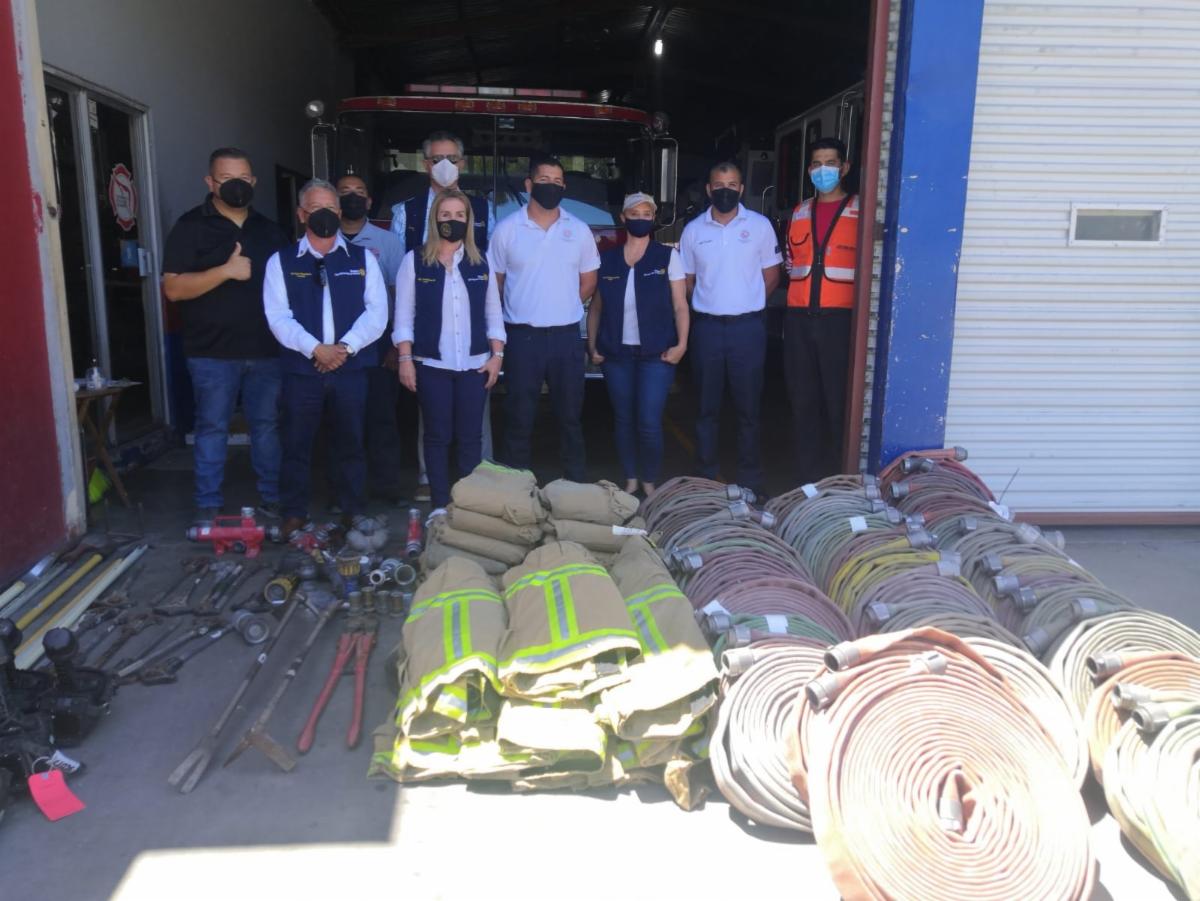
The Puerto Penasco Fire Department gave a big thanks to Club Rotarios Mar de Peñasco, Buckeye Fire Department, and the Rotarians Club of Surprise, Arizona, for their support with the donation, transportation, and delivery of tools and equipment for the institution.
This equipment consists of fire hoses, personal protective equipment for firefighting, hand tools such as firefighter's wrenches, distribution nozzles, bars, poles, firefighter lamps, among other things.
Thank you colleagues!
|
|
Water Returns to Colorado River in Mexico |
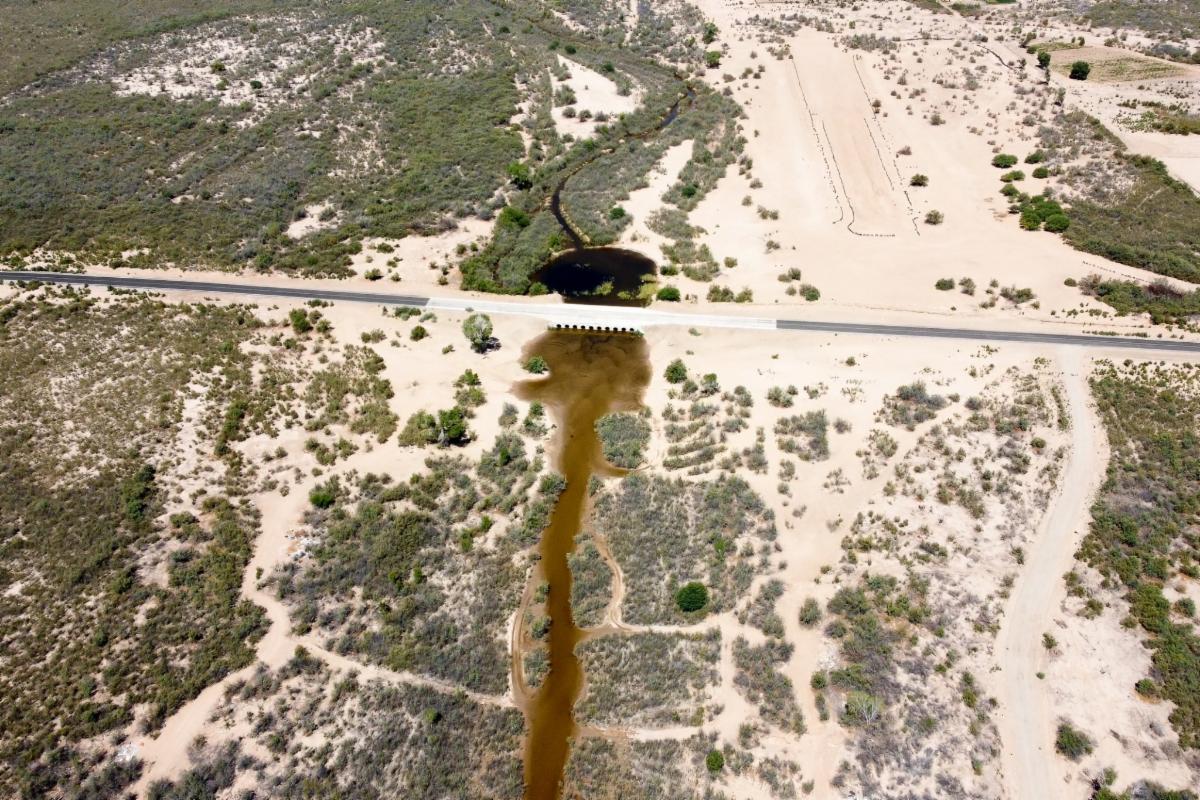
On May 1, water began flowing into the arid Colorado River Delta as part of a program of scheduled deliveries to restore this region, sanctioned under a bi-national agreement between the U.S. and Mexican governments for advancing sustainable management of the Colorado River.
The water deliveries are part of an ongoing plan of vital and historic importance implemented through the U.S. and Mexican sections of the @InternationalBoundaryandWaterCommission and supported by an alliance of conservation organizations from the United States and Mexico. The Colorado River enters Mexico at San Luis Rio Colorado, which is about a 3-hour drive from Rocky Point on the way to Mexicali.
|
|
In Border Town, Sonoyta, New Police Chief Cracks Down on Corruption |
There’s a new sheriff in town in Sonoyta, and he’s not happy about the bribes that his officers have been receiving from passing tourists on their way to and from Rocky Point. In a very public fashion, he made it clear that there will no tolerance for corruption among his police officers. He even went so far as to publicize his personal cell phone number, asking anyone who has a problem with his officers to contact him directly to report it. Another practice which will no longer be tolerated are people who cut in line instead of forming at the end of the line. Offenders will be fined and escorted to the rear of the line.
This is very welcome news and has been very well received, even if a bit overdue. Most regular visitors to Puerto Penasco are very familiar with the “Sonoyta Crawl” in which they creep through town at about 15 mph and make extra-long stops at stop signs to avoid attracting attention. That said, don’t forget that the speed limit in most of Sonoyta is 40 kph (about 24mph), and you must stop completely at stop signs. If you do break the law, you will be fined – but all fines are to be paid at the police station, not to the officer who pulls you over. Recent reports from travelers have suggested that the efforts are working!
ctioned
|
|
June 6 is Election Day in Rocky Point |
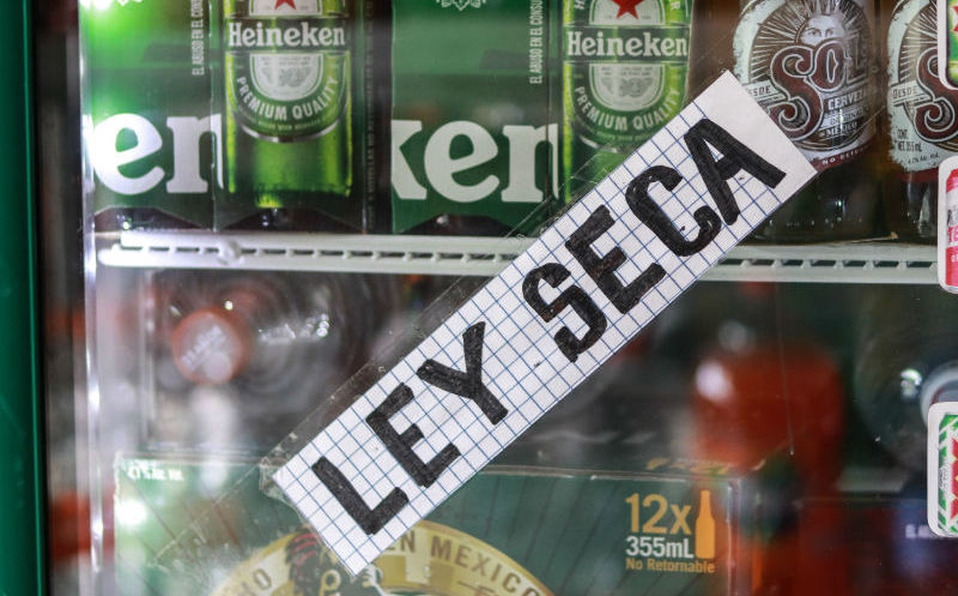
June 6th is election day in Rocky Point, and in the State of Sonora. While that may not mean much to us foreigners who live and visit in terms of the election itself – foreigners are specifically forbidden to vote in or interfere in any way with Mexico elections – you still may be interested to know that you will not be able to buy any alcohol from midnight the day before until midnight the day of the election. This prohibition is known as Ley Seca.
The Ley Seca (literally “Dry Law” in Spanish) refers to the banning of the sale of alcohol for at least 24 hours (and sometimes more) before elections and throughout the day on election day in Mexico and some other Latin American countries. The purpose of the law is to avoid public displays of intoxication, maintain public order, and to ensure that the elections are held with the maximum degree of decorum and level-headedness, allowing citizens to exercise their vote in a calm and orderly manner.
The law has a long tradition in Mexico: it first came into effect in 1915 and used to be enforced at a national level, but since 2007 it is left to the authorities of each state to determine whether or not they will apply it. Some states restrict the sale of alcoholic beverages for up to 72 hours, some for 48 or 24 hours
In Mexico, general elections are held every six years, and in Rocky Point, local elections are held every three years. Elections are usually held on the first Sunday of June, but this can vary. Elections are also usually held on a Sunday in Mexico so that the greatest number of people will show up to vote without the conflicts of work or school.
|
|
Rocky Point Curfew Ends as City Continues Return Towards Normalcy |
|
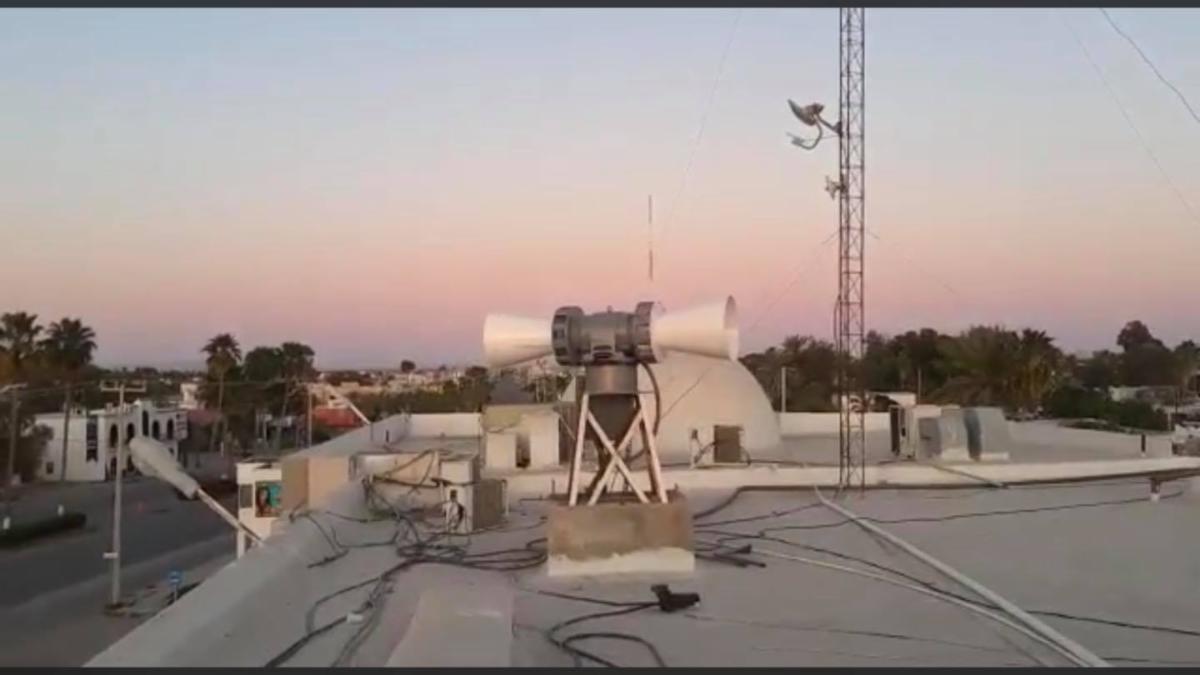
It has already been more than a year since the start of the nightly curfew siren on the roof of city hall sounding to tell everyone to get home, or face a fine. The measure was put into place as one of the restrictions in the plan to curb and keep Covid-19 at bay here in Rocky Point. Much to the delight of a good portion of the population, this restrictive measure was lifted, as authorized by city authorities and the members of the Municipal Health and Safety Council.
The low incidence of cases of the disease and the “minimal risk” status of the green traffic light on the covid traffic light map system, which has been the case for weeks, was decisive in putting an end (at least as long as there is no regrowth of the virus) to the curfew. This change took effect on May 14.
Ever since the curfew siren was activated, it has been very controversial among the population, both local residents and tourists alike, mostly due to the fines imposed on those who were still out and about after the time specified, a measure which caused many to change their schedules, or their hours of operation. Those people are rejoicing as things get back to normal and tourism continues to surge in recent months.
Along with the removal of the curfew (and the loud siren), members of the Municipal Health and Safety Council approved, unanimously, the return to normal the operation of all types of essential and non-essential activities to be carried out without restriction of modified hours, and returning to simply respecting the laws and ordinances established by the city, state, and federal governments. Businesses are however, required to continue to adhere to the directed preventive actions against the contagion and spread of the Covid-19 virus.
Terencio Gutiérrez, from the city administration, thanked all citizens, businessmen and authorities of the three levels of government, as well as those who participated directly and indirectly, for their cooperation in complying with the preventive measures which helped contribute to the low incidence of Coronavirus infections. However, he remarked, it is now necessary to remove restrictions and regulations and allow people to return mostly to normal through the Penasco se Activa Plan.
Note: Facemasks are still required in Puerto Penasco until further notice.
|
|
Recertification of Blue Flag Status Advances on Manny's Beach |
|
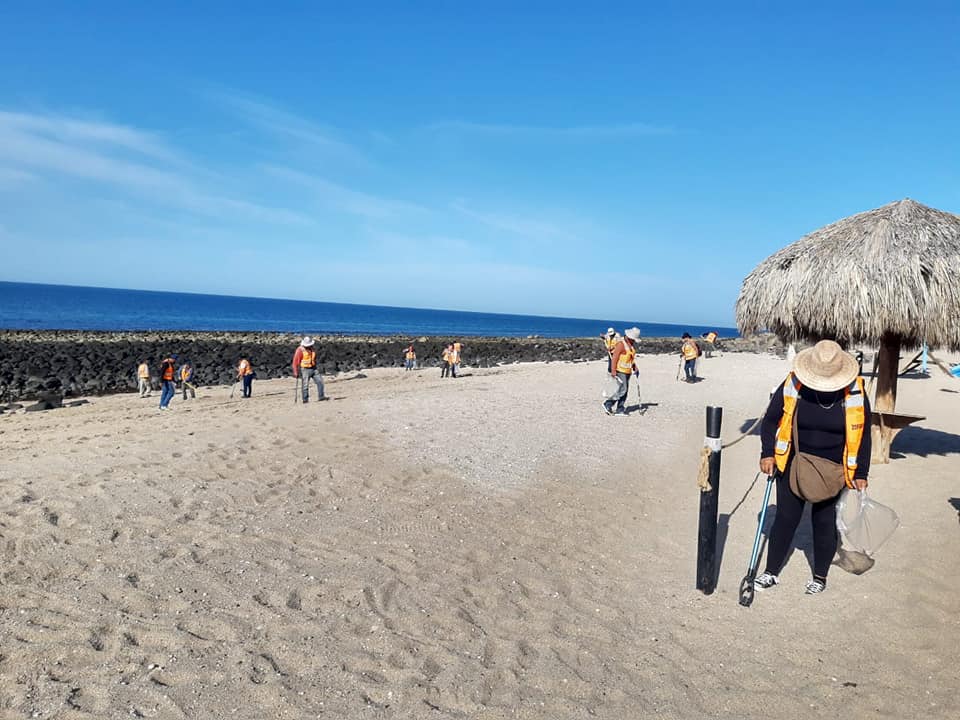
Puerto Peñasco obtained a favorable result in the audit of the control visit for recertification of Blue Flag beach, in the Mannys Beach Club area, El Mirador beach, with 91% compliance with the established criteria, reported Marcia Ortega Morales.
The director of Ecology and Sustainable Development of the City Council specified that this represents the ratification of the Blue Flag award, achieved last year, for the 2021-2022 season.
He specified that the auditors corroborated compliance with most of the 33 criteria established to hold this accreditation, which involve environmental education, water quality, surveillance, cleaning, tourist influx, presence of lifeguards, Blue Flag information module, bicycle station and other parameters.
Ortega Morales stressed that monitoring logs are sent monthly in the certified area, which facilitated the audit and also merited congratulations to the staff of the Federal Maritime Terrestrial Zone of the City Council, for the adequate work in cleaning and maintaining the coastline.
"We meet 91% of the criteria required, so once again, Puerto Peñasco has proven that it can raise the blue flag again in the 76 meters certified as Blue Flag, in Mannys Beach," she said.
The director of Ecology added that they have a month to correct 9% of the observations issued by the auditors, but, in general, everything is fine and it is practically a fact to hold the Blue Flag award in Puerto Peñasco.
She stressed that it has not been easy, especially in the midst of the Covid-19 pandemic, and yet this has not been an obstacle to continue with the beach accreditation processes in this tourist destination.
She recalled that it is an international certification for coastal destinations in environmental management, safety, services, education activities and water quality; This proves once again the progress that we have and the quality of the beaches that make Puerto Peñasco the best tourist destination in the Northwest of Mexico.
|
|
Pemex Invests US $600 Million in Texas Oil Refinery |
|
The company already owns half of the facility in a partnership with Shell
Mexico’s heavily indebted state oil company has reached a deal to buy Shell Oil Company’s 50% share in the jointly-owned Deer Park oil refinery near Houston, Texas, for US $600 million, President López Obrador announced Monday.
Pemex, which has some $100 billion in debt, “bought 50% of the shares because the other 50% were already owned by Pemex,” he said in a video message posted to social media.
“In this way, we now have a new refinery. This refinery in Houston has the capacity to process 340,000 barrels [of crude] per day. … It’s the same [capacity] as the new refinery at Dos Bocas [on the Tabasco coast] that we’re building …” López Obrador said.
“In essence, we received six refineries in a poor state – we’re modernizing them, … and we’re going to deliver eight refineries [to the next government]. In this way, we’re going to stop buying fuel abroad, … we’re going to be self-sufficient by 2023.”
The president, who sees oil production as crucial to both Mexico’s sovereignty and its economic future, stressed that Pemex’s purchase of Shell’s share of the Houston refinery – a joint venture since 1993 – will not be made with funds supplied via a loan but with savings generated by the government’s austerity drive and elimination of corruption.
The acquisition comes at a time when many countries are attempting to reduce their reliance on fossil fuels. But López Obrador has made their use a cornerstone of his energy plan and has moved to make it more difficult for private, renewable companies to participate in the Mexican market.
Mexico expert Duncan Wood said on Twitter that the decision to buy Shell’s interest in the refinery “is not a bad idea per se” before adding: “but let’s see how Pemex runs the place without Shell.”
“While some oil companies seek to shed unprofitable assets, Pemex looks to accumulate. It’s an unusual investment approach. Pemex is buying an aging asset that produces a commodity for which time is running out,” wrote Wood, former director of the Wilson Center’s Mexico Institute and now the center’s vice president for strategy and new initiatives.
“A key question arises: will the Biden administration raise environmental regulations for refining, to reach climate and energy transition goals? And how expensive will that be for Pemex? Of course there is the possibility that pursuing lower emissions at Deer Park will teach Pemex how to do a better job at its refineries in Mexico … we can always dream.”
Huibert Vigeveno, Shell’s downstream director, said the company had not been planning to sell its interest in the refinery but “following an unsolicited offer from Pemex, we have reached an agreement to transfer our interest in the partnership to them.”
“Pemex has been our strong and active partner at the Deer Park Refinery for nearly 30 years, and we will continue to work with them in an integrated way, including through our on-site chemicals facility, which Shell will retain,” he said.
Shell said in a statement that “the consideration for this transaction is $596 million which is a combination of cash and debt, plus the value of hydrocarbon inventory.”
López Obrador complained recently that the Texas refinery – which processes a significant amount of Mexican crude – has not provided any benefits to Mexico in the almost 30 years since Pemex invested in it, apparently because most profits were reinvested.
The Associated Press said that $600 million for half a refinery looks like a good deal for Mexico but added that it raises questions about the government’s $9 billion outlay to build a similar refinery on the Tabasco coast. That investment is 7.5 times higher than the apparent $1.2 billion value of the Deer Park facility.
Construction of the Dos Bocas refinery, criticized by many energy analysts on the grounds that it diverts resources from Pemex’s more profitable exploration business, is expected to be completed by the middle of next year.
|
|
Rocky Point Recorded History Began with Robert William Hale Hardy, a Retired Lieutenant in the British Navy in 1826 |
|
Preliminary Growth Numbers Show 20.6% Increase in April |
|
The economy bounced 20.6% in April compared to the same month last year, according to preliminary estimates by the National Institute of Statistics and Geography (Inegi).
The rebound would be the highest annual growth for any month on record, and would see the economy break the negative streak of 20 consecutive months of dips.
The hit taken by the economy in April last year due to the arrival of the Covid-19 pandemic and the confinement measures that accompanied it was largely responsible for the extent of the increase.
Inegi predicts 22.4% growth for April as the most optimistic possible outcome and a worst case scenario of 18.6%.
The statistics body also details secondary and tertiary activities, which would also have a significant growth rate. The industrial sector could see 34.5% annual growth for April, while the services sector could show a recovery of 16.4%.
Gabriela Siller, director of financial analysis at Banco Base, said the historic growth rate is mainly a reflection of last year’s poor results. “It should be remembered that, in April 2020, economic indicators contracted 19.7% in annual terms, so the significant annual growth is mainly due to the low comparison base,” he said.
She added that the outlook is positive for continued growth into the second quarter, driven particularly by the recovery of the service sector, which was one of the most affected by the pandemic.
|
|
Puerto Penasco Recycles 100,000 Tires with the Llantaron Program |
|
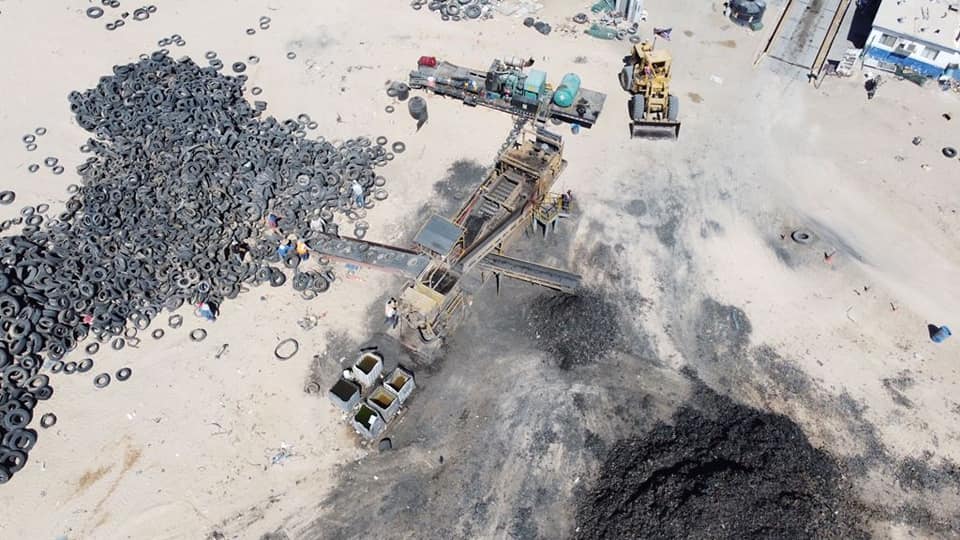
The “Llantatón” tire recycling ecological program, which began last March, will continue to operate for at least two more weeks to meet the objective of eliminating all discarded tires in the vicinity of the landfill, reported Marcia Ortega Morales. The Director of Ecology and Sustainable Development of the City Council reported that the tire shredding machine has recycled around 100,000 tires to date in an effort to continue advancing precautions against landfill fires and the pollution which goes along with them.
He stated that on March 28, the Mayor of Puerto Peñasco, Kiko Munro, initiated the operations of the tire shredder plant which processes around 5,000 discarded tires per day. Tire fragments are then transported to Hermosillo to be used in a cement plant for the production of cement for the construction industry.
He is asking the community in general to take their tires to the landfill now, because the "Llantatón" is free this time, but in the future to avoid creating a new tire dump, charges may be applied to those who generate this type of waste. He acknowledged that there are still many tires to be eliminated and that is why it was decided to extend this program, which represents the first stage of the total remediation process of the Puerto Peñasco landfill.
Ortega Morales commented that discarded tires had accumulated on one side of the sanitary landfill as well as in five collection sites around town for years, and through this process, they will all be eliminated. "The tire collection centers are open and operating from 8:00 am until 3:00 pm as well as the recycling center located behind the Municipal building, and also in the community development centers of the Obrera, Nueva Esperanza, and San Rafael colonies” he added.
Ortega Morales stated that, due to the accumulation of tires, the situation that was created on one side of the sanitary landfill, most of which had been dumped there illegally, had generated visual, atmospheric, and soil contamination, as well as being a source of proliferation of mosquitos and other pests, potentially causing diseases such as dengue.
He reiterated that this is the first and a very important step being taken with this tire recycling program in working towards the total remediation of the sanitary landfill so that Puerto Peñasco has a functional and adequate site for the final disposal of garbage.
The 5 collection centers locations:
• Municipal Collection Center: Ave. Coahuila and Ignacio Allende, behind the town hall, Benito Juárez neighborhood.
• Nueva Esperanza Community Development Center: Ave. San Luis and Dr. Gracida street, Nueva Esperanza neighborhood.
• Center for Community Worker Development:
• San Rafael Community Development Center: Lázaro Cárdenas y 67, San Rafael neighborhood.
• Public Services / OOMISLIM: Calle 10 and Belisario Domínguez.
|
|
Chihuahua Native is Third Mexican to Win Miss Universe Crown |
|
A software engineer from Chihuahua was crowned Miss Universe at the contest’s 69th pageant in Hollywood, prevailing over contestants from 73 countries.
Andrea Meza, 26, is the third Mexican to win after Mexicali’s Lupita Jones in 1991 and Guadalajara’s Ximena Navarrete in 2010.
Meza graduated from the Autonomous University of Chihuahua in 2017 with a degree in software engineering. She is a tourism ambassador for her home state and a makeup artist in her spare time.
The competition was set to take place last year, but was delayed due to the Covid-19 pandemic.
In a statement during the pageant, Meza addressed the topic of modern day beauty standards.
“We live in a society that is increasingly advanced. And just as we have advanced as a society, we also have advanced in terms of stereotypes. Today, beauty does not lie only in how we see ourselves … For me, beauty lies in our spirit, in our soul and in the values which we hold. Never allow anyone to tell you that you are worthless,” she said.
Speaking on Good Morning America Meza said she first dreamed of taking home the crown when Navarrete triumphed in 2010.
“I used to think that Mexican people were not able to get to these places and to be in these high positions, and after she [Navarrete] won, she changed the mindset that I had,” Meza explained.
However, she said she still had to battle with insecurities to reach the competition. “I didn’t feel capable of doing this. I always thought that I was not pretty enough, that I was not smart enough, and I was afraid of being in front of cameras or microphones, so let’s just say that it was an impossible dream that I had … But I started growing up and I decided that this was the path I needed to take in order to get out of my comfort zone and keep growing,” she said.
She added that she feels a responsibility to represent Mexico and to inspire women. “In order to be … an ambassador of your country, you have to be prepared, and it doesn’t matter the career that you choose. I mean, I’m an engineer, we have doctors, we have administrators, and the amazing thing about Miss Universe is that we have all these well-prepared women,” she said.
|
|
Mexican Entrepreneurs Launch Ecolana Hoping to Convince Millions Adopt to the Habit of Recycling |
|
In Mexico, 53 million tons of solid waste are generated each year, but less than 10 percent is recycled because most people do not recognize the value of waste and it becomes a garbage problem.
To reverse plastic pollution, mainly, and promote recycling, showing the different types of materials and collection centers, three Mexican entrepreneurs, Alejandra Valdéz, Mariana Soto, and Lisseth Cordero, launched the Ecolana App, which was announced on May 17 by 24 Mexican celebrities, in the context of the commemoration of the International Recycling Day.
“The Ecolana app is a social commitment to get millions of Mexican families to adopt the habit of inclusive recycling. To help us amplify this message, we ask for the help of generous men and women who have put their profile as public figures at the service of the environmental cause in our country. We are very grateful for the great support that this movement is receiving ”, said Mariana Soto, communication director of Ecolana and master in Business Administration from the University of Les Roches in Switzerland.
Through a video broadcast on social networks, 24 celebrities and public figures made known their involvement in favor of recycling and environmental responsibility, promoting the mobile download of the Ecolana App, a digital tool that makes recycling easier for Mexican households and that has the backing of the United Nations environment program.
“Ecolana has been operating since 2018 as a social and environmental impact company that promotes inclusive recycling in Mexico through its digital platform, where anyone can find collection centers and locations to take their waste to recycling, recycling tips and a dictionary of waste that tells you what to do with them and how to take them to the collection to facilitate their recycling ", said Alejandra Valdéz, financial director of Ecolana and environmental engineer for the National Polytechnic Institute.
In this way, she said that as of today, the app is integrated into the priority actions that this social enterprise carries out in favor of environmental culture in Mexico.
In 2020, these entrepreneurs were chosen as Recycling Heroes by the prestigious publication Recycling International, as they managed to turn Ecolana into one of the most awarded environmental initiatives of today, highlighting the avant-garde values, accessibility, and innovation that distinguish the project.
“We have found that most of the people in Mexico consider recycling to be difficult, that motivated us to work harder. The app that we present today will break that taboo and will make Mexico now have a simple, fun and productive alternative for millions of homes to recycle, ”said Lisseth Cordero, general director of Ecolana and an industrial engineer for the Instituto Tecnológico Autónomo de México.
The Ecolana app allows users to earn points by recycling, learn more about environmental culture, meet recycling challenges, invite friends to recycle and promote inclusive recycling, which is exchangeable for discounts on products that promote a life without waste, services mobility, and experiences such as tickets to concerts, plays, and museums.
|
|
Collecting Sand Dollars on the Beaches Around Rocky Point |
|
We often find sand dollars on our beaches, and their beautiful skeletons make a great souvenir, but it’s illegal to collect them when they are alive. Live sand dollars play an important role in our local ecosystem by controlling populations of smaller invertebrates and serving as food for some larger organisms.
Before you go beachcombing, be sure you can tell the difference between the skeleton and the living creature by keeping these three tips in mind!
1) Live sand dollars are members of the Phylum Echinodermata, meaning “spiny skin”. As the name implies, they have tiny spines all over their bodies that resemble hair. These spines help the animal move along the ocean floor and bury itself in the sand. Hold the sand dollar gently in the palm of your hand and observe the spines. If they are moving, it is still alive. The animals lose these spines soon after they die.
2) Another way to determine if the animal is alive is by observing its color. Sand dollars can vary from a deep brown to a purplish-red color when alive. After the animal dies, the sun causes its color to fade, and the skeleton eventually turns silvery-white. People thought the skeletal remains (called the test) resembled silver coin currency, which is how the name “sand dollar” came about.
3) Live sand dollars produce a harmless substance called echinochrome, which will turn your skin yellow. Place a sand dollar on your open palm and leave it there for a minute. If it leaves a yellowish stain, the animal is alive.
Sand dollars can’t survive out of the water for more than a few minutes. If you find a live one, return it to its home by placing it gently on the sea floor, so it can continue to play its important role in the ecosystem.
If you are lucky enough to find a dead sand dollar, you can take it home to display proudly among your beach treasures. Thank you for helping us care for the creatures we share the Sea of Cortez with.
|
|
Dishes of Mexico Made with Insects |
|
Some demographers believe that humanity will soon have to learn to eat insects in large quantities in order to cope with the growing demand for food from the world’s population. Mexicans would find this adaptation easier because they already have extensive experience in eating delicious critters of all kinds.
Here are some of the best typical Mexican dishes with insects and their surprising health benefits.
1. Fried Ahuautles
Axayácatl is the generic name given to various species of insects that live in the lakes of the Valley of Mexico. Although it is not a properly aquatic insect, it reproduces in water and both the animal and its roe have been delicacies since pre-Hispanic times.
The roe are called ahuautles and are often praised as a “Mexican caviar.” The specimens are fished with a net and the roe are captured by means of tulles placed on the water’s edge, where the adult insects put them.
The axayácatl is roasted to eat it, while the ahuautles are eaten fried, in pancakes, in tamales and in mixiotes.
2. Chahuis with lemon
In Mexico there are more than 80 species of edible beetles, which are eaten mainly in the larval stage.
They come mainly from four families of insects (Cerambycidae, Melolonthidae, Scarabaeidae and Passalidae) and receive other names, such as stick worm and blind hen.
They are part of the popular diet, especially in the central and southern regions of Mexico. The most popular are the chahuis, also called xamoes, which grow on mesquite trees and bean plants.
You have to cook them well so that the bitterness they have naturally disappears. They are eaten alone or with salt and lemon.
3. Chachamas with garlic sauce
The spoonbill caterpillar has transcended the Puebla municipality of Zapotitlán, where there is a tradition of consumption since pre-Hispanic times to enter some gourmet dishes thanks to its characteristic flavor.
In Zapotitlán, caterpillars are traditionally collected by indigenous Popolocas and there are families that, for generations, have derived their livelihood from this work.
The natives look for them in the green sticks, among the bushes full of cacti, where it is not surprising to come across a viper or a scorpion.
Harvesting begins at the beginning of the rainy season, at the beginning of July. First they are put in water so that they release their bitter compounds and then they are baked and dried, being ready to consume them. They are eaten fried, enchilados, in tacos with avocado and garlic sauce.
4. Dragonflies with chili peppers and lemon
Dragonflies are large-eyed anisoptera insects that live near freshwater bodies, because their nymphs are aquatic.
They were part of pre-Hispanic mythology, since the Teotihuacanos considered them the symbol of the purity of water, while the Mexica associated them with demons. It is also called the devil’s horse.
The deterioration of lagoons, lakes, estuaries and other aquatic spaces (which are habitats of dragonflies) has led to several species being at risk of extinction in Mexico.
In the north of the country, particularly in Sonora, they are eaten with a mix of chili, lemon and salt. They are also eaten fried as snacks, with the accompaniment of a shot of tequila.
5. Baked Tarantulas
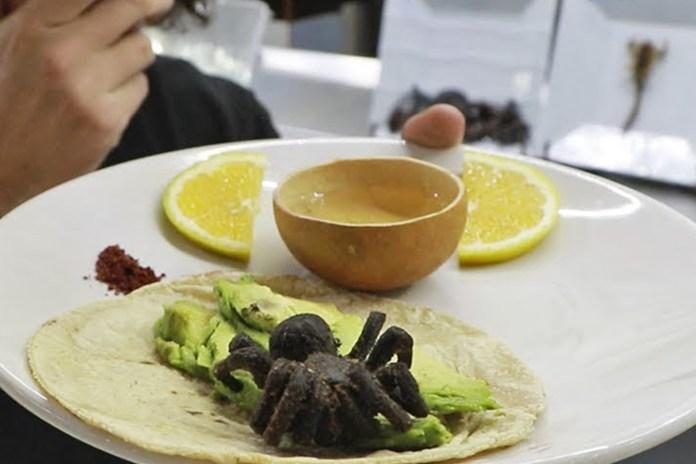
Among the typical Mexican dishes with insects, the roasted tarantula is one of the most unusual.
Tarantulas are fundamentally the largest spiders that make up the genus Lycosa and carry a bad reputation for their supposed lethal bite, which is more myth than reality.
If you want to eat tarantulas in Mexico City, you have to go to the San Juan de Pugibet market. At the local México en el Paladar they prepare some in Veracruz.
Live tarantulas are put in a freezer for several minutes to die and then boiled for three times; the first, with a mixture of mezcal from Oaxaca and water; the second, with wild aromatic herbs and, the last, with shrimp salt.
They are then baked and, finally, the belly is brushed to remove the remains of hair. They are eaten alone or in tacos with avocado.
Connoisseurs recommend starting by eating the legs, before attacking the main prey, which are the head and the belly.
If starting with tarantulas is too much for you, the restaurant offers lighter options on insects, such as chicatanas and scorpions.
6. Cuetlas with pasilla chili sauce
Cuetlas are edible butterfly larvae, also called chiancuetlas, that live on chia, jonote, cuaulote and tlahuilote plants.
In Mexico they are consumed mainly in the Mixteca area, Veracruz and Puebla. The caterpillars are harvested during the rainy season, boiled and roasted on the comal or left to dry.
These larvae are a powerful source of protein, B vitamins, and iron. One way to eat them is in tacos seasoned with a pasilla chili sauce.
7. Toasted Cupiches
The strawberry tree butterfly ( Charaxes jasius ) also called “low” and “four tails”, receives its common name because its caterpillars feed on the strawberry tree bush.
In Mexico, the larvae of this butterfly receive various names in the State of Mexico and in Michoacán.
The Mexicans call them cupiches, in the area of Lake Pátzcuaro they call them chamas, the Zitacuarenses call them huenches, and in other parts of Michoacán they call them conduchas. They are collected in the pupal stage and toasted on the comal to eat.
8. Titococcus soup
Titococci are wood borers, also called canalejos, titocos, and cuauhocuilines. In southern Mexico they are eaten after roasting them on the comal or in a broth prepared with epazote, avocado leaves and grains of young corn.
9. Chocolate with crickets
Edible crickets are a rich source of protein. In countries like Finland, farms have been opened to breed these insects and make flour and pasta.
If you dare to prepare a chocolate with crickets, all you will need are some insects, a bar of dark chocolate to melt, butter and sugar. Follow the procedure below:
Wash the crickets and bake them at 180 ° C, until they are crisp, taking care that they do not dry out or burn.
Let them cool and, if desired, remove the heads and legs.
Heat the chocolate in a water bath and when it melts add a tablespoon of butter and sugar to taste, mixing until everything is integrated.
Dip the crickets in the hot chocolate with the help of a fork and cool on wax paper.
Refrigerate for about two hours and cut your cricket chocolate chip bars to the desired size.
|
|
Meet the Sonoran's Family of Beachfront Resorts |
|
Chapulines: Cooked Grasshoppers |
|
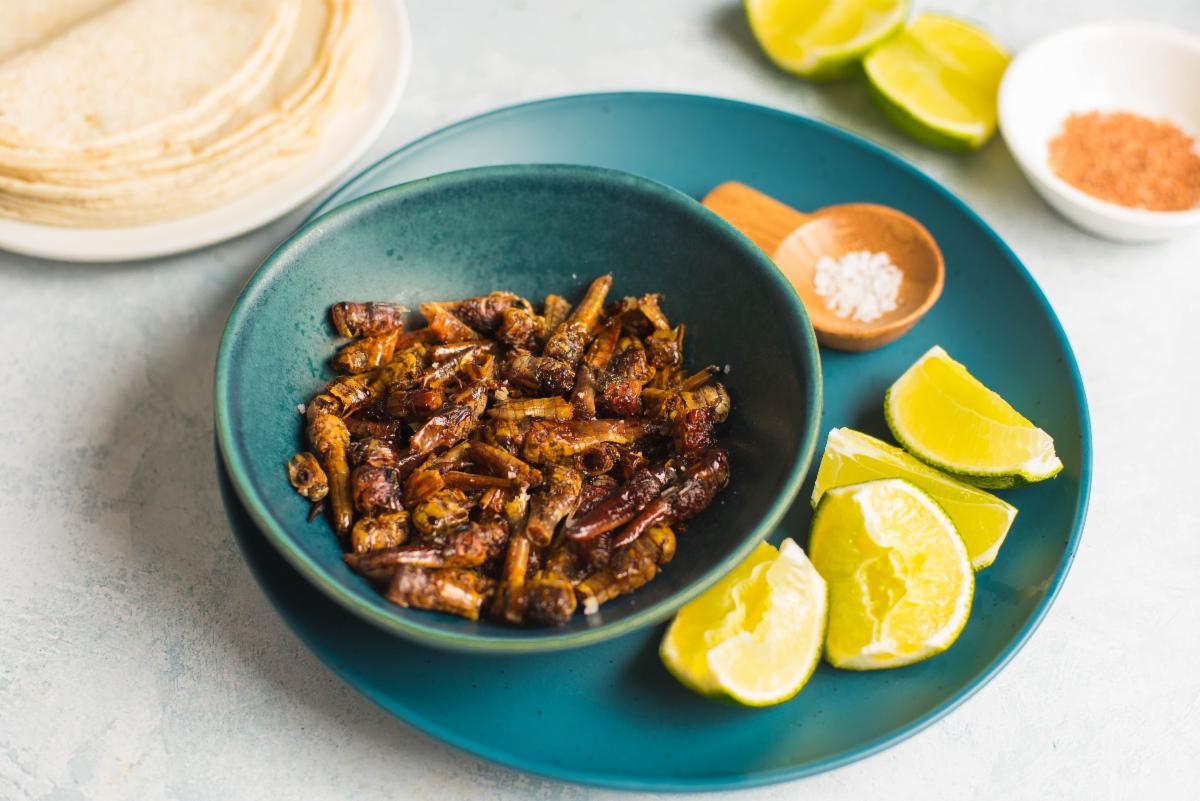
Chapulines, or grasshoppers, are delicious when wrapped in a corn tortilla and drenched in chile sauce or on their own as a quick snack. They are very popular in Oaxaca, Mexico, where they are consumed on a daily basis.
Chapulines are very high in protein while being low in fat and have a wonderful crunchy texture when cooked properly. Pan-frying them in a skillet with infused oil is a quick and easy method. Grasshoppers in great abundance are hard to find, and even in Mexico they are only found in certain states. But if you do come across a good chapulines source, you can use this recipe for fantastic results.
Grasshoppers can sometimes contain parasites, so cooking them thoroughly is very important. Removing the wings and legs before cooking is important since they provide an unpleasant texture. Eat them as a crunchy snack with a Mexican beer or serve as a filling for tacos with tortillas and toppings.
Chapulines Mexican grasshoppers recipe:
Prep:
20 mins
Cook:
10 mins
Total:
30 mins
Servings:
4 to 8 servings
Ingredients:
1 pound chapulines (grasshoppers)
1/2 cup oil (for frying)
3 cloves garlic (peeled and chopped)
1 serrano chile (seeded and diced)
1/2 onion (chopped)
Dash salt (or to taste)
1 lime (cut into wedges)
Steps to Make It:
Gather the ingredients.
Pull the wings and legs off of each chapuline (grasshopper). Discard.
Heat the oil in a shallow pan over medium-high heat. Sauté the garlic, chile, and the onion until the onion is translucent.
With a slotted spoon, remove and discard the onions, chile, and garlic from the oil, leaving the oil in the pan.
Sauté the chapulines in the oil until they are brown and crispy.
Remove the chapulines and drain them well on paper towels.
Sprinkle salt over the top and then squeeze some lime over them.
Enjoy them as a snack or use as a filling for tacos.
Tip:
Chapulines can be tricky to find if you don't live in Mexico. You're likely to have the best luck if you live in the Southwest or have a good Mexican market available. They can also be ordered online.
What Do Chapulines Taste Like?
Chapulines, or grasshoppers, have a mild flavor on their own. Some compare eating fried chapulines to eating fried shrimp. They are crunchy and tend to take on other flavors like garlic, chile, and lime.
Is It Safe To Eat a Grasshopper?
Grasshoppers, known as chapulines in Mexico, are safe to eaten once cooked—cooking helps kill any harmful parasites and bacteria. Grasshoppers can be consumed whole once the legs and wings are removed.
Are Chapulines Good for You?
Chapulines are a healthy choice for meat-eaters since they are low in fat and high in protein. They provide some other essential minerals like zinc and iron, and may help improve gut bacteria.
|
|
The Mother of All Expressions |
|
Mexico's widespread use of a word whose English equivalents have nothing to do with matriarchal figures
Mothers are widely revered in Mexico, and although Mother’s Day on May 10 isn’t a national holiday, not a great deal gets done that day. It isn’t moved to the nearest Sunday like Father’s Day, or Mother’s Day in other countries: when it falls on a week day, so be it. Working mothers are given the day off, some people leave early for family gatherings, and any employer who refuses to allow this without good reason may be said to “not have a mother.”
Which brings this entry to its point: the widespread use of the word madre in expressions whose English equivalents have nothing to do with matriarchal figures.
When it’s said of a person, “no tiene madre,” it means they are shameless or unscrupulous. It can also be applied to things that are disgraceful or simply unfair. A variation is “¡qué poca madre!” which amounts to the same thing.
These two expressions, however, can also mean something quite different, in fact something quite positive:
“Este juego de video no tiene madre” means the video game is very good—extraordinary, in fact; a football team that played “de poca madre“ played extremely well; and a great party can also be said to have been “de poca madre.”
A car that whizzes past at breakneck speed “va hecho la madre,” although “va hecho la raya” means the same thing and is more fitting in polite company.
Hasta la madre is a versatile expression that suggests testing limits in a variety of ways. Its basic meaning is fed-up, or sick-and-tired. “Estoy hasta la madre del tráfico,” or the more personal and unpleasant “me tienes hasta la madre.”
Someone who is very drunk can be described as being “hasta la madre” with alcohol, and a bus that is so crammed-full with passengers that they are hanging out of the doors is also packed “hasta la madre.”
“Hasta el gorro” — literally “up to the cap” — is a valid alternative.
In Spanish “mentar la madre” means to insult — literally “mention or refer to the mother,” even if the recipient’s mother or mother-child relationship isn’t alluded to.
Threats to visit bodily harm on a person can be expressed as “te voy a romper la madre” or “dar en la madre” which make as little sense, literally considered, as some of their English equivalents. And if you run headlong into a brick wall or fall off a bike, a bystander may observe that someone “se dio en la madre.”
A standalone expression of surprise or shock, “¡en la madre!” can be elicited from someone observing an accident or disastrous event.
But the real Mexican classic is “me vale madre” — “I don’t give a damn” — used widely across classes and immortalized by the illustration of late cartoonist Rogelio Naranjo. This mother of all expressions even has its own noun form: someone in Mexico who habitually couldn’t care less is known as a “valemadrista.”
|
|
Sonoran Sales Group - The OFFICIAL sales team for Sonoran Resorts!
We are Rocky Point's one and only exclusive and dedicated team who have always, and will always, sell Sonoran Resorts and ONLY Sonoran Resorts!
If you are looking for a team of real professionals who specialize in Puerto Penasco's best family of "True Beachfront" resorts, you've found us, and we are here to serve you.
Whether Buying or Selling, no one can serve you better when it comes to the Sonoran Resorts. We have been here since the beginning, and we will be here for you when you need us.
Our In-House closing team will make things happen quickly and professionally and we will save you money. Our attorneys are on salary and no additional attorney fees are charged to our clients. Loyalty to the Sonoran Resorts Sales Team is both appreciated and rewarded!
We don't just sell the Sonoran Resorts, we ARE the Sonoran Resorts. We work directly with the Developers, the HOAs, and the Rental companies.
We really can help you in ways that no one else can.
|
|
April 2021
Let me know if you would like links to any of the earlier ones. (Almost 10 years worth)
|
|
Just for the fun of it... |
|
Jim Ringquist
rockypointjim@gmail.com
|
|
|
|
|
|
|