Summer is coming and we have been busy! Welcome to June! The weather is beautiful, our resorts have been very full, and everyone has been having a great time. Besides the nice weather, this time of year is extra busy because the kids have just gotten out of school and families are ready for a vacation break. Memorial Day weekend saw a huge influx of tourists and there were so many great activities around town that people just couldn't attend them all in such a short time.
With the continuing increase in tourism, especially at times like this past holiday and most weekends, most of us are painfully aware of the possible wait at the border - in both directions these days. Having a wait coming into Mexico is something that most of us are not accustomed to seeing, but there have certainly been times recently with a backup of cars on the US side waiting to cross.
The longer wait heading home after a weekend has become a given and most people either try to avoid it by leaving super early or by staying an extra day. Those that don't have that option have just learned that it is a small price to pay for living so close to such a wonderful place to visit. Just remember that both sides of the border are doing what they do to keep everyone safe and help to prevent illegal items or substances from crossing. It's their job, and the vast majority of the time, they are friendly and very accommodating.
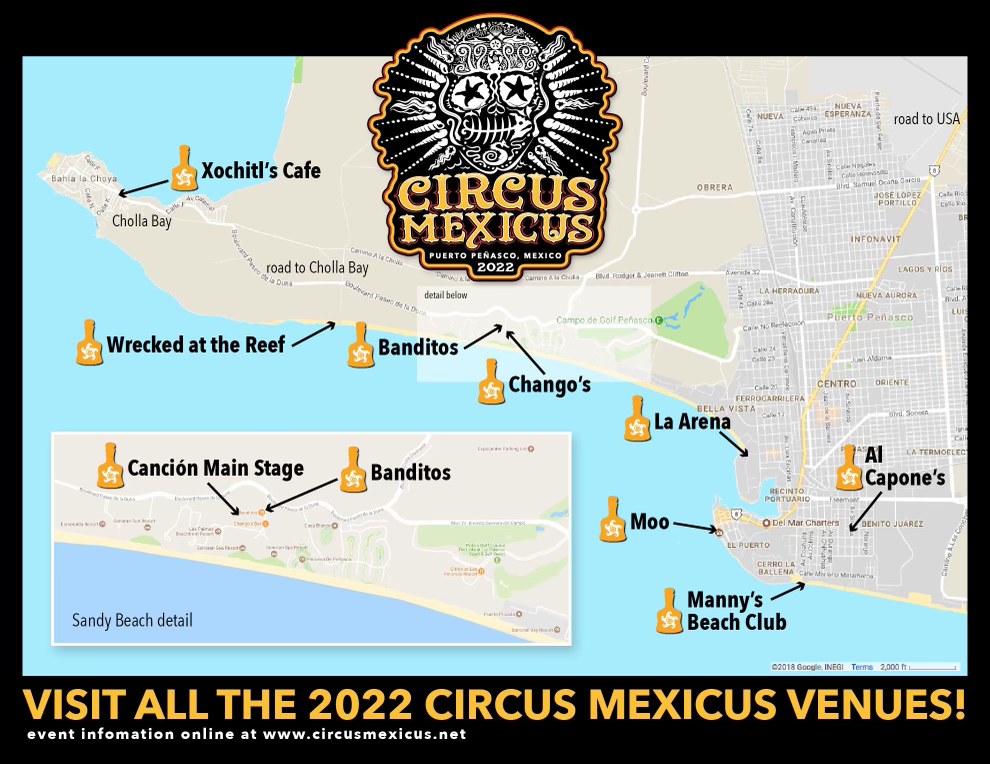
This month is full of activities as well so if you're in town, you will have the choice of attending the many fun events, or just relaxing on the terrace of your oceanfront condo. Maybe a bit of both would be the ticket. Circus Mexicus is a big one for June and you can be sure that this town will be packed with fans for the shows and events.
Sales have been very strong again this year - in fact, this year-to-date, we are ahead of where we were over the past several years – again. All good news. In fact, our inventory of condo listings is at the lowest point since I started working with this company in 2010. If you’re interested in selling your Sonoran Resorts condo, now is a great time. Just give me a call or send me an email and we can go over details. Times are good in Rocky Point.
Enjoy this beautiful month, come to Rocky Point if you can, and if you need anything don't hesitate to ask. Let me put my experience and expertise to work for you, and remember, as always, I've been here full-time for over 15 years and I am more than happy to help you with whatever you need, whether Sonoran Resorts related or not.
Just give me a call or send me an email any time and I will do my very best to help you. If I can't help you myself, I'm sure that I can point you in the right direction and help find you someone who can.
Besides the links below, you can our listings at the following:
www.sonoranresorts.mx
www.sonoranresortsresales.com
AMPI Puerto Penasco MLS
Point 2 Agent Multinational MLS
Pick up a handout at any of our Sonoran Resorts
Barrett Jackson Show - Scottsdale and Las Vegas
Various Real Estate and Trade shows in AZ, NV, and CA
Our listings are also shared with the following:
|
|
IMPORTANT: Some email providers cut this newsletter off before the end. If that happens on yours, please scroll to the bottom of this email and click "View Entire Message" to see the entire newsletter.
Sincerely,
Jim Ringquist
Broker/Sales Director
Sonoran Resorts Spa - Sea - Sun - Sky
602-476-7511
rockypointjim@gmail.com
www.SonoranResorts.mx
President/Volunteer
Tourist Assistance Unit Advisory Committee (Tourist Assistance Police)
602-774-1777
www.touristassistancerockypoint.org
touristassistancerockypoint@gmail.com
I hope that you enjoy my newsletter and continue to recommend it to your friends. Please feel free to give me thoughts, suggestions, or ideas for future newsletters. Puerto Peñasco is my home and I love to share the news and goings-on with you.
I do get email requests each month asking me to add someone to my list. While I certainly don't mind doing so, all you really need to do is click Sign-Up for Newsletter below, add the email address, and it will happen automatically. Not to worry - I will not spam you or share your email address, and you will only receive one email-newsletter each month on the 1st.
|
|
Exclusively Serving the Sonoran Resorts
Buy & Sell Direct and SAVE!
22 Years Experience on Sandy Beach
Four Fully Completed Beachfront Resorts
We Have Earned Our Stellar Reputation
Your Only Logical Choice when Buying
or Selling a Sonoran Resorts Condo!
|
|
Rocky Point Hosts 33,000 Tourists over Memorial Day Weekend |
Memorial Day is always a popular holiday in Rocky Point and this year was no exception. The weather was perfect and the condos and hotels fill up, almost to capacity. The OCV, Convention and Visitor’s Bureau, quoted an occupancy rate of almost 90%.
This is always one of the busiest weekends of the year in town and more than 33,000 thousand visitors came to visit, primarily from the USA. It is also estimated that the long weekend, from May 27 to 30, resulted in over 38,000,000 pesos of economic activity in town (approximately $1,900,000 US Dollars).
Fortunately, the long weekend also ended with no fatalities from accidents, and only minor mishaps were suffered by visitors.
|
|
Holiday Border Hours Extended |
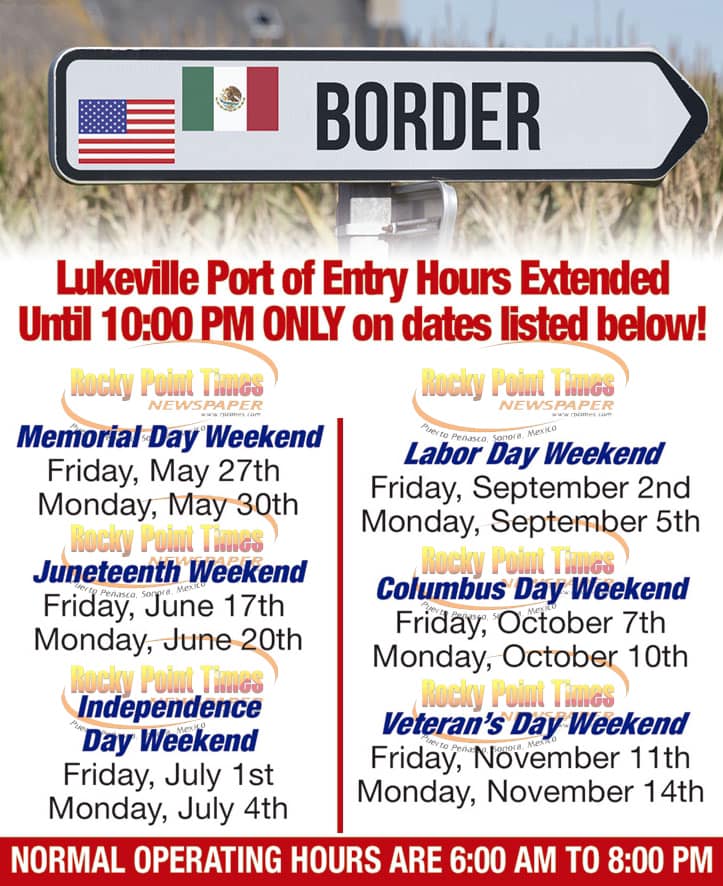
The US-Mexico border at Lukeville had the hours adjusted during the Covid-19 pandemic and the hours have not been readjusted back to pre-Covid times as of yet.
The Federal Government did, however, agree to extend the hours for certain holidays. The graphic above shows the dates for the extended hours during 2022. As of now, it is unknown if the hours will ever be adjusted to the previous schedule. Please plan your trips to and from Rocky Point accordingly.
And, as always, if you'd like to avoid the longest lines and wait times at the border, try to plan your trip home for a day other than Sunday. Of course, that isn't always possible, and Rocky Point is still worth waiting a bit longer at the border, but Sundays always have the longest wait times.
|
|
Breakfast Buffet Fundraiser Wednesday June 15, 2022 at the Convention Center |
From 8:00am To 12:00pm. Donation of $220.00 Pesos (about $12 dollars) per person. 100% of the funds raised from this event will be used to help support activities at the Community Center "La Esperanza Para Nueva Vida A.C."
The Community Center has been in operation for over 15 years assisting the residents of Barrio San Rafael with Food Distribution, English Language Classes, Computer Skills Classes... Also life skill courses such as Culinary Arts and Beautician Hair Cutting and Sewing courses have helped many members of the center start self supporting home businesses of their own.
Tickets to this event can be purchased from our Director of the Center Blanca Estela Soto Ayala.
Our Accountant José Manuel Barrera, Olga Murrieta, Barbara Olszewski or via PayPal through RPBarbO@gmail.com or call 001-52-638-114-2406. Cash Donations will be accepted and greatly appreciated. You can also pay for and donate a ticket to be gifted to residents of the center who have donated their time teaching or doing maintenance at the center. Thank You and God Bless you for your kindness and generosity.
|
|
Rocky Point Beaches Receive Prestigious Platinum Certificate and Flag |
|
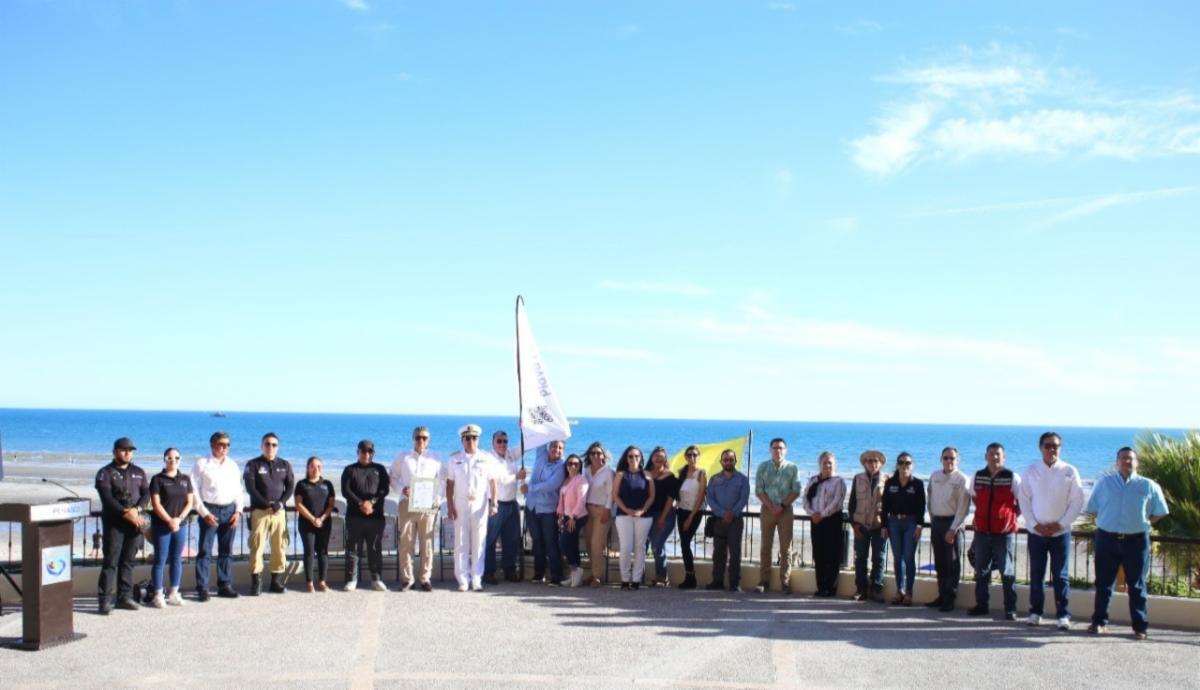
Puerto Pensco’s Sandy Beach and Isla del Mar beach recently received the national certificate and the Platino Beach flag from the Mexican Institute for Standardization and Certification for being coastlines of excellence and with good cleaning practices and sustainability.
This award, which is received by beaches in Mexico recognized for their history of actions that keep them in a high degree of excellence and clean, with sustainability practices, was received by the secretary of the City Council, Miguel Ángel Maciel Félix, on behalf of the Mayor Jorge Pivac Carrillo, as well as by representatives of the condo and hotel complexes in front of Sandy Beach and Islas del Mar
The Sonoran Sky Resort was the location of the very first Platinum Beach Certificate on Sandy Beach coastline. The 1,700 lineal meters has maintained the national clean beach certification for more than 5 years. Now, the area has gained an even more prestigious recognition for a very limited number of coastlines to position them as worldwide leaders for meeting strict criterias of infrastructure, safety, services, cleanliness, and protection of the ocean ecosystems.
The secretary of the City Council recognized that it has been the joint effort of the municipal government, the condo/hotel managements, and the general public that have worked together to allow Rocky Point to obtain this certification as the only tourist beach destination recognized as such in the state of Sonora.
|
|
Rocky Point Enthusiast Makes Generous Donation to the Fire Department |
|
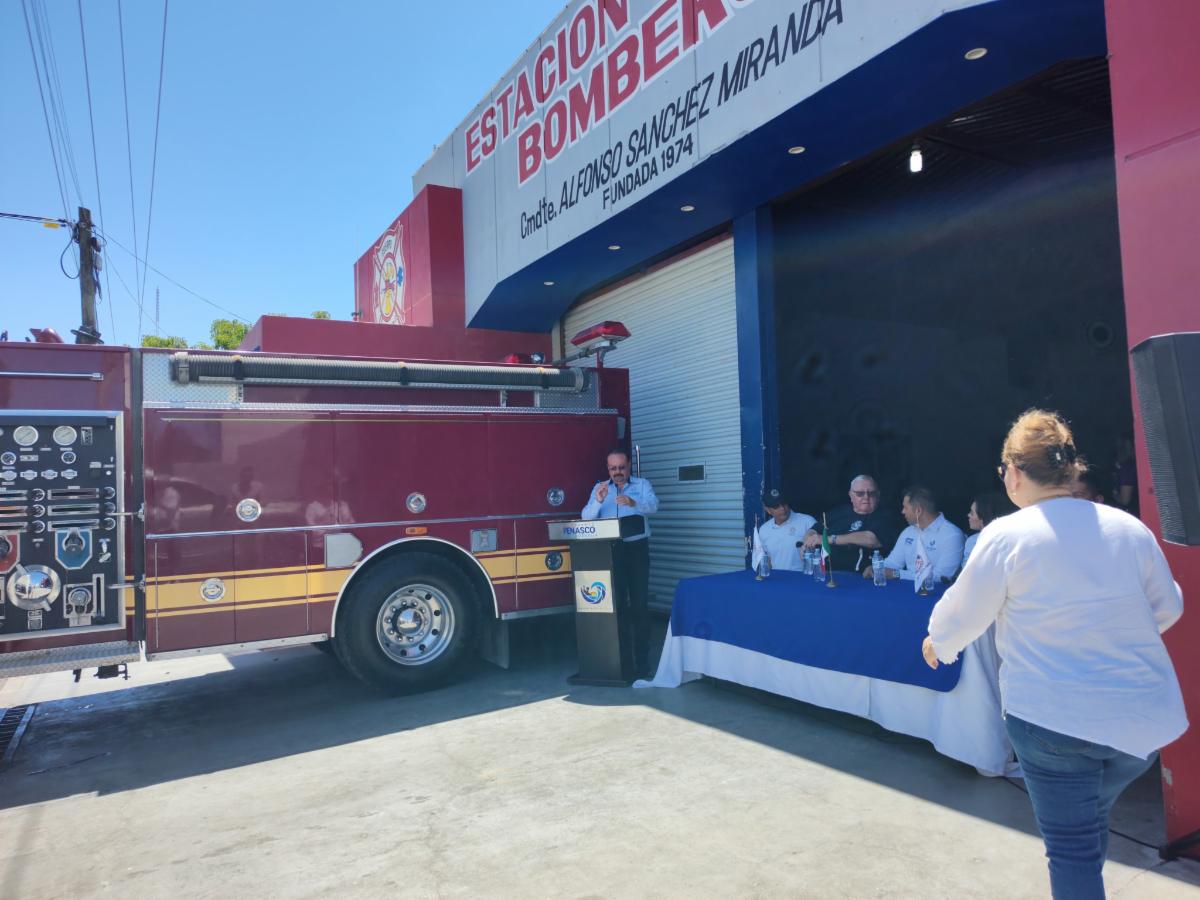
Mayor Jorge Pivac received the donation of life saving equipment from Mr. Peter H. Horner with gratitude as the equipment helps to reinforce the local fire department to offer even better and faster service in cases of emergency. The unit was transferred from the state of Pennsylvania and was donated by Mr. Horner in support of the Department of Firefighters of Puerto Peñasco.
The Mayor was accompanied by his mother, the director of the Municipal DIF charity system, Martha Carrillo de Pivac, the director of Municipal Civil Protection, Alan Ontiveros and the Captain of Fire Department Volunteers. The group heartily thanked the American citizen for his selfless and generous donation, which will offer better service in case of fire emergencies.
Mr. Horner stated that the donation was made because of the love that he has for the community of Puerto Peñasco, a place that has been his second home for 60 years. "I want to acknowledge and thank Mr. Horner for this great and significant gift for the city. Having another firefighting unit will allow volunteers to be able to attend to the emergencies that may come more quickly and effectively. I want to thank Peter Horner and his family. Obviously he does it as a sign of the love and affection he has for this city to which he has been coming to for more than 60 years”.
The firefighting unit is a 1995 model of the Stuphen Deluge line in optimal conditions, with a 75-gallon water tank capacity, and a hale pump with a discharge capacity of 1,500 gallons per minute. Mayor Pivac added that plans are in place to rehabilitate the fire stations that are located in other parts of the city to provide a faster response to calls.
|
|
Tijuana/San Diego to Penasco Flights are Available Now |
|
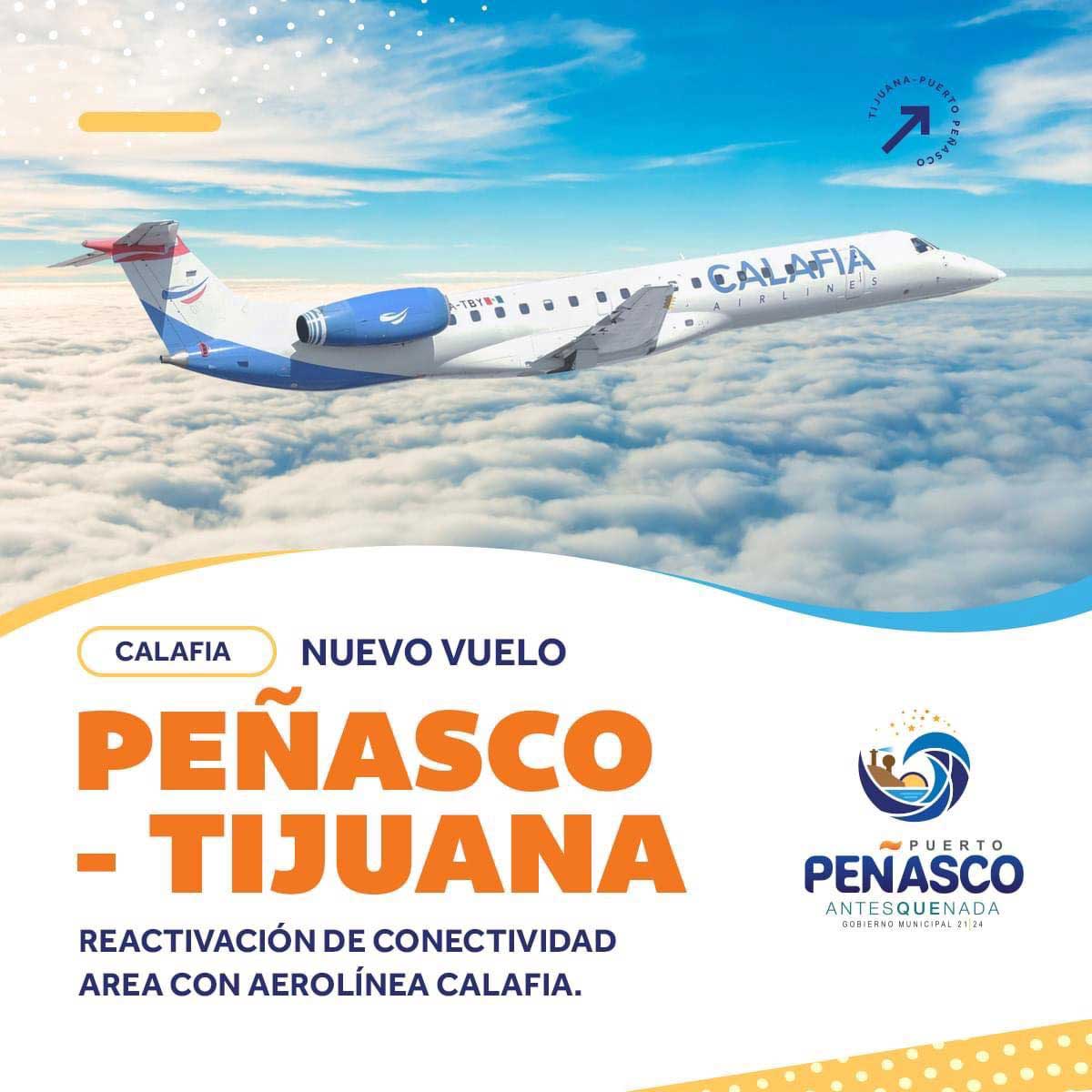
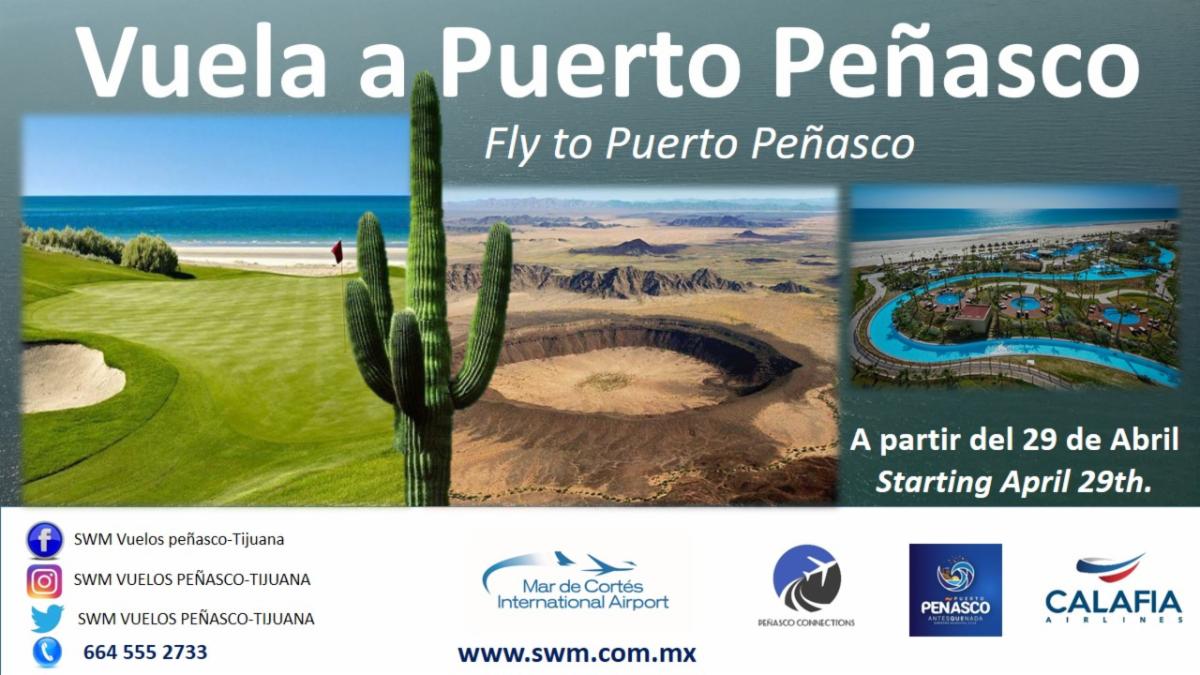
Beginning on April 19, 2022, Calafia Airlines began a new round-trip route from Tijuana to Puerto Penasco, opening our seaside paradise up to air travelers from all over the world.
The Tijuana airport is connected to San Diego by the Cross Border Xpress (CBX), a pedestrian bridge exclusively for passengers of the Tijuana International Airport that allows passengers to cross the border between Mexico and the United States. The bridge is 390 feet long and connects the Tijuana International Airport with a service terminal in San Diego.
Calafia Airlines currently offers two weekly flights (Mondays and Fridays) to Tijuana with Embraer ERJ 145 aircraft, with a capacity for 50 passengers. In addition, from Tijuana it will be possible to connect to Loreto (LTO) and La Paz (LAP) in Baja California Sur.
The renovated Sea of Cortes International Airport, which serves Puerto Peñasco, once again has commercial flights. The last route to Rocky Point was with TAR Aerolineas, which operated between July and November 2016 to Hermosillo (HMO), Tijuana (TIJ) and Ciudad Juarez (CJS). That route was cancelled.
This new route is once again brining tourists from the areas surrounding Tijuana and especially from California in the United States. Officials mentioned that California has the sixth-largest economy in the world, a market with a high purchasing value, where they will seek to attract tourists with the attractions of its coasts. “We are very pleased. This is great news for us, and it opens up additional travel options to Puerto Peñasco. This will allow us to offer all the attractions of this extraordinary city to the Tijuana market, and particularly to the California market,” commented Sonora Governor Alfonso Durazno.
|
|
Schedule:
Flight From Departure To Arrival Day
A7 901 Tijuana 10:15 Puerto Peñasco 11:25 Monday
A7 902 Puerto Peñasco 11:50 Tijuana 12:55 Monday
A7 901 Tijuana 11:45 Puerto Peñasco 12:55 Friday
A7 902 Puerto Peñasco 13:20 Tijuana 14:25 Friday
Current Cost: $1250 pesos + tax per person per flight (about $65 US Dollars)
|
|
Rocky Point Government Rehabilitates La Milla Sports and Activities Areas |
|
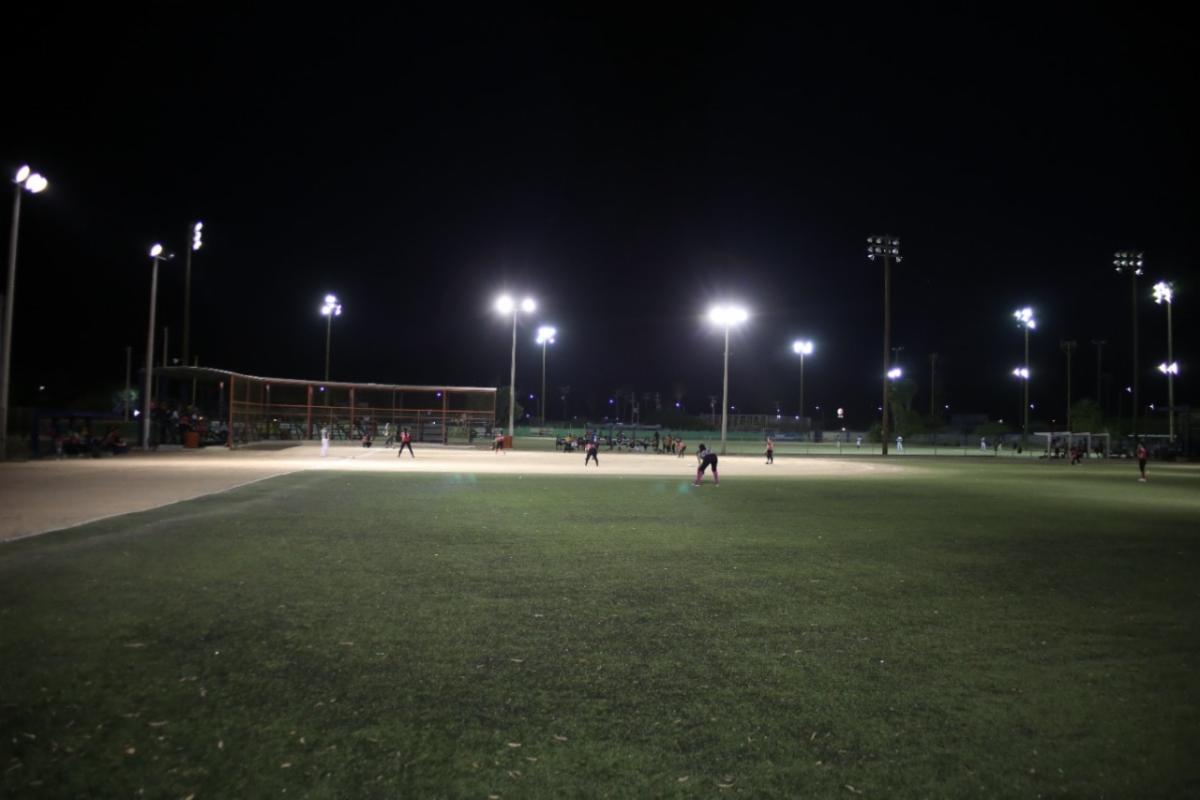
The Sandoval softball field and the La Milla skate park have been upgraded, allowing people of all ages to enjoy sporting events and exercise. The areas have been rehabilitated and have new lighting as part of the works carried out by the municipal government in a project with an investment of over three hundred thousand pesos.
Following up on Mayor Jorge Pivac's promise to dignify and improve the conditions of Rocky Point’s sporting spaces, making them more attractive, healthy and safe recreation places for children and adults. The lighting of the Sandoval softball stadium was renewed with luminaires in the Skate Park "La Milla".
Alberto Ramírez, director of the Municipal Council for the coordination of the public work, explained that the lighting installation works in the Sandoval softball field and the "La Milla" Skate Park which were planned through municipal government have been completed. He indicated that these two works are part of a package of projects aimed at improving sports areas that have required rehabilitation, maintenance, and construction in order to provide safe and decent spaces to users.
He explained that in the Sandoval Softball Stadium, 234,250 pesos were invested in the acquisition and installation of new lights around the field to replace those that were damaged. Similarly, in the “La Milla” skate park, lights were installed for the first time in this area, which is very popular with young people, thus guaranteeing greater safety for those who practice this sport. For this work, 99,233 pesos were allocated in the acquisition and installation of lights, cells, and poles that now illuminate this entire area.
|
|
Rocky Point Mayor Pivac and Tucson Mayor Romero Strengthen Ties |
|
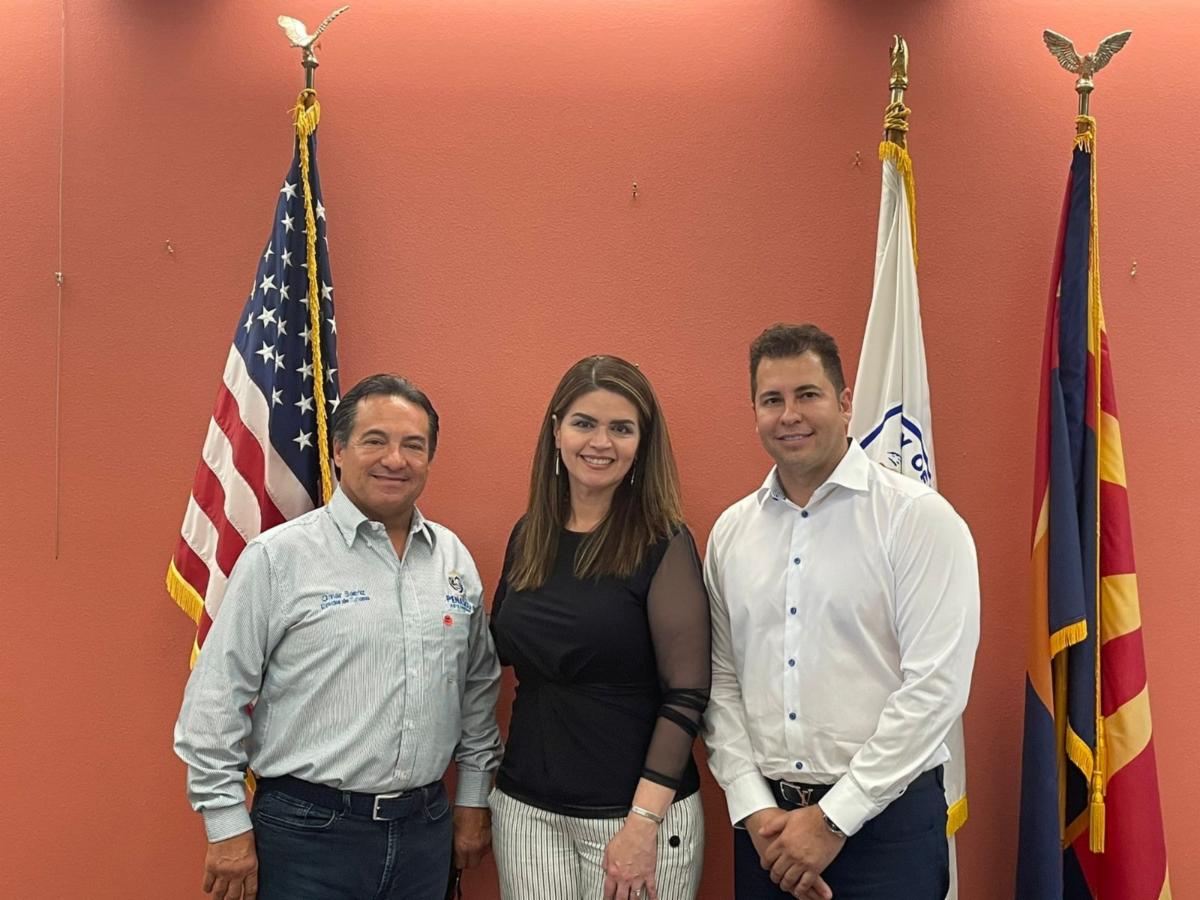
In an ongoing collaboration with the purpose of strengthening ties between Puerto Penasco and Tucson, Arizona, Mayor Jorge Pivac Carrillo met with Regina Romero, the mayor of Tucson, in order to coordinate the procedures to continue working together for the mutual benefit of these two cities.
The Mayor, accompanied by Aidé Verduzco, Director of Municipal Economic Development, and Omar Sáenz, Director of Tourism, expressed his interest in joining forces to carry out numerous projects for educational exchange, health, security, art and culture, and other mutually beneficial actions.
“We are interested in signing a “Sister Cities” agreement between Puerto Penasco – Tucson, Arizona, as this is one of the main cities of the Sun Belt and the most populated in the south of the state. In addition, we share similar characteristics in the border strip between the states of Sonora and Arizona, sharing investment, business, tourism, real estate relationships, and others”, explained the Mayor.
In the meeting, Regina Romero was accompanied by her team of collaborators, including Alma Perales, director of Economic Development, and Kevin J. Burke, deputy director of Economic Initiatives. The mayor promoted the tourist attractions of Rocky Point, such as the 5 beaches with national and international certifications "Clean Sustainable Beaches, Blue Flag and Platino Beach", the visitor center of the El Pinacate Biosphere Reserve declared a World Heritage Site, the gastronomy and the placid experience that visiting Puerto Penasco represents.
“Penasco is known as the best tourist destination in northwestern Mexico and the state of Sonora, for its cuisine, safety, and the warmth of the people. We are already on the flight map with connectivity to Tijuana, which makes us an accessible destination by air, and we continue with the agendas of the federal and state governments, since large investment and business projects are planned to be added in our municipality " , he added.
Finally, Mayor Jorge Pivac and Tucson Mayor Regina Romero promised to follow up on the signing of the Sister Cities, since both share the same vision, interest and agreement to unify forces between these two cities and their people.
|
|
The Story and Origins of Mexican Beer and Breweries |
|
The Spaniards were the first to brew beers in Mexico using barley and wheat, although production was limited in the early days in part due to the lack of available grains.
The first official concession to brew European-style beers was issued by the Spanish authorities in the middle of the 16th century; however, despite the brewers’ attempts to expand the business by growing more crops locally to increase the supply of barley at a lower price, heavy regulation and high taxation imposed by Spain on locally-produced beers and wines stymied the industry’s growth.
After Mexico’s war of independence, beer production began to flourish in Mexico, and during the latter part of the 19th century an influx of German immigrants brought additional knowledge and expertise to the field which caused the local market to diversify and improve its products.
By the turn of the 20th century, beer had become big business in Mexico, helped also by prohibition in the United States at that time, which gave rise to a brisk and profitable trade of beer and other alcoholic beverages along Mexico’s border towns and cities.
By the end of the Mexican Revolution, there were more than thirty-five breweries operating in Mexico, and a period of consolidation that began in the 1920s brought about the beer market we see here today: independent breweries were absorbed into one of the “big-two” breweries, Grupo Modelo and Cerveceria Cuautehmoc-Moctezuma, which emerged as the dominant players of the Mexican beer market.
Successful beers produced by the acquired regional breweries were mass-produced and distributed nationally, and less successful beers disappeared from the market altogether. Smaller breweries that were not bought-out were forced to close as they could not compete with the economies-of-scale brought about through consolidation.
The two big Mexican breweries, which by the turn of the 21st century controlled over 90% of the Mexican beer market, were subsequently acquired by international conglomerates. Cerveceria Cuautehmoc-Moctezuma, whose brands include Sol, Bohemia, Tecate, and Carta Blanca, was sold to Heineken in 2010; Grupo Modelo, which sells Corona, Modelo, and Pacifico brands among others, was acquired by Anheuser-Busch in 2013.
Mexican Corona beer is a light lager sold world-wide and has become an iconic brand. Other, darker and craft Mexican beers can sometimes be found in the premium brews section of higher-end supermarkets and trendy restaurants across the US, Canada and Europe.
The colossal marketing budgets and the extensive distribution networks controlled by these two breweries ensure that their big-brand names are placed at the forefront of buyers’ choices across the country.
However, changing consumer habits are fueling a boom in artisanal beer across Mexico, and independent brewers have been making a noticeable comeback recently with small-batch craft beer and ale labels appearing regionally in local stores, restaurants, and bars.
The majority of beers sold in Mexico today are lagers, pilsners, Vienna-style light and dark beers, as well as Munich dark beers. Beer in Mexico is served cold, or taken as a Michelada: beer with lime juice, or lime juice mixed with a variety of spicy sauces like Worcester, Tabasco, and soy.
The beverage is still regularly supplied using returnable bottles, although recyclable cans and bottles are becoming increasingly common. If you are visiting Mexico and purchase beer from a local store, choose the cans or recyclable bottles with the words “No Retornable” printed on the label, which don’t require a deposit and can be recycled after use.
When you’re living in Mexico, it’s worth building up a small stock of returnable bottles which you can take back to the store when you want refills. Over time, if you build-up a good rapport with your local independent shopkeeper, they might waive the deposit if you’re passing-by or forget to take your returnable bottles on that occasion.
Most Mexican beer bottle sizes are 325ml, although some brands of beer are also available in larger 925ml, 940ml, and full 1-liter sizes.
In Mexican slang Spanish, the larger bottles are called caguamas (sea turtles) or you might hear them referred to as ballenas (whales).
|
|
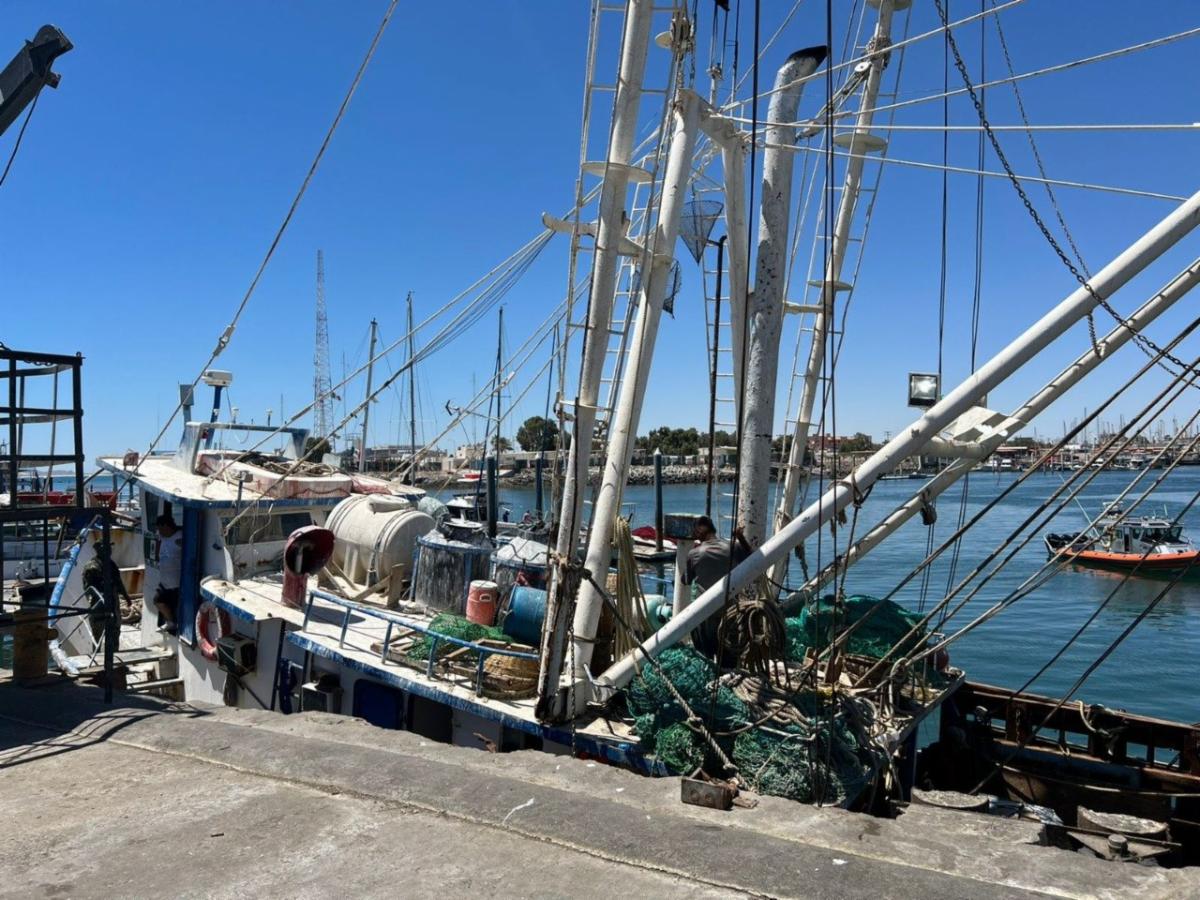
A load of juvenile sharks and manta ray was secured by elements of the marines guard. The boat had been fishing in the vicinity of Puerto Penasco. The boat and its 7 crew members were detained and taken to port while responsibilities are determined.
The Secretary of the Navy reported that in an exercise of the National Maritime Authority, with the Mexican Navy acting as Coast Guard, in coordination with personnel from the National Aquaculture and Fisheries Commission ( CONAPESCA), directed a fishing boat to return to Puerto Penasco, for not complying with the established regulations on fishing for species that are closed and under a special protection regime in the Upper Gulf of California.
The ship that was located through a maritime surveillance patrol, was fishing approximately 28 nautical miles (52 kilometers) northwest of Puerto Penasco, in the vicinity of Bahía Adair. Naval personnel aboard an Interceptor Patrol boat and a person assigned as the federal fishery inspector, in coordination with a federal fishery officer of CONAPESCA, sighted the fishing vessel named “Hummar” with seven crew members on board, carrying out fishing activities.
When carrying out the inspection, species under a special protection regime, shark and ray were detected in the refrigeration area. These species are in a fixed temporary ban, and it was determined that they were violating current regulations. The patrol notified the skipper of the vessel that it would be taken to the base port.
Finally, upon arrival in Puerto Penasco, SEMAR personnel, in coordination with CONAPESCA, carried out the corresponding actions, informing the vessel's skipper of responsibility for infringing the regulations on fixed and permanent temporary closures of the area. In this way, the Secretary of the Navy - Navy of Mexico, in cooperation with other federal authorities, contributes to the protection of natural resources and the conservation of the marine ecosystem in the Upper Gulf of California and the Sea of Cortez.
|
|
Educarte will Support More than 150 Children in Primary School |
|
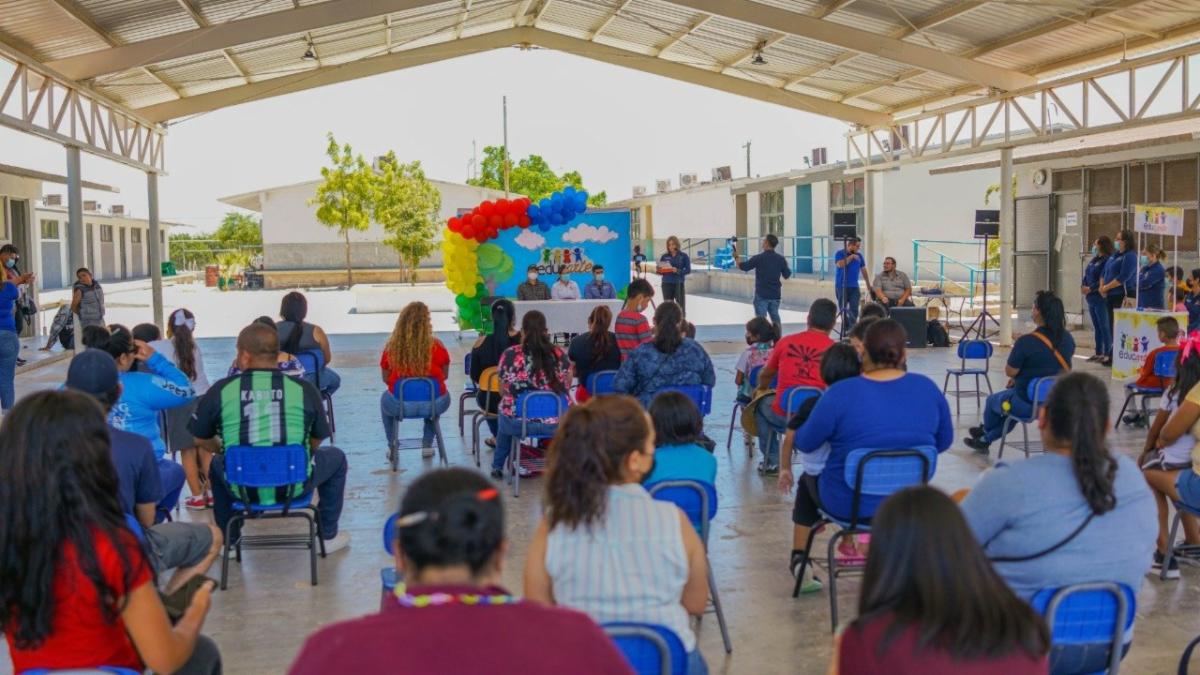
On Monday, May 23, the agreement was signed between the Enriqueta Ortega Gastélum elementary school and the Educarte institution, to form the new task club which will be supporting more than 150 students with academic help, in addition to teaching courses that will allow children to “catch up” if they are behind because of the limitations caused by the Covid-19 pandemic.
Representing the General Director of Educarte, Carolina Pacheco Robles, and the Educational Supervisor, Professor Luz Imelda Sánchez, explained in detail the purpose of Educarte and its different programs. Later she introduced the group of teachers who will be providing advice in the classrooms and in closing she expressed her gratitude to the authorities present for opening the doors of the institution to work together for the good of the children.
Next in the event, the Supervisor of Zone 18 spoke enthusiastically about what is to come and thanked the General Director of Educarte for the opportunity to work together to benefit schools. "On April 25, we had the pleasure of talking with the General Director, Carolina Pacheco, and she opened the doors for us. She put at our disposal, all of their resources for our schools. It is such a pleasure to be in this school today, the largest school in Puerto Peñasco has open doors to Educarte so that our children can officially start this intensive literacy course.” “It is everyone's job, because each one of us is doing the best that we can to ensure that our boys and girls receive the attention, advice, and support they need. That's why parents, personally and on behalf of all my directors, we ask you to trust us, to trust Educarte, because this team comes to work in our schools for the benefit of our children” commented Teacher Ana Isabel Gómez.
Director, Ángel Adrián, also invited parents to take advantage of the assistance that Educarte is providing for all the children on campus. “Take advantage of this help that is provided within the school to improve skills, to improve education and, above all, accept this support that will provide an opportunity for everyone”. said Director Adrián. The collaboration agreement was signed between the Supervisor of Zone 18, the director of the primary school, and the educational supervisor of Educate, thus sealing this alliance that will benefit so many children.
|
|
Principal Routes to Obtaining Legal Residency in Mexico |
|
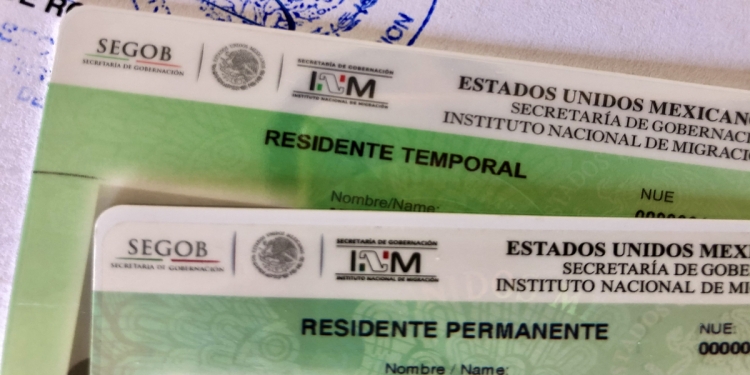
Temporary or Permanent residency
Regardless of which route you take to apply for residency in Mexico, if your application for residency is accepted, you’ll be granted either temporary or permanent residency here.
Some routes and situations enable the applicant to apply for permanent residency right away; other routes and situations may require you to apply for temporary residency first, and after four consecutive years of holding temporary residency, you may opt to exchange that for permanent residency.
Principal routes to obtaining legal residency
Here are the principal routes that most foreigners consider when they decide to apply for legal residency in Mexico.
Economic solvency
Most applications for legal residency are sought through ‘economic solvency’—proving that you have sufficient income or savings to sustain yourself in Mexico. Our article about financial criteria for residency describes the amount of income or savings you are required to prove to qualify for residency this way.
If you don’t qualify for permanent residency right away under the ‘economic solvency’ route (e.g., some consulates require applicants to be ‘retired’ even if they qualify economically), after four consecutive years of holding a temporary residency card, you can apply to automatically exchange your temporary residency for permanent residency in Mexico.
Owning a house in Mexico
If you own a house in Mexico —free of any mortgage and liens— then you can apply for temporary residency in Mexico if the assessed value of the house is equal to or greater than the value required under the qualification rules. The house must be situated in Mexico (not abroad) and it must be registered in the name of the applicant(s) seeking legal residency in Mexico. You can only apply for temporary residency when you use the value of your Mexican home as the basis for qualification. After four consecutive years of temporary residency you may apply to automatically exchange that for permanent residency.
Family connections
If you have certain types of family connections in Mexico, you can apply for residency on the basis of ‘Family Unit.’ Whether you can apply for temporary or permanent residency right away will depend on the type of family connection you have. These types of applications carry a lower ‘economic solvency’ threshold (or none, depending on the type) and applicants applying for residency through Family Unit are among the few applicants who can exchange a Visitor Permit for a residency card without having to leave Mexico. Our related article describes who qualifies for residency in Mexico under the Family Unit rules.
Making a capital investment in Mexico
If you have capital to invest in Mexico, there is a route to applying for temporary residency based on making that investment. There’s a minimum capital investment required, the capital must be invested in one of a prescribed set of ways, and these applications tend to be more involved/complex than applications on the basis of economic solvency or family unit. You can find out what the current capital investment is on our article about financial criteria for residency.
Local job offer (employer as sponsor)
If you have a formal job offer in Mexico, the Mexican company that has agreed to hire you can make a special application to the INM for your temporary residency permit. When this is approved, you are invited to attend a Mexican consulate abroad, who will place a visa sticker in your passport, and when you arrive (or return) to Mexico that sticker is exchanged for a residency card. Note that your right to residency will be tied to that employment contract.
Humanitarian grounds and political asylum
It’s possible to apply for residency in Mexico on humanitarian grounds or under the auspice of political asylum. These are very specialized applications and you should contact your nearest immigration office in Mexico for guidance and advice.
Special programs and procedures
Mexico’s immigration institute, the INM, occasionally announces special programs which can enable visitors or other foreign persons in specifically-defined circumstances to apply for residency in Mexico under the auspice of a special procedure.
Special programs may be announced and withdrawn at any time without prior notice and all applications are dealt with on a per-case basis; the INM retains ultimate discretion to accept or deny any application.
|
|
FAQs: What is Mexico’s RFC, and What is it Used For? |
|
The RFC is a registration number issued by Mexico’s tax collection agency, SAT. This FAQ describes what it is, how it’s used, and how to apply for it
Tax and House Concept
This article contains a list of the most frequently asked questions and answers regarding matters related to Mexico’s RFC (and the related but distinct, CURP).
What is a RFC in Mexico?
The RFC stands for Registro Federal de Contibuyentes. It’s a unique registration number issued by Mexico’s tax collection agency, SAT.
What is the ‘SAT’ in Mexico?
SAT stands for Servicio de Administracion Tributaria. This is Mexico’s tax collection agency, akin to the IRS in the United States. Like the IRS, SAT has offices in every state around the country.
What types of RFC are there?
There are two main categories of RFC:
One for physical persons (Persona Física) that is akin to a US Social Security number; and
one for registered companies (Persona Moral) that is akin to a company tax registration number.
Who can apply for a RFC?
A RFC can be issued to Mexican nationals and legal foreign residents who have residency cards. Visitors and tourists cannot apply for one.
Is the CURP a form of RFC?
No. The CURP stands for Clave Única de Registro de Población and is different to the RFC. When you are granted legal residency in Mexico you are automatically assigned a CURP, but you are not automatically assigned a RFC—you have to apply for the RFC separately. Your CURP is usually printed on your residency card, but not always.
What is the RFC used for?
The RFC is used to track business and commercial transactions, payments, and expenses for taxation reporting purposes.
For example, employers use it to report income tax deducted from employees’ paychecks, and businesses and self-employed individuals trading in Mexico use it to report their income and tax-deductible expenses. Individuals can also use their RFC to claim certain tax rebates that their employers do not handle, for example, certain medical expenses.
Most businesses and self-employed individuals hire a local accountant to manage the reporting through their RFC; individuals claiming a tax rebate might also hire an accountant to assist them through the procedures. n.
What is a Factura, and how does it relate to the RFC
A Factura is an official tax invoice that is associated with the seller’s and buyer’s RFC. If you want to claim an expense for income tax deduction purposes, you must ask for an official Factura when you buy —and it must be issued within 30 days of the purchase date— a simple receipt will not suffice. When you ask for a Factura the seller will ask you for your RFC (or the business RFC). Facturas are requested and issued electronically through the SAT’s online system. Expenses incurred without a Factura cannot be used to claim any tax credits.
How do I apply for a RFC in Mexico?
You need to attend your local SAT office in person to apply. SAT only receives applications by prior appointment. You need to request your appointment online. If appointments are not currently available in your state/area, you can opt to join a waiting list and the SAT system will send you an email when appointments become available in your area. It can several weeks or months to get an appointment.
When you go to the SAT office to register, you will need to take a printed copy of your CURP, your residency card (temporary or permanent), and some official ID—your passport is best.
You might consider hiring a local accountant to help you with this
What happens if I don’t have a RFC?
If you don’t have a RFC, you cannot claim capital gains tax deductions or exemptions on any property you own when you come to sell it. Banks now ask for a RFC when you open a bank account in Mexico, and car dealers ask for a RFC when you purchase a car in Mexico.
What purpose does the RFC have if I own a home in Mexico?
If you own a home in Mexico, you will need a RFC to claim capital gains tax deductions when you sell it.
Dealing with tax and business matters in Mexico
Tax law and its rules are complex, and it is recommended you contact and hire a local accountant to assist you with matters related to your tax in Mexico. You don’t have to use an accountant, but if you don’t, you’ll need a good grasp of Spanish, and patience, to deal with the bureaucracy. Two key advantages of using an accountant are that the good ones will be up-to-speed with the current rules and may be able to advise you about the way to organize your income and expenses here, and they will ease the burden of all the reporting forms and requirements.
|
|
Meet the Sonoran's Family of Beachfront Resorts |
|
Esperanze para Los Ninos is organizing a three hour sunset cruise for all the children and staff of the Esperanza orphanage for June 11, 2022, and they need your support. The kids will be participating in games, sightseeing, eating, and more. Support this effort by giving of your time, talent, and donations.
Volunteer! The Ship can only hold about 55 people so we will only need about 10 volunteers to join us on the boat. If you are interested, text me at 480-283-3843. We also need volunteers to help put together goody bags for each child, collect donated gifts, solicit donations, take pictures, facilitate games and prepare for the event.
Donate! Donations of gifts for the winner of our games, sunglasses, personal sunscreen, hats, and treats are all needed. There will be around 30 children attending. Your gifts will be a giant part of making the DAY OF THE CHILD a grand event.
A $100 donation will sponsor a child in meeting their future needs in the upcoming school year.
A $200 donation will pay for gasoline to transport children to school for one week.
A $300 donation will pay for additional staff or counseling for a month.
A $1000 donation will buy food for the children for one month.
Any amount will help and will make a difference in the lives of the children.
Esperanza also accepts clothing, canned food, laundry supplies etc.
You can donate and sent your check to:
Esperanza para Los Ninos I.A.P.
PO Box 1024
Lukeville, AZ 85341
or if in need of a donation receipt for US taxes send a check to:
Lakes Community Church
6703 N. Idaho RD.
Newman Lake, WA 99025
Indicating Esperanza in the memo line guarantees 100% of your donation will go for the children's needs. If you need help in getting items to us please call me at 480-283-3843
This is the only annual fundraising event solely for Esperanza. !00% of your donation goes directly to the children's care. Esperanza is not funded by the government and is solely dependent upon your generosity!
|
|
Sonoran Sales Group - The OFFICIAL sales team for Sonoran Resorts!
We are Rocky Point's one and only exclusive and dedicated team who have always, and will always, sell Sonoran Resorts and ONLY Sonoran Resorts!
If you are looking for a team of real professionals who specialize in Puerto Penasco's best family of "True Beachfront" resorts, you've found us, and we are here to serve you.
Whether Buying or Selling, no one can serve you better when it comes to the Sonoran Resorts. We have been here since the beginning, and we will be here for you when you need us.
Our In-House closing team will make things happen quickly and professionally and we will save you money. Our attorneys are on salary and no additional attorney fees are charged to our clients. Loyalty to the Sonoran Resorts Sales Team is both appreciated and rewarded!
We don't just sell the Sonoran Resorts, we ARE the Sonoran Resorts. We work directly with the Developers, the HOAs, and the Rental companies.
We really can help you in ways that no one else can.
|
|
April 2021
Let me know if you would like links to any of the earlier ones. (Almost 10 years worth)
|
|
Just for the fun of it... |
|
Jim Ringquist
rockypointjim@gmail.com
|
|
|
|
|
|
|