|
Sonoran Resorts
November 2023 Newsletter
| |
|
November is here and the weather is great, with daytime temperatures in the low 80s and nighttime temps in the 60s. That’s about as good as it gets. There have been several days that I looked out at a sea of glass in the morning, wondering why I was headed for my office instead of heading out to sea for a day of fishing. But, I'm certainly not complaining and the spectacular views are awesome in themselves. If this month follows the normal pattern, November will be a beautiful month.
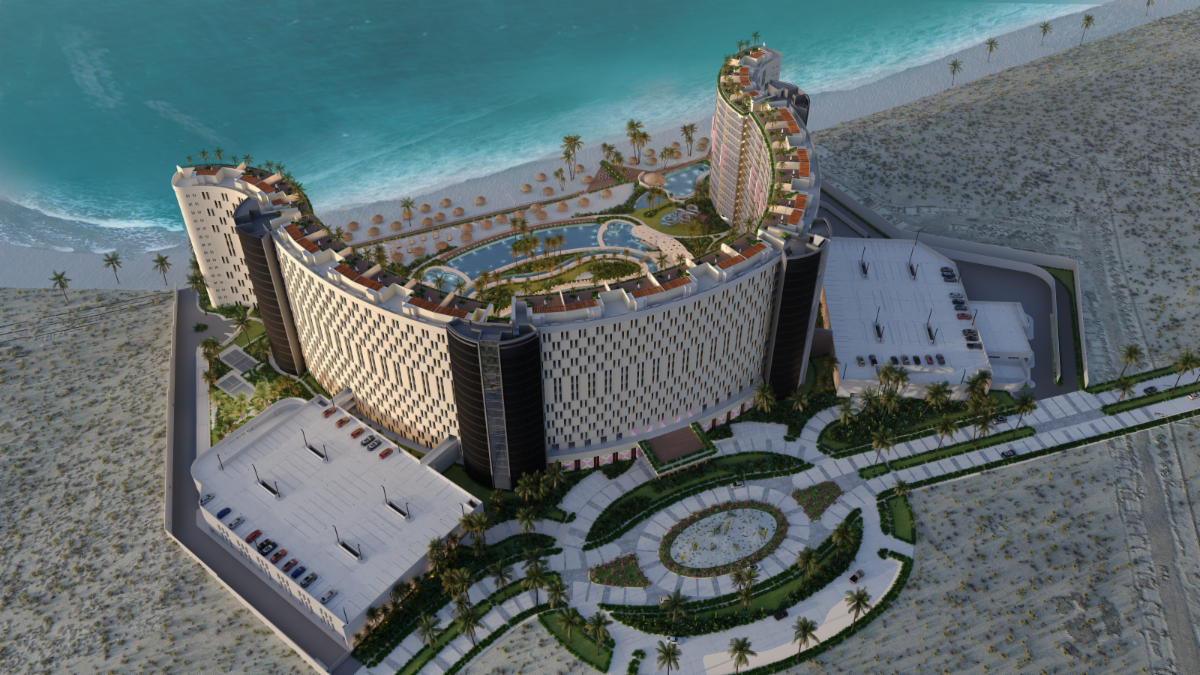
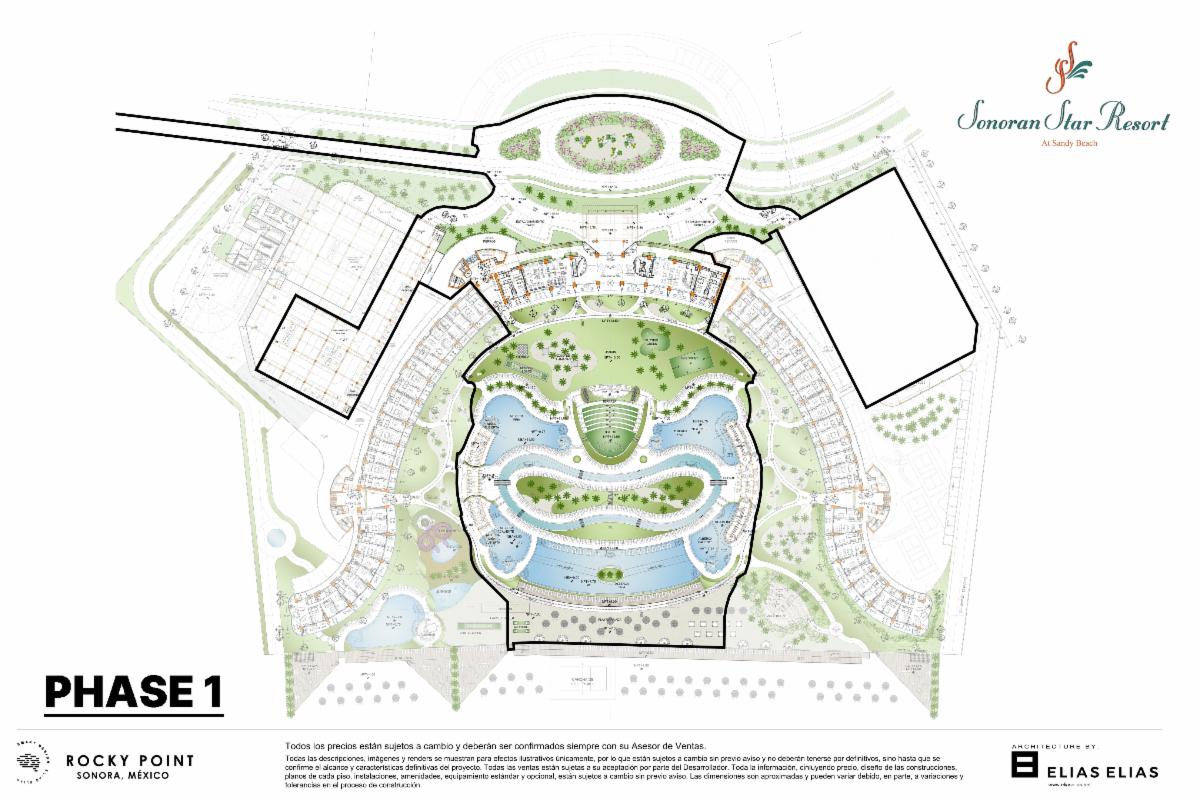
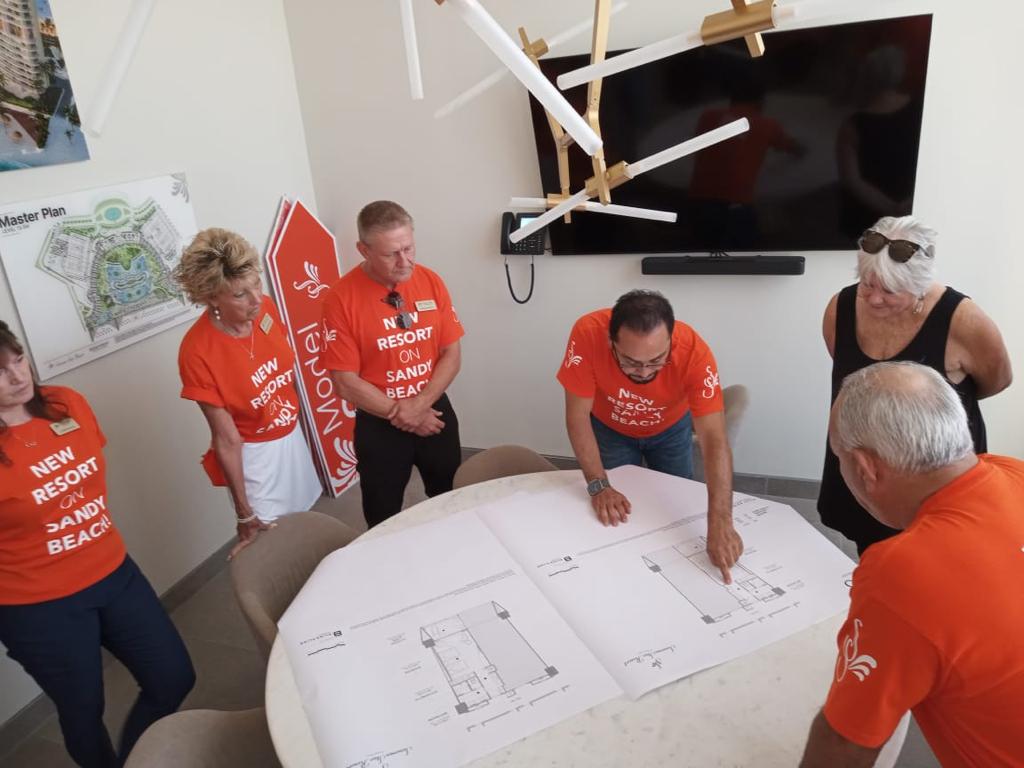
The impressive progress of construction on the new Sonoran Star Resort is nothing short of amazing. It is fantastic to watch it move along. The underground work is complete, the subfloor (which will be the basement floor) is nearly complete and very soon we will see the building going vertical. Construction is currently ahead of schedule and we expect to go up by one story every 2-3 weeks. It won’t be long before Tower #1 will be visible from all over town. Actually, if you look towards the site at night, the brightly lit up crane is already visible from all over town. When you see the crane, understand that it is about 5 stories high. That will give you an idea of how tall Tower #1 will be at 16 stories. Stop by the sales office for a tour and see it up close and personal for yourselves.
Halloween was just celebrated in the USA, and while mostly not observed throughout Mexico, it is celebrated here in Rocky Point. The celebrations for Dia de los Muertos, the actual Mexican celebration can be experienced and enjoyed here as well on November 2nd. Thanksgiving is also more typically celebrated in the USA than it is in Mexico but these days, our local Sam's club always has an extra supply of turkeys on hand as the holiday approaches and several restaurants around town offer a traditional turkey dinner special. Christmas season is a holiday with many differences as well, but we can get to that next month.
The Sonoran Resorts host an Annual Holiday Food Drive each year. This year's collection efforts will begin now and run through the end of the year. If you're in town, please drop off an item or two (or more) at any of our five sales offices if you can. All donations are appreciated.
Rocky Point Rally is coming right up. As always, we are expecting a large turnout and our condos are already fully, or almost fully sold out for rentals. I give the same advice to people thinking of visiting during the Rally as I do to people thinking of visiting over the Easter weekend: There will be a ton of people in town and it's one of the busiest weekends in the year. Generally, people will either love it or they will hate it, depending on what their expectations were for their stay here. It can be a great time, but if you're planning on a quiet time on the Malecon, you might want to pick a different time to visit. Sandy Beach and our resorts are usually pretty quiet as most of the activity goes on in town, specifically on the Malecon and on Calle 13. If you have never experienced one of the Rallys here, it is definitely something that you should do at least once. Chances are you'll have such a good time that you'll come back every year.
Shrimp season is in full swing and the fresh shrimp are as good as you could hope they are. Lots of constructions projects going on around town, both large and small, and businesses have reported good crowds this year. Our sales remain very strong with another great year almost under our belts with both new Sonoran Star condo sales and Sonoran Spa, Sea, Sun, and Sky resale sales both strong. Be sure and stop by one of our sales offices while you’re in town.
Enjoy this beautiful month, come to Rocky Point if you can, and if you need anything don't hesitate to ask. Let me put my experience and expertise to work for you, and remember, as always, I've been here full-time for over 15 years and I am more than happy to help you with whatever you need, whether Sonoran Resorts related or not.
Just give me a call or send me an email any time and I will do my very best to help you. If I can't help you myself, I'm sure that I can point you in the right direction and help find you someone who can.
Besides the links below, you can our listings at the following:
www.sonoranstar.com
www.sonoranresorts.mx
www.sonoranresortsresales.com
AMPI Puerto Penasco MLS
Point 2 Agent Multinational MLS
Pick up a handout at any of our Sonoran Resorts
Scottsdale Barrett Jackson Show
Various Real Estate and Trade shows in AZ, NV, and CA
| |
|
IMPORTANT: Some email providers cut this newsletter off before the end. If that happens on yours, please scroll to the bottom of this email and click "View Entire Message" to see the entire newsletter.
Sincerely, Jim Ringquist
Broker/Sales Director
Sonoran Resorts Spa - Sea - Sun - Sky - Star (coming soon)
602-476-7511
rockypointjim@gmail.com
www.SonoranResorts.mx
President/Volunteer
Tourist Assistance Unit Advisory Committee (Tourist Assistance Police)
602-774-1777
www.touristassistancerockypoint.org
touristassistancerockypoint@gmail.com
I hope that you enjoy my newsletter and continue to recommend it to your friends. Please feel free to give me thoughts, suggestions, or ideas for future newsletters. Puerto Peñasco is my home and I love to share the news and goings-on with you.
I do get email requests each month asking me to add someone to my list. While I certainly don't mind doing so, all you really need to do is click Sign-Up for Newsletter below, add the email address, and it will happen automatically. Not to worry - I will not spam you or share your email address, and you will only receive one email-newsletter each month on the 1st.
| |
|
Exclusively Serving the Sonoran Resorts
Buy & Sell Direct and SAVE!
23 Years Experience on Sandy Beach
Four Fully Completed Beachfront Resorts
We Have Earned Our Stellar Reputation
Your Only Logical Choice when Buying
or Selling a Sonoran Resorts Condo!
| | | |
Resale Listings at the Sky, Sun, Sea, Spa | |
Progress Continues on the New Sonoran Star Resort! | |
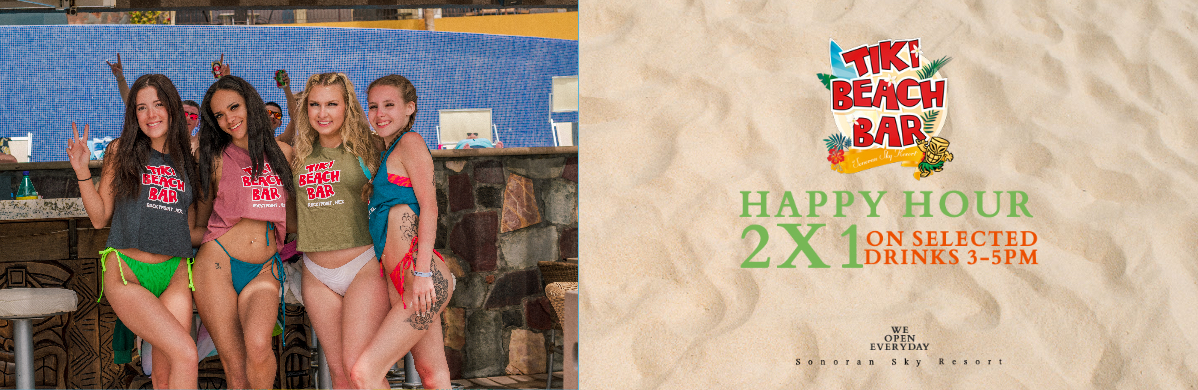
Food and Drink at the Sonoran Sky Resort:
| |
2023 Rocky Point Rally Nov 9th – 12th |  | |
* General Calendar * Live music at local bars and sponsors * Subject to changes *
IMPORTANT! MAKE SURE YOU HAVE YOUR MOTORCYCLE REGISTRATION PAPERS AND ID READILY AVAILABLE FOR CROSSING BORDER BOTH INTO MEXICO AND FOR THE RIDE BACK NORTH! NO WEAPONS!
Thursday & Friday
Meet up spot @ Vazquez Licores in Sonoyta
9 am – 5 pm Rally Registration @ Barclin’s gas station *In town registration option @ Playa Bonita Resort 10 am – 5 pm
PreReg – WILL CALL spot! Puerto Peñasco – Sonoyta Highway
Charity Poker Run
Thurs & Fri – Pick up cards @ Barclin’s Registration Stop (*Do on your own or join up on Fri 1 pm TBA – Hand in cards on Fri 5-6 pm at Playa Bonita beach party)
Thursday – KICK OFF BIKE FIESTA
Friday – Desert Ride
Fri / Sat / Sun – Pirate Boat Cruise – get there @11:30 a.m. Ship sails @ Noon (Free w/Rally registration NO ICE CHESTS – Cash bar on board)
POKER RUN MEET UP @ 1 pm : TBA
Do the Poker Run on your own (Thurs & Fri) or meet up to ride together 1st card @ TBA Turn-in completed cards Fri 5 pm – 6 pm @ Playa Bonita Beach Party
Friday – Queen of the Streets All-Female Ride-In Bike Show
Friday – TRADITIONAL BEACH PARTY @ Playa Bonita Resort
Friday & Saturday – Fiesta on Calles 12 y 13
Saturday
Bike show @ City Hall parking lot
9 – 10 am Bike Registration / 10 – 11:30 am Viewing
12 PM AWARDS BEFORE BIKE PARADE
Categories:
Trike
Sport
Vintage
Paint
Ingenuity / Inventive
Metric
Custom
Chopper
Bagger
People’s Choice
Judge’s Choice
Best of Show
11:30 am Bike Parade line-up
Corner across street from Fire Department – Blvd. Carrillo (Fremont)
BIKE PARADE
Stands up @ 12:30 pm – Parade Route TBA
Sunday
7 am – 9 am Bike Blessing @ Plaza a la Madre
SEE YOU FOR THE 2023 ROCKY POINT RALLY – NOV. 9TH – 12TH, 2023!
| |
How to Make an Altar for Dia de los Muertos | |
 | |
Día de Muertos, or Day of the Dead, is known around the world as one of Mexico’s most colorful celebrations.
Are you one of the many who wonder why Mexicans remember their dearly departed with music, makeup and sugar skulls, instead of somber grief? Well, this holiday is about celebrating their life, and the once-a-year chance to welcome family, friends and pets home again.
Folk wisdom says that people die three times: when they take their last breath, when they are buried, and when they are forgotten. That’s why Day of the Dead is, to Mexicans, a way to keep our loved ones alive.
The offerings put out on Day of the Dead are evidence that those of who are still alive continue to remember and celebrate a life that was once by our side, or that we admired, and that still lives in our hearts.
It’s a time when spirits of the departed return for an earthly visit, a time when the realms of the living and the dead reunite.
One way to ensure they get the warm welcome they deserve is by crafting a heartfelt altar, known as an “ofrenda” in Mexico. You can dedicate it to a family member, a friend, a beloved pet or your favorite artist.
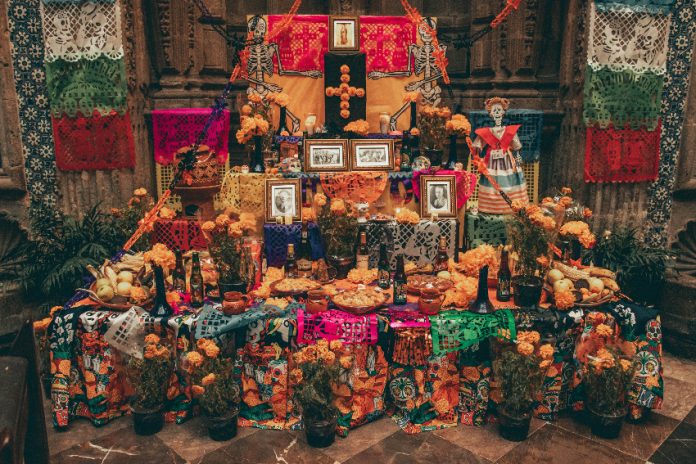
The altar is full of ofrendas (offerings) that symbolize love and remembrance. From photos that capture a loved one’s essence, to the aroma of their favorite dishes, to colorful flowers, altars are all about creating a portal to the past.
The roots of Día de Muertos are found in the pre-Columbian civilizations that saw death as a part of life’s eternal cycle – grieving was frowned upon, as it showed a lack of faith. In their worldview, the deceased remained integral members of the community, perpetuated in memory and spirit. The pre-Columbian religious rite for honoring the departed coincided with the maize harvest in the fall, when cherished souls embarked on their temporary return to the earthly realm.
Spanish conquistadores, upon their arrival in the 16th century, introduced their customary observances for honoring the deceased, specifically, the remembrance marked on All Saints’ Day. As they sought to convert the Indigenous peoples of the New World to Christianity, a syncretic blend evolved, ultimately giving rise to the festivity known as Día de Muertos, celebrated on the 1st and 2nd of November.
The customs and practices associated with this holiday carry profound symbolism and you, too, can find comfort in celebrating the life of your loved ones. It is believed that setting up a beautiful altar with their photos and favorite foods helps them find their way back to your heart and home during this annual holiday.
Interested in partaking in this soulful ritual?
First, make sure to include the four elements: water, wind, earth and fire.
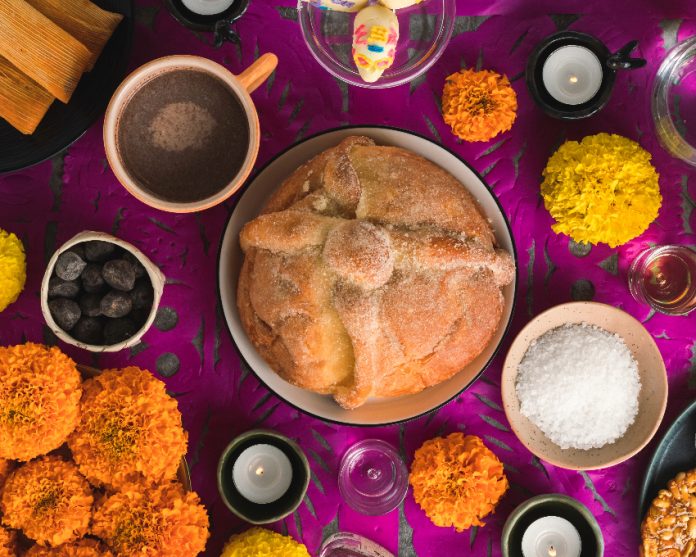
Water in a pitcher so the spirits can quench their thirst. Wind in the form of “papel picado”, intricately perforated tissue paper that hangs above the altar; when the paper moves, it means the deceased are present. Earth is represented by food, especially the sweet bread known as “pan de muerto”, for the souls to enjoy when they visit. Fire is represented by candles to help the dead find their way from the spirit world.
This is what you need to set up an altar:
A table and boxes: To create the three levels that represent heaven, Earth and the underworld
Tablecloths or colorful fabric: Draped over all three levels
Sugar skulls: To represent the sweetness of life and death
Marigolds (cempasúchil flowers): In pots or flower vases, plus petals scattered all around
Incense: Usually “copal”
Papel picado: Artful perforated tissue paper that hangs above the altar
A glass of water: The souls will be thirsty from their journey
Salt: Helps purify the soul on its way back to the spirit world, and is usually placed in clay bowls
Photos of the people you are honoring
Their favorite foods and drinks, including tamales, chocolate, fruits and nuts
Mementos: their jewelry, toys, hobbies, favorite books, hats and religious items
Pan de muerto: The delicious sweet pastry enjoyed this time of year
Candles: To light the way into your home
The altar can be as simple or complex as you like; there is no right or wrong way to do it. You can start setting up the altar on the 25th of October, and start lighting the candles on the 28th, since, according to tradition, this is when the souls begin to arrive. If you are hoping to receive your departed pets, they are said to arrive one day earlier, on Oct. 27.
Día de Muertos is officially celebrated on Nov. 2, and some families take the altar down up to seven days later.
The ritual of gathering and setting up these meaningful personal items and traditional elements in honor of your dearly departed and holding space for them at home is part of what makes this tradition so healing. As long as they are kept alive in your heart, they are never gone.
| |
|
Potpourri!
Short Shorts of All Sorts!
Sometimes so much is going on in our little slice of paradise by the sea that we can't address the many short subjects with proper attention. To handle the hodgepodge of dangling subject matter, we invented the Potpourri Page. Here are a few "short shorts" to keep you up to date.
| |
Bowling Center coming to town and will be located in the Malec | |
|
Rocky Point 360 Turns Page after 12 years | |
|
Rocky Point 360 first burst on the Puerto Peñasco online stage in October 2011. As a family collaboration, we brought together the photographic prowess of webmaster Ariel and Arq. Plinio Rivero, the Spanish storytelling talent of Moka, and my own writing ambition along with a fervent desire to provide timely information on upcoming events in our nook here on the Sea of Cortez. Twelve years later, much as a 1st grader works up through senior year, the time has come to graduate…don a cap and turn the tassel… or rather, close out this particular chapter.
At distinct periods spanning from then to now, with Rocky Point 360 I have had the distinct pleasure of collaborating with exceptional local journalists José Antonio Pérez and Susy Mazon, fellow enthusiastic scribe Richard Scott, photographers Dan Lopez, Edwin, Crisbel, and Robespierre, calendar and directory sidekicks Chico and María Luisa, along with various collaborators and content contributors…and, of course, family.
Though my husband Architect Plinio Rivero and I had already been living in Puerto Peñasco for a decade prior to the launch of Rocky Point 360, in many ways the first years of the site catapulted me …us… onto the cross-cultural expat and still muy mexicano scene. We suddenly found ourselves decked out in cameras and curiosity to capture the fun and excitement of events and experiences in Rocky Point. Over the next twelve years, we saw the city’s event landscape rise and dip much as the dramatic tide movement along these shores and we rode every wave – even through “the Covid year.”
Rocky Point 360 has opened doors. It has strengthened existing friendships and provided an immense opportunity to build new ones. Looking back, the first time we stepped out for the night to a music event announced on the site was to Mark Mulligan that initial Fall; my very first actual interview for Rocky Point 360 was with Roger Clyne just before January Jam 2012. Carnaval parades, Cervantino Festivals on the malecón, open air concerts, regattas, triathlons, car races, rallies, hot-air balloons, Mexican Independence Day fiestas, Revolution Day parades, 5 de mayo jamborees, Día de los Muertos altars and catrinas, fundraisers, art markets, aquatic adventures, golf tournaments, chili cook-offs, y más. For me personally, Rocky Point 360 also shed a whole new light on the community nestled into Cholla Bay – the 1-club golf and bathtub races at JJ’s, cornhole and horseshoe tournaments, and don’t forget Oktoberfest, potlucks, poker runs, and the Christmas Light parade, just to highlight some of their happenings.
We’ve been there to document turtle releases, whale watching excursions, Bird Island escapades (one of my favorites!), stargazing at the Schuk Toak Visitors Center of the Pinacate Biosphere Reserve, maar crater encounters at the Pinacate, ongoing environmental education activities at the Intercultural Center for the Study of Desert and Oceans (CEDO), Circus Mexicus and January Jam, charanga derby races, fishing tournaments, beach clean-ups, four (or was it five?) mayors, and at least two or possibly three commercial flight ventures to town, and don’t forget the vintage cruise ship of 2020.
New Chapter
I am excited about new opportunities and adventures to come, yes from right here in Rocky Point. For those who may not know, I have been a certified Spanish/English translator in the state of Sonora since 2013, with more than a decade of translating experience even prior to that. Writing continues to be one of my passions (right up there with travel and language) and I am excited to embark on new collaborative projects. ¡Gracias por todo!
| |
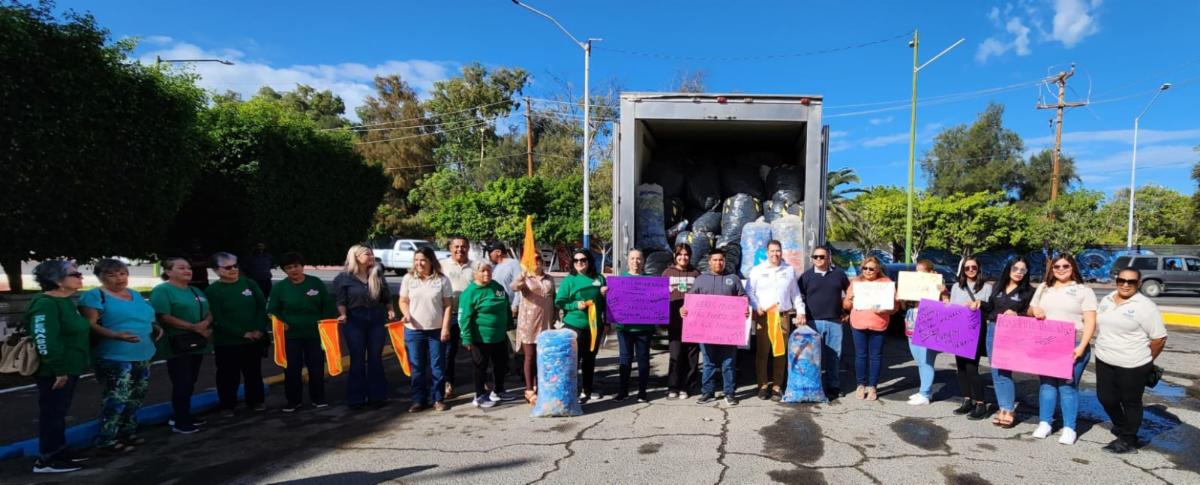
3.6 Tons of Plastic Bottle Caps Collected | |
|
A shipment of 3.6 tons of plastic caps was sent to Hermosillo last Tuesday morning to the Un Día Especial Fonsi foundation, in support of families affected by cancer.
A cargo truck transported the thousands of caps, arranged in dozens of bags, to the city of Hermosillo where they will be used for the noble purpose of raising funds to support those suffering from cancer, an extension of the “Pink Month” which is a campaign to increase awareness, prevention, and treatment of breast cancer.
Jorge Pivac, Rocky Point’s Mayor, thanked and congratulated all those who participate by doing their bit with the delivery of the tops in order to support people with cancer and their families with food and lodging while they receive their medical treatments.
He highlighted that for the third consecutive year Puerto Peñasco is present in support of the Un Día Especial Fonsi foundation, which greatly supports families affected by cancer.
For her part, the director of Ecology and Sustainable Development, Marcia Ortega Morales, the main promoter of this promotion, announced that this year the number of caps collected was double what it was last year and will be of great benefit to people who face a cancer condition.
As a thank you to the collaborators of this collection, recognitions were given to representatives of UNIDEP, UTPP, Tiburones, Black Belt Ecológico, to Regina Frozen Foods for sponsoring the shipment, Cuéntanos Peñasco, CIMA Colegio Americano, Secondary # 27 Guillermo Pacheco , Grupo San Peregrino, and participating municipal agencies.
| |
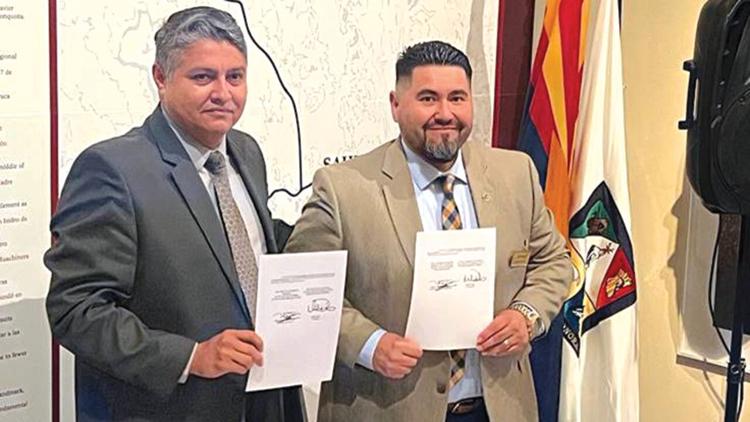
Avondale Signs Agreement with Rocky Point | |
|
Signed by Vice Mayor Mike Pineda and Rocky Point Secretary Miguel Angel Maciel Felix, the agreement creates a five-year framework between the two cities to boost economic development in both areas.
“The intent was really to highlight, promote and educate the residents of both of our communities on one another,” Pineda said. “For us as a city — considering our new tourism designation — it gives us the ability to promote and advertise our city, whether it be here within the state or elsewhere. And in this case, internationally, we wanted to take advantage of those opportunities.”
A Sister Cities agreement is a relationship between two cities that is officially recognized by the highest elected official from both communities, according to Sister Cities International.
This agreement comes with a plethora of benefits to both Avondale and Rocky Point. Specifically, from an economic development standpoint, the dollars flowing into both areas through tourism and other areas provides a big boost to either city’s local economy.
“It could be beneficial for students and residents of Rocky Point who are looking to further their education,” Pineda said. “And so, looking at our educational institutions, like Estrella Mountain Community College, maybe even some of the local, other educational opportunities and universities that we have in that part of town to take advantage of.
“Really, what we’re looking at is translating to actual revenues that will be coming into the city.”
Rocky Point was an area that Avondale’s economic development department was “aggressively” targeting, as they saw the potential successes that both cities would see in a shared capacity.
“We are excited about the opportunities that this collaboration with our neighbors in Rocky Point presents,” said Ken Chapa, economic development director for the city of Avondale. “This agreement will create new avenues for both cities to benefit our residents in the years to come.”
The list of positives that the agreement provides is long, including business, commerce, culture and cross-promotional opportunities. Certain areas of cooperation will include strategies to boost health care destinations and tourism attractions, promotion of events and commerce in both cities, and promotion of community assets.
“Whether it be through publication materials, whether it be marketing materials, billboards, however we can communicate the benefits that we offer within the city of Avondale just gives us that positive approach,” Pineda said. “Anytime that our economic development team is speaking to businesses, corporations, entities that would like to look at Avondale as a potential landing point, we want to be able to highlight some agreements such as this to take advantage of those opportunities.”
Moving forward, Pineda feels that the city’s boost from this agreement will help pave a way for more agreements to be “successful” in the future, overall positively affecting Avondale’s continued growth.
“It’s the whole team, it’s city management, its leadership within and all of the departments of the city — our economic development team, Discover Avondale and the council — because obviously it takes the council to approve. … Everybody is looking at the potential success, the potential opportunity,” he said.
“We are taking an aggressive approach to highlighting what our community brings to the table and looking forward to other opportunities that may exist now or in the future.”
| |
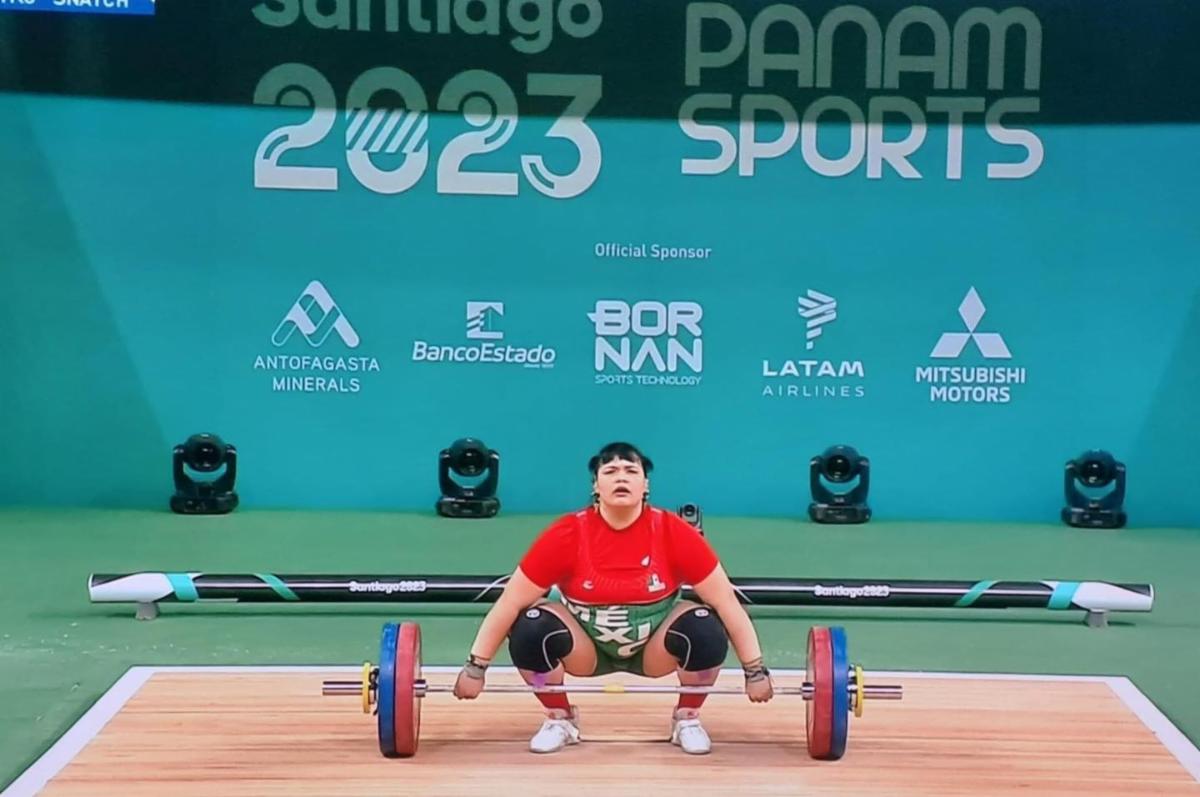
Rocky Point Native Noemí Rodríguez Debuts in the Pan American Games Earning 4th Place | |
|
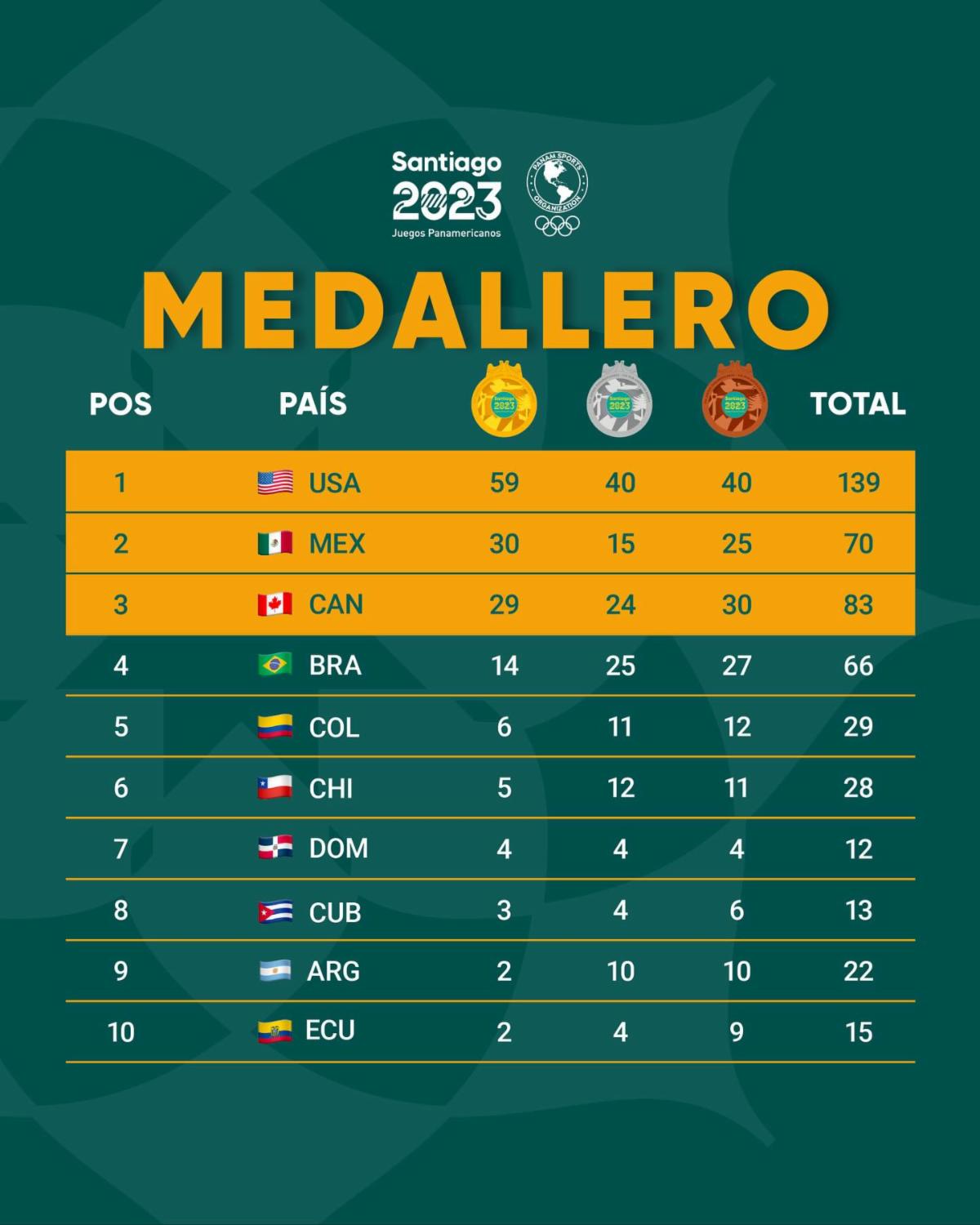
Sonoran weightlifter Noemí “Mimí” Rodríguez Lugo, the pride of Puerto Peñasco, achieved a good debut at the Santiago 2023 Pan American Games, in Chile, where she came very close to getting on the podium after finishing in fourth overall position in the over 87 kilogram division.
In a statement, the Sports Commission of the State of Sonora (CODESON) highlighted that Rodríguez Lugo, originally from Puerto Peñasco, and who has just achieved third place in the Athlete category in the State Sports Award, competed against nine lifters in the Chimwoke Gym in the Chilean capital.
The 21-year-old added a total of 264 kilograms to place herself as the fourth best in the entire women's competition, since she achieved 114 in the snatch and 150 in the clean and jerk modality.
In what was the snatch competition, the Puerto Peñon woman opened with 108 on the bar, but she failed on her second opportunity, when she tried to hoist 113, however, she closed strong.
Later, in the clean and jerk competition, Adbeel Noemí started at full speed with two good lifts, the first of 145 and the second of 150, which in the end was the one she registered, as her attempt at 154 was unsuccessful.
The gold medal went to the American Mary Theisen-Lappin, who lifted 277 kilograms, leaving the Ecuadorian Lisseth Betzaida Ayoví with the silver at 276 kilograms, and the bronze went to the Dominican Crismery Santana with 267 kilograms.
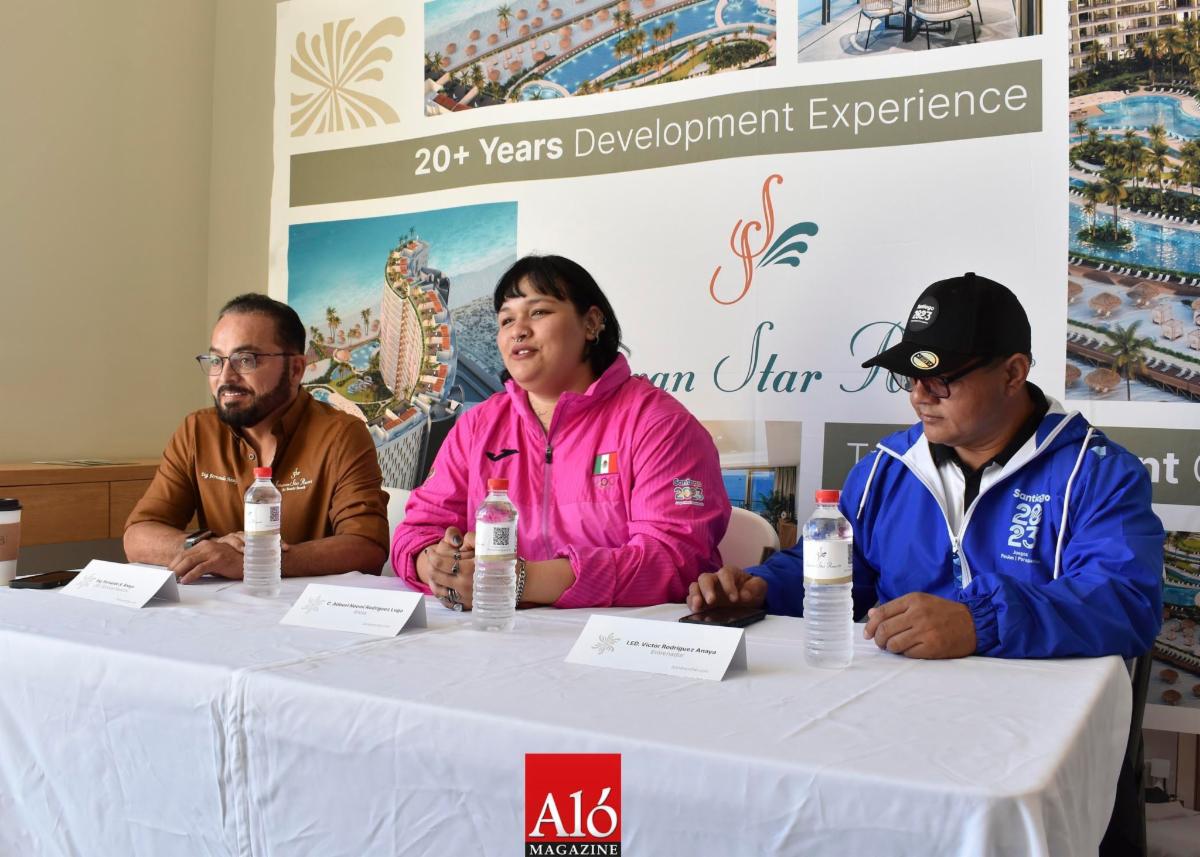
Rodriguez and her coach father visited the Sonoran Star Sales Office for a press conference and to give her thanks to the support that the new Sonoran Star Resort has given her.
| |
State Wheelchair Basketball Championship to be Held in Rocky Point | |
|
The Peñasco on Wheels Wheelchair Basketball team invites you to support the team representing Rocky Point in the State Tournament on December 2nd and 3rd, 2023. The state champion of the Sonora Wheelchair Basketball League will be determined in this final tournament.
The team operates almost exclusively through donations and the team is always looking for those good people who will provide the much needed support. The expenses for traveling to the various tournaments around the State including the lodging and food needed can add up quickly. The team hosting the tournament usually tries to help visiting teams with food and lodging.
In this tournament, teams from Navajoa, Obregon, Hermosillo, Nogales, and Caborca will be coming to Rocky Point to compete. If you are able to help with food, lodging, or a cash donation, it would be much appreciated. If you are able to help, please contact Frank at +52-638-112-9964 or email him at frankba.lp@gmail.com.
The team would also very much appreciate your attendance and support at the games themselves. If you have not attended a game in the past, you may be very surprised at the level of competition and action. Wheelchair basketball is a fantastic sport, played on a standard sized court with standard height baskets. There is no illegal dribble rule and players are allowed two pushes of their wheels before they must pass, dribble or shoot the ball. Because the wheelchair is counted as part of the body, to block a player you must stop their chair. This makes the game fast, furious and all about tactics, likened by many to a game of chess on wheels. Many times, because of the speed at which these wheelchairs can be pushed down the court, a block looks like and results in a move more like a tackle as the colliding chairs often come completely off the floor and frequently tip over causing a brief halt in play as the player and chair are up-righted by any combination of assistance by a referee, teammate, opponent or the agile athlete himself.
Besides being a major sport of the Paralympics Games, played two weeks after the Olympics, wheelchair basketball is played by an estimated 100,000 people as recreation by club and elite national team members in 82 National Organizations for Wheelchair Basketball throughout the world under the governance of the International Wheelchair Basketball Federation.
The sport of wheelchair basketball began in 1946, organized by a group of disabled World War II veterans and has grown ever since to its current status where it’s played in nearly 100 countries. It’s truly an exciting sport to watch as you can witness for yourself right here in Puerto Penasco
| |
Ninth Annual Celebration of Day of the Dead | |
|
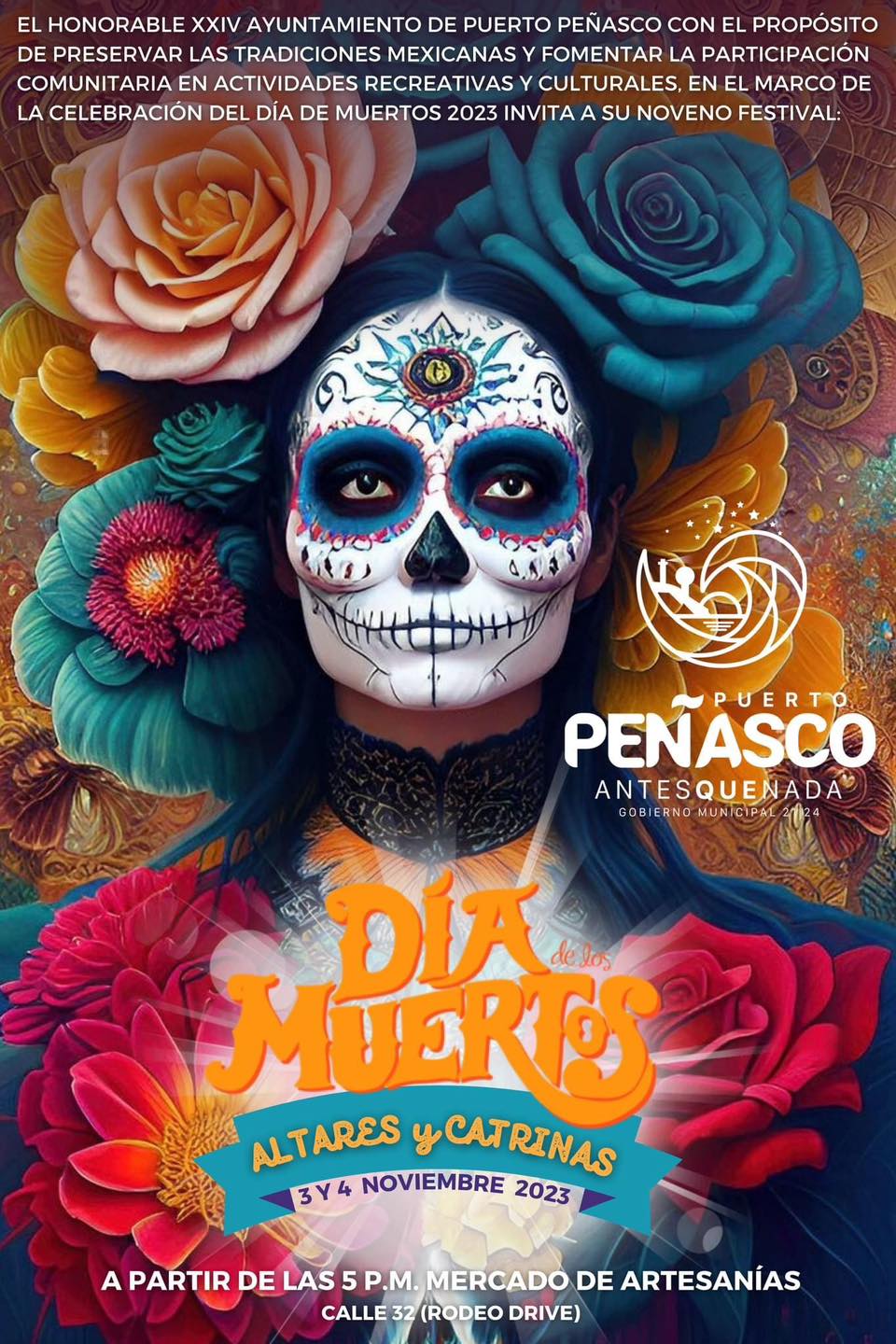
In the ninth annual edition which honors Mexican traditions and culture, the “Day of the Dead - Altares y Catrinas 2023” Festival will be held on November 3 and 4 in the Rodeo Drive crafts corridor - Calle 32 – The road that goes from Benito Juarez to the convention center.
This festival is promoted by the management of the Municipal Institute of Art and Culture to encourage citizen participation in the celebration of traditions in constructing altars and in catrina characterization. The contests, the artistic cultural program and the sale of Mexican foods and snacks attracts a very good number of participants every year.
| |
City Analyzes Potential Recycling Program | |
|
As part of the total solution sought in the disposal of garbage in Puerto Peñasco, the city is holding meetings with specialized recycling companies that are interested in the recyclable trash generated by this city, revealed Fernando Mendoza, Director of the Operating Agency for the Comprehensive Management of the Municipal Cleaning Service (Oomislim). Mendoza reported that he has had meetings with a company from Mexicali, Baja California; and another from Monterrey, Nuevo León, both of which see a profitable option in the reuse of some of the waste generated by this port.
He explained that the company from the capital of New Leon is analyzing setting up in this municipality for the recycling of garbage, with the exception of debris and waste from marine products. The approach they are taking, he said, is for the City Council issue them a contract or concession for at least nine or ten years. This is something that must be proposed to the full City Council, but without a doubt, it is a positive alternative to simply taking recyclables to the landfill and will provide a favorable impact for everyone.
Mendoza Torres reiterated that there is great interest on the part of the municipal government to reduce the problems generated by the abundance of garbage in Puerto Peñasco. They also want to prevent the environmental pollution created by the trash and therfore Mayor Jorge Pivac is very attentive to all the options and possibilities that are available.
| |
Reflections on a Decade of Shopping El Buen Fin | |
|
Mexico has barred the import of GMO corn for human consumption, raising the ire of exporter US where most corn is GMO.
Corn is sacred in Mexico. Its roots can be traced to Aztec and Mayan creation stories that exalted the arrival of a crop that was key to their survival.
In modern times, maiz, as it is known in Spanish, maintains its cultural, spiritual and political prominence as a staple in Mexican cuisine – and, increasingly, a brewing trade dispute.
Mexico has drawn a line in the sand with the United States when it comes to genetically modified corn, barring its use and import for human consumption, and gradually phasing it out for livestock feed or industrial uses.
After months of negotiations, US officials announced last month that they were pulling a lever under the United States-Mexico-Canada Agreement (USMCA), seeking an intermediary to resolve the dispute.
For Mexico, the issue is multi-pronged, but rooted in ensuring the affordability and availability of a crucial crop, experts say. For the US, it is about business. Corn is its biggest crop and the vast majority of it is genetically engineered.
Far from a regional issue, it is a feud that could have wide-reaching implications for importing and exporting nations, as evidenced also by Canada, which has added its voice to the proceedings and backed the United States in saying that Mexico’s position on biotech is “not scientifically supported” and could “unnecessarily disrupt trade in the North American market”.
As the role of industrial agriculture comes under added scrutiny in the era of climate change, Mexico’s stand to protect small-scale farmers is one that others are watching closely.
“I would say Mexico is at the forefront of the world,” said Ernesto Hernández López, a professor at Chapman University in California, who specialises in international law and food law.
What is this trade dispute about?
It is illegal to grow genetically modified corn on Mexican soil. In 2020, Mexico expanded the prohibition with a decree banning all GMO corn, including imports, as of January 31, 2024, on the grounds that doing so protected its food security, its rural communities, its food heritage and the health of its people.
It also announced that it would impose strict limits on the import, distribution and use of the contentious herbicide glyphosate – widely used in GMO farming – culminating in its complete ban by that date. Glyphosate is a well-known weed killer whose potential to cause cancer is the subject of heated debate.
In February of this year, Mexico issued another decree that softened its stance. It scrapped the date by which animal feed corn – which represents the vast majority of imports from the US – is banned. This means yellow GMO corn used for animal feed can continue to cross the border, although the decree still states the intention of “gradually substituting” it, but with no date set.
The decree maintains the ban on GMO corn used for human consumption in dough and tortillas, which is white corn. The Mexican government said Mexico produces enough white corn that is free of GMOs to sustain itself.
“Mexico is the center of origin of more than 55 strains of maize. The food security policy of the Government of Mexico consists of preserving this biocultural heritage,” the government said in a statement, in addition to preserving the sustainable farming practices of peasant communities. “This has to do with consolidating sovereignty and food security in a central part of Mexican culture.”
The move rankled the US, which considered it an affront to the free trade rules of the region. After multiple meetings and consultations with Mexican officials, the US announced in August it would seek to establish a dispute settlement panel under the USMCA, arguing that the Mexican decree “undermines the market access” Mexico had agreed to provide.
The US considers Mexico’s ban an affront to free trade rules of the region.
“Mexico’s approach to biotechnology is not based on science and runs counter to decades’ worth of evidence demonstrating its safety and the rigorous, science-based regulatory review system that ensures it poses no harm to human health and the environment,” said Agriculture Secretary Tom Vilsack in a statement.
“Innovations in agricultural biotechnology play a key role in advancing solutions to our shared global challenges, including food and nutrition insecurity, the climate crisis and the lingering effects of food price inflation,” he said.
Mexico says it will not back down from its position, which it asserts is rooted in science. Officials have said that the United States has refused to take part in additional scientific research on the health impact of GM corn. “[That] makes no sense because if a government cares about people’s health, then they would have no problem doing further research on the health implications,” Mexican Economy Minister Raquel Buenrostro said in August.
How big of a deal is this?
Mexico bought nearly $5bn worth of corn, the vast majority of it yellow GMO corn that is destined for livestock feed, from the US in 2022 making it the second-biggest destination for the US crop. Some 17 million tons of yellow corn flowed south of the border last year.
While more than 90 percent of the corn grown in the US is genetically engineered, white corn represents a small portion of US exports to Mexico, and “little if any” is genetically modified, suggesting to researchers that the dispute will have a “limited effect” on American farmers in the short term.
Nonetheless, trade unions, such as the National Corn Growers Association, maintain the ban would be “catastrophic” for US producers and threatens the integrity of the USMCA. Certain states, like Illinois for instance, send most of their corn exports to Mexico.
| |
Sonora: Mexico’s Silicon Valley of Clean Energy? | |
|
Mexico’s Energy Regulatory Commission (CRE) has granted a permit to the Federal Electricity Commission (CFE) to generate energy at the solar power farm that is under construction in Puerto Peñasco, Sonora.
The permit granted to the CFE allows for the generation of solar power at the Puerto Peñasco plant for 30 years, although it could be withdrawn if not found to be in legal compliance.
The CFE will own 54% of the plant and the Sonora state government will own 46%, according to Sonora Governor Alfonso Durazo Montaño.
The solar power plant reportedly will be the largest in Latin America and the eighth largest in the world when it is completed.
Authorities said commercial activities will begin there in May 2023 and that the second phase will begin operations in May 2024.
The plant will be located on the Miramar ejido (communal land) on the Puerto Peñasco–Caborca highway. It’s being built on land donated by businessman Daniel Chávez, owner of Grupo Vidanta.
The plans for the US $1.69 billion project were announced 14 months ago, with both President López Obrador and Durazo (then the governor-elect) singing the praises of the Mexican state’s pursuit of clean energy production, which is a sector that has been dominated by private investment.
The photovoltaic plant will satisfy the demand for electricity in northwestern Mexico, a region that uses fossil fuels to generate electricity or imports it from the United States. Its location will take advantage of the sun-drenched, desert conditions of Puerto Peñasco, in a stretch of land between the Gulf of California and the Arizona border.
In addition, it was announced that 10 public sector agencies are coming together to create the Sonora Clean Energy Plan, reportedly at the urging of López Obrador.
Representatives will come from the economic, treasury and foreign affairs ministries, CFE, Sener (energy), Semarnat (environment and natural resources), the navy, the Mexican Geological Service and elsewhere. The committee is supposed to come up with a plan within a month, Durazo said.
“We are going to go from being net importers of energy to being exporters because a high-voltage line is going to be added to link the solar power plant to the Baja California peninsula” and the National Interconnected System (SIN), Durazo added. “I want to replicate in the state of Sonora the model of the Puerto Peñasco solar plant in two, three, four, five places.”
The SIN is Mexico’s national grid for electricity distribution. It serves about 98% of Mexico.
Building solar plant in Sonora Mexico
The CFE plan in Sonora could eventually free Baja California from having to buy electricity from the U.S. Government
“The president says that he wants to turn Sonora into the Silicon Valley of clean energy,” Durazo said.
The first phase of the project will cover some 2,000 hectares with solar panels, according to the governor.
“The first section is already under construction, and the tender for the second stage is coming,” he added, “and the second stage will be triple the first. The first is 124 megawatts; the second will be close to 400 megawatts … truly a mega-work.”
In reports last year, it was noted that electricity generated by the plant will benefit the more than 4 million inhabitants of Sonora and Baja California, replacing Baja California’s purchase — at a high cost — of electricity from California. It will also connect electricity-strapped Baja California to the rest of the country, as it currently operates separately from the SIN.
| |
What You Need to Know about Day of the Dead Bread | |
|
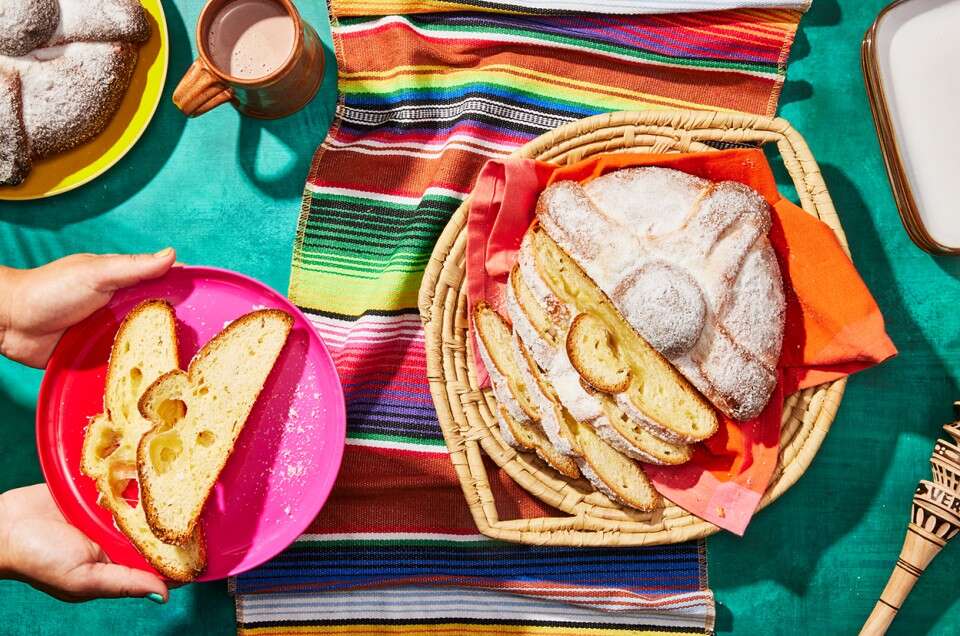
It’s that time of year in Mexico when markets, tiendas and pastelerías are filled with “pan de muerto” (“bread of the dead”). Specially baked for Día de los Muertos on Nov. 1 and 2, the shape of this traditional “pan dulce” or sweet bread, represents the bodies of the departed, with “bones” laid atop small round buns. Though customarily placed on altars and shared with friends and family on the days surrounding Day of the Dead, pan de muerto is available in the weeks before the actual holiday.
To understand how the elegant, sugary pastries known as pan dulce became such an integral part of Mexican cuisine and culture, we need to look at a little history.
In the early 1500s, Roman Catholic monks brought wheat seeds with them from Spain in order to make communion wafers and other unleavened sacramental breads. (That’s why sheaves of wheat are still used in church decorations and celebrations in some rural areas.)
The seeds also came with the conquistadores; the earliest record of wheat in New Spain was in 1523, in the area now known as Mexico City. Today, those ancient wheat strains are valued for their genetic heritage; wheat historians and pathologists have tracked down hundreds of varieties throughout Mexico, spread by, for example, Franciscan friars in Michoacán and Dominican monks in Oaxaca.
Because these old religious missions were carried out in isolation, the wheat varieties found have never been mixed with more modern strains and have retained their original traits – including natural disease and pest resistance. Jump to the present day and northern Mexico is the country’s largest producer of wheat – specifically durum wheat, used primarily in making pasta and couscous. However, most of the Mexican crop is, sadly, sold as animal feed due to a lack of demand.
From this introduction, it was a small and easy step for local people to embrace the new grain and incorporate it into their diet, both for its apparently sacred nature but also for its versatility and flavor. Tortillas made from wheat flour were a logical next step from the more familiar corn flour – but pan dulce?
Again, some history: Food historians trace this culinary innovation to the mid-1800s when the French occupied Mexico. True to form, the gastronomic landscape was one of the many changes brought by this occupation.
Beginning in 1876 and continuing through the controversial 30-year reign of president/dictator Porfirio Diaz – a time called “the Porfiriato” – war against the French occupation raged on and off, with Diaz at the head. Finally, after being forced to resign from office in disgrace, he fled to exile in Spain and later settled in Paris, where he died and was buried.
Despite so many political differences and years of war with France, Porfirio was a dedicated Francophile who loved – you guessed it! – elegant French pastries. Thus, pan dulce was incorporated into the cuisine and palate of the Mexican people.
Since then, creative bakers across Mexico have come up with innumerable shapes, flavors and names for these sweet, pretty breads, traditionally enjoyed in the late afternoon with hot chocolate or coffee. It’s estimated that Mexico is home to many hundreds of (some say 2,000) kinds of pan dulce. Sprinkles and icings in a rainbow of colors; unusual intricate shapes; fruit fillings; flaky, airy, dense or fluffy doughs – each is different and worth trying.
Where to find pan dulce? The better question might be, where can’t you find pan dulce?!
Restaurants offer trays of sweet pastries with breakfast, and grocery stores offer shelves and shelves of them. And while those are viable places to buy pan dulce, I encourage you to make the effort to find these pastries as fresh-baked as possible.
Because they’re baked without any preservatives, their shelf-life is short. (Unless they’re packaged, which doesn’t count as the real thing.)
Often, you can find bakers selling just-baked, still-warm pan dulce from the back of their car, outside a government building, or in a busy section of town at the start or end of the workday. In small towns and close-knit neighborhoods, home bakers can be found peddling baked goods on a bike at the same times of day. Or, go to a local bakery early in the morning or in the late afternoon when the pan dulce is fresh and just out of the oven.
Bearing in mind that this list is by no means complete, what follows is a selection of the most common pan dulce. Some are universally found throughout the country – such as “conchas” and “niños envueltos” – although size and shape may differ slightly; others are regional specialties, beloved in certain areas and unknown elsewhere. Each has its own characteristics, texture and specific ingredients.
“Conchita/Concha”: Fluffy pastry pillows topped with a thick striped crust of sugar and cinnamon to look like a concha (shell). Sometimes colored pink or blue.
“Ciudadela”: Crispy sweet pastry drizzled with sugary syrup in various shapes, including Napoleons, shaped like the emperor’s hat.
“Mantecada”: A rich yeasted vanilla cupcake, traditionally baked in red cupcake paper.
“Elote”: A cookie made with corn flour, baked in the shape of an ear of corn. Not the same as…
“Pan de Elote”: Mexican-style cornbread, moister and more pudding-like than we’re used to.
“Polvorón”: Round or triangular vanilla sugar cookies are traditionally served at weddings (these are the traditional Mexican wedding cookies). Often colored in pastel or a rainbow of colors. Crunchy on the outside, soft and sandy on the inside.
“Niño envuelto”: Jam-filled sponge cake, like a jelly roll.
“Novia”: Domed, rolled cinnamon sugar pastry.
“Cañas”: Log-like, fruit-filled rolled pastry.
“Coliflor”: Vanilla cupcake with a “bumpy” top (like the vegetable cauliflower).
“Picón”: Round cake with a bubbly mass of melted sugar on top.
“Empanadas”: Small baked turnovers filled with “cajeta” (goat milk caramel), pineapple, guayaba or other fruit filling.
“Ojos de Buey”: Bright red balls of vanilla cake covered with shredded coconut.
“Churros”: Though not technically pan dulce, churros are a basic pastry dough squeezed through an extruder, deep-fried and rolled in cinnamon sugar. Sometimes they are filled with chocolate or cajeta. Originally from Spain.
| |
Meet the Sonoran's Family of Beachfront Resorts | |
Craft Beers in Mexico More Popular Than Ever | |
|
Most of the world knows about Corona, Tecate and Dos Equis. These and other brands have made Mexico the world’s number one exporter of beer. However, over the past three decades, the country has developed a craft beer industry, which may have a similarly bright future.
A little history
Depending on your point of view, craft beer in Mexico is either centuries old or a recent phenomenon. In 1544, Alfonso de Herrero founded a brewery near Mexico City, but it failed a few years later. In the colonial period beer was an imported luxury good, and massive consumption only began in the 19th century when German immigrants established breweries. In the 20th century, many of these breweries became consolidated as the two brewing powerhouses of today: Grupo Modelo and Cervecería Cuauhtémoc Moctezuma (now legally Heineken México).
Establishing “modern” craft beer in Mexico
Mass production led to a kind of homogenization in order to achieve mass appeal. A movement in the U.S. looked to revive more beer styles, and by the 1990s, American homebrewers, microbreweries and brewpubs were catching the attention of beer lovers in Mexico, says certified beer sommelier and beer historian Guillermo Ysusi.
“The consensus is that the first craft beer brewer in Mexico was Gustavo Rodríguez in Mexico City,” Ysusi says. Rodríguez discovered U.S. microbrews visiting Texas in 1993, purchasing a beer-making kit in 1995. Five years later, he opened Cosaco, which has been going strong ever since.
Other craft beer establishments appeared in the late 1990s and early 2000s, including Beer Factory in Mexico City, Sierra Madre Brewing Company in Monterrey and Minerva in Guadalajara. Despite their current fame, Baja California breweries would only get off the ground almost a decade later.
Ariette Armella of the Mexican Association of Craft Beer Brewers (Acermex) says that home brewing is still popular in Mexico, although there are no statistics available to back this point. She adds that many of the smallest microbreweries are run out of people’s homes.
Craft beer culture
Lacking strong ties to an agricultural region, craft beer is largely an urban phenomenon. Brewers and drinkers tend to be younger and more affluent, often drawn initially by the beverage’s ties to the U.S. and Europe.
According to Armella, “The U.S. is the reference point for quality for Mexican craft beers and there is significant cultural and professional exchange among brewers on both sides of the border.” Acermex and the Brewers’ Association, its U.S. counterpart, have created the Together We Brew program specifically to enable this.
Mexico City has the largest market for sales, but Baja California produces the most craft beer. Mexico City has a long history of adapting outside foodstuffs into its cuisine, while Baja’s brew scene overlaps with its wine, with both being carefully paired with its internationally recognized fine dining. Both areas now have beer sommeliers and other experts and both offer tours of breweries.
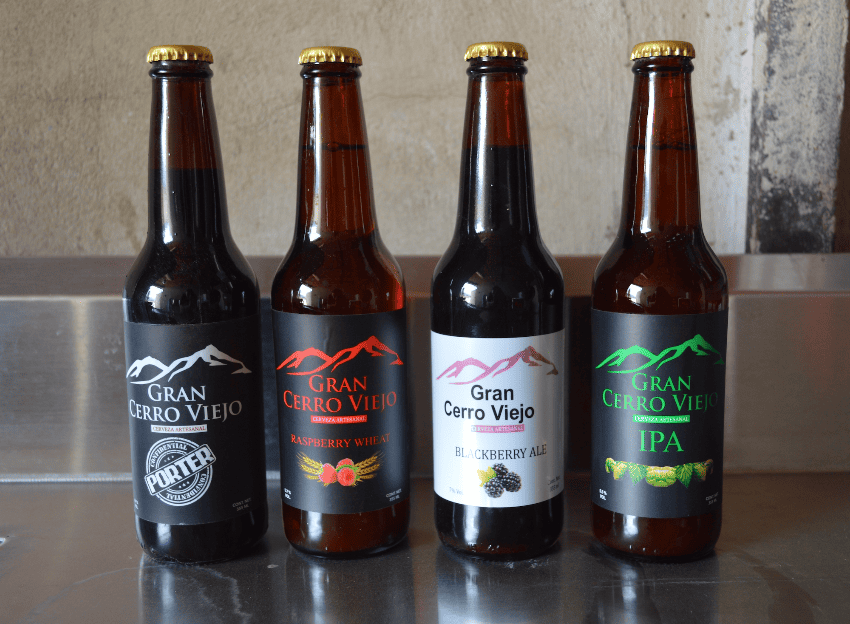
Mexican brewers are not simply reproducing U.S. beers but are also experimenting with “Mexicanizing” them, adding flavors such as cacao, regional fruits, chili peppers and more. Some of the more interesting twists include Falling Piano’s bread-flavored Day of the Dead beer, Gran Cerro Viejo beers flavored with berries from Lake Chapala, and yes, a cricket-flavored La Grilla from Querétaro.
Craft beer events have been growing in popularity over the past decade. The largest of these is the Expo Cerveza, held in Guadalajara in the spring and again in Mexico City in the fall (this year on October 20-22). Other important events include the Ensenada Beer Fest and the Festival de la Cerveza in Monterrey, but booths selling local craft beer can be found at smaller events all over Mexico.
Current craft beer market in Mexico
Despite 30 years of brewing, craft beer remains a very niche market in Mexico. Acermex estimates that Mexico’s 2,000 craft breweries produced 330,000 hectoliters (33,000,000 liters) in 2022. But it pales in comparison to the 141 million hectoliters produced in total that same year in Mexico.
About half of craft beer production is in the north. Baja California leads with 18% of Mexico’s total, followed by Nuevo León (13.8%). In the center of the country, most beer is produced in Jalisco (17%) and Mexico City (10.6%).
Despite a downturn during the pandemic years, the past decade or so has been good for the industry. More beers are available more widely. In some cases, like Cucapá, it is because they were bought out by one of the big brewers, but others like Tempus (Monterrey) and Minerva are expanding on their own. Acermex also states that about 5% of sales are now exported, with brands like Colima, Minerva, Ocho Reales, Rey, Loba, Hercules and Monstruo de Agua available in the U.S.
Challenges to the industry
However, establishing a market share where two companies sell over 90% of Mexico’s beer is not easy. The main issue is price. Cost-conscious Mexicans simply won’t pay double or triple the price of a commercial beer, says Montiel Hernández of Ayutla Distillery and Brewing.
Being more expensive to produce, craft brewers must market similarly to wine in finer restaurants and other outlets able to help customers make selections. Craft brewers must also compete with commercial brewers for supplies, malt in particular and often have to import. Water usage, especially in the arid north, is also an issue, which was aggravated by last year’s drought.
| |
Dia de los Muertos Pan Dulce | |
|
This traditional Mexican pan dulce, with its distinctive shape, is commonly made as an offering during Day of the Dead (Día de los Muertos), November 1-2. Aside from being eaten with gusto and deeply loved, Pan de Muerto often serves as an altar decoration to both honor and celebrate those who’ve died
PREP:
50 mins
BAKE:
40 to 45 mins
TOTAL:
11 hrs
YIELD:
Two 8'' round loaves
Ingredients:
Starter:
1/2 cup (113g) milk, lukewarm; whole preferred
1 tablespoon instant yeast
1 teaspoon granulated sugar
1/2 cup (60g) King Arthur Unbleached Bread Flour
Dough:
2 tablespoons (28g) orange blossom water, rose water, or water
2 teaspoons orange zest (grated rind)
1 1/2 teaspoons anise seeds
3 1/2 cups (420g) King Arthur Unbleached Bread Flour
1 teaspoon table salt
1/2 cup (99g) granulated sugar
4 large eggs
16 tablespoons (226g) unsalted butter, cut in 1/2" cubes; at room temperature
Topping:
6 tablespoons (85g) butter, melted
1/3 cup (66g) granulated sugar, for dusting
Instructions:
Bake Mode:
To make the starter: In the bowl of a stand mixer, combine the lukewarm milk, yeast, sugar, and flour. Stir with a whisk or fork, cover, and set aside until the mixture begins to bubble, about 20 to 25 minutes.
To make the dough: Add the remaining ingredients (except the butter) to the starter. Using the flat beater attachment, beat at low speed until everything is combined.
Scrape the bowl and beater and switch to the dough hook. Knead at medium speed for 10 to 12 minutes, stopping to scrape down the sides of the bowl as needed, until the dough pulls away from the sides and makes a slapping sound.
On low speed, add 3 tablespoons of the butter at a time, incorporating each addition before adding the next. Stop the mixer and scrape the sides of the bowl as necessary.
Once all the butter has been incorporated, increase the speed to medium and beat for another 8 to 10 minutes, until the dough slaps against the bowl. It will be smooth, yet still a bit sticky; resist the urge to add more flour.
Shape the dough into a ball and place it in a lightly greased bowl. Cover and allow it to rise until almost doubled, about 1 1/2 to 2 hours.
Turn the dough out onto a lightly greased surface and gently fold it over on itself. Place the dough back into the bowl, cover, and refrigerate for at least 4 hours, or overnight.
To shape the Pan de Muerto: Remove the chilled dough from the refrigerator and let it rest in a warm spot for about 30 to 45 minutes to come to room temperature.
Line a large baking sheet with parchment.
Portion off one-quarter of the dough (about 280g). Divide that quarter into two pieces (140g each). Set them aside.
Divide the remaining three-quarters of the dough into two pieces (about 425g each). Shape each piece into a ball, then press down gently to make flatter rounds about 6" in diameter. Place the rounds on the prepared baking sheet.
Divide each of the smaller pieces of dough into thirds (about 46g each), to make a total of six pieces. Shape two of the pieces into balls and roll the other four into ropes about 6" to 7" long. Pinch the ropes at intervals to make them look like bones.
Place two of the “bones” over one of the large dough rounds, crossing them in the middle. Place one of the small dough balls in the center and press down firmly to anchor it as securely as possible.
Shape the rest of the dough the same way you shaped the first loaf, making a second loaf.
Cover the loaves and allow them to rise in a warm spot until doubled, about 1 to 1 1/2 hours.
While the loaves are rising, preheat the oven to 350°F.
To bake the Pan de Muerto: Bake the loaves for 20 minutes, until lightly browned on top. Open the oven and loosely cover both loaves with foil. Bake for another 20 to 25 minutes, until the loaves are fully baked and dark golden brown on the bottom and top, and their internal temperature is 190°F.
Remove the loaves from the oven and let them cool slightly on the baking sheet, about 20 minutes.
To top the Pan de Muerto: Brush the loaves with the melted butter. Repeat a second time, brushing a section of the loaf with the melted butter and immediately covering that section with a generous amount of sugar, so the sugar sticks before the butter cools and dries.
Continue buttering and sugaring the loaves section by section. Transfer them to a rack to cool completely before slicing.
| |
Plants Popular in Mexico with Medicinal Properties | |
|
Of the 23,314 vascular plant species native to Mexico, anywhere from 3,000–5,000 are thought to have medicinal benefits. (Government of Mexico)
Traditional plant medicine in Mexico is layered. To say this article has even scratched the surface would be a gross understatement. But, these are a few of the most popular treatments.
Mexica sculpture
This is not referring exclusively to psychedelics. This genre encompasses a much larger swath of the plant kingdom, nearly all of which can be traced back to the beginnings of Mesoamerican civilization.
Of the 23,314 vascular plant species native to Mexico, anywhere from 3,000–5,000 are thought to have medicinal benefits, according to the University of Texas at El Paso’s Herbal Safety website. Many, like the ones listed below, are still used today.
Mexican arnica
Not to be confused with European arnica, Mexican arnica still reaps similar anti-inflammatory benefits. For stomach issues and nervous disorders, it was traditionally ingested in a tea form. Today, it is commonly found as a tablet or cream applied topically to reduce swelling and inflammation.
Mexican arnica plant
Aloe, like leather bombers, is a forever trend. For centuries, it’s been used to improve digestion and treat burns. It’s now found in beverages, lotions and other over-the-counter skin-care products. Several Mexican states use the plant as a supplement for Type 2 diabetes.
Sarsaparilla (Mexican zarsaparilla)
Sarsaparilla was a Mesoamerican go-to for patients in need of an anti-inflammatory or an immunity booster. It’s also thought to improve liver function. You will most commonly find it today sold as a tea.
Mexican oregano
Oregano oil is a staple in most plant-medicine cabinets as an alternative to antibiotics. Mexican oregano was, and is, used to fight respiratory illnesses and stomach ailments and promote overall healing. The Maya have been using it for centuries to cure or relieve patients of asthmatic conditions.
Damiana
Found in the driest regions of Mexico, damiana boasts a wide variety of health benefits for your intestinal tract and bladder. It’s even used as an antidepressant. However, damiana’s real draw is its aphrodisiac qualities, a fact long known by the Maya.
Copal
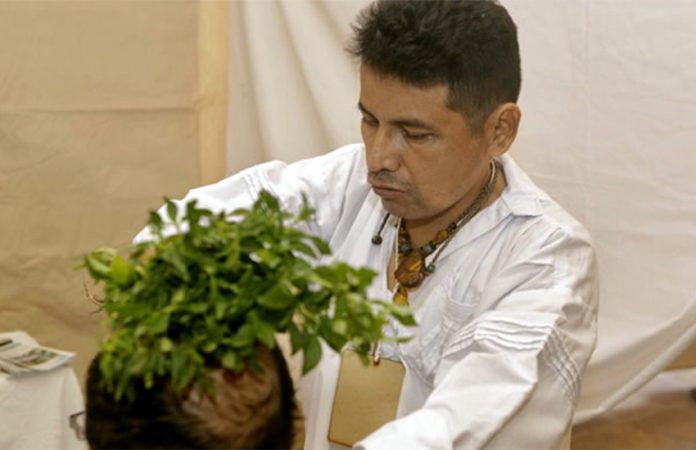
You probably know very well that distinct, smoky scent of burning copal used to cleanse unnecessary energies from your body or home. For thousands of years, the coveted tree resin was also used as a Mesoamerican medicine to cure toothaches, headaches and diarrhea.
Maize
Medical maize isn’t used as often today as it was in the past. Everyone from the Mexica (Aztec) to the Maya used corn to cure fevers, fatigue, ulcers and kidney problems.
Nopal
Joint pain? Nausea? Diabetes? If you like to “eat your medicine,” you’ll be delighted to learn that nopal cactus was used traditionally to cure such ailments. Modern alternative medicine practitioners tout the prickly pear’s ability to lower inflammation and regulate blood glucose levels.
Chayote
Originally used medicinally by the Mexica, we now know that the compounds in chayote squash promote heart health and control blood sugar. It’s often suggested as an anti-arteriosclerosis.
Cacao
Its use to treat fatigue, promote weight gain and improve digestion among the Mexica and Maya has been well documented by researchers. But why are cacao ceremonies all the rage these days?
Aside from mood-boosting phenylethylamine and high levels of antioxidants, some indigenous peoples of Mexico believe that the deity Quetzalcoatl brought it from the gods. “It’s the blood of the earth, through which we can obtain strength, sensitivity and joy at being alive,” says Giovanna Navarro, a Mexico City native who has been leading cacao ceremonies for five years.
Peyote
Its use can be traced back more than 5,000 years as both a hallucinogen and enema for fever reduction. Eating it raw can be highly nauseating, so it’s common to ingest it as a powder. Peyote is used today to increase creativity, awareness, euphoria and assist in chronic pain relief.
Salvia divinorum
Also known as la hierba de la pastora (the shepherdess’ herb) Salvia divinorum is grown in Oaxaca’s Sierra Madre Oriental and used ritualistically by the Mazatec. Medicinally, it’s said to improve stomach ailments like “swollen belly” and diarrhea, as well as anemia and headaches. It’s usually smoked or taken as a tincture and is so powerful that high doses can lead to complete loss of physical control. The trip is said to be colorful, light and full of laughter when taken properly.
Bufo alvarius
Not a plant, but natural nonetheless. The Bufo alvarius (Colorado river toad) is native to the state of Sonora, and it was used as far back as the Olmec period. Its skin secretes a powerful substance with high concentrations of 5-MeO-DMT, a substance that some believe is produced in the human pineal gland during birth, death, positive moods and REM sleep. It has not yet been scientifically proven to be present in humans, though animal studies have shown that trace amounts can be found in rats.
This medicine “stimulates the immune system and triggers healing by eliminating the emotional root of disease”, according to Emmanuelle Rodríguez , an ancestral medicine therapist in Mexico City. The substance is crystallized and smoked in sessions lasting up to 15 minutes.
Note: If you plan on experimenting with psychedelics of any kind, please talk to a professional and please do so in the presence of an experienced practitioner.
| |
Sonoran Sales Group - The OFFICIAL sales team for Sonoran Resorts!
We are Rocky Point's one and only exclusive and dedicated team who have always, and will always, sell Sonoran Resorts and ONLY Sonoran Resorts!
If you are looking for a team of real professionals who specialize in Puerto Penasco's best family of "True Beachfront" resorts, you've found us, and we are here to serve you.
Whether Buying or Selling, no one can serve you better when it comes to the Sonoran Resorts. We have been here since the beginning, and we will be here for you when you need us.
Our In-House closing team will make things happen quickly and professionally and we will save you money. Our attorneys are on salary and no additional attorney fees are charged to our clients. Loyalty to the Sonoran Resorts Sales Team is both appreciated and rewarded!
We don't just sell the Sonoran Resorts, we ARE the Sonoran Resorts. We work directly with the Developers, the HOAs, and the Rental companies.
We really can help you in ways that no one else can.
| |
Just for the fun of it... | |
Jim Ringquist
rockypointjim@gmail.com
| | | | |