|
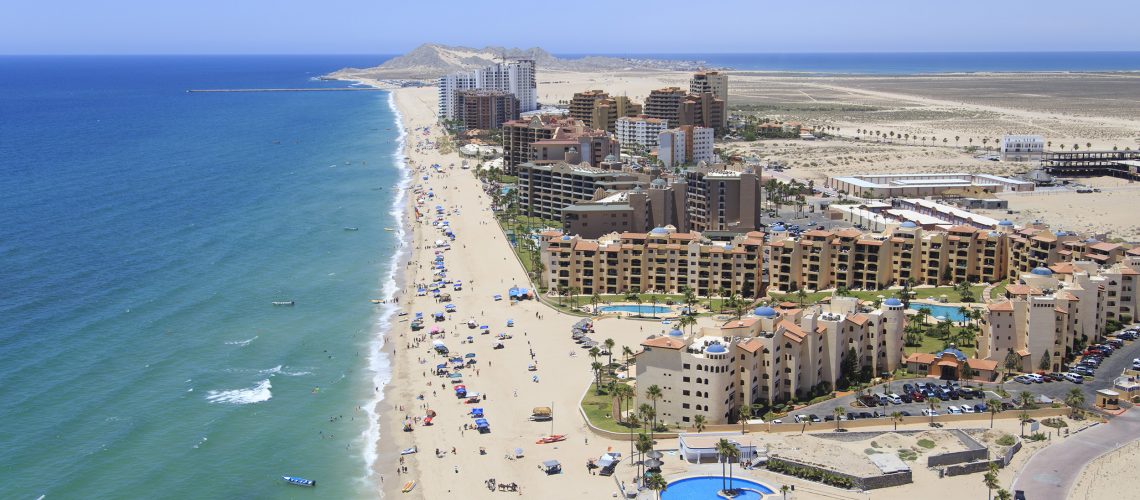
Welcome to October and the weather that we've all been waiting for. October is always one of the favorite months of the year in Rocky Point in terms of comfortable weather. The nights are cool and the days are warm. The Ocean is still a comfortable temperature for swimming, snorkeling, or water sports. Air conditions are being turned off and windows are opening again letting in the wonderful sound of waves on sand that lulls even the biggest insomniacs to a comfortable sleep. Our friends who had gone North to cooler climates for the Summer return to town. Yes, October is probably my favorite month.
About a week ago, the mornings began to feel a little more fresh and crisp. Not quite there yet, but we’re close. The humidity has gone down and it is actually becoming "comfortable" to lounge outside in the sun again. This is the time to enjoy the beaches, and the ocean, and it should hang around as long as until December before it starts getting a bit "chilly" and the jackets come out of storage. Whatever the season and whatever the weather, Rocky Point is always a wonderful place to be, but, October is just one fine month and it's now time to enjoy it.
Shrimp season is well under way too and those delicious fresh blue shrimp are flowing into the hands of vendors as you read this. There are many places to find fresh shrimp, most of them being on the Malecon (aka; fish market), but my favorite has always been a company called Seafood Products. They sell fresh-frozen, 2 kilo blocks of shrimp of separated by size. The weights are always accurate, the prices are set and clearly marked, and they are very competitive and easy to work with. They have many other types of fresh-caught seafood delicacies as well, and all are priced right and the quality and freshness is consistent. You can find their big blue storefront on Sinaloa Street, just off the main Blvd., kind of across the street from the Burger King to the East.
We've had a busy Summer and we are expecting a busy Fall as well. Tourism is up and it has been going up by a substantial amount every year in our recent past. Businesses are making money and new ones are opening frequently. Construction is happening everywhere you look and I have found that it's getting harder to find available workers on short notice because they all seem to have ongoing projects. The peso exchange rate continues to offer great bargains to those who exchange dollars for pesos to spend during their stay. This especially applies to the more "local" establishments, as many businesses catering to tourists set their prices based on dollars instead of pesos. All good news for Rocky Point, our residents, and our visitors. Hope to see you soon!
Enjoy this beautiful month, come to Rocky Point if you can, and if you need anything don't hesitate to ask. Let me put my experience and expertise to work for you, and remember, as always, I've been here full-time for over 15 years and I am more than happy to help you with whatever you need, whether Sonoran Resorts related or not.
Just give me a call or send me an email any time and I will do my very best to help you. If I can't help you myself, I'm sure that I can point you in the right direction and help find you someone who can.
Besides the links below, you can our listings at the following:
www.sonoranresorts.mx
www.sonoranresortsresales.com
AMPI Puerto Penasco MLS
Point 2 Agent Multinational MLS
Pick up a handout at any of our Sonoran Resorts
Scottsdale Barrett Jackson Show
Various Real Estate and Trade shows in AZ, NV, and CA
Our listings are also shared with the following:
| |
|
IMPORTANT: Some email providers cut this newsletter off before the end. If that happens on yours, please scroll to the bottom of this email and click "View Entire Message" to see the entire newsletter.
Sincerely, Jim Ringquist
Broker/Sales Director
Sonoran Resorts Spa - Sea - Sun - Sky - Star (coming soon)
602-476-7511
rockypointjim@gmail.com
www.SonoranResorts.mx
President/Volunteer
Tourist Assistance Unit Advisory Committee (Tourist Assistance Police)
602-774-1777
www.touristassistancerockypoint.org
touristassistancerockypoint@gmail.com
I hope that you enjoy my newsletter and continue to recommend it to your friends. Please feel free to give me thoughts, suggestions, or ideas for future newsletters. Puerto Peñasco is my home and I love to share the news and goings-on with you.
I do get email requests each month asking me to add someone to my list. While I certainly don't mind doing so, all you really need to do is click Sign-Up for Newsletter below, add the email address, and it will happen automatically. Not to worry - I will not spam you or share your email address, and you will only receive one email-newsletter each month on the 1st.
| |
Exclusively Serving the Sonoran Resorts
Buy & Sell Direct and SAVE!
22 Years Experience on Sandy Beach
Four Fully Completed Beachfront Resorts
We Have Earned Our Stellar Reputation
Your Only Logical Choice when Buying
or Selling a Sonoran Resorts Condo!
| |
21st Annual Rocky Point Rally! |  | |
The Greatest Motorcycle Fiesta just South of the Border will hit our shores again Nov 10 – 13, 2022 for the 21st Annual Rocky Point Rally! Founder and chief organizer Oscar Palacio anticipates numbers to top last year’s 20th Anniversary celebration, with bikers expected from across the southwestern US and beyond along with a growing number of participants from across Mexico.
Don’t forget to register prior –even if you’re just coming as a fiesta-goer – as all proceeds from registration, poker run, and bike show go to local charities. This has been an important part of the Rocky Point Rally since the beginning, providing valuable donations to the local Red Cross, Fire Department, DIF offices in Puerto Peñasco and Sonoyta, CAM La Montaña school for children with special needs, Casa Hogar home for the elderly, the local George Papanicolau chapter aimed at prevention and early cancer detection, as well as scholarships through the local DIF’s educational program. Register at: 21st Rocky Point Rally Tickets, Thu 10 Nov 2022 at 12:00 | Eventbrite
Along with Thurs-Fri registration plus Poker Run, this year will once again include Thursday night kick-off fiesta, a Friday night “Queen of the Streets” Bike Show at the end of the Old Port, Friday’s traditional fiesta at Playa Bonita (where it all began in 2001), Saturday’s open Bike Show near City Hall followed by the bike parade through town and wrapping up in the Mirador, plus this year’s line-up includes stunt bike riders right before the parade plus around town. Don’t forget Calle 13 celebrations throughout the weekend, and music, music, music at local sponsor venues! Keep up to date on calendar at www.rockypointrally.com
The 21st Annual Rocky Point Rally also honors the memory of Duane Moore, founding member of the Arizona band Mogollon, which has performed at the rally nearly every year since it began. Mogollon will be performing throughout the weekend, and we’ll all raise our glasses to Duane and his rocking violin!
For more information and to register, visit:
www.rockypointrally.com
email: rockypointrally.com@gmail.com
Facebook: @rocky.point.rally
| |
Food and Drink at the Sonoran Sky Resort:
| |
High Tide and Tropical Storm Kay Hit Rocky Point Simultaneously | 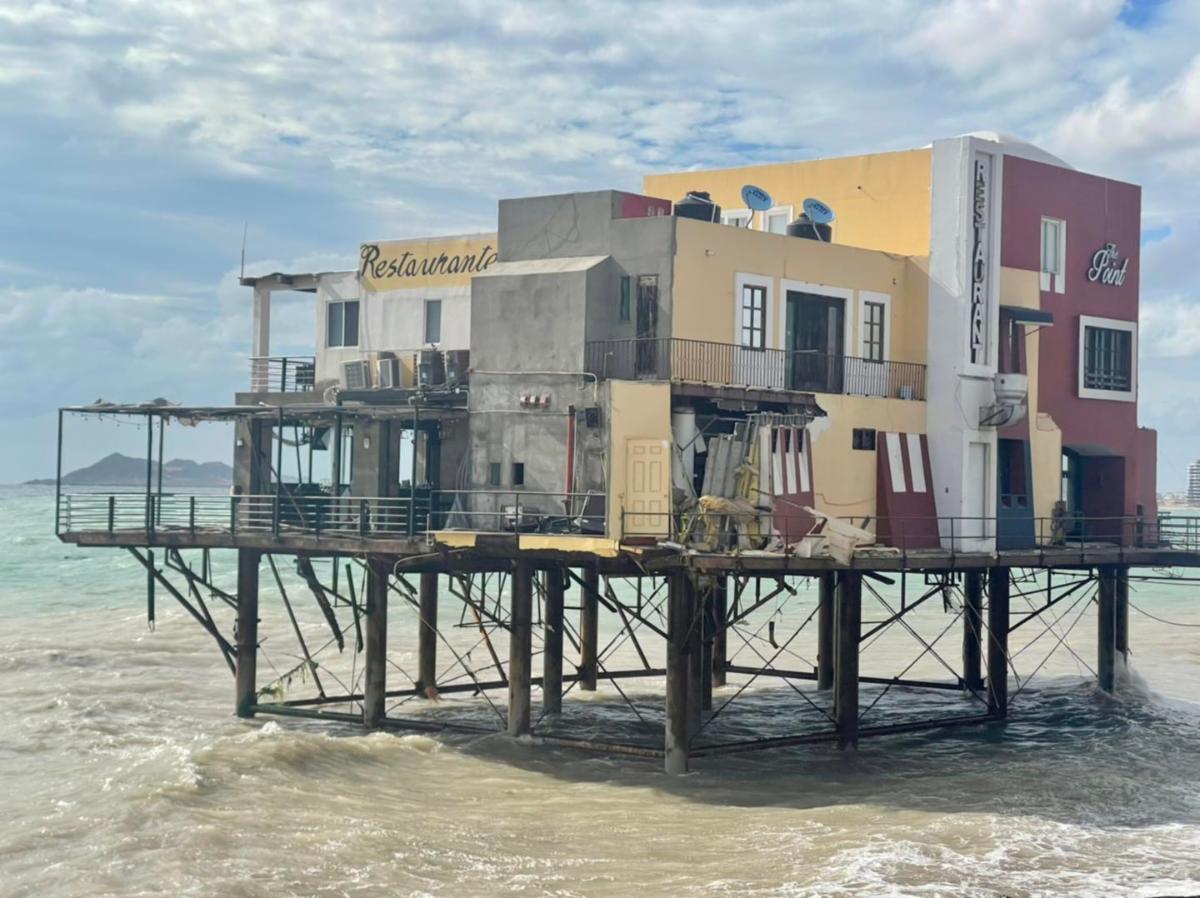 | |
A full-moon high tide coupled with the remnants of Tropical Storm Kay blowing along the Baja coastline caused some heavy rain, large waves, and damage around Rocky Point on September 9th. Thankfully, there was no loss of life and damage to properties, roads, and infrastructure were the only victims of the storm.
The director of Civil Protection and Firefighters recommendation led to the temporary suspension of classes at institutions of all levels, but they were back in class by Monday after the weekend spent cleaning up
One of the serious situations was reported in the Family Medicine Unit of the Mexican Institute of Social Security (IMSS) hospital when an aluminum and glass structure covering the front of the building for two floors collapsed. Fortunately no one was injured and the area was immediately cordoned off. Authorities gave instructions to proceed with the repair of the structure as soon as possible.
In other parts of the city there were reports of downed trees, fallen cables, and toppled billboards, along with some structural damage to seawalls and beachfront establishments. The rain and wind also caused the closure of the Coastal Highway as a large section of the road washed out. The highway was opened again the following day, but repairs are still ongoing.
Puerto Penasco is fortunate in its location on the Sea of Cortez as it would be very difficult for a hurricane to actually move up the narrow body of water to reach the city directly. Hurricanes are much more common on the Pacific side of Baja, but the mountain ranges between Baja and Rocky Point tend to diffuse a storm, keeping most of force of the storms away from this city. As of today, the city has mostly been restored, with the storm only causing a short interruption in the normal activities in the city.
| |
Potpourri!
Short Shorts of All Sorts!
Sometimes so much is going on in our little slice of paradise by the sea that we can't address the many short subjects with proper attention. To handle the hodgepodge of dangling subject matter, we invented the Potpourri Page. Here are a few "short shorts" to keep you up to date.
| |
John Fowler - Santa Claus Club Raffle and Cornhole Tournament | |
We are having a raffle to raise funds for the Santa Claus Club. Tickets are $2.00 each, 6 for $10.00, 13 for $20.00, 40 for $50.00 and 100 for $100.00. Drawing is October 29 at the Cornhole Tournament at Banditos. YOU DO NOT HAVE TO BE PRESENT TO WIN.
Send payment to John Fowler, P. O. Box 5, Lukeville, AZ. 85341. I will send you your stubs and winnings. 100% of the money raised will be used to buy food and provide Christmas for the families in the Barrios of Rocky Point. We have 240 prizes to date. More to be added weekly. If you would like a prize list email me at santaclausclub@hotmail.com.
| |
|
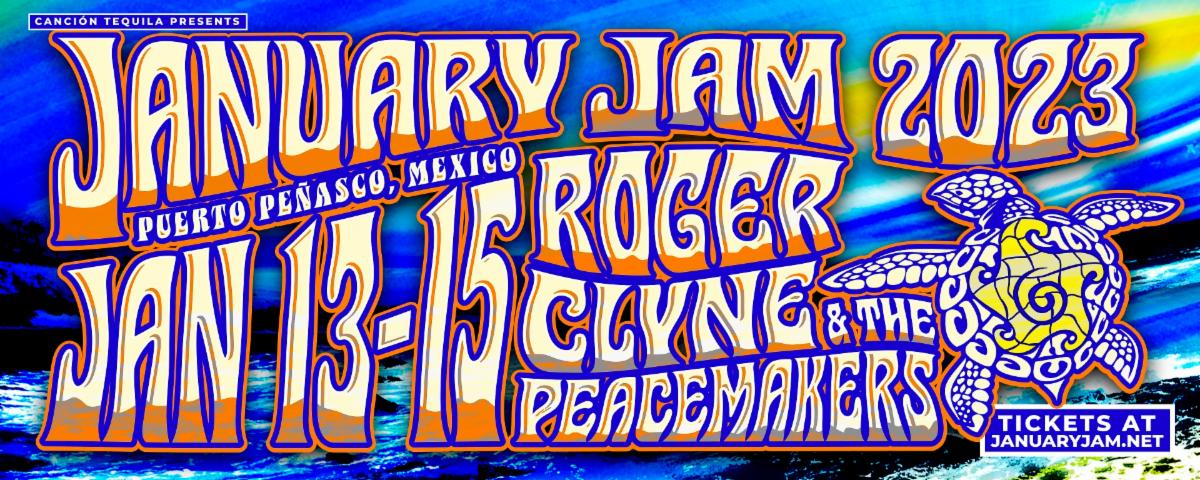
Roger Clyne & The Peacemakers announce January Jam will take place MLK Weekend January 13-15, 2023 in Puerto Penasco.
In addition to Friday and Saturday night shows at Banditos, fans can expect other events around town as well as the annual Cancion Tequila Golf Classic at The Links at Las Palomas raising money for local Penasco non-profits.
Tickets and band line up will be announced October 30th at www.januaryjam.net! Reserve your accommodations today and we’ll see you for 3 days of live music at the beach.
| |
Aquatic Chair Available through TAU | |
If you , or family or friends are not able to walk the beach and would like to dip your toes in the ocean, the Tourist Assistance Unit has a special chair that can help them enjoy their time in Rocky Point.
The TAU will even provide an officer to help with the chair. Normally, the chair can be located on weekends at Playa Hermosa. Just show up and ask. It's just one more little service provided by the great officers at the TAU.
| |
Green Angels Assist Motorists Between Rocky Point and Lukeville | |
First Baby Turtles of the Season Released | |
|
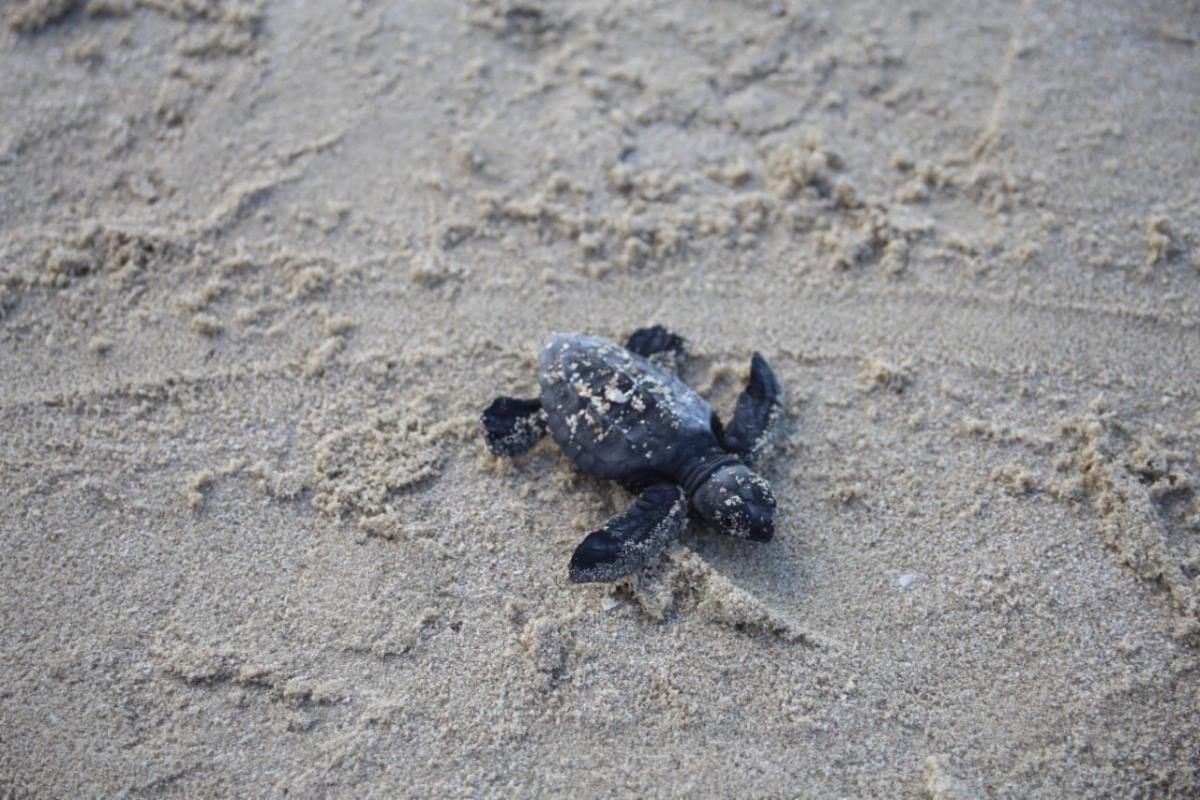
On Saturday, September 24, the first release of olive ridley turtles was carried out in Playa Hermosa so that the babies could make their way into the ocean.
There were 7 hatchlings that managed to survive from a family of 44 eggs that were collected from a nest at Playa Hermosa. On Saturday, September 24, after artificial incubation, the hatchlings were released with the support of ZOFEMAT biologist Humberto González and staff, assisted by the Tourist Auxiliary Unit, Secretary of the Navy, and CEDO.
The newborn turtles had been kept in artificial incubation under the care of the biologist in charge, Itzel Carolina Cárdenas, and once placed on the beach, the baby turtles advanced towards the sea, always protected by the support staff and some tourists. The waves attracted them instinctively as they made their way towards the ocean.
This beautiful natural spectacle occurs on very few coasts of the country, so a strict release protocol is followed to safeguard the turtles until they reach their new home in the ocean. The municipal government, in coordination with environmental agencies, manages the procedure along with Wildlife and PROFEPA. The activity is regulated to facilitate and ensure that the procedures for the incubation and release of turtles are followed.
This release was successfully carried out on one of the most visited beaches in Puerto Peñasco, “that is why we are vigilant of the beach visitors, ensuring that they always pick up their trash and their bags” commented Humberto González, a biologist from ZOFEMAT, who supervised to see that tourists and residents who witness the release of baby turtles do not interfere with the baby turtles on their way to the sea.
| |
The Great Desert Race in Mexico | |
|
On October 22th and 23th of 2022, a competition like no other will take place in Mexico: The Great Desert Race. An Ultra Trail race where some of the best athletes from more than 10 countries will participate.
This challenge is different; it’ll be an encounter with yourself full of adrenaline and strength, passing deep into the salt paths of ancient ancestors, a magical place going through the dunes of the Great Altar Desert to then find the sea breeze from the beautiful Sea of Cortez in Puerto Peñasco in Sonora, Mexico. You’ll also get the chance to camp below a breathtaking sky full of stars. A unique experience you should definitely live.
Rocky Point has the scenery of a competition never seen before in the country where the runners can sign up for any of the 4 distances, all going through spectacular natural views that will amaze you with their beauty, awakening your adventure spirit: Beach Fun Run (10K), Beach & Desert Run (25K), Mega Desert Run (50K) and Ultra Trail (75K).
Save the date for October 22th and 23th for The Great Desert Race, in collaboration with the Government of Sonora and with the support of both Federal and State Departments of Tourism. This event seeks to promote the sport and grow the tourism in the area mostly unexplored by people from outside the area, but with an important potential.
Pack your bags and test your limits!
Sign up today to any of the 4 distances available at
www.grancarreradeldesierto.com.mx
| |
Summer Tourism was Strong in 2022 | |
|
This summer was very good in terms of the number of tourists and the amount of income generated. According to the OCV, in the three months of Summer tourism, the city saw a financial gain of more than $500 million pesos, through the arrival of approximately 470,000 tourists, reported the director of the Convention and Visitors Bureau.
Héctor Vásquez del Mercado, director of the OCV, revealed that in the three summer months of June, July, and August, condos and hotels averaged a 62% occupancy level, with an average of 40,000 visitors per week. These numbers were very similar to those in 2019 and were slightly higher than last year during the same months.
He indicated that the summer tourism was comprised of 70% foreign visitors and 30% national visitors from other areas of Mexico, with the exception of mid July to mid August when schools were on Summer vacation. During that time, 60% of the visitors were nationals from Mexico.
Vásquez del Mercado stated that there is strong optimism in the tourism industry due to these excellent statistics, reaffirming the strength of the tourism industry in Puerto Peñasco that those in the tourism industry are experiencing.
| |
Tourist Assistance Unit Receives Uniforms and Equipment | |
|
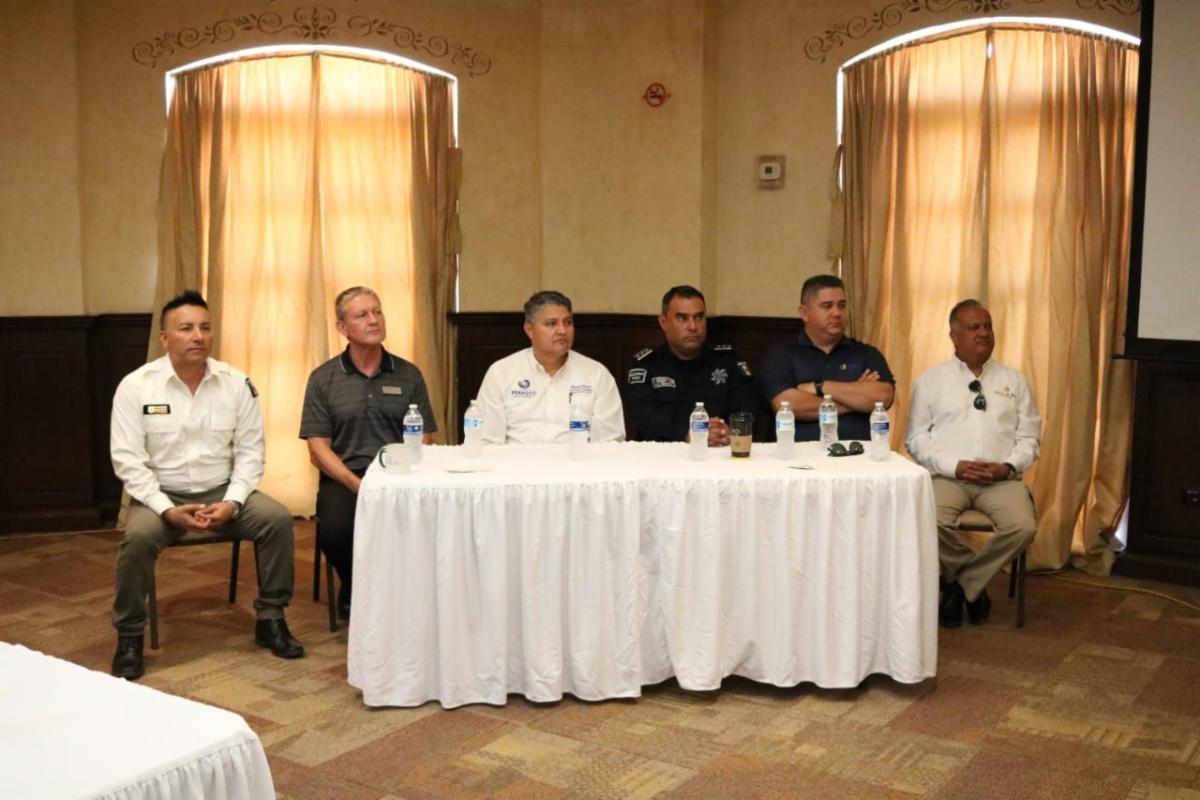
The municipal government provided uniforms to the members of the Tourist Auxiliary Unit as part of the ongoing actions to well equip them and to strengthen their ability to care for tourists and residents of Rocky Point.
Municipal secretary, Miguel Ángel Maciel Félix, who on behalf of Mayor Jorge Pivac delivered a uniform kit consisting of pants, t-shirt and a cap to each member of the Tourist Auxiliary Unit to be used in their daily duties of safeguarding tourism and residents, as well as helping to care for the beaches and the ecosystem.
"They have proven to be a group of highly professional men and women who have worn the uniform with dignity, promoting culture, and ensuring a place of peace, legality and respect. I share that the tourist unit is an excellent example to be copied at a national level”, specified the secretary of the City Council.
Added to the delivery from the city was a donation made Roger Clyne, represented by Mr. Jim Ringquist, Sonoran Resorts Sales Director. The donation consisted of helmets, tactical boots and equipment to complement the equipment required by the Tourist Auxiliary Unit officers for their daily operation.
A short video was shared with the attendees showing sample of the accomplishments and good work done by the officers of the TAU who, along with the government officials offered their thanks for the generous donations.
| 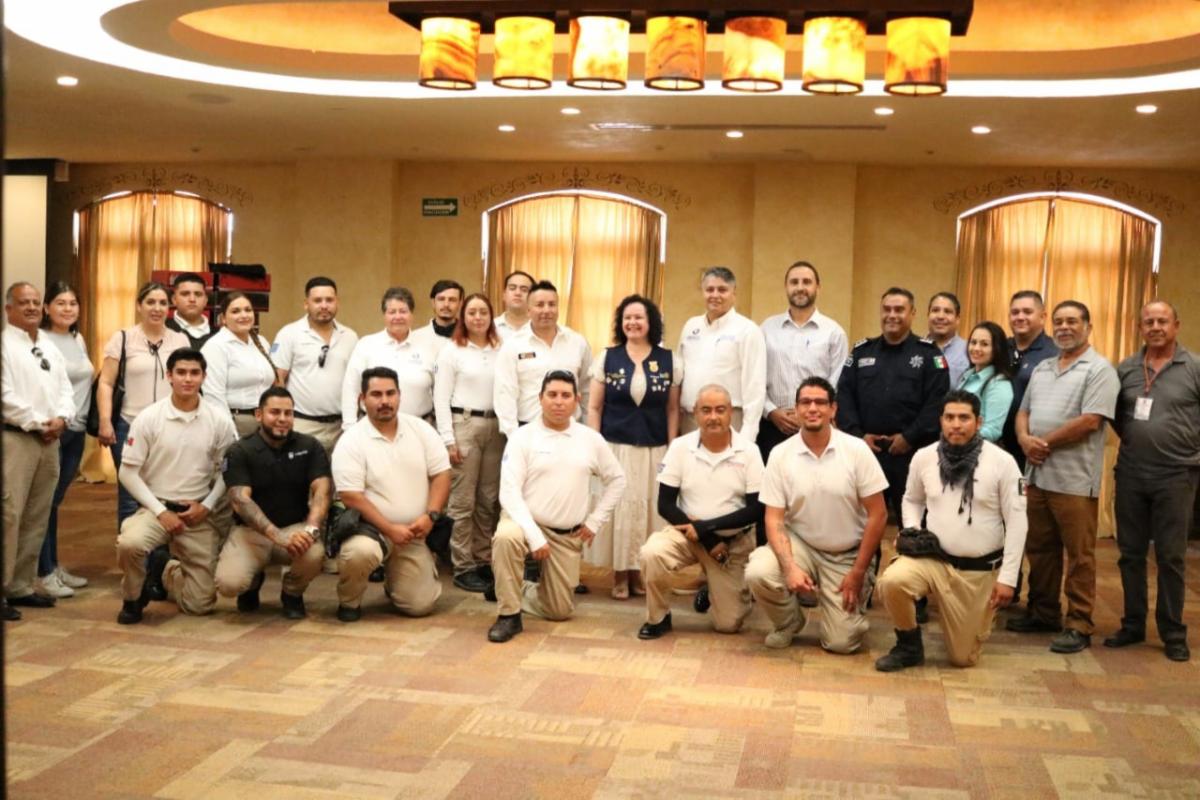 | The presentation was held at the Sonoran Sky Events Center and was attended by: Carlos Bravo, director of the Tourist Auxiliary Unit, Jim Ringquist, representative for Roger Clyne and public relations manager for Sonoran Resorts, Raúl Quintero Barrón director of Public Safety, Councilman Enrique Gaxiola, and Leonardo Peralta, president of the Association of Condominium Development Administrators of Puerto Peñasco. Also in attendance were the president of the Mar de Peñasco Rotary Club, María Conchita Peralta, as well as other public servants and special guests. | |
Rocky Point Rally Founder Named Sonora Tourism Ambassador | |
|
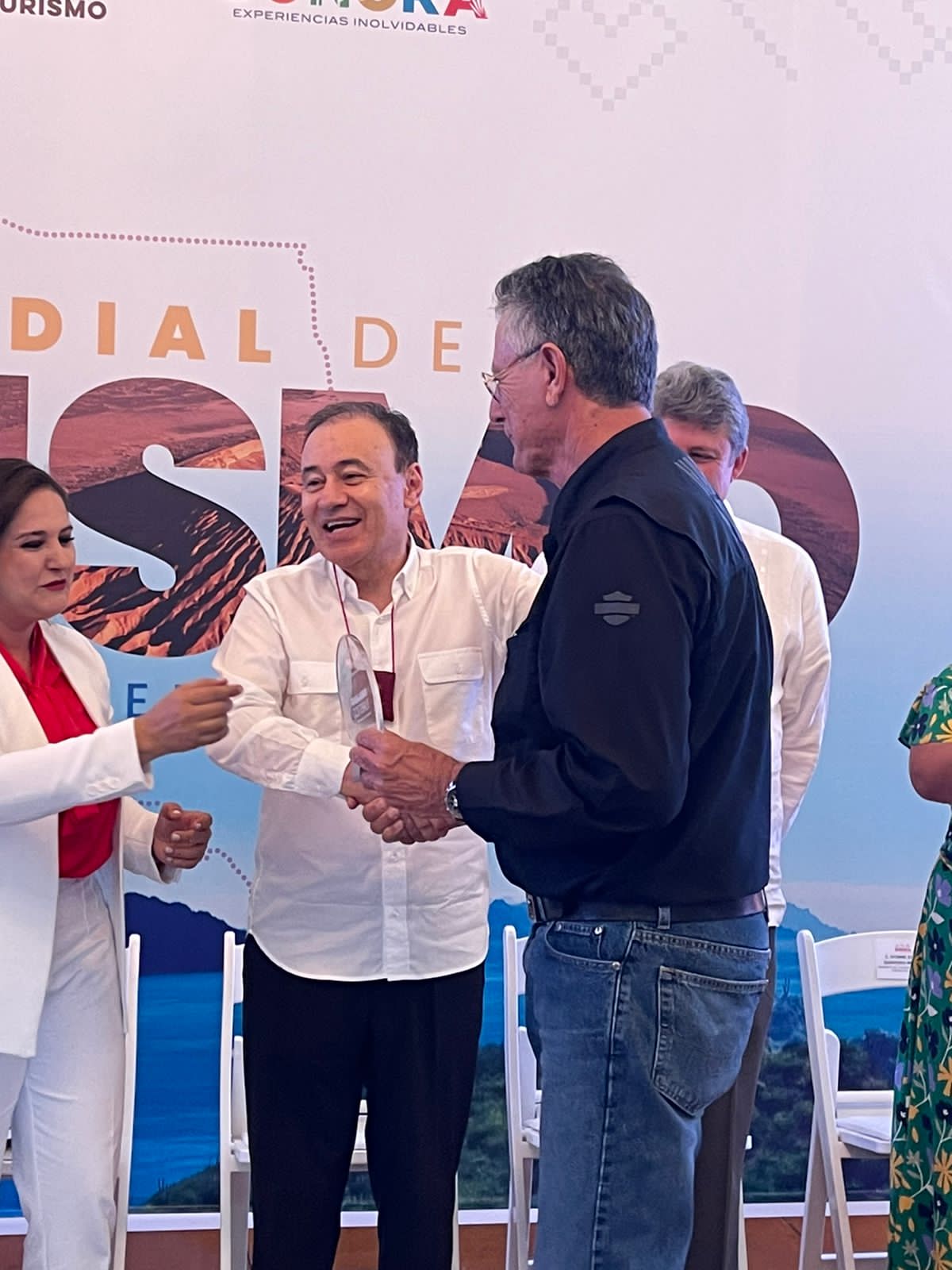
Congratulations to Rocky Point Rally™ founder Oscar Palacio on being named a Tourism Ambassador by Sonora Governor Alfonso Durazo on #WorldTourismDay for the success of the Greatest Motorcycle Fiesta just South of the Border for over 2 decades!
“While I received this acknowledgment,” remarked Palacio Soto, “more than anything this is in recognition of the many people that have collaborated and volunteered to ensure the Rocky Point Rally’s success and tremendous impact on our city.”
“Thanks to all the volunteers, and special recognition from the beginning to Lyman Sherer and Jim Luck and the local bikers who first proposed the idea of creating this event here; thanks to the various municipal and state administrations that have continually supported us, the businesses and individuals that have put their trust in us, our sponsors, and in more recent years to the late Bill Bingham, Beverly Arrowood and Shandra Keesecker Mark Lamberton Jan Christensen Russ Black Rusty Childress and countless others - for doing a tremendous job and whose volunteering of time and effort has helped us become the most successful biker event in northwestern Mexico. Above all, this is a shared recognition for all, and we should feel very proud.
See you on November!! 21st Annual #RockyPointRally Nov 10 – 13, 2022!
| |
This is the Vaquita Marina, the Mexican Porpoise That Fights for Its Survival in the Sea of Cortez | |
|
Recent Research Estimates Possibly only 10 Remaining Vaquita Marina Porpoise
The French oceanographer, Jacques Cousteau, once called the Sea of Cortez “the world's aquarium”, due to the great biological diversity that exists in the area. This corner of the Pacific Ocean is, indeed, one of the richest places in marine fauna. Despite this, fishing and other human activities have been putting the survival of many endemic species at high risk. This is the case of the vaquita marina:
The vaquita porpoise is also known as the cochito, however its scientific name is Phocoena sinus. Phocoena comes from Latin and means "porpoise", while sinus refers to "cavity", which, in this case, is a reference to the place of origin of this marine mammal: the Sea of Cortez.
Porpoises are a species of marine mammals that belong to the group of cetaceans. Whales, dolphins and sperm whales are also part of this classification. There are seven species of porpoises, all of which are distinguishable by being smaller compared to other animals in the same group, and by the shape of their (flat) teeth.
Of all the porpoises, the vaquita porpoise is the smallest. Consequently, it is also the smallest cetacean. The first descriptions of this animal come from the first half of the 20th century. These were the result of the discovery of some skulls seen in San Felipe, Baja California. However, it was not until 1958 that they were formally identified.
The description of this marine mammal is very peculiar. It is an animal that reaches 1.5 meters in length in the case of females, and 1.4 meters in the case of males. Like other porpoises, the vaquita porpoise is characterized by its robustness. Its head is rounded and its dorsal fin is high. Other attributes of this cetacean are the black spots around its eyes and lips. As for its colors, the back is dark gray, the sides are light gray and the belly is white.
The Gulf of California porpoise is from shallow waters. According to Dr. María Luisa Martínez Vázquez, from the Institute of Ecology (INECOL), the vaquita porpoise never strays far from the coast and prefers warm currents. It is also an animal that moves in small groups (2 to 3 individuals). It uses echolocation to search for food and to detect the presence of predators.
The Government mentions that the sexual maturity of this cetacean is reached at six years. Mating months are April and June. Fertility is, compared to other species, low. It is estimated that a female can give birth, throughout her life to only 5 or 7 offspring.
Due to different factors, the vaquita has been in danger of extinction since 1996. The number of specimens of the species has been decreasing year after year, despite the work done in favor of its conservation. In 2022, a study by the University of California was published in which, among other data, it was mentioned that there may currently only be 10 remaining vaquitas. However, the same source makes it known that the existing specimens appear in good health, a fact that increases the chances of saving the species.
The main reason that is driving this marine mammal to extinction, according to the United Nations (UN), is the illegal fishing of totoaba. This is a fish that is also at high risk of disappearing, since it is traded clandestinely, especially in China due to its supposed healing and aphrodisiac properties.
The problem with this type of fishing is that many vaquitas become trapped in the nets used to capture totoaba. In 2017, the Mexican government prohibited the use of these fishing nets in the vaquita's habitat. Other measures have also been taken to protect the species.
In 1992, even before the vaquita was declared as endangered, the Technical Committee for the Preservation of the Vaquita and Totoaba (CTPVT) was created. This organization combined efforts, from the public and private sectors focused on caring for this species.
Additionally, in 1997, the International Committee for the Recovery of the Vaquita Marina (CIRVA) was formed. Researchers from Canada, the United States, Europe and Mexico cooperate together in this group. CIRVA takes its work in two directions; Firstly, there is the elaboration of a recovery plan for the species; Second, the socioeconomic impact on the communities that may be affected by the proposed measures is monitored.
| |
Strawberries and Raspberries in Winter? You Can Thank Mexico for That | |
|
Mexican farmers are taking advantage of a year-round growing climate and a profitable U.S. market to grow all sorts of berries
Mexico News Daily’s John Pint did a good job discussing the issues related to berry cultivation in Jalisco back in March, but despite the problems, berry cultivation isn’t going anywhere for one compelling reason: money.
Mexico and its cuisine are not traditionally associated with strawberries, raspberries, blackberries and blueberries, but they are not entirely unknown.
Blackberries grow wild in a few high forested areas, but berry cultivation in Mexico was almost nonexistent until the late 20th century. This lack of familiarity may account for the wide variety of names used for this category of fruits in Mexican Spanish: baya, frutilla, fruta de bosque, mora and even the English word “berry.”
But as Pint and many others have noticed, this has changed dramatically in the past couple of decades.
The visibility comes with the rise of greenhouses growing raspberries, blackberries and blueberries, with white tarp greenhouses dotting various landscapes. These abound in Michoacán, which is the largest producer of such berries, but berries of all types are grown in 22 of Mexico’s 32 states.
Prime growing areas extend from central into southern Mexico, with some other areas in the northwest and Baja, generally microclimates where the altitude moderates temperature and rain patterns. Right now, 55,000 hectares of land are under berry cultivation, but that number is sure to grow.
Berries as a whole account for only 5% of Mexico’s agricultural production but 11% of its agricultural income. The vast majority are strawberries, but the most profitable by far are raspberries, blueberries and blackberries. This has gotten the attention of many local, state and federal agricultural agencies, and the establishment of a producers’ group, the National Association of Berries (Aneberries).
Biochemist María Aparicio Cid started La Mora berry wine in 2015 when she found that tons of overripe and damaged fruit was being dumped in a local Jocotepec, Jalisco landfill. Such dumping is no longer the case thanks to her and others’ entrepreneurship.
Strawberries have been grown in Mexico for some time, with Mexico now producing 10% of the world’s supply. They are an important part of the economy of southern Guanajuato, with the city of Irapuato holding a strawberry fair each spring.
But the cultivation of other berries, especially raspberries, has a much higher profit margin and less price fluctuation since they have long been prized in the northern cultures in the United States, Canada and Europe. Their demand has only risen with studies touting their antioxidant content and their benefits to the immune system.
The U.S. had long produced its own fruit, and it is still the main producer of blueberries worldwide. But climate conditions in most of the country mean a short season in the spring. Mexico has a huge advantage in that it can produce berries in the fall, winter and spring, with many Mexican farmers managing their harvests to happen in winter, when prices are highest.
Mexico not only has climatic advantages it also has logistical ones: it’s located next to the world’s largest berry market, the United States. It is also much better located for shipment to Europe and even Asia than its main Latin American competitors, Peru and Chile. Lower labor costs is also an advantage.
The recent explosion in production and export is due to free trade agreements starting with NAFTA in 1994. Just one year prior, only 13,000 tons of strawberries left Mexico for the U.S., and none of the other berries, and only a minuscule amount of blueberries, were grown in Puebla.
Exports really took off after 2005. By the end of 2022, Aneberries anticipates the export of over 584,000 tons of berries from Mexico, earning US $3 billion. That would make berries Mexico’s third most important food export after beer and avocados.
All berry production is rising, but raspberries are by far the most popular, bringing in more than US $3 billion annually. Blueberry production remains very small, but it is the fastest growing, rising from 29,000 tons to 50,000 tons from 2016 to 2020. Berry fields and greenhouses are replacing corn in states like Michoacán and Jalisco. This is leading to a mutual dependence developing between Mexico and the U.S., an exchange of berries and other fruit for corn.
Despite environmental and socioeconomic concerns, there seems to be no end in sight to the Mexican berry industry’s growth. There is still a large gap between the demand for berries and worldwide production, as consumers are more than happy to see these formerly seasonal treats available almost year-round and at better prices.
| |
Mexico is the United States’ Second Largest Trade Partner; Bilateral Trade has Increased in 2022 | |
|
Mexico is the United States’ second largest trade partner; bilateral trade has increased in 2022
Mexico was the United States’ second largest trade partner in the first seven months of the year with two-way trade worth almost US $450 billion, U.S. government data shows.
United States Census Bureau data published this week shows that two-way trade increased 19.8% between January and July to $449.8 billion. Almost 60% of that amount – $261.9 billion – came from Mexican exports to the United States, while imports from the U.S. were worth $187.9 billion.
The value of Mexico’s exports to the United States increased 20% compared to the first seven months of 2021, while imports from the U.S. rose 19.5%. Mexico was also the United States’ second largest trade partner in 2021, behind Canada. It seized the No. 1 position earlier this year, but has since relinquished it.
Most of Mexico’s export income comes from manufactured goods, including vehicles, machinery, computers and televisions. However, it also sends a range of other products to the United States and other countries further afield, among which are crude oil, fruit and vegetables, chemicals, beer and alcoholic beverages such as tequila, mezcal and wine.
Among the products that Mexico imports are gasoline and other refined fuels – a situation President López Obrador is trying to bring to an end – food (including corn) and consumer goods such as cell phones.
Canada edged out Mexico as the United States’ No. 1 trade partner in the first seven months of the year, with Canadian-American trade totaling $466.7 billion. China ranked as the United States’ third largest trade partner, with Sino-U.S. trade worth $402.3 billion between January and July.
The trade between Mexico and its northern neighbor left the former with a surplus of almost $74 billion so far this year. However, taking into account all trade partners, overall Mexico is running a trade deficit for 2022.
Data from national statistics agency INEGI shows that the value of Mexican exports to all countries around the world in the first seven months of the year was $327.3 billion. Imports in the same period totaled $346.2 billion, leaving Mexico with a trade deficit of $18.9 billion.
Trade surpluses have only been achieved in two months this year – February and March – while there were deficits in January and the four months between April and July. Mexico recorded a trade deficit of $10.9 billion in 2021.
| |
The Totoaba, a Unique Species That is Still in Danger | |
|
Despite efforts to repopulate it at sea, it is still classified as at risk, according to the federal government.
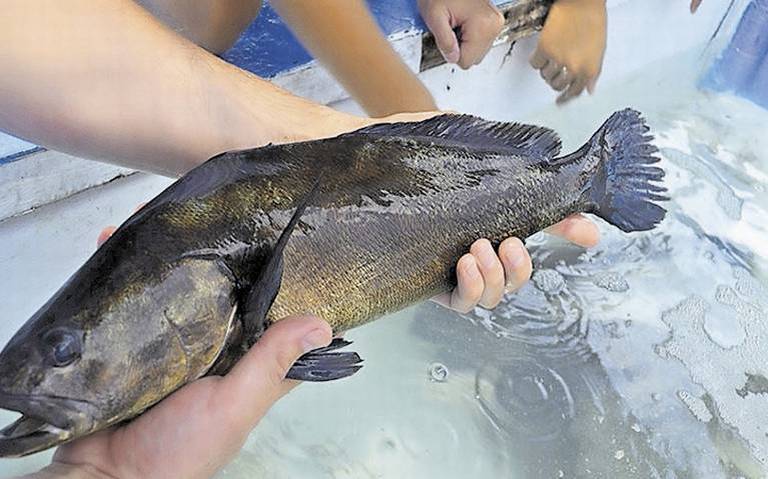
The totoaba is the largest fish in the Upper Gulf of California, unique in the region and the species continues to face illegal fishing, which has led to an alarming decrease in its population. Still, it is dangerously close to its almost extinction The problem is that it is poached to obtain its swim bladder, also called crop, which is taken in violation of the law and sold to the Asian continent at exorbitant prices.
Since August 1975, the federal government (via the then Secretariat of Fisheries) decreed that this fish was at risk of disappearing, and therefore decided to protect it.
In 1991, a population of 2,300 totoabas was estimated and at that time, it was believed that there has been an apparent recovery. In a study to determine the distribution, abundance, growth, and bycatch of totoaba by shrimp boats, a density of juveniles of 11.6 and 11.5 individuals per square kilometer was found in 1989 and 1990. Based on these results, it is believed that the juvenile population in the upper Gulf of California remains stable at low levels, but with possibilities of recovery.
In the report carried out by the National Fisheries Institute (Inapesca) called "Evaluation of the population of Totoaba in the Gulf of California", of February 2018, it was considered that under a controlled capture scheme, the capture of adult specimens could be allowed along with the incidental capture of juveniles only when the change in risk category is determined.
Biologist, Martha Román, concluded that the status continues to be "in danger of extinction" another evaluation of the population has to be made. An evaluation done in 2018 and 2019, and published in 2020 concluded that the species was in good condition, but illegal fishing continued to be a latent risk.
Likewise, she commented, illegal fishing makes it difficult to know exactly what the real situation of the totoaba population is and how it continues to impact it. She stated that illegal fishing is very difficult to assess because its impact on the totoaba population is unknown. "For that reason it has not been delisted as endangered despite the fact that studies say that in 2018 and 2019 the population of the species was stable. But since illegal fishing continues to affect us, we do not know if this is going to change drastically."
She mentioned that this issue is the responsibility of two federal agencies, the Ministry of Environment and Natural Resources (Semarnat) and the National Fisheries Commission (Conapesca). "The ban was put by Conapesca and it is better not to unlist it for the moment. Additionally, internationally, it is in the risk category in legal traffic between countries. Despite all the studies, it has been determined that the totoaba is not out of risk
| |
Sotol: Will Mexican Moonshine Conquer the US? | |
|
Sotol was first mass-produced in Mexico in the 1930s, when it developed a similar reputation as moonshine north of the border
Step aside, tequila and mezcal. There’s a new – but actually very old – drink in town.
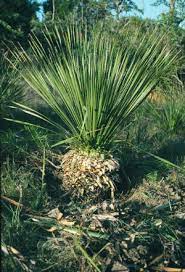
Sotol is a spirit made from the sotol plant (dasilyrion wheeleri), which grows in the deserts of northern Mexico as well as the southern US states of Texas, New Mexico, and Arizona.
The sotol plant is a close relative of the agave, and the beverage distilled from it has been gaining in popularity over the past several years on both sides of the border. Some industry experts claim the drink’s popularity will eventually surpass that of mezcal and tequila.
“Commercially speaking, it’s where mezcal was 10 years ago,” Ricardo Pico, Vice President of the Certifying Council of Sotol told BBC World. Notable for its clear pour, herbal, smooth taste, and easy drinkability, sotol has gained many new fans over the past several years. It can be consumed straight, but also makes a good base for cocktails.
The “heart” of the plant, which grows on the end of a long stem in its center, is traditionally roasted in an earthen oven, then pressed to remove the sap before being fermented. While sotol can be aged to bring out more complex flavors, it is not always part of the process.
There is archaeological evidence in both present-day Mexico and Texas of the cultural importance of the sotol plant that goes back 7,000 years. More recently, the Rarámuri tribe of Chihuahua, Mexico, are believed to have made a beer-like beverage using the plant starting approximately 800 years ago. When the Spanish began colonizing the region in the 16th century, they introduced the distillation process, making sotol what it is today.
Sotol was first mass-produced in Mexico in the 1930s, when it developed a similar reputation as moonshine north of the border. The Mexican government outlawed its production in 1944, not lifting the ban until 1994, after the signing of the North American Free Trade Agreement (NAFTA).
In 2002, the Mexican government granted the beverage a designation of denomination of origin (DO), meaning that only sotol produced in the states of Durango, Chihuahua, and Coahuila can rightly be labeled as sotol (similar examples are champagne and scotch). The DO designation is recognized by the World Intellectual Property Organization.
However, when the new US-Mexico-Canada Agreement (USMCA) came into effect in 2020, sotol did not receive the denomination of origin protection enjoyed by tequila and mezcal; in fact, it was removed last minute out of fear that it would hurt producers in Texas.
As the beverage gets more attention, the debate about spirits made from local varieties of sotol plants in Texas and whether they should be labeled and marketed as sotol has heated up.
Texas producers maintain that because the plant grows “in their backyard” and they are using the same or similar techniques to produce it, then they should be allowed to continue to do so while maintaining the drink’s name.
A few vocal Mexican producers and activists believe that Mexico’s DO should be respected, for cultural reasons and economic ones. But Mexican sotoleros like Jacobo Jacquez of Sotol Don Celso see increased visibility of the beverage as a boon to both sides of the border.
Jacquez, who collaborates with Texas sotol producer Marfa Spirit Co., told Texas Monthly, sotol is “a heritage that we share.”
| |
Meet the Sonoran's Family of Beachfront Resorts | |
|
Pozole is one of the most traditional dishes in Mexico, but it harbors a secret that few people know.
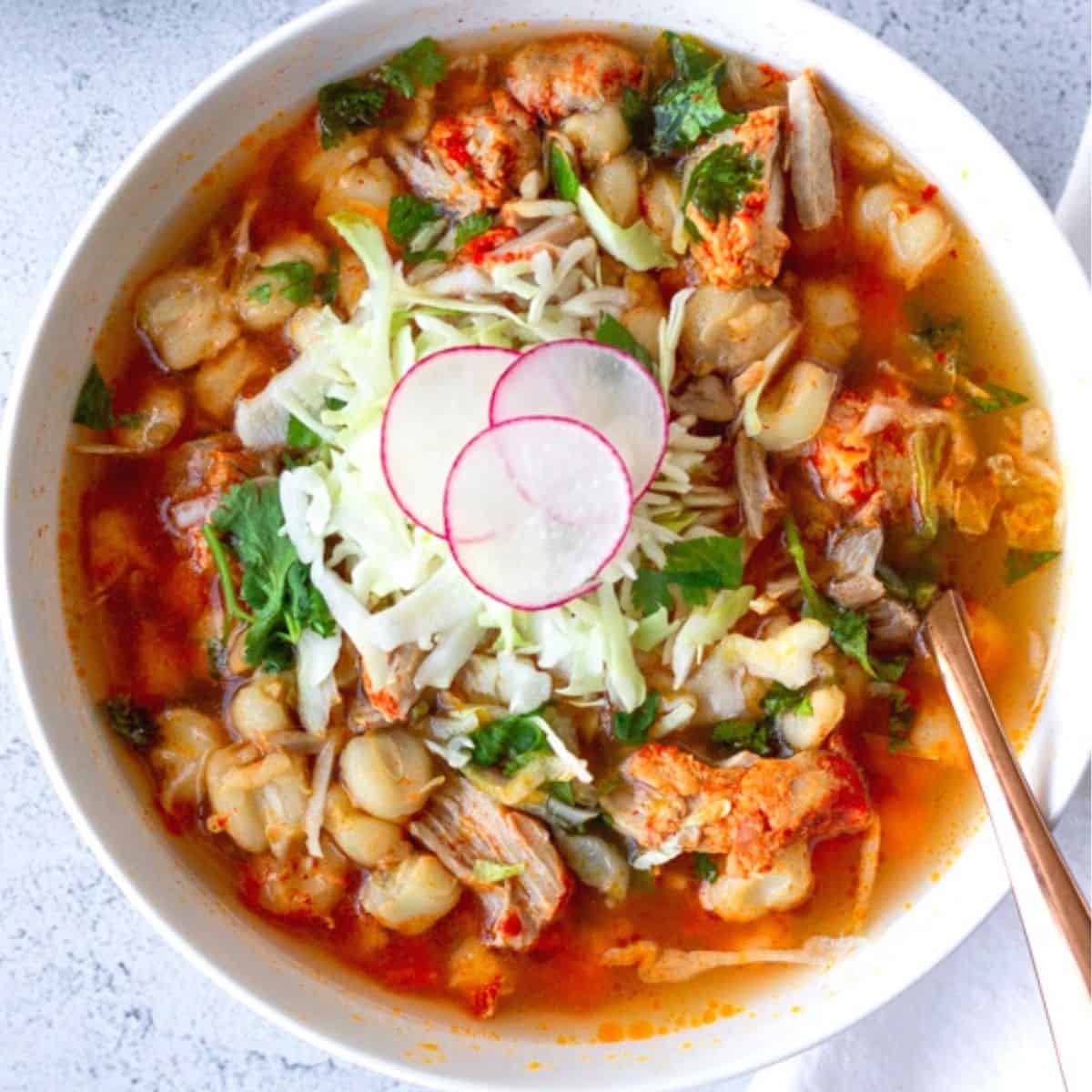
This dates back to pre-Hispanic times where according to some experts it was part of a religious ritual. Today, when we think of the dish, we think of beans, chicken, pork, hominy, and green, red or white pozole.
According to the 'General History of Things in New Spain' by Fray Bernardino de Sahagún, the pozole which was prepared with human meat, specifically with the thigh of a prisoner who had been sacrificed, and the only one who was allowed to eat the dish was Moctezuma.
As further evidence, the book 'Sabor que Somos' refers that in the year 1530 Nuño Beltrán de Guzmán (conqueror of Nueva Galicia) was received with dances and Mexican pozole in Tonalá, Jalisco after overthrowing the indigenous people. He explained that when he saw the container in which the pozole was served, he discovered that it had human remains.
Also, as reported by other media sources, there was a specific ritual that included the sacrifice of the prisoner. The right thigh was claimed to be the "richest” part and was offered to Tlatoani (from the Nahuatl "he who speaks, orator" or also "great ruler"). While the left thigh and arms were intended for those who made the sacrifice.
The Instituto Nacional de Antropología e Historia in Mexico found that hominy or maize was sacred to the Aztecs. As a result, it was used in ritual sacrifices to the corn gods and for special occasions. As part of the ritual, human flesh was incorporated into the dish. After their hearts had been taken out and offered to the Gods as a sacrifice, the rest of the human bodies were chopped into bits and added to the pozole.
When this tradition came to an end with the arrival of the Spanish, the pozole stopped being prepared with human meat and was replaced by animal meat. Today, it is widely consumed over all of Mexico and considered to be one of the nationally cherished dishes.
| |
|
Here's a Pozole recipe without the body parts :)
INGREDIENTS
1 1⁄2 lbs pork shoulder
2 garlic cloves, peeled
1tablespoon cumin powder
1onion, chopped
2 garlic cloves, chopped
2 tablespoons oil
1⁄2 teaspoon black pepper
1⁄2 teaspoon cayenne
2 tablespoons california chili powder
1 tablespoon salt
1⁄4 teaspoon oregano
4 cups canned white hominy, drained and rinsed
3 -5 cups pork broth, from cooking pork shoulder
1 cup canned diced green chilis (optional)
salt
2 whole fresh jalapenos, chopped (optional)
3 whole ancho chilies, seeded and stemmed (garnish) (optional)
DIRECTIONS
This recipe requires a simple prep.
Prepare the onion, peel the garlic, chop the onion, peel and chop the 2 garlic cloves, chop the green chilies and jalapenos if you are using them and get the hominy drained and rinsed.
Now you are ready to cook.
Place the meat in a large saucepan and just cover with lightly salted water.
Add 1/2 chopped onion, the 2 cloves peeled garlic, pepper, cumin, and oregano.
Bring to a boil over medium heat, skim off any foam that rises, reduce heat, cover and simmer for 45 minutes.
Remove meat and broth, reserving both.
Saute the remaining chopped onion and garlic in oil until translucent.
Add the remaining spices, stir for a minute.
Cut the reserved pork into 1 inch cubes and add to the pan.
Stir in the canned hominy, pork broth (if there is not enough pork broth, add chicken stock, add it for flavor, about 2-4 cups, eyeball the amount you like), green chilies and jalapenos (optional).
Cook at a simmer, covered, for 45 to 60 minutes until the meat and hominy are tender.
If necessary, cook for up to an additional 60 minutes until the chilies and onions are well blended into the broth.
Degrease the stew, taste for salt, and serve in soup bowls.
This is a delicious recipe and well worth the effort to make.
GARNISHES THAT ARE ALWAYS SERVED WITH POZOLE:
lots of lime/lemon wedges.
sliced radishes.
chopped cilantro.
Shredded cabbage (not red).
fresh/packaged fried corn tortillas.
| |
The Proliferation of Abbreviations in Mexican Spanish | |
|
Standard abbreviations for a wide, and growing, variety of words are as much a part of Mexican Spanish as they are in English
Standard abbreviations of household words are as much a part of Mexican Spanish as they are of English. Over the years, shortened forms of words have been creeping into everyday use, exacerbated somewhat by the younger members of the population whose communications fit a new set of parameters defined by text messages, chat room one-liners, and email.
Time-saving alternatives to longer words
Appliances are a natural candidate for saving time speaking. One of the most common is fridge instead of refrigerator, in Spanish refri instead of refrigerador—and conge for congelador followed on the heels of refri.
La tele for televisión, has been in use for as long as most people can remember. La micro will do for horno de microondas or microwave oven —not to be confused with el micro of public transport fame— and la laptop, already conveniently Anglicized to avoid the painfully Castillian ordenador portátil, is rendered la lap.
The supermarket or supermercado, became el súper with no problems, and other outlets followed suit. The stationery store was reduced from la papelería to la pape, and the gas station or gasolinería simply to la gas. The now-ubiquitous WhatsApp messaging system is most often referred to as el Güats.
Place names are not exempt
Next up for this treatment were names of places frequented by the bourgeois and their Bohemian peers alike.
Coyoacán, a popular spot in the south of Mexico City for cafés, book shops, street entertainment, and handicraft stalls, goes simply as “Coyo,” and Cuernavaca and Tepoztlán, popular weekend hangout towns for chilangos, have been shortened for one reason or another to Tepoz and Cuerna, respectively.
The origin of such abbreviations is impossible to pin down, although the latter two seem to be more a matter of class distinction than oratorical convenience.
Anyone proclaiming their intention of joining the miles-long lines of cars leaving the capital for “Cuerna” on a Saturday morning is saying more about where they are likely to be staying —someone’s home with a pool, or an up-scale boutique hotel or BnB— than about their city of destination.
Linguistic terms between social classes
Linguistic habits cross class borders, however, and sooner or later they come to be used by all. Just as the proletarian chido —or “cool”— and others are standard fare among the juniors, Aca instead of Acapulco and o sea* are also staples of working class conversation.
It’s possible, but by no means demonstrable, that friction between the classes generates the desire to be constantly coming up with new adulterations of language, if only to keep the others permanently passé.
*O sea literally means “in other words,” although its current use is more akin to the English “like,” in phrases such as “and I was, like, what?”—y yo, o sea, ¿qué? Another translation could be “I mean,” and it’s also used as a filler while thinking about what to say next.
| |
Sonoran Sales Group - The OFFICIAL sales team for Sonoran Resorts!
We are Rocky Point's one and only exclusive and dedicated team who have always, and will always, sell Sonoran Resorts and ONLY Sonoran Resorts!
If you are looking for a team of real professionals who specialize in Puerto Penasco's best family of "True Beachfront" resorts, you've found us, and we are here to serve you.
Whether Buying or Selling, no one can serve you better when it comes to the Sonoran Resorts. We have been here since the beginning, and we will be here for you when you need us.
Our In-House closing team will make things happen quickly and professionally and we will save you money. Our attorneys are on salary and no additional attorney fees are charged to our clients. Loyalty to the Sonoran Resorts Sales Team is both appreciated and rewarded!
We don't just sell the Sonoran Resorts, we ARE the Sonoran Resorts. We work directly with the Developers, the HOAs, and the Rental companies.
We really can help you in ways that no one else can.
| |
Just for the fun of it... | |
Jim Ringquist
rockypointjim@gmail.com
| | | | | |