|
Sonoran Resorts
October 2023 Newsletter
| |
|
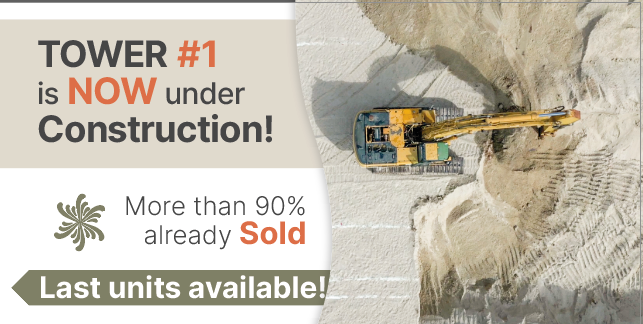
Welcome to October and the beginning of the perfect weather in Rocky Point. I say it often, but I truly can’t believe how quickly the months fly by. Time flies when you’re having fun – and it truly is fun and exciting to watch the progress of the new Sonoran Star Resort. Construction is moving right along.
The 60’ deep foundation pillars are nearly finished for Tower #1, and now it will start moving vertically. Though it is understandable that a lot of underground work needs to happen in order to prepare for a 16-story tower, the exciting part really starts when that work is finished and the tower starts going up. That time is here. The big crane has been erected and before long, the tower will be visible from all over Rocky Point. I’m told that it will go up by one story every 2-3 weeks once all the foundation work is completed.
If you haven’t stopped by to see our model and take a tour of the build site, you should do so as soon as you get a chance. There are still a few condos available in Tower #1, so it’s not too late to be among the first to receive your condo. We also have marked various places around the resort with “you are here” signs, so you can accompany one of our representatives on a CanAm ride to actually see where the lazy river, the private beach, the upcoming towers, etc are located. It really gives you a feel for what the completed resort will be like.
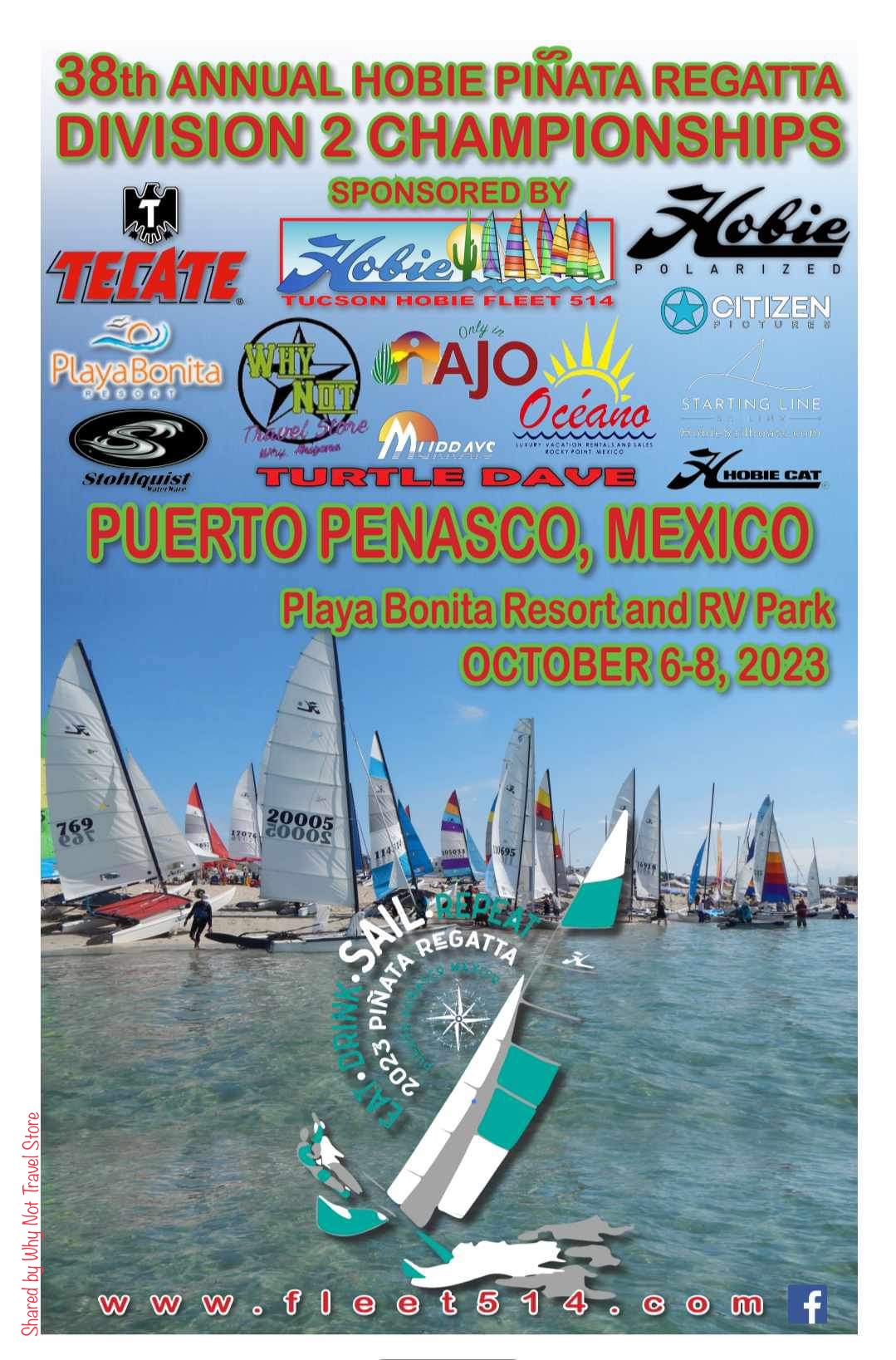
Obviously, I’m excited about the Star, but on to some Rocky Point comments… The weather has already cooled and the humidity seems to be mostly gone. Shrimp season has begun, so you can get fresh shrimp from vendors on the Malecon, or in town. My favorite is still Seafood Products, kind of across the street from Burger King and behind the gas station. Just go down Sinaloa and you’ll see it on the East side of the road. Businesses that had closed for a month or more over the summer are open again and our Fall/Winter busy season is upon us. The Rocky Point Rally is just around the corner. Amazing to think that this will be the 23rd edition of that very popular event. Activities happen often during the great weather, so be sure to see what’s going on while you’re in town. Sometimes things do not get advertised very well here so watch Facebook groups and ask the rental reception people.
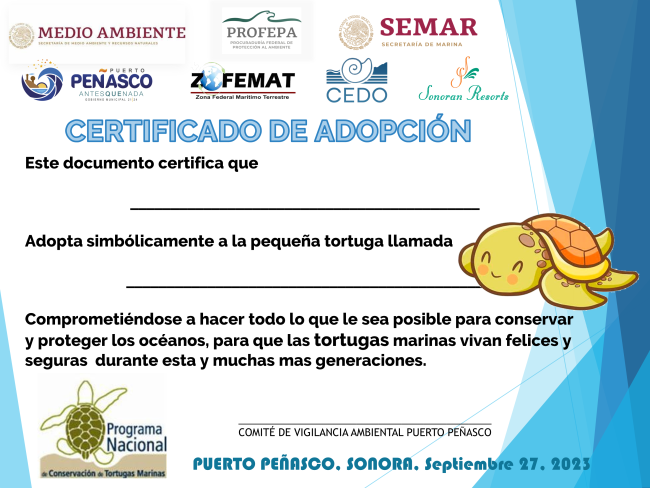
The sea turtles are hatching and being released back into the sea during this time of year. Check with CEDO when you’re in town if you would like to participate in the release of the baby turtles. Earlier this week, several baby turtles were released in front of the Sonoran Sea and the kids got to “adopt” one of the turtles and release it. They had to make a promise that they would take care of the sea and “take care” of their adopted turtle. Great idea to instill a sense of conservation and respect for the ocean in them.
We will be starting our Annual Food Drive shortly. I usually like to announce it in the November newsletter but thought that I would start a bit earlier this year so that you have even more time to help us gather as much non-perishable food as possible to be donated just after the New Year. We will officially start on November 1st, but we're happy to accept any donations earlier. Just drop them off at any of our 5 onsite sales offices.
Enjoy this beautiful month, come to Rocky Point if you can, and if you need anything don't hesitate to ask. Let me put my experience and expertise to work for you, and remember, as always, I've been here full-time for over 15 years and I am more than happy to help you with whatever you need, whether Sonoran Resorts related or not.
Just give me a call or send me an email any time and I will do my very best to help you. If I can't help you myself, I'm sure that I can point you in the right direction and help find you someone who can.
Besides the links below, you can our listings at the following:
www.sonoranstar.com
www.sonoranresorts.mx
www.sonoranresortsresales.com
AMPI Puerto Penasco MLS
Point 2 Agent Multinational MLS
Pick up a handout at any of our Sonoran Resorts
Scottsdale Barrett Jackson Show
Various Real Estate and Trade shows in AZ, NV, and CA
| |
|
IMPORTANT: Some email providers cut this newsletter off before the end. If that happens on yours, please scroll to the bottom of this email and click "View Entire Message" to see the entire newsletter.
Sincerely, Jim Ringquist
Broker/Sales Director
Sonoran Resorts Spa - Sea - Sun - Sky - Star (coming soon)
602-476-7511
rockypointjim@gmail.com
www.SonoranResorts.mx
President/Volunteer
Tourist Assistance Unit Advisory Committee (Tourist Assistance Police)
602-774-1777
www.touristassistancerockypoint.org
touristassistancerockypoint@gmail.com
I hope that you enjoy my newsletter and continue to recommend it to your friends. Please feel free to give me thoughts, suggestions, or ideas for future newsletters. Puerto Peñasco is my home and I love to share the news and goings-on with you.
I do get email requests each month asking me to add someone to my list. While I certainly don't mind doing so, all you really need to do is click Sign-Up for Newsletter below, add the email address, and it will happen automatically. Not to worry - I will not spam you or share your email address, and you will only receive one email-newsletter each month on the 1st.
| |
|
Exclusively Serving the Sonoran Resorts
Buy & Sell Direct and SAVE!
23 Years Experience on Sandy Beach
Four Fully Completed Beachfront Resorts
We Have Earned Our Stellar Reputation
Your Only Logical Choice when Buying
or Selling a Sonoran Resorts Condo!
| | | |
Resale Listings at the Sky, Sun, Sea, Spa | |
Progress Continues on the New Sonoran Star Resort! | |
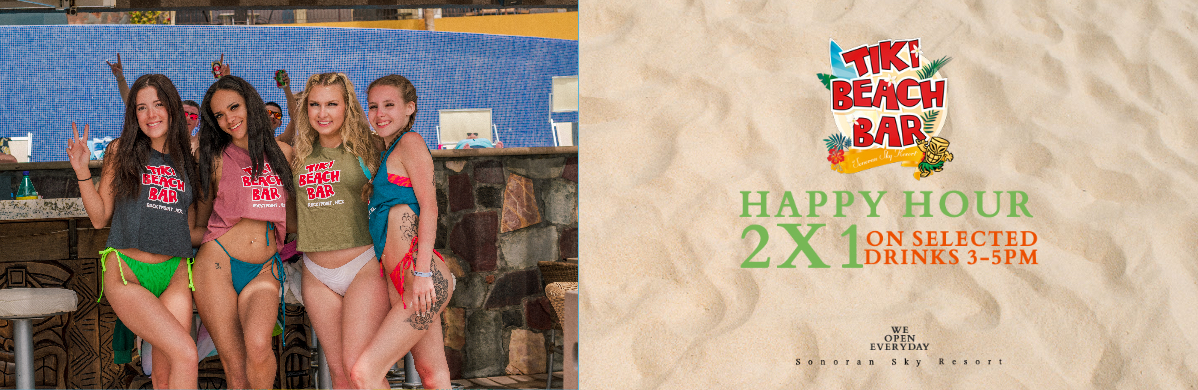
Food and Drink at the Sonoran Sky Resort:
| |
Preparations Underway for the 23rd Edition of the Rocky Point Rally | 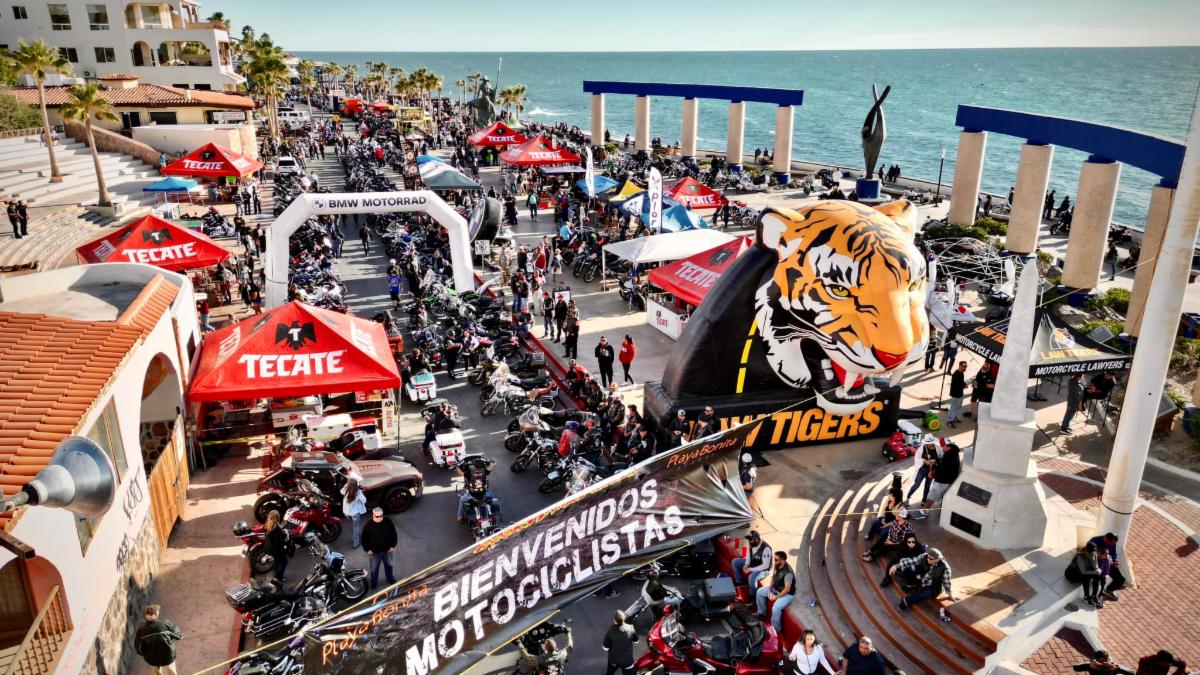 | |
Preparations are already underway for the 23rd annual Rocky Point Rally, and the expectations are that we will meet or exceed the numbers of participants from last year. In 2022, there were over 8,000 bikers in town, coming from the USA, Canada, various parts of Mexico, and even Central America, according to Oscar Palacio, the founder and president of the event.
Palacio commented that he has been in meetings with local and state authorities in order to work out the details, logistics, organization, security, and everything needed to put together an event of this magnitude. This year the Rocky Point Rally will take place from November 9th through November 12th. Mr. Palacio reported that he began the work to organize and promote the rally in April of this year, and the feedback that he has received point to a very good turnout.
He also indicated that this years’ edition of the motorcycle even, the 23rd such event, will be similar to last years’ with stunt motorcycle shows, multiple concerts, poker run, parade, and more. Condo and hotel rental reservations for the dates are already booking up as they are usually sold out by the time that the event begins. The event is expected to draw upwards of 35,000 visitors to Rocky Point this year, a great number of them attending the rally year after year, some for more than two decades.
The history of the Rocky Point Rally stretches for more than 20 years, beginning in 2001 when Oscar Palacio, an avid motorcycle rider himself, came up with the idea and made his vision into reality. Over the years, the attendance has grown exponentially with the first Rally only attracting 380 participants. In 2002, it grew to 1,200, 2003 brought 4,200, 2004 had 5,500. By 2006, more than 10,000 motorcycles came to town. Since that time, the numbers have stayed relatively consistent, with an estimated 8,000 motorcycles in attendance last year.
| |
Banditos BBQ Challenge Teams up with Roger Clyne and Educarte to serve Heaven on a Paper Plate | |
 |  | |
Who doesn’t like a little meaty competition served up with good times, good music, and all for a great cause? On Oct.14th, Banditos will be serving up just that at their Inaugural BBQ Challenge to feature 8-10 teams from Mexico and the US, along with the music of Roger Clyne, Combo Deluxe, and wrapping up the night with Purple Onions.
The grill is smokin’ My friends are jokin’
Waylon Dillon, Operating Partner at Banditos, details, “Everyone will be making something different so the crowd will have some options.” Yep, we’re talking ribs, pulled pork, pork belly, brisket, wings, and more. Dillon adds, in continuing to highlight local businesses, event organizers have teamed up with carne provider Top Meat as a sponsor for the tastebud tantalizing BBQ event.
Along with an evening of tasty morsels in a family-friendly environment, proceeds from Bandito’s Inaugural BBQ Challenge will go toward educational and therapeutic opportunities for children with special needs via the local organization Educarte.
The coals are glowin’ The spirits flowin’
Kathleen Duncan, aka “Tía Katy” of Educarte, remarks they are grateful for the opportunity Banditos has provided to showcase the organization and excited to share inspiring stories from both their CATI (comprehensive therapy) and La Escuelita programs. She notes Educarte would love to make ongoing connections through this event with folks interested in becoming sponsors for the nearly dozen children currently on their waiting list, learning more about their program, and of course visiting Educarte’s facilities in town. Every Child Belongs: Supporting Students with Special Needs - Friends of Educarte
We got heaven on a paper plate – We got heaven y’all
“It’s about community, having fun, raising money and awareness for Educarte, and bringing people to check out Banditos,” emphasized event organizer Greg Ross. While Ross noted the event’s BBQ plate is full for teams this year, “hopefully it grows into something bigger in the future.” Sounds scrumptious!
Banditos BBQ Challenge Need to Knows:
-
October 14th @ Banditos on Sandy Beach in Rocky Point
- Tickets $20 US in advance / $25 US (or 500 pesos) at door – 15 and under free with paid adult
Advance tickets at: Banditos BBQ Challenge Tickets, Sat, Oct 14, 2023 at 1:00 PM | Eventbrite
- Doors open @ 1 pm (tastings through 5 pm) with Championship Belt award and more music to follow!
-
Includes: first 3 small samples, additional plates available for purchase on-site; attendees cast votes for 1st, 2nd, 3rd place – Championship Belt awarded just before 6 pm
- Music! Music! Music! BBQ attendees get a 4 pm solo performance by Roger Clyne on the outside stage.
Once BBQ challenge wraps up at 6 pm, Combo Deluxe will take the stage as Banditos opens up to public, with Purple Onions at 9:30 pm
| |
|
Potpourri!
Short Shorts of All Sorts!
Sometimes so much is going on in our little slice of paradise by the sea that we can't address the many short subjects with proper attention. To handle the hodgepodge of dangling subject matter, we invented the Potpourri Page. Here are a few "short shorts" to keep you up to date.
| |
Bowling Center coming to town and will be located in the Malecon area. Not much info yet, but I will update as more details come out. | |
| |
|
The first Mermaid's Market of the season will be on Saturday, October 21, 2023 at Shrimp Park, at the corner of Blvd Benito Juarez and Freemont. Arts and crafts, unique gifts and treasures, along with great food, great atmosphere, and very likely great weather. If you are in Penasco, it's a great place to visit. | |
Adopt a Baby Turtle
-
CEDO has a new program that allows people to "adopt a baby turtle". Obviously, you don't really get a baby turtle, buy your donation will definitely help the organization save and release more baby turtles into their natural environment. Please contact CEDO at 638 382 0113
- info@cedointercultural.org
- cedo.org
| |
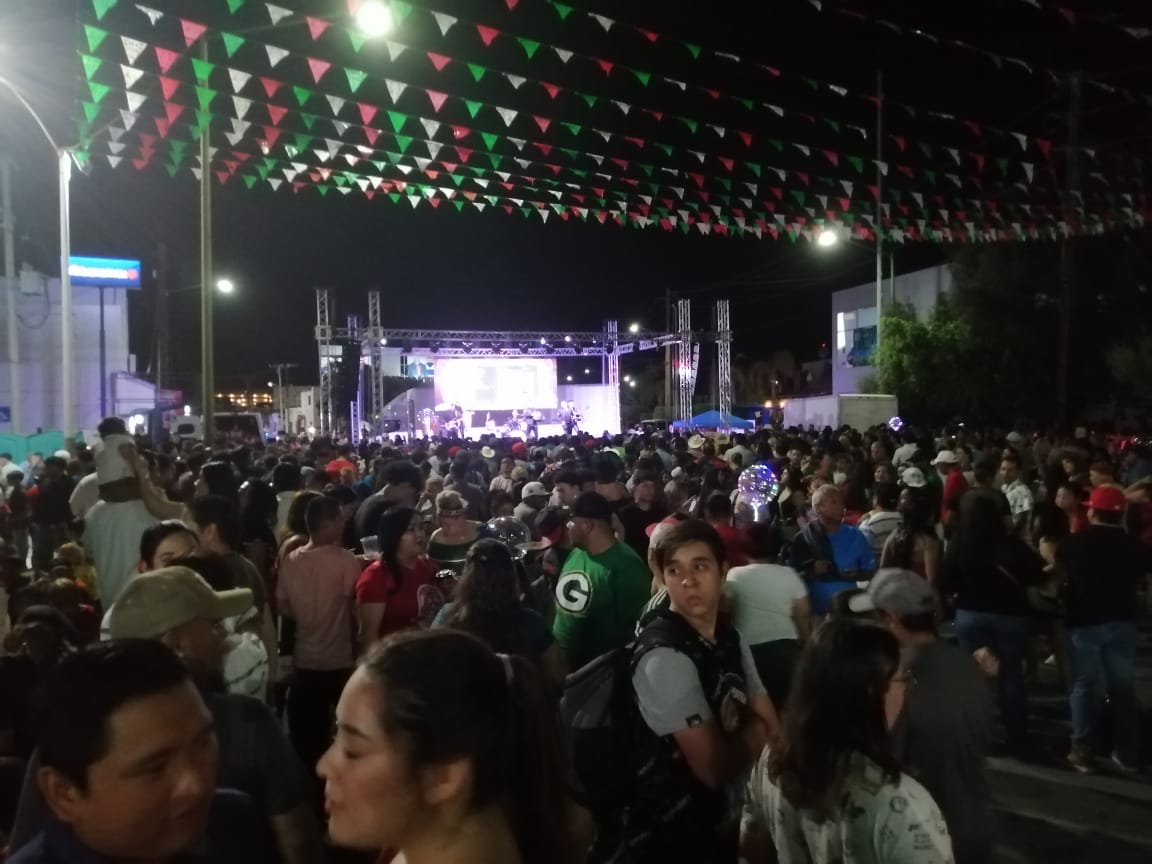
Independence Day Celebration Draws 25,000 Visitors | |
|
Lizette Ibarra, the director of the Convention and Visitors Bureau (OCV) of Puerto Penasco reported that the town had over 61%, bringing an estimated economic impact to our town of approximately 1.6 million dollars.
She stated that the celebration and traditional Grito was promoted by several different tourist organizations. Visitors were also able to attend a basketball tournament and an offroad race.
The numbers for this year were very similar to that of last year with only a slight decrease of 2% in attendance. This was a good weekend for town, even though the summer season had officially ended and the autumn/winter busier season has not yet arrived.
The OCV director stressed that tourism during national and international holidays represents a high percentage of the total number of visitors in this resort town.
| |
Black and White Ball 2023 | |
|
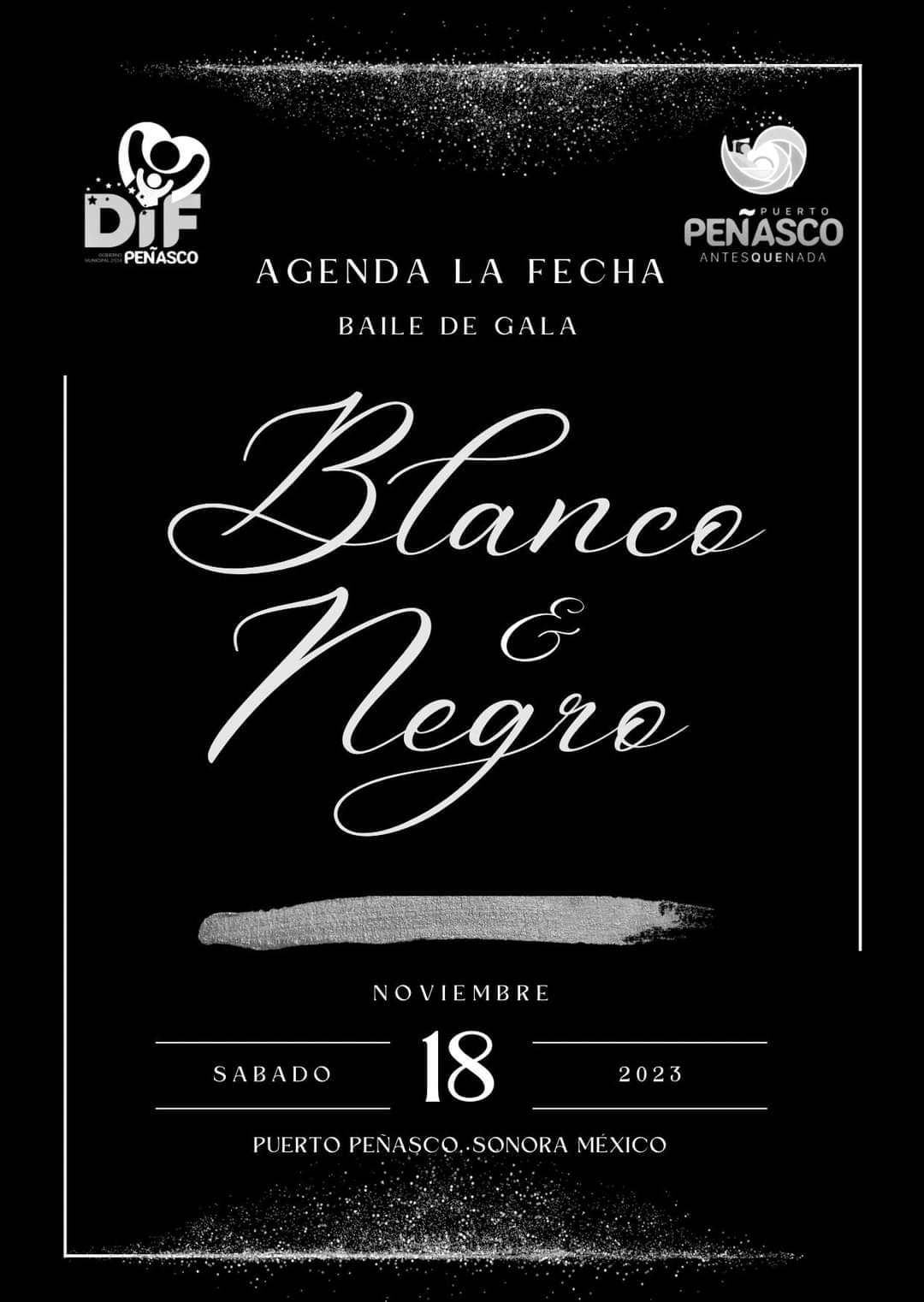
DIF Municipal is preparing to offer the "Black and White 2023" Grand Dance, which it traditionally holds to raise funds for scholarships for students.
Schedule the date this November 18 to join us to enjoy a great evening with dinner and music while supporting the education of students in Puerto Peñasco.
| |
Fishing Boat Catches Fire Causing Serious Injuries | |
|
A shrimp boat which embarked from Puerto Penasco starting the annual shrimp season suffered an accident which let to an escalating fire on board. The event took place in the sea off of Desemboque.
Details are still pending on how the fire started, but it was reported that at least four fishermen suffered serious injuries and were taken to the hospital in Caborca.
The fishermen are 20 year old Julio Manuel Mendoza, 27 year old Jesus Miguel Guzman, 35 year old Javier Ramirez Estrada, and 27 year old Ricardo Peralta Tlalteca. All are expected to recover.
| |
Mexico is ‘King’ of Searches for US Second Home Buyers | |
|
Large numbers of people in the United States aspire to own a home in Mexico, a recent analysis suggests.
Mexico is the “most wanted destination for U.S. homebuyers looking for a home in the Americas,” according to the real estate company Point2 Homes.
That conclusion is based on the number of people in the U.S. doing web searches using Mexico-relevant real-estate related keywords such as “homes for sale in Mexico” or “Puerto Penasco condos.”
The news division of Point2 Homes – which conducted the web search analysis – reported that the average number of Mexico-related real estate searches in the U.S. was 136,530 per month during the 12 months to the end of June, up 3.3% from a year earlier.
Such searches surged almost 60% in a 12-month period prior to the publication of Point2 Homes’ 2022 study, which noted that Mexico had retained its title as “the king of vacation destinations and locations for second homes” for United States citizens.
Point2 said in its latest report that “Mexico remains undefeated” as the most desirable country in the Americas for U.S. homebuyers, despite only a modest annual increase in related web searches.
“With more than 130k monthly visits, this land of endless, dazzling beaches and rich culture continues to attract buyers,” the company said.
Who is interested in buying property in Mexico?
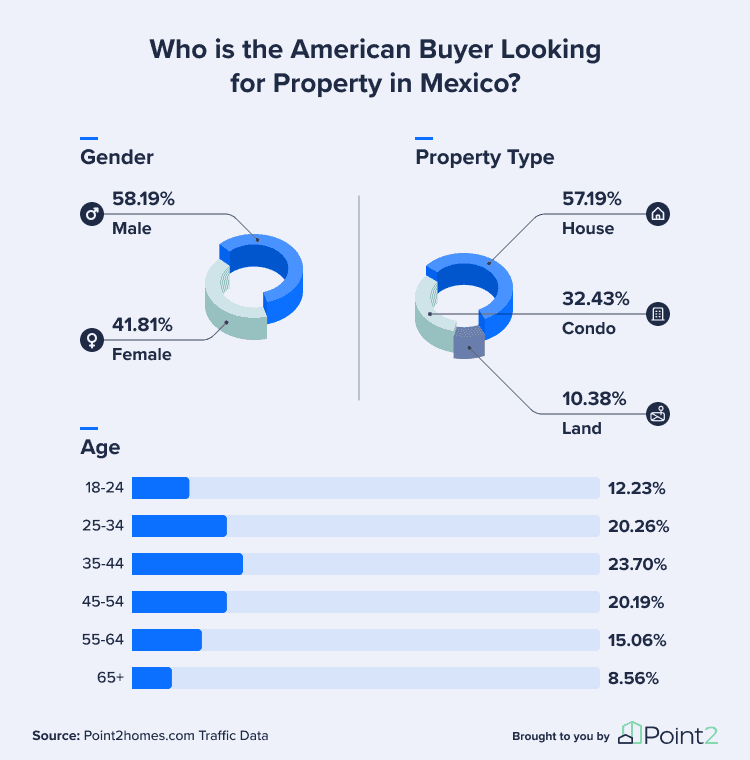
Point2 Homes’ internet traffic data showed that men were responsible for just over 58% of Mexico-relevant real-estate related searches in the United States in the 12 months to the end of June, while almost 42% of searches were made by women.
U.S. residents aged 35 to 44 made 23.7% of the Mexico real estate-related searches during the period, more than any other age cohort.
According to the Point2 survey, the 35-44 age demographic was responsible for the largest percentage of searches compared to other cohorts. Those aged 25-34 and 45-54 were each responsible for just over 20% of total searches, while Americans in the 55-64 bracket accounted for 15% of searches. The percentages for those aged 18-24 and 65+ were 12% and 8.5%, respectively.
“The surprising part is that people in the youngest age bracket (18 to 24 years old) are driving traffic to Mexico’s real estate pages more than retirees,” Point2 said.
“People aged 65 and over, who might be interested in warmer climate areas to buy a home and retire to are outnumbered by their much younger peers.”
Families with kids are among a recent wave of U.S. citizens who have moved to Mexico.
| |
Summer Tourism Numbers are In | |
|
During the last 11 weeks of the summer vacation season in Puerto Peñasco, more than 602,000 tourists visited this destination, reported Lizette Daniela Ibarra, director of the Puerto Peñasco Convention and Visitors Bureau (OCV). She highlighted that the economic benefit in this period was approximately 39 million dollars (665 million pesos at the current exchange rate). She noted that this year was down slightly from last year, in which 615,000 people arrived.
During those 11 weeks, lodging occupancy remained at or above 50%. Hotel occupancy remains a good way to determine the numbers of tourists who are in town, though the number of visitors is probably a bit higher as some will stay with friends or family or camp in an RV. The benefit of the visitors goes far beyond lodging though and includes services, vendors, restaurants, and bars, etc, she explained.
During the first 8 months of the year 1,400,000 tourists have visited Rocky Point, which generated an economic benefit of over 90 million dollars. Good numbers are expected for the upcoming fall/winter season which include two very popular events, La Gran Carrera del Desierto, and the Rocky Point Rally.
Vicky Morales Gastélum, president of the National Chamber of Commerce (Canaco) in Puerto Peñasco, also explained that the summer season brought many economic benefits for local businesses due to the arrival of thousands of tourists. She said that she still does not have a statistical estimate of the benefits, but the increase in commercial activity was evident, not only in formal businesses, but also in informal ones.
| |
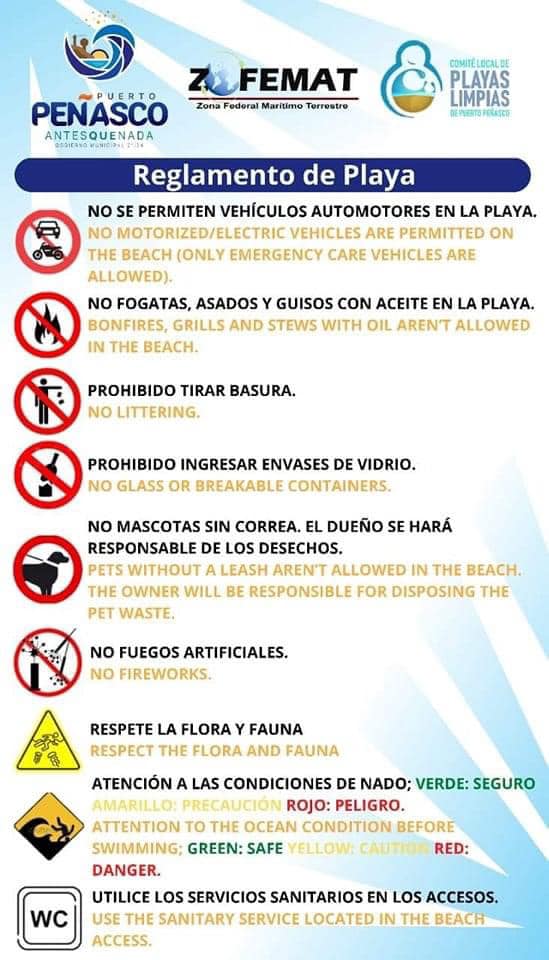
Rocky Point Beach Regulations | |
|
For your safety and that of your family...
We want to guarantee that you fully enjoy our beautiful beaches in Puerto Peñasco
That is why we invite you to be a responsible and vigilant user and/or visitor of the Beaches.
Let's take care of and keep our beaches clean - the only ones certified in the State of Sonora!
| |
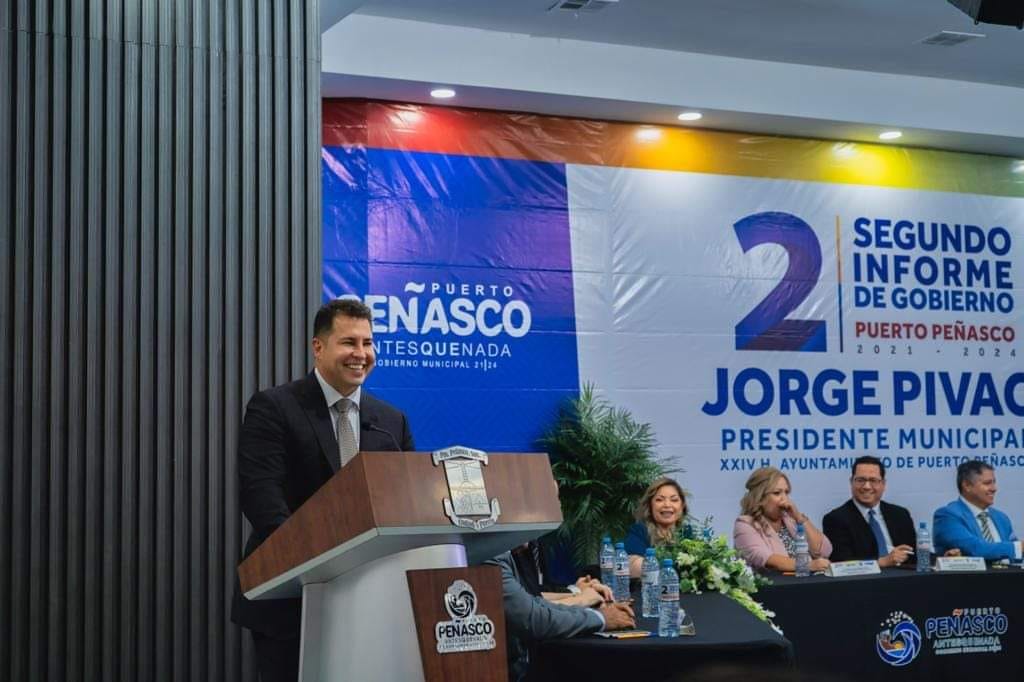
Mayor Pivac Delivers "State of the City" Report | |
|
Rocky Point Mayor Jorge Pivac gave his second “state of the city” government report to the citizens of Puerto Penasco where he highlighted the most important works that his administration has performed and also reaffirmed his commitment to continue the hard work to improve the city for the families and visitors of this municipality.
The speech was held at the Municipal Convention Center and the mayor was joined by Secretary of Health, Jose Luis Alomia Zegarra, who was in attendance to represent Sonora Governor Alfonso Durazo Montano. Also in attendance were the members of the city council and representatives of various public and private sectors. The meeting was attended by former mayors as well.
The mayor highlighted that in this second year of his term, repair and rehabilitation works were performed in many areas of the city, including paving 1,327 kilometers of streets, adding public lighting as well as repairing and performing maintenance on more than 2,000 existing public lights. More than 100 notebook tablets were donated to the education system for use by low-income students, and he created Jose el Pescador program to assist the towns fishermen by making monthly support payments to over 100 retired fishermen.
"These two years of government have been spent in constant work, seeking to solve long-standing problems of our city with satisfactory results, and to make progress and reaffirm my commitment to not slow down until pressing issues are completely resolved - and until the last day of my administration, my commitment is with my people and my city"
Pivac Carrillo highlighted that during these two years of administration, debts that were inherited from previous administrations have been resolved and municipal finances have been cleaned up. He also reiterated that the current city income is sufficient when it is used responsibly, transparently, and with the main objective to benefit as many families as possible.
“Tomorrow we will begin the third year of our government, in which we will work with the same determination as the first day, and listening to the concerns of the people of Puerto Peñasco in order to continue setting the course for our city, because Peñasco comes before anything else,” the mayor stated.
| |
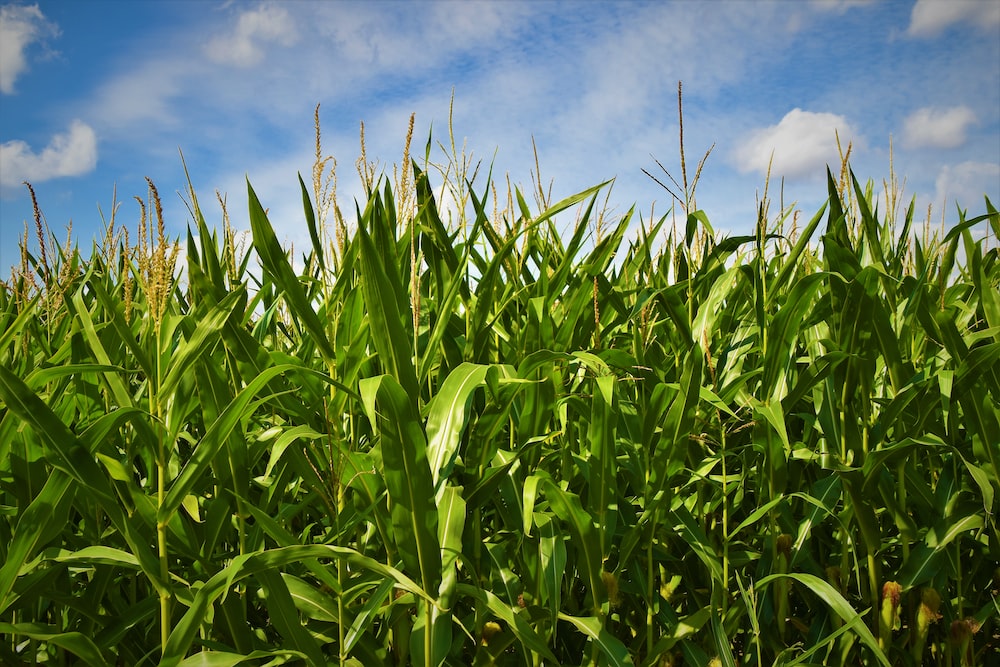
Why is Mexico Standing up to Bigger Neighbors US and Canada on Corn? | |
|
Mexico has barred the import of GMO corn for human consumption, raising the ire of exporter US where most corn is GMO.
Corn is sacred in Mexico. Its roots can be traced to Aztec and Mayan creation stories that exalted the arrival of a crop that was key to their survival.
In modern times, maiz, as it is known in Spanish, maintains its cultural, spiritual and political prominence as a staple in Mexican cuisine – and, increasingly, a brewing trade dispute.
Mexico has drawn a line in the sand with the United States when it comes to genetically modified corn, barring its use and import for human consumption, and gradually phasing it out for livestock feed or industrial uses.
After months of negotiations, US officials announced last month that they were pulling a lever under the United States-Mexico-Canada Agreement (USMCA), seeking an intermediary to resolve the dispute.
For Mexico, the issue is multi-pronged, but rooted in ensuring the affordability and availability of a crucial crop, experts say. For the US, it is about business. Corn is its biggest crop and the vast majority of it is genetically engineered.
Far from a regional issue, it is a feud that could have wide-reaching implications for importing and exporting nations, as evidenced also by Canada, which has added its voice to the proceedings and backed the United States in saying that Mexico’s position on biotech is “not scientifically supported” and could “unnecessarily disrupt trade in the North American market”.
As the role of industrial agriculture comes under added scrutiny in the era of climate change, Mexico’s stand to protect small-scale farmers is one that others are watching closely.
“I would say Mexico is at the forefront of the world,” said Ernesto Hernández López, a professor at Chapman University in California, who specialises in international law and food law.
What is this trade dispute about?
It is illegal to grow genetically modified corn on Mexican soil. In 2020, Mexico expanded the prohibition with a decree banning all GMO corn, including imports, as of January 31, 2024, on the grounds that doing so protected its food security, its rural communities, its food heritage and the health of its people.
It also announced that it would impose strict limits on the import, distribution and use of the contentious herbicide glyphosate – widely used in GMO farming – culminating in its complete ban by that date. Glyphosate is a well-known weed killer whose potential to cause cancer is the subject of heated debate.
In February of this year, Mexico issued another decree that softened its stance. It scrapped the date by which animal feed corn – which represents the vast majority of imports from the US – is banned. This means yellow GMO corn used for animal feed can continue to cross the border, although the decree still states the intention of “gradually substituting” it, but with no date set.
The decree maintains the ban on GMO corn used for human consumption in dough and tortillas, which is white corn. The Mexican government said Mexico produces enough white corn that is free of GMOs to sustain itself.
“Mexico is the center of origin of more than 55 strains of maize. The food security policy of the Government of Mexico consists of preserving this biocultural heritage,” the government said in a statement, in addition to preserving the sustainable farming practices of peasant communities. “This has to do with consolidating sovereignty and food security in a central part of Mexican culture.”
The move rankled the US, which considered it an affront to the free trade rules of the region. After multiple meetings and consultations with Mexican officials, the US announced in August it would seek to establish a dispute settlement panel under the USMCA, arguing that the Mexican decree “undermines the market access” Mexico had agreed to provide.
The US considers Mexico’s ban an affront to free trade rules of the region.
“Mexico’s approach to biotechnology is not based on science and runs counter to decades’ worth of evidence demonstrating its safety and the rigorous, science-based regulatory review system that ensures it poses no harm to human health and the environment,” said Agriculture Secretary Tom Vilsack in a statement.
“Innovations in agricultural biotechnology play a key role in advancing solutions to our shared global challenges, including food and nutrition insecurity, the climate crisis and the lingering effects of food price inflation,” he said.
Mexico says it will not back down from its position, which it asserts is rooted in science. Officials have said that the United States has refused to take part in additional scientific research on the health impact of GM corn. “[That] makes no sense because if a government cares about people’s health, then they would have no problem doing further research on the health implications,” Mexican Economy Minister Raquel Buenrostro said in August.
How big of a deal is this?
Mexico bought nearly $5bn worth of corn, the vast majority of it yellow GMO corn that is destined for livestock feed, from the US in 2022 making it the second-biggest destination for the US crop. Some 17 million tons of yellow corn flowed south of the border last year.
While more than 90 percent of the corn grown in the US is genetically engineered, white corn represents a small portion of US exports to Mexico, and “little if any” is genetically modified, suggesting to researchers that the dispute will have a “limited effect” on American farmers in the short term.
Nonetheless, trade unions, such as the National Corn Growers Association, maintain the ban would be “catastrophic” for US producers and threatens the integrity of the USMCA. Certain states, like Illinois for instance, send most of their corn exports to Mexico.
How long has this been going on?
In Mexico, the push to protect corn is not new. A national campaign known as “Sin Maiz No Hay Pais” – Without Corn, There Isn’t a Country – launched in 2007, representing a cross-section of some 300 organizations that included rural farmers, environmentalists, consumers, human rights and women’s organizations.
Their goal has been to make food security a central concern for politicians, pushing for the prohibition of genetically modified corn, and against industrialized agricultural monopolies.
In 2013, a collective of farmers, consumers, and environmentalists launched a lawsuit that sought to ensure that GMO corn seeds continued to be denied entry into Mexico. In 2021, the Mexican Supreme Court ruled in their favor.
For Víctor Manuel Chima Ortíz, a member of Sin Maíz No Hay País, the issue has to do with national sovereignty, and ensuring that neither the US nor Canada “intervene in the decisions that the Mexican government is making to safeguard human rights related to this issue”.
“The right to food, the right to health, the right to a healthy environment, the right to access to information,” are all issues that are at stake, said Ortiz.
“But there is a background that is fundamental to also be able to sustain Mexico’s decision, which is the cultural value, the historical value, the symbolic value that corn has,” he noted. “There are many territories, there are many communities, Indigenous peoples that have corn as a symbolic element, as an identifying part of their cultures.”
What are the arguments in this case?
Corn is a staple in Mexican cuisine, households, farming and income, raising the bar for the country to hold its ground [File: Edgard Garrido/Reuters]
The US’s position is clear. It argues that Mexico does not have a scientific leg to stand on, and that the move is in violation of a free trade agreement. While Mexico still has to elaborate on its arguments, the question of biodiversity is key.
The health issue largely turns on the use of glyphosate, a weed killer used extensively in GMO farming, which a World Health Organization agency has said is “probably carcinogenic to humans”, a claim that the US Environmental Protection Agency disputes. The European Food Safety Authority recently gave the pesticide its stamp of approval, to the shock of environmentalists. Bayer, the German chemical giant that owns glyphosate and maintains its safety, has paid out billions to settle cancer lawsuits.
“Where the fight is going to be is on Chapter 9 of the USMCA, which is about food safety,” said Lopez. “It’s a very procedural technical issue, and it depends on whether the panelists agree with Mexico’s description of the science, and that it met its procedural disclosure obligations, versus the United States’ claims that there is no science and there’s been no disclosure.”
“That’s the same fight from the ’90s with beef hormones, and biotech in 2006,” he said.
In 2006, the WTO ruled in favor of the US when it contested restrictions from the European Union on genetically modified crops.
What are the ramifications of this move?
“The United States is very focused on protecting the product,” said Lopez, referring to its corn exports. European and Chinese markets are not as open as they used to be, and Mexico represents a huge market.
“For Mexicans, what is politically important is being able to secure corn for masa [dough] and corn for tortillas. And that’s what the decree this year has focused on for the consumer, and rural agriculture, to make sure that people aren’t losing their livelihood or having more pressure to migrate,” said Lopez.
“What will really spell disaster for any president in Mexico is that he or she has to deal with rising corn prices that affect what people eat,” he added.
Ortiz, from Sin Maiz, No Hay Pais, said this battle will resonate outside of Mexico’s borders, noting that countries such as Guatemala, Bolivia and Colombia also have native corn.
The dispute settlement provision triggered by the US is contained under Chapter 31 of the USMCA. It establishes an independent panel of five members to investigate and rule on Mexico’s GMO corn. Once the panel is struck, it is expected to present an initial report within 150 days. Each country then gets 60 days to review and make comments on the report. The panel would produce findings of fact in the dispute, determine if the measure adopted by Mexico goes against the trade agreement, and make recommendations to resolve the dispute.
| |
Peso Again Loses Ground to the US Dollar | |
|
The Mexican peso is on the wane again after recovering from a dip earlier in the month.
One US dollar was trading at 17.47 pesos at 11 a.m. Mexico City time, according to data from Bloomberg. The greenback reached a high of 17.56 pesos in overnight trading.
The peso has lost about 40 centavos against the dollar over the past week after closing at 17.08 to the greenback last Tuesday. The dollar traded at a three-month high of 17.6 pesos in early September, but Mexico’s currency subsequently rallied.
A range of factors have contributed to the peso’s most recent dip, including a general strengthening of the dollar and decreased appetite for risk.
The U.S. dollar index, which measures the value of the greenback relative to a basket of six other currencies, reached its highest level of the year on Tuesday morning.
Some analysts say that the weakening of the peso on Monday and Tuesday is partially due to Minneapolis Federal Reserve Bank President Neel Kashkari’s statement that the Fed probably needs to raise interest rates above the current 5.25-5.5% level to bring inflation down to 2% in the United States.
“If the U.S. economy is fundamentally much stronger than we realized, on the margin, that would tell me rates probably have to go a little bit higher, and then be held higher for longer to cool things off,” Kashkari said at an event on Monday.
The Mexican financial group Ve por Más said in a note that it was “probable” that the appetite for risk assets, such as the Mexican peso, would be “limited” due to “the restrictive tone” of “some members of the Fed” as well as “the risk of a United States government shutdown.”
The Fed’s next monetary policy decision is due in late October, while board members of Mexico’s central bank will meet this Thursday to discuss monetary policy.
The significant difference between the Bank of Mexico’s benchmark rate – currently set at a record high of 11.25% – and that of the Fed is cited as one factor that has boosted the peso in 2023 after the year started with a USD:MXN exchange rate of about 19.5.
At a press conference earlier this month, the president highlighted the peso’s strong performance against the U.S. dollar this year. (Gob MX)
Another factor that has recently affected appetite for risk assets is the real estate crisis in China.
Gabriela Siller, director of economic analysis at Banco Base, said on X (formerly Twitter) that the expectation that interest rates will remain high in the U.S. for a “prolonged period” as well as “aversion to risk” due to the situation in China were both weighing on the peso.
The financial news website Finbold reported that rising U.S. Treasury bond yields is also a factor in the recent strengthening of the US dollar against the peso. Finbold noted that if Mexico’s inflation rate continues to decelerate – the headline rate fell to 4.44% in the first half of September – the Bank of Mexico “may have to adjust the monetary policy, which could potentially weigh on” the peso.
However, a cut to the 11.25% rate before the central bank’s December monetary policy meeting is considered unlikely. The bank itself has said on repeated occasions that maintaining the record high rate for an “extended period” is necessary in order to bring inflation down to its 3% target.
While the peso is currently well off its 2023 – and almost eight-year – high of 16.62 to the dollar – the performance of the currency this year remains impressive.
Buoyed by strong inflows of foreign investment and remittances, the peso has appreciated over 10% against the greenback since Jan. 1, making it one of the best performing currencies of 2023.
| |
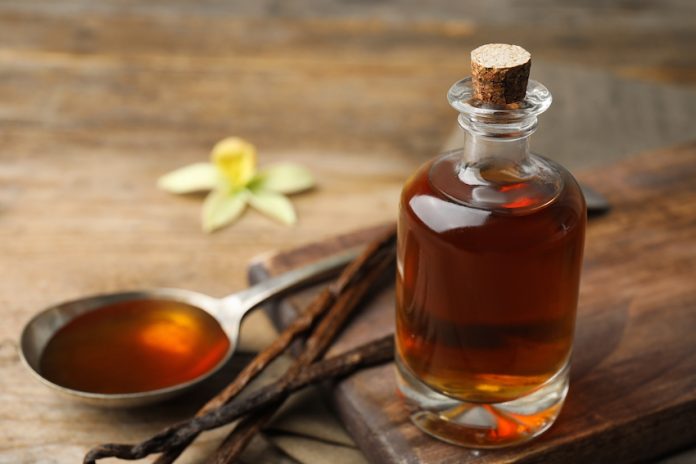
Why is it Hard to Find Real Vanilla in Mexico? | |
|
So why is it so much harder to find real vanilla, especially compared to some of Mexico’s other delicacies like chocolate, avocados and chapulines (grasshoppers)?
Perhaps the reason is that it is “plain ol’ vanilla,” an ingredient in so many things, but hardly any preparation that absolutely defines it as “Mexican.”
This is curious because the history of vanilla parallels that of world-famous chocolate. First cultivated by the Totonacs of northern Veracruz, the Mexica quickly adopted it after they conquered the region in 1427, considering it a “food of the gods” (and of emperors, of course).
The Spanish enthusiastically adopted it; in fact, they did not drink chocolate without sugar and vanilla. Shipped to Europe, vanilla was quickly favored in sweet dishes.
For three centuries afterwards, Mexico was the only producer of vanilla. The French were the first to try to cultivate it elsewhere, but the plant would not produce the needed pods because its natural pollinator, the melipona bee, exists only in Mexico.
Development of hand-pollination techniques took away Mexico’s monopoly on vanilla cultivation, but it did not make vanilla either cheap or ubiquitous as it is time-consuming and labor-intensive to grow and process.
There is only a short window for successful pollination and a mature pod takes 9 months to cultivate. The pods then need to be parboiled, sweated, dried and left to cure on strict timetables, and much can go wrong during the arduous process. In the end, only 2% of each successfully processed pod has the required essence, which is extracted through a solution of ethanol and water.
This extract contains all of the vanilla’s complex flavor profile, making it prized internationally – so much so that it is not possible to produce enough for the world’s demand. Artificial vanilla (sometimes called vanilla essence) was developed to fill the gap, and is able to reproduce vanilla’s qualities sufficiently for many commercial baked goods. This is the kind of vanilla you are likely to find in a supermarket in Mexico. However, if you really want to appreciate the difference, try a commercial vanilla ice cream side-by-side with a gourmet one, flavored with the real thing.
But appreciation of what real vanilla can do is growing internationally, keeping demand so high that most Mexican vanilla is exported. This demand, along with Mexico’s famous cost-consciousness, keeps it out of most brick-and-mortar retail venues, even those selling gourmet foods and specialty foods from Mexico.
International interest now extends into the different varieties of vanilla that Mexico can produce as well as those produced by different growing conditions. Although it is grown in six states, only the vanilla cultivated in its native region of northern Veracruz into Puebla can be called “Papantla vanilla.” And the designation does indeed affect the price.
The value of the global vanilla market is expected to hit US $43 billion by 2025, but Mexico ranks only third in production – behind Indonesia and top dog Madagascar – which produces a whopping 43.9% of the world’s supply. Mexico struggles to keep up in part because most vanilla-suitable lands are owned in small plots, thanks to land redistribution efforts in the 20th century.
So why is it so much harder to find real vanilla, especially compared to some of Mexico’s other delicacies like chocolate, avocados and chapulines (grasshoppers)?
Perhaps the reason is that it is “plain ol’ vanilla,” an ingredient in so many things, but hardly any preparation that absolutely defines it as “Mexican.”
This is curious because the history of vanilla parallels that of world-famous chocolate. First cultivated by the Totonacs of northern Veracruz, the Mexica quickly adopted it after they conquered the region in 1427, considering it a “food of the gods” (and of emperors, of course).
The Spanish enthusiastically adopted it; in fact, they did not drink chocolate without sugar and vanilla. Shipped to Europe, vanilla was quickly favored in sweet dishes.
For three centuries afterwards, Mexico was the only producer of vanilla. The French were the first to try to cultivate it elsewhere, but the plant would not produce the needed pods because its natural pollinator, the melipona bee, exists only in Mexico.
Development of hand-pollination techniques took away Mexico’s monopoly on vanilla cultivation, but it did not make vanilla either cheap or ubiquitous as it is time-consuming and labor-intensive to grow and process.
There is only a short window for successful pollination and a mature pod takes 9 months to cultivate. The pods then need to be parboiled, sweated, dried and left to cure on strict timetables, and much can go wrong during the arduous process. In the end, only 2% of each successfully processed pod has the required essence, which is extracted through a solution of ethanol and water.
This extract contains all of the vanilla’s complex flavor profile, making it prized internationally – so much so that it is not possible to produce enough for the world’s demand. Artificial vanilla (sometimes called vanilla essence) was developed to fill the gap, and is able to reproduce vanilla’s qualities sufficiently for many commercial baked goods. This is the kind of vanilla you are likely to find in a supermarket in Mexico. However, if you really want to appreciate the difference, try a commercial vanilla ice cream side-by-side with a gourmet one, flavored with the real thing.
But appreciation of what real vanilla can do is growing internationally, keeping demand so high that most Mexican vanilla is exported. This demand, along with Mexico’s famous cost-consciousness, keeps it out of most brick-and-mortar retail venues, even those selling gourmet foods and specialty foods from Mexico.
International interest now extends into the different varieties of vanilla that Mexico can produce as well as those produced by different growing conditions. Although it is grown in six states, only the vanilla cultivated in its native region of northern Veracruz into Puebla can be called “Papantla vanilla.” And the designation does indeed affect the price.
The value of the global vanilla market is expected to hit US $43 billion by 2025, but Mexico ranks only third in production – behind Indonesia and top dog Madagascar – which produces a whopping 43.9% of the world’s supply. Mexico struggles to keep up in part because most vanilla-suitable lands are owned in small plots, thanks to land redistribution efforts in the 20th century.
| |
Meet the Sonoran's Family of Beachfront Resorts | |
What do Quesadillas, Chilaquiles and Nachos all have in Common? | |
|
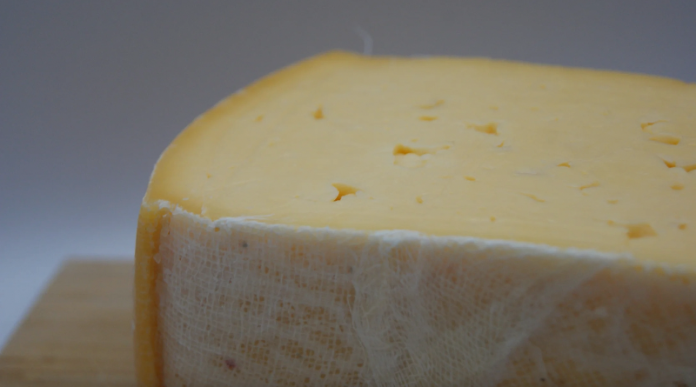
It’s not that they’re delicious (although they are!) It’s the gooey, melty, yummy cheese you can’t get enough of: queso Chihuahua.
Along with queso Oaxaca, Chihuahua cheese is Mexico’s answer to mozzarella or Monterey Jack. It’s not to be mistaken for cotija, the slightly sour and often quite salty dried cheese sprinkled on top of many traditional Mexican dishes. Chihuahua is a semi-soft melting cheese, lightly aged (only 2-4 weeks) with a mild flavor. Depending on the butterfat content of the milk, it might have a pale yellowish tinge, but usually it’s quite white. Sometimes, the cheese is pressed and can be known as Campesino Menonita because of this process.
Possibly, you’ve seen Mennonites, men and boys in overalls and straw hats, women in long skirts or dresses, selling cheese at streetlights. They invented Queso Chihuahua, and you could consider them artisan producers. Most of the Mennonite communities in Mexico are in the northern state of Chihuahua, hence the name. In some places, it’s known as queso Menonita, though nowadays other commercial producers make it too. They’ll be selling the cheese in blocks, braids, or balls and it’s worth buying some if you have the opportunity.
Otherwise, avoid packaged brands in the grocery store and search out a cremeria (like a deli that sells dairy products, luncheon meats, salsas, eggs, etc.) in a market. Those vendors will have big rounds that look like the classic wheels of Parmesan we’ve seen in Anthony Bourdain’s and Stanley Tucci’s Italian food shows. Usually, they’re happy to let you taste a tiny slice first, and once you decide which brand you like best (they will all have slightly different flavors), they’ll cut you whatever size piece you want.
Because it’s so versatile, Chihuahua cheese is good to have on hand. Besides being an integral part of so many traditional Mexican foods, it’s perfect for just about anything you’d use mozzarella for: tuna melts, grilled cheese sandwiches, queso fundido, hash browns or pizza.
| |
|
Recipe:
12 oz. mixed fresh mushrooms, thinly sliced
¾ cup minced white onion
3 garlic cloves, minced
1-2 Serrano chilies, seeded and minced
3 Tbsp. neutral oil
Salt to taste
1½ cups shredded Chihuahua cheese
6 fresh corn tortillas
Optional: Butter for sautéeing
For serving: Salsa verde, sour cream
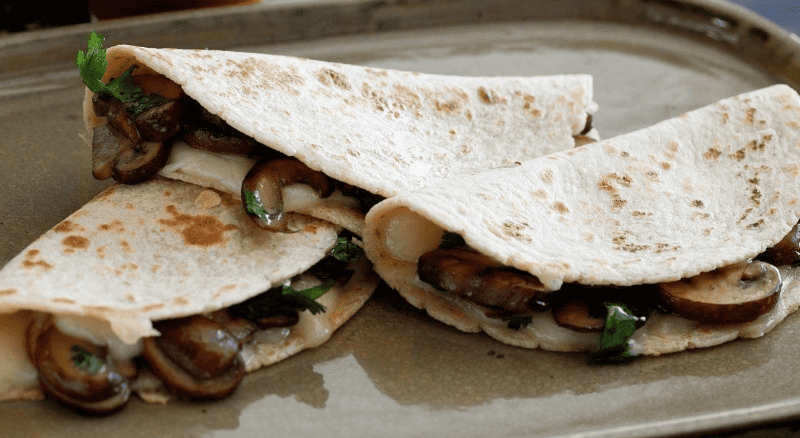
In a medium bowl, mix mushrooms, onion, garlic and chilies. Place oil in a large heavy skillet over medium-high heat. When the oil is shimmering, add the mushroom mixture. Cook, stirring, until mushrooms are browned, 6-10 minutes, seasoning very lightly with salt about halfway through. Scrape into a bowl, taste and adjust seasoning if needed.
Divide cheese among the tortillas, spreading a portion over half of each tortilla, leaving a small 1-inch cheese-free border at the edge. Divide the mushroom mixture between the tortillas, placing it on top of the cheese. Fold the empty side of the tortilla over the filling; press firmly to close.
Heat a cast-iron or other heavy griddle over medium heat. Cook quesadillas in batches, turning once, until light golden brown and crisp, about 3 minutes per side. If desired, melt a little butter in a pan before frying for a crispier tortilla. Serve immediately with sour cream and salsa verde.
| |
What you Need to Know about Beauty Treatments in Mexico | |
|
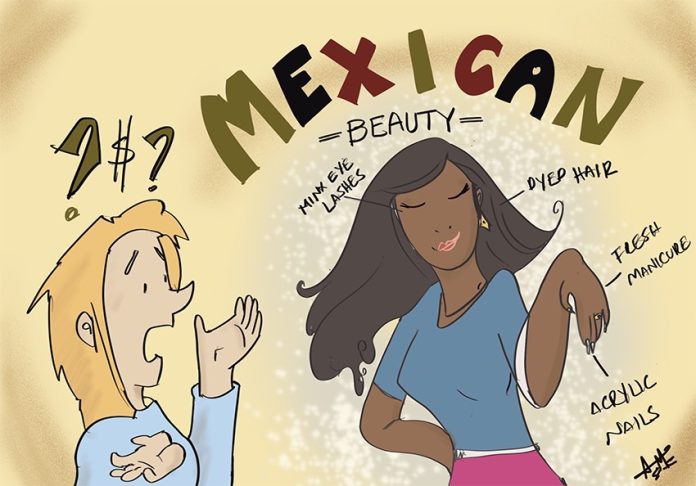
If you have spent any time in Mexico, chances are you’ve also spotted a plethora of beauty salons, nail salons, and spas of all shapes, sizes, and types, making glamour in the country no mystery at all.
The good news is that for most people, prices are typically quite accessible in ways that they’re not north of the Rio Grande So, how do you make these beauty treatments happen, especially if your Spanish is only so-so?
First of all, let’s look at some tips for any appointment you make:
1) Look online. Most reputable places will have both Facebook and Instagram accounts, and you can look for them by typing in a keyword like “salon” or “uñas” plus the city name in the search bar.
2) Write out your questions and requests in a message with the help of a friend or an AI translator if needed. That way, they’ll know what services you’re interested in, and you can get help if needed in understanding their questions and responses.
3) Use pictures to show what it is that you want (a good idea even in your native language); a picture really is worth a thousand words, luckily in any language! Pinterest can be an especially good place to get ideas if you don’t find anything on their local pages similar to what you’re looking for!
4) Ask about prices beforehand. Almost every place will have their price per service fairly set in stone, so ask about the services you want in advance so you and your budget are prepared.
Now it’s time to get specific! Below, are some of the most popular beauty service categories in Mexico, along with key vocabulary and average price ranges.
Cabello (Hair)
From 100-1200 pesos for haircuts; 600-4000 for color and special treatments. Places to get your hair cut can range from someone’s living room to dedicated, fully-equipped hair salons (if your Spanish isn’t great and you’re not adventurous with your hair, you probably want the fully-equipped kind). Most hair salons also offer make-up services for special events!
Here are some key vocabulary words you might want to know:
Cortar (las puntas): cut, trim (the ends)
Lavar y secar: wash and dry
Teñir: dye
Fleco: bangs
Capas: layers
Keratina: keratine treatment (all the rage lately!)
Maquillaje: makeup
Uñas (Nails)
From 200 to 800 pesos, depending on the service.
Nail art is a major thing here, so if you want to go wild, this is your chance! Most places have a price for mono-colored and then go up from there depending on how many designs you want. Here’s some helpful vocabulary:
“Polish”: This is what they say for non-gel (regular) nail polish, the kind that comes off with nail polish remover from the grocery store.
“Gel”: pronounced as “hell” in Spanish.
Acrílica: it is what it sounds like – acrylic!
Extensión: acrylic extensions
Acrimano: when they put acrylic material over your natural nail length, with no extensions
Diseño: design – if you want any special cute shapes on your nails, this is what to ask for!
Efecto: special effects, which might include things like glitter, a matte finish, or anything they need to use several different polishes or magnets to make happen
Forma (ovalo, cuadrado): nail shape (oval, angled)
Pestañas (Lashes)
Want to wake up every morning with long, thick lashes? Mink lash extensions have been popular in Mexico for a while now, and if you’ve got 800-1000 pesos for the first treatment and 500-800 pesos for touch-ups every three weeks or so, they can be great fun!
Essentially, fake “mink” lashes are glued one by one to your natural lashes, a process that takes a couple of hours but that isn’t all that uncomfortable, especially if you’ve wanted to force yourself to just lay there and relax! Results are pretty, dramatic, and immediate.
Key vocabulary:
Rizado(a): curled
Largo: length (also “long”)
Color: is what it sounds like!
Natural: used to describe a natural (as in, not overdone) look.
Retoque: touch-up, which for mink lashes, is approximately every three weeks
Cejas (Eyebrows)
Microblading has been all the rage for a few years now, and I have to admit, I have seen some beautiful eyebrows out there lately, not something I’d have ever thought to pay attention to. The cost is around 2000-4000 pesos, and the effects can last up to two years.
Here are some key vocabulary words:
Grueso: thick
Tatuaje: tattoo (from what I understand, microblading basically is “tattooing” one’s eyebrows on!)
Depilar: remove hair (through shaving, plucking, waxing, etc.)
If you’re feeling adventurous, the time is always right to experiment. But even if you’re quite conservative and cautious when it comes to trying out new beauty treatments, you’re sure to be pleased with what you find!
| |
Sonoran Sales Group - The OFFICIAL sales team for Sonoran Resorts!
We are Rocky Point's one and only exclusive and dedicated team who have always, and will always, sell Sonoran Resorts and ONLY Sonoran Resorts!
If you are looking for a team of real professionals who specialize in Puerto Penasco's best family of "True Beachfront" resorts, you've found us, and we are here to serve you.
Whether Buying or Selling, no one can serve you better when it comes to the Sonoran Resorts. We have been here since the beginning, and we will be here for you when you need us.
Our In-House closing team will make things happen quickly and professionally and we will save you money. Our attorneys are on salary and no additional attorney fees are charged to our clients. Loyalty to the Sonoran Resorts Sales Team is both appreciated and rewarded!
We don't just sell the Sonoran Resorts, we ARE the Sonoran Resorts. We work directly with the Developers, the HOAs, and the Rental companies.
We really can help you in ways that no one else can.
| |
Just for the fun of it... | |
Jim Ringquist
rockypointjim@gmail.com
| | | | |