Armchair gardening days are drawing to a close. Pruning, cleanup, weeding – the season begins! |
|
The Root of It newsletter ends with our monthly quotation. If you find your newsletter has been clipped by your email provider please click HERE for a webpage version of the newsletter. |
|
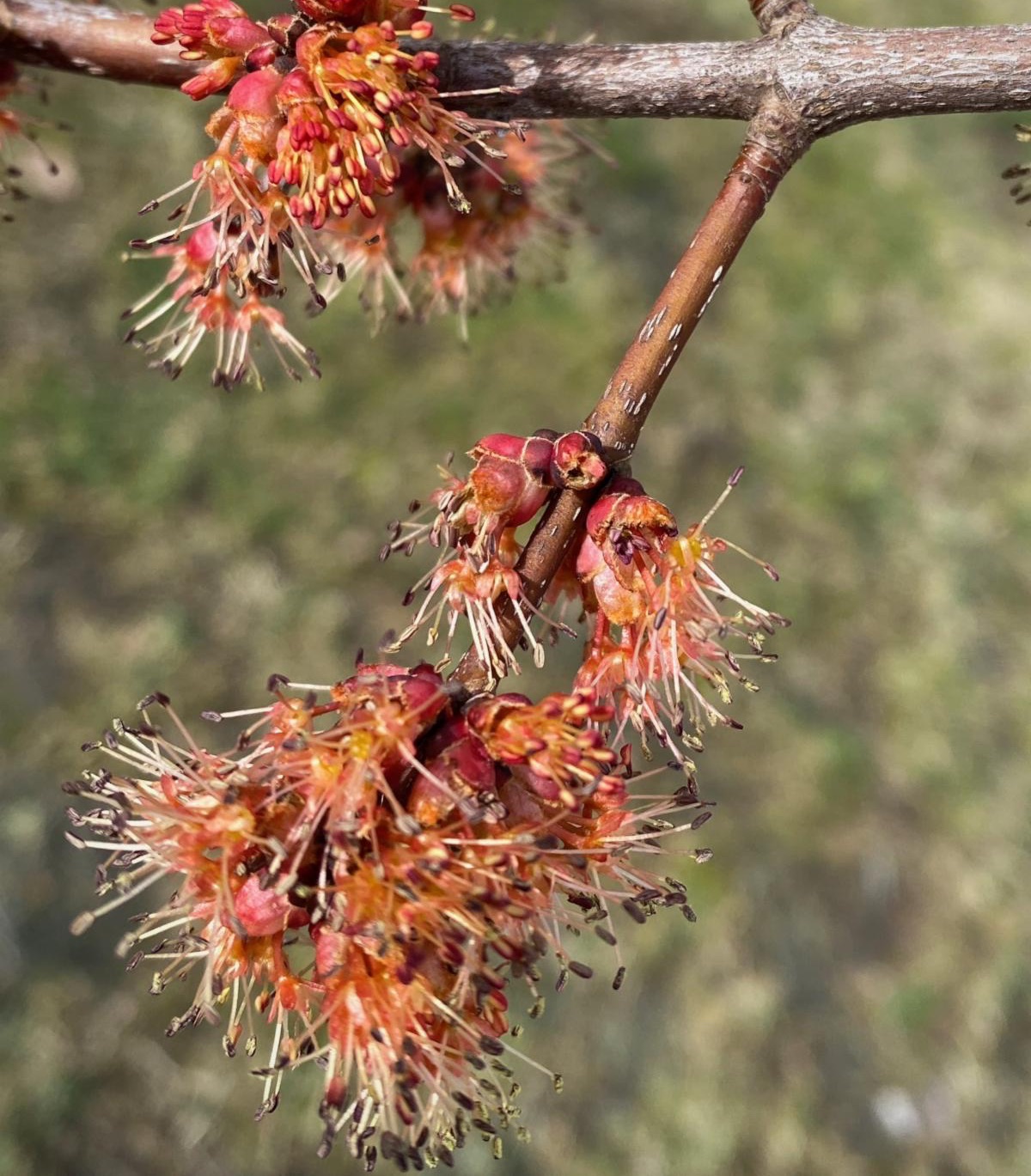
Watch for the beautiful blooms of red maple (Acer rubrum) at 44 GDDs
photo by E Barth-Elias
|
|
On to mercurial March, with swings from wintry blasts to daffodils popping through the ground. But wait! Daffodils started emerging in Akron gardens in mid-January this year! We may expect our bulbs to break through the soil in March and plant our peas on St. Patrick’s day, but plants regulate themselves by accumulated heat in their environment, rather than by our calendar, and January’s balmy days signaled “GO!” to dormant bulbs. Phenology expert Dr. Dan Herms tells us that the “Development rate of all plants, insects, and other cold-blooded animals is temperature dependent and, thus, is tied to accumulated warmth.” By tracking this accumulated warmth, we are able to predict such biological events as leaf emergence, flowering, reproduction, and migration. |
|
The study of the timing of these events and their relationships is called phenology, and this emerging science has roots that go way back in time. Phenological knowledge was a key survival tool for early hunters and gatherers, helping them to determine when to forage for particular foods. Gardeners have long taken advantage of phenological relationships to determine when to plant their crops: seeding lettuce and planting potatoes when dandelions begin blooming, beets and carrots when lilacs begin to leaf, tomatoes when dogwoods are in full flower. The serviceberry tree (Amalanchier spp.) was so named because the bloom of its flowers indicated that the ground had warmed enough for graves to be dug and signaled to circuit preachers that it was time to travel to distant parts to conduct funeral services.
Phenologists measure the accumulated heat after the winter freeze as units called Growing Degree Days (GDDs), and Ohio State University has developed a site which provides the number of GDDs by date for Ohio zip codes. The site also lists many biological events by degree day, such as first bloom of the saucer magnolia (Magnolia x soulangeana) at 174 GDDs and the first seedling emergence of smooth crabgrass (Digitaria ischaemum) at 155 GDDs. The list includes a number of insect pests and diseases, such as the emergence of white pine weevil (Pissodes strobi) at 84 GDDs. Check it out HERE.
On March 1st of 2020 the GDD for Akron was 16, in 2021 5, and in 2022 it was 11. The GDD for February 27th, a couple of days ago, was 39, so we can expect the early emergence of many plants, insects and diseases this season. Things to look for this month: first bloom of Cornelian Dogwood (Cornus mas – 40 GDDs), Red Maple (Acer rubrum – 44 GDDs), northern lights forsythia (Forsythia x intermedia – 58 GDDs), and star magnolia (Magnolia stellata – 83 GDDs). Watch the landscape begin to wake up. Look Around!
K Edgington
|
|
Leaf Brief - Wild Garlic and Onion |
|
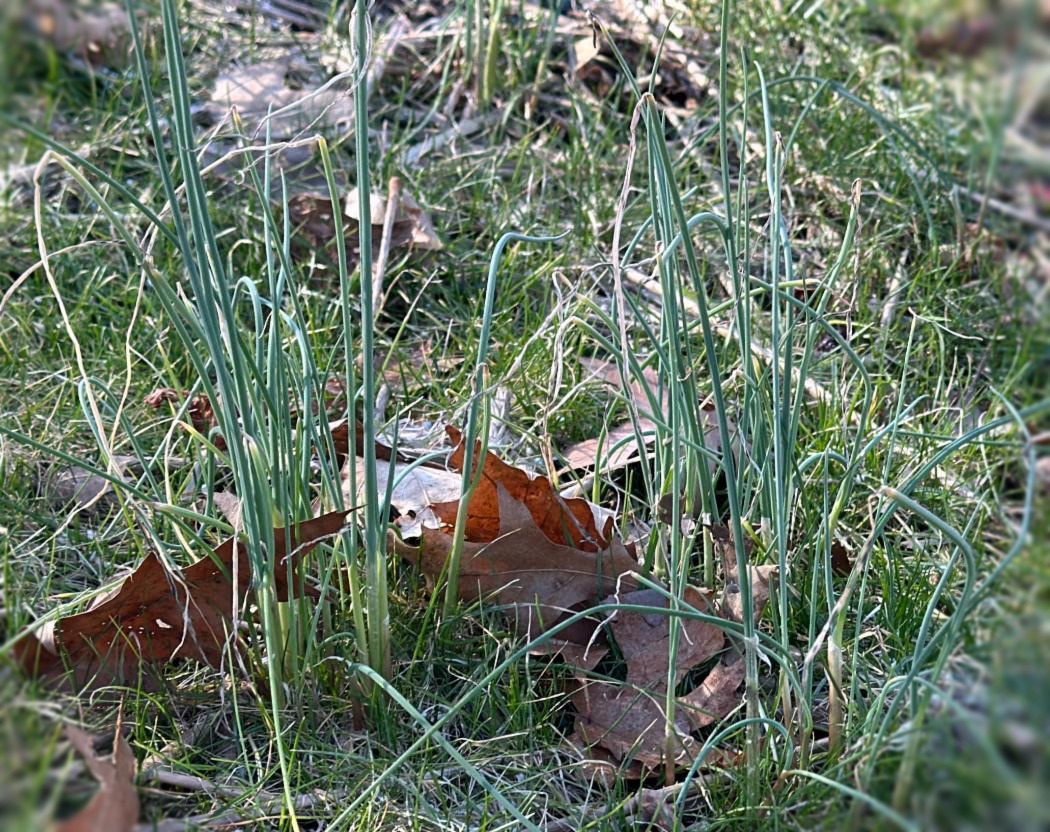
Wild garlic (Allium vineale) has gotten a foothold in this turf.
photo by E Barth-Elias
|
|
Who doesn’t like garlic and onion? The smell of it sauteing in a pan with a little olive oil or spread with butter on a hunk of crusty bread is a little slice of heaven. Wild garlic and onion in your yard - not so much. Those thin blades that proliferate through your flower beds, as well as your lawn, are about as welcome as company arriving after you’ve burned the casserole. And like unwelcome guests, they’re hard to get rid of. |
|
While very similar, wild garlic (Allium vineale) and wild onion (Allium canadense) are two distinct plants. They share the same grass-like foliage, height, and habitat but there are subtle differences. Garlic leaves are smooth, round, and hollow while wild onion leaves are flat and solid inside. Both produce the hallmark allium aroma when crushed, which distinguishes them from other bulbs with similar foliage. These naturalized perennials emerge in the fall, and grow through the winter, producing flower clusters and bulbs (garlic only) on stalks in the early spring, along with underground bulblets. They then go dormant in the summer.
Wild garlic and onion, like their more well-bred cousins in your garden, are edible. Because they are versatile and nutritious, some chefs are jumping on the wild garlic/onion bandwagon with soups, pestos, and more. TIPS FOR COOKING WITH WILD ONIONS AND GARLIC Before harvesting any wild edible make sure to confirm identification with an experienced expert, as look-alikes may not be edible. Keep in mind that wild plants may have been sprayed with pesticides or other run-off contaminants, and using wild grown plants should be done at your own risk.
As you may have learned on your own, if you have wild garlic or onion you are now in a long-term relationship. They are considered invasive and require special care and patience to get rid of. While a nuisance for the home gardener, these troublemakers also plague the nursery industry, farmers (they can be toxic to cattle in large quantities), and those who maintain public parks and golf courses, costing time and money to control.
Because bulbs will continue growing and reproducing as long as they are viable, they need to be removed completely. Not the easiest task, since they can be several inches underground and number in the hundreds. Cutting off the foliage provides only momentary satisfaction, as a new bulb will continue to push up new leaves and reproduce until the bulb's stored energy is spent. Continuous mowing in turf areas will help, but to completely eliminate them the bulb must be totally removed with a shovel, narrow trowel or pitchfork. Any remnants will send up new shoots. There are many pesticide options but even those are hardly foolproof. Repeat applications over a few years may be required and no pre-emergent herbicide is available. Your best bet is to be vigilant and dig bulbs before they become well-established. See more information about wild garlic and onion control HERE.
Take heart gardeners. You can choose to live with wild onion and garlic as a part of nature and appreciate their pretty spring blossoms or enjoy the smell while you have your nose to the ground picking weeds. Perhaps their savory aroma will inspire you to whip up something extra special in the kitchen.
J Gramlich
|
|
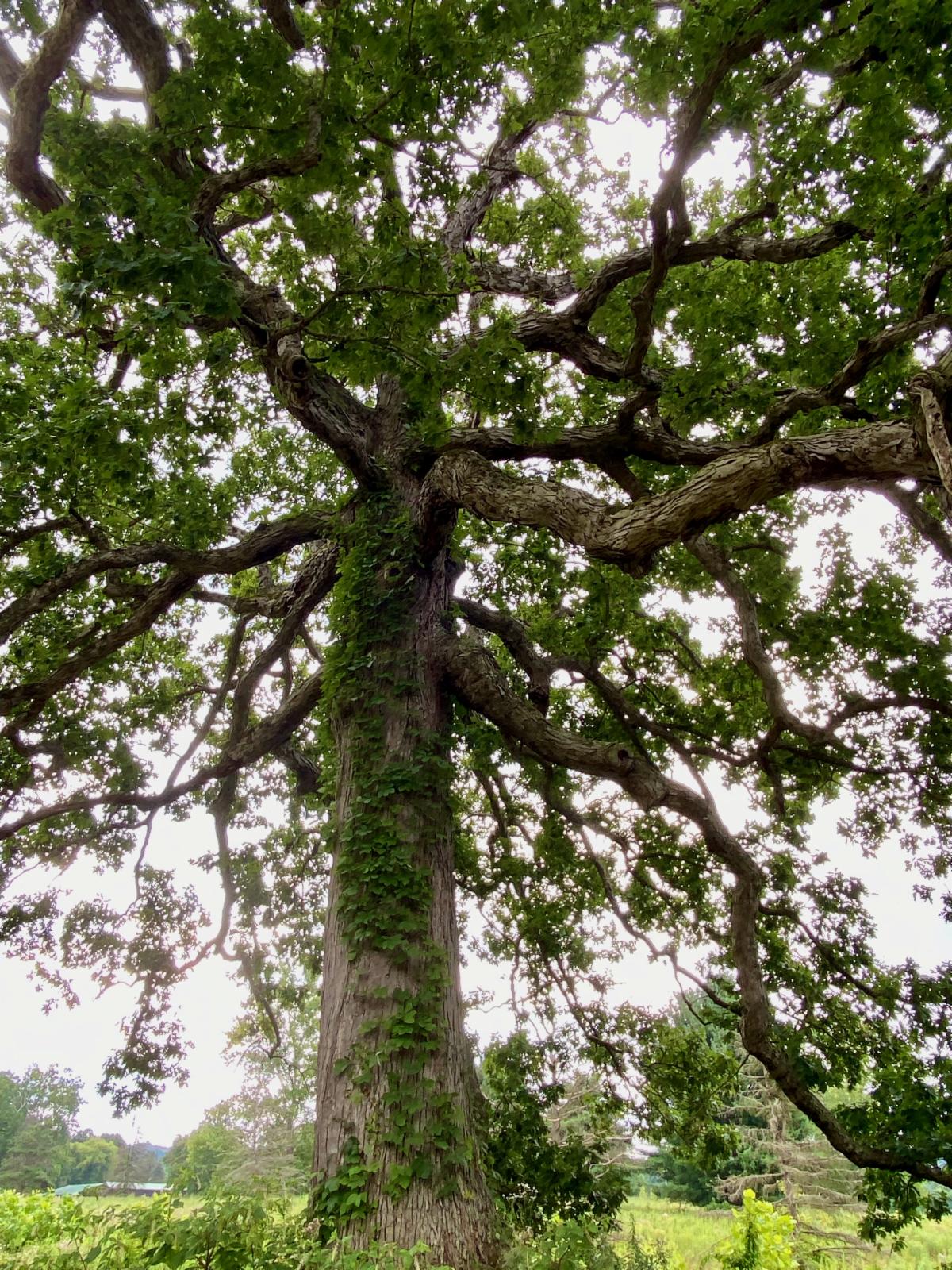
White oaks (Quercus alba) are a premier food source for caterpillars.
photo by E Barth-Elias
|
|
There's a lot of bad news about nature these days. Bird and insect populations are plummeting because of pollution and lack of habitat, clean water, and food. Without insects, birds cannot feed their young. Without birds, plants’ ability to reproduce through seed dispersal is limited. Without plants, we humans do not survive.
This isn’t fearmongering; the danger is real. Nothing exists without plants, and plants do not exist without insects. At the beginning of the 21st century, humans had already destroyed up to 60 percent of the Earth’s carrying capacity, meaning we have removed much of the earth’s ability to support its population without environmental degradation [1].
It is also wrong to believe nothing can be done. We gardeners need to expand our perspective. Indeed, gardeners are, as the title of Dr. Douglas Tallamy’s latest book says, Nature’s Best Hope.
|
|
There are many ways to begin this restoration: shrink the lawn; plant for pollinators; water wisely; give weeds a chance. To Tallamy, it comes down to planting natives.
Why natives? It’s chemistry. Insects have adapted to the unique chemical compounds in the plants they eat. They rarely eat leaves from other kinds of plants. When native plants are replaced by non-natives, the insects, and the birds that depend on insects – about 96 percent of all bird species – must go elsewhere to find what they need [2]. Increasingly, there is no “elsewhere.”
Tallamy, a professor of entomology at the University of Delaware, is a leader among the hundreds of academics, naturalists and others who are promoting biodiversity, growing plants to provide the wide variety of food and shelter options birds and insects need to thrive. Plants that have not evolved in a particular region cannot feed the insects that local bird and animal populations rely on. He focuses on insects because they are the foundation of a well-functioning ecosystem. As naturalist E.O. Wilson said, insects are “the little things that run the world.”
Tallamy highlights caterpillars because they contain rich stores of fat, protein and carotenoids, the primary nutrients for baby birds. Many species of caterpillars find homes in native trees. For example, Tallamy writes that oaks provide food for 557 species of caterpillars. Willows, cherries and plums, maples, poplar and birch also host many species. On the other hand, gingkoes, which are native to China, support very few native caterpillars.
Insects pollinate, decompose waste and provide food for birds and other animals. Birds, in turn, disperse seeds that keep plant populations healthy. Plants provide crucial ecological services: they filter water and anchor soil. They take in carbon dioxide and exhale oxygen. They pull carbon into the soil, keeping it from escaping into the atmosphere.
In Nature’s Best Hope, Tallamy enlists the nation’s gardeners to return natives to the landscape and help turn the tide of declining insect and bird populations. He proposes the creation of a Homegrown National Park, suggesting that if American property owners turned even half their property into native plant communities, 20 million acres would return to productive ecological service. Twenty-million acres would create the country’s largest park system.
We know that no one park is able to restore the habitat needed for insects and birds to make a comeback. And while preservation of what we already have is crucial, we need to focus our efforts on building habitat where we can, with the goal of building corridors that enable insects and birds to find food and shelter without having to travel long distances between large preserves. That’s where gardeners can play such an important role.
Biodiversity is like a quilt. No two parts are ever the same but each piece knits together the fabric of nature. Each gardener who accepts the challenge will play a crucial part in returning nature to its pre-eminent place in our world.
[1] Douglas Tallamy, Nature’s Best Hope, Timber Press, Portland, OR, 2019, p. 80
[2] Ibid., p. 133
S Vradenburg
|
|
Stepping Up Garden Photos |
|
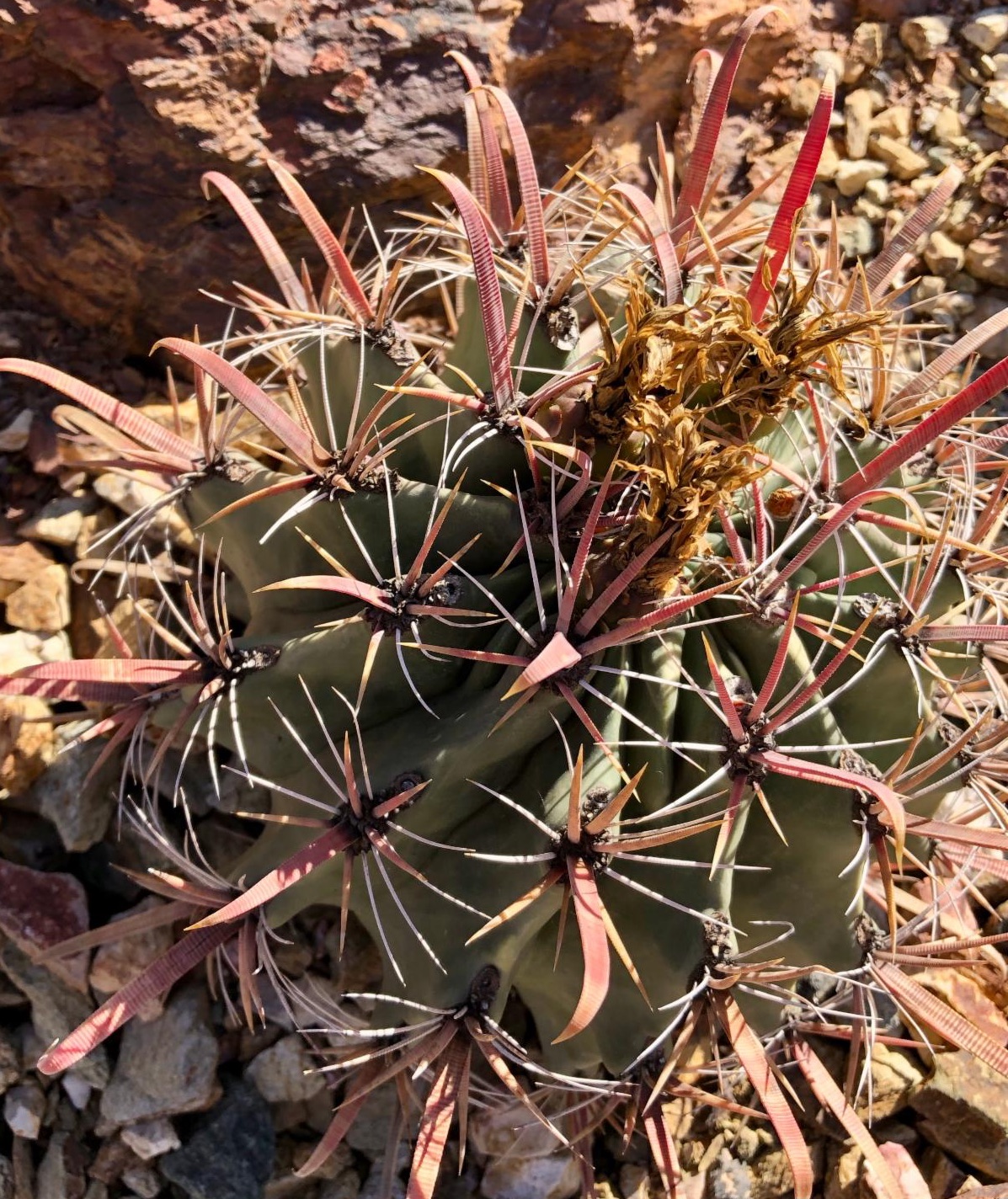
This cactus image was taken in bright, direct sunlight which adds contrast and gives textures some pop. Note the use of the rule of thirds, leading lines, and repetition.
photo by Barth-Elias
|
|
As Growing Degree Days (GDDs) accumulate and the gardens of Ohio begin to wake, opportunities for exploration through photography are likewise on the rise. In preparation for this growing season, let’s explore some basic principles of light and composition to guide us as we reach for the camera.
As gardeners, we have trained our eyes to notice. We notice intricate details, patterns and the repetition of colors, shapes, and textures. We notice the garden as a whole, a selection of plants forming a striking combination, and we notice the finest details— like the illuminated hairs covering the stem of a gracefully unfurling fern. This is the level of keen observation needed to be a student of light.
|
|
LIGHT is the essence of photography. In the garden setting we are working with natural light which is constantly changing due to seasons, the time of day, and weather. While highly technical knowledge is not necessary for our purposes, awareness of these four characteristics of light will enhance understanding and may assist in choosing when, where, and how to take your garden photos. Consider the following questions to understand how quantity, quality, color, and direction relate to garden photography.
-
Quantity (intensity) - Ask yourself how much light is falling on your subject? Is it a sunny or cloudy day? Is your subject in direct sun or shade?
-
Quality (hardness) - Is the light concentrated and harsh (think of a sunny day at noon) or diffused and soft (as with overcast skies)? Will the texture of your subject benefit from strong shadows (stone wall) or lower contrast (smooth skin)— or somewhere in between?
-
Color (temperature) - All light has color (measured in Kelvins.) For about a half hour before and after sunrise and sunset, the atmosphere appears to have a warm glow often referred to as the golden hour. As the day progresses the color temperature cools until the sun is highest, then begins to slowly warm again. Well-lit shade registers as cool.
-
Direction (source) - The sun’s position relative to your camera and subject determines the length of the shadows. Longer shadows give the appearance of greater distance and dimension.
General awareness and frequent reminders to assess these characteristics will result in stepping up our photos.
COMPOSITION refers to the arrangement of elements within the frame. Try applying the following “rules” (guidelines) and tools to help create a strong composition. Chances are you already use some of these but, if not, don’t get overwhelmed! Simply pick one and give it a try— but first, pause to clearly identify your subject.
-
Rule of thirds - places the subject at an intersection of tic-tac-toe lines. This increases dynamism by drawing the eye to the subject, then scanning the remainder of the image.
-
Point of view - location of camera lens relative to subject. Experiment with shooting from varying heights and angles. Lay on your belly or get up on a ladder. Feature the full garden scape (wide angle), a grouping of plants, or move in for a super closeup (macro.) Examples: looking straight down from above, side profile, hold camera horizontally or flip and frame vertically.
-
Leading lines - refers to the use of an existing element to draw the eye along a line toward your subject. Examples: up a tree trunk, along a pathway, road, or fence. Often these are established for us by garden design.
-
Framing - use to block a distraction and/or enhance your subject. Examples: step to the side to let the subject block out a distracting object in the background, shoot through an archway, allow two trees to frame both sides.
-
Patterns/Symmetry - use the repetition of color, shape or texture which is often abundant in gardens. Or disrupt the pattern. Examples: closeup of a succulent rosette, a single yellow tulip among a sea of deep purple.
-
Scale - include any easily identifiable (related) object to demonstrate size. Example: incorporate a shoe or glove into your image.
With practice these techniques will become automatic, elevating our skill and creating more satisfying photos.
E Barth Elias
|
|
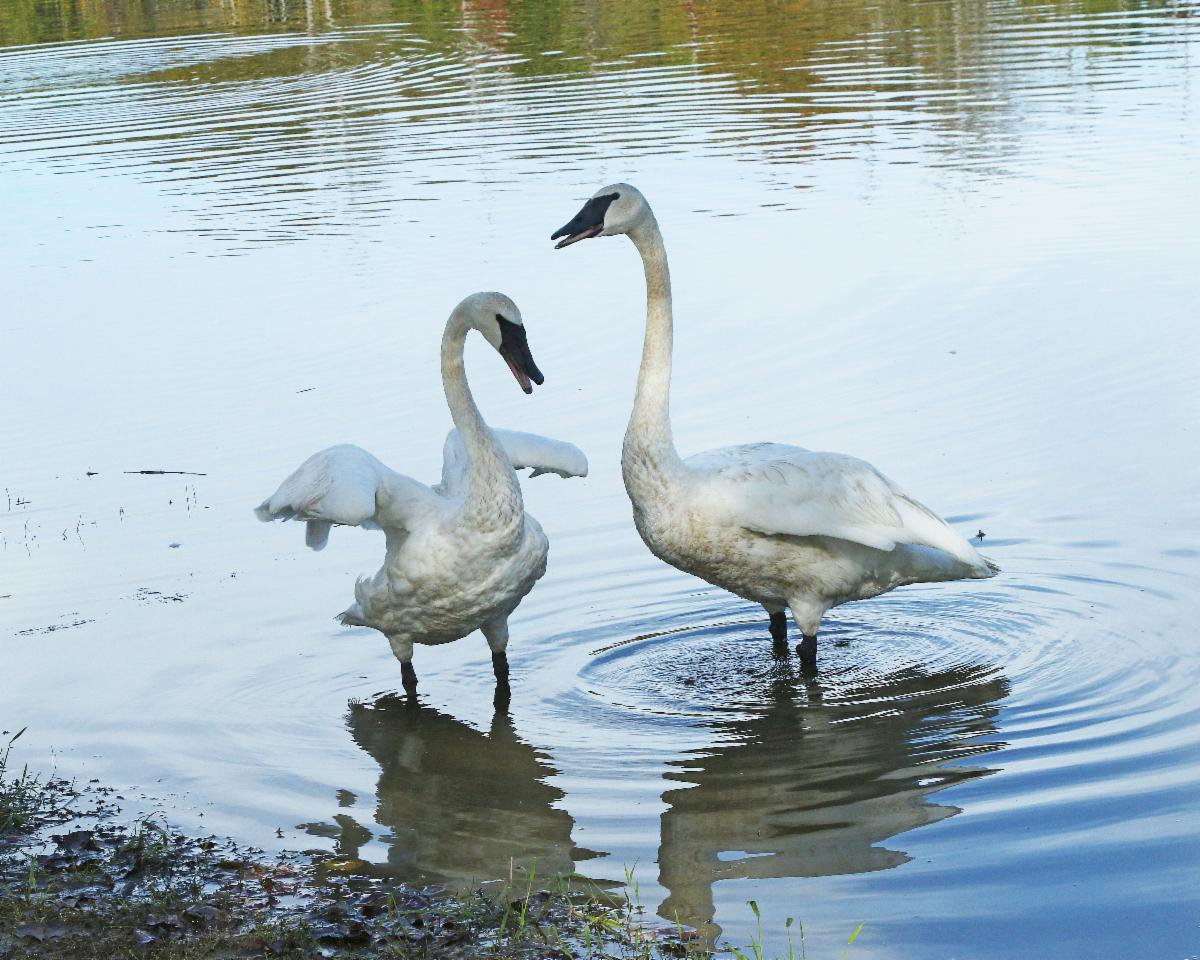
A pair of Trumpeter Swans at Tinker Creek
photo by Jerry Cannon
|
|
Humans celebrate swans for their beauty, grace and elegance. Swans have been featured in stories and legends for centuries as symbols of transformation, love and commitment. One of our most popular ballets is Swan Lake, and there’s even a constellation honoring swans — Cygnus (Greek for swan).
Yet all is not sweetness and light with our beautiful feathered (25,000 per bird!) not-exactly friends.
|
|
Swans can be…unkind. Very unpleasant. Murderous even. Swans are so nasty that there is actually a human medical condition called cynophobia (or kiknophobia) — fear of swans. Are they really that bad?
Knowledge is power, so let’s look a bit closer (but not too close!)
There are only six species of swans in the world, three of which are found in Ohio—tundra, trumpeter and mute. HERE'S a simple overview on how to recognize each type.
Tundra swans generally only pass through Ohio on their 2,500 mile migration from the sub-Arctic and Arctic regions to the eastern U.S. coastline. Traveling in groups of 100 or more, these birds (dubbed “whistling swans” by Lewis and Clark) can be difficult to distinguish from trumpeter swans although they are smaller and faster. Watch HERE. Up close, you may notice small yellow markings below their eyes.
The trumpeter swan is BIG—our largest native waterbird, weighing 26 plus pounds. These massive birds have a wing span of up to 10 feet, black bills, necks curved in the shape of a “C”, and a loud call similar to, well, a trumpet. Their size requires about 100 yards of “runway” to become airborne. Trumpeter swans were once found across the continent, summering in the northern U.S. and Canada and migrating west, south and east. While they can reach speeds of 60 mph, their low, slow migratory flights make them easy targets, and beginning in the early 1800’s mass quantities were hunted for their skins (used for powder puffs), feathers (used for hats and writing quills) and meat.
By the early 1900’s trumpeters were almost extinct. They were saved by the creation in 1935 of the Red Rock Lakes National Wildlife Refuge in southwest Montana. In 1996 Ohio joined several other states to bring the birds back to the Midwest, with some success. In 2022, 135 pairs of trumpeters were documented in Ohio and 235 babies were born, although they are still considered threatened. Contemporary dangers for trumpeters include lead poisoning (from swallowing lead fishing tackle or pellets), collisions with powerlines, and loss of habitat.
Between ages two and four, trumpeters choose a mate (generally for life) and build nests of leaves and twigs in marshy waters with lots of vegetation. Trumpeters are territorial and may become aggressively so during mating season. Females (“pens”) lay between 3-9 eggs that hatch in about 5 weeks. Babies (“cygnets”) stay with their parents for a year. Dads (“cobs”) are very involved in parenting, HERE earning the title “ultimate animal dad”: Some Ohio trumpeter swans remain year-round while others migrate. Their diets include aquatic vegetation like waterweed, pondweed, algae and musk grass, and seeds, grains, snails, fish and worms. Their long necks are beautiful and useful, enabling them to reach food under water up to four feet deep!
Mute swans were originally brought from Europe beginning in the mid-1800’s as decorative accents for estates, zoos and parks. Their orange bills, black knobs on their foreheads, and “S” curves in their necks makes them easily recognizable as the elegant swans of fairytales and legends.
Mute swans are not mute (but their call is not as loud as other swans). THIS VIDEO highlights their majestic flight. A flight so majestic, in fact, that KLM featured them in a series of commercials. Watch HERE (and spot the “Top Gun” parody).
And see what excellent parents mute swans are! Click HERE and HERE.
But mute swans have a dark side. Where trumpeter swans are aggressive, mute swans are extremely so, and are considered a threat to humans, native wildlife and wetlands. Especially during mating season and once cygnets are born, mutes attack anything they perceive as a threat. There are multiple reports of mutes assaulting humans, and at least one fatality (a mute went after a kayaker who drowned). Yep, pretty dark.
HERE Dad goes after a human trying to help his baby. WATCH MOM drive off a blue heron threat.
And there’s more bad news about mutes. They eat an enormous amount, about 8 pounds of food a day—but destroy another 50% as they feed, dramatically reducing the food supply for other waterbirds and habitat for fish. They attack native birds to drive them from their nesting areas. They may spread disease, and their abundant poop can be a problem. The Ohio Division of Wildlife considers mute swans an invasive nuisance species, and has created an action plan to deal with them.
THIS is what swans think of that. (Test – what kind of swan is in the video?)
Beautiful, elegant, graceful…and yes, maybe a little scary.
C Christian
|
|
March Checklist
- Start seeds indoors for summer vegetables and annuals according to packet directions.
- Prune trees and shrubs to remove diseased and dead branches, and to manage size, and shape.
- Trim and shape roses and cut out dead wood when buds appear.
-
Get your garden off to a good start with a soil test. SOIL TESTING: PennState Extension
- Cut back and divide ornamental grasses if you haven’t already.
- Start dahlias, begonia tubers and cannas indoors.
J Gramlich
|
|
More learning opportunities:
|
|
"Is the spring coming?" he said. "What is it like?"... "It is the sun shining on the rain
and the rain falling on the sunshine.."
Frances Hodgson Burnett, The Secret Garden
|
|
We invite you to share The Root of It with your gardening friends and family. If you would like to subscribe to our mailing list please visit our website, scroll to the bottom, and follow the link under Join our email list. |
|
The Root of It staff: Karen Edgington (Editor), Emma Barth-Elias (Photo Editor), Carolyn Christian, Jennifer Gramlich, Sarah Vradenburg, and Geoff Kennedy (Technical Advisor)
|
|
We Would Like your Feedback
Contact us at: newsletterscmg@gmail.com
To discontinue receiving this newsletter please click on the UPDATE YOUR PROFILE link below. You may then choose what types of information you would like to receive from us.
|
|
|
|
|
|
|