Nesting Osprey are Back at Riverside Park
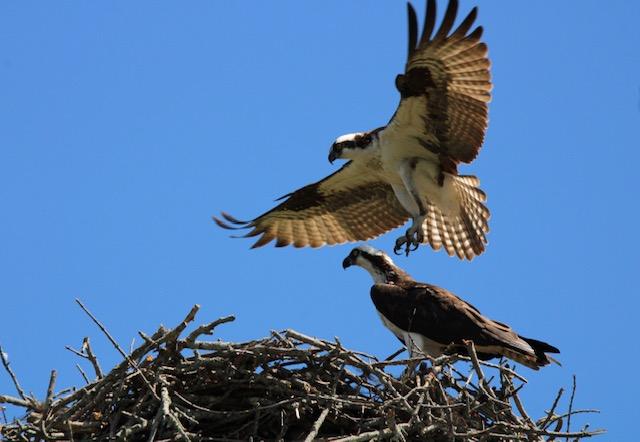
A beloved pair of Ospreys has returned to Haverhill’s Riverside Park for the fifth year in a row! The Osprey’s impressive nest is on one of the ballfield light stands.
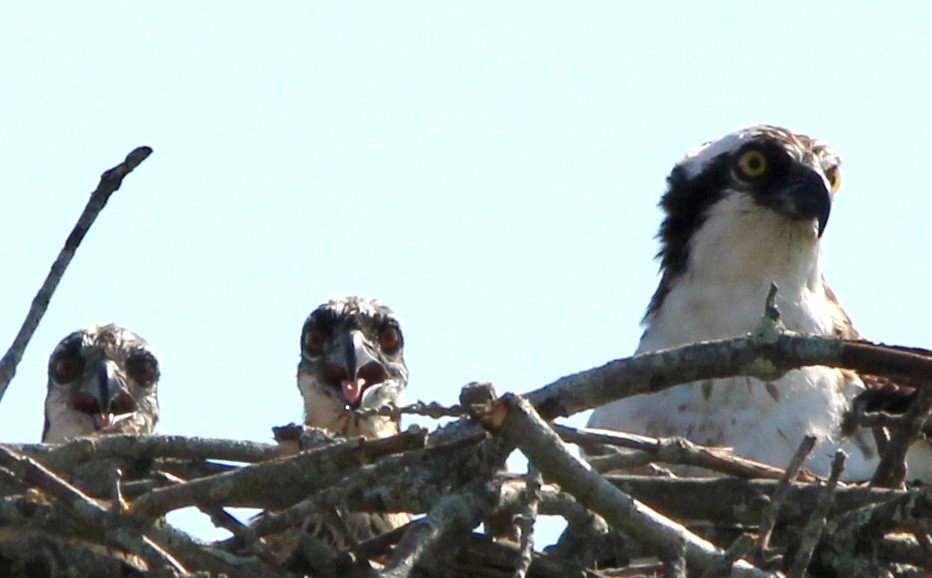
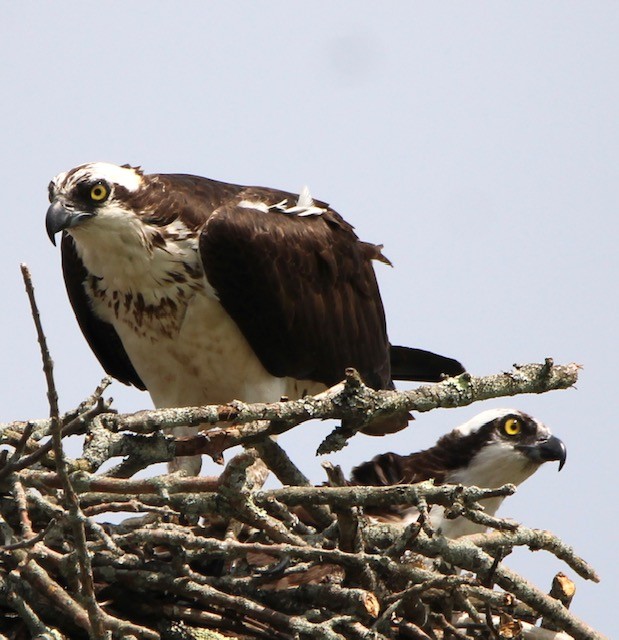
Since 2021, when they initially nested on a stand at the stadium, the pair has produced nine fledglings – offspring that have learned to fly and fish. The Ospreys are a beautiful white, brown and black bird sometimes confused as an eagle or a hawk. The female Osprey, larger than the male, has a speckled chest known as a “necklace.” Our male Osprey also has light speckling making them hard to tell apart. Adult ospreys have yellow eyes and the young have red eyes and distinct white tips on their back feathers.
Ospreys mate for life and return each spring to the same nest to raise their young. It is cause for celebration when the ospreys return because their migration to and from South America, where they spend the winter, is long and perilous.
The female Osprey will remain on the nest for much of the spring and summer first incubating her eggs and then caring for her chicks until they learn to fly and feed themselves. The male Osprey provides a steady flow of fish from the river for his mate and growing family and helps protect the nest when the female will stretch her wings, so to speak, and take a fly about.
The female Osprey will leave the area shortly after the young have fledged. The male will stay with the young as they perfect their flying and diving skills. Most Ospreys leave the area by mid-October. The young Osprey stay in South America for two years until they are mature. They will eventually return to the area where they were born.
It is hard to see what is happening in the nest as it is so high and deep. It’s not unusual for Osprey lovers and nature photographers to spend hours watching the nest trying to determine whether chicks have hatched and how many. While the Ospreys seem unfazed by baseball games, dog walkers, music, picnickers and all kinds of park activities, please respect their nesting area. The birds can be threatened by eagles and other Ospreys so let’s not add any human interference such as drones or kite flying near the nest.
For more information on Ospreys and how to get involved, visit the Essex County Greenbelt Association's Osprey Conservation Program at ecga.com.
Text provided by Ann Massoth, who is a nest monitor volunteer for Essex County Greenbelt Association.
|