| |
Energy, electricity and ICT for Africa
| | News and announcements from EE Business Intelligence | | |
You are receiving this email because of your past interactions with EE Business Intelligence and
EE Publishers. To unsubscribe, please click the SafeUnsubscribe link at the bottom of this email.
| | Roundup of major energy and electricity news and developments: 14 September to 27 September 2026 | |
1. From load-shedding to affordability: Under Dr Nyati, Eskom 2.0 faces its next test.
2. Billions mobilised to unlock the regional green-energy pipeline.
3. Discovery Green brings actuarial science and AI to renewable-energy trading.
4. Zambia and Namibia push ahead with private, merchant renewable power projects.
5. Mantashe seeks Treasury billions to revive South Africa’s mothballed refineries.
6. PetroSA faces liquidation battle over toxic Nako Energy deal.
7. Proposed new East London LNG plan joins scramble to avert South Africa’s gas cliff.
8. Green hydrogen ambitions gather momentum – but bankability remains the real test.
9. Johannesburg tests microgrids while municipal debt crisis deepens.
| | |
1. From load-shedding to affordability: Under Dr Nyati, Eskom 2.0 faces its next test.
Dr Mteto Nyati’s reappointment as Eskom board chair for a further three years from 1 November 2026 provides leadership continuity as the utility enters a challenging new phase – what government and Eskom are styling as “Eskom 2.0”. The immediate crisis of load-shedding has eased and Eskom has returned to profitability, but the underlying structural problems are unresolved. Nyati says the board’s new top priority is electricity affordability – a necessary shift after years of steep tariff increases that have eroded household disposable income, damaged industrial competitiveness and encouraged customers to move to alternative energy sources and to defect from the grid. Eskom 2.0 will therefore be judged less by whether it can keep the lights on than by whether it can drive down the real cost of electricity, become genuinely customer-centric, and improve operational efficiency across generation, transmission and distribution. The biggest financial threat remains municipal arrear debt, now exceeding R120-billion and still rising. Without structural intervention, this problem risks undermining Eskom’s balance sheet just as government support begins to taper. At the same time, Eskom must support – rather than frustrate – unbundling, an independent transmission system operator (TSO), electricity trading and a competitive wholesale market. Through Eskom Green, it must also prove it can become a serious participant in renewable generation rather than remain overwhelmingly dependent on ageing coal assets. Another challenge is shrinking electricity demand. Eskom is therefore courting energy-intensive users through negotiated pricing agreements, including ferroalloy smelters, data centres and even crypto miners, while seeking stronger regional sales. This strategy carries its own challenges: Eskom must attract large new customers with competitive prices while avoiding cross-subsidies that shift costs onto everyone else. Nyati’s second term will therefore test whether Eskom’s recovery is genuinely structural – or merely a temporary respite from crisis.
| | |
2. Billions mobilised to unlock the regional green-energy pipeline.
South Africa’s renewable-energy investment pipeline is attracting a widening mix of development finance, sovereign guarantees and private institutional capital as the electricity market opens to competition. Norway has provided a state-backed guarantee of up to 150-million Norwegian Krone (about R261-million), supporting the trading platform associated with Scatec and Stanlib Infrastructure Investments’ Lyra Energy. The instrument reduces payment risk across Lyra’s commercial and industrial customer portfolio, helping underpin new generation including Scatec’s 255 MW Thakadu solar project, which is under construction for commercial operation in 2027. Importantly, the guarantee is risk mitigation rather than project funding or a shareholder subsidy. Meanwhile, Airnergize Capital has reached final close of its Fund I at R3.89-billion, anchored by a R240-million commitment from the Development Bank of Southern Africa (DBSA). Other investors include RMB Ventures, Standard Bank and Nedbank. Initial deployment targets commercial and industrial solar and battery-storage assets across South Africa and the wider region. European funding is also expanding. Team Europe has launched two Global Gateway programmes worth more than R1-billion, including a R690-million grant programme supporting green hydrogen and battery value chains, and a further R370-million grant alongside concessional financing aimed at unlocking green-hydrogen investment through the DBSA. The capital requirements remain substantial. GreenCape estimates investable opportunities of R161.2-billion across 12.9 GW of new renewable generation to 2030, spanning utility-scale and behind-the-meter projects. The emerging pattern is significant: public and development finance is increasingly being used not to fund projects outright, but to absorb specific risks, crowd in commercial capital and improve bankability. Together with grid access, creditworthiness and route-to-market now often more constraining than renewable-energy technology itself, innovative financing structures are becoming as important as wind turbines, solar panels and batteries in determining which projects actually get built.
| | |
3. Discovery Green brings actuarial science and AI to renewable-energy trading.
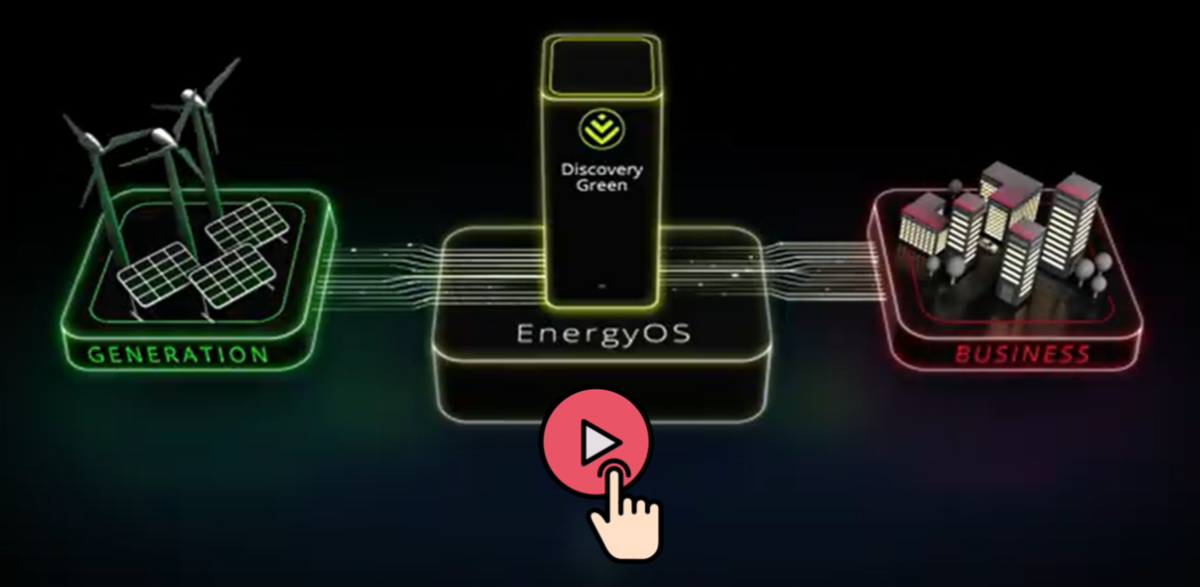
Licensed electricity trader Discovery Green has launched EnergyOS, a proprietary artificial-intelligence and actuarial modelling platform designed to optimise renewable-energy procurement for commercial and industrial customers. The platform seeks to address what Discovery Green CEO André Nepgen calls the “renewables trilemma” – simultaneously maximising electricity-cost savings, reducing carbon emissions and managing the financial risks associated with variable renewable generation, customer demand and future electricity prices. Rather than treating renewable electricity simply as a commodity, Discovery Green is applying actuarial techniques developed within the wider Discovery Group to model renewable-energy procurement as a risk-management exercise. EnergyOS draws on more than 10,000 electricity-consumption simulations, 87-million renewable-generation simulations and over 200,000 future electricity-market price points. AI-based forecasting then models different combinations of solar PV, wind and battery storage against individual customer load profiles and commercial requirements. The system also optimises how available renewable electricity is allocated to customers, seeking the best balance between savings, emissions reduction and exposure to market risk. Discovery Green says internal testing across customers ranging from agriculture to mining has shown significant potential savings and emissions reductions. EnergyOS is being rolled out to existing customers during 2026 and is immediately available to new clients. A public interactive version allows prospective customers to test different technology and pricing scenarios. The development is significant beyond Discovery itself. Launched only three years ago, Discovery Green already has more than 50 business customers and over 740 MW of renewable generation under construction. Its move illustrates how electricity trading is evolving from straightforward wheeling and bilateral contracting towards sophisticated portfolio optimisation, aggregation, forecasting and risk management. As South Africa’s electricity market liberalises, competitive advantage may increasingly depend not simply on who can secure renewable megawatts, but who can combine generation, storage, data and market intelligence most effectively.
| |
4. Zambia and Namibia push ahead with private, merchant renewable power projects.
Renewable-energy development across Southern Africa is increasingly being driven by private capital, open-access trading and merchant generation models, with Zambia and Namibia emerging as important test cases. In Zambia, Africa-focused energy investor Exergy has secured a US $250-million financing agreement with global commodities group Mercuria for generation and transmission projects. The funding will flow through Exergy subsidiaries Lunzua Power Company and Lusitu Transmission & Distribution Company, while trading arm Kanona participates in the Southern African power market. The transaction remains subject to regulatory approvals. The deal comes as Zambia’s liberalised electricity market gathers momentum. Following open-access reforms, around 1164 MW of generation has secured approved PPAs with non-Zesco buyers, although only about 225 MW can currently be matched to operating projects – highlighting the gap between contractual commitments and projects actually reaching financial close and operation. Meanwhile, Hungary-based EnerSynk has signed a 25-year PPA with Zesco for a planned 500 MW solar project in Copperbelt Province. The agreement clears the way for technical studies, financing and implementation planning, with development expected in phases. Namibia has also crossed an important market milestone. Solarcentury Africa’s 19.3 MW Gerus solar plant has entered commercial operation, becoming Namibia’s first merchant solar project and only the second purpose-built merchant solar plant trading directly into the Southern African Power Pool (SAPP). These developments point to a wider regional shift. Renewable projects are no longer relying solely on traditional utility PPAs, but increasingly on traders, bilateral customers, cross-border markets and merchant exposure. The opportunity is substantial, particularly for mining and industrial demand. But execution remains the test: financing, grid access, balancing rules and credible offtakers will determine how much of the rapidly growing project pipeline actually gets built.
| |
5. Mantashe seeks Treasury billions to revive South Africa’s mothballed refineries.
South Africa’s bid to rebuild state-owned fuel refining capacity is taking shape as an increasingly costly test of government’s energy-security ambitions. Mineral & Petroleum Resources Minister Gwede Mantashe is seeking direct National Treasury backing for the proposed redevelopment of the former Sapref refinery in Durban, arguing that strategic refining infrastructure should not have to rely mainly on commercial borrowing. The Central Energy Fund (CEF) has outlined a three-phase Sapref programme costing about US $7.15-billion, or roughly R117-billion. The plan starts with storage leasing, fuel blending, LPG imports and trading, before progressing to studies, approvals and ultimately a new refinery with capacity of about 400,000 barrels a day, potentially rising to 650,000 barrels a day. Sapref, formerly owned by Shell and BP, was acquired by the state for a nominal R1 after being shut following severe flood damage. CEF says South Africa now imports about 61% of its fuel requirements, up from 22% in 2019, strengthening the case for greater domestic refining capacity. But Sapref is not the only costly revival project. CEF is also considering restarting PetroSA’s mothballed Mossel Bay gas-to-liquids refinery. An initial 18,000 barrels-a-day phase is estimated at R5.8-billion, while a second phase to reach 46,000 barrels a day would require another R8.5-billion. Together, Reuters estimates the two refinery programmes would require more than US $8-billion. The strategic objective is clear: reduce dependence on imported refined fuels and improve security of supply. The harder questions concern affordability, financing and commercial viability. With the main Sapref capital commitments still unsecured and bankability only expected during 2027/28, Treasury may soon face a major choice between liquid fuels supply security and another large call on constrained public finances.
| | |
6. PetroSA faces liquidation battle over troubled Nako Energy deal.
State-owned oil company PetroSA is fighting an application for its provisional liquidation by fuel trader Nako Energy over an unpaid R605-million debt arising from a deeply troubled fuel supply relationship. Nako approached the Western Cape High Court claiming PetroSA had acknowledged in writing in May 2025 that it owed R605.5-million for petrol supplied, but had failed to pay. Nako argues this indicates PetroSA is commercially insolvent and unable to meet its obligations. PetroSA says it has a substantive defence and will oppose the application. The dispute is complicated by the fact that Nako itself owed PetroSA about R832-million for a diesel cargo purchased but not paid for. On a simple offset, PetroSA should therefore have been owed about R227-million. However, amaBhungane reports that PetroSA subsequently signed an acknowledgement of debt and a settlement arrangement requiring it to buy another 11 petrol cargoes from Nako, involving around 505-million litres. At current prices, those purchases could cost about R7.4-billion, while the expected margin would merely recover the R227-million net amount originally owed to PetroSA. The situation worsened when Nako ceded its PetroSA debt to financier Plane Tree Capital, which separately demanded more than R620-million plus interest. PetroSA could therefore potentially face substantial claims while still struggling to recover what Nako owes it. AmaBhungane estimates PetroSA could ultimately lose as much as R1.4-billion if the transactions unravel. PetroSA has declined to comment on the merits while the matter is before court, but insists there is no imminent liquidation and that operations continue normally. The affair raises serious questions about PetroSA’s contracting, credit-risk controls, governance and oversight – particularly as government prepares to consolidate state petroleum assets into the proposed South African National Petroleum Company (NPCSA).
| | |
7. Proposed new East London LNG plan joins scramble to avert South Africa’s gas cliff.
South Africa’s looming “gas cliff” is becoming an immediate industrial risk, as declining supplies from Mozambique’s Pande and Temane gas fields collide with slow progress on replacement infrastructure. Sasol has warned that by around 2028 gas from its Mozambican fields will increasingly be required for its own operations, reducing supplies available to external South African customers. Industries dependent on pipeline gas contribute an estimated R700-billion annually to the economy and said to directly employ about 75,000 people. Industry body IGUA-SA argues that the country is effectively already entering the gas cliff, because replacement projects cannot now realistically arrive before existing supply tightens materially. Mozambique’s CMH has separately confirmed declining production from Pande and Temane, with cumulative gas sales down 15.6% in 2025/26. The most advanced import options remain Matola in Mozambique and Richards Bay in KwaZulu-Natal. The proposed Matola LNG terminal could connect directly into the existing Rompco pipeline supplying Gauteng, but still requires sufficient committed demand and financing. At Richards Bay, Zululand Energy Terminal is progressing with an LNG import facility, with Eskom signed as a foundation customer for its planned 3000 MW gas-to-power programme. However, final investment decision is only targeted for 2028, with commercial operations only expected after 2030. A third initiative has now emerged at East London, where Transnet National Ports Authority has invited bids for a privately financed small-to-medium-scale LNG terminal under a 25-year concession. The 8900 m² site is intended mainly for Eastern Cape industrial demand. The concern is therefore no longer whether alternative gas infrastructure is being planned, but whether any of the major supply solutions can be delivered before existing supplies fall away.
| | |
8. Green hydrogen ambitions gather momentum – but bankability remains the real test.
Southern Africa’s green-hydrogen ambitions are moving from policy rhetoric towards a first group of investable projects – but the gap between announcements and bankable, operating plants remains large. South Africa has unveiled the first six priority projects under its national green-hydrogen programme, covering green ammonia, sustainable aviation fuel, green methanol, low-emissions iron and steel, and domestic hydrogen demand. The strongest near-term signal is Phelan Green Group’s Saldanha Bay electro-sustainable aviation fuel project, which has reached final investment decision with a US $100-million equity commitment, an offtake agreement and construction targeted from early 2027. In the Eastern Cape, Hive Hydrogen has awarded the front-end engineering design contract for its proposed US $5.8-billion Coega green-hydrogen and ammonia project, while government is positioning the sector as part of a reindustrialisation and export strategy. Namibia is also progressing its larger Hyphen project. The African Development Bank (AFDB) has selected it for a prospective US $5.93-million reimbursable grant to advance development towards FID. Hyphen ultimately envisages around 7 GW of renewable generation, 3 GW of electrolysers and two-million tonnes a year of green ammonia. But Andy Calitz’s new book Navigating World Energy provides a useful reality check. He argues that renewable hydrogen remains expensive, demand uncertain and projects prone to delay; noting that announced capacity ambition is not delivered fuel. His practical test is whether projects have firm offtake arrangements and “steel in the ground”. The book also notes collapsing electrolyser orders and scaled-back hydrogen ambitions where promised customers failed to materialise. Southern Africa’s renewable resources create genuine opportunity, particularly for fertiliser, shipping, aviation fuels and hard-to-abate industry. But grants, deal books and megawatt announcements are only early milestones. The real test will be signed customers, competitive production costs, financing, infrastructure and plants actually producing hydrogen derivatives at scale.
| | |
9. Johannesburg tests microgrids while municipal debt crisis deepens.
South Africa’s municipal electricity crisis is becoming a test of whether financial reform can translate into visible service delivery, with Johannesburg again at the centre. City Power is said to be investing R517.8-million in solar-and-battery microgrids across five informal settlements where conventional grid connections are difficult. Two projects are operational, two under construction and one partially complete. The initiative could reduce illegal connections and improve safety and revenue collection, although vandalism, theft, maintenance and weak system availability at the Amarasta pilot remain concerns. On 21 September 2026, City Power announced that from 1 October 2026, 70% of all electricity revenue collected by the City of Johannesburg will be transferred to City Power within 48 hours under a new ring-fencing arrangement. For City of Johannesburg to take 30% of gross electricity revenue and leaving 70% for City Power for finance costs, Eskom electricity costs, staffing costs, operating and maintenance costs, depreciation and retained earnings for investment in distribution infrastructure, is startling and unsustainable. Johannesburg’s broader governance and financial problems are prompting intervention from above. Finance Minister Enoch Godongwana says National Treasury, the DBSA and other institutions are preparing an intensive three-year turnaround programme that will continue regardless of the November municipal election outcome. The Centre for Development & Enterprise (CDE) argues that no recovery will succeed without merit-based appointments and professional boards at entities such as City Power and Johannesburg Water. The stress extends beyond Johannesburg. DBSA municipal disbursements fell from R4.6-billion in 2024 to R1.3-billion in 2026, while R16.1-billion of its municipal development loan book is classified as high-risk Stage 2. Most alarming is the electricity debt spiral. Municipal arrears to Eskom reached R120.26-billion by July 2026 and, without decisive intervention, Eskom projects this could reach R358-billion by 2030/31. The message is increasingly difficult to avoid: South Africa’s municipal electricity problem is no longer primarily about technology or tariffs, but governance, collections, maintenance and accountability.
| | |
Independent Energy Pool (IEP Global)
Independent Energy Pool (IEP Global) is a business-to-business energy pool, allowing energy users and energy traders to buy and sell electricity. IEP's ecosystem allows transacting of electricity in a balanced and standardised environment. The pool incorporates the ability to trade renewable energy certificates, as well as the tracking and reporting of ESG criteria.
| | |
EE Business Intelligence
EE Business Intelligence strives to be a positive formative influence on policy, economic, social, regulatory, standardisation, training and business development in the energy, electricity sectors of Africa. Its activities and services include thought leadership, analysis, research, consulting, special assignments, business intelligence, strategic event facilitation and management, and public, corporate and media speaking engagements and commentary.
| | SHARE THIS ON SOCIAL MEDIA | | | | |