| |
Energy, electricity and ICT for Africa
| | News and announcements from EE Business Intelligence | | |
You are receiving this email because of your past interactions with EE Business Intelligence and
EE Publishers. To unsubscribe, please click the SafeUnsubscribe link at the bottom of this email.
| | Roundup of major energy and electricity news and developments: 17 March to 31 March 2025 | |
1. Some long-awaited progress amid further energy planning delays for SA.
2. Wake-up jolt as Eskom customers face tariff hikes 3x the inflation rate tomorrow.
3. Ministerial determination for 1164 km of new 400 kV lines for South Africa gazetted.
4. Important milestone on Kusile power station’s long and arduous road to completion.
5. SA’s nuclear plans intensify amid leadership changes and international scrutiny.
6. Leadership uncertainty at South Africa’s IPP Office raises concerns.
7. Major renewable energy projects continue unabated over last two weeks.
To see an archive of all energy and electricity sector roundups to date, please visit www.eebi.co.za/news
To reach 20 000+ energy professionals in the region, please visit: www.eebi.co.za/newsletter-advertising
| | |
1. Some long-awaited progress and further energy planning delays for South Africa.
In a long-awaited move towards sustainable energy and localisation in the green economy of South Africa, the Cabinet has finally approved the South African Renewable Energy Masterplan (SAREM) for implementation. This masterplan focuses on leveraging the growing demand for renewable energy and storage technologies to drive industrial development, attract investment and create employment opportunities within the renewable energy sector. However, in the reply to questions in Parliament by Kevin Mileham MP, the shadow Minister of Mineral Resources & Energy in the Democratic Alliance (DA), Minister of Electricity & Energy Kgosientsho Ramokgopa announced delays and revised timelines for the finalisation of the long outstanding Integrated Resource Plan (IRP) for electricity and the Integrated Energy Plan (IEP) for South Africa. Finalisation of the IRP for electricity, which outlines the country's plans for the electricity generation mix needed to meet growing electricity demand in the years to 2050, has been delayed by three months, and is now scheduled for publication by end June 2025. The Draft IRP is currently following government consultation processes at the National Economic Development & Labour Council (NEDLAC) after which it will go to the cabinet for “policy adjustment” before being published in the Government Gazette. The inaugural IEP, which must look holistically at the supply and demand the all the country’s primary energy resources and energy carriers, including coal, oil, liquid fuels, biofuels, gas, hydrogen, electricity, nuclear, hydro, wind, solar, energy storage, etc., to provide a comprehensive framework for South Africa's overall energy landscape, was expected to have been published in 2025 in terms of Section 6 of the National Energy Act, 2008, but has now been delayed until September 2026.
2. Wake-up jolt as Eskom customers face tariff hikes 3x the inflation rate tomorrow.
From 1 April 2025, South Africans will feel the pain of Eskom’s newly approved tariff hikes and structural overhaul, described by the utility as a “necessary shock to the system”. On average, customers face a 12.74% electricity tariff increase if supplied directly by Eskom, while municipalities will see an 11.32% rise from 1 July 2025. But the pain goes beyond price. The National Energy Regulator of South Africa (NERSA) has also given Eskom the green light to scrap Inclining Block Tariffs (IBTs), which previously offered tiered rates that benefitted low consumption, generally poorer customers. Now, all residential customers on the Eskom Homelight and Homepower tariffs – whether low or high consumption – will pay a flat rate per kWh, thereby reducing cross subsidies from larger to smaller customers. Fixed monthly charges are also ballooning – by 88% for residential customers on Eskom’s Homepower 4 and Homeflex 4 tariffs – eroding affordability, and again impacting smaller customers on these tariffs the hardest. Eskom’s time-of-use tariffs will see morning peak periods shortened, evening peak periods extended, and changes from an off-peak to a standard tariff rate on Sunday evenings from 18h00 to 20h00. In a controversial move, Eskom is also introducing solar PV and battery energy storage system registration and compliance fees, raising alarms among installers and homeowners alike. Critics warn this could backfire, pushing more users to permanently defect from the grid, rather than pay the high monthly fixed costs to stay connected. Green Building Africa labelled the structural changes “aggressive,” while Daily Maverick warned of a likely exodus from Eskom’s services, particularly among solar adopters who feel penalised for seeking to supplement their energy needs from renewable sources. While Eskom insists these changes will improve cost recovery and grid sustainability, consumers are bracing themselves for the harsh financial impact.
| | |
3. Ministerial determination for 1164 km of 400 kV lines for South Africa gazetted.
In a move to bolster South Africa's electricity transmission capacity, the Minister of Electricity & Energy has published a Section 34 determination allowing the procurement of 1164 km of 400 kV transmission lines and associated infrastructure across the Northern Cape, Northwest and Gauteng provinces. Historically, outdated transmission infrastructure and limited government and Eskom funding have impeded the integration of renewable energy projects into the national grid. The newly approved transmission lines aim to alleviate these constraints, facilitating the incorporation of renewable energy and enhancing grid reliability. To address financial and operational challenges, the government is actively promoting public-private partnerships (PPPs) in the transmission sector. Finance Minister Enoch Godongwana announced that new PPP regulations, designed to streamline procedures and encourage private sector involvement, will take effect on 1 June 2025. These regulations aim to simplify processes, establish sector-specific PPP units, and create opportunities to optimise the balance sheets of financially distressed state-owned enterprises (SoEs). Further supporting this initiative, the National Transmission Company of South Africa (NTCSA) has updated its Transmission Development Plan (TDP) outlining a pipeline of proposed transmission infrastructure projects. Additionally, the government has launched a request for information (RFI) to gauge private sector interest in participating in independent transmission projects. This RFI is a preparatory step towards a pilot tender planned for later in 2025, signaling a commitment to collaborative efforts in addressing the country's energy challenges. Analysts hope that these concerted actions will be implemented concurrently with a new Bid Window 8 of the Renewable Energy IPP Procurement Programme (REIPPPP) to unlock significant new power generation capacity in South Africa in efforts to ensure a sustainable and reliable power supply for the future.
4. Important milestone on Kusile power station’s long road to completion.
After 17 years of construction marred by delays, corruption, plant failures and staggering cost overruns, Eskom announced on 23 March 2025 that the last 800 MW unit at its Kusile coal-fired power station had finally achieved first synchronisation to the national grid. Kusile has six units, giving a total rated output of 4800 MW, and providing it with the somewhat dubious distinction of being the second largest dry-cooled coal-fired power station in the world. With the milestone touted by Eskom Generation as a boon for South Africa's beleaguered energy sector, this is overshadowed by the project's astronomical cost. Initially budgeted at R80bn billion, costs have ballooned to an estimated R250bn. Energy analyst Chris Yelland has labeled Kusile as “probably the most expensive coal-fired power station ever built in the history of mankind”, citing capital expenditure overruns, rework costs, additional capitalised interest during the extended construction period, and the economic impact of prolonged load-shedding resulting from the time overruns. Despite Eskom claiming the milestone has added 800 MW to the grid, analysts caution that after first synchronisation Kusile Unit 6 will be still undergoing commissioning for the next six months or so, and only thereafter will it be handed over to Eskom Generation for commercial operation, generating a maximum of 720 MW into the grid at that stage. Factors contributing to the delays include labor disputes, technical defects, maladministration and corruption. Notably, in 2020, multinational engineering firm ABB agreed to pay $104m to settle investigations into improper payments linked to Kusile contracts. Kusile's exorbitant costs and protracted construction time have placed a significant financial strain on Eskom and the South African economy. The power station stands as a stark reminder of the consequences of mismanagement and corruption in large-scale infrastructure projects.
| | |
5. SA’s nuclear plans intensify amid leadership changes and international scrutiny.
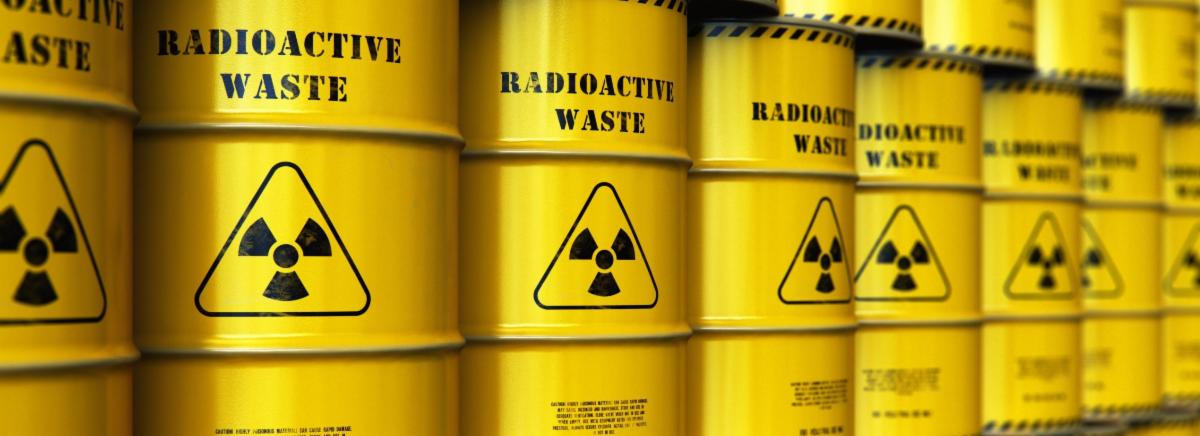
The Department of Electricity & Energy (DoEE) has appointed Riedewaan Bakardien as the new CEO of the National Radioactive Waste Disposal Institute (NRWDI), effective 1 April 2025. Bakardien, formerly Eskom's Chief Nuclear Officer, and subsequently a senior vice president at Ontario Power Generation, Canada, brings over 15 years of nuclear industry experience to the role. His mandate includes overseeing the management of radioactive waste, a critical component as South Africa considers expansion of its nuclear power generation capacity. Concurrently, DoEE Minister Kgosientsho Ramokgopa has established an international panel to assess South Africa's nuclear infrastructure and readiness for new nuclear projects, and to provide strategic guidance on integrating new nuclear power into the national energy mix. The move underscores the government's ambitions to address energy security challenges through diversified sources. However, these developments are not without controversy. Critics question the transparency and timing of the initiatives, especially given South Africa's recent history of energy mismanagement and corruption scandals. The appointment of Bakardien and the formation of the advisory panel come at a time when the nation still grapples with intermittent rolling blackouts and public skepticism toward large-scale energy projects. Furthermore, South Africa's openness to nuclear project bids from countries like Russia and Iran has raised geopolitical concerns. Engaging with these nations could strain relations with Western allies and complicate international partnerships. The government's pursuit of nuclear energy, while potentially beneficial for energy security in the long-term, must navigate a complex landscape of domestic apprehension and global diplomacy. As South Africa considers its nuclear future, the effectiveness of its leadership choices and the transparency of its processes will be under intense scrutiny, both at home and abroad.
6. Leadership uncertainty at South Africa’s IPP Office raises concerns.
In a move that has raised eyebrows across the energy sector, the Development Bank of Southern Africa (DBSA) has posted a vacancy for the Head of the Independent Power Producers Office (IPPO), raising concerns over the future leadership of South Africa's power procurement initiatives. The IPPO, initially established to drive the Renewable Energy IPP Procurement Programme (REIPPPP), has been instrumental in procuring energy projects of various technologies for integration into the national grid. The advertisement for a new IPPO head raises questions about the position of the current leader, Tshifhiwa (Bernard) Magoro, and the continuity of critical energy programmes. Under Magoro's tenure, the IPPO faced challenges including legal disputes and procurement controversies. Notably, significant portions of the Risk Mitigation IPP Procurement Programme (RMIPPPP) and REIPPPP Bid Windows 5 and 6 to failed to reach financial close, and delays are being experienced in new coal, gas-to-power, nuclear and renewable energy procurements. The timing of this uncertainty comes as the Department of Electricity & Energy (DoEE) is due to be operationalised as a separate ministry from the former Department of Mineral Resources & Energy (DMRE) on 1 April 2025, with new appointments and its first operational budget. The lack of transparency surrounding Magoro's position and the abrupt search for new leadership suggests the possibility of deeper issues within the energy procurement framework. Stakeholders in the energy sector are seeking clarity and assurances that the transition will not further disrupt the already embattled energy sector. Government commitments to a sustainable energy future hinge on effective and transparent operation of the IPPO. Stakeholders are watching closely and looking to the DBSA and DoEE to provide clarity and certainty in order to maintain confidence in South Africa's renewable energy, energy storage, gas-to-power and transmission system development trajectory.
| | |
7. Major renewable energy projects continue unabated over last two weeks.
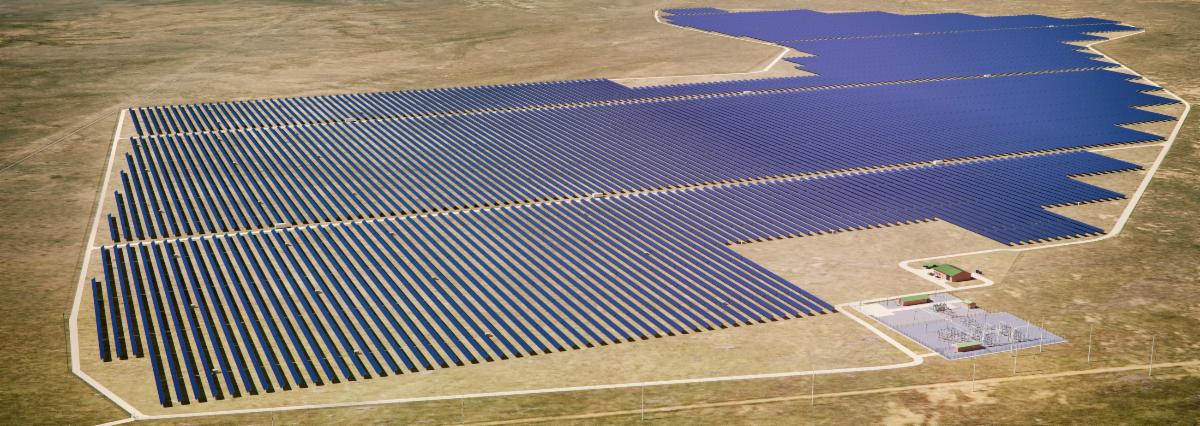
Ongoing announcements of a number of major renewable energy project developments across South Africa's mining and industrial landscape have continued unabated over the past two weeks, signalling robust momentum in respect of private sector wheeling and power trading solutions. Ivanplats, a subsidiary of Canada’s Ivanhoe Mines, has entered into a ten-year agreement with Enpower Trading to supply 48.3 GWh of green electricity per year to its Platreef palladium, rhodium, nickel, platinum, copper and gold projects in Limpopo province. The electricity will be wheeled from SolarAfrica Energy’s 342 MW SunCentral solar PV plant in De Aar, located in the Northern Cape province of South Africa. This partnership underscores the mining sector's commitment to reducing its carbon footprint by integrating renewable energy sources into its operations. PPC Cement has finalised a long-term contract with Yellow Door Energy to provide solar PV generated electricity to four of its plants. The solar power agreement will see the construction of a 24.5 MWp dedicated solar facility aiming to supply approximately 30% of the energy requirements for PPC's operations, thereby enhancing sustainability and reducing reliance on the national grid. Mulilo Energy has achieved financial close on the groundbreaking 75 MW Du Plessis Dam Solar PV2 facility in partnership with H1 Capital, and will supply about 248 GWh to energy trader Etana Energy per year. Utilising an innovative aggregator model, the project consolidates demand from multiple buyers, facilitating the development of large-scale renewable energy infrastructure. This approach not only accelerates the adoption of clean energy but also sets a precedent for future collaborative ventures in the sector. These developments reflect a growing momentum in South Africa's renewable energy sector, driven by both private and public entities committed to diversifying the country's energy mix and promoting environmental sustainability.
| | |
Independent Energy Pool (IEP Global)
Independent Energy Pool (IEP Global) is a business-to-business energy pool, allowing energy users and energy traders to buy and sell electricity. IEP's ecosystem allows transacting of electricity in a balanced and standardised environment. The pool incorporates the ability to trade renewable energy certificates, as well as the tracking and reporting of ESG criteria.
| | |
EE Business Intelligence
EE Business Intelligence strives to be a positive formative influence on policy, economic, social, regulatory, standardisation, training and business development in the energy, electricity sectors of Africa. Its activities and services include thought leadership, analysis, research, consulting, special assignments, business intelligence, strategic event facilitation and management, and public, corporate and media speaking engagements and commentary.
| | SHARE THIS ON SOCIAL MEDIA | | | | |