| |
Energy, electricity and ICT for Africa
| | News and announcements from EE Business Intelligence | | |
You are receiving this email because of your past interactions with EE Business Intelligence and
EE Publishers. To unsubscribe, please click the SafeUnsubscribe link at the bottom of this email.
| | Roundup of major energy and electricity news and developments: 3 March to 16 March 2025 | |
1. EU pledges R94bn to South Africa amid global trade tensions.
2. Budget clarifies some government intentions concerning energy and electricity.
3. South Africa's National Treasury reduces Eskom debt relief package by over R20bn.
4. Red Rocket reaches financial close for South Africa’s largest wind farm.
5. Mpumalanga launches agrivoltaics tender to boost renewable energy and agriculture.
6. Final demise of South Africa’s solar water heater programme, costing R325m.
To see an archive of all energy and electricity sector roundups to date, please visit www.eebi.co.za/news
To reach 20 000+ energy professionals in the region, please visit: www.eebi.co.za/newsletter-advertising
| | |
1. EU pledges R94bn to South Africa amid global trade tensions.
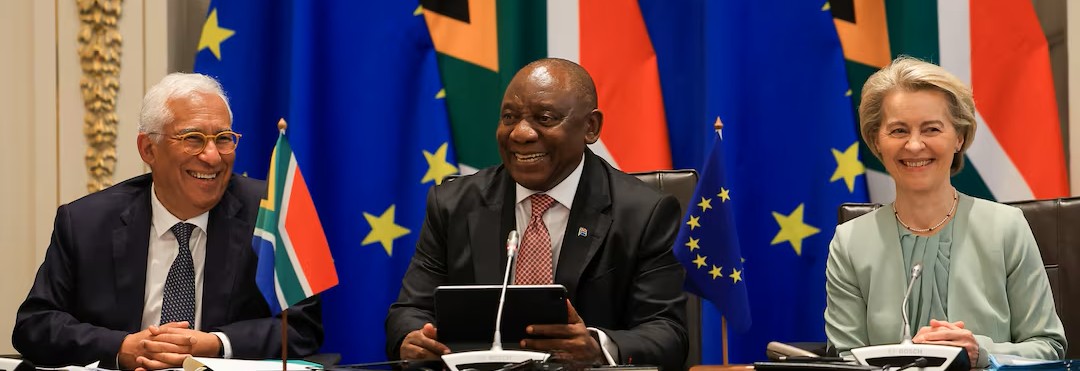
The European Union (EU) has announced a landmark €4.7bn (R94bn) investment package for South Africa, aimed at accelerating clean energy transitions, boosting vaccine manufacturing, and enhancing digital and physical infrastructure. The package, unveiled during a high-level EU-South Africa summit in Pretoria, marks a significant step in strengthening economic ties between the two partners. European Commission President Ursula von der Leyen praised South Africa as a “strategic ally” and highlighted the deal’s potential to advance both economic growth and climate resilience in the region. “This investment will not only drive South Africa’s shift to renewable energy but also create new opportunities in local manufacturing and connectivity,” Von der Leyen said. The announcement comes at a crucial moment, as geopolitical tensions escalate following former US President Donald Trump’s increasingly confrontational stance on international trade. The EU’s move is widely seen as an effort to deepen engagement with South Africa amid shifting global alliances. South African President Cyril Ramaphosa welcomed the investment, emphasising its importance in tackling energy shortages and economic stagnation. “This is a strong vote of confidence in South Africa’s future,” Ramaphosa said, noting that the funds would help stabilise the country’s embattled power sector and expand domestic vaccine production. The package includes financing for infrastructure projects and technical support for Eskom and other renewable energy initiatives, reinforcing South Africa’s commitment to reducing carbon emissions. With South Africa seeking long-term energy security and economic revitalisation, the EU’s multibillion-rand pledge signals a deepened strategic partnership in an increasingly fragmented global economy.
2. Budget clarifies some government intentions concerning energy and electricity.
In the 2025 budget speech on 12 March 2025, Finance Minister Enoch Godongwana outlined initiatives aimed at transforming South Africa's energy and electricity sectors. Earlier reforms facilitated a substantial pipeline of generation projects totaling 22.5 GW, with over 10 GW of these formally registered with NERSA. To further bolster energy infrastructure, government plans to launch the Independent Transmission Programme later this year, with the IPP Office issuing an RFI in July and an RFP in November for a multi-line transmission package. A credit guarantee vehicle is set to be launched in 2026 to attract private capital and reduce investment risks. Initially, this mechanism will focus on supporting independent transmission projects to address existing deficits. Recognising the financial pressures faced by local government, the equitable share allocated to them by National Treasury is projected to increase from R99.5bn in 2024/25 to R115.7bn by 2027/28. In the 2025/26 fiscal year, approximately 83% of this equitable share is intended to fund a free basic services package valued at R610 per indigent household per month to 11.2-million indigent households. Government is also considering reforms to ensure that the money for free basic services reaches the intended recipients and is not misappropriated by municipalities. Government is also implementing reforms in respect of revenue-generating services such as water, sanitation, electricity and refuse removal to enhance the efficiency and financial viability of municipalities. These reforms aim to enhance the efficiency and financial viability of municipalities. Collectively, these measures reflect a more comprehensive approach to revitalising South Africa's energy sector, promoting private investment and strengthening local government capacities, all of which are essential for the country's economic advancement and social well-being.
| | |
3. South Africa's National Treasury reduces Eskom debt relief package by over R20bn.
South Africa’s National Treasury has announced a reduction of more than R20bn in its debt relief package for Eskom, citing fiscal constraints and the need to streamline government borrowing. In his budget speech on 12 March 2025, Finance Minister Enoch Godongwana, attributed the savings to a simplification of the government’s original R254-billion debt relief plan for the struggling power utility. Initially structured as a three-year program aimed at strengthening Eskom’s balance sheet and funding necessary maintenance, the package was expected to culminate in 2025/26 with a final allocation of R40bn. However, by the end of March 2025, the government will have advanced R140bn in debt relief, R4bn less than originally projected, due to Eskom’s failure to meet the deadline for disposing of the Eskom Finance Company. Looking ahead, the government had planned a takeover of R70bn of Eskom’s debt in 2025/26. However, Eskom and National Treasury have now agreed to replace this debt takeover with direct payments by National Treasury of R39bn of Eskom debt due on 2 April 2026 and R10bn due in 2027/28. Eskom CFO Calib Cassim stated that this new arrangement ensures the utility receives around R50bn within three years rather than stretching the debt relief over a decade. This, he says, benefits both Eskom and the government’s borrowing requirements. Over a five-year period, the government will have provided R230bn in loans to Eskom – R24bn less than initially projected. While this move eases pressure on public finances, Cassim warned that mounting municipal arrears, now exceeding R100bn, could undermine Eskom’s financial stability despite the relief package.
4. Red Rocket reaches financial close for South Africa’s largest wind farm.
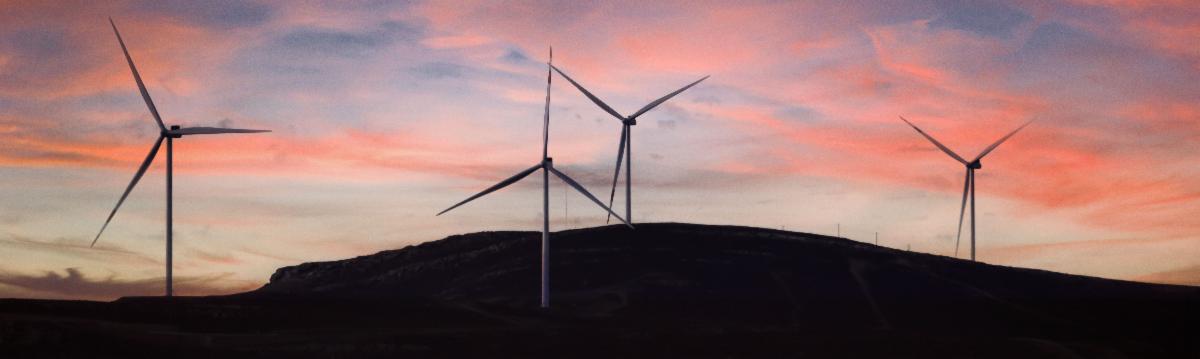
Red Rocket has reached financial close on the first 242 MW phase of the Overberg Wind Farm, a major renewable energy project in South Africa’s Western Cape near Swellendam. The wind farm will wheel clean electricity to Rio Tinto’s Richards Bay Minerals (RBM) under a 20-year power purchase agreement (PPA), marking a significant step in reducing RBM’s reliance on coal-fired power. The Overberg Wind Farm will be built in two phases, eventually reaching 380 MW in total capacity, and delivering an estimated 750 GWh per year to RBM. The first phase will feature 39 Goldwind turbines, with construction scheduled to begin in 2025 and electricity delivery expected by December 2026. The project is financed by a consortium that includes Absa Bank, Standard Bank and the Development Bank of Southern Africa (DBSA). This deal is RBM’s third renewable energy agreement with Red Rocket, increasing its total contracted renewable energy capacity to approximately 500 MW. Through these agreements with Red Rocket, RBM has also secured power from the 130 MW Bolobedu Solar PV project and the 140 MW Khangela Emoyeni Wind Farm. Combined, these projects are expected to reduce RBM’s greenhouse gas emissions by 60%, with the Overberg Wind Farm alone contributing a 30% reduction. RBM Managing Director Werner Duvenhage emphasised the importance of renewable energy in RBM’s decarbonisation strategy, stating, “We are taking real action to displace coal-generated electricity.” Red Rocket CEO Matteo Brambilla called the project a “major step” in South Africa’s energy transition. This partnership underscores a growing commitment to sustainable industrial operations, positioning RBM as a leader in South Africa’s shift toward green energy.
| | |
5. Mpumalanga launches agrivoltaics tender to boost renewable energy and agriculture.
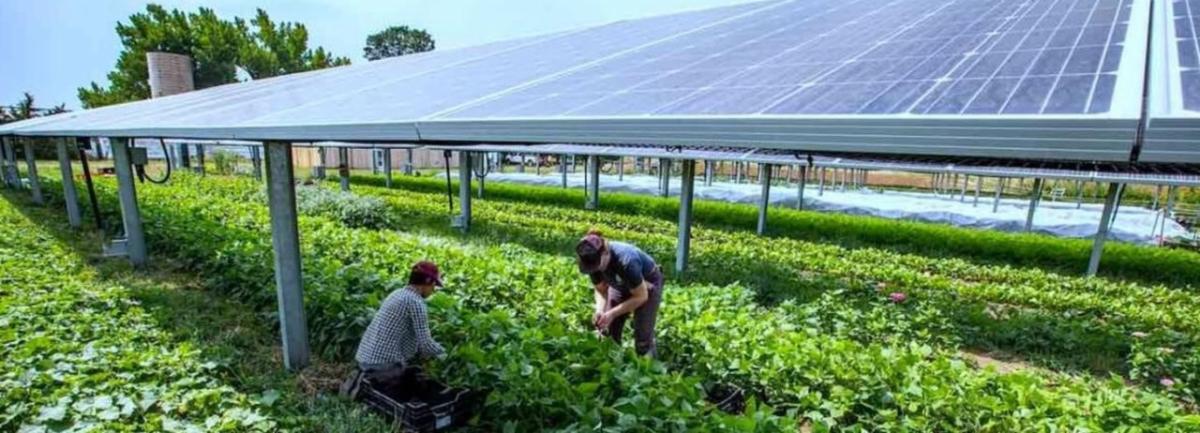
The Mpumalanga provincial government in South Africa has launched a new tender for agrivoltaics development, inviting bidders to integrate solar energy generation with agricultural activities. This initiative aims to accelerate South Africa’s transition to renewable energy while supporting local farmers. The project, which is part of the province’s broader sustainability strategy, seeks to optimise land use by installing solar panels over farmlands, allowing crops to grow beneath them while simultaneously generating electricity. Officials say the approach will enhance food security, create jobs and reduce strain on the national power grid. “This is a win-win solution that aligns with our energy and agricultural priorities,” said a government spokesperson. “By combining these two critical sectors, we can improve energy security while safeguarding rural livelihoods.” The tender invites both local and international developers to submit proposals for agrivoltaic projects of varying scales. Special consideration will be given to projects that demonstrate a clear socio-economic impact, such as job creation and skills development in rural communities. Mpumalanga, historically reliant on coal mining, is positioning itself as a leader in South Africa’s just energy transition. This agrivoltaics initiative is expected to serve as a model for other provinces looking to diversify their energy sources and mitigate climate change impacts. The food-water-energy nexus is a framework that examines the interconnectedness and interdependence of food, water and energy systems, highlighting the synergies and trade-offs between them for sustainable resource management. With the deadline for proposals set for the coming months, industry players are closely watching how this ambitious plan unfolds, hoping it will pave the way for broader adoption of agrivoltaics across South Africa.
6. Final demise of South Africa’s solar water heater programme, costing R325m.
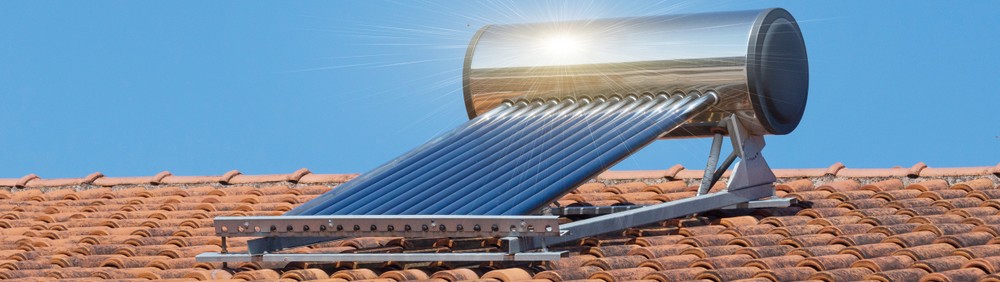
South Africa’s National Solar Water Heater Programme administered by the Department of Mineral Resources and Energy (DMRE) has been called a complete failure after wasting R325m. Launched in 2008 as a flagship project to reduce household electricity demand and promote renewable energy adoption, the programme was intended to roll out 1-million solar water heaters across the country. Instead, it has been marred by mismanagement and poor planning. Despite its ambitious goals, thousands of solar water heaters remain unused in warehouses or have been installed improperly. Industry experts and researchers have long pointed to administrative inefficiencies and a lack of technical oversight as key reasons for the programme’s collapse. A study published on ResearchGate in 2019 outlined multiple causes of failure, including flawed procurement processes, lack of public awareness, and an inadequate skills base to install and maintain the units. In many instances, low-income households were left without functioning systems, undermining the project’s intended social and economic impact. Local businesses that were promised contracts to supply and install the solar hot water heaters suffered financial losses as the government failed to follow through on its commitments. Critics argue that the lack of a clear implementation strategy and poor coordination between different government departments led to the initiative’s downfall. “This was a missed opportunity to provide affordable, energy-efficient water heating solutions to thousands of households,” said an energy policy analyst. “Instead, it has become another costly lesson in how not to run a large-scale renewable energy project.” With no tangible benefits to show for the R325m spent, calls for transparent approach to public-sector energy initiatives are growing.
| | |
Independent Energy Pool (IEP Global)
Independent Energy Pool (IEP Global) is a business-to-business energy pool, allowing energy users and energy traders to buy and sell electricity. IEP's ecosystem allows transacting of electricity in a balanced and standardised environment. The pool incorporates the ability to trade renewable energy certificates, as well as the tracking and reporting of ESG criteria.
| | |
EE Business Intelligence
EE Business Intelligence strives to be a positive formative influence on policy, economic, social, regulatory, standardisation, training and business development in the energy, electricity sectors of Africa. Its activities and services include thought leadership, analysis, research, consulting, special assignments, business intelligence, strategic event facilitation and management, and public, corporate and media speaking engagements and commentary.
| | SHARE THIS ON SOCIAL MEDIA | | | | |