| |
Energy, electricity and ICT for Africa
| | News and announcements from EE Business Intelligence | | |
You are receiving this email because of your past interactions with EE Business Intelligence and
EE Publishers. To unsubscribe, please click the SafeUnsubscribe link at the bottom of this email.
| | Roundup of major energy and electricity news and developments: 4 August to 17 August 2025 | |
1. Minister warns Eskom: Drop trader court fight and avoid market reform setback.
2. To be, or not to be: Mozal at the crossroads as electricity deal falls through.
3. OUTA recommends homeowners hold off with solar PV system registration.
4. Oil and gas exploration derailed: Environmental activists score another legal win.
5. Seriti Green, Eskom Green and AIIM propel South Africa’s renewables sector forward.
6. Carbon clampdown: South Africa gazettes tougher 2035 targets and emissions rules.
7. South Africa’s nuclear curveball: Duynefontein greenlit, while activists hit the alarm.
8. eThekwini approved to procure 400 MW of power, but questions remain on gas supply.
To see an archive of all energy and electricity sector roundups to date, please visit www.eebi.co.za/news
To reach 20 000+ energy professionals in the region, please visit: www.eebi.co.za/newsletter-advertising
| | |
1. Minister warns Eskom: Drop trader court fight and avoid market reform setback.
Energy & Electricity Minister Kgosientsho Ramokgopa has doubled down on his call for Eskom to abandon its legal challenge against electricity trading licences, warning that litigation threatens to derail South Africa’s energy reform momentum. Eskom is challenging the approval by the National Energy Regulator of South Africa (NERSA) of five private electricity trading licences, arguing that the move represents a fundamental shift in policy not subject to public consultation. But Minister Ramokgopa insists reform is “irreversible” and that Eskom must adapt to a liberalised electricity market rather than resist it. “We cannot build the future with one foot stuck in the past”, he said last week, urging the utility to focus instead on grid reliability and financial sustainability. The standoff has exposed deep divisions. Business Unity South Africa (BUSA) and Business Leadership South Africa (BLSA) have condemned Eskom’s court action as anti-competitive and damaging to investor confidence. In a joint statement, the business bodies said Eskom was clinging to outdated monopolistic practices that stifle private sector participation and jeopardise much-needed new investment in generation and trading. However, the South African Local Government Association (SALGA) has thrown its weight behind Eskom, warning that unregulated private trading could erode municipal revenues derived from electricity distribution. SALGA argues that unless a sustainable model for municipalities is crafted, the reform agenda risks creating fiscal holes at the local level. Minister Ramokgopa has acknowledged municipal concerns but maintains that litigation is not the answer. Instead, he has called for constructive dialogue to balance the interests of Eskom, municipalities and electricity traders while advancing market liberalisation. The outcome of Eskom’s legal strategy could determine whether South Africa’s long-delayed electricity market reforms gain traction – or stall under legacy resistance.
| |
2. To be, or not to be: Mozal at the crossroads as electricity deal falls through.
South32 has sounded the alarm: its Mozal aluminium smelter in Mozambique is set to be placed under care and maintenance in 2026 unless a new affordable power supply deal is struck. The company announced a massive US $372m impairment, citing bleak prospects of securing electricity beyond March 2026. CEO Graham Kerr warned that the proposed tariffs would render Mozal “internationally uncompetitive”. Production is already set to fall sharply, with South32’s share forecast to plunge from 355 kilotons in 2025 to just 240 kilotons in 2026. The looming cutback threatens up to 5200 direct jobs and a further 22 000 indirect livelihoods, undermining an operation that contributes roughly 3 – 4% of Mozambique’s GDP and 15% of export earnings. The crisis highlights the vulnerability of aluminium smelters in Southern Africa to energy pricing. In South Africa, just a handful of energy-intensive industrial users – including South32’s Hillside smelter in Richards Bay – consume 17% of Eskom’s electricity, often at heavily discounted rates. These special deals, estimated to cost Eskom about R10bn in lost revenue in 2025, are increasingly under scrutiny as power utilities and governments seek to rebalance energy markets. Adding to the pressure, Carbon Border Adjustment Mechanisms (CBAMs) are reshaping global aluminium trade. Mozal and Hillside, both powered by South Africa’s predominantly coal-heavy grids, face rising carbon costs when exporting to the EU, UK and other jurisdictions. Without affordable, cleaner energy, analysts warn these smelters risk becoming stranded assets – caught between unsustainable electricity deals at home and punitive carbon tariffs abroad. As negotiations with Mozambique’s Hidroeléctrica de Cahora Bassa (HCB) continue, the fate of Mozal may prove a test case for whether Southern Africa can reconcile industrial growth with the twin demands of energy security and decarbonisation.
| |
3. OUTA recommends homeowners hold off with solar PV system registration.
In a bold move, the Organisation Undoing Tax Abuse (OUTA) is recommending that South Africans with rooftop solar PV and battery energy storage systems should hold off from registering these installations with Eskom or municipalities – for now. The recommendation follows a “constructive” meeting with Eskom Distribution held on 8 August 2025, during which OUTA raised concerns over what it labelled “restrictive and costly” registration and compliance requirements for low‑voltage, small‑scale embedded generation (SSEG) systems installed on a customer’s premises “behind the meter”. OUTA suggests that Eskom’s registration and compliance rules are irrational, unfair, anti-poor and discriminatory against households and businesses who have taken action or intend to take action to reduce their energy consumption from the grid. In particular, OUTA argues that current rules are prejudicial and discriminatory towards prepaid electricity customers on “Homelight” tariffs, postpaid customers on “Homepower” tariffs, and customers on time-of‑use “Homeflex” tariffs, who have invested in solar and battery solutions but do not export energy back into the grid. OUTA suggests that Eskom and municipal registration and compliance rules may be overstepping their regulatory authority, safety mandate and enforcement authority. According to OUTA, the Occupational Health and Safety (OHS) Act, the associated Electrical Installation Regulations, and revisions underway to the mandatory SABS Code of Practice for Low-Voltage Electrical Installations, SANS 10142-1, already provide adequate and lawful safety, technical and compliance protocols – making additional Eskom‑mandated sign‑off by ECSA‑registered professionals unnecessary. Eskom Distribution has agreed to revisit and clarify the contested requirements and respond in due course. Meanwhile, OUTA plans to continue engaging with Eskom, the Department of Employment & Labour, the National Energy Regulator of South Africa (NERSA), and the SANS 10142-1 working group, to ensure a fairer, pragmatic path forward.
| |
4. Oil and gas exploration derailed: Environmental activists score another legal win.
In a judgment delivered on 13 August 2025, the Western Cape High Court quashed the environmental authorisation enabling offshore oil and gas exploration by TotalEnergies and Shell in Block 5/6/7, located between Cape Town and Cape Agulhas. The decision marks a victory for environmental groups and coastal communities who challenged the process and substance of the approval. Judge Nobahle Mangcu‑Lockwood ruled that the environmental impact assessment (EIA) was grossly deficient – failing to fully scrutinise the economic fallout of potential oil spills, ignoring climate change implications, and neglecting compulsory public participation. Crucially, members of the public were not given access to the oil spill and blowout contingency plans until after authorisation was issued, depriving communities of their chance to contribute meaningfully. The judgment requires TotalEnergies (and its potential successor, Shell) to undertake fresh, comprehensive assessments and reopen public consultation before any environmental approval can be reconsidered. Assessments must now address cross-border risks, lifecycle climate effects, coastal protection regulations, and detailed spill response plans. Only then may a revised authorisation be considered. The Green Connection and Natural Justice, who spearheaded the legal challenge, welcomed the judgment as a triumph for transparency, precaution and environmental justice – especially for small-scale fishers, tourism operators, and other coastal livelihoods. Natural Justice’s Melissa Groenink‑Groves affirmed that the ruling reinforces the mandate that companies must adhere to due process and ensure public voices are heard. While the court has set aside the existing authorisation permit, it granted TotalEnergies the opportunity to resubmit a more robust and legally compliant application. The company and its partners must now act on the court’s mandate – prioritising environmental integrity and public engagement before proceeding further.
| |
5. Seriti Green, Eskom Green and AIIM propel South Africa’s renewables sector forward.
Over the past two weeks, South Africa’s renewable energy landscape gained fresh momentum as Seriti Green secured significant project approvals; Eskom announced its intention to unlock untapped solar PV potential; and African Infrastructure Investment Managers (AIIM) completed a transfer of mature renewable energy assets. Energy & Electricity Minister Kgosientsho Ramokgopa lauded Seriti Green’s planned UmmBila‑Emoyeni 900 MW hybrid renewable energy project in Mpumalanga, calling it a beacon for South Africa’s just energy transition. Meanwhile, Seriti Green and the Energy Exchange of Southern Africa (EXSA) sealed a 15-year power purchase agreement (PPA) for a 155 MW wind farm within the UmmBila‑Emoyeni project, opening the regulatory path for construction. In the same period, Eskom Green issued a Request for Proposals (RFP) aiming to develop 291 MW of solar PV capacity at some of Eskom’s old coal-fired power stations in Mpumalanga. This move, part of a broader framework being prioritised ahead of Eskom Green’s formal launch, seeks to repurpose the utility’s aging coal-fired infrastructure with a greener energy mix. Also in the same period, the AIIM IDEAS Fund sold its stakes in three REIPPPP projects – Jeffreys Bay Wind (138 MW), Kalkbult Solar (73 MW) and Linde Solar (38 MW) – in a deal valued at over R750m. The assets, now in the hands of GAIA Renewables and existing partners, underline the maturing secondary market for renewable infrastructure in South Africa. The projects have collectively supported over R100m in local community development – a testament to their dual economic and social returns. These developments in the last two weeks paint a picture of an accelerating just energy transition: Seriti Green driving greenfield capacity; Eskom transforming coal-fired power to solar assets; and AIIM recycling capital through mature project exits.
| | |
6. Carbon clampdown: South Africa gazettes tougher 2035 targets and emissions rules.
In a move to elevate its climate ambitions, the South Africam government has published draft regulations in terms of the Climate Change Act, 2024, introducing a mandatory carbon budgeting and mitigation system for high-emission industries. In addition, government has published a draft enhanced emissions reduction trajectory in terms of the Paris Agreement for the years 2026 to 2035. The draft regulations require large emitters to operate within sector-specific carbon budgets, submit detailed mitigation plans, and adhere to annual reporting and independent verification – failing which they face harsher penalties, including carbon tax hikes, fines of up to R10m, or 10 years’ imprisonment. The regulations will have immediate implications for the mining, steel, cement, chemicals and energy sectors, which account for the majority of the country’s greenhouse gas emissions. Heavy emitters such as Eskom, Sasol and large mining houses will be required to reconfigure production processes, scale up renewable energy use, and adopt carbon capture or efficiency measures to stay within their allocated budgets. Regulators will rely on independent auditors to verify company reports, with enforcement driven by the Department of Forestry, Fisheries & the Environment (DFFE). In addition, the draft of South Africa’s second Nationally Determined Contribution (NDC) in terms of the Paris Agreement will maintain the country’s existing 2026 – 2030 emissions target range of 350 – 420 Mt CO₂e and now adds a stricter 2031 – 2035 goal of 320 - 380 Mt CO₂e, signalling stronger long-term commitment. The Presidential Climate Commission (PCC) has welcomed the move but called for inclusive dialogue to refine the NDC, warning that enforcement must balance environmental urgency with economic resilience. This dual release – rigorous carbon controls backed by tangible targets – marks a shift toward a low-carbon economy anchored in accountability and transition readiness.
| | |
7. South Africa’s nuclear curveball: Duynefontein greenlit, while activists hit the alarm.
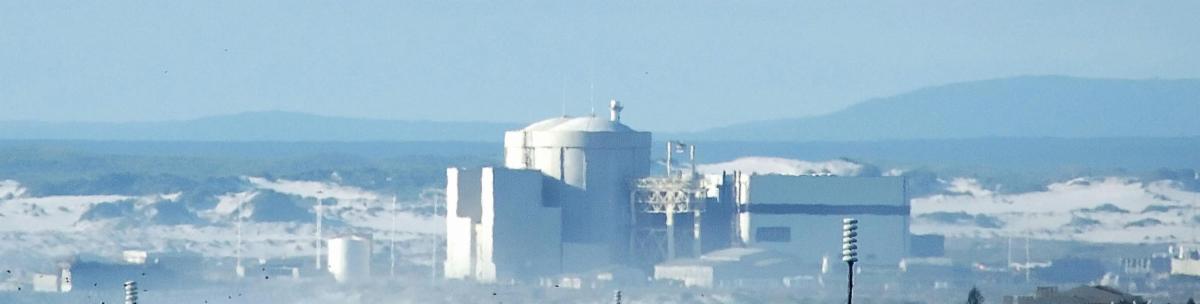
A further step has been taken on the road to South Africa’s second nuclear power station – despite vocal opposition from environmental and civil society activists. Environment Minister Dion George has upheld a 2017 environmental authorisation for Eskom to build a 4000 MW nuclear power plant at Duynefontein, adjacent to the existing Koeberg facility in the Western Cape province of South Africa, marking a pivotal moment in the nation’s energy strategy. The Nuclear Energy Corporation of South Africa (Necsa) lauded the decision as a critical step in bolstering energy security and advancing a “balanced energy mix” - one that it says aligns with climate-friendly, socio-economic development goals. But the authorisation hasn’t gone unchallenged. A coalition of environmental organisations has decried the plan, voicing concerns over ecological and safety implications near Cape Town. Critics argue the government’s approval skirts robust oversight and downplays threats to coastal communities. Despite the green light, Eskom must still navigate a gauntlet of statutory approvals – from the National Nuclear Regulator to water-use licences – before spades for nuclear reactors can turn ground. With Koeberg already supplying a modest share of the national grid, the new plant represents a major bet on the future of new nuclear power in South Africa. Question marks remain around the readiness of South Africa for a nuclear new build, as well as its cost, affordability, business case and business model, characterised by long construction periods, and cost and time overruns. The Integrated Resource Plan for electricity, IRP 2025, is still not finalised, and a request for proposals from nuclear vendors has not been issued yet, leaving uncertainty around the price, the required cost-benefit analysis by National Treasury, and the construction, operation and ownership models.
| | |
8. eThekwini approved to procure 400 MW of power, but questions remain on gas supply.
eThekwini Municipality has become the first metro in South Africa to secure approval to procure its own generation capacity – a milestone that could reshape local energy resilience. A Section 34 ministerial determination published in the Government Gazette, with the concurrence of the National Energy Regulator of South Africa (NERSA), authorises the city to develop 100 MW of solar PV and 300 MW of natural gas-fired power generation. The move, hailed by Mayor Mxolisi Kaunda as “a new era of municipal-led generation”, is aimed at reducing dependence on Eskom, cutting load-shedding, and enabling long-term energy security. The solar project is expected to draw strong interest from independent power producers, aligning with national decarbonisation goals. However, significant caution is warranted. While the Section 34 determination is an important planning and regulatory step, it does not guarantee that financial close can or will be achieved, or that construction will proceed. In particular, the 300 MW gas component raises red flags: there is no secured supply of new gas for power generation in eThekwini, no liquified natural gas (LNG) import, storage and regassification plant in Durban, and no transmission pipelines in place to deliver the fuel. Industry experts warn that without a guaranteed and competitively priced gas source, the project risks stalling before it gets off the ground. The wider uncertainty in the gas market also compounds the risks. The municipality may face delays in attracting investors unless a clear procurement framework and comprehensive, integrated supply solutions are presented. For now, eThekwini’s determination marks a symbolic breakthrough in the shift toward decentralised municipal generation. But the practical hurdles ahead – particularly on gas – mean the city’s ambitious plans remain far from a done deal.
| | |
Independent Energy Pool (IEP Global)
Independent Energy Pool (IEP Global) is a business-to-business energy pool, allowing energy users and energy traders to buy and sell electricity. IEP's ecosystem allows transacting of electricity in a balanced and standardised environment. The pool incorporates the ability to trade renewable energy certificates, as well as the tracking and reporting of ESG criteria.
| | |
EE Business Intelligence
EE Business Intelligence strives to be a positive formative influence on policy, economic, social, regulatory, standardisation, training and business development in the energy, electricity sectors of Africa. Its activities and services include thought leadership, analysis, research, consulting, special assignments, business intelligence, strategic event facilitation and management, and public, corporate and media speaking engagements and commentary.
| | SHARE THIS ON SOCIAL MEDIA | | | | |