Leadership often begins long before someone holds a title. It starts when a person recognizes their ability to make a difference and decides to step forward.

At the NC Rural Center, cultivating authentic leadership is a core value and a guiding principle of our leadership development work. We believe people are most effective in serving their communities when they understand their own strengths, values, and purpose. From that foundation, they can create clarity, build trust, and inspire others to act.


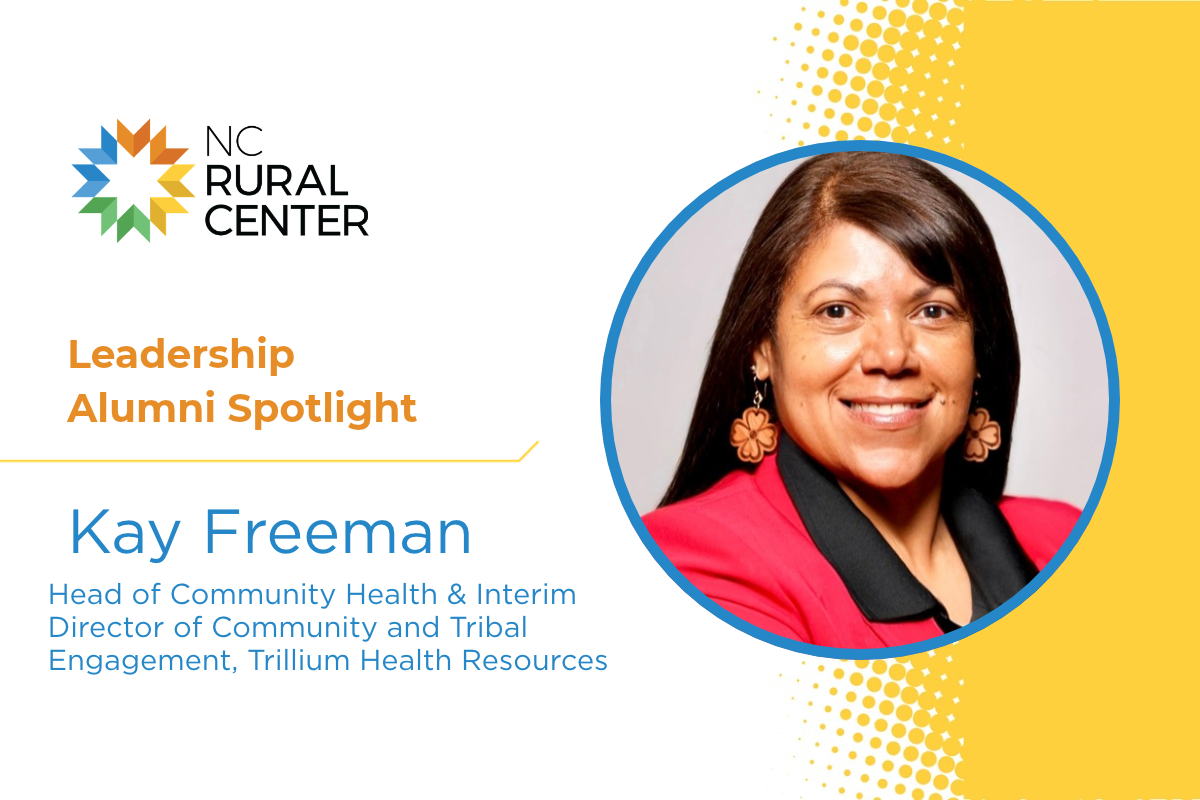
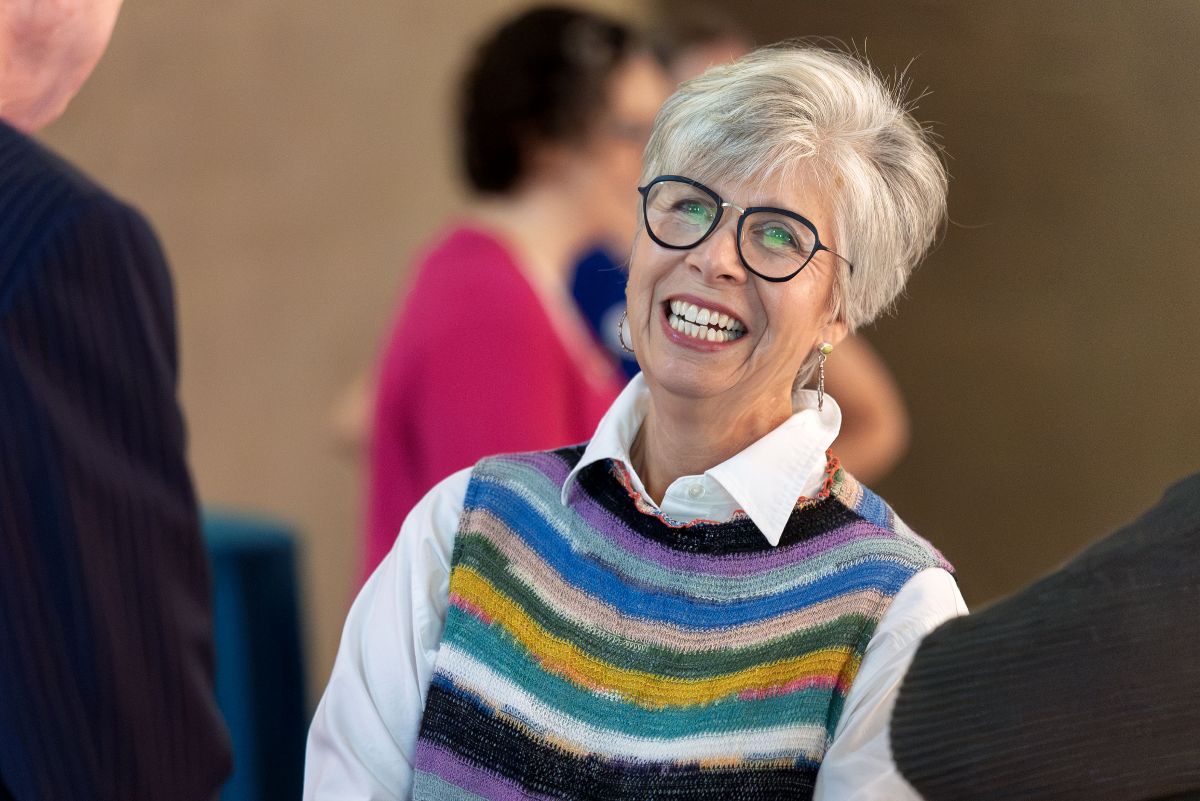
That philosophy is on full display this week as a new cohort gathers for the second session of the Rural Economic Development Institute (REDI), one of the Rural Center's longest-standing investments in strengthening local leadership across North Carolina. In this month's newsletter, you'll also meet Kay Freeman, a REDI alumna and leader at Trillium, who shares how the program helped her recognize her own potential and gain the confidence to lead in new ways.


As we celebrate the impact of leadership development, we're also asking for your voice in our advocacy effort. If you haven't already, please take a few minutes to complete our Rural Issues Poll. Your input helps ensure the priorities, challenges, and opportunities facing rural North Carolina continue to shape our work and advocacy in the year ahead.


Thank you for being part of our shared rural community.


Kay Freeman On Finding the Keys to
Step Into Leadership

When exactly do people become effective leaders?


For Trillium Health Resources Head of Community Health Kay Freeman, it’s “when you realize that leadership is about passing the baton.”


Kay has grown to see herself as a leader. It’s a realization that’s come from welcoming the growth of others and in herself as well. This change in thought helped her build a foundation ready for leadership.


“I don’t intend to hold anyone back in my role. My goal is to try to advance people to their highest potential,” she says.


Things began to shift during a stall in her career where she couldn’t see herself as someone with leadership potential.


Starting to say yes to collaboration and opportunity again and again helped things change gradually… and then transform in rapid fashion.

Listening Tour Recap

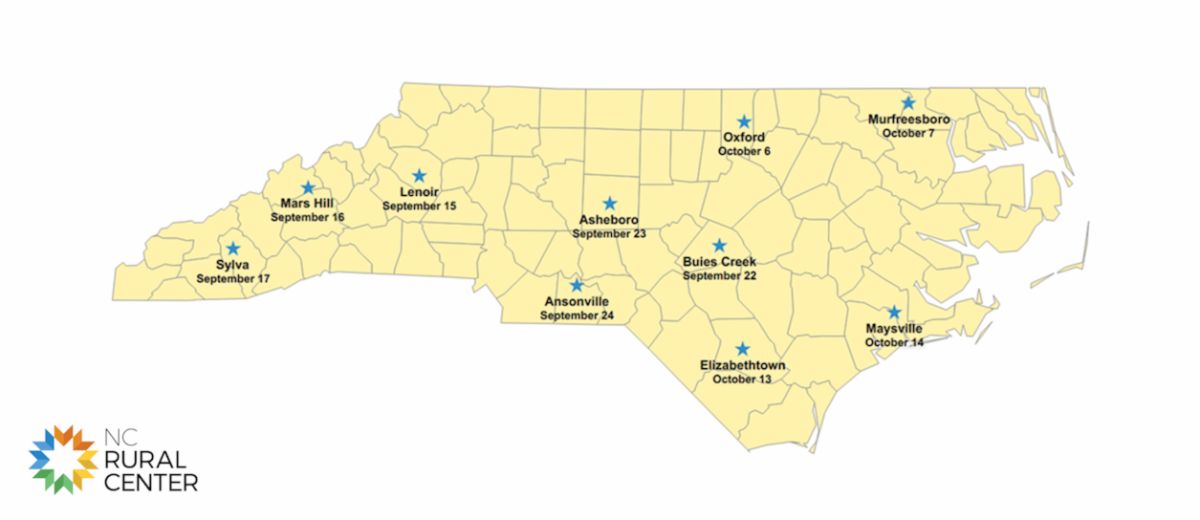
This fall, the NC Rural Center traveled across the state for our Rural Listening Tour, visiting 10 rural counties to hear directly from residents, partners, and community leaders about the issues that matter most to their communities. These conversations, along with feedback from our 2026 Rural Issues Poll, will help inform the Rural Center's 2027 Advocacy Platform.


We're grateful to the 255 people who joined us in person and shared their experiences, ideas, and priorities along the way.


Watch our Rural Listening Tour recap video to hear directly from our team about what they heard, saw and experienced throughout the tour.


Watch the video

Last Chance to Share Feedback With Us On the 2026 Rural Issues Poll!

If you still haven't taken our 2026 Rural Issues Poll yet, there are still a few days to share your thoughts with us. The answers you share in this poll will help us create our advocacy platform for 2027.


We've already received at least one answer from each of North Carolina's 100 counties and exceeded the number of responses we received for our 2024 Rural Issues Poll.


So far, Brunswick County leads the way with 52 responses, followed by Jones, Harnett, Wake, and Jackson. Perhaps your answer will help your county take the lead!


Help us better serve rural North Carolina today: www.surveymonkey.com/r/rural_issues_2026


Encuesta disponible en español: www.surveymonkey.com/r/rural_issues_2026_spanish


  • Additionally, if you're an alumnus of either Homegrown Leaders or our Rural Economic Development Institute (REDI), we'd love for you to provide feedback in the short survey we sent via email on Monday. If you haven't seen it yet, please check your email!

Celebrating Work that Matters

Our Chief Program Officer Chris Estes earned his master's degrees in social work and regional planning. He recently spoke with the UNC School of Social Work about his career efforts to strengthen rural communities across North Carolina and beyond.


He reflects in the interview on his time at UNC-Chapel Hill, how it shaped his career, and how the lessons he learned there continue to influence his work today.


You can read more about his journey as well as the work he's doing at the Rural Center at the link below.


Read the interview

NC Idea Ecosystem Summit 2026

We are a proud sponsor of the Ecosystem Summit 2026, happening on November 12-13, 2026, in Wrightsville Beach.


This conference brings together community leaders, entrepreneurs, and neighboring organizations to strengthen the impact of community entrepreneurs in North Carolina. Learn more about the summit and how to register by clicking the link below.


Find out more

NC Main Street and Small Town

Main Street Program Success

The NC Main Street & Rural Planning Center reported last month that since the start of the state's Main Street program in 1980, designated Main Street and Small Town Main Street communities have leveraged more than $6.6 billion in public and private investment in their downtown districts.


This investment supported more than 8,700 building rehabilitations and a net gain of more than 8,000 businesses and nearly 42,000 jobs.


To read the rest of the North Carolina Department of Commerce press release and learn more about the NC Main Street Program and the Small Town Main Street Program, including information about the programs' 2025-2026 work, click the link below.


Learn more

Congrats to Jennifer Tolle Whiteside

We'd like to share our congratulations to Jennifer Tolle Whiteside on her retirement!

For over 40 years, Jennifer has supported nonprofits across North Carolina, including twice serving as a member of our board. We're honored to have seen firsthand the difference she has made in communities over the years.


We're wishing her all the best in this next chapter!


Upcoming UNC School of Government

Development Courses

The UNC School of Government has a few upcoming courses that will address issues affecting rural communities. (Note: The school offers scholarship and discount opportunities for many of its courses.)


Development Finance Toolbox (Online)

December 8-10, 10 a.m.-3:30 p.m. 
Course Cost: $370


Program topics include:

  • Learn how local governments use different tools to support the community.
  • Explore partnerships and ways to attract private investment.
  • Discover how to identify and manage new funding opportunities.
  • How to attract private investment to Main Street.


Find out more


Community Development Academy (In person)

March 9-11 and April 6-8, 9 a.m.-5 p.m.

Course Cost: $935


Course topics include:

  • Community development finance
  • Affordable housing strategies and tools
  • Purchasing and contracting
  • Grants management


Find out more

WNC Prepared and Resilient

Communities Grant Program

The North Carolina Community Foundation's Disaster Relief Fund is accepting applications for the WNC Prepared and Resilient Communities Grant Program, which supports charitable organizations working to strengthen preparedness in Western North Carolina communities impacted by Hurricane Helene.


There is approximately $6 million available in funding, with awards up to $100,000 each.


Priority will be given to organizations serving the most severely impacted NC counties. Proposed projects should focus on building community preparedness and resilience rather than recovery efforts.


Applications are due by noon on Monday, December 14, 2026.


Learn more

Farmer Innovation Bridge

Farmer Innovation Bridge is a new initiative that will help North Carolina farmers tackle agricultural challenges and opportunities by connecting them with innovators.


The North Carolina Chamber Foundation will lead the program with support from the Golden LEAF Foundation and the North Carolina Tobacco Trust Fund Commission.


Learn more

One North Carolina Small Business Program

If your North Carolina-based organization has 1) applied for Small Business Innovation Research (SBIR) or Small Business Technology Transfer (STTR) Phase I funding and/or 2) received SBIR/STTR Phase I funding, you may be eligible for reimbursement or matching funds.


North Carolina’s One North Carolina Small Business Program compliments the SBIR and STTR programs, also known as America’s Seed Fund. SBIR/STTR funds are awarded by 11 federal agencies and support early-stage technology development and commercialization funding for small businesses worldwide. 


One North Carolina Small Business Program funding applications will be accepted until June 30, 2027, or until funds have been exhausted for the 2026-2027 fiscal year funding cycle. 


Learn more


Join the conversation

LinkedIn  Instagram  Facebook
LinkedIn Share This Email