|
“It’s just a little bit so I don’t have to worry about it.”
A little change in the trends on a trailing basis means a lot.
You should be concerned if the trend is going the wrong way. Investigate why.
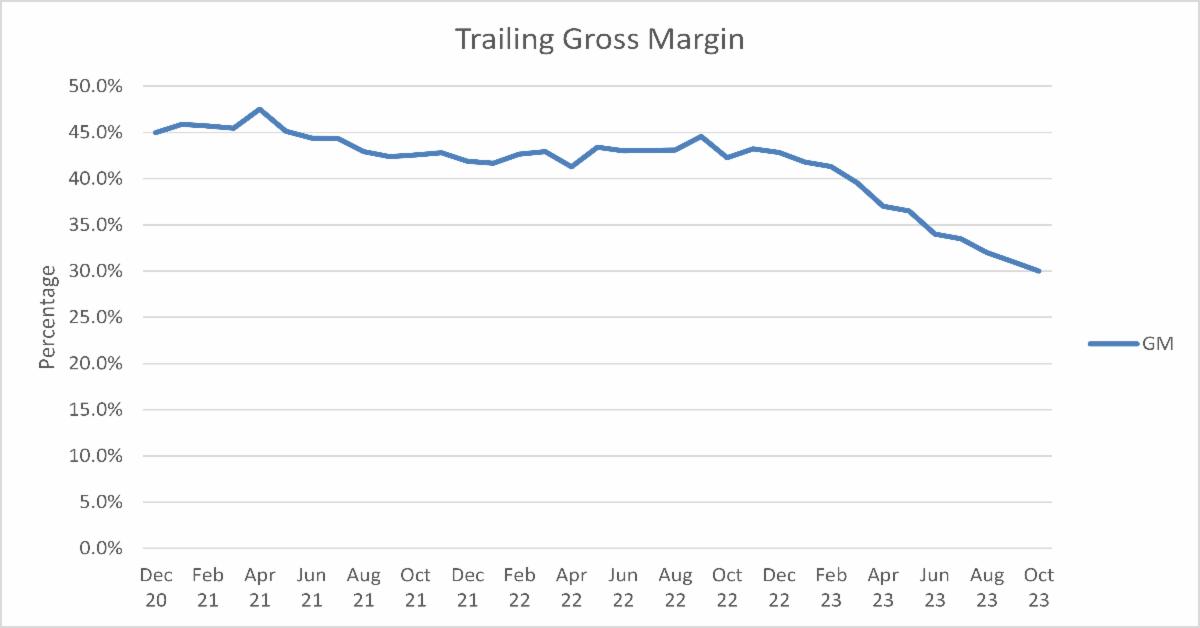
Your company’s gross margin trend should never look like the graph above.
This company’s gross margin has dropped from about 45% to 30%. Not a good trend. Why did it drop 15% - on a trailing basis? Yes, there are some months were gross margins can fluctuate depending on the type of work you are doing that month. Generally, the gross margins of maintenance are lower than the gross margins of service, projects, etc.
Direct costs are increasing – usually either suppliers have increased costs and prices have not been increased accordingly or productivity has decreased.
Check your supplier invoices to make sure that there hasn’t been a subtle price increase. Sometimes it is hard to see a 2% or 3% increase. However, that increase causes your profit to be lower.
If you have given raises, this could also be an explanation of the decreased gross margin. Remember that if you give the field a 5% increase in wages, the increase to your prices needs to be at least 6.5%. This covers, for most states, the increase in payroll taxes, worker’s comp, and other benefits. Raising staff wages increases the overhead trend line. These increases will also increase your prices to your customers.
Another place to look is job costing. If jobs are consistently taking longer than estimated, this could be a reason for the drop in gross margins. Do you have inexperienced crews who are taking longer to get the jobs done?
A slower revenue month is not the answer if your pricing is consistent in slower and busier months (gross margin should remain the same). However, if the company gave discounts in slower months, this could explain the drop in gross margin.
What about different mixes of business? For example, if you are doing more maintenance work in specific months and more repair/replacement work in other months, the monthly gross margin trends can fluctuate. However, the trailing trend lines take out all seasonality (these lines are 12 months of data taken a month at a time. For example, March 2026 gross margin trailing data point is April 2025 through March 2026 gross margins added together and the sum is divided by 12).
If you need to raise prices, then it would be best to raise them in busier times. Customers are less likely to shop when it is busy since they need the work done immediately to get and stay comfortable in their homes and offices. However, a 1% or 2% increase would not be as noticeable.
Come see me at:
ACCA – Las Vegas, NV – March 18, 2026 – The 10 Rules of Profit and the 10 Rules of Wealth - https://www.accaconference.com/
FRACCA - Orlando, FL - April 8, 2026 - The 10 Rules of Profit and the 10 Rules of wealth - 2026 FRACCA Conference - 25th Anniversary! - FRACCA Schedule
___________________________________________________________________________________
How financially fit is your business?
Click here to take this one minute assessment.
___________________________________________________________________________________
2026 In Person Class Schedules
I added a class:
Building Profit and Wealth - Save $700 when you subscribe to Financially Fit Business
- April 21-22, 2026 - Atlanta, GA
Note: I added this class because the January Atlanta class sold out. Here is your opportunity to attend in Atlanta.
Click Here for more information
|