|
Advocacy at a Glance
- Hosted a Government Affairs Committee meeting featuring the Texas Taxpayers and Research Association and representatives from Northside ISD.
- Continued meeting with City Council members to advocate for priorities that support the business community.
- Hosted the first candidate forum for Texas' 35th Congressional District with both candidates present.
- Continued monitoring updates from the U.S. Small Business Administration regarding proposed changes to industry size standards.
- Key Dates and Election Information
As 2026 draws to a close, the San Antonio Hispanic Chamber of Commerce is developing a state and federal agenda focused on strengthening businesses, advancing workforce development, expanding economic opportunity, and enhancing regional competitiveness. We will engage policymakers at every level, champion our members’ priorities, and ensure San Antonio’s business community has a strong voice in critical policy discussions.
Election Day is Tomorrow, November 3! Make your voice count. Before heading to the polls, confirm your voter registration status, find your polling location, check voting hours, and review election information at VoteTexas.gov.
The San Antonio Hispanic Chamber of Commerce is a nonpartisan organization and does not endorse candidates for public office.
📌 A quick note: This newsletter is filled with valuable information and may be clipped by your email provider. If you reach the bottom and see "[Message Clipped] View entire message," be sure to click it so you don't miss the rest of this month's updates and opportunities!
|
| |
|
On October 29, City Council approved a $442 million amount for San Antonio’s 2027–2032 municipal bond program, which will go before voters in May 2027. The package includes $259 million for street improvements, $35 million for municipal facilities, $50 million for affordable housing, and $98 million for parks and facilities. The approved amount is considerably less than the $1.2 billion 2022 bond and smaller than the bond adopted in 2012.
Council’s approval establishes the bond amount as the City moves forward with project review and preparation for voter consideration. The final project list will determine how funding is distributed among competing priorities.
Significant Needs, Limited Capacity
City departments and community stakeholders have submitted 304 project requests totaling approximately $5.8 billion. The approved bond amount represents only a small share of the value of all requested projects. While not every request will receive funding, the gap illustrates the scale of San Antonio’s unmet capital needs.
Infrastructure improvements alone require an estimated $1.8 billion. Streets, sidewalks, mobility connections, and public facilities are not simply quality-of-life investments; they are essential tools for business development. Reliable infrastructure supports employee and customer mobility, attracts employers, facilitates development, and encourages private-sector investment.
Protecting Regional Economic Assets
Many requested projects serve regional centers, including universities, the airport, military installations, and downtown. Investment in these areas can strengthen research and innovation, improve access to major employment centers, protect local jobs, and position San Antonio to compete for future business investment and military missions.
Because these assets generate benefits beyond individual neighborhoods, the final package should consider both immediate community needs and projects that contribute to citywide and regional economic growth.
Drainage and Flood Protection
Stormwater and drainage needs exceed $2 billion. In addition to the $442 million municipal bond, Council approved $208 million for stormwater drainage, supported by stormwater fees. The expanded drainage program would support projects in every Council district. The average residential customer’s stormwater fee would be $4.94 per month; this is the total monthly fee, not the amount of the increase. Recent heavy rainfall and flash flooding have reinforced the public-safety and economic consequences of inadequate drainage.
Flooding can damage homes, disrupt business operations, interrupt transportation networks, and increase costs for property owners and employers. Strategic investment in drainage and flood-control infrastructure can reduce those risks, support responsible development, and give residents and businesses greater confidence to continue investing in San Antonio.
What SAHCC Is Watching
With the bond amount approved, the San Antonio Hispanic Chamber of Commerce will continue monitoring project selection and implementation of the stormwater fee increase, including effects on infrastructure, economic development, workforce mobility, regional competitiveness, and business costs. A balanced investment approach should address urgent neighborhood needs while supporting the systems and regional assets that enable long-term business growth.
Member Takeaway: Council approved a $442 million municipal bond amount and a separate $208 million stormwater drainage program supported by stormwater fees, for a combined $650 million in planned investment. The municipal bond will go before voters in May 2027. Chamber members should remain engaged in project review and monitor how drainage improvements and stormwater fees affect their businesses.
|
|
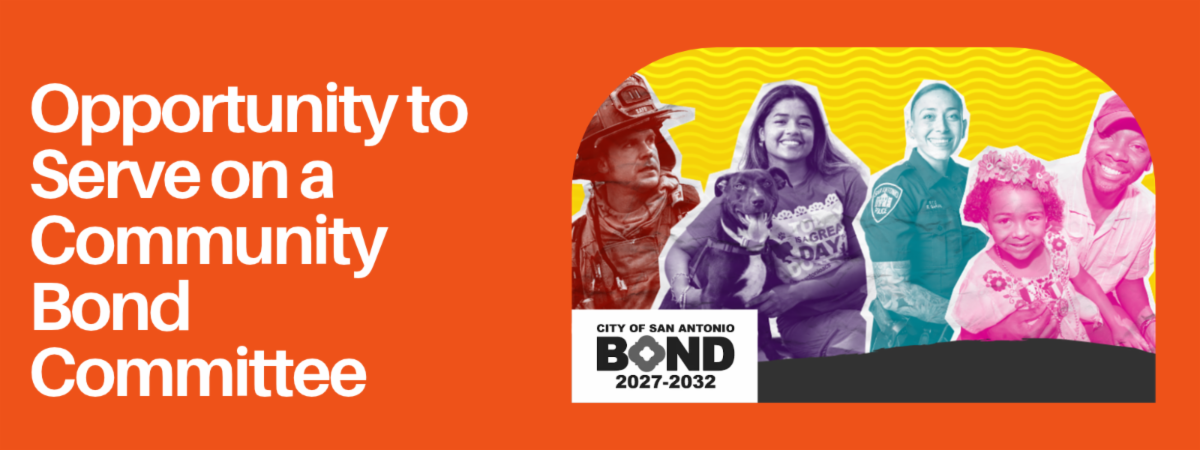
The City of San Antonio is preparing its 2027–2032 Bond Program and is expected to convene Community Bond Committees to review proposed infrastructure projects, hear public input, and develop recommendations for City Council.
The committees have historically addressed streets and transportation, drainage and flood control, parks and open space, public facilities, and housing. The City has not yet confirmed the committee structure for the upcoming bond cycle.
Participation may include attending meetings, reviewing project materials, evaluating community needs and benefits, contributing professional expertise and local knowledge, and helping formulate recommendations. Committee recommendations are expected to be presented to City Council in January.
Interested in Serving? Complete our interest form to let SAHCC know you would like to be considered for service on a Community Bond Committee.
|
| |
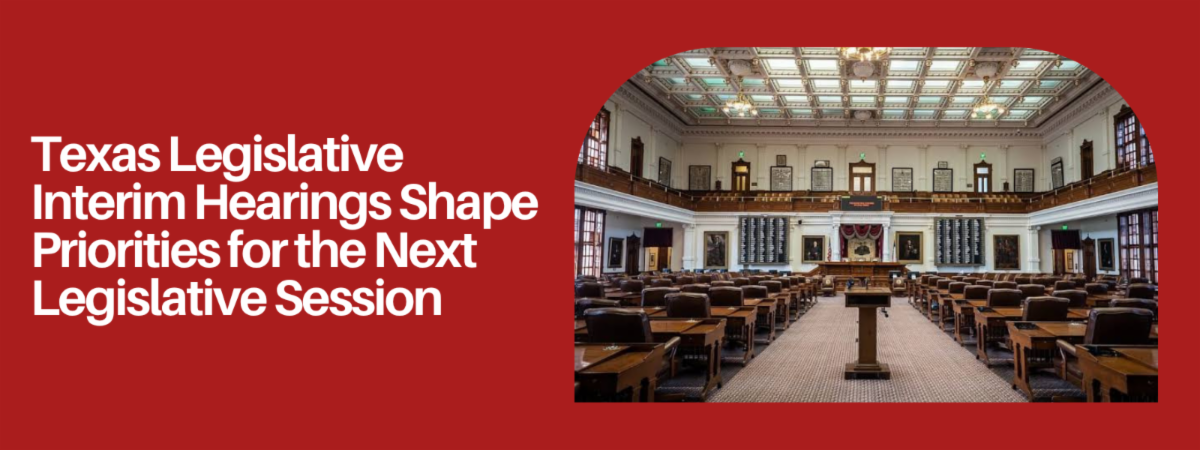
Texas is entering the final stage of preparation for the 90th Legislature. Bill filing will begin in the coming weeks, while legislative committees conclude interim hearings and prepare reports expected in December. These reports will summarize committee findings and recommendations, helping clarify the issues likely to receive attention during the session.
Interim discussions have examined workforce development, childcare access, economic development, energy infrastructure, broadband, transportation, and the pressures associated with Texas’ continued growth. As bill filing begins, lawmakers’ proposals will provide a clearer picture of how these priorities may translate into legislation.
Property Taxes Remain a Leading Concern
Property taxes are expected to remain a major legislative issue. Lawmakers may revisit taxpayer relief, appraisal values, school finance, and the relationship between state policy and local government funding.
These decisions matter to businesses because property taxes affect owners directly and can also influence rents, operating expenses, development costs, and investment decisions.
Data Centers and Infrastructure Capacity
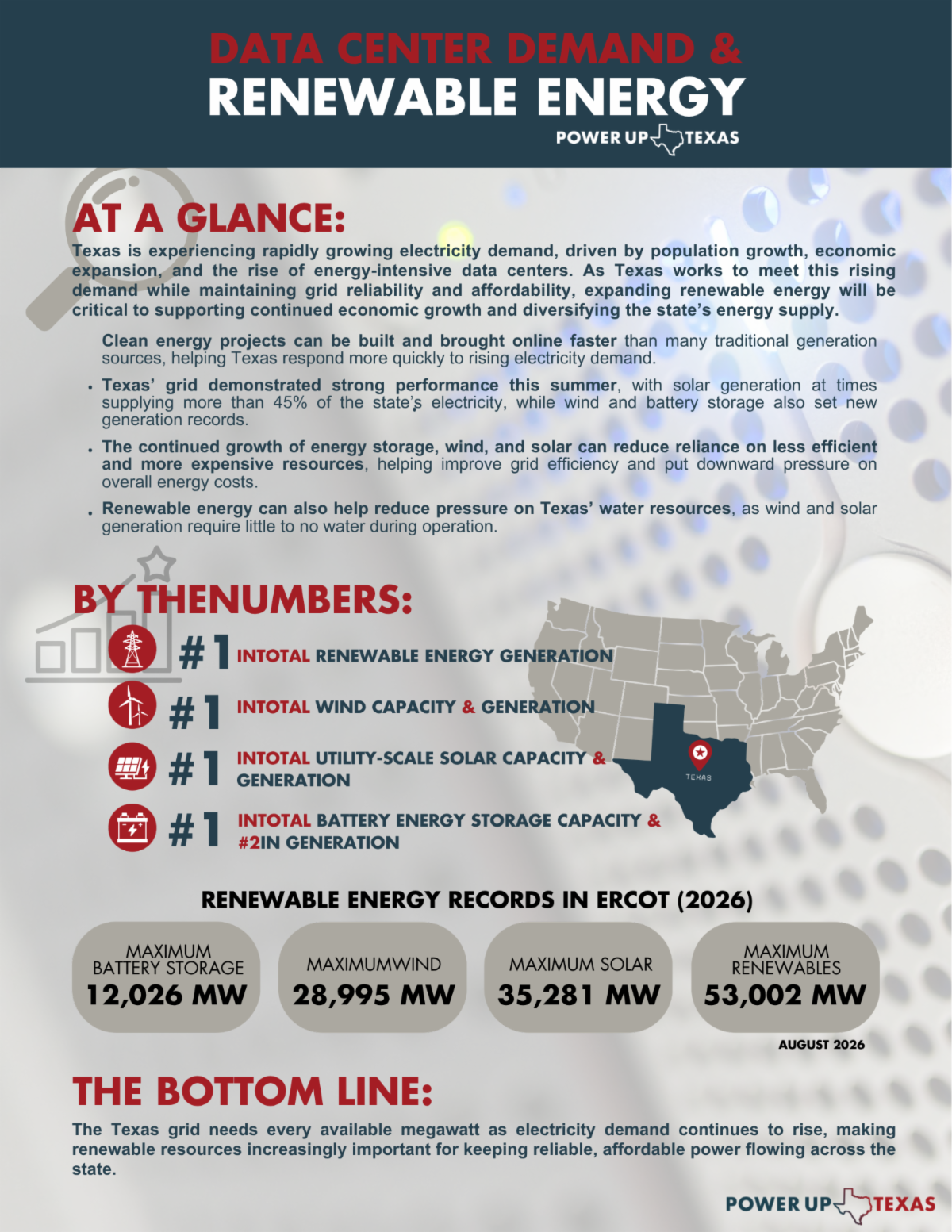
Data centers are also expected to generate significant debate. Their rapid growth presents economic-development opportunities while raising questions about electricity demand, water use, infrastructure capacity, reliability, and how associated costs should be allocated.
The debate will likely form part of a broader legislative discussion about balancing business recruitment and innovation with affordable, reliable infrastructure for existing employers and residents.
| |
What SAHCC Is Watching
SAHCC will monitor early bill filings, final committee reports, and emerging proposals affecting property taxes, data centers, energy and water infrastructure, workforce development, and business competitiveness.
Member Takeaway: The next several weeks will begin transforming broad interim discussions into specific legislative proposals. Businesses should watch for measures that could affect taxes, utility costs, infrastructure reliability, development, and Texas’ overall business climate.
Member Engagement: SAHCC will soon begin gathering member input to help shape our legislative agenda. Please watch for a separate email with details on how to share your priorities and perspectives.
|
|
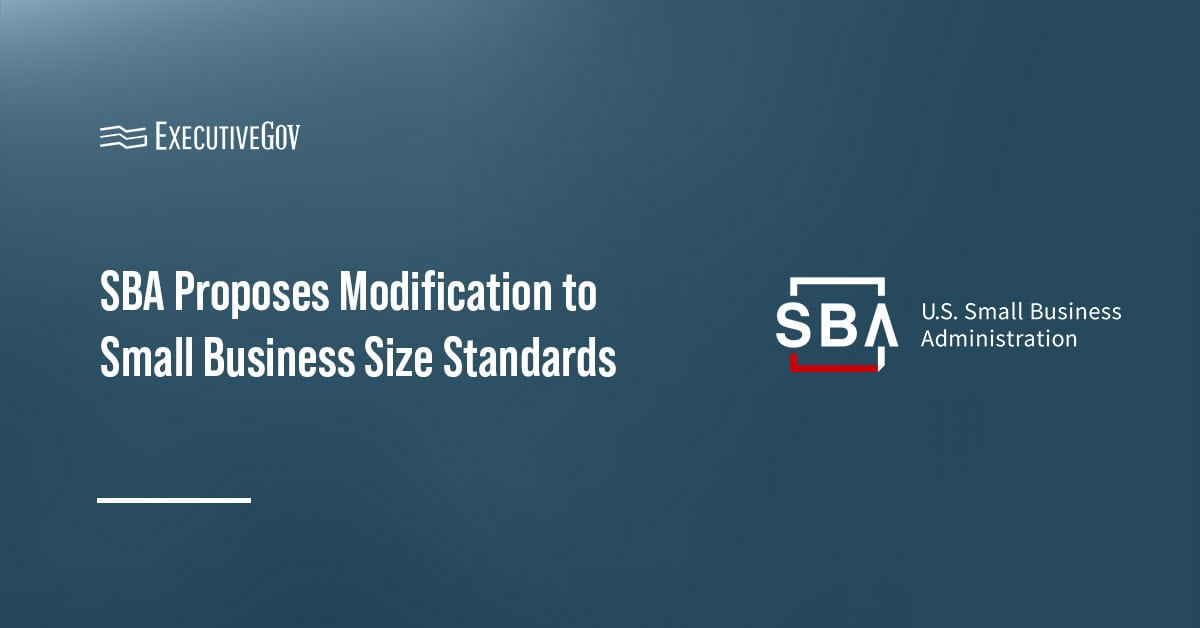
In August, the U.S. Small Business Administration (SBA) proposed a comprehensive overhaul of the standards used to determine whether businesses qualify as small for federal assistance programs. The proposal would raise certain thresholds, consolidate classifications, and revise the methodology used to establish industry size standards.
Key proposed changes include:
- Consolidating nearly 1,000 industry-specific standards into 338 broader four-digit NAICS categories.
- Eliminating 18 subindustry exceptions.
- Expanding eligibility to approximately 114,000 additional firms.
- Considering regional market conditions.
- Using employee-based standards more frequently instead of receipt-based standards.
- Replacing seven analytical factors with three: national industry size, geographic-market count, and net imports.
- Removing the explicit maximum cap on size standards.
-
Adding productivity adjustments to inflation adjustments for monetary standards.
There would not be one universal employee limit; eligibility thresholds would continue to vary by industry. The SBA is accepting public comments through November 20, 2026.
Member Takeaway: These changes could expand federal small-business eligibility while affecting how companies are classified for contracting and assistance programs. Members should review the proposed standards for their industries and consider submitting comments before the deadline.
| | |
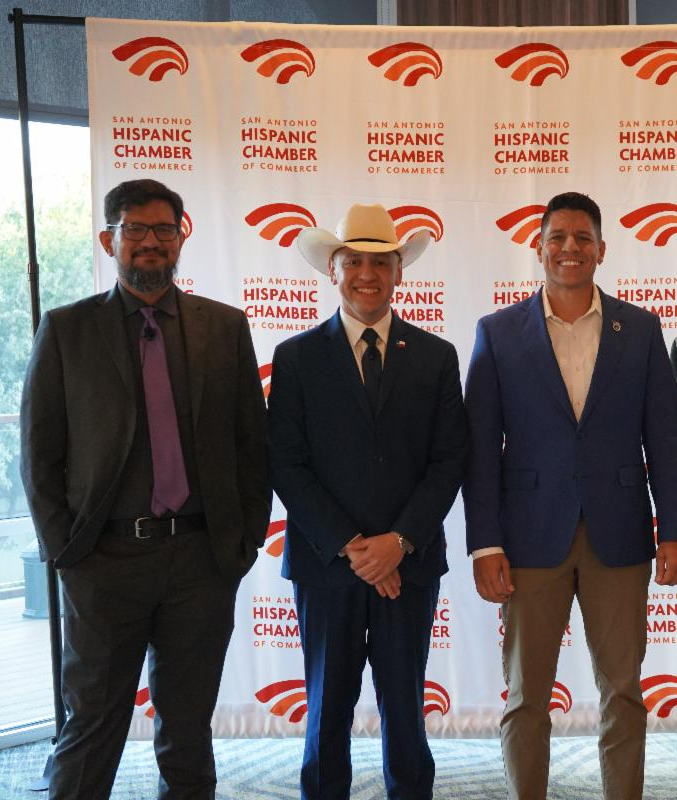
On October 8, the San Antonio Hispanic Chamber of Commerce brought Congressional District 35 candidates Johnny Garcia and Carlos De La Cruz together for their only joint candidate forum of the election cycle, positioning the Chamber at the center of an important conversation about the future of San Antonio's business community and regional economy.
Moderated by Joey Palacios of Texas Public Radio, the forum offered Chamber members, business leaders, and community stakeholders a rare opportunity to hear directly from both candidates, side by side, on issues shaping our region's economic future, including small business growth, workforce development, infrastructure, immigration, and federal policy.
As the only organization to bring both candidates together on one stage, the Hispanic Chamber demonstrated its influence as a leading voice for the business community and a trusted platform for civic dialogue. The forum reinforced the Chamber's ability to bring decision-makers and the business community together for substantive conversations on the issues that matter most.
We extend our appreciation to both candidates, Joey Palacios, our event partners, Government Affairs Committee leadership, and everyone who participated in this important discussion.
As the November 3 General Election approaches, we encourage our members to stay informed, engaged, and ready to make their voices heard.
|
|
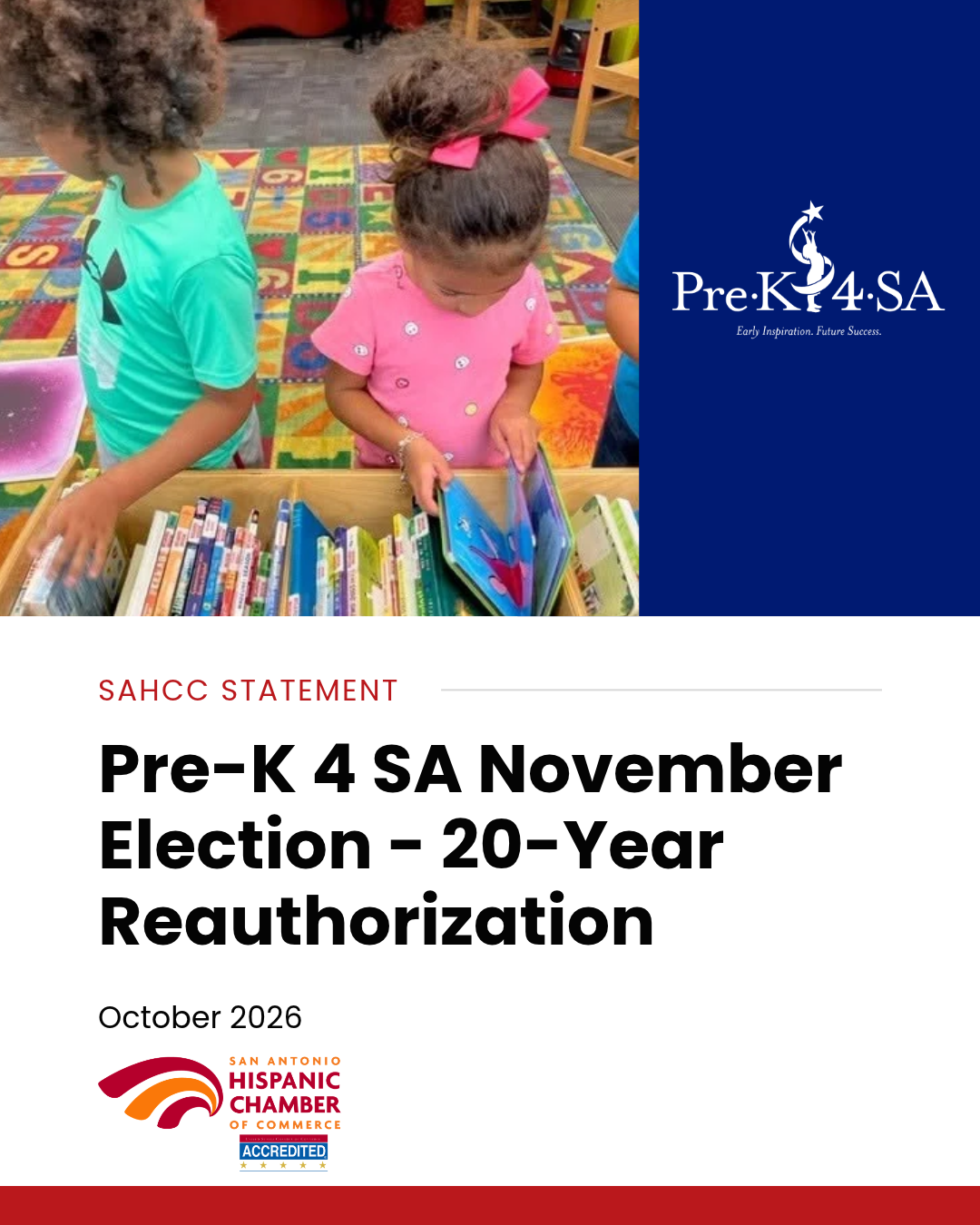
Beyond candidate races, the November 3 ballot also includes measures with long-term implications for San Antonio’s workforce and economic future. One of those measures is Proposition A, the proposed renewal of Pre-K 4 SA.
SAHCC Supports the Renewal of Pre-K 4 SA
The San Antonio Hispanic Chamber of Commerce supports Proposition A—the renewal of Pre-K 4 SA and continuation of the voter-approved 1/8-cent sales tax dedicated to early childhood education for an additional 20 years.
SAHCC views high-quality early childhood education as a direct workforce-development investment. Continued support for Pre-K 4 SA can strengthen school readiness, help working families access dependable early learning, and contribute to a stronger talent pipeline for San Antonio’s long-term economic competitiveness.
Our support also reflects the importance of accountability, transparency, affordability, collaboration with community partners, and continued assessment of the program’s broader impact on families and child care providers.
| |
Thank you for taking the time to stay informed and engaged on the policy issues affecting our business community and region. As always, our Government Affairs team remains committed to monitoring developments at the local, state, and federal levels, advocating on behalf of our members, and providing timely, factual updates on issues that matter most to employers and job creators.
The pace of policy activity shows no signs of slowing as budget discussions continue locally, interim hearings advance across Texas, and Congress returns later this year to address several unresolved federal priorities. We look forward to keeping you informed and providing additional updates, analysis, and opportunities for engagement in the months ahead.
If you have questions, concerns, or feedback on any of the issues discussed in this newsletter, please do not hesitate to contact the Government Affairs team.
Your input helps inform our advocacy efforts and ensures the voice of our business community remains represented in important policy discussions.
Thank you for your engagement and continued support. We look forward to sharing future updates with you.
| | Thank you to our wonderful Chamber Familia, for reading and for all your support! | | | | |