|
As we move through September, our Government Affairs work remains focused on advancing policies that strengthen our business community, support regional competitiveness, and ensure the voice of our members is represented at every level of government.
This month’s newsletter highlights several important developments shaping San Antonio and Texas, from the adoption of the City of San Antonio’s FY 2027 budget and ongoing infrastructure discussions to state legislative interim hearings and federal funding negotiations.
In this Issue:
This month, we’re tracking key policy developments at the local, state, and federal levels that could impact businesses, employers, and communities across our region.
Local: The San Antonio City Council adopted its $4.4 billion FY 2027 budget on September 17. We’re breaking down key investments, revenue and fee changes, and what the budget could mean for small businesses, infrastructure, economic development, and the overall business climate. We’re also highlighting SAHCC’s continued engagement with City Council members throughout the budget process.
State: As Texas prepares for the 90th Legislative Session, interim committee hearings are helping shape the issues lawmakers may address next year. Workforce development, childcare access, economic development, energy infrastructure, broadband, transportation, and the rising cost of supporting Texas’ continued growth remain central to these conversations. Property taxes and school finance are also emerging as key areas to watch.
Federal: Congress has extended federal funding through December 11 while appropriations negotiations continue. SAHCC continues to advocate for federal investments that support workforce development, infrastructure, economic competitiveness, trade, and small business growth while monitoring decisions that could affect programs and resources important to our region.
Across all levels of government, direct engagement remains one of our most important advocacy tools. Through meetings with policymakers, participation in policy discussions, and continued member engagement, SAHCC is working to ensure San Antonio’s business community has a voice in decisions shaping our economic future.
Stay informed and engaged as we continue advocating for policies that support our members and strengthen San Antonio’s business community.
Don’t Miss:
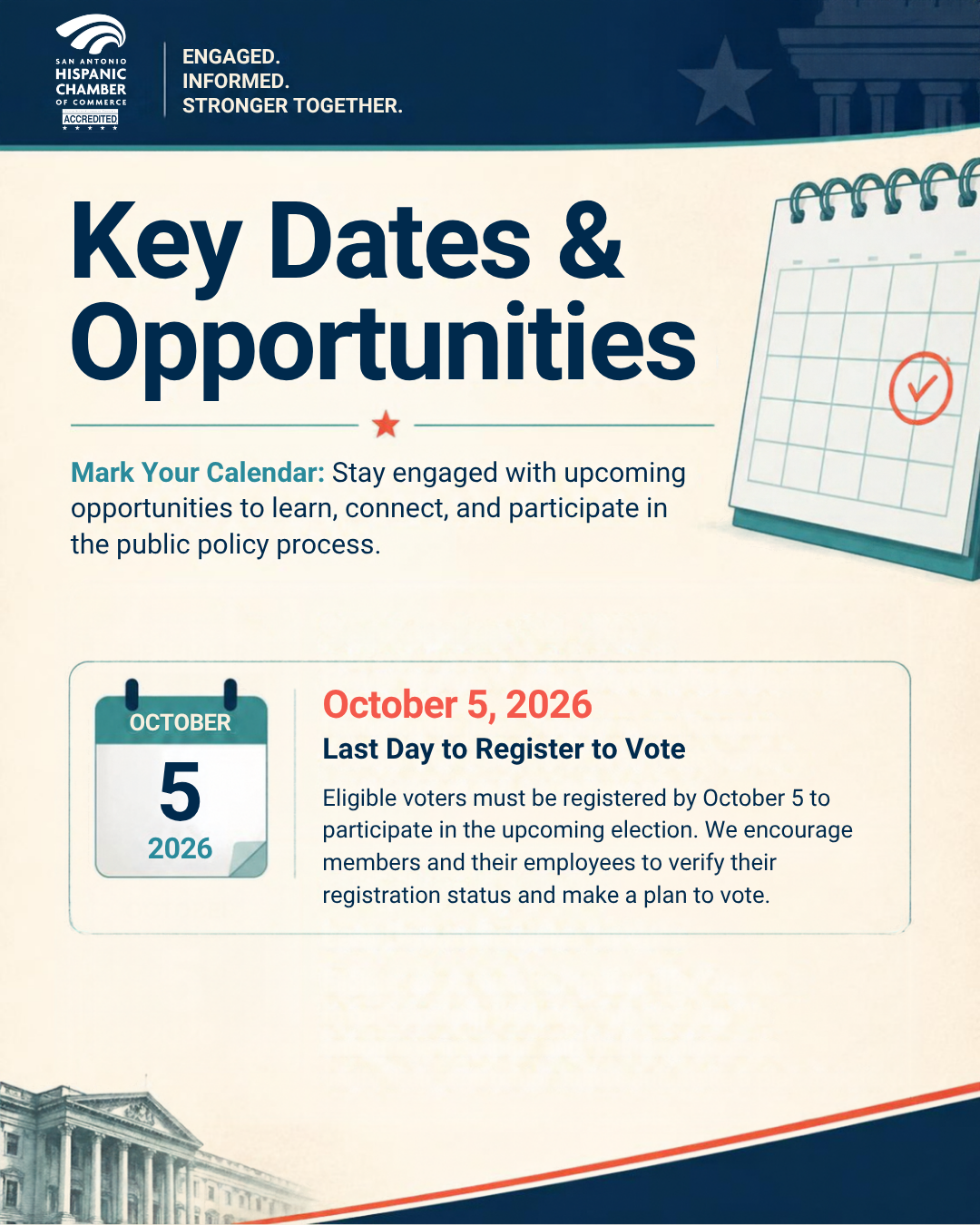
- October 5: Last Day to Register to Vote
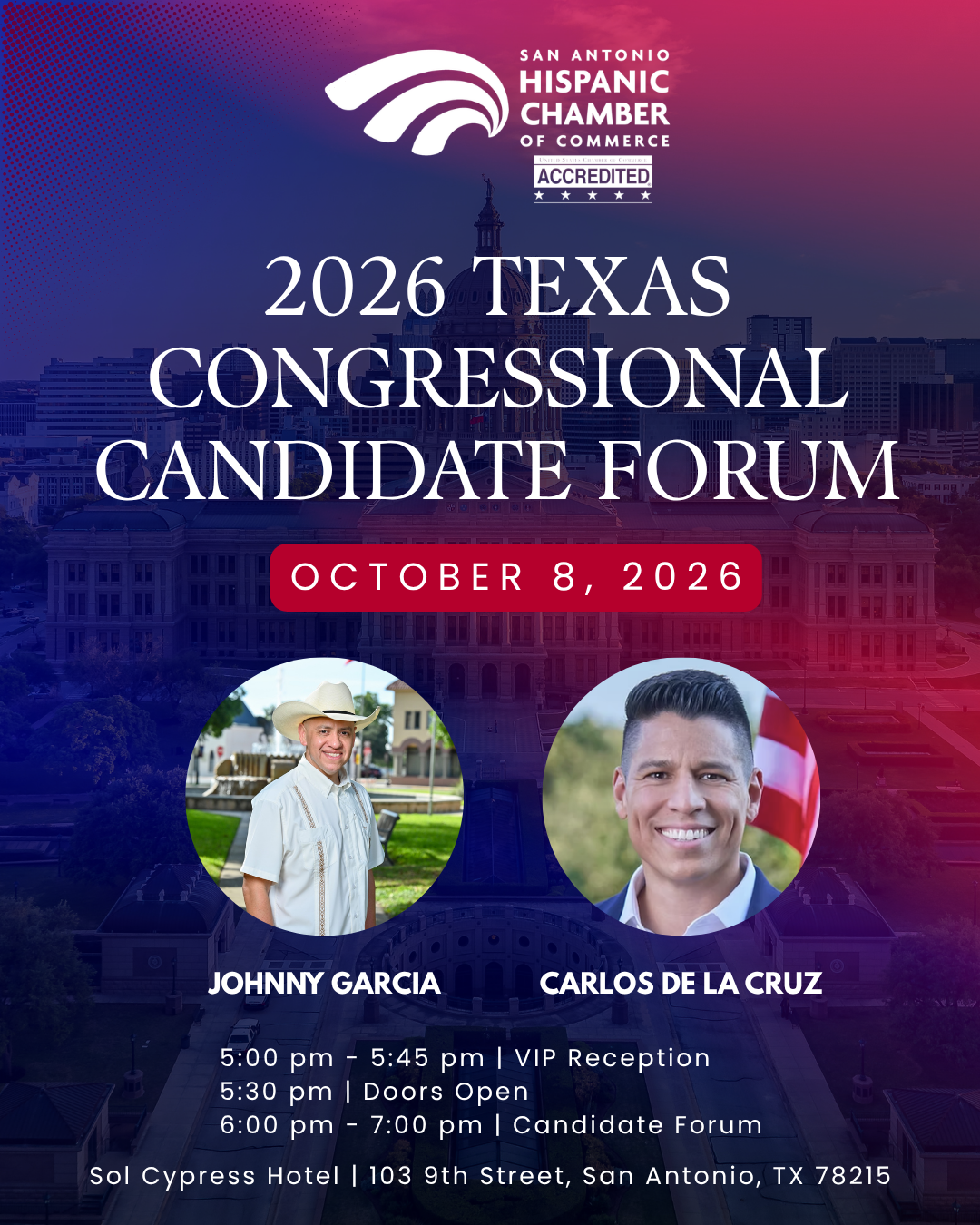
- October 8: Congressional District 35 Candidate Forum
- October 19–30: Early Voting
- November 3: Election Day
📌 A quick note: This newsletter is filled with valuable information and may be clipped by your email provider. If you reach the bottom and see "[Message Clipped] View entire message," be sure to click it so you don't miss the rest of this month's updates and opportunities!
|
| |
|
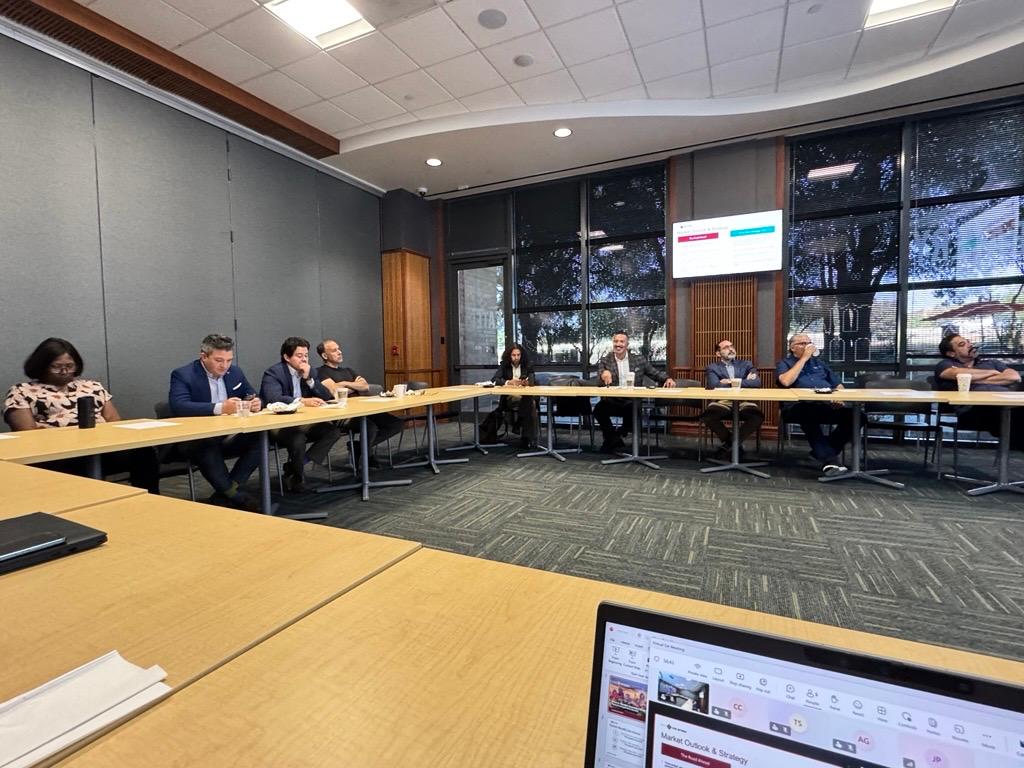
In August, the Government Affairs Committee welcomed Visit San Antonio for a discussion on the proposed convention center expansion and its potential impact on tourism, economic development, and San Antonio's long-term competitiveness. Members received updates on local policy issues and discussed opportunities to support continued growth across the region.
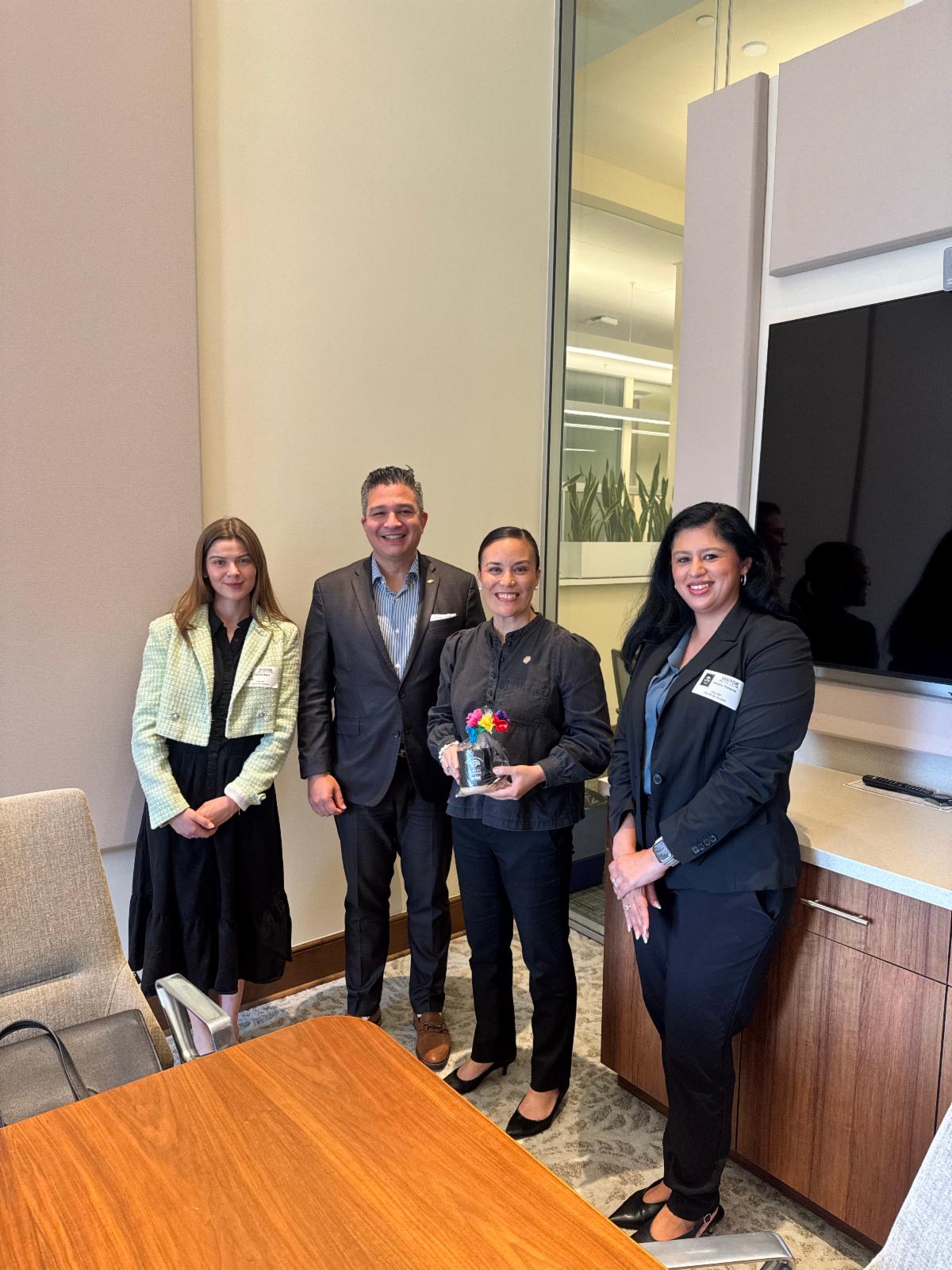
The Chamber also conducted a series of meetings with City Council members ahead of the adoption of the City of San Antonio's FY 2027 budget. These conversations focused on issues affecting small businesses, economic development, workforce needs, infrastructure investments, and maintaining a competitive business environment.
Member Takeaway: Direct engagement with policymakers remains one of the Chamber's most important advocacy tools. These conversations help ensure that the voice of the business community is represented during major policy and budget decisions.
|
SAHCC Government Affairs team meeting with Mayor Gina Ortiz Jones | SAHCC meeting with District 4 Councilman Edward Mungia |
|
On September 17, the San Antonio City Council adopted a balanced $4.4 billion Fiscal Year 2027 budget that also maintains balance through FY 2028. The budget was developed amid rising costs, declining property values, and state-imposed limits on local revenue growth that created a projected shortfall of nearly $158 million through FY 2028.
The adopted budget includes a combination of spending reductions, fee adjustments, and available property tax capacity while maintaining investments in public safety, street maintenance, affordable housing, homelessness services, parks, libraries, animal care, senior services, and economic development. The budget also continues investment in major infrastructure projects, including the new airport terminal and economic development initiatives.
Throughout the budget process, the San Antonio Hispanic Chamber of Commerce met with City Council members to advocate for policies that support small businesses, economic growth, workforce development, and infrastructure investment. The budget includes a property tax rate increase and several fee adjustments as the City works to balance service delivery with long-term financial sustainability.
Member Takeaway: City budget decisions affect the cost of doing business, infrastructure investments, public safety, economic development efforts, and the overall business climate. Members should remain informed as implementation begins and future budget discussions emerge.
|
| |
As the Texas Legislature prepares for the next legislative session, lawmakers continue to hold interim hearings examining issues that affect employers, communities, and the state's economic competitiveness. In August alone, House committees held ten interim hearings covering topics including workforce development, economic development, public health, broadband deployment, transportation, higher education, agriculture, and energy infrastructure.
The House Committee on Trade, Workforce & Economic Development reviewed oversight of the Texas Economic Development & Tourism Office, supply chain resiliency, and childcare access and workforce participation. Discussions highlighted the relationship between workforce availability, childcare accessibility, employee retention, and economic growth.
During testimony, Texas Economic Development & Tourism officials emphasized that while Texas remains a leading destination for business investment, communities must continue competing for projects and demonstrating they have the workforce, infrastructure, and capacity necessary to support growth. A recent example discussed was Toyota's expansion in San Antonio, which reflects the importance of coordinated economic development efforts at the state, regional, and local levels.
Member Takeaway: The interim hearing process often lays the groundwork for future legislation. Workforce development, childcare access, economic development, and business competitiveness are expected to remain key topics heading into the next legislative session.
|
|
Several interim hearings also focused on the challenges created by Texas' continued growth. Topics included data centers, increasing electricity demand, broadband expansion, transportation infrastructure, and proposals related to 765-kilovolt transmission lines needed to move power across the state.
These discussions reflect a broader question facing policymakers: how to support continued economic growth while ensuring businesses and residents have access to reliable infrastructure at an affordable cost. As Texas attracts new investment and population growth, demands on energy systems, transportation networks, water resources, and workforce pipelines continue to increase.
The Chamber is closely monitoring these conversations because infrastructure investments and funding decisions often influence utility costs, economic development opportunities, and long-term competitiveness.
Member Takeaway: As Texas grows, policymakers will face difficult decisions about infrastructure investments, economic development incentives, and affordability. These discussions could ultimately affect utility costs, taxes, and the overall cost of doing business.
| |
Property taxes remain one of the most important issues affecting businesses and homeowners across Texas. Recent local decisions, including the property tax rate adopted as part of San Antonio's FY 2027 budget, demonstrate how local government funding decisions directly affect taxpayers.
At the same time, school districts across Texas continue to consider Voter-Approval Tax Rate Elections (VATREs) to support maintenance and operations needs. These discussions are occurring alongside broader conversations about school finance, local government funding, appraisal values, and taxpayer relief.
To help members better understand these issues, the Government Affairs Committee will welcome the Texas Taxpayers and Research Association at its September 24 meeting for a discussion on Texas' property tax landscape and potential legislative priorities heading into the 90th Texas Legislature.
Member Takeaway: Property taxes influence business costs directly through ownership expenses and indirectly through leases and operating costs. Understanding how local budgets, school finance, and state policy interact will be critical as lawmakers begin shaping the next legislative agenda.
| |
Congress returned to Washington in September following its August district work period with one of its most pressing responsibilities still unresolved: funding the federal government for Fiscal Year 2027. To avoid a lapse in funding, lawmakers approved a Continuing Resolution that extends federal funding at current levels through December 11 while appropriations negotiations continue.
The legislation also delays implementation of new Office of Management and Budget grant guidance that had been scheduled to take effect on October 1. While the measure provides short-term certainty, it postpones broader funding decisions until later this year.
The Chamber continues to advocate for federal investments that support workforce development, infrastructure, economic competitiveness, trade, and small business growth. While the funding deadline has moved, the need for continued engagement with federal policymakers has not.
Member Takeaway: The deadline has moved, but the importance of advocacy has not. Federal funding decisions affecting workforce programs, infrastructure investments, economic development initiatives, and small business support will still be debated in the coming months. Members should continue engaging with their congressional delegation and sharing the importance of investments that strengthen our workforce and economy.
|
| |
Join the San Antonio Hispanic Chamber of Commerce for the Congressional District 35 Candidate Forum on Thursday, October 8, 2026, at the Sol Cypress Hotel.
This nonpartisan forum will give members and the broader community an opportunity to hear directly from participating candidates on issues affecting small businesses, workforce development, infrastructure, economic growth, and the future of our region.
The program will include opening statements, a moderated discussion, and closing remarks, helping attendees learn more about each candidate’s priorities ahead of the November General Election.
Registration is encouraged, as space is limited.
|
|
Thank you for taking the time to stay informed and engaged on the policy issues affecting our business community and region. As always, our Government Affairs team remains committed to monitoring developments at the local, state, and federal levels, advocating on behalf of our members, and providing timely, factual updates on issues that matter most to employers and job creators.
The pace of policy activity shows no signs of slowing as budget discussions continue locally, interim hearings advance across Texas, and Congress returns later this year to address several unresolved federal priorities. We look forward to keeping you informed and providing additional updates, analysis, and opportunities for engagement in the months ahead.
If you have questions, concerns, or feedback on any of the issues discussed in this newsletter, please do not hesitate to contact the Government Affairs team.
Your input helps inform our advocacy efforts and ensures the voice of our business community remains represented in important policy discussions.
Thank you for your engagement and continued support. We look forward to sharing future updates with you.
| | Thank you to our wonderful Chamber Familia, for reading and for all your support! | | | | |