Jan. 13, 2023

For immediate release


SC State ‘Misters’ exchange knowledge about education with the world in the Aloha State

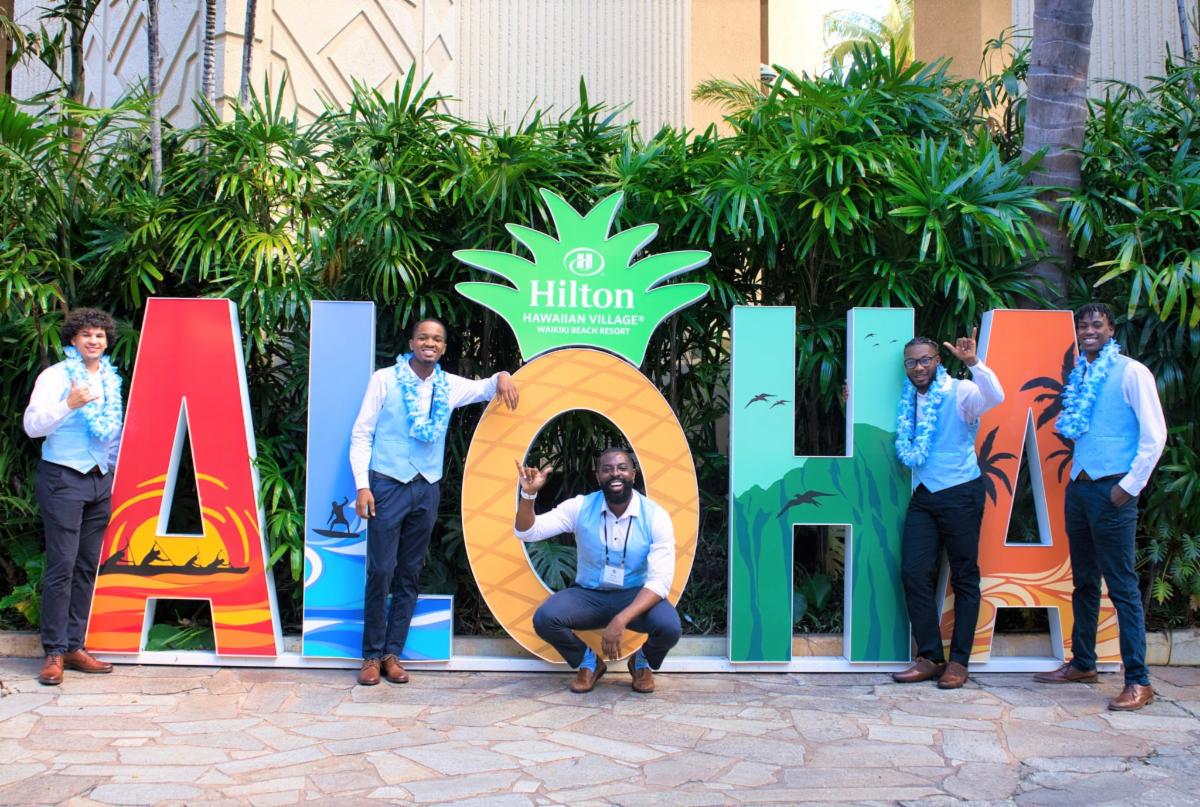
Four of SC State’s “Misters” and their advisor in Hawaii. L-R: Lesane Lockhart-Boyd, Joshua Barringer, Dr. Rashad Anderson, Gabriel Million and Phillip Thomas.

The event was one of three conferences at which SC State’s Call Me MiSTER cohort is presenting research this month. 

ORANGEBURG, S.C. – Before Lesane Lockhart-Boyd set out for Hawaii earlier this month, he had never set foot on an airplane, much less mingled with educators from around the world.


The occasion was the 21st Hawaii International Conference on Education, where Boyd-Lockhart and three other students in South Carolina State University’s Call Me MiSTER program presented research about barriers to success for minority students.


“It’s a blessing. A lot of kids aren’t exposed to experiences like that,” said Lockhart-Boyd, a 19-year-old freshman from Columbia, South Carolina. “For me to have the opportunity to go on a trip like that – not even just the trip – to be invited to a conference at that degree, it’s something I’ve always prayed for.


“Seeing teachers who actually care about the students and how they want to be in the classroom, that just opened another eye for me. It made me really want to pursue this education route for my career,” he said.


Call Me MiSTER was established in 2000 to combat the shortage of Black male teachers in South Carolina, and it has since grown into other states. Less than 2% of classroom educators in South Carolina are Black men, and SC State is working to change that.


Dr. Rashad Anderson, who graduated from SC State’s Call Me MiSTER program in 2010, is now the cohort’s director. He considers conference attendance an essential component of the Call Me MiSTER experience.


“Conferences, especially national and international conferences, provide our Misters with experiences they can’t get in the four walls of the classroom,” he said. “The networking and getting on the stage with professionals from all across the nation and around the world make a powerful experience.”


Since joining the program in the mid-2000s, SC State has graduated 27 certified Black male teachers via Call Me MiSTER. Of those, 17 have been named teachers of the year in their districts. Anderson noted that all 17 had spoken at national conferences in the program.


“It’s a game changer,” said Anderson, an associate professor of teacher education. “When you take an 18-year-old who’s never been on a plane, never been out of South Carolina and you take them to a national conference, it expands and broadens their mind.”


While Anderson and/or SC State Misters have presented at nearly 70 conferences, the presentation in Hawaii was the program’s first at an international conference. More than 55 countries were represented. That kind of experience expands students’ perspectives.


“They know the world is much bigger and that diversity, culture and the experiences of other people are valuable,” Anderson said. “It makes them a more humanistic practitioner when they go into the classroom.”

Presentations in Hawaii

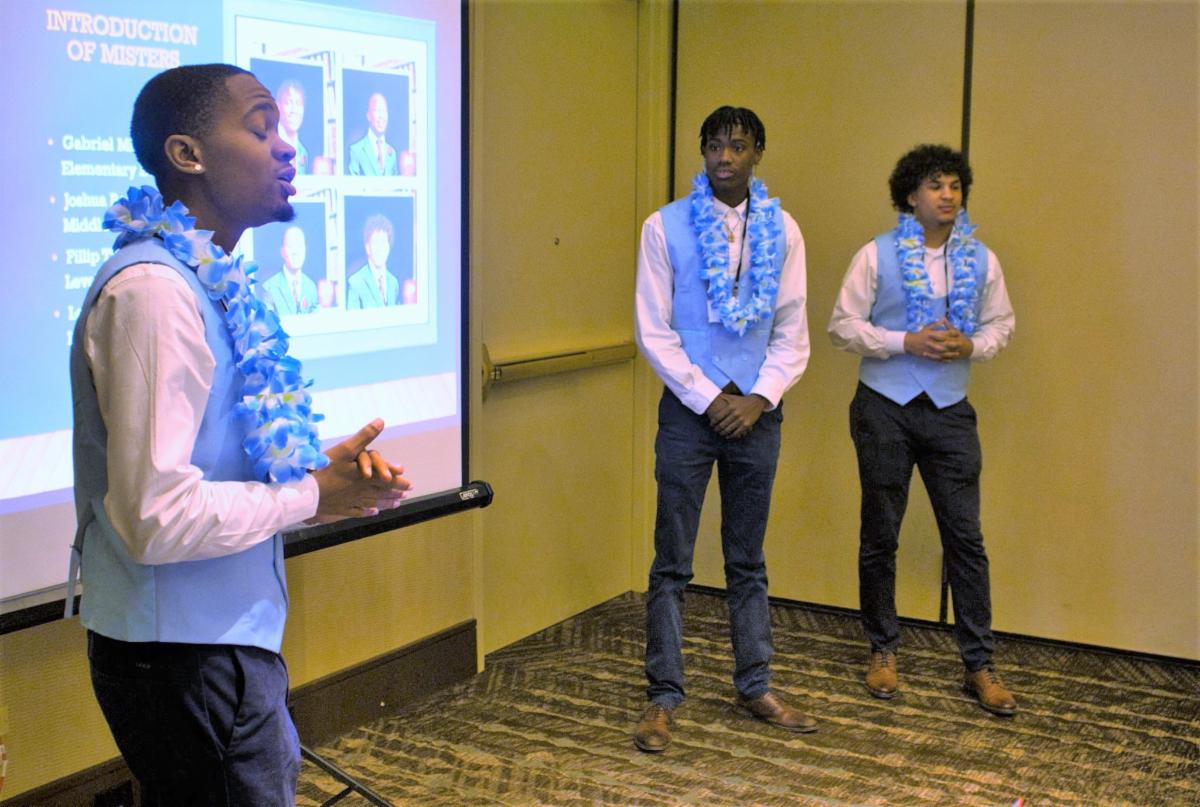
SC State sophomore Joshua Barringer, left, speaks at the Hawaii International Conference on Education, as Phillip Thomas and Lesane Lockhart-Boyd look on.

Each of the four Misters who accompanied Anderson to Hawaii Jan. 3-6 was given a segment of research to present at the conference.


Lockhart-Boyd’s portion was about targeted exclusion. He said teachers often place adult expectations for behavior on Black male students, while their white peers are seen with “a boys will be

boys” attitude. It’s something he experienced firsthand when he attended a private school in the third grade.


“I noticed immediately I was not getting the same treatment as my peers,” Lockhart-Boyd said. “My white peers were able to pick which seat they wanted, but I had to sit right next to the teacher. I didn’t get the freedom my peers got.”


But Lockhart did not accept that lot in life.


“If I maintained the mentality that I would not be treated fairly, I would not be where I am now. I pushed myself to be better,” he said.


Phillip Thomas, an 18-year-old SC State freshman, was tasked with sharing insights about intentional student embarrassment and how it affects students’ sense of worth.


“They feel they aren’t needed,” Thomas said. “They begin to so bad about themselves and they don’t want to come to be taught anything. They’re distant in class. Their behavior gets really bad.”


Thomas is a history education major from Greenville, South Carolina.

“There’s so much to history that people don’t know but should be known, especially about African American males and African Americans period,” he said.


Being able to attend an international conference in his freshman year was a nice bonus of joining the Call Me MiSTER cohort. With 3½ years to go in his education, he looked forward to more enlightening experiences.


“I’m very excited about this school has in store for me and what this program has to offer,” Thomas said. “I’m blessed to be in this position. I really would not be here if were not for Dr. Anderson. This has been a big changer for me.”


Teaching is in Joshua Barringer’s blood. The 19-year-old sophomore from Charlotte, North Carolina, said both his mother and his aunt are administrators in their respective districts.

“All my family is in education,” Barringer said. “So, education has always been around me. I’ve always been in that circle, and I was picking up small things along the way that they didn’t even know they gave me.”


As a middle level education major, Barringer looks forward to exchanging knowledge with an age group ready to explore core subjects on a deeper level than the preparations received in elementary school.


“I love to get into the actual subjects,” he said. “These kids are a whole lot smarter than people think they are. I want to get into those topics and have

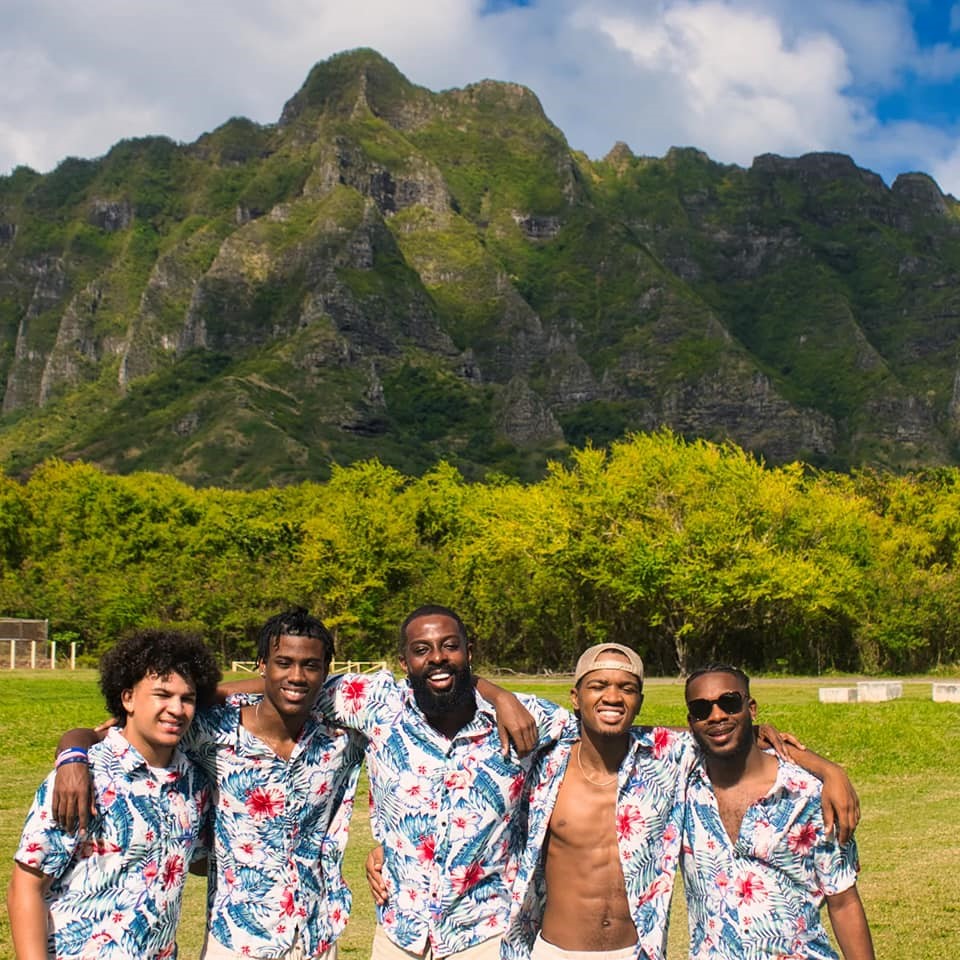
The Misters had the opportunity to see the sights, soak up the tropical climate and enjoy the island food on the trip to Hawaii.

real conversations with kids that you would not necessarily have with other ages.


“These middle school kids – they can change how you think, and you can change how they think. I just love the group I will be teaching,” Barringer said.


His topic at the conference was microaggression. He cited an example of a student who felt unchallenged in the classroom and misbehaved as a result.


“He was lashing out because he actually wanted to learn,” Barringer said. “There’s a problem with being punished for that reason. The teacher did not want to understand his reasons. She was just trying to dismiss him.”


The old hand on the trip was senior Gabriel Million, 22, who serves as cohort president this year. The Hawaii conference was his fourth with Call Me MiSTER. His topics were controlled body movement and excessive punishment for petty behavior.


“Children typically have double if not triple the energy we have as adults,” Million said. “Teachers should have more comfortable stations in the classroom for students to do work. Instead of just sitting at a desk, taking notes and working on assignments, they should have spaces that are compatible.


“It’s good for all students but especially for male students, because males are tactile and kinesthetic learners,” he said.


As for excessive punishment, Million cited an example from Anderson’s research about a teacher who reprimanded a student frequently to make him ineligible for a Halloween activity.


“Teachers are pushing students out for no apparent reason, but it’s because students are being excessively punished for petty behavior they had no control over or were not even actually doing,” Million said.


An elementary education major from Anderson, South Carolina, Million is on a path to graduate next December.


“Now that I’m a senior, I am looking at these conferences way differently than I was as a freshman,” he said. “I’m months away from graduation, so I have to be serious. I have to be serious about listening to the presentations and serious about networking with people, because soon enough, this is going to be me.”


He said the experiences will aid him if he ever enters graduate school, conducts his own research or develops curricula. They also translate to what he will do in the classroom.


“I’m about to be working – having a big boy job – working in a school system, so I value this very much,” Million said.


More ahead for Call Me MiSTER

The Hawaii conference trip was funded in a partnership between SC State’s College of Education, Humanities and Social Sciences and Clemson University, which is home to the national Call Me MiSTER programs.


“It really is about experience and exposure. That’s what gives our students an opportunity to compete”, said Dr. M. Evelyn Fields, acting dean of the College of Education, Humanities and Social Sciences. “When these opportunities present themselves, we try to secure the resources to make it happen.”


SC State’s Call Me MiSTER cohort is back in action this weekend (Jan. 13-15) at the South Carolina Alliance of Black School Educators Winter Conference in Charleston, where students will be the featured speakers in the Youth Conference.


And Jan. 25-26, the Misters will be the keynote speakers for the national Educator Exchange conference in New Orleans, Louisiana, where the focus will be on recruitment and retention of educators of color.


“South Carolina State is leading the conversation nationwide in recruiting and training Black male educators,” Anderson said, “and I just want everyone to know just the special work that happens here.


“When people talk about what is the excellent Call Me MiSTER cohort experience, I want them to say South Carolina State University,” he said. “When they want someone to talk about issues of culturally relevant pedagogy and the recruitment and training of Black male educators, I want them to call South Carolina State. We are leading that conversation.”


For more information about SC State’s Call Me MiSTER program, contact Anderson at 803-536-8490 or rander29@scsu.edu. You may also visit the program’s page on SCSU.edu.


###


Media Contact

Sam Watson

Director of University Relations

South Carolina State University


swatson2@scsu.edu

803-533-3603 (Desk)

803-747-1223 (Cell)


About South Carolina State University

Founded in 1896 as a land grant institution with a mission of providing service to the citizens of the state, South Carolina State University has evolved from a small teachers’ college into a major University center of learning and research. Located in Orangeburg, S.C., South Carolina State offers more than 50 different fields of study on the undergraduate and graduate levels. South Carolina State University is accredited by the Southern Association of Colleges and Schools and is a member of the Council of Graduate Schools.