This Week's Water Conditions Update
June 24, 2022
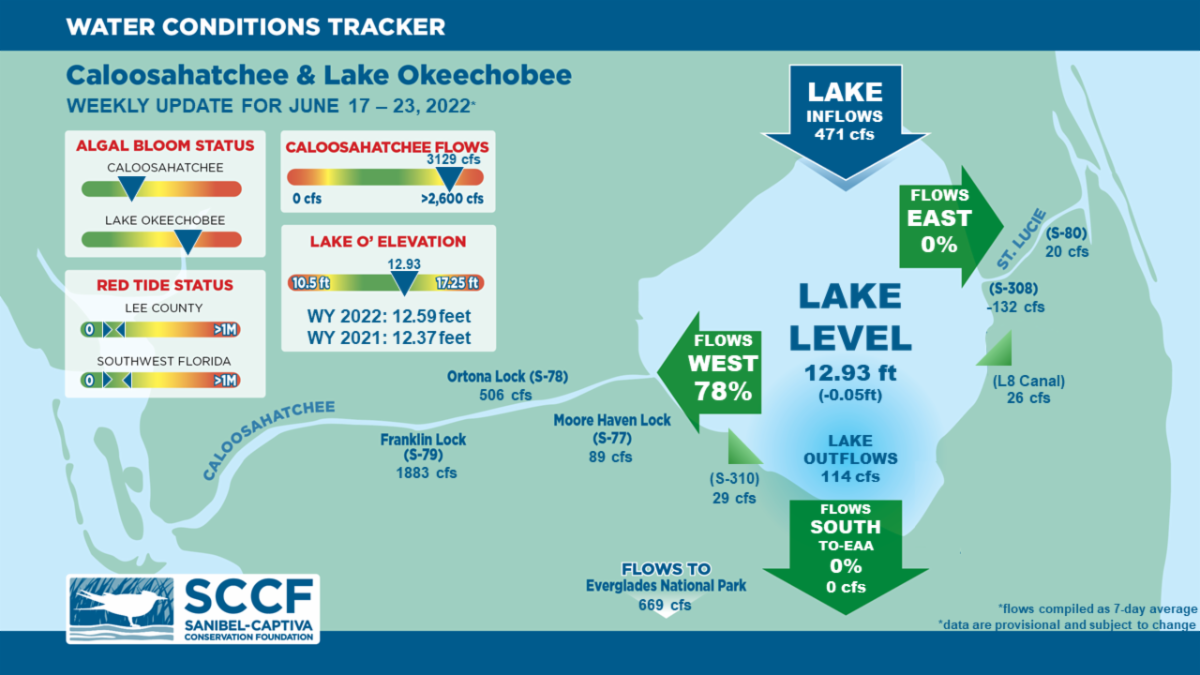
Water Conditions Tracker
Lake Okeechobee Levels & Caloosahatchee Flow Impacts
On 6/23/22 Lake Okeechobee was at 12.93 feet, decreasing by 0.05 feet in the past week. The weekly average flow at S-79 was 1,883 cfs (cubic feet per second) and flow from the Lake at S-77 was an average of 89 cfs. The 14-day average flow on 6/23/22 was 2,909 cfs and has been in the damaging (>2,600 cfs at S-79) flow envelope for 15 days.
For more information on Lake Okeechobee and estuary conditions go to the latest Caloosahatchee Conditions Report
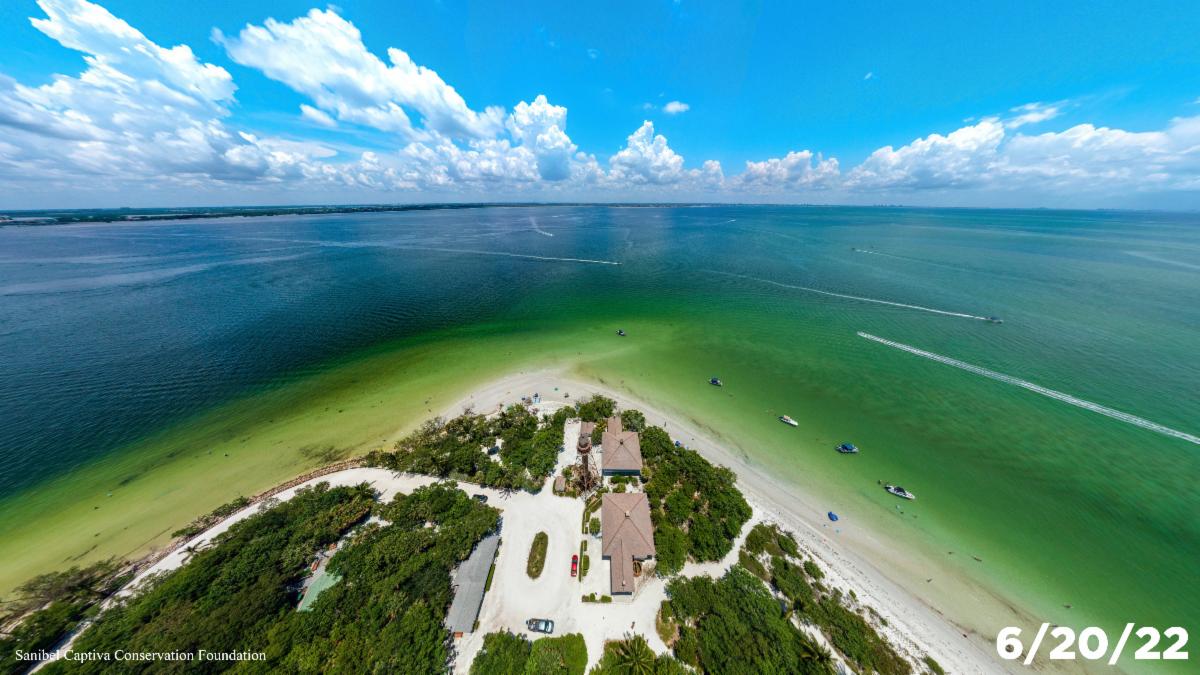
Virtual Water Quality Tour from Lighthouse Beach
Click here or on the image above to take a virtual tour from above Lighthouse Beach Park to see how the water looked this week.

Photo was taken on 6/20/22 at 1:38 PM on a rising tide (Low tide @ 12:38 PM (1.56ft)).
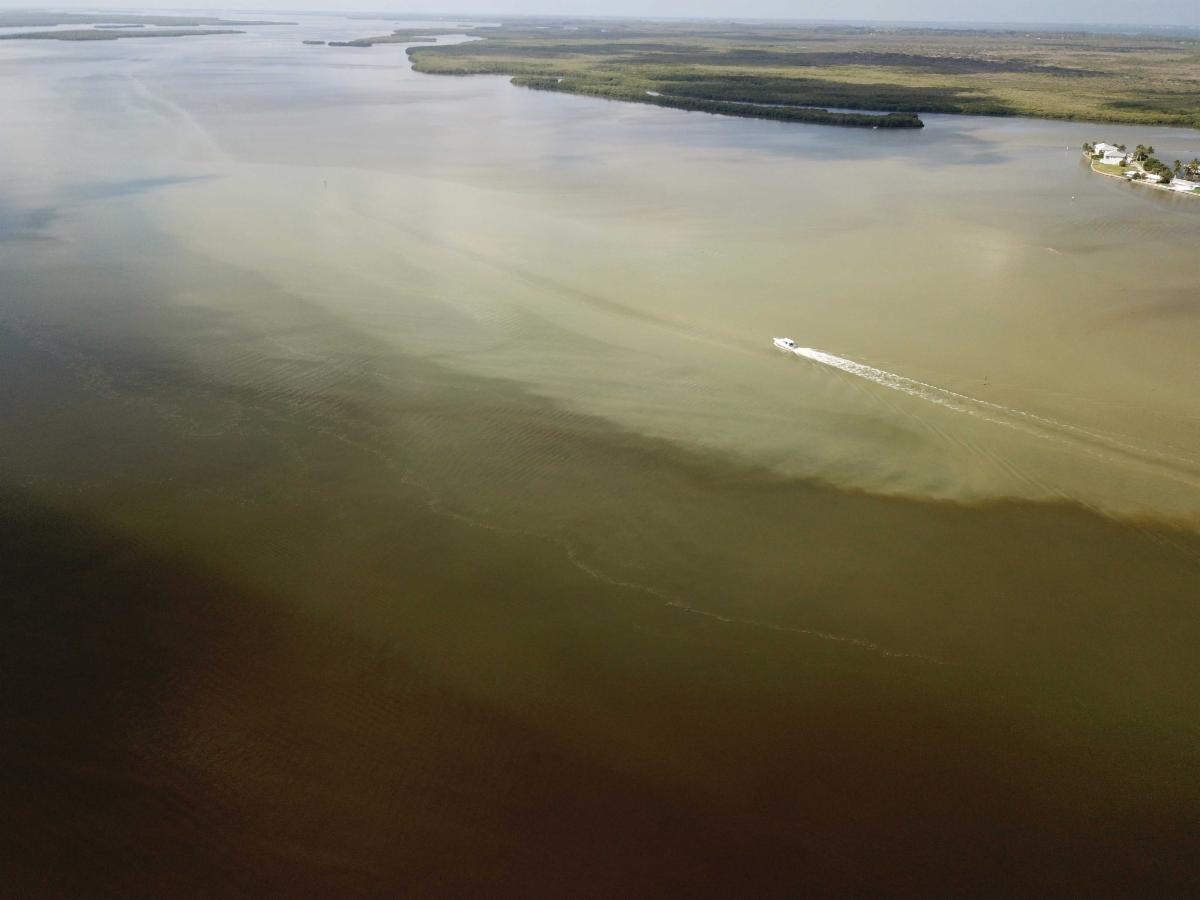
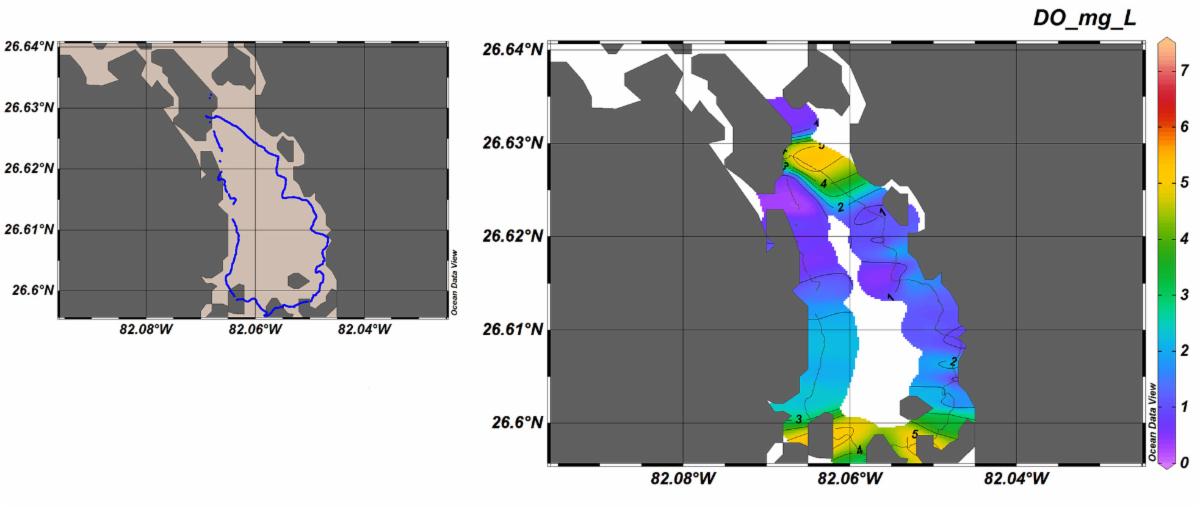
Anoxia in Matlacha Pass has been related to the milky white colored water and a fish kill event. The white color is caused by sulfur particles that precipitate from H2S (hydrogen sulfide) produced from the bacterial decomposition of the macroalga Caulerpa. Transects (below) show low oxygen levels throughout Matlacha Pass (right) on Saturday morning, 6/18/22. SCCF. 
Red Tide
Satellite imagery over the past week has not detected any blooms off the coast of Southwest Florida.

On 6/17/22, the FWC reported that the red tide organism, Karenia brevis was observed background and very low concentrations offshore of Collier County.

In the past week (6/14 – 6/20), the CROW wildlife hospital on Sanibel received 1 toxicosis patient: 1 osprey (still at CROW).
Blue-Green Algae
On 6/20/22 sampling for cyanobacteria by the Lee County Environmental Lab reported the presence of Microcystis and cyanobacterial filaments at the Alva Boat Ramp as light streaks. Microcystis and a dinoflagellate bloom were present upstream of the Franklin Locks with accumulation along the lock and sparse specks visible at the dock. Dolichospermum and Microcystis were moderately abundant at the Davis Boat Ramp as streaks with some accumulation along the seawall.
Data from the FDEP blue-green algae dashboard reported 43 samples collected over the past 30 days for the 10 county area 23 samples had toxins present ranging from 0.25 to 1.2 μg per L which is below the EPA recommended standard for recreational waters (8 μg per L).
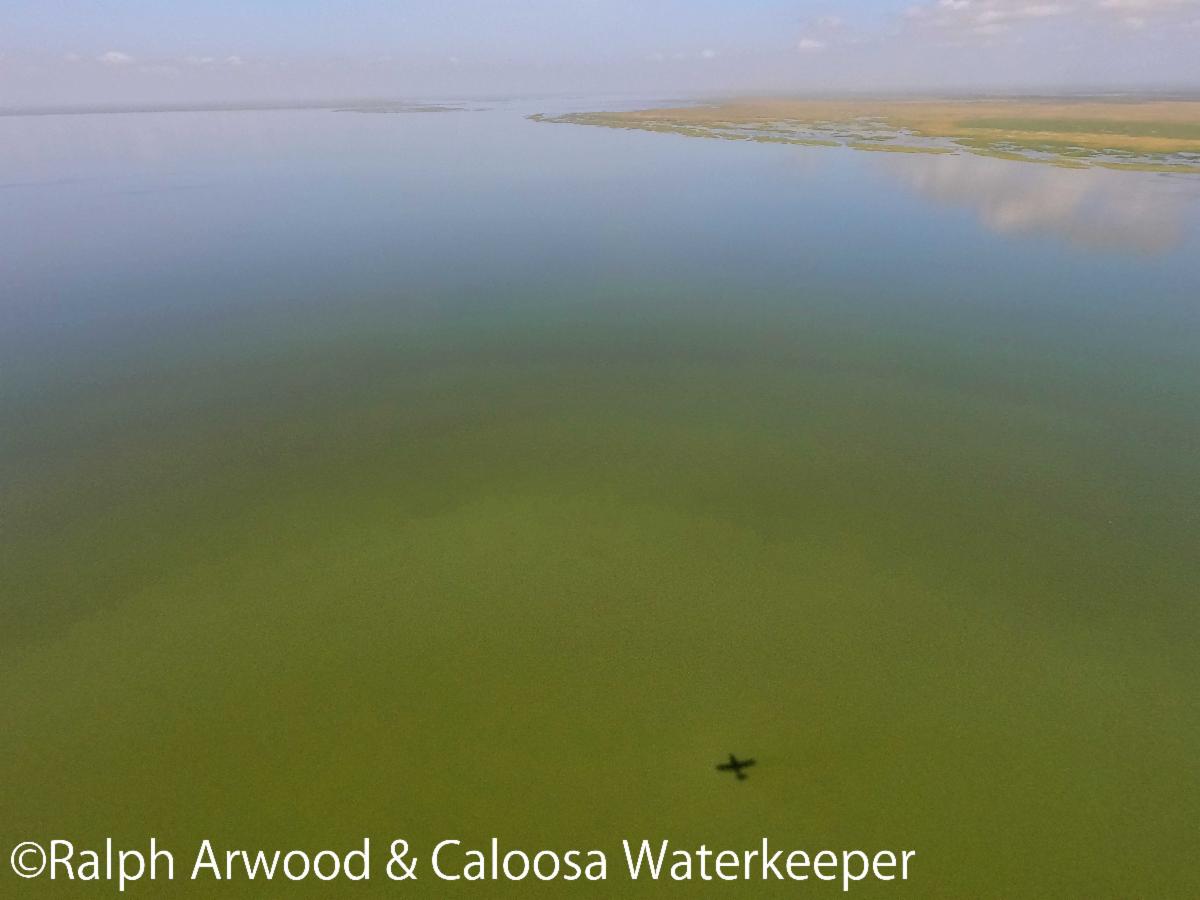
Cyanobacterial blooms on the Northwest edge of Lake Okeechobee on 6/15/22.
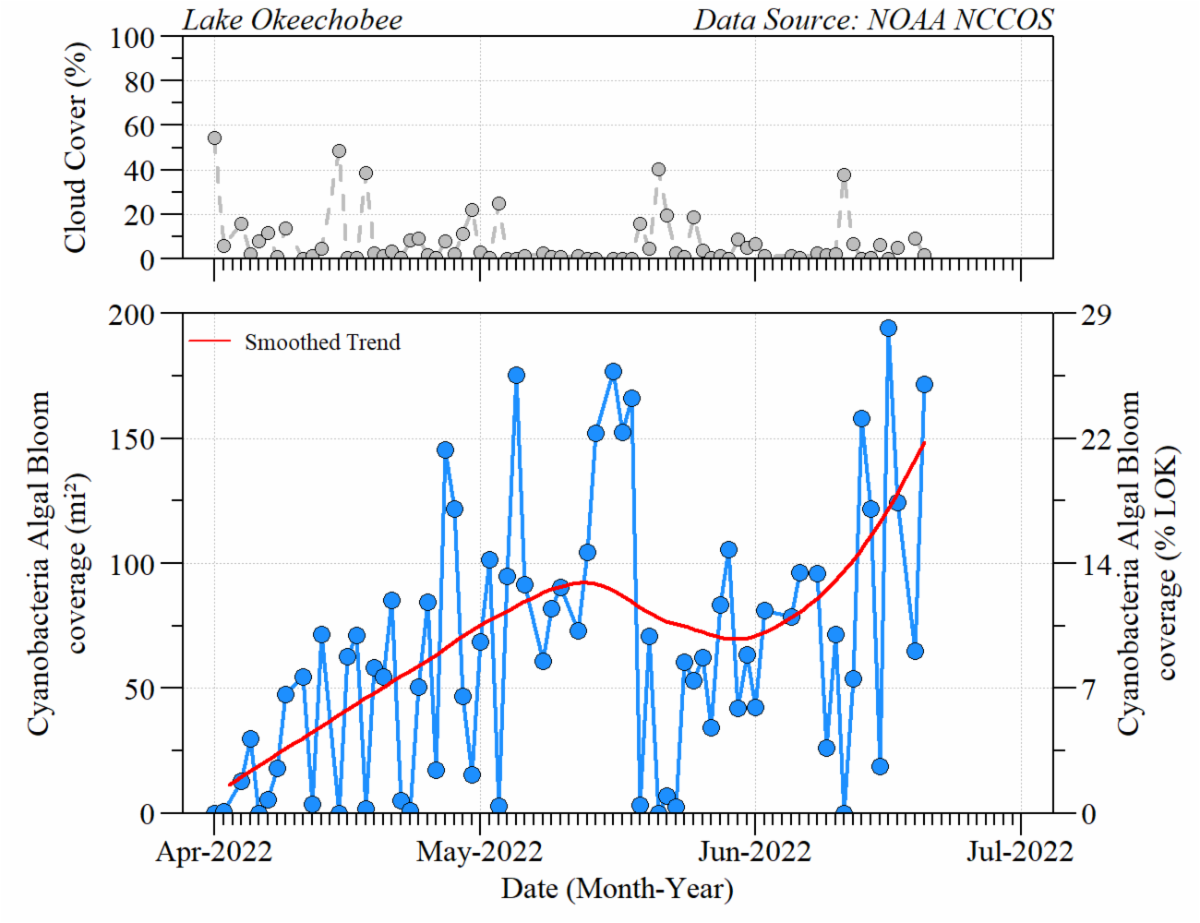
Percent coverage of cyanobacteria on Lake Okeechobee. Tropical Storm One dispersed algae on the Lake in early June, but we are now back to pre-tropical storm trends with 171.7 mi2 or approximately 24.6% of the Lake area as of 6/20/22. SCCF.
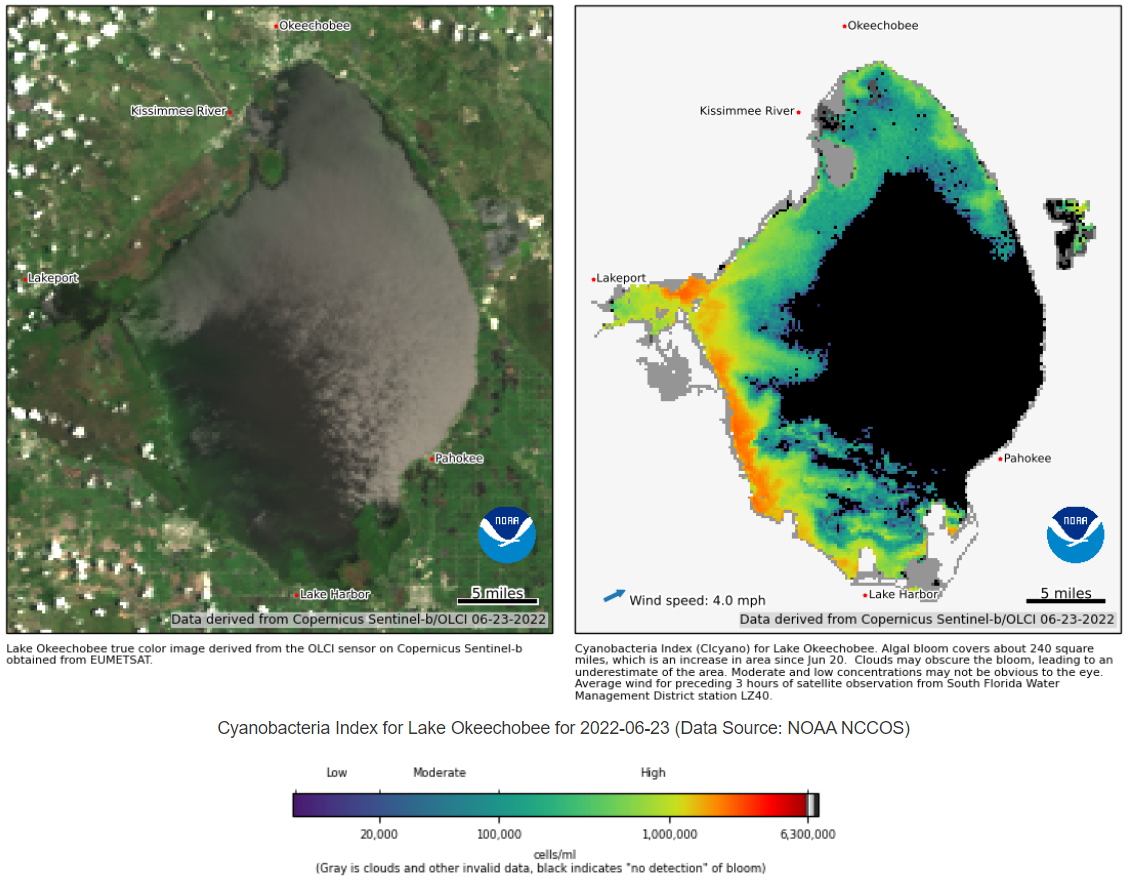
On 6/23/22, satellite imagery from Lake Okeechobee showed that algal blooms covered about 240 square miles of the Lake along the north, west, and southern shores, an increase since 6/20/22.
Resources To Follow:
To learn more about our current water conditions, click on the following links:

A collaborative, weekly analysis, including recommendations for water managers regarding Lake Okeechobee flows.

SCCF's River, Estuary, and Coastal Observing Network is a network of eight optical water quality sensors deployed throughout the Caloosahatchee and the Pine Island Sound estuary to provide real-time water quality data.


Click here to subscribe to Connecting You to SCCF and other SCCF mailing lists.
Stay Connected!
Your copy should address 3 key questions: Who am I writing for? (Audience) Why should they care? (Benefit) What do I want them to do here? (Call-to-Action)

Create a great offer by adding words like "free" "personalized" "complimentary" or "customized." A sense of urgency often helps readers take an action, so think about inserting phrases like "for a limited time only" or "only 7 remaining!"