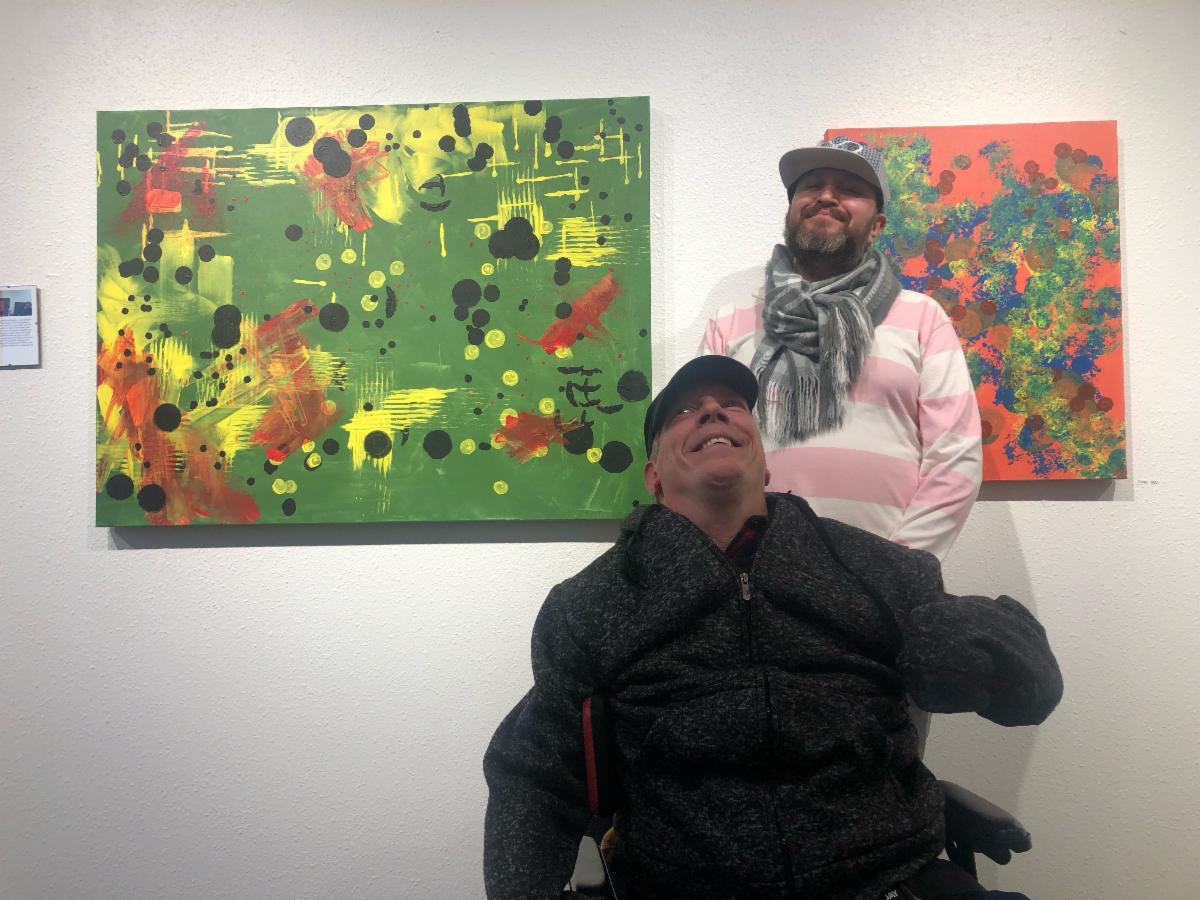
Stevie and Corey, both accomplished artists, don’t use conventional methods to make their art. They can’t.
But what the two artists and others like them who are living with disabilities can do is use the technique Artistic Realization Technologies (A.R.T.) to realize their artistic vision. Pieces created with the process have recently been sold as part of Access Gallery's corporate commission for Modivcare, a Denver Tech Center-based company that provides transportation options for people who use Medicaid and Medicare for health insurance. For nearly 50 years, Access Gallery has been a creative home for individuals living with disabilities, many of whom sell their work through the gallery’s gift shop or through corporate and non-profit commissions secured through the gallery.
The A.R.T. process uses conventional and unconventional artistic tools as well as specific processes to support artists who often do not have full use of their hands as well as many who are only semi verbal or not able to verbalize at all. Each artist works with a tracker, an abled supporter who works to specifically express what is in the artist’s head. Using creative processes that include laser pointers, color palettes, yard sticks and other simple devices, the tracker works to specifically render each artist's direction.
“The A.R.T process is set up so that the artist can completely translate their vision. The tracker keeps their influence out of the artwork,” said Louis Trujillo, Access Gallery Manager who is also a trained tracker for the process. “It gives them a voice in a world where they really don't get a voice a lot of the time. It allows them to make decisions in a world where they aren’t always given the opportunity to make their own decisions.” Read more.