|
Internal Medicine Physicians, sometimes known as Internists or Doctors of Internal Medicine, are experts in complexity. They specialize in adult medicine, and are specially trained to solve diagnostic problems, manage severe long-term illnesses, and help patients with multiple, complex chronic conditions. They provide comprehensive, longitudinal patient care. They have life-long relationships with adult patients, and their recommendations are based on each patient’s unique situation.
Internal medicine physicians' extensive training and knowledge of the entire human body and its organ systems give them a unique perspective of how everything works in unison. They analyze, consider and make connections from multiple data sets, and identify solutions for optimal health outcomes. Their expertise makes them vital to both patients and medical professionals.
Dr. Alison Redding and Dr. Monika Thoppil, Internists, are now accepting adult patients at South Central Internal Medicine. The physicians provide wellness prevention, diagnosis and treatment of chronic care patients including:
- Allergies
- Arthritis
- Blood Pressure
- Cholesterol
- Diabetes
- Digestive disorders
- Geriatrics
- Infections
- Kidney diseases
- Respiratory disorders
Medicare, Medicaid, and Most Commercial Insurance Plans are Accepted.
South Central Internal Medicine is located inside of South Central Clinics at 1203 Jefferson Street in Laurel, directly across from South Central Regional Medical Center.
For an appointment, call 601-649-2863.
| |
|
In a few weeks, children throughout the Pine Belt will be returning to school. During this preparation time, parents are stocking up on school supplies and new clothes, but South Central Regional Medical Center is reminding parents and guardians to check their child’s immunization record. Pediatrician, Grant Saxton, MD, at South Central Pediatrics, discusses vaccine requirements for school entry, why vaccinations are used and how they protect children.
“In the state of Mississippi, children need to keep vaccinations up to date for school entry. For those entering pre-kindergarten and kindergarten or who have never attended a public school before, we start by offering vaccines for Diphtheria, Tetanus, Pertussis (DTaP), Polio, Hepatitis B, Measles, Mumps, Rubella (MMR) and Chickenpox.”
Following entry to elementary school, the next set of vaccinations are due when a child enters seventh grade. “Mississippi state law requires that you have a Tdap booster. This is for protection from tetanus, diphtheria, and pertussis, which is known as whooping cough,” said Dr. Saxton.
According to the Mississippi State Department of Health (MSDH), childhood immunizations have dramatically improved the health and survival of children in Mississippi ever since polio vaccinations began in 1955. Today, diseases like diphtheria, polio, rubella and pertussis that once killed or disabled Mississippi children are now almost completely eliminated, thanks to widespread childhood immunization.
The MSDH reports that immunizations provide a high level of protection for your child at a very low risk. However, mild reactions such as temporary discomfort or low fever are possible. Serious or dangerous reactions are very rare: about 1 in one million vaccinations or fewer. The risk of serious illness from immunizations is far lower than the risk of illness from the diseases they prevent.
Dr. Saxton states, “Our goal as Pediatricians is to protect infants and children from preventable illnesses that can be debilitating and/or deadly. To have a vaccine to prevent these illnesses is excellent. I always tell people one of the best things I do on a daily basis is educate parents. Teaching parents about their children’s healthcare, immunizations and other risks, help develop children into healthy, young adults.”
Back-to-school vaccines are available at Pediatric offices – such as Ellisville Pediatric Clinic and South Central Pediatrics - but there are other medical offices that offer the same service. “Primary care clinics, local health departments or a family medicine clinic most likely stock vaccines that children are required to receive,” said Dr. Saxton. “Urgent care or walk-in type medical offices do not typically stock vaccinations for children.”
To learn more or to discuss scheduling vaccinations at a South Central Pediatric office, visit scrmc.com or call:
Ellisville Pediatric Clinic – 1203 Avenue B, Ellisville – 601-477-3550
South Central Pediatrics – 1002 Jefferson Street, Laurel – 601-649-3520
| |
|
I chose South Central because it’s a team effort.
Seth Powell, RN, has been a member of the South Central Regional Medical Center family for four years. Seth, who is a Smith County native, works on the Telemetry floor at SCRMC. He is a graduate of Mize Attendance Center and Jones College Associate Degree Nursing program. During his training, Seth participated in clinical rotations at South Central.
“During my clinical rotation, I enjoyed SCRMC because everybody seemed to step in and readily lend a hand to teach and guide the students,” said Seth. “Their assistance and training helped prepare us to complete the nursing program. South Central not only supported me as a student, but as a new nurse in the field.”
Nursing is a field that allows a person to invest not only in themselves, but in the lives of others. “A person can never go wrong by becoming a nurse. You will have rewarding experiences, always have someone looking out for you, and have availability for career growth. The best part of working at South Central is that I have experienced all of this. There will always be challenges, but if we continue to work together as a family we will push through any obstacle together.” Our focus at South Central is to emphasize team work. By working together, employees feel supported and thrive.
At SCRMC, our goal is for employees to choose us. Our health system offers extensive benefits and competitive pay rates. By choosing South Central, you become a part of our healthcare family. To view our open positions at South Central, click here.
| |
Shortness of Breath | South Central Pulmonary Medicine
Alla Yugay, MD, Pulmonologist
| |
|
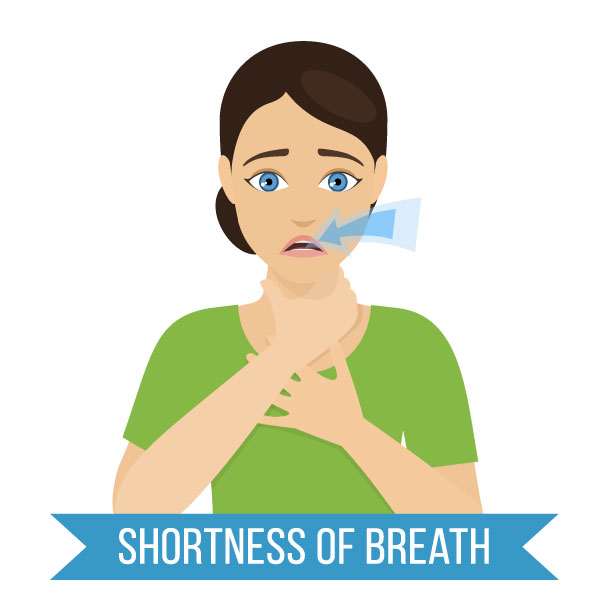
Ever feel as though you cannot catch your breath? That heavy feeling that leaves you wondering if you overdid it or if something is wrong? Alla Yugay, MD, Pulmonologist at South Central Pulmonary Medicine, clarifies what is normal and what is not for shortness of breath, including when it is time to be seen by a pulmonologist.
What Does Shortness of Breath Feel Like? Shortness of breath, or dyspnea, is difficulty breathing when resting or performing daily life activities. Shortness of breath is commonly associated with symptoms of chest tightness, cough, fatigue and anxiety, as well as a possible chest pain.
“Most common reasons for shortness of breath are lung and heart conditions, physical deconditioning and anxiety”, Dr. Yugay says. Hence, most commonly people with shortness of breath are referred to those specialties.
What Causes Shortness of Breath? Many lung conditions can be associated with shortness of breath.
- Asthma. Reversible inflammation and constriction in the airway (bronchi) that makes both inhaling and exhaling difficult.
- Chronic obstructive pulmonary disorder (COPD). Irreversible obstruction of the airway (bronchi) that makes exhalation difficult.
- Interstitial lung disease. Damage such as fibrosis and scarring of the lung tissue
“Typically, people start to feel short of breath in their 50s, as changes take time to progress. When we’re young, we can make up for reduced lung function with our physical state,” Dr. Yugay says. “In certain cases, like asthma, or early onset cardiac diseases, genetics may play a role.”
To read more about shortness of breath, click here.
| |
|
Tensage Growth Factor and its exclusive SCA Biorepair Technology use natural growth factors to promote glowing, younger-looking skin. Tensage Growth Factor is clinically proven to help improve the appearance of fine lines and wrinkles, increase elasticity and enhance texture, tone and luminosity.
All Tensage products at South Central Dermatology
are 15% off during the months of July and August.
Contact us today at 601-425-4860 for more information.
| |
|
Effective Tattoo Removal Available at the Cosmetic and Plastic Surgery Center. During the month of July, Buy 5 Laser Tattoo Removal Sessions and Get 1 Free!
The Lumenis® Tattoo Removal treatments enable your healthcare provider to effectively remove black, blue and other dark tattoos safely.
The Q-Switch technology enables tailoring of the treatment according to the type of the tattoo, to gradually and gently reveal your skin, with minimal downtime.
To learn more, call 601-425-7522.
| |
|
Alla Yugay, MD is a Pulmonologist at South Central Pulmonary Medicine. Dr. Yugay manages, diagnoses and treats a variety of lung conditions. “I chose South Central because of the wonderful community. I think it is an amazing group of people that are dedicated to making our community better.”
As a Pulmonologist, Dr. Yugay is dedicated to improving the overall health of her patients. To learn more, watch our HealthBreak segment or visit scrmc.com.
| |
|
|
South Central Health Care Foundation at Laurel-Jones County Library
SCRMC has partnered with the Laurel-Jones County Library to bring the community health resources for 2023. Each month will feature a new health topic with resources, education, screenings and local support options. We invite you to stop by the Laurel Jones County Library and learn more!
| | | |
|
Skin Cancer Awareness
Shield Yourself from Skin Cancer this Summer! About 1 million Americans will develop skin cancer each year, according to the National Cancer Institute. That makes skin cancer—not breast cancer, prostate cancer or even lung cancer—the #1 cancer threat.
While sun damage begins in childhood, most skin cancers do not appear until after age 50. The American Academy of Dermatology notes that nearly 25% of new cases of melanoma—the deadliest type of skin cancer—occur in men older than age 65. But the most preventable cause of skin cancer is excessive sun exposure. If prevention fails, speedy detection and treatment could save your life.
Suspect Skin Changes. Skin cancer can erupt anywhere, but it tends to appear most often on the head, face, neck, hands and arms. Report to your doctor any change in your skin, especially a new growth or a sore that fails to heal within two weeks. Do not wait for pain—skin cancer rarely hurts.
The most important sign of melanoma is a change in a mole or other skin growth, such as a birthmark. Any change in the shape, size or color of a mole would indicate the need to seek a health professional for examination. Melanoma normally appears like a flat, brown or black mole that has irregular, uneven borders and is not symmetrical. A melanoma may be lumpy or rounded, change color, become crusty, ooze or bleed.
When checking moles, remember your “ABCs”:
-
Asymmetry: One side of the mole does not match the other.
-
Border: A mole’s outline is jagged or blurry.
-
Color: The color is uneven. You may notice different shades of tan, black and brown. Areas of white, gray, red, pink or blue also may be present.
-
Diameter: The mole is larger than ¼ inch in diameter—about the size of a pencil eraser.
-
Elevation: Be cautious of moles that are raised above the skin’s surface.
To detect skin cancer at an early stage, get familiar with your moles and birthmarks. Then, every month, check your entire body in the mirror for skin changes, including your back, scalp and feet. A handheld mirror can help ensure a thorough self-exam. Each year it is important to schedule an annual screening with your Dermatologist. Ask your doctor to check out anything that concerns you.
For more information on skin cancer or to schedule a screening, please contact South Central Dermatology at 601-425-4860.
| | | | |