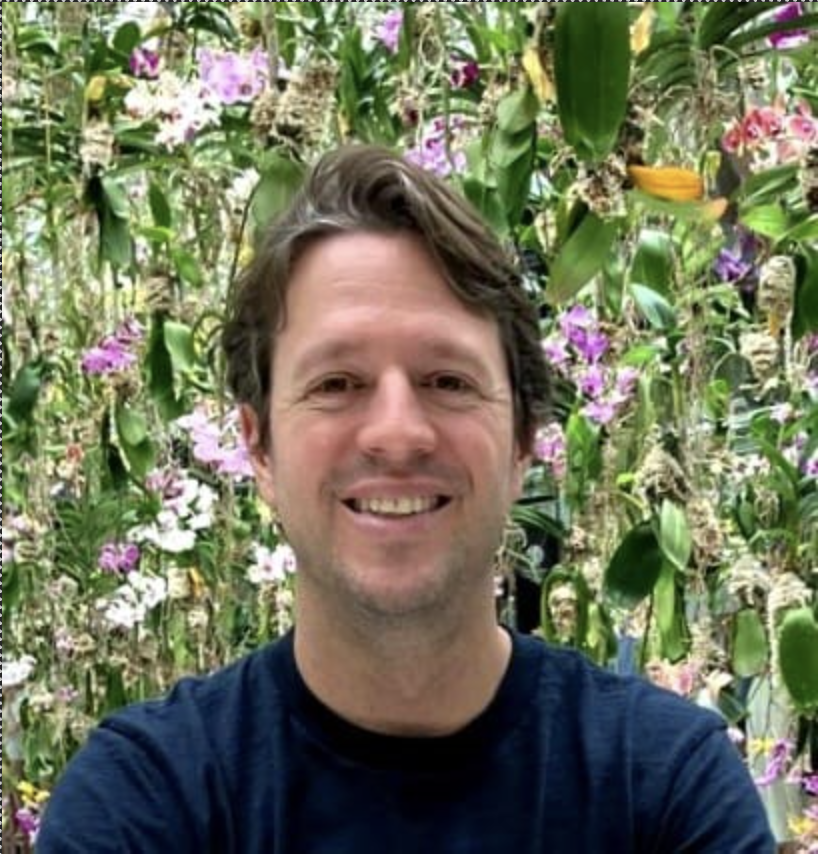
SDSG WELCOMES BRENDAN SCHWARTZ AS

EXECUTIVE DIRECTOR


Brendan Schwartz started work on April 1, 2025, as SDSG’s new Executive Director and Chief Executive Officer. I have known Brendan for nearly fifteen years and had the pleasure of working closely with him ever since he joined the SDSG Board of Directors. Brendan’s 20-year track record of on-the-ground legal empowerment support to rural communities impacted by natural resource extraction complemented by his policy research experience will help SDSG to grow its impact over the coming years. Brendan has authored the following note.  


Luke Danielson, President

Dear SDSG colleagues, partners and supporters, 


Under the leadership of Luke Danielson, Cecilia Dalupan, Kristi Disney Bruckner, Julia Metzger and many others, the Sustainable Development Strategies Group has been involved in ground-breaking work that has not only changed the way we think about natural resources and nature, but also vastly improved the governance of our natural resource endowments and the environment. Even with SDSG’s numerous accomplishments, people and the planet are now facing unprecedent challenges that require new approaches and bold initiatives.  


For the last 6+ years I’ve had the privilege to sit on SDSG’s board and am now delighted to join the staff as Executive Director. Alongside my engagements with SDSG, I worked as a researcher at the International Institute for Environment and Development (IIED) and independently as a natural resource policy analyst; consulting for philanthropic foundations, civil society organizations and United Nations agencies.  


In collaboration with SDSG’s partners in Colorado and across the globe, we will continue to ally our organization with Indigenous Peoples and local communities to uphold their rights in the context of natural resource extraction. We will also bridge the gap between social movements calling for better regulation of natural resources and policy-makers that must act with urgency to safeguard our planet. We will challenge the private sector to play its part in a sustainable world and we won’t be afraid to call-out nonsense when we see it. SDSG will continually channel its energy into new programs that will address the globally-systemic issues underpinning climate change and our collective venture into a new era of energy development.  Finally, our organization will produce even more quality research on natural resources and renewable energy.


A little about me: I was born and raised in Colorado and I couldn’t be happier to move home to work with SDSG. When I’m not in the office you’ll find me playing sports, taking the dogs for a walk, exploring nature or watching a good movie.  


As I get settled into my new role and lead SDSG’s next strategic planning cycle, I’d be delighted to hear from you: our dear colleagues, partners and supporters. Your invaluable contributions will help to shape the future of our organization! So drop me a line anytime. 

In Solidarity, 


Brendan Schwartz 

schwartz@sdsg.org  


CECILIA DALUPAN 

Cecilia Dalupan is one of SDSG’s founders. She is an extremely talented leader; heading many of our most impactful initiatives since the organization was founded in 2007, including SDSG’s work in collaboration with the Extractive Industries Transparency Initiative to increase transparency of the management of mineral revenues in a number of Southeast Asian countries. She continues to drive our work in the Philippines. As Cecilia transitions to her new role as Senior Advisor, the entire SDSG family would like to convey a BIG THANKS!

ANNOUNCING SDSG’s RARE EARTH MINERALS PROJECT

SDSG has received a grant to concudt a study on rare earth minerals policy. This project builds on a webinar co-sponsored by SDSG with the University of Denver Sturm College of Law and the Colorado School of Mines, featuring Dr. Fengping Gao of the Inner Mongolia University of Science and Technology and Dr. Roderick Eggert of the Colorado School of Mines. 


The webinar, Clean Energy Minerals and Their Supply Chains: Perspectives on the Impacts of Environmental Regulations, Trade Policies, and Climate and Clean Energy Legislation, can be viewed at this link.


There is a March 20, 2025, Executive Order in which the President prioritizes steps to promote the domestic production of critical minerals. A fundamental purpose of SDSG’s new research project is to evaluate the measures proposed in that Executive Order. We will attempt to answer the following questions and more: 

  • Is it feasible to vertically integrate and onshore the value chains of critical rare earth minerals?  
  • Will the Trump administration’s push for domestic production of key minerals advance the climate agenda?  
  • What are the implications of granting mining licenses to the US military?  

MINING DIALOGUES PODCAST 

The Colorado School of Mines has produced a podcast series entitled “Mining Dialogues.” The first in this series is now available: a set of about a dozen podcasts that feature SDSG President Luke Danielson and his long time colleague Glann Sigurdson, discussing the changes in the global mining industry over the last forty years. These podcasts can be accessed on LinkedIn


They are also available on Spotify or YouTube


OPINION PIECE: NUCLEAR POWER IS NOT “CLEAN ENERGY” 

Luke Danielson and Brendan Schwartz 

Governor Polis this week signed legislation redefining nuclear energy as “clean energy” in the state of Colorado. Neither the Governor’s Office nor the collection of legislators who supported this bill have been clear in explaining exactly what that means. 


Given what is at stake: the future of our climate, energy security, the environment, and public spending priorities, we are better off being clear in our thinking.  


Let’s be real, there is no such thing as purely “clean energy” because the supply chains of all sources of energy—even renewables—require mining, refining, transport, and manufacturing; all of which are sources of carbon emissions and have a significant material impact on our environment and the health of communities. That said, renewable sources of energy are preferable to fossil fuel-based energy, and nuclear because they have much less of an impact on the environment at scale. 


While it is absolutely true that nuclear fission itself does not produce carbon emissions, as proponents of nuclear will argue, it is equally true that nuclear plants cannot possibly function as part of a complex supply and waste chain. There are parts of that chain that can only delusionally be called “clean.” 


So let’s break it down: 


First of all, as a coalition of Colorado environmental groups rightly pointed out in a letter to Governor Polis, in some cases nuclear energy is more carbon-intensive to produce compared to wind, solar, hydropower, and geothermal.  


Furthermore, uranium mining has created a legacy of polluted and radioactive sites all over the West. Colorado alone has over 1,500 former uranium mines, many of them – probably the majority -- abandoned without any reclamation or environmental control. There are efforts to locate and clean up these mines, but they are far too small given the scale of the problem. At the rate we are going, our children’s grandchildren will inherit this mess. 


After it is mined, uranium has to be milled. There were some three dozen former uranium mill sites around the country that the government has spent billions of dollars cleaning up under the UMTRCA program, including in Colorado in places like Grand Junction, Gunnison, and Durango. And there are yet more mill sites such as the Cotter uranium mill Superfund Site outside Canon City that will take another few billion dollars to clean up. 

And then there is nuclear waste. After 75 years of trying, we are still unable to establish a national consensus on where and how to store the rather substantial amount of highly hazardous spent fuel from past nuclear power production. Our nuclear utilities have sued the government for failing to assure there is a place to put this waste, and have won judgments forcing annual payment of billions of dollars of government money in compensation. 


The U.S. has been producing far less than 1% of the world’s uranium in recent years and yet we are still reeling from the impacts. Something close to half of all world production comes from Kazakhstan. And the industry is expanding in places with very limited capacity for environmental regulation, such as Niger, Mali and the Central African Republic. 

Over half of all uranium is now produced by in situ leaching (“ISL”), where acids or other reagents are pumped into the ground, dissolve the uranium, and are then pumped to the surface. At the end of the operation’s life, the groundwater is flushed to try to avoid leaving radioactive mobile contaminants in the ground. Except in Kazakhstan sites are left with no remediation because it is said, groundwater will “naturally” reclaim itself. Do we Coloradans really want to stimulate demand for uranium and thus export this kind of environmental devastation to communities far and wide? 


The Denver Post has written that the recently passed law “would let future fission-based power plants obtain local grants previously reserved for other carbon-free energy sources, and it would allow those projects to contribute to Colorado’s renewable energy goals.” 


Given that nuclear energy i) can lead to higher carbon emissions than other forms of renewable energy; ii) uranium mining and milling has left a legacy of environmental hazards across the West and internationally; iii) there is no solid plan for managing nuclear waste; and iv) our tax dollars can be better spent subsidizing less environmentally impactful sources of energy – it leaves a lot of us wondering, why did Colorado decide to label nuclear “clean power” at all? 

Contact Us

We look forward to hearing from you!
You can reach us at:

p.  1-720-248-8707
Donate

Your donation will help us work for a future where resource development respects human rights, aligns with the economic and social objectives of local communities, and protects the natural environment.
DONATE
 
Sustainable Development Strategies Group | 1-720-248-8707
1031 33rd St., Suite 133, Denver, CO 80205 USA | www.sdsg.org
 
Facebook  Linkedin