|
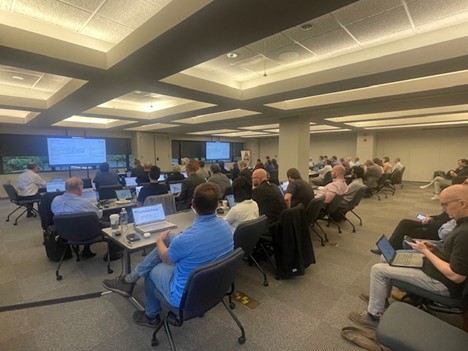
The annual January Student Showcase is SEAW’s premier, annual event for student networking. If you or your firm are interested in networking with students from both the University of Washington (UW) and Seattle University (SU), this event is for you. Don’t let this opportunity for community involvement pass you by! Click here to register.
There will be four presentations by Seattle University and University of Washington students. Presentation details will be provided prior to the event.
Date: Thursday, January 22nd, 2026
Time: 5:30PM - 8:00PM
Location: Lyceum (HUB160), Husky Union Building, 4001 E Stevens Way NE, Seattle, WA 98195
Agenda:
5:30PM - 5:45PM: Registration / Pre-function
5:45PM - 6:00PM: Welcome/Announcements
6:00PM - 7:00PM: Student Showcase Presentations
7:00PM - 8:30PM: Catered Dinner / Student-Company-SEAW Networking
Pricing (includes dinner):
- Student: FREE
- SEAW Member: $30
- Non-Member: $40
- Table Sponsor: $500
| | | | |
SPOKANE
Parker Spotts
Committee: Spokane Chapter President
| | |
The Spokane Chapter has had an active and memorable second half of the year. September marked a major highlight as we hosted the Northwest Conference. The event drew a strong turnout from across the region and was very successful, thanks to some outstanding presentations, vendors, and the CSI Dinner Party.
In October, we welcomed SCAFCO for a well-attended lunch presentation on steel stud solutions. The talk included practical case studies with cost comparisons between steel stud and wood stud systems, offering attendees a deeper understanding of material selection impacts.
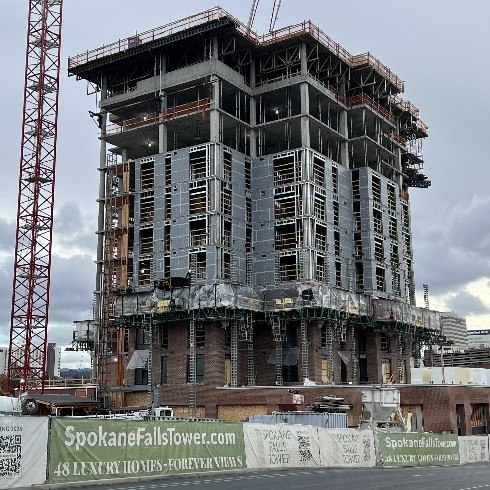
| | The Spokane SEAW Chapter was able to tour The Falls in November. Photo by Parker Spotts. | | | | |
SOUTHWEST
Evan Olszko
Committee: Southwest Chapter President
| | |
The year is rapidly coming to end, and the new year seems to be approaching especially fast with the holidays and the short daylight hours. As we close out 2025, here is a quick update on what is going on with the Southwest Chapter.
In November, the Southwest Chapter hosted two watch parties for the SEFW Fall Forum. There was a watch party at Saint Martin’s, in Lacey, and one on the UW Tacoma campus. We plan to continue doing this in the future, so if you can’t make it to the in-person Seattle event, consider attending one of the watch parties.
| | |
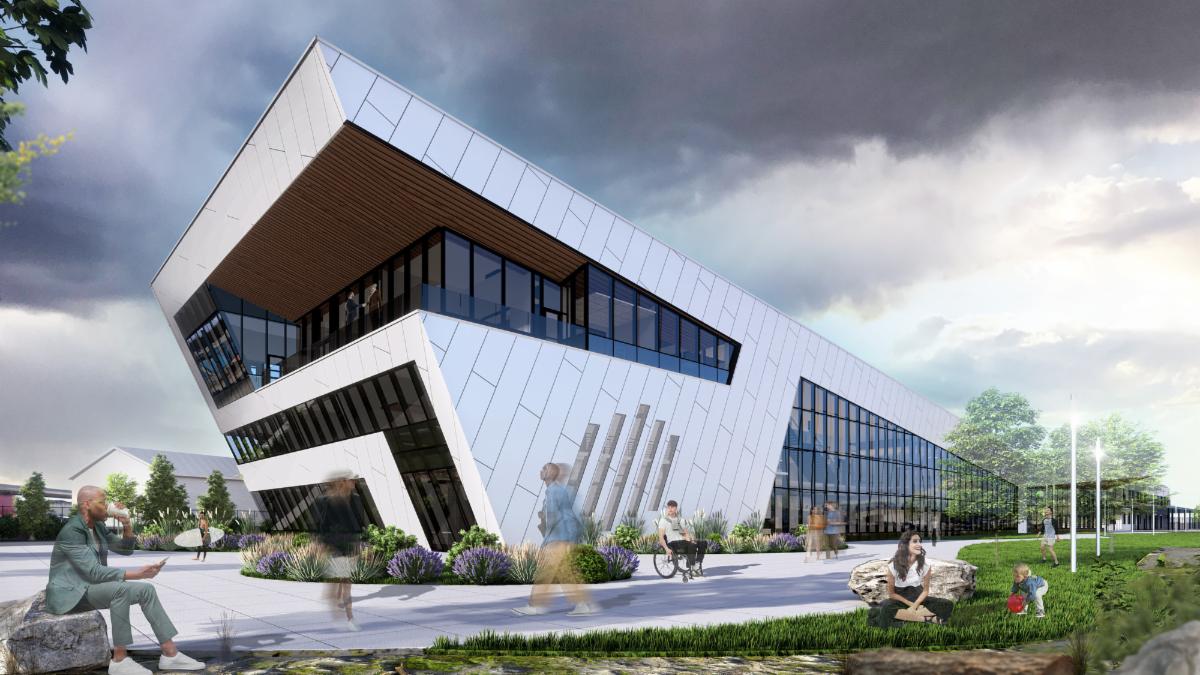
The SEAW Southwest Chapter will tour the construction site for the Maritime Center, a partnership between Port of Tacoma and Tacoma Public Schools. Rendering from TCF Architecture.
| | |
Heading into 2026, we have several exciting events coming up.
On Thursday, January 8th, we will have our joint event with CSI Mt. Rainier chapter and this year we will be joined by AIA SWW chapter. We will tour the construction of the Maritime Center, in Tacoma, followed by dinner and a presentation at the La Quinta Inn & Suites. The price for members is $40 and includes dinner ($50 for non-members). Please register for this event by January 6th at the following link.
On February 24th, our Trade Show will be returning. More details to come!
We are continuing to plan other events leading up to our annual summer social. As always, if you are aware of interesting projects in the Southwest region, have other suggestions for events, or would be interested in getting more involved with the Board, please get in touch by using our new email address, seaw.southwest@gmail.com.
See you in 2026!
| | | | |
SEATTLE
Patrick Lindblom
Committee: Seattle Chapter President
| | |
We can all agree that 2025 was a big year for SEAW, with marking the 75th anniversary of SEAW’s founding. In addition to the usual dinner meetings and committee work that SEAW has consistently held, there was even more reason to get involved and commemorate everything that SEAW has accomplished.
The Seattle chapter started off the year with our annual Student Showcase; the Younger Member Group coordinates with students from the University of Washington and Seattle University to showcase the student projects that they have worked on throughout the year. In February, we held a joint meeting with the ACI Washington chapter, which highlighted new ACI 323 and ACI 318 provisions for concrete sustainability. This was followed by a presentation from City of Seattle’s URM team on updates to their URM program. In April, we held a joint meeting with the ASCE Seattle Section with a presentation on the Seattle Waterfront expansion. We wrapped up the program year with the June Social with a fantastic presentation on the University of Washington’s new Health Sciences Education Building and the engineering awards program.
To celebrate SEAW’s 75th anniversary, two very special events were held. The SEA Northwest Conference was hosted by the Spokane Chapter. There were lots of great educational and project highlight presentations and it was a fantastic opportunity to connect with people in-person. Wrapping up the 75th year for SEAW, the Seattle and SW chapters held an anniversary gala at the Museum of Flight. The event was sponsored by CSI, and it was an extravagant evening celebrating the amazing progress that SEAW has made over the last 75 years.
| | I would like to thank the NW Conference planning committee and the 75th Anniversary planning committee for organizing and hosting these great events. I also want to thank everyone that is and has been involved with SEAW for their tireless contributions and for helping to build SEAW into the supportive organization that it is. I look forward to continuing that effort and am excited for the year to come. | | |
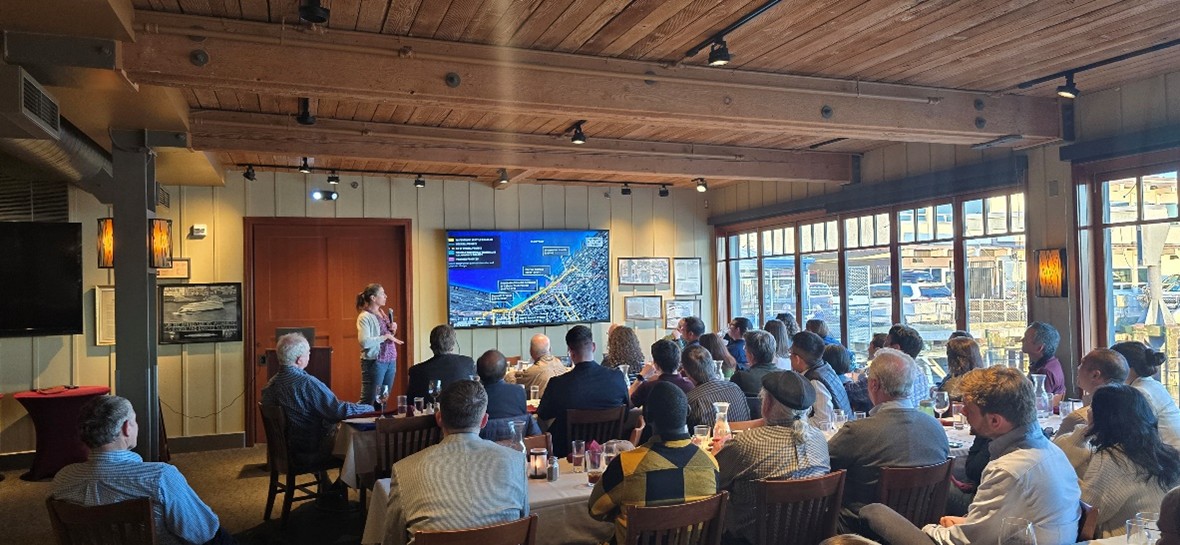
Jessica Murphy of SDOT presents on the Seattle Waterfront Program to SEAW and ASCE at the SEAW meeting in April of this year. Photo by Romulos Ragudos.
| | Dinner Meeting Discusses History, Code Adoption for Temporary Structures | | | | |
Tom Walters
Committee: YMG
| | |
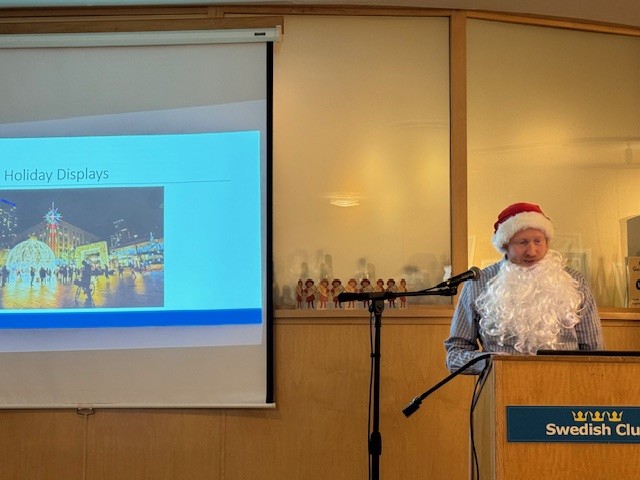
Thursday, December 11th, the Seattle Chapter gathered to hear about temporary structures from Kyle Johnson and Jon Siu. Temporary structures are all around us this holiday season: a local holiday parade stand, lighting structures on the Macy’s building, or the Seattle Christmas Market at the Seattle Center. Each of these temporary structures involve our structural engineering expertise in one way or another.
The meeting began with Kyle Johnson reviewing the history of temporary structures. While temporary structures have existed for centuries, official code adoptions did not occur until the IBC 2000, where temporary structure provisions were introduced under Chapter 31: Special Construction. Kyle spotlighted the temporary structure project of Nordstrom’s Santa Lane which was located right outside their downtown Seattle flagship store. Nordstrom’s Santa Lane was a one-story temporary structure that hosted photos with Santa for thousands of customers every year. The temporary structure emulated a homey Christmas cabin with a classic holiday look; however, what was not visible from the outside were the complex connections and detailing that went on behind the scenes.
Jon Siu led the next portion of the presentation, diving into what to expect when the IBC 2024 is adopted. Key takeaways included the reduction of environmental loads and the controlled occupancy procedures required for those reductions. Snow and ice loads will be allowed to be omitted in some areas outside of snow season, seismic loads can be reduced in areas that see less seismic activity, and wind loads can be reduced outside of hurricane season. While the code allows for these reduced environmental loads, we, as structural engineers, must still exercise due diligence and use our engineering judgment when applying these reductions.
| | Kyle Johnson, feeling festive, began the Seattle Chapter dinner meeting with a review of the history of temporary structures. Photo by Patrick Lindblom. | | |
These reductions also require Controlled Occupancy Procedures which are essentially strict, pre-approved plans to monitor hazards and implement evacuation protocol. Real-time monitoring of wind speed and snow or ice accumulation must be maintained with a threshold-based evacuation plan set in stone. Personally, having worked on temporary structure projects in the Miami area, I am most excited about the reduction of wind loads outside of hurricane season.
Thank you to both Kyle and Jon for sharing their expertise on temporary structures as well as the SEAW Seattle Chapter for sponsoring my attendance at this event!
| | SEFW Celebrates a Successful 15th Annual Fall Forum | | |
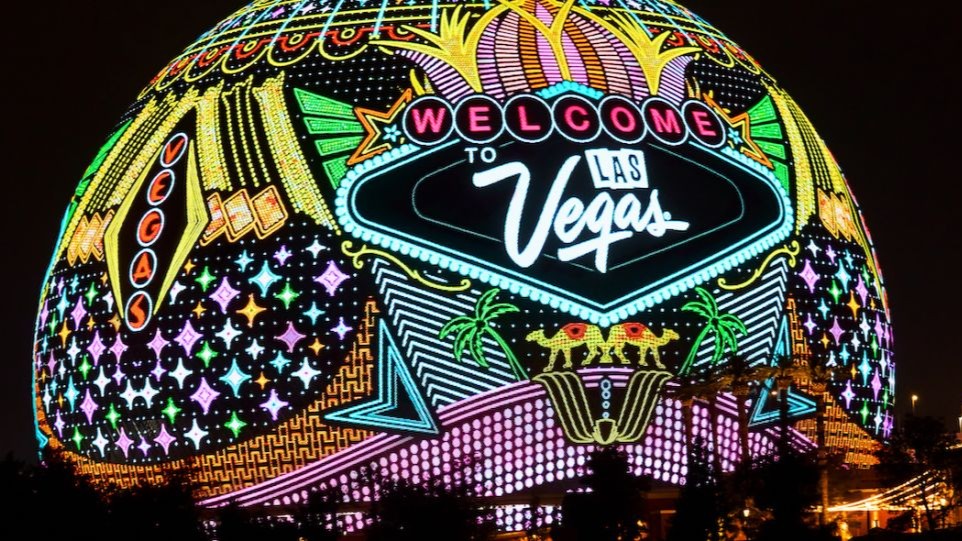
The Structural Engineers Foundation of Washington (SEFW) proudly hosted its 15th Annual Fall Forum on Thursday, November 13th at Benaroya Hall, marking another exceptional gathering of our structural engineering community. This year’s program featured a compelling keynote presentation by Cawsie Jijina, Principal at Severud Associates, who delivered an outstanding talk on “Las Vegas Sphere: Building the Ultimate Experience.” His presentation captivated the audience with an inside look at the innovation, engineering challenges, and remarkable collaboration behind one of the most complex entertainment structures ever built.
The event welcomed approximately 175 in-person attendees and 35 virtual participants, creating a vibrant hybrid experience that allowed professionals, students, and industry partners to engage from near and far.
We are also tremendously grateful for the generous support of our sponsors. A total of 29 sponsors partnered with SEFW this year, contributing $40,000 in sponsorship income. Their commitment helps us continue advancing structural engineering education and public awareness throughout Washington.
A recording of the lecture is up on the SEFW Sharepoint page and can be viewed here.
Thank you to everyone who attended, sponsored, or supported this year’s Forum. Your participation made the 15th Annual Fall Forum a resounding success. We look forward to gathering again next year to continue this important tradition of learning and connection within our profession.
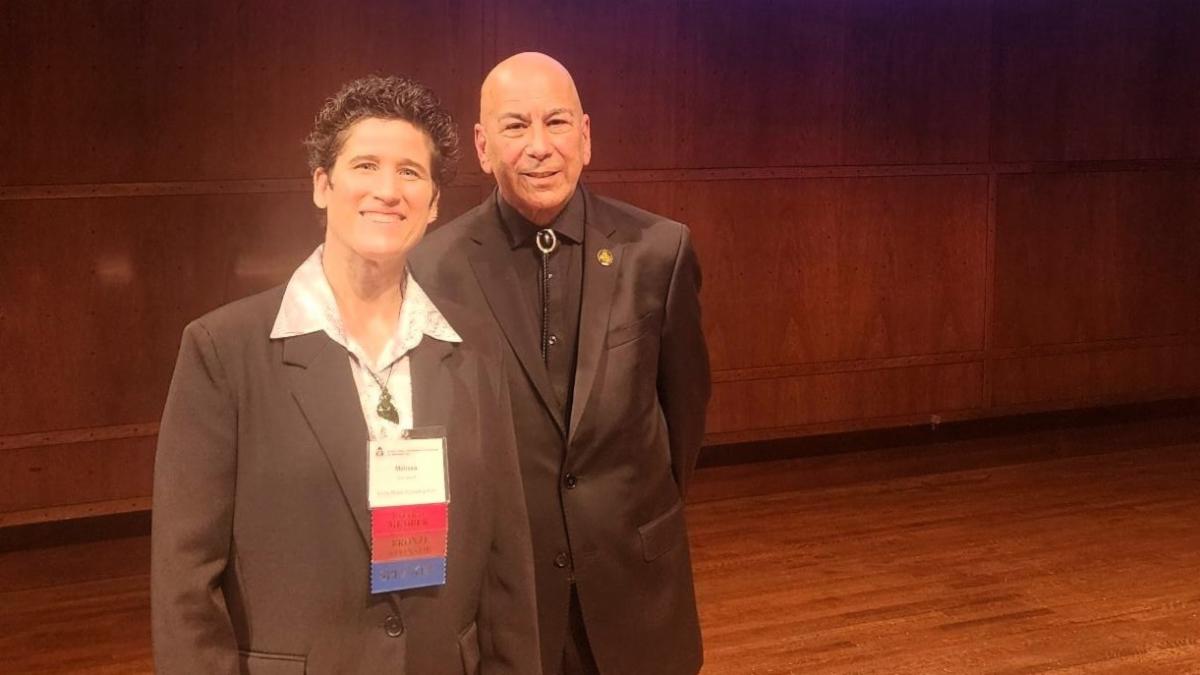
| | SEFW Chair Melissa Verwest meets with keynote presenter Cawsie Jijina before the Fall Forum. Photo by Katie Bohocky. | | Keynote presenter Cawsie Jijina shared stories from the design and construction of the MSG Las Vegas, known as the Sphere. Image courtesy SEFW. | | The YMG Experience Celebrating 75 Years of SEAW | | | | |
Paolo Bourdeau
Committee: YMG
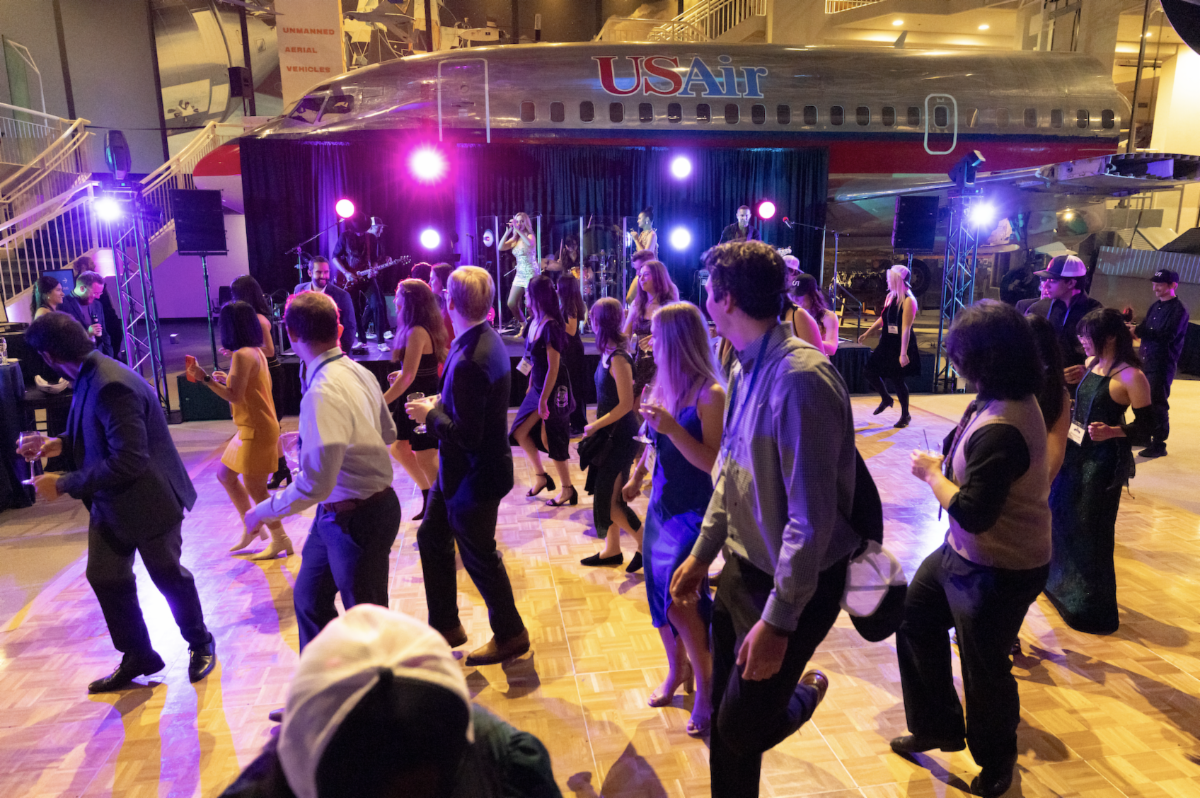
| | Guests at the 75th Anniversary Celebration, including several YMG members, participate in a line dance during the festivities. Photo by CSI. | | This year marked 75 years of SEAW, and it was celebrated through an extravagant party with the amazing backdrop of the Museum of Flight. For many young members, this was a relatively new experience. While we were accustomed to peer-to-peer networking through happy hours, small group social events, and conferences, the scale and energy of this celebration set a new standard. The evening featured great food and drinks, live music, and dancing; all enjoyed in the company of industry leaders, history makers, and emerging pioneers. | | |
Young professionals had the rare opportunity to socialize with seasoned SEAW members, hear firsthand stories of SEAW’s legacy, and feel inspired to continue shaping its future.
The Young Members Group has maintained steady membership and continues to strengthen its network. In alignment with SEAW’s 75th anniversary, the YMG hosted several social events highlighting the history of structural engineering in Seattle and SEAW’s lasting impact. These events sparked greater engagement, which was evident in the strong YMG presence at the anniversary celebration. We received positive feedback such as excitement about meeting experienced engineers from leading firms, while others showed interest in joining committees and becoming more involved in SEAW’s initiatives. Students also attended, eager to contribute to the community and learn from professionals. If you have any additional feedback, feel free to complete this survey on the event.
As we close out the year, I look forward to the SEAW history we will continue to write, such as shaping codes through committee involvement, fostering professional development through seminars and conferences, as well as impacting the community through volunteering and local policy engagement. For me, this year’s celebrations deepened my commitment to advancing the structural engineering profession and supporting the SEAW community. I hope it has done the same for you. Happy holidays and here’s to another 75 years of SEAW!
| | Tips & Insights on the Computer-Based SE Exam | | | | | |
Joe Jesse and Jared Plank
PCS Structural Solutions
| | |
Preparing for the new Structural Engineering (SE) Exam can be a daunting task, especially given the recent changes to the exam format and digital resource requirements. Success on this challenging test demands not only a strong grasp of engineering concepts but also strategic preparation and familiarity with the tools and references used during the exam. In this article we first offer practical tips and proven strategies to help maximize study efforts, develop confidence, and approach the SE Exam with a well-structured plan for success, and then we have some data analytics on the testing that you might find interesting.
Practical Tips & Proven Strategies
Take Multiple Full-Length Practice Tests. One of the most effective ways to build confidence for the SE exam is to take multiple full-length practice exams. Treat them as seriously as you would the real thing: complete them within the time limits, follow the same pacing, and resist the urge to stop and look up unfamiliar topics mid-exam. Regular exposure to realistic question formats helps reinforce your understanding and improves confidence for the long testing days. When you're finished with the exam, review every question to understand what you did well and where you can improve. If you aren't passing the practice tests, then it's unreasonable to expect that you will pass the real exam, so focus on getting strong practice test results.
Replicate the Actual Exam Environment. To make practice even more valuable, replicate the actual exam environment as closely as possible. One of the primary constraints of the new exam format is that you will be viewing references and exam material at the same time. Set up a similar workspace, which includes just one monitor, and lay out the content in the same way as you would see during the real test. Practicing in conditions that mirror the testing center helps reduce anxiety and ensures that your performance isn’t thrown off by unfamiliar surroundings and will help you improve the speed at which you can navigate the resources. If you have access to a PDF viewer such as Bluebeam, set up your materials with a practice test view on the right side and PDF references, including the NCEES handbook and applicable codes, on the left side. You can use Bluebeam's "File Access" tool to pin all your codes and references to the lefthand side panel in a format that mirrors the test environment.
Practice Using the Digital Codes and Resources. Because the SE exam is heavily dependent on reference materials, it’s also critical to practice using the same digital codes and resources you’ll rely on during the exam. It's easy to underestimate the time required to navigate these documents efficiently. Integrate these codes into your daily practice so that finding tables, provisions, and equations becomes second nature. Remember that without the context of book thickness or tabs, it can be more difficult to remember where to flip to in a reference, and you’ll need to focus on section numbering and chapters.
Seek Opportunities to Practice with All Relevant Codes. There is no better way to study than with actual practice of the codes in effect. Not only does it reinforce learning, but you are getting paid to study! Seek out opportunities to practice with codes and materials with which you are less familiar. For those unfamiliar with AASHTO, something as simple as a retaining wall subject to vehicle or highway surcharge loads can be a great introduction to the organization and flow of the codes. The same goes for small structures like canopies that can be a good introduction for ASCE 7 loads, and material standards.
Split Up the Exams. The revised exam format allows test takers the opportunity to sit for breadth exams at any time throughout the year. Take advantage of this opportunity, and space out the gravity and lateral exams. There is a lot of material to cover between the two types of exams, and while the codes are the same, the overlap in study material isn’t large. Splitting up the exams allows you to narrow down the scope of your study material and focus your efforts.
Thorough preparation and strategic practice are key to success on the SE exam. By simulating real test conditions, mastering digital resources, and focusing your study efforts, you can approach exam day with greater confidence and readiness. Take advantage of every opportunity to familiarize yourself with the format and material to maximize your performance.
Background, Data & Insights
The SE Exam has seen many different iterations over the years and has, historically speaking, been a difficult exam. Recent changes have made this statement even more true. Summarized below are background, data, and insights to help you understand where we are today. Additionally, noted at the end of the article are upcoming changes to the exam starting in Spring of 2026.
Background. Most are now aware that NCEES has transitioned the PE Structural Exam (Breadth and Depth for both Lateral and Vertical components) to a Computer Based testing (CBT) system. This change has resulted in low pass rates for the Depth portions of both the Lateral and Vertical exams. Survey results and direct feedback has indicated that access to reference material has been one of the most prominent issues.
| | |
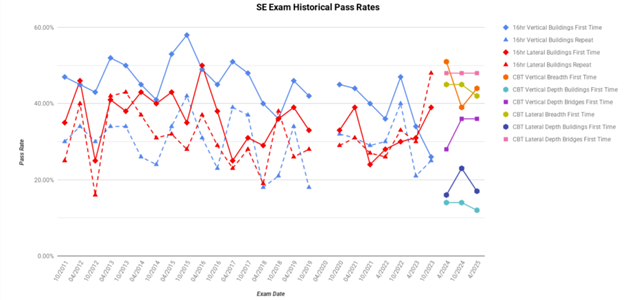
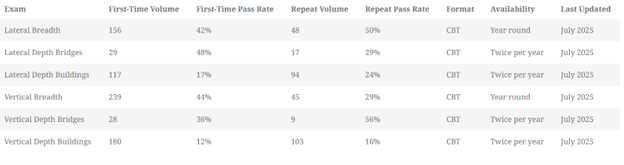
Data: NCEES updates test data when results are available (typically 2 months after the depth sections are completed in April and October). We have included images here on historical pass rates for the SE exam, as well as pass rates for April. The October numbers are not available yet.
Insights: Historically the average exam pass rate for Vertical and Lateral exams were around 44% and 35% respectively with the written exam. Currently Breadth CBT exams are being passed at around 45% while Depth CBT exams are being passed at around 15%.
| | SE Exam Historical Pass Rates. Image from Godfrey, W. “NCEES SE Exam Historical Pass Rates.” williamsgodfrey.com, January 20th, 2025 | SE Exam April 2025 Pass Rates. Image from National Council of Examiners for Engineering and Surveying. “Structural Exam Pass Rates.” Ncees.org, July, 2025 | | |
So why the disparity of passing rates between current Breadth and Depth? With shorter questions and less code lookups required, the Breadth exam may be easier to manage the digital references, and thus a higher pass rate. This tracks with the Bridge sections of the depth exam being passed at a higher rate (36-48% currently) since the code references for bridge engineers are limited for the most part to a single code.
Repeat test takers historically have performed worse, while currently repeat test takers have, on average, done better. One theory for this is that since the exam format is difficult to recreate, taking the exam on multiple occasions allows users to familiarize themselves with the digital resources. As indicated above, one suggestion is to try to recreate the test environment for practice tests. This along with practicing using digital codes as much as possible in daily work appear to be keys to success.
There has been a general decrease in test takers, which is concerning for the advancement of SE Licensure nationwide and in Washington state. We are hopeful that upcoming changes to the exam will enable higher passing rates and encourage more examinees to take the test in the future.
Changes: In the Summer Equilibrium Marjorie Lund (Past Chair, BRPELS) reminded us of a few changes. See below for a quick summary:
- April 2026: 60 questions, 40 scored, 6.5 hours*
- October 2026: 60 questions, 40 scored, 6.5 hours*
- April 2027 and future (not confirmed): 48 questions, 40 scored, 6.5 hours
- *includes tutorial and break
We are hopeful that the extra hour this spring and eventually reduction in pretest questions will help examinees have enough time to adequately address each question.
Additional Resources: NCEES lists on their website additional resources including requesting exam accommodation. It is important to note that accommodation cannot be added to a previously scheduled exam. Requests for “reasonable” accommodations, such as requesting additional time or resources, are done by indicating your needs during the exam registration process. Once registered, you’ll receive an email from NCEES that contains next steps to continue your accommodations request. Steps include creating an account and submitting supporting doctor or psychologist evaluations. Here is the link to the Pearson VUE website with more details and to request test accommodations.
Summary: We are hopeful that upcoming changes will be welcomed and help individuals with the difficult task of passing the SE Exam. SEAW has been, and still is, pushing for changes to the exam to ensure it is testing based on current principles and practices.
If you have feedback for SEAW please reach out. Any complaints about the exam should be issued directly to BRPELS if possible. To formally file a complaint, click here.
They have the strongest voice to push for changes. SEAW will continue to advocate for our members and encourage licensure in Washington and nationwide.
Please join us if you are not yet a member or participate in our chapter meetings to keep the conversation going.
| | GCRC Ends Productive Year, Shares Recap | | | | |
Scott Douglas
Committee: GCRC
| | |
The GCRC (General Code Requirements Committee) has been extremely active since its inception this February, with ten meetings and the following agenda items that have been discussed:
Washington State Snow Loads
State Building Code (IBC) Proposal 24-GP1-063. The SEAW GCRC is finalizing clarifying language to submit as a public comment to State Building Code Proposal 24-GP1-063. Public comment period is February 18th through March 27th, 2026. This proposal addresses:
- An alternate analysis method for snow drift for sites 700 feet and less in elevation west of the Cascades, and
- A requirement to submit substantiating data to the building official where the site elevation and hazard tool elevation differ by 10% or 300 feet.
State Residential Code (IRC) Proposal 24-GP2-035. The Committee cleaned up the snow load language in IRC Section R301 and submitted it as proposal 24-GP2-035. This proposal was approved August 26 by the SBCC Technical Advisory Group. The Committee will also submit a public proposal to clarify that the snow loads in R403.1.1 are ASD and not strength loads.
State Amendment Schedule
The 2024 Washington State Building Code and Residential Code is currently scheduled for adoption November 1st, 2026. The GCRC Committee will review and update as required SEAW White Paper #2-2009, SEAW/WABO White Paper #8, and SEAW/WABO White Paper dated August 2000, regarding snow loads once the above state amendments are adopted.
| | |
Guard Loadings
State Building Code (IBC) Change Proposal S74-25. The issue of guard loadings in crowded areas was also submitted for the 2027 IBC as code change proposal S74-25 (IBC-Structural Committee Action Hearings (CAH #1) and IBC Structural Committee Action Hearings (CAH #2). The proposal failed at the second session of ICC hearings in Cleveland October 22nd through 30th. A revised public proposal to address the issue of guard loadings in crowded areas was presented to the ASCE 7-28 Subcommittee on Dead and Live Loads (DLSC) December 3rd. The DLSC made recommendations to revise the proposal. These recommendations are being incorporated and will be presented at the DLSC’s next meeting for review and planned balloting by the Subcommittee.
| | Proposal S74-25 concerning guard loadings in crowded areas was considered at the ICC hearings in Cleveland in October. Photo by Scott Douglas. | | |
Flood Loads
ASCE 24-24. ASCE 24-24, Flood Resistant Design and Construction, has recently been published. ASCE 24-24 contains significant changes from the previous version, ASCE 24-14. It basically extends the flood hazard from a 100 year to a 500 year flood plain.
State Building Code Proposal 24-GP1-053. Making its way through the SBCC approval process, this proposal adopts Supplements 1 and 2 to ASCE 24-14. It was determined that SBCC adoption of ASCE 7-14 Supplement #2, which includes the 500-year flood plain requirements of ASCE 24-24, would present some challenges and difficulties in design. As a consequence, the part of Proposal 24-GP1-053 to adopt Supplement #2 as a State amendment will be withdrawn during the public comment period February 18 thru March 27, 2026.
Next Meeting
Join Us! Tuesday February 10th from 12:00pm to 1:00pm.
Meeting will be virtual via the following Zoom link:
https://us02web.zoom.us/j/6785565290pwd=f3EPR3pAr4btK0sapF1wfOEgYnGIDY.1&omn=87420834725
Meeting ID: 678 556 5290 | Passcode: 309648
| | Updates from the Wind Engineering Committee | | | | |
Scott Douglas
Committee: WEC
| | |
SEAW’s WEC (Wind Engineering Committee) submits the following report for the Winter Equilibrium:
-
State of Washington Special Wind Regions (SWR) – Current status for incorporating SEAW White Paper WEC #3-2023 recommendations for Special Wind Regions in Washington State in relevant Building Codes:
-
2024 Washington State Building Code – Code Change Proposal 24-GP1-004 was approved by the Washington State Building Code Council (SBCC) Technical Advisory Group (TAG) and the BFRW (Building, Fire, Residential, and Wildland-Urban Interface) standing committees. This proposed State amendment will be posted for public comment February 18 thru March 27, 2026. After resolving any public comments and passing the full SBCC, the SBCC Staff will file this and all other Washington Code amendments for approval by the State Legislature. The updated Special Wind Regions are expected to be approved by the Legislature and officially become part of the 2024 Washington State Building Code in November 2026.
-
2024 Washington State Residential Code – Code Change Petition 24-GP2-034 – This amendment to incorporate the updated Special Wind Regions was approved August 26 by the SBCC TAG Committee. SEAW members seldom use the International Residential Code (IRC), but the IRC is frequently used by the AHJ’s in the Washington State SWRs. This proposal will align the Washington State Residential Code SWR wind speeds and boundaries in the IRC with those in the Washington State Building Code.
-
ASCE 7-28 – The Washington State and Oregon SWR ballot proposal was balloted and has been approved by the ASCE 7-28 Main Committee.
- Continuing Agenda Items for 2026: With codification efforts for the Washington State SWR relatively complete the SEAW WEC committee will target the following two agenda items for completion in 2026:
-
City of Bellevue Kzt Map – A Kzt Wind Load Factor map replicating City of Seattle’s Wind Load Factor Map will be generated for City of Bellevue’s consideration. If adopted, the map will facilitate an alternate conservative method for rapid determination of Kzt factors and justify use of a Shoreline Exposure C classification in the City of Bellevue.
- SEAW/ATC 60 Wind Commentary Update – The effort to partner with the NCSEA Wind Engineering Code Advisory Subcommittee to update the 2004 SEAW/ATC 60 Wind Commentary will continue.
-
Participation - All SEAW members, whatever their experience, are encouraged to participate in WEC meetings. Please contact the WEC chair, Scott Douglas sdouglasscott@gmail.com, to join the SEAW WEC and receive additional information and announcements on Committee activities and actions.
| | Seattle Structural Engineering Excellence Awards | | | | |
Kyle Johnson
Committee: Seattle Chapter
| | |
SEAW is excited to announce the inaugural Structural Engineering Excellence (SEE) Awards Program! This will be an annual event that celebrates the significant structural engineering achievements of our members. The award ceremony is a key opportunity for SEAW’s Seattle Chapter to recognize the successful work of our members. Members of the SEAW Seattle Chapter are encouraged to submit eligible projects to the annual SEE awards program for consideration. Solicitations for applications will go out in January 2026 with an awards ceremony at the June Social.
Five awards will be given in five different categories, as well as a People’s Choice Award and a Community Impact Award. The five categories for awards are as follows:
-
New Construction: Excellence in the structural engineering analysis, design, and/or construction of a new construction project.
-
Retrofit/Alteration/Historic Preservation: Excellence in the structural engineering analysis, design, and/or construction of an evaluation and/or design of a seismic retrofit project or alteration of an existing structure. This category includes seismic analysis, seismic strengthening, additions, tenant improvements, and other structural building alterations.
-
Infrastructure: Excellence in the structural engineering analysis, design, and/or construction of an infrastructure project, including but not limited to, bridges, tunnels, transportation facilities, and dams.
-
Special-Use Structures: Excellence in the structural engineering analysis, design, and/or construction of a special-use project. Examples include non-building structures such as a temporary movie set, an artificial rock-climbing wall, or a sculptural work of art.
-
Study/Research/Guidelines: Outstanding achievement in the development of structural engineering practice, standards, research documents, or design guidelines. This category is intended to encompass projects or efforts that may not result in a constructed project.
Keep an eye out for the call for submissions in January with more information.
| | |
SEAW SW & CSI Mount Rainier Maritime Center Tour & Presentation
January 8th | 2:30PM - 7:00PM | Tacoma, WA
SEAW Spokane January Meeting
January 20th | 12:00PM -1:30PM | Spokane, WA
SEAW Seattle Student Showcase
January 22nd | 5:30PM - 8:30PM | Seattle, WA
| Visit the SEAW website for other event dates and information. |
| |
Welcome New Member!
Jason Bourne
Member SE (Bourne Engineering) | Seattle Chapter
| | Are you currently seeking employment as a structural engineer, senior manager, or a senior engineer technician? Check out our job board for current employment opportunities. | | |
Structural Engineer
MLA Engineering | Seattle, Washington
MLA Engineering has a unique opportunity for a Structural Engineer with three to eight years of experience to join our growing consulting and design firm in Seattle, WA. Our diverse projects require critical thinking and creativity that is cultivated through our problem-solving approach in a flexible work environment. We encourage professional development and have opportunities to advance to management roles for individuals with appropriate motivation, experience, and skills.
We design new buildings and renovate existing structures in concrete, steel, masonry, and wood-framing. We have a specialized niche in the structural design of aquarium and zoo facilities in the United States and abroad; in addition to building designs for governmental projects, including county and state infrastructure.
Qualifications required for this Structural Engineer position include:
- Bachelor’s or Master’s Degree in Civil Engineering with Structural emphasis from an ABET accredited program;
- Minimum of three years of experience working in a structural engineering consulting design office;
- EIT for three to five years of experience, PE/SE for five to eight years of experience;
- Strong technical background and analytical skills, including technical writing;
- Intuitive and practical;
- Practical use of REVIT as a design tool;
- Proficient with structural software such as RISA, ETABS, SAP2000;
- Confident and articulate in written and verbal communication;
- Motivated to advance your effectiveness as an engineer;
- Must be authorized to work in the United States.
Our welcoming and collaborative work environment encourages creativity, teamwork, and professional growth. To learn more about MLA, please visit our website at: www.mlaengineering.com
Apply: Send a cover letter and resume to MLA Engineering, LLC, 1109-1st Ave, Ste 300, Seattle, WA 98101 or email: info@mlaengineering.com
Location: Convenient Downtown Waterfront Seattle location with excellent public transit options.
Benefits: Top line Medical, Dental & Vision insurance, generous HRA account, 401K Plan w/4% matching, PTO & Sick Leave, and professional training
Work Schedule: Flexible, with a minimum of three days per week in MLA's Seattle office, combined with some remote work time from home.
Supplemental Pay: Bonus and compensatory pay.
Projects: Diverse and often unique.
MLA Engineering is an equal opportunity employer. We encourage women and minority candidates to apply.
| |
Applying or Renewing your Membership in SEAW
SEAW is organized into the membership categories and their corresponding dues structures listed below. Select the membership category that best fits your status. Your contact information is shared with our foundation, SEFW. In order to “opt-out” please contact the association office.
| Please consider making a line-item donation to SEFW as part of your dues renewal. Special designation can be placed on the donation, so it can be applied to scholarships, disaster preparedness or research opportunities. SEFW fulfills its mission with the assistance of donations from individuals and corporations. More information on SEFW and its mission to promote structural engineering can be found at www.sefw.org. Thank you for your support! | | | | |