SFWMD Governing Board Approves
Lower East Coast Water Supply Plan Serving 6 Million People
Plan calls for measures such as maintaining adequate Lake Okeechobee levels to fight saltwater intrusion into drinking water wellfields
|
|
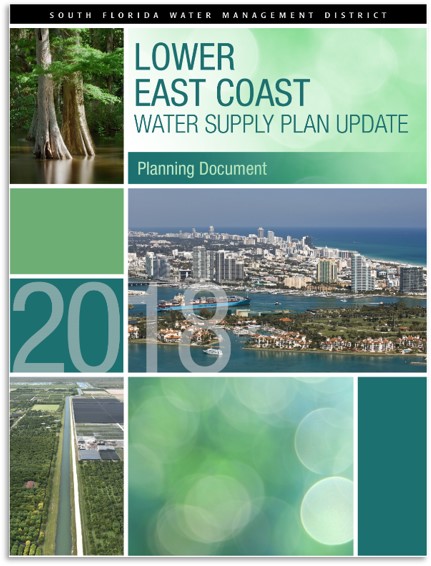
| Click on the image to view SFWMD's Lower East Coast Water Supply Plan web page. |
Miami, FL - The South Florida Water Management District (SFWMD) Governing Board on Thursday approved an update of the Lower East Coast Water Supply Plan, a blueprint to ensure there will be enough drinking water for the more than 6 million residents of South Florida's Lower East Coast region. The Lower East Coast Water Supply Plan directly protects water sources in Palm Beach, Broward and Miami-Dade counties and parts of Monroe, Collier and Hendry counties for the next 20 years.
"No one can predict whether Mother Nature will leave our District with a deluge of water or create a drought. That is important to remember when advocating for lower lake levels in Lake Okeechobee," said SFWMD Governing Board Chairman and Miami-Dade County resident Federico Fernandez. "The Lower East Coast Water Supply Plan considers Lake Okeechobee water essential to replenishing the region's drinking water wellfields and ensuring their water supply."
The Lower East Coast's approximately 6 million residents, businesses, industries and agricultural operations use almost 1.7 billion gallons of water per day, so ensuring that resource remains vital to protecting life. SFWMD updates regional water supply plans every five years. The plans identify water sources in relation to water demand over the next 20 years.
The update approved by the Governing Board estimates the Lower East Coast's population will increase by about 26 percent, resulting in 7.5 million residents by 2040. Demand for water in those counties will increase by 14 percent to more than 2 billion gallons per day. Efforts by SFWMD and utilities to promote water reuse and conservation have helped control the demand for water amid an ever-increasing population.
The plan update also anticipates the potential impact of sea level rise on water supply by 2040. The plan specifically takes into account the potential threat of salt water intruding farther into underground freshwater wellfields that are used to supply drinking water to residents. SFWMD works with the U.S. Geological Survey to map the underground saltwater front every five years. The next SFWMD saltwater intrusion mapping will be conducted in 2019.
Maintaining adequate levels of water in Lake Okeechobee also helps combat sea level rise and encroachment of saltwater intrusion because it allows SFWMD to move water into canals to recharge underground aquifers during the dry season. If levels in the lake were kept too low during dry periods, SFWMD would be unable to supply enough fresh water to conservation areas and canals to keep the underground saltwater front from moving farther inland. This scenario could potentially endanger the drinking water supply of millions of residents.
For more updates on SFWMD's work: