|
The Importance of Odor Control in Composting
Uncontrolled odors are more than just an annoyance – they can threaten the viability of a composting facility. Foul smells from compost piles often lead to public complaints and can prompt regulatory action or even facility shutdowns. Persistent odors pose a nuisance to neighbors, increase operating costs through additional mitigation or legal challenges, damage the compost industry’s reputation, erode public trust, and make it more difficult to site new facilities. In other words, odor issues undermine community goodwill and tarnish the reputation of composting. By contrast, a facility that effectively contains and neutralizes odors will be viewed more positively, easing community acceptance and future expansion.
Regulatory Landscape
Regulatory Environment: Odors themselves are challenging to regulate, but some regions have begun adopting standards to address this issue. More commonly, regulators address odor indirectly by limiting the emissions of compounds that cause odor, such as volatile organic compounds (VOCs) and ammonia. VOCs from compost (e.g., terpenes, alcohols) contribute to smog, so air districts in California have rules (SCAQMD Rule 1133.3, San Joaquin Valley Rules 4565/4566, etc.) requiring ≥80–90% VOC reductions from composting operations. These strict standards effectively force the use of advanced odor control technologies in those regions.
SG ADVANCED COMPOSTING™ Technology, combined with the GORE® Cover, has been recognized as a Best Available Control Technology (BACT) for odor and VOC control by at least one California air district. Overall, the trend is toward tighter integration of composting within air quality permitting, ensuring that modern facilities minimize the impact of odors on the community.
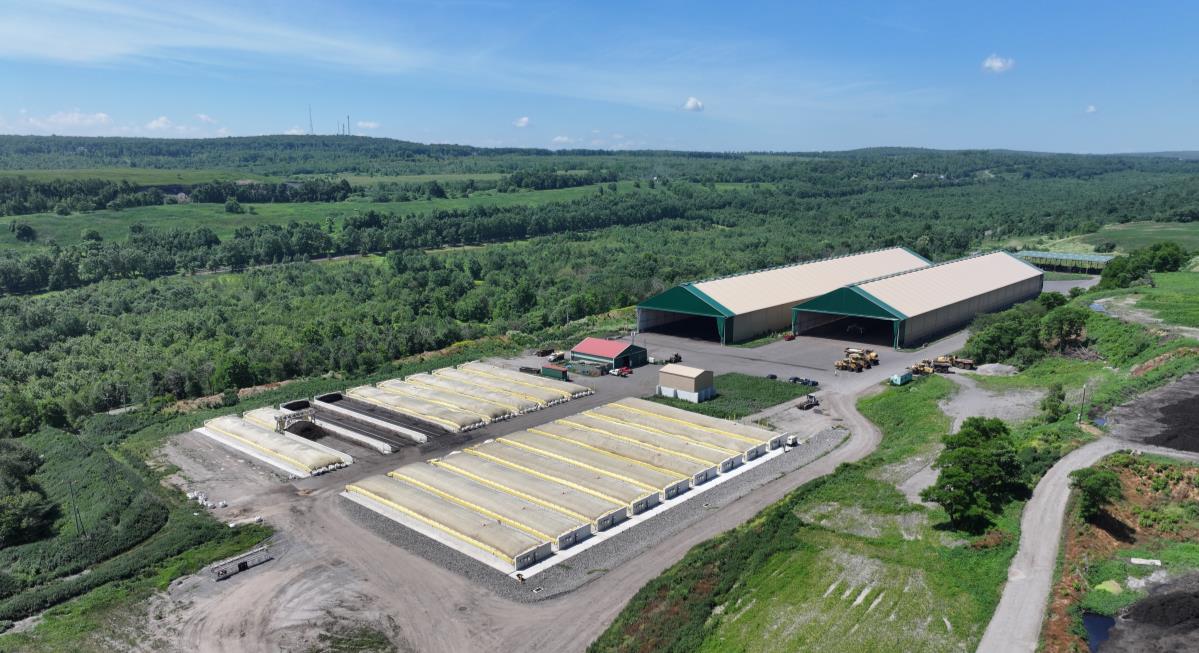
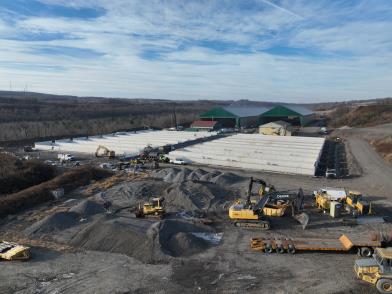
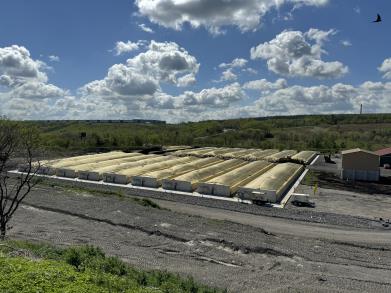
One of the most effective solutions for controlling compost odor is the approach exemplified by Sustainable Generation®. This system transforms an open compost pile into a contained, in-vessel process without the need for a permanent building. In SG’s system, compost piles are covered with a special semi-permeable membrane (the GORE® Cover) and aerated with blowers. The membrane creates a controlled microclimate inside the pile and captures emissions. The GORE® cover is a multilayer, breathable fabric that allows airflow and gas exchange while trapping odors, VOCs, and bioaerosols.
In a covered ASP, air is forced into the pile, resulting in positive aeration. As the airflow percolates outward, it carries odorous compounds to the underside of the cover, where a microbial layer on the fabric biologically scrubs many of the odorous compounds from the pile surface. The cover also sheds rainwater while retaining moisture within the heap, eliminating the need for separate roofs to keep stormwater out, unlike a basic “compost cap” of finished compost or wood chips (often used on open piles). There is no unmanaged venting of odor and no reliance on energy-intensive external biofilters or scrubbers for exhaust air. This enables facilities to process food scraps, biosolids, and manures at higher ratios than would be possible in uncovered systems, which typically must limit such inputs to avoid overwhelming their odor controls.
Proven Odor & Emission Reductions
SG ADVANCED COMPOSTING™ Technology has been validated through third-party testing in the field. A recent study in Santa Barbara County, California, compared traditional open windrow composting to SG’s covered aerated static piles for processing wet digestate, a particularly odor-prone material. The independent tests showed a 97.5% reduction in odor emissions and a 98% reduction in VOC emissions compared to the baseline open windrows.
These dramatic results were achieved while also cleanly separating stormwater from leachate during heavy rains and producing a stable, fully matured compost in approximately 90 days. Notably, volatilization (as observed in one study) resulted in nearly undetectable ammonia in the cover’s exhaust, indicating that more nitrogen is retained in the compost. This not only improves air quality but also yields a richer finished compost.
Furthermore, because the process is enclosed and insulated, it maintains optimal temperatures and moisture, accelerating biodegradation.
|