Florida Shore and Beach Preservation Association Monthly Newsletter APRIL 2026 EDITION

Partial Wrap-up of the 2026 Regular Legislative Session & 

Update on Perpetual Easements, Washington DC Trip 

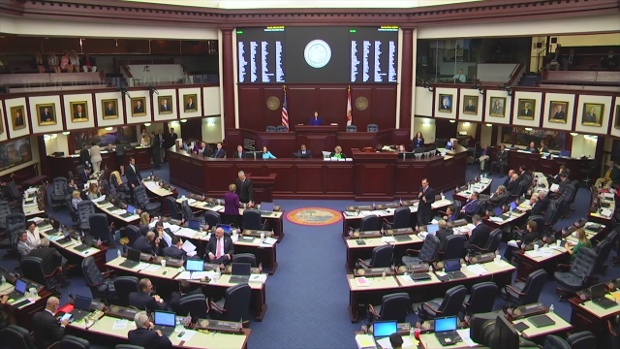
We find ourselves in an uncomfortable albeit familiar situation this year. After 60 days of the 2026 Regular Legislative Session, the policy is concluded but the budget is not. We are all waiting on the House and Senate to iron out their budget differences. With continuing philosophical disagreements on spending, and taking into consideration looming budget deficits, the two chambers are at an impasse.

Inside this Edition


Partial Wrap-up of the 2026 Regular Legislative Session & 

Update on Perpetual Easements, Washington DC Trip 


2026 Awards Nominations Now Open


FDEP Revises Coastal Armoring Standard


2026 FRC Student Travel Scholarship Application


Leadership Update: U.S. Army Corps of Engineers

SUBSTANTIVE BILLS DURING SESSION 


The most important bill this session, which took up the majority of our time and political capital, was SB 636 (Leek)/HB 1297 (Greco) – Beach Management, which FSBPA and a broad coalition of local government stakeholders opposed as drafted. 

The bill would have created an administrative path for a critical erosion designation in addition to the existing data-driven method in s. 161.161, F.S. In so doing, it required DEP to review data related to beaches that have been preemptively and repeatedly repaired to avoid complete erosion and for which private funding, local government funding, and state and federal grants have been expended to stop or mitigate such erosion. Additionally, there were several other provisions that if met would automatically designate a beach as critically eroded. 


Although we supported the underlying concept of creating an administrative path for critical erosion designations, there were some major potential unintended consequences that needed to be addressed. Ultimately, there was too much opposition and not enough time for the sponsors to negotiate fixes. The bill was held in both chambers pending compromise language that never came. 


I want to sincerely thank our coalition of local government stakeholders and their contract lobbying teams. Also, the support we got Representatives Berfield and Griffitts and Senators Passidomo and Hooper was immeasurable. We could not have achieved this result without their tireless work behind the scenes. I will continue to work on this issue over the summer and fall to see if the sponsors can get relief for their district through other avenues to avoid a repeat next session. 


SB 302 (Garcia)/HB 1035 (Mooney) – Nature-based Coastal Resiliency (FSBPA SUPPORTED)  

The bill creates several provisions related to using nature-based methods to improve coastal resilience. Specifically, it: 

  • Requires the DEP to initiate rulemaking to establish a statewide permitting process for such nature-based methods. 
  • Requires DEP to develop design guidelines and standards for using green or hybrid green-gray infrastructure to address coastal resilience. 
  • Requires DEP and local governments to promote public awareness and education of the value of nature-based solutions for coastal resilience. 
  • Authorizes structures to be erected for nature-based solutions to improve coastal resilience in all state preserves. 
  • Authorizes dredging and filling of submerged lands and placement of living shorelines and seawalls in Biscayne Bay Aquatic Preserve for coastal resilience purposes. 
  • Prohibits the Board of Trustees of the Internal Improvement Trust Fund from approving dredging and filling of submerged lands of the Terra Ceia Aquatic Preserve unless for certain purposes and after required notice. 


We are working with DEP to ensure beach and inlet programs are not impacted by the rulemaking effort. Preliminary conversations are positive in this regard. 

The bill has been signed into law and is now Chapter 2026-1


SB 1234 (DiCeglie)/HB 803 (Trabulsy, Overdorf) – Budling Permits and Inspections 

The only provision of this bill we advocated on was about ensuring permit exemptions for temporary residential hurricane and flood protection walls or barriers did not expand to permanent installations. In relevant part, the bill: 

  • Creates an exception to the prohibition on permitting temporary residential hurricane or flood protection walls or barriers, allowing a local government to require a permit when necessary to ensure compliance with National Flood Insurance Program (NFIP) requirements. 
  • Prohibits local governments from requiring a separate permit for each parcel on which a retaining wall is constructed, rather than directing the Florida Building Commission to amend the building code to include that prohibition. 
  • Clarifies that s. 553.79(1), F.S., regarding the prohibition on permits for certain construction work, does not limit a local government’s authority to ensure compliance with NFIP requirements. 

This bill has been enrolled but has not been sent to the governor yet.

SB 1510 (Massullo)/HB 1417 (LaMarca, Boyles) 

This is the DEP’s agency package bill this year. In relevant part for coastal issues, the bill: 

  • Removes the Environmental Regulation Commission and shifts its responsibilities and rulemaking authority to the DEP and other entities. 
  • Limits the requirement that any commercial or residential property with an existing septic system, within the area covered by the Indian River Lagoon Protection Program, connect to central sewer or upgrade the septic system so that it only applies to commercial or residential properties of 10 acres or less. 
  • Creates provisions allowing public-private partnerships for coastal resilience projects. 


This bill has been signed into law and is now Chapter 2026-2


HB 5503 (Griffitts)/SB 7040 (Appropriations) – Trust Funds/Re-creation/Emergency Preparedness and Response Fund/EOG 

This bill re-creates the Emergency Preparedness and Response Fund (fund) within the Executive Office of the Governor and extends the termination date to July 1, 2028, and is retroactive to February 17, 2026. 

The bill also makes the following modifications to the fund: 

  • For natural emergencies, requires that upon renewal of the emergency (after 60 days) use of the funds is subject to the budget consultation process, notwithstanding ss. 216.181 and 216.292, F.S. 
  • For manmade or technological emergencies, requires that upon renewal of the emergency (after 60 days) use of the funds is subject to the budget consultation process. However, the chair and the vice chair of the Legislative Budget Commission may authorize such amendment to be approved. 
  • Prohibits funds from being used to purchase aircraft, boats, or motor vehicles, but clarifies that funds may be used for short-term leases of aircraft, boats, or motor vehicles. 
  • Requires federal reimbursements to be deposited in the fund and for such reimbursements to be held in a separate account. Additionally, the bill requires expenditures from this separate account to be only made for invoices that were incurred before the deposit of the federal reimbursement and prohibits the funds from being used for any other purpose until all outstanding prior invoices have been paid. 
  • Requires additional reporting, including projected year-end cash balances and cash flow statements. 


This bill has been enrolled but has not been sent to the governor yet.

Update on Perpetual Easement Requirements – Trip to Washington DC


Report on Trip to Washington DC in March 


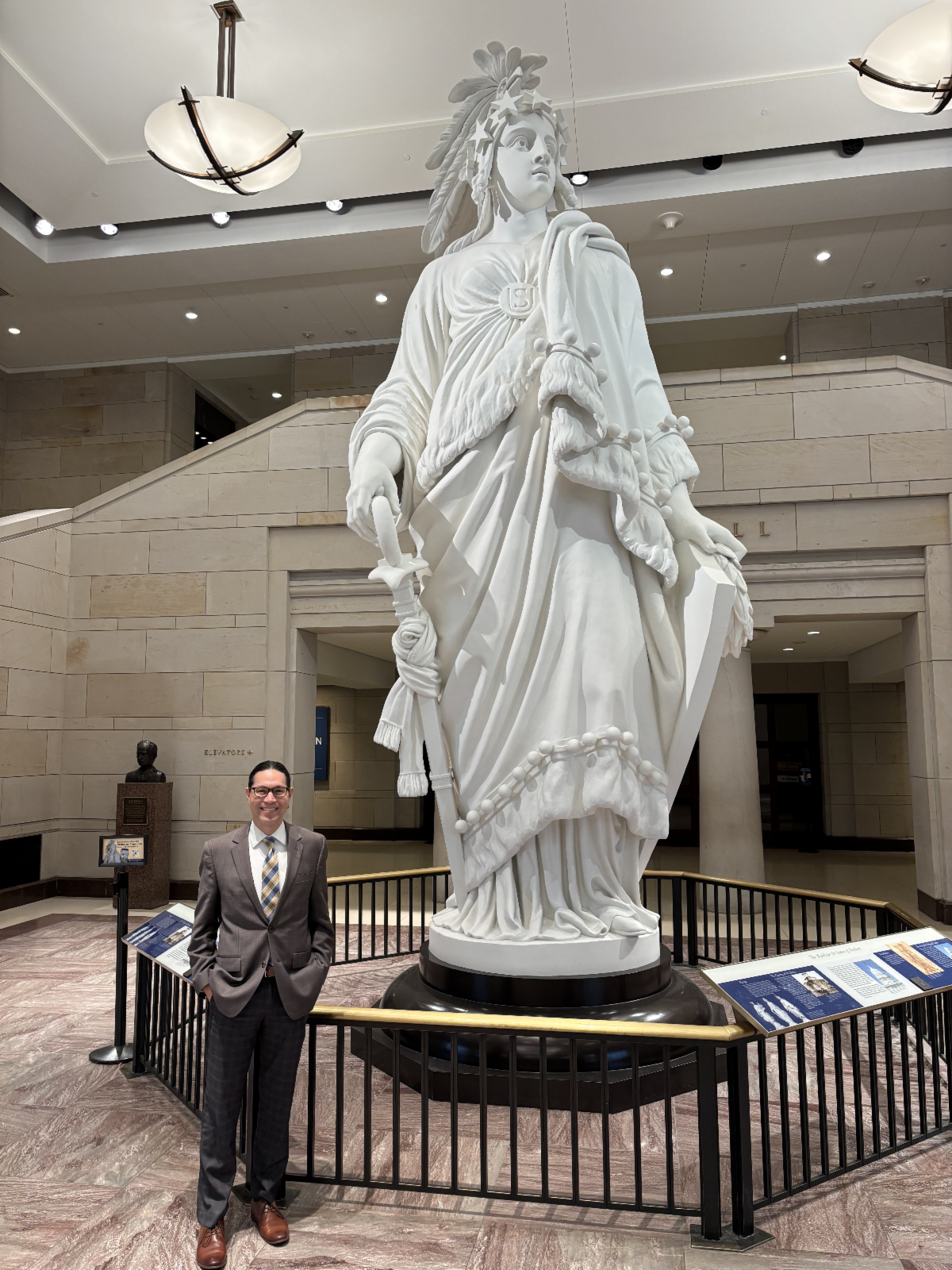
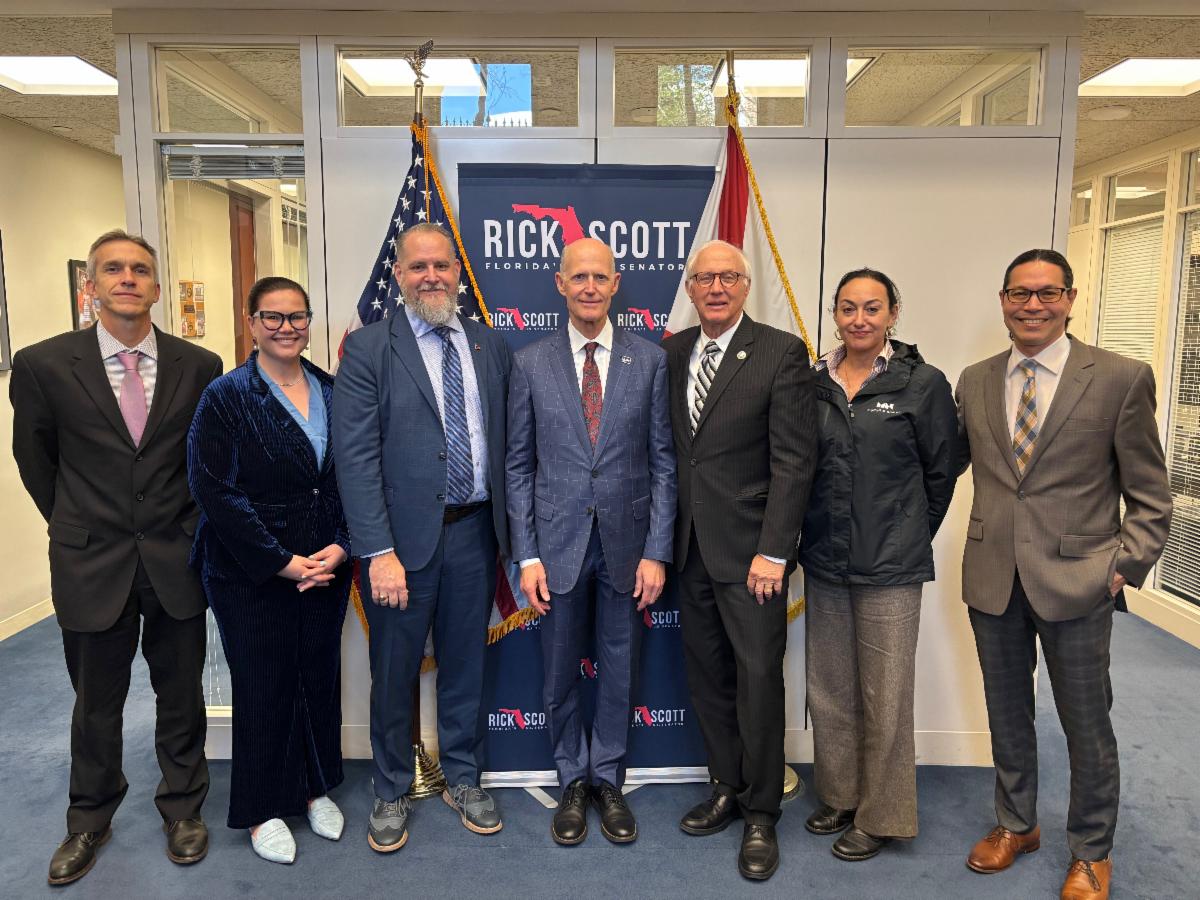
I spoke on a panel at the ASBPA Coastal Summit in Washington, DC, to discuss the history of beach management in Florida. As part of the summit’s advocacy goals, a group of Florida’s beach stakeholders took as many congressional meetings as we could fit in an afternoon to advocate for common sense solutions to solve USACE’s misguided policies on easements. We met with Senator Scott and his staff, Reps. Mast and Rutherford and staffs, and Rep. Frankel’s staff. We also received insights from Senate & House EPW and T&I committee staff. 


Based on the information coming from our local sponsors regarding USACE’s flexibility in implementing Florida’s "noncompliant” projects, which was unfolding in real time in DC, and information from committee staff, we pivoted in our ask of congressional members. We are now only asking for a 2-year continuation of WRDA 2024, Sec. 1145, in WRDA 2026 (would expire 2 years after signing into law). This will give us time to work out any lingering issues with favorable USACE implementation of ASA guidance and memos. The logic that resonated most with members and staff for a continuation of Sec. 1145 is that guidance has just started to be released, so our 2-year window to construct under the waiver was only 9-10 months. 


If you have relationships with any of Florida’s congressional delegation, please contact them and ask them to support our 2-year continuation. “Continuation” is key as we are not asking to extend project completion dates but rather a continuation of authority granted in Sec. 1145. Time is of the essence here. Drafts of WRDA are being put together.

From left to right; Chris Bender, Lindsey Precht, Beau Suthard, Senator Rick Scott, Charlie Hunsicker, Lynette Cardoch, Pepper Uchino

Update on Easement Implementation Guidance  


Earlier this month, I met with the ASA’s office and USACE HQ staff. Describing the meeting as “positive” would be an understatement. ASA Telle’s guidance and USACE’s initiative of Building Infrastructure, Not Paperwork is taking shape and benefiting Florida in ways we could not imagine two years ago. The great news is that USACE intends this guidance to be durable and not tied to the waiver we secured in WRDA 2024, which expires Jan. 4, 2027. It is a reinterpretation of prior authority (mainly WRDA 1986), so it will not expire even if we do not secure a 2-year continuation of Sec. 1145. Additionally, staff in the ASA’s office and USACE HQ support our request for the 2-year continuation to cover any gaps in the short term. 


Many of the commonsense solutions we have been proposing are being implemented across Florida’s projects, including: 

  • Allowing "life of the project" easements rather than perpetual. 
  • Recognizing a customary use ordinance in lieu of public use easements (they referenced Indian Rocks Beach’s ordinance). 
  • Not requiring public use and access easements from 100% of owners within the project area in order to construct. 
  • Allowing local sponsors to pay 100% of costs for sand placement on areas not subject to an easement. 
  • Cost-sharing on all work below the ECL even in transects where there is no public use easement. 
  • Allowing for flexibility in the easement language to ease owners’ concerns (even down to the individual property owner) 


In furtherance of the great progress we are making, please support our efforts in your interactions with partners (especially ASA and USACE) and tout USACE’s initiative of “Budling Infrastructure, Not Paperwork.”

2026 FSBPA Awards Nominations Now Open

FSBPA is now accepting nominations for the 2026 Annual Awards Program.


These awards recognize excellence in coastal engineering, science, and public service, honoring the individuals and projects that contribute to the management, protection, and resilience of Florida’s beaches and shorelines. Each year, the program highlights professionals advancing shoreline management—from large-scale beach nourishment and post-storm recovery efforts to innovative approaches in research and environmental protection.


Do you have someone in mind?

Members are encouraged to submit nominations for individuals from local governments, state and federal agencies, and the private sector who have demonstrated outstanding commitment to preserving and protecting Florida’s sandy beaches. Award categories recognize achievements in engineering, environmental stewardship, research, public service, and more.


A complete list of award categories and submission details is available here and the submission form for nominations is accessible here.


Deadline to nominate: June 30


Awards will be presented on September 24 at the 2026 Florida Resilience Conference in at the Sunseeker Resort in Charlotte Harbor, Florida.

FDEP Revises Coastal Armoring Standard

DEP has published a revised version of its coastal armoring rule in the Florida Administrative Register (FAR) that changes how structures are determined to be “vulnerable to frequent coastal storms” under the Coastal Construction Control Line (CCCL) Program.  


At a public workshop in September, DEP proposed updating the vulnerability standard for public infrastructure only to a 25-year return interval storm, while maintaining the 15-year standard for private structures. However, the newly published rule—without explanation—applies the 25-year standard more broadly to all structures.  


This change departs from prior agency communications with our members and the draft rule as it was presented at the workshop.  


Why this matters

The revised standard could expand eligibility for coastal armoring without a full evaluation of potential impacts to public beach access, adjacent properties, or ongoing and planned beach management projects.  


If requested, a hearing will be held on April 29, 2026, at 10:00 a.m. at 2600 Blair Stone, Tallahassee.  


Please let us know if you have any concerns or would like additional information.  

Leadership Update: U.S. Army Corps of Engineers

Please join FSBPA in congratulating Milan Mora on his new role leading the Latin America USACE team within the U.S. Army Corps of Engineers Antilles District. 


Milan has been an exceptional partner to FSBPA for many years and a trusted authority at our conferences, where he has provided our members with invaluable policy and project updates on the federal shore protection program. His contributions, leadership, and insight to advancing coastal flood protection, navigation, and environmental restoration in Florida have been greatly appreciated. We sincerely thank him for his longstanding service and wish him continued success in this new role.  


We are also pleased to welcome Jason Harrah, who will be stepping in as Chief of the Water Resources Branch in Programs and Project Management Division at the U.S. Army Corps of Engineers Jacksonville District. Jason brings extensive experience managing major federal navigation and coastal projects, along with a strong understanding of Florida’s stakeholders and their priorities. Please join us in congratulating Jason. We look forward to working with him in this new capacity. You can reach Jason by his LinkedIn profile. 

2026 FRC Student Travel Scholarship Application

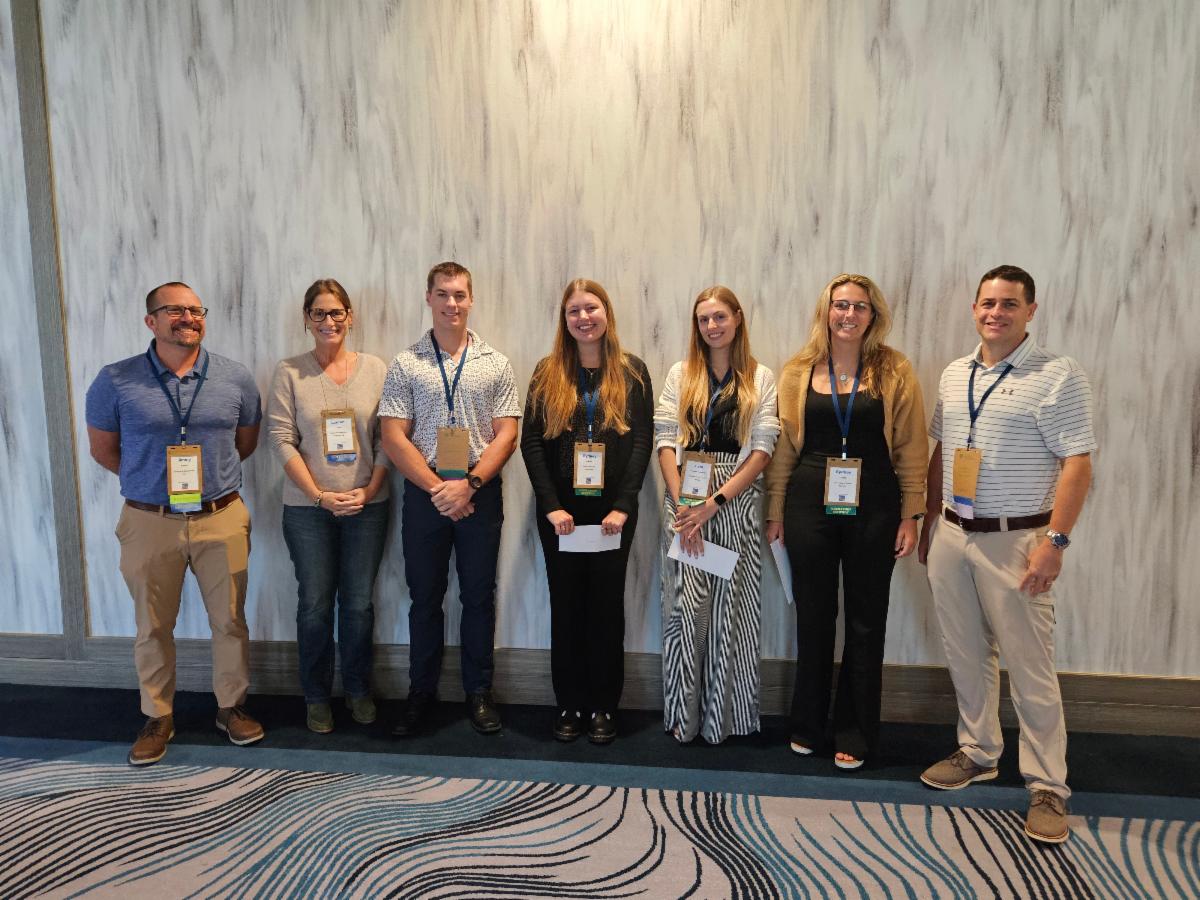
FSBPA and Resiliency Florida will co-host the 5th Annual Florida Resilience Conference, September 23–25, 2026, at Sunseeker Resort in Charlotte Harbor, Florida. We are also offering four Student Travel Scholarships, each worth $1,100, funded by the Surfing’s Evolution & Preservation Foundation. 

Scholarship Details:

  • $1,100 stipend per student
  • $175 will be deducted to cover conference registration (includes meals and access to sessions)
  • Remaining funds may be used for travel, lodging, or other expenses
  • Finalists must attend the conference in person
  • Finalists must volunteer a minimum of five (5) hours during the event (e.g., registration support or assisting with presentations)
  • Application Deadline: June 30, 2026
  • Winners Announced: July 24, 2026


Eligibility Requirements:

  • Must be a degree-seeking student at an accredited Florida institution
  • Field of study must relate to beach or dune ecology or other coastal sciences
  • Must submit a complete application, including:
  • Short essay
  • Contact information
  • Advisor reference
  • Must be available to attend all three days of the conference and meet with the scholarship committee onsite


The full application is available to download below. Please share this opportunity with eligible students and encourage them to apply. If you have any questions, feel free to email Alexis Brown, alexisbrown@fsbpa.com

A monthly electronic publication of the Florida Shore & Beach Preservation Association.


Officers

Chair

Andy Studt, Palm Beach County


Vice-Chair

Mike McGarry, Brevard County


Secretary-Treasurer

James Gray, Sebastian Inlet District


Past-Chair

Janet Zimmerman, FIND


Directors

John Bishop, Pinellas County

Alan Dodd, City of Wilton Manors

Damon Douglas, St. Johns County 

Jessica Fentress, Volusia County

Jessica Garland, Martin County

Charlie Hunsicker, Manatee County

Charlie Mopps, Town of Longboat Key

Nikesh Patel, City of Sarasota


President Emeritus

Deborah Flack


Ex Officio

USACE Jacksonville District, Milan Mora

USACE Mobile District, Jenny Jacobson

FDEP, Lainie Edwards

Cheryl Miller, Coastal Eco-Group Brett Moore, Humiston & Moore Lynn Nietfeld, Great Lakes Dredge & Dock


FSBPA Staff

President: Pepper Uchino

Executive Director: Jackie Larson

Technical Director: Lisa Armbruster

Office/Conference Manager: Teri Besse

Communications/Events Specialist: Alexis Brown

Calendar of Events


FSBPA Events:

June 30: 2026 FSBPA Award Nominations due

June 30: 2026 FRC Student Travel Scholarship applications due

September 23-25: 2026 Florida Resilience Conference

February 3-5, 2027: FSBPA 40th Annual Conference on Beach Preservation Technology

PO Box 13146, Tallahassee FL 32317

Phone: (850) 906-9227 • mail@fsbpa.com

Facebook  Instagram  LinkedIn