|
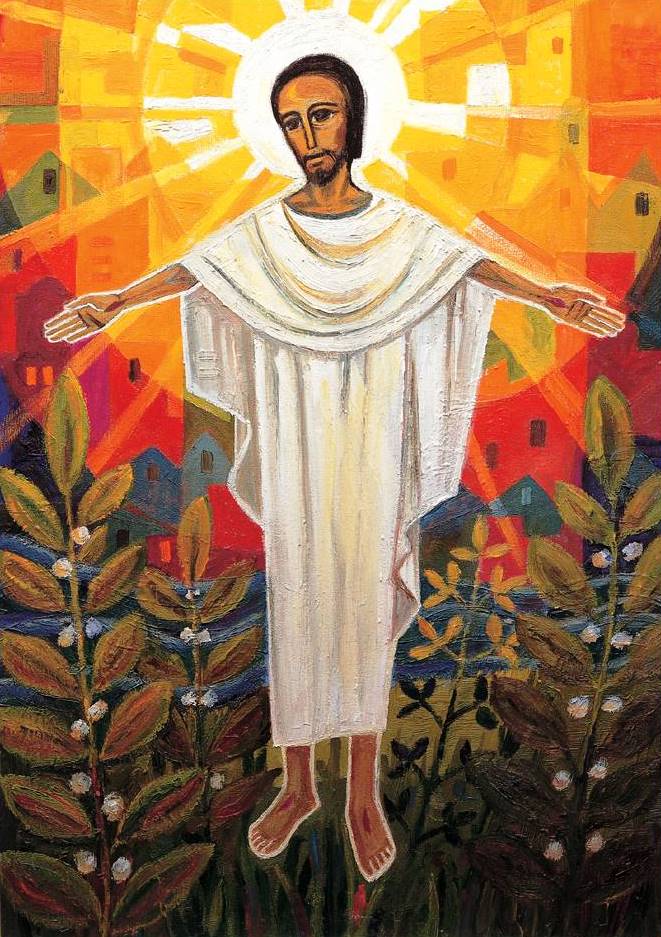
Of all the accounts of individual encounters with the Risen Jesus, I have a hands-down favorite: the story of Mary Magdalene going to visit Jesus’ tomb on the “First Day of the Week.”
Distressed upon discovering that Jesus is nowhere to be found, she asks a “gardener” if he knows the whereabouts of the body. Francis de Sales renders this beautiful reflection:
“Mary Magdalene is looking for Our Lord, and it is him she holds. She is asking for him, and it is him she asks. She did not see him as she would have wished to see him. This is why she is incapable of recognizing him in this form and searches to discover him in some other guise. Mary Magdalene wanted to see him in robes of glory and not in the lowly clothes of a gardener. But all the same, in the end she came to recognize it was Jesus when he called her by name: ‘Mary.’”
As happened so many times during his earthly ministry, even in the wake of his Passion and Death, the Resurrected Jesus continued to defy human expectations. The Risen Jesus is not clothed in glory; he is dressed as a simple laborer. But for Mary, the breakthrough comes when she hears her own name spoken by an all-so-familiar voice. So ordinary, and yet so personal and powerful.
| |  | |
Francis de Sales continued:
“You see, it is Our Lord in his gardener’s clothes that you meet every day in one place or another when quite ordinary challenges come your way. You would prefer Him to offer you different and noteworthy challenges, but the ones that look the best are not in fact the best. Do you not believe that he is calling you by name, too? Before you see him in his glory, Jesus wants to plant many flowers in your garden. These may be small and ordinary, but they are the kind that please him: that is why he comes to you clothed in this way.”
In what ordinary, everyday places and ways might the Risen Jesus be calling you by name today that are both personal and powerful?
| | |
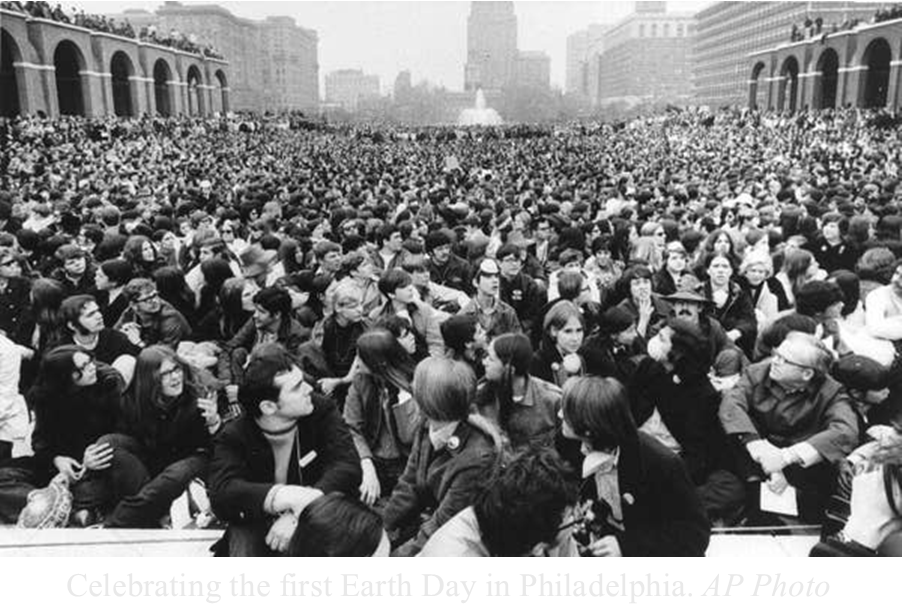
In the 1960s, without federal regulations to protect our air and water, environmental contamination was unchecked, and pollution was choking the Great Lakes and other iconic American waterways. Senator Gaylord Nelson of Wisconsin recognized the threat to our resources and livelihood, but was unable to engage his Congressional colleagues to prioritize environmental issues at the federal level. Instead, Nelson created a non-partisan, non-profit organization called Environmental Teach-in , Inc., engaging the momentum of the environmental grassroots movement across the U.S. The mission of the organization was to host teach-ins that would spotlight the issue and essentially force Congress to address environmental concerns. This movement resulted in the first Earth Day on April 22, 1970, when twenty million Americans gathered in large rallies across most U.S. cities. In response, the creation of a new federal agency, the U.S. Environmental Protection Agency was authorized in December 1970.
| |
Upon the tenth anniversary of Earth Day, Sen. Nelson wrote, "So long as the human species inhabits the Earth, proper management of its resources will be the most fundamental issue we face. Our very survival will depend upon whether or not we are able to preserve, protect and defend our environment. We are not free to decide about whether or not our environment 'matters.' It does matter, apart from any political exigencies."
In May 2015, Pope Francis published the 184-page encyclical, Laudato Si', which means "Praise be to you," from St. Francis of Assisi's "Canticle of the Creatures." This pastoral guidance inspired the concept of "Care for Our Common Home" — the subtitle of the encyclical — to clearly gain momentum in the Catholic Church. The apostolic exhortation, Laudate Deum ("Praise God"), was published on the feast of St. Francis of Assisi, October 4, 2023. Laudate Deum builds upon Laudato Si', while elevating the cry for a Catholic response. As we approach Earth Day 2026, it has become increasingly apparent that protecting and loving all of God's creation is an essential part of our connection to our Creator. As Catholics, one of our seven Social Teachings is "Care for God's Creation." According to the USCCB, "Care for the earth is not just an Earth Day slogan, it is a requirement of our faith."
The following material is excerpts from the Catholic Climate Covenent's "Energizing Our Faith" Earth Day 2026 program. You can access a copy of the entire program by clicking here.
From An Invitation to Ecological Conversion for U.S. Catholics, U.S. Catholic Conference of Bishops, February 17, 2026: "We each must recognize the power we have as individuals and in community…We must each make daily choices that reflect our conversion to better care for God’s creation and the people, communities, and livelihoods that are interconnected…"
We invite you to prayerfully discern how you, your parish, and your community might participate in any of the actions below.
Families and individuals can purchase products from companies that prioritize care for creation and consider renewable energy sources for their homes.
Business leaders can work to increase sustainability and ensure justice towards their workers and communities in the areas surrounding their operations.
Schools can integrate care for creation into curricula.
Parishes can create opportunities for prayer in nature, offer pilgrimages, and celebrate a Mass to care for creation.
Dioceses can conduct an energy audit of the buildings they own, which can lead to energy and often cost savings. They can convene synodal listening conversations to learn more about community needs and partner locally to build climate resilience.
Priests, deacons, and seminarians can receive formation about Catholic social teaching on environmental stewardship, which they can share through homilies.
Religious communities can share with others their successes in utilizing socially responsible investing practices, which work to align investments with the values of Catholic social teaching, including care for creation.
Policymakers can listen to the voices of those most impacted by environmental challenges and seek to create just policies mindful of their well-being, with an eye also to other vulnerable populations, such as workers.
Everyone has a role to play in urging leaders at all levels to convert their hearts — and establish policies to better care for God’s creation.
Reflection: What role can you and your faith community play in converting hearts to better care for God’s creation?
| |
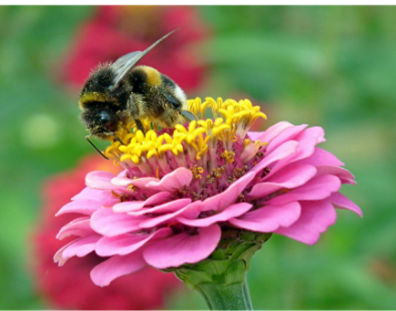
In celebration of Earth Day this month, SJN's Care for Our Common Home is hosting a presentation, " Create a Plant and Pollinator Community in Your Yard," led by Ann M. Mason, a member of the Fairfax County Master Gardeners and an SJN parishioner.
The presentation will be on Sunday, April 26 at 3 p.m. and will be followed by a tour of SJN's Native Plant Garden.
Come learn how you can celebrate Earth Day by creating a beautiful yard to be enjoyed by you and the pollinators!
| |
This prayer is a contemporary reimagining of the Romero Prayer, originally written by the late Bishop Ken Untener of Saginaw and often misattributed to Saint Óscar Romero. It was composed for those who care for our common home and all who labor quietly for ecological renewal.
The healing of our common home is not only beyond our efforts; it is even beyond our sight.
We accomplish in our lifetime only a small part of the great renewal that is God’s work in the world.
It helps, now and then, to step back and take a long view of creation.
Nothing we do is complete — and that is another way of saying that the wholeness of creation always lies beyond us.
No campaign restores every forest.
No prayer cools every warming sea.
No act of solidarity mends every wound of the poor or the planet.
No gathering, however global, fulfills the dream of communion.
This is what we are about.
We plant trees whose shade we will never sit beneath.
We tend the soil that others will harvest.
We clean the waters, trusting they will flow clear again.
We join the slow work of resurrection — the quiet mending of all that has been broken.
We cannot do everything, and there is peace in knowing that.
It frees us to do something, and to do it with love and perseverance.
It may be incomplete, but it is a beginning — a step along the way — a chance for the Spirit to breathe through our small acts and make them more than we could imagine.
We are sowers, not saviors; caretakers, not creators; pilgrims on this beautiful, wounded earth — walking together toward restoration, trusting that God makes all things new.
Amen.
| | Experiencing the Holy Spirit in the Easter Season
by Fr. Sleeva Kala, OSFS | |
Before my ordination in 2013, I was just an ordinary seminarian, treated like anyone else. But the day I was ordained, everything changed. My family and those around me began to treat me in a way that was quietly different, full of respect and humility. They hesitated to speak loudly when I was around, lowered their voices even in casual conversation, and politely waited to enter my room, often saying, “This is Father Sleeva’s room.” At meals, they offered me the first seat, poured my water carefully, and even sought my blessing before leaving. Small gestures; a gentle nod, a hand lightly touching my shoulder, a respectful pause when I entered a room became their way of showing reverence.
I was wondering what caused this transformation.
| |
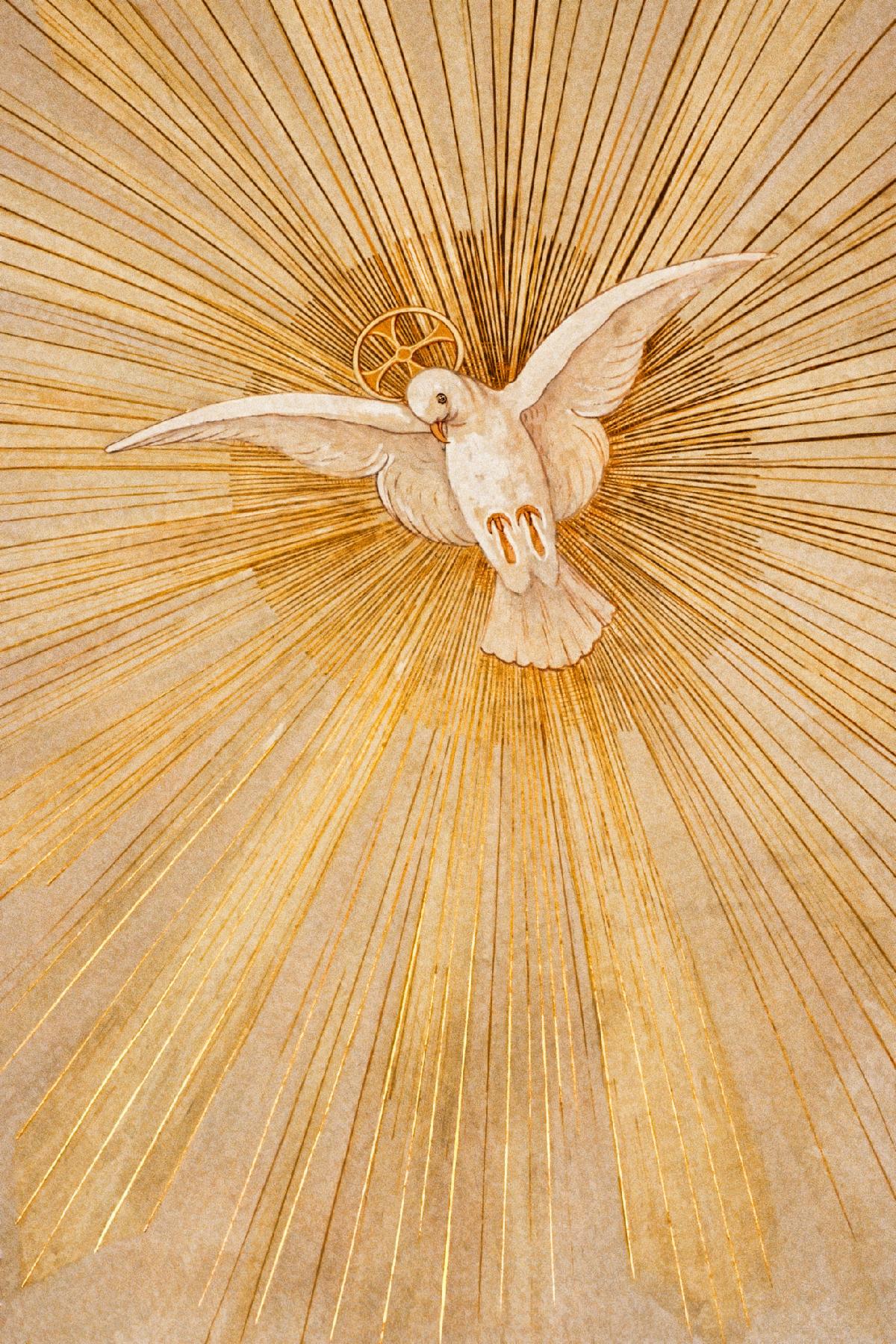
Answer is the Holy Spirit, invoked through the laying on of hands by the Bishop and priests during ordination, consecrating me for God’s service. That moment marked a silent but profound change, not just in me, but in the hearts of those around me, reminding me that God’s presence can transform ordinary relationships into ones filled with respect, humility, and love.
Jesus promised in the Gospel of John 14:16-17 — “And I will ask the Father, and he will give you another Advocate to help you and be with you forever—the Spirit of truth.”
The Easter season is a celebration of the Holy Spirit’s power to transform lives. Look at the disciples:
Peter, who denied Jesus three times, became a fearless preacher and baptized about 3,000 people on Pentecost (Acts 2:41). The apostles, once hiding in fear, boldly preached Jesus after receiving the Holy Spirit as tongues of fire (Acts 2:2–4). Stephen, filled with the Spirit, faced persecution courageously and became the first Christian martyr (Acts 6:5–8:2). Philip, guided by the Spirit, led the Ethiopian eunuch to faith (Acts 8:26–39). Paul, once Saul, was transformed by the Spirit on the road to Damascus and became the greatest missionary (Acts 9:17–20).
The Holy Spirit doesn’t just empower leaders, it changes hearts, heals fears, and ignites love. St. Francis De Sales says: “Without the Holy Spirit, our works are empty; with Him, even the smallest act becomes sacred.”
This Easter season, we celebrate that same Spirit alive in us, guiding, strengthening, and transforming our lives for God’s glory. Just as the apostles were changed, we, too, can be renewed in faith, courage, and love. Happy Easter Season!
| | |
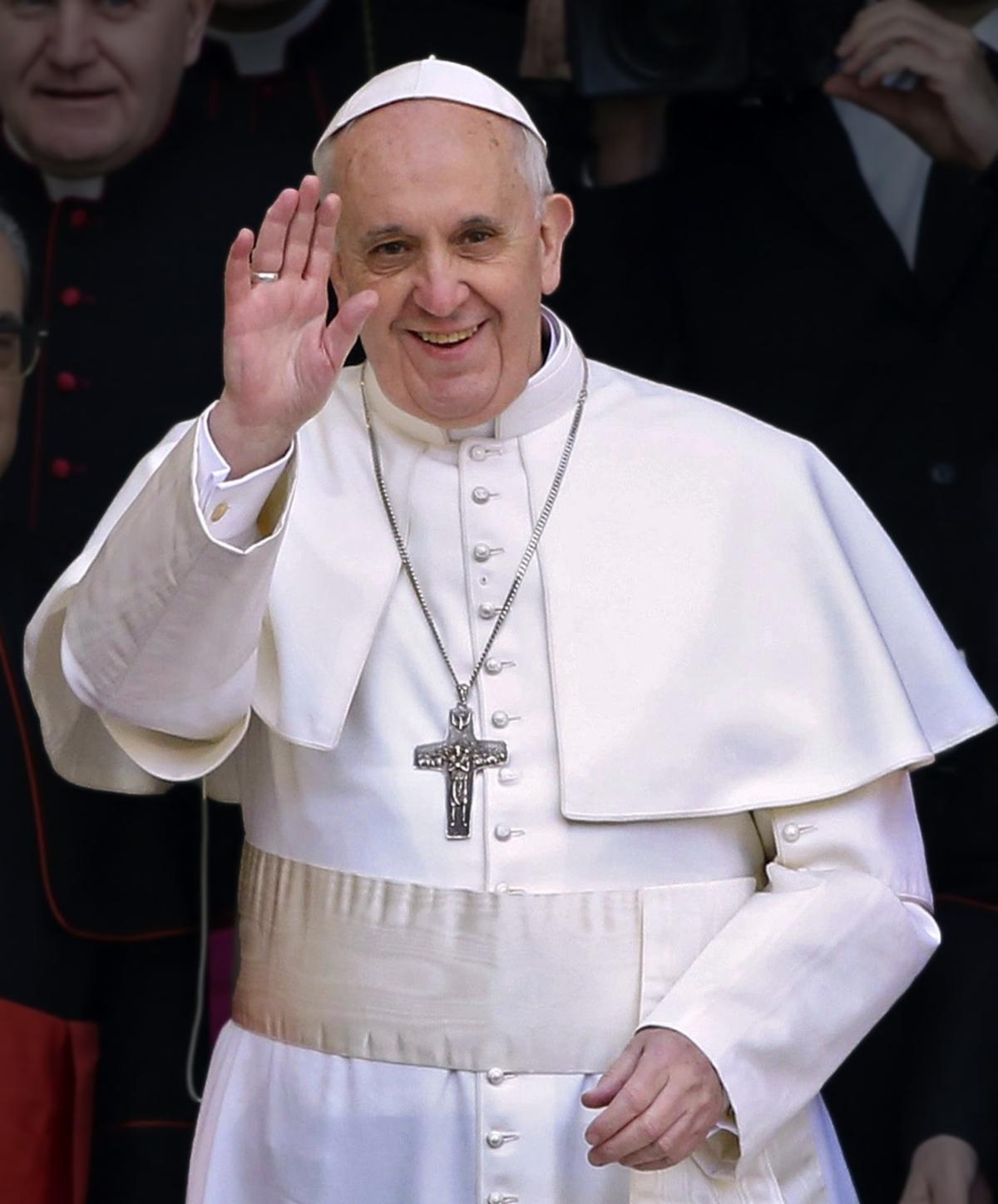
Rest in Peace, Pope Francis
On April 21, we will mark the one-year anniversary of the passing of Pope Francis. On the liturgical anniversary of his death, on Easter Monday, Pope Leo said:
"With particular affection, in the light of the risen Lord, we remember today Pope Francis, who, on Easter Monday of last year, returned to the Lord. As we recall his profound witness of faith and love, let us pray together to the Virgin Mary, Seat of Wisdom, that we may become ever more radiant heralds of the truth."
This Easter season let us continue to pray, both for the soul of Pope Francis and for the continued mission and leadership of the faithful that is now the responsibility of Pope Leo.
| | |
The Extraordinary Ordinariness
of St. Zita
by Elizabeth Connell Wright
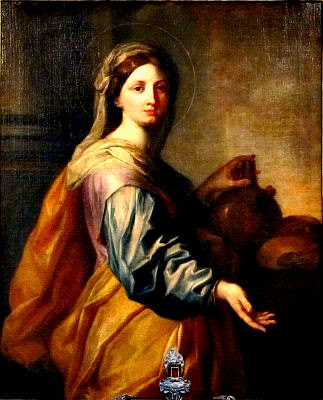
On April 27, we celebrate the feast of St. Zita. Born in Tuscany in 1218, she was extraordinary in the most ordinary ways, which led to her not only being canonized, but being beloved by her community and well beyond. Zita was not courageous like Joan of Arc nor selfless to the level of Maximillian Kolbe, rather hers was the quiet courage of a humble servant. She turned the most ordinary routine of a servant’s life into an endless prayer. Her faithfulness made an ordinary life extraordinary.
At the age of 12, Zita’s parents, Giovanni and Buonissima Lombardo, sent her to Lucca, a town eight miles from her home, to serve the wealthy Fatinelli family, who operated a prosperous business of weaving silk and wool. For her first twelve years, her pious parents had instilled two things in Zita: work hard and love God, and she built upon this foundation for the next 48 years of her life, serving the Fatinellis.
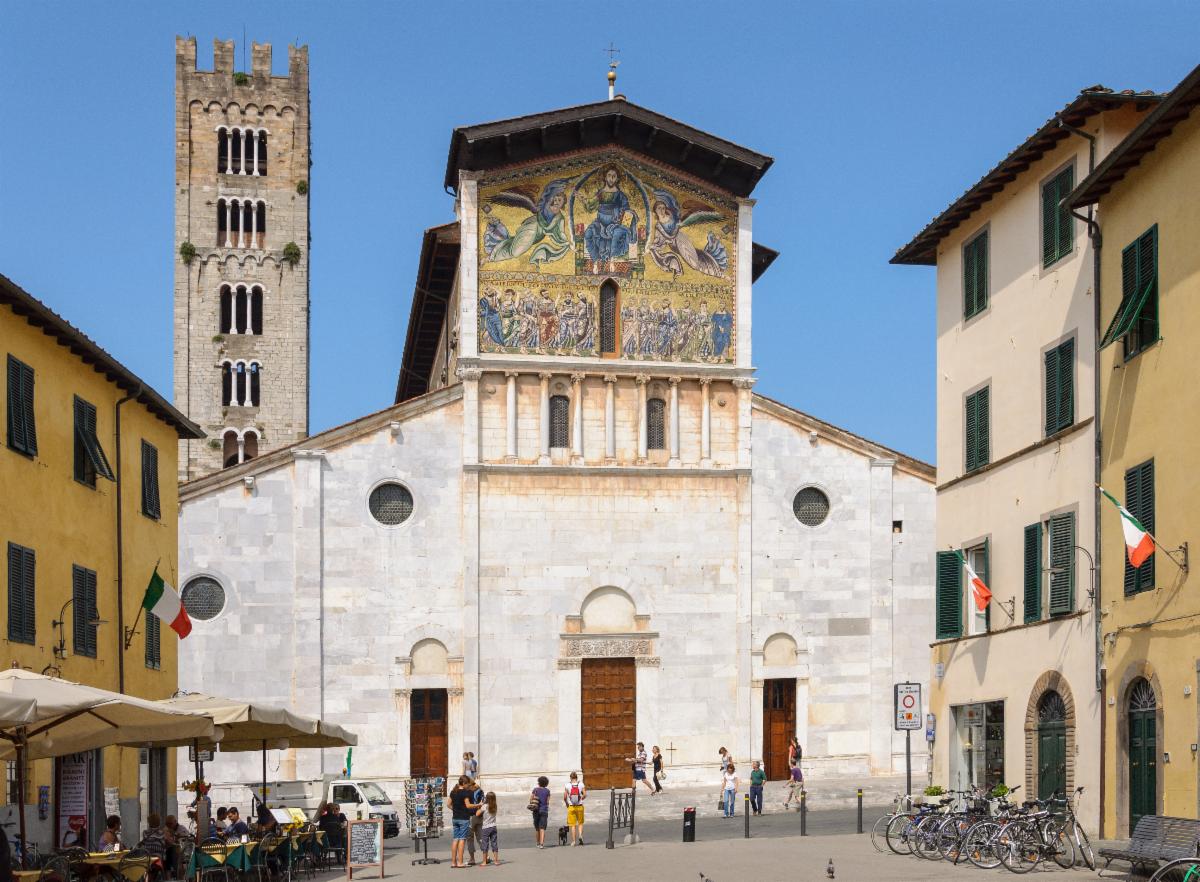
Zita began every day rising long before the rest of the household for prayers before attending Mass at the church adjacent to the household, San Fredaino. In her employer’s home, she completed her tasks with the utmost diligence. As a member of the Third Order of St. Francis, she regarded her work as a vocation honoring God. She often sacrificed her own meals to feed the hungry and would go out at the end of her long days to tend to the poor, sick, and imprisioned. She wore scraps of clothing and never wore shoes, literally the embodiment of the poor she served.
For many years, her fellow house servants scorned her pious ways and complained to the Fatinellis that she was giving away their food. Zita continued her prayerful life, offering any ridicule she suffered to Christ. There are said to be a number of miracles attributed to St. Zita’s devoutness. Once during a local famine, Zita had given beans away to the poor. When she learned that the Fatinellis had decided to sell the stock of beans for a profit, she prayed fervently, knowing she would be punished for using a portion of the beans to feed the hungry. Miraculously, when the beans were prepared for market, the full amount was there.
| |
Another time, Zita had remained after morning Mass praying, losing track of time. She rushed home, knowing she was behind with her daily tasks, to discover the bread already prepared, risen, and ready to go in the ovens. Other servants said they saw angels bustling in the kitchen that morning. To this day, it is a Tuscan tradition to bake a loaf of bread on her feast day.
Over time, the house servants and the Fatinellis all came to realize that Zita’s behavior was genuine and sincere — that she was living a life wholly dedicated to God. The Fatinellis came to adore her, putting her in charge of the household, and as Signora Fatinelli lay upon her deathbed, it was Zita who lovingly nursed her through her final days. All of Lucca, especially the poor and sick, came to know Zita as an angel. She was known throughout Lucca for her joyful charity.
| |
After foretelling her own death, Zita peacefully died in the Fatinelli home on April 27, 1271. Almost immediately she was locally regarded as a saint. By the early 1300s, when Dante’s “Inferno” was written, her fame was widespread to the point that in the narrative poem, he referred to the city of Lucca simply as “Santa Zita.” A liturgical cult at San Fredaino was sanctioned by Pope Leo X in the early 16th century and many faithful were attributing miracles to her. In 1580, the body of Zita was exhumed and found to be incorrupt, and in 1696, Pope Innocent XII canonized her St. Zita. Her body is venerated yet today at the Basilica of San Frediano, the church where she attended morning Mass for 48 years. St. Zita is the patron of housekeepers, servers, bakers, and lost keys. (apparently even St. Anthony needs assistance with the number of lost keys!)
As we look upon the ordinary life of St. Zita it is fitting that St. Francis de Sales’ words come to mind: “Be who you are and be that well.” Zita didn’t attempt to be anything more than she was. She embraced her vocation as a housemaid and dedicated herself to God through the routine and mundane tasks of her days and years. It is this simple mindset that speaks to each of us as a way we can glorify God through our everyday tasks and encounters.
| | |
Autism in the Church
by Elizabeth Connell Wright
April is Autism Awareness Month, and a good time for us to reflect more deeply on how we can each contribute to inclusive environments in the Church and in our communities. As the Body of Christ, we are comprised of all different kinds of people, each made in God's image, and together, it is our responsibility to make the Church a place where we can all be accepted and thrive.
Currently, the prevalence of Autism Spectrum Disorder (ASD) in the U.S. is about 1 in 31 or roughly 2% of the population. In 2007, the United Nations General Assembly designated April 2 as World Autism Awareness Day. Since then, the entire month has come to be recognized as Autism Awareness Month. Over the past twenty years, understanding of the autism spectrum has dramatically increased, but there is still a long way to go, and the Church is still working toward both acceptance and inclusion.
Many people who have ASD, whether or not they are diagnosed, have learned to mask their behaviors and go to great lengths to self-regulate. Many are invisible in our pews, struggling to integrate into the community. Fr. Matthew Schneider, a priest who was diagnosed in 2019 at the age of 34, says that most American parishes have accomplished the first level of support, which is awareness, but the next level — acceptance — is harder. Acceptance requires changes and accommodations, like a sensory-friendly Mass with soft lights and sounds. When you look at a traditional Catholic Mass, sometimes referred to as “smells and bells,” it isn’t hard to see how this could be overstimulating.
| |
Parishes across the nation are finding innovative ways to include or in some cases welcome families back to Mass with ASD support. Some parishes provide Mass bags with items like ear plugs, Catholic fidgets, and Mass picture cards and predictable schedules. Other churches have sensory rooms, which not only have softer lighting and quieter space, but provide textures, sensory anchors, and deep-pressure bean bag chairs.
The final level is inclusion, which Fr. Scheider says is very rare in parishes. He believes that this requires a need to move beyond disability ministry, which prevents those with autism from truly integrating in the community. John Smith, founder and executive director of Autistic Catholics, who also was diagnosed as an adult, says, "Those who identify or are identified as being disabled feel like they are separate from the 'normal' folks who are being evangelized. We have yet to fully realize Jesus' prayer for unity. I believe the first way of evangelizing is to remove those barriers."
My godson/nephew was born in 2003, the same year as one of my sons, and was diagnosed with ASD as a toddler. I have watched his journey through life and particularly the Catholic Church for over twenty years. Unlike my son, who received his Sacraments in community, my godson received First Holy Eucharist and Confirmation by himself, largely instructed by my sister. There weren’t inclusive options for him. I know for a fact that it has often been a lonely path. It has taken years to really carve out their place and some form of acceptance in their parish. In their case, they have had the burden of removing barriers, but in reality, this burden should not be placed on those with ASD or their families. We, as part of the Body of Christ, bear responsibility to help move the Church forward.
| |
As the Church moves slowly toward inclusion, there are many ways that individuals can learn more about ASD, become an ally, and build community with people who have autism. Smith of Autistic Catholics says, "Remember, most of us sitting in the pews are masking our autistic behaviors, so we may be sitting right next to you." Remember that every life has value and struggles — just being kind can go a long way — especially if we notice someone struggling. Being sensitive about noise and music levels as well as bright lights is also important for people with ASD. Giving people with autism safe space to process information or decisions is helpful as well as just being a calm presence.
The theme for this year’s UN World Autism Awareness Day on April 2 was “Autism and Humanity – Every Life Has Value.” At the April 2 celebration of Autism Awareness Day, UN Secretary General said " Like anyone else, autistic people should be able to shape their own lives — and help to shape our shared future.” Autism Speaks offers a free 30-minute course to become an Autism Friendly Ally. You can also read hundreds of ways other people are pledging to take action and “show up” for those with autism, as well as make your own pledge here. Together, we can all shape a better shared future, especially in the Church.
Note: Fr. Matthew Schneider is the author of “God Loves the Autistic mind: A Prayer Guide for Those on the Spectrum and Those Who Love Us.”
| | From the Holy See This Month | | |
The Pope's Intention for
Prayer and Action for April:
For priest in crisis
Let us pray for priests going through moments of crisis in their vocation, that they may find the accompaniment they need and that communities may support them with understanding and prayer.
| | | |
Current Mass Times
Saturday: 5 p.m.
Sunday: 7:30 a.m., 9:30 a.m., 11:30 a.m., 2 p.m. (Spanish), 5 p.m.
Monday-Friday: 9 a.m.
Wednesday & Friday: 12:10 p.m.
Watch a livestreamed or recorded Mass
Confession
Saturday: 10 a.m.-10:30 a.m. (English)
Sunday: 3 p.m.- 4 p.m. (Spanish)
| | | Elizabeth Connell Wright, Communications Director, is the editor of SJN's monthly newsletter. If you are interested in submitting an article to the newsletter or have a topic that you would love to see an article written about, please contact me at ewright@saintjn.org. Thank you for reading our monthly newsletter! | | | | |