|
Fr. Louis Brisson, OSFS made the following observations regarding the season of Advent:
“Advent means coming. This time is set aside for the preparation of Christmas. There are two advents of Our Lord. The first is the great advent when Jesus came to this earth to save us. Jesus willed to come to us little, humble, and unknown. Jesus was born poor to show us that poverty itself is no reason for disgrace. Jesus willed to be raised by a laborer to teach us to love work just as He loved it.
“The ordinary advent of Our Lord is made daily in our minds and hearts. Every time we have a good thought or feeling, every time we make ourselves aware of God’s presence, every time we put our good thoughts and feelings into action an advent takes place: Our Lord comes to others through us. Come Lord not only into our hearts but also into the hearts of all those whom we love and for whom we pray.”
The season of Advent calls us to practice expectation: to be watchful and on the lookout for the countless opportunities afforded us each day to practice “ordinary” advents, that is, to help Jesus come into the lives of others through our love for them.
Regarding the great solemnity for which Advent expectation prepares us – the Incarnation – Francis de Sales wrote the following:
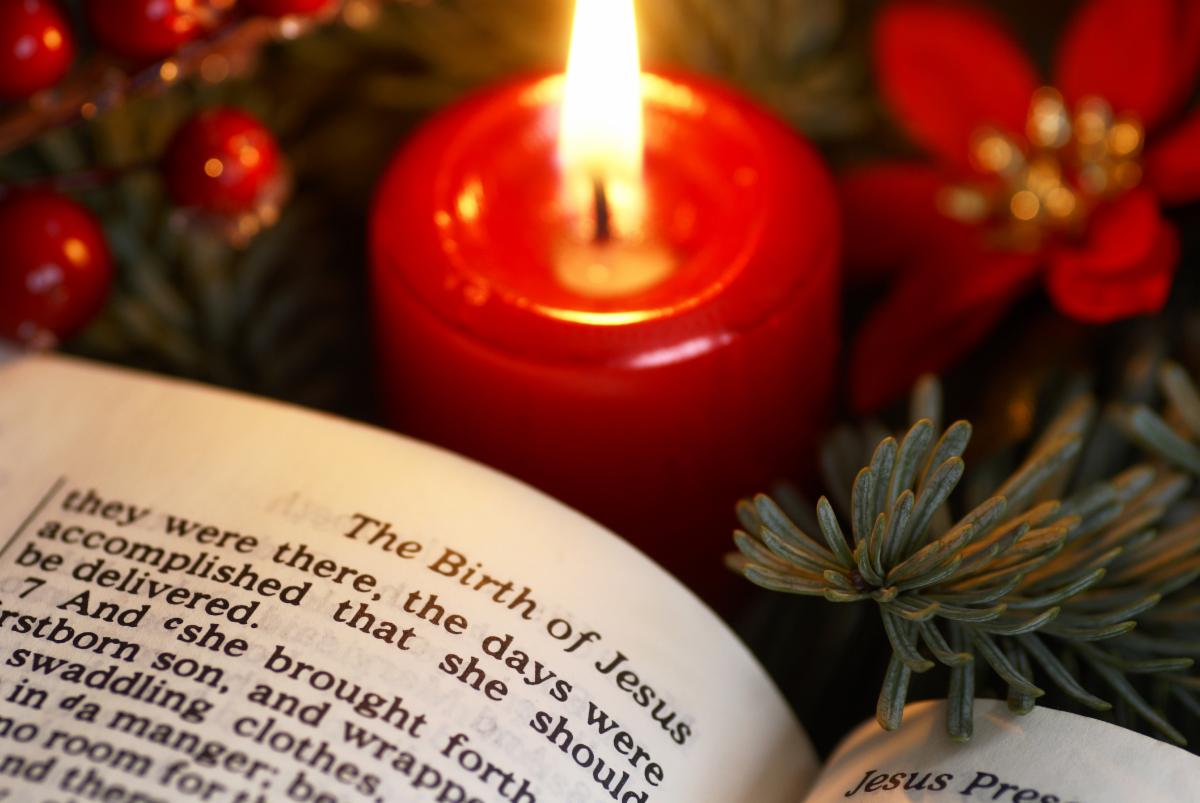
“God has signified in so many ways that God wills us to be saved that no one should be unaware of this truth. Indeed, God made us in God’s image and likeness through Creation, and by the Incarnation God made Himself in our image and likeness. Through the latter God made a closer and more pressing union and by it human nature remains forever joined in personal unity with divinity. God did this so that human nature - and all people – might be intimately united with God’s goodness.”
| |  | |
Indeed, the Incarnation is about redemption. But from a Salesian perspective, God’s motivation for the Incarnation goes even deeper: it is an affirmation of the divine love that created us in the first place. For his part, Francis de Sales believed that even if there had been no “fall” — even if Adam and Eve had been satisfied with all that Eden offered them apart from the now-infamous fruit of one particular tree — God would still have taken on our image and likeness at a time and place of God’s choosing in the person of his Son!!! As limited as we may be, there is no limit to God’s love for us! Talk about the greatest gifts of all!
Thus, the culmination of an Advent well-lived invites us to (first) consider the length(s) to which God will go — and continues to go — to both redeem and love us, and (second) to ask ourselves this question: How far are we willing to go in being instruments in the lives of others the love that our Creating, Incarnating God has for each of us?
Not solely in the Season of Advent, but throughout all the seasons of life.
| | |
The Meaning of the Advent Wreath
| |
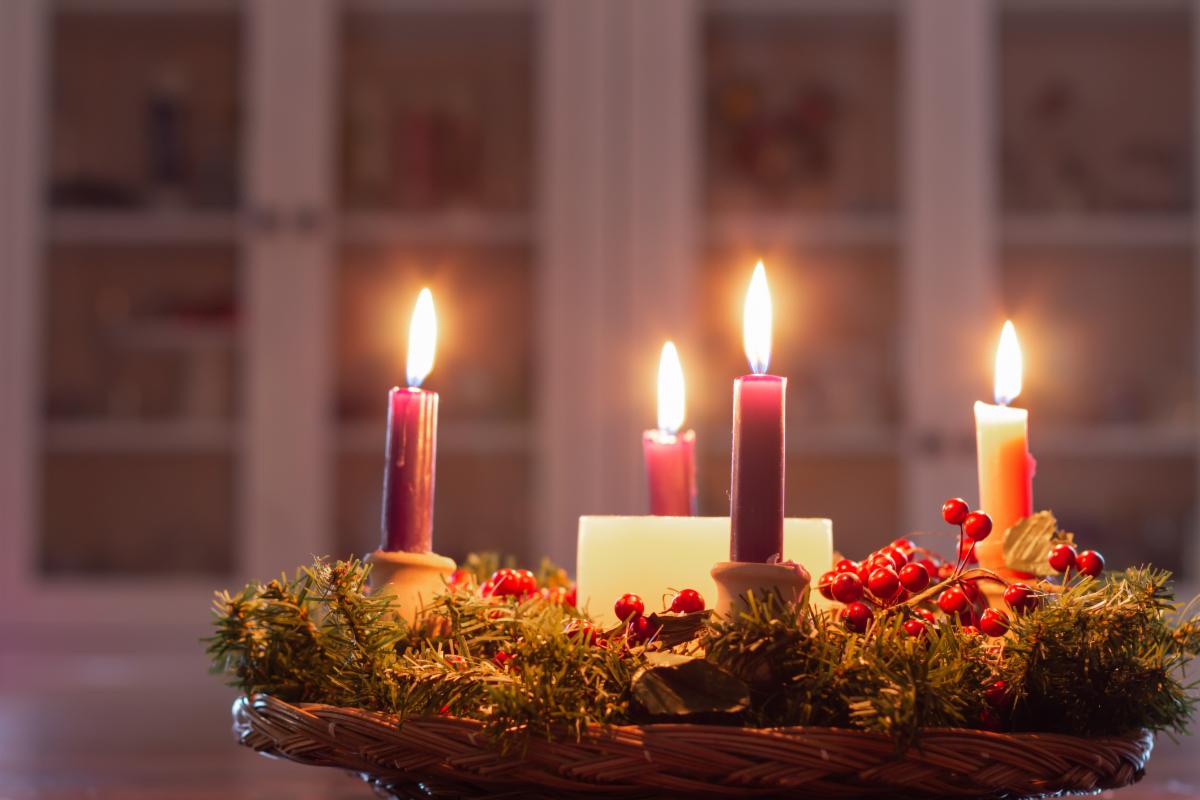
Dating back several centuries, the Advent wreath has its origins in pre-Christian Germany. The candles festooned by evergreens were lit through the darker months of winter anticipating the light and warmth of spring. By 1600, the tradition of the Advent wreath had been adopted by Catholics and Lutherans and spread beyond Germany to other regions of the world. Today, the Advent wreath is integral to our anticipation of the birth of Christ.
The Advent wreath is traditionally a circle, which represents the endless love and mercy of God. It is adorned with evergreens symbolizing the eternal life we are granted through the life and death of Jesus. There are four candles on an Advent wreath with an optional fifth. Each week, the light of Christ grows nearer as we light another candle:
The First Week of Advent: Hope (purple)
The first week of Advent represents hope. We light the Prophecy candle and reflect on the promise of Christ’s coming foretold by prophets throughout the salvation history woven through the Old Testament. We anticipate the promise of our Savior and hope for life everlasting.
The Second Week of Advent: Peace (purple)
The second week of Advent represents peace and preparation. We light the Bethlehem candle and remember Mary and Joseph’s journey to Bethlehem. This week, we focus our lives on the peace of Christ and prepare our hearts for His coming.
The Third Week of Advent (Gaudete Sunday): Joy (pink)
The third week of Advent is called Gaudete Sunday, which means "Rejoice!" This week, we light the pink candle, which is the Shepherd's candle. During this week, we reflect on the overwhelming joy that the shepherds in the field must have felt when they heard the angels proclaiming the birth of Christ the King, and similarly, we focus on the joy of our own lives and how we can be transformed by that joy and spread it to the world.
The Fourth Week of Advent: Love (purple)
The fourth week of Advent we light the final purple candle, the Angel’s candle, which represents love. The angel Gabriel foretold the birth of Jesus: “Behold, you will conceive in your womb and bear a son, and you shall call his name Jesus.” (Luke 1:31) As Jesus is incarnated as man, God’s love is evident in the sacrifice of his own Son. In the final days of Advent, we end the Advent season focusing on the immense love God has for us and prepare our hearts for the birth of Christ.
Christmas (optional): Christ Candle (white)
The center white candle is lit on Christmas Eve or Day. The prophecy of all we hoped for has been fulfilled: our Savior has been born. “I am the light of the world; he who follows me will not walk in darkness but will have the light of life.” (John 8:12) We now begin the Christmas season and rejoice spreading the peace and love of Christ.
| | |
Written in the Stars
by Elizabeth Connell Wright
From the very first page of the Bible our lives have been intertwined with the skies above: “And God made the two great lights, the greater light to rule the day, and the lesser light to rule the night; he made the stars also.” (Genesis 1:16) Later in Genesis, God assured Abraham his descendants would be as numerous as the stars (Genesis 15:5). In fact, all said and done, there are more than 50 references to stars in the Bible, yet none is as noteworthy as the Scriptural reference to the Star of Bethlehem: “Where is he who has been born king of the Jews? For we have seen his star in the East and have come to worship him.” (Matthew 2:2) The year of Christ’s birth, the wise men had their eyes fixed on the heavens, and the universe continues to captivate the Church over 2000 years later.
| |
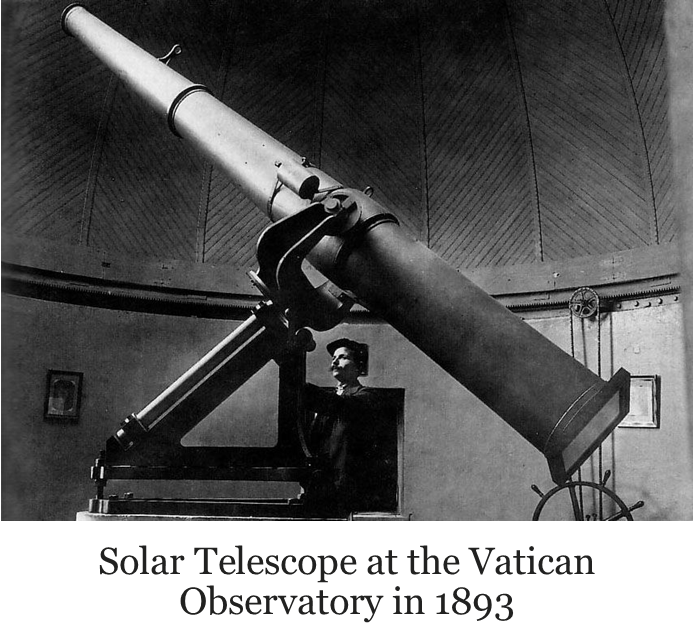
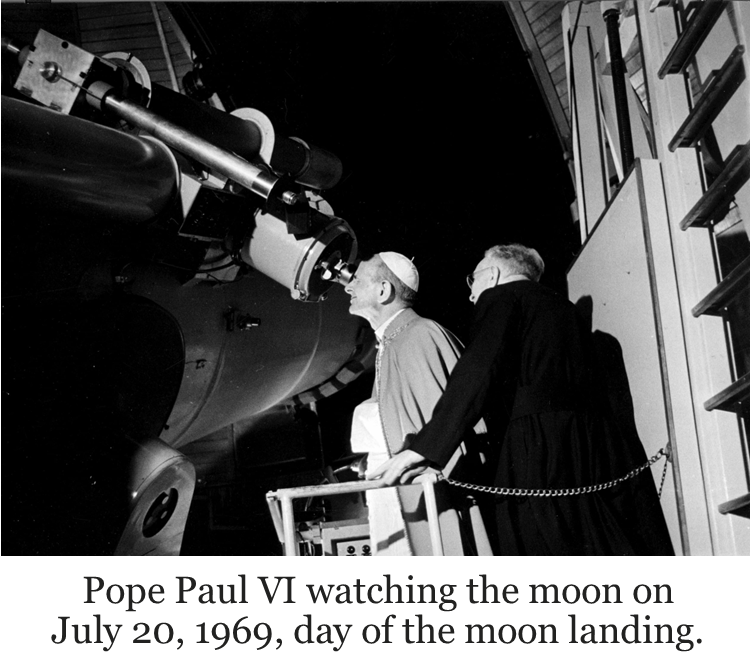
The Vatican Observatory is one of the oldest astronomical institutions in the world. The origin of the papal mission to seek knowledge of creation through astronomy is rooted in the adoption of the Gregorian calendar in 1582. Pope Gregory XIII established a committee to compile scientific evidence to support reformation of the Julian calendar, and the committee included a Jesuit mathematician, Fr. Christoph Clavius, the first of many Jesuits to contribute to our understanding of the world by studying the skies. According to “The Jesuits” by Jonathan Wright, people across Europe held Jesuits responsible for the realignment of the calendar, which subtracted ten days from the year, even attacking them in their protestation of the change which “stole" their time.
| |
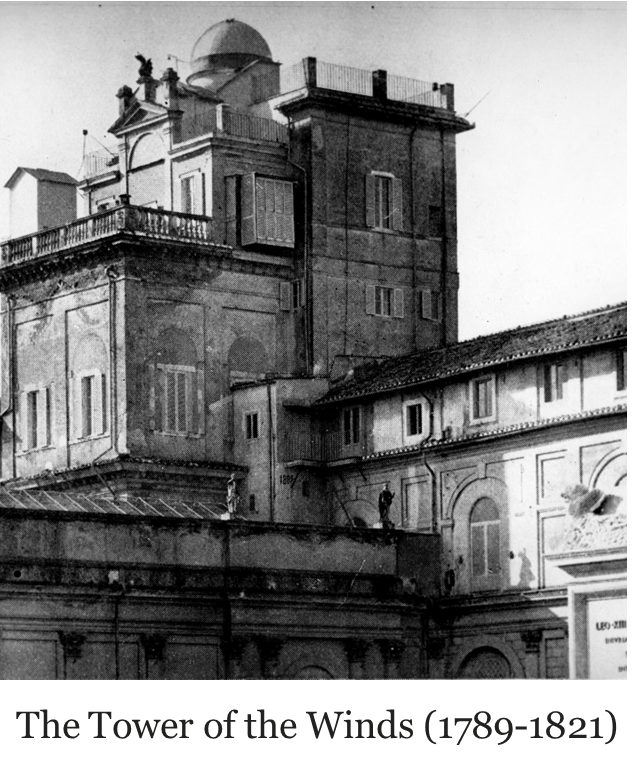
By the late 18th century, the fascination with the heavens above had exploded into three pontifical observatories across Rome that would lead to the creation of today’s Vatican Observatory. Jesuits were back in favor, and Fr. Angelo Secchi, S.J., known as the “Father of Modern Astrophysics” was directing the Roman College Observatory. Specola Vaticana, known as Towers of the Winds, was built atop the Vatican Library and Museum, and the third was the Observatory on the Capitoline Hill. In 1870, following the unification of Italy, the observatories became state property, however, in 1891, Pope Leo XIII rejected the accusations of a conflict between Church and science from the state and devoted a second observation tower in the Vatican to astronomy, which became the Specola Vaticana (the Vatican Observatory).
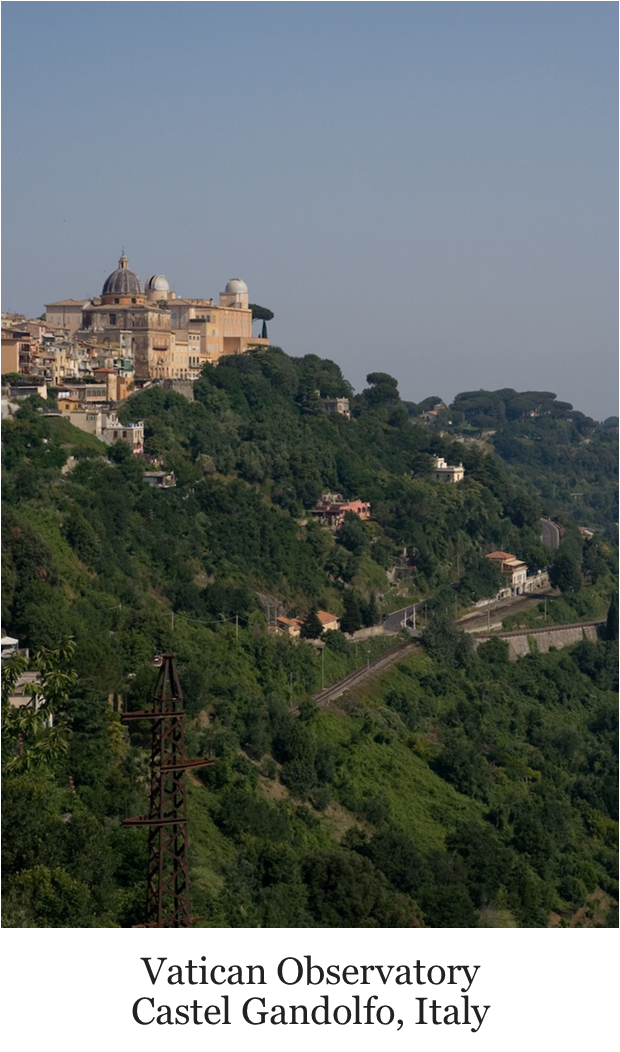
Following the rebirth of the Observatory, work focused on an international collaboration to map the entire sky, but by 1935, the brilliant lights of the Eternal City were interfering with the view of the heavens, and Pope Pius XI had the observatory moved to Castel Gandolfo, the centuries-old summer
|
| |  | residence of the pope, which is about 25 kilometers outside Rome. Two new telescopes were installed, and a group of young Jesuit physicists set up a Spectrochemical laboratory, formally solidifying the long tradition of Jesuit leadership at the Vatican Observatory. It seems the Jesuits service to the Observatory may have been long "written in the stars": St. Ignatius Loyola, founder of the Society of Jesus (Jesuits), noted in his autobiography, “the greatest consolation that he received … was from gazing at the sky and stars, and this he often did and for quite a long time.” The mission of the Vatican Observatory aligns perfectly with the core Jesuit spirituality of “Finding God in All Things.” As Director Emeritus of the Observatory, Br. Guy Consolmagno, S.J. said in May 2021, “The Vatican supports an Observatory and asks the Jesuits to staff it with astronomers, in order to show the world in a visible way that it does not fear science but rather embraces it. This follows the long tradition of seeing knowledge of the created world as a path to the Creator.” (“Jesuits and the Vatican Observatory”)
| |
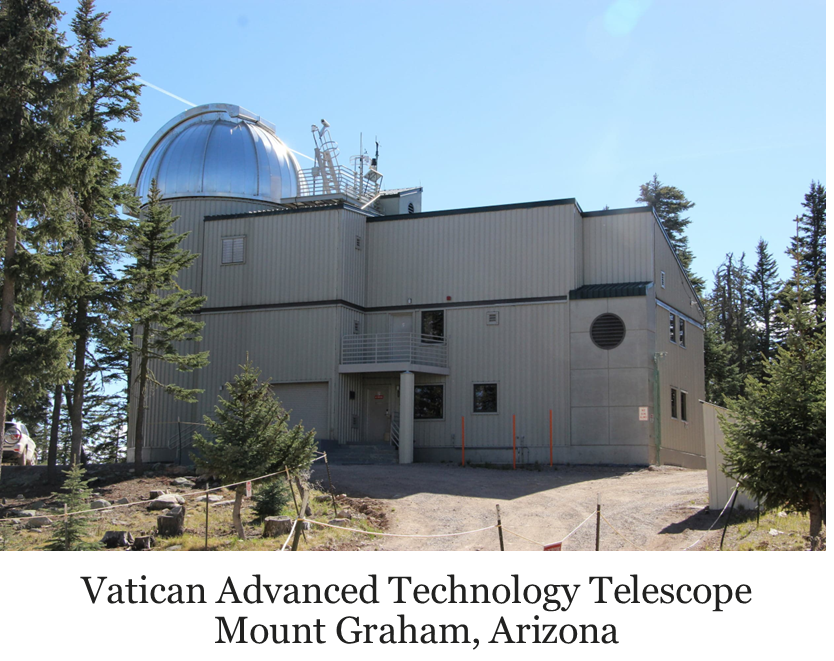
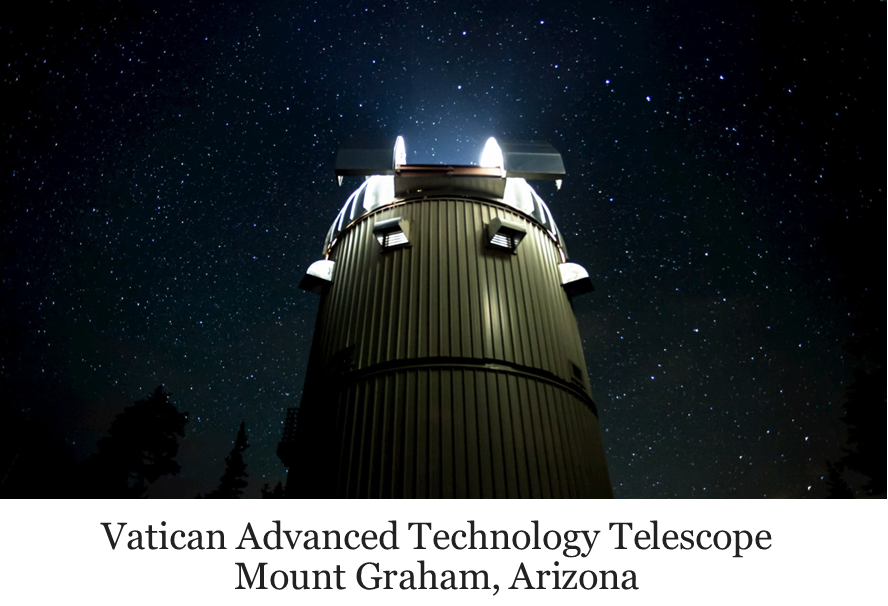
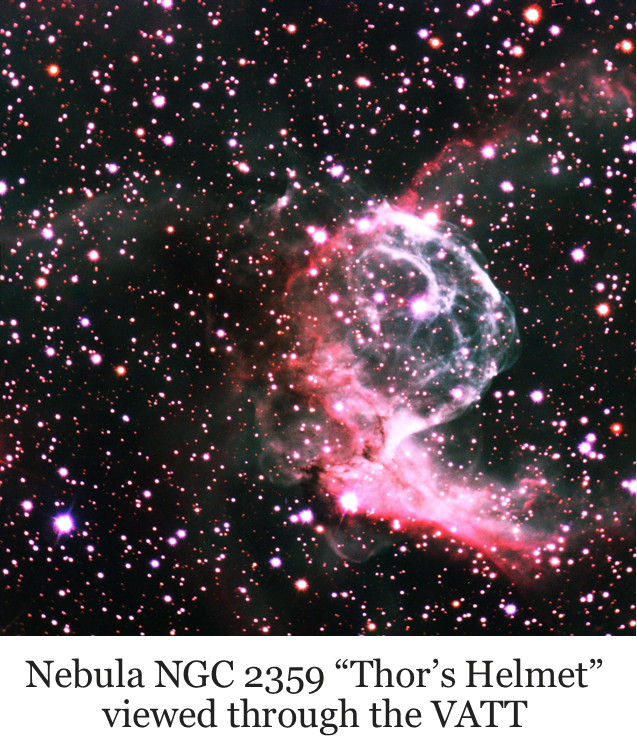
In 1980, the continued spread of light pollution inspired the Observatory’s astronomers to expand outside of Europe. Partnering with the University of Arizona’s Steward Observatory, the Vatican Observatory Research Group (VORG) was established in Tucson, Arizona. In 1993, the Observatory expanded to Mount Graham, located in southeastern Arizona, installing the four-million-dollar Vatican Advanced Technology Telescope (VATT) that continues advancements of our understanding of God's creation in collaboration with other scientific institutions around the world.
| |
The science behind the Bethlehem Star has endured hundreds of years of astronomical speculation. Today, it is merely agreed that there are three possible explanations: the story of the star was fabricated, it was truly a supernatural occurrence and therefore beyond scientific explanation, or it was an astronomical phenomenon. Br. Guy Consolmagno, S.J. says that as “the Pope’s Astronomer,” he has often been asked about the Star of Bethlehem to which he says, “There is nothing conclusive, but scientists have identified various suggestive celestial phenomena in the years around the birth of Christ, including alignments of planets which might, to the naked eye, look like bright stars. (The New Yorker, Annals of Inquiry, July 28, 2025)
| |
Like the wisemen seeking the newborn king, the Jesuits continue glorifying God through their scientific discovery of creation. This Advent season take a moment to notice all the stars — twinkling on strands of light, proclaiming the “Good News” loftily atop the manger scenes, or even hanging as glittery paper ornaments in the window of a store. Finally, look up — just as the wise men did — and pause to reflect on God’s glory in the heavens and all of creation. So great is He who created the vast universe for us and then sent a baby to be the Light of the World.
For more information on the Vatican Observatory, visit here, and be sure to check out the Vatican Observatory library of images.
| |
Note: I would be remiss if I didn't acknowledge the Church's complicated history with Galileo. On the Vatican Observatory's website, there is a worthy historical account of Galileo.
| | |
Advent: Waiting and Hoping
by Jean Lupinacci
The short dark days of December call out to me to be still as I wait for Jesus coming at Christmas. As a Type A person who tries to do too much, I long for silence and less activity, especially in the evening. Quiet nights reading, praying, and sitting in God’s presence are what fills me in this liturgical season.
The dark settling in at 5 p.m. calls me home to get cozy on the couch with a cup of tea. I heat the water in the kettle and place the tea leaves in my favorite large mug — Fr. Crossin’s “Fall Friendship Festival,” one that I inherited. I think of him as I pour in the water and inhale the fragrance of my tea. I hold the warm mug and lay the quilt my daughter made for me over my legs. I marvel at the lavender pattern of small flowers, and it reminds me of the great love we have for each other and for our friend Jesus. This is a Psalm I often pray with during Advent: Be still and know that I am God (Psalm 46:10).
The dark, the prayers, the tea, and the quilt call me to stillness in the presence of God. I’ve just started reading through St. Jane de Chantal’s letters of spiritual direction to Noël Brûlart, a French diplomat who renounced the world and became a priest who was involved in much charity to others. At the time of the correspondence, he is burnt out from his good works, suffers from illness, and is searching for guidance from her. I can relate to this as one who seeks perfection and has chronic illness. She encourages him to take care of himself and to look to God for help. These passages stood out for me:
“Instead of being preoccupied with weighty thoughts, just gaze at God and let Him do what He wills – these are the words of our blessed Father – because our divine Savior is the only object of your love and aspiration, and the sole comfort of your dear, beloved heart, you will find in Him all you need.”
“…in all your good works, you should unite yourself to the will of God’s good pleasure, and in your faults and imperfections, you should unite yourself to his permissive will gently, quietly and with peace of mind.”
These words from St. Jane were comforting and helpful to Noël Brûlart. They are also meaningful to me in seeking what God calls me to do instead of trying to achieve perfection in my personal life and in my ministry at St. John Neumann.
| |
In unity with Pope Leo, I hope for many things in this world, both personal and global. He mentioned hope in his homily on the first Sunday of Advent, November 30, 2025. He hopes for peace, unity, and reconciliation for the world. I hope for peace within families that are estranged from one another. I hope for unity within our parish, our diocese, the universal Catholic Church, and with other faith traditions. I also hope for reconciliation among family members, communities, and those living in the United States.
How do you still yourself in the presence of God during Advent? If you do not, how can you? What do you hope for?
Other ideas for Advent:
- Pray with an Advent devotional (The Pascal Lamb in Fairfax has these), or you can find one here.
- Find out more about one of the saint days we celebrate in December: Nicholas, Ambrose, Juan Diego, Lucy, John of the Cross, or Lazarus.
- Sit and pray with one of the gospel readings in Advent (Matthew 3:1-12; Matthew 11:2-11; Matthew 1:18-24).
- Have a digital sabbatical and unplug for an hour or more.
- Turn out the lights in the evening and light candles.
- Prepare a small altar somewhere in your home that include your sacramentals.
Have a blessed Advent as you wait and hope anticipating the coming of Jesus at Christmas!
| |
O Antiphons
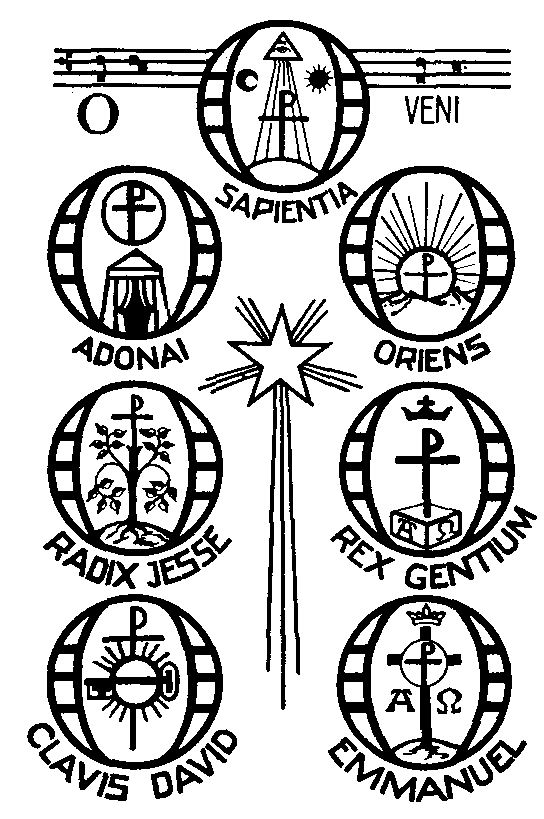
In the final stretch of Advent, the Roman Church sings and meditates upon the seven "O" Antiphons. These antiphons, which are Scriptural verses often sung or recited, have been a part of our liturgy since at least the eighth century.
Each year, on December 17-23, the "O" Antiphons accompany the Magnificat canticle in the Liturgy of the Hours Evening Prayer. The antiphons embody both the Messianic hopes from the Old Testament as well as the fulfillment of the prophecy in the birth of our Savior and our own longing for the Second Coming. The repeated use of the imperative verb "come" captures our inherent, even insistent, longing for God, our Creator.
In the last week of Advent, consider praying the "O" Antiphons each day in communion with the Church universally, as we all await the celebration of Christ's birth.
| | |
December 17
O Wisdom of our God Most High, guiding creation with power and love: come to teach us the path of knowledge!
December 18
O Leader of the House of Israel, giver of the Law to Moses on Sinai: come to rescue us with your mighty power!
December 19
O Root of Jesse's stem, sign of God’ s love for all his people: come to save us without delay!
December 20
O Key of David, opening the gates of God’ s eternal Kingdom: come and free the prisoners of darkness!
| | | |
December 21
O Radiant Dawn, splendor of eternal light, sun of justice: come and shine on those who dwell in darkness and in the shadow of death.
December 22
O King of all nations and keystone of the Church: come and save man, whom you formed from the dust!
December 23
O Emmanuel, our King and Giver of Law: come to save us, Lord our God!
—From Catholic Household Blessings & Prayers
| | From the Holy See This Month | | |
The Pope's Intention for
Prayer and Action for December:
For Christians in the areas of conflict
Let us pray that Christians living in areas of war or conflict, especially in the Middle East, might be seeds of peace, reconciliation, and hope.
| | | |
A Christmas Reflection
Saint Francis de Sales, in one of his many letters addressed to Saint Jeanne Frances de Chantal, he writes as follows:
“I imagine I see Solomon on his ivory throne, all beautifully gilded and carved, which, as the Scripture tells us, had no equal in all the kingdoms of the earth (1 Kings 10:18-20) neither was there any king that could be compared, for glory and magnificence, with the king that sat upon it (1 Kings 10:23). And yet, I would a hundred times rather see the dear Jesus in his Crib, than all the kings of the world on their thrones.” What he says is beautiful. Jesus, the King of the universe, never sat on a throne, never: He was born in a stable – we see it represented thus [indicating the manger scene in the Paul VI Hall] – wrapped in swaddling clothes and laid in a manger; and finally He died on a cross and, wrapped in a sheet, was laid in the tomb. Indeed, the evangelist Luke, in recounting the birth of Jesus, insists a great deal on the detail of the manger. This means that it is very important not only as a logistical detail. But how to understand it as a symbolic element? In order to understand what kind of Messiah is He who was born in Bethlehem; what kind of King He is, Who Jesus is. Seeing the manger, gazing upon the cross, looking at His life, a life of simplicity, we can understand who Jesus is. Jesus is the Son of God Who saves us by becoming man, like us; stripping Himself of His glory and humbling Himself (cf. Phil 2:7-8). We see this mystery concretely in the focal point of the crib, namely in the Child lying in a manger. This is “the sign” that God gives us at Christmas: it was at the time for the shepherds in Bethlehem (cf. Lk 2:12), it is today, and it will always be so. When the angels announce the birth of Jesus, [they say,] “Go and you will find Him”; and the sign is: You will find a child in a manger. That is the sign. The throne of Jesus is the manger or the street, during His life, preaching; or the Cross at the end of His life. This is the throne of our King.
Excerpt from the General Audience with Pope Francis on the 400th anniversary of the death of St. Francis de Sales, December 28, 2022
|
| |
Current Mass Times
Saturday: 5 p.m.
Sunday: 7:30 a.m., 9:30 a.m., 11:30 a.m., 2 p.m. (Spanish), 5 p.m.
Monday-Friday: 9 a.m.
Wednesday & Friday: 12:10 p.m.
Watch a livestreamed or recorded Mass
Confession
Saturday: 10 a.m.-10:30 a.m. (English)
Sunday: 3 p.m.- 4 p.m. (Spanish)
| | | Please note that the January SJN Newsletter will be distributed on Saturday, January 10. | | | | |