|
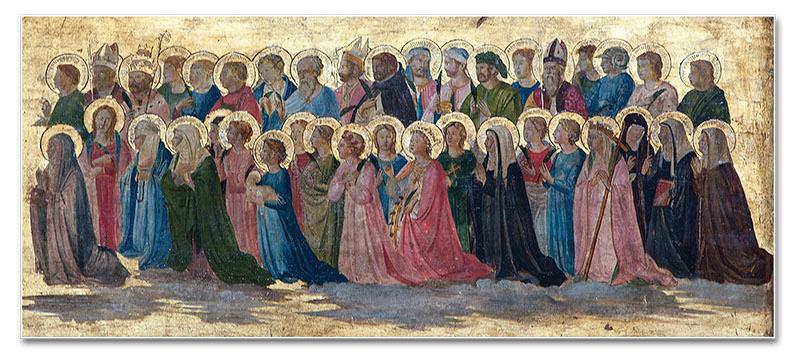
The Solemnity of All Saints is a holy day celebrated annually on the first day of November to honor all the saints in heaven, both those formally canonized and those known only to God. Of this solemnity, Francis de Sales made the following observation in a sermon he preached in the cathedral of Annecy on November 1, 1621:
“The Church celebrates the feast days of the saints with wonderful delights. When we think of them and honor them individually, observing the fervor of the martyrs, the love of the apostles and the fidelity of virgins we say in imitation of the account of Creation in the Book of Genesis, ‘It is good.’ But when we come to gather all the saints together in one great festival, reflecting on the crowns, palms, victories and triumphs of all the saints, we exclaim: ‘How good it is; indeed, it is very good!’”
Francis then focused on one fascinating aspect of this celebration of All Saints:
“There are many reasons why this feast was instituted, but I am only going to deal with the basic one. This feast was instituted to honor many holy men and women, now in heaven, whose individual feasts cannot be observed by the Church because their names are not known to us. We should not imagine for a moment that the majority of the blessed in Heaven became saints through working miracles or following lofty callings. The vast majority were unknown to us in this life or never worked any miracles and so we never heard about or noticed them.” (emphasis added)
| |  | |
When you boil it all down, what is a saint? No, correct that. Who is a saint? A saint is a person who we recognize for having done their level best to become the person that God created them to be, and who did that in ways commensurate with God’s will and design for them. But in the opinion of St. Francis de Sales, for every saint who became “the best version of themselves” (as author Matthew Kelly describes sainthood) in extraordinary ways or circumstances that garnered our attention, countless more (who were never recognized) pursued this through simple, ordinary, and everyday means…with great love.
Whether recognized by others or not, what does sainthood look like? The Gospel specifically chosen for the solemnity of All Saints says it all: living a life of Beatitudes as described in Matthew 5:1-12, of which each person — imperfect as we are — is more than equipped and capable of living!
In a conference to the Visitation Sisters, Francis de Sales remarked: “What all the saints have in common is that they united their wills to the will of God, but no two saints did it in exactly the same way.”
How might God be inviting us to be anonymous saints in our own day, even if no one else recognizes it? Except for God, of course.
| | |
Black Catholic History Month Facts
from the USCCB
1565: St. Augustine, Florida: Blacks, both slave and free, helped to found this oldest town in the United States. In 1693 Spain offered freedom in Florida to slaves who converted to Catholicism. Until 1763, these freed slaves lived in a community northeast of St. Augustine. Gracia Real de Santa Teresa de Mose, or Fort Mose, established in 1738, thus became the first free black town in the United States.
1780: The city of Chicago is founded by Jean Baptiste Point du Sable who participated in Catholic Sacraments. You can learn more about him HERE.
1781: Los Angeles, California: Governor Don Felipe de Neve recruits 11 families to settle on the Porciuncula River—now Los Angeles. The settlers are all Catholic, a mix of Africans, Spanish, and American Indians.
1889: Daniel Rudd calls the first Black Catholic Congress in Washington, DC. Learn more about the Congress and visit their Black Catholic History timeline.
1909: The Knights of Peter Claver are founded in Mobile, Alabama, and, in 1922 the Ladies Auxiliary is authorized. Learn more about the Knights of Peter Claver.
1920: The first seminary for Black men to study for priesthood, St. Augustine Seminary, is founded in Greenville, Mississippi, by the Society of Divine Word Missionaries.
1925: Xavier University of Louisiana is founded by St. Katharine Drexel. This is the only Catholic HBCU (Historically Black Colleges and Universities). Learn more about Xavier University of Louisiana.
1984: The Black Bishops of the United States release their document, "What We Have Seen and Heard: A Pastoral Letter on Evangelization." Learn more about this document, and its upcoming 40th Anniversary.
June 1989: Servant of God, Sr. Thea Bowman, FSPA, addresses the USCCB about “What Does it Mean to Be Black & Catholic?” You can watch the video of her address here.
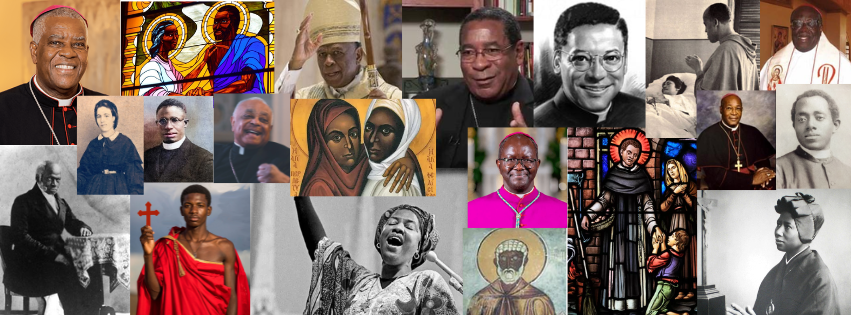
Learn about noteworthy Black Catholics and the seven African Americans on the road to Canonization.
| | |
We are All the
Communion of Saints
by Elizabeth Connell Wright
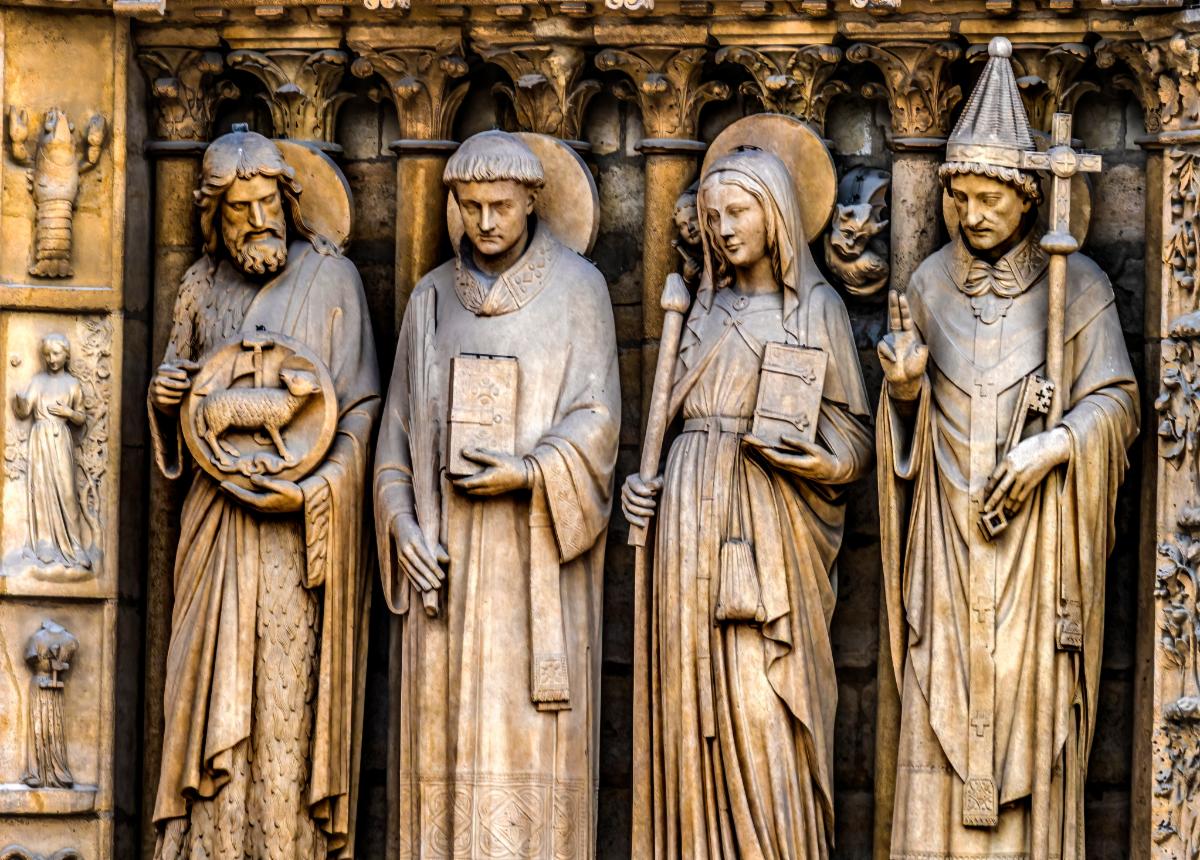
In November, we celebrate the communion of saints. As the Catechism of the Church states, “The communion of saints is the Church” (946). Besides each other, the faithful on earth, we also have over 10,000 canonized saints and another several hundred on the path to canonization who inspire us as examples of holiness. In the early Church, becoming a saint was largely synonymous with being martyred, and then later, the lives of holy men and women were presented to local bishops for determination of sainthood. Under Pope Urban II, the first canonical process was introduced and used to declare Nicholas of Trani a saint in 1098. In 1170, Pope Alexander III proclaimed that only a pope had the authority to declare sainthood, and in 1234, Pope Gregory IX formally included this as a law of the Church. Over time, the process has continued to be amended and has resulted in a method used today that is both rigorous and efficacious. Most spend decades on the path to canonization, and sometimes, sainthood is simply never verified.
As a relatively young nation, there are just 11 saints attributed to the United States. This is defined as those who spent much of their lives as missionaries in the U.S. — or territories that would become part of the U.S. — or those born in the U.S. But to date, only three saints were born in the United States — or what would become the U.S. in St. Kateri’s case: Kateri Tekakwitha, Elizabeth Ann Seton, and Katharine Drexel.
As a relatively young nation, there are just 11 saints attributed to the United States. This is defined as those who spent much of their life as missionaries in the U.S. — or territories that would become part of the U.S. — or those born in the U.S. But to date, only three saints were born in the United States — or what would become New York in St. Kateri’s case: Kateri Tekakwitha, Elizabeth Ann Seton, and Katharine Drexel.
| |
For a better understanding, these are our saints in order of canonization date followed by country of origin:
St. Isaac Jogues and companions (1930) France
St. Frances Xavier Cabrini (1946), born in Italy, but first American citizen saint
St. Elizabeth Ann Seton (1975), first American-born saint
St. John Neumann (1977) Bohemia (Czech Republic)
St. Rose Philippe Duchesne (1988) France
St. Katharine Drexel (2000) United States
St. Mother Théodore Guérin (2006) France
St. Damien of Molokai (2009) Belgium
St. Kateri Tekakwitha (2012), born 1656 in what would become present-day New York
St. Marianne Cope (2012) Germany
St. Junípero Serra (2015) Spain, only saint canonized on U.S. soil
| |
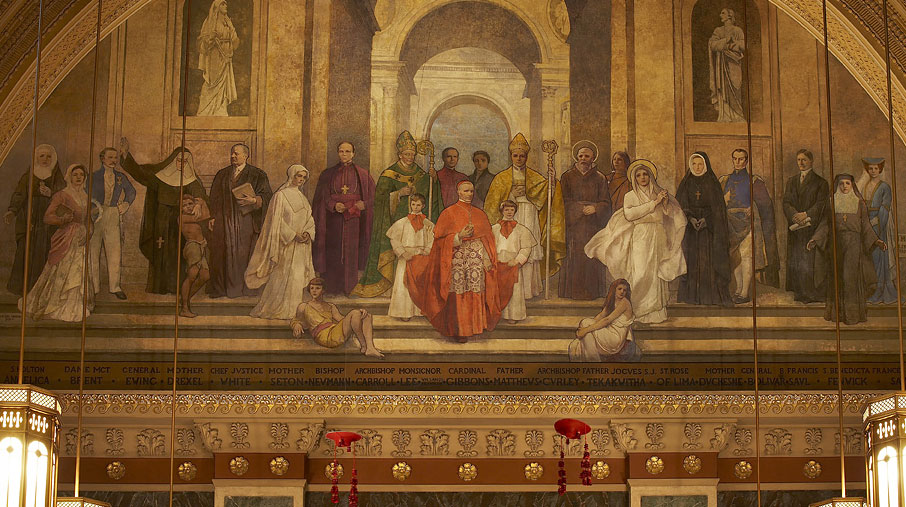
At the Cathedral of St. Matthew the Apostle, the seat for the Archdiocese of Washington D.C., there is a large mural over the church entrance. The mural is entitled “Saintly and Eminent Personages of the Americas” and was completed in 1931. At its completion, the first saint attributed to the U.S., St. Isaac Jogues, had been canonized just months previously. Also included in the mural are Katharine Drexel, Elizabeth Ann Seton, Kateri Tekakwitha, and Philippine Duchesne, four other now-canonized U.S. saints.
When you look at the painting, the beautiful tapestry of our nation is not truly reflected, but the uniqueness of American saints is that most of them were immigrants and many of them served people facing marginalization, hate, and bigotry. Nearly 100 years later, however, there is a persistent absence: we have yet to canonize an African American saint.
November is also Black Catholic History month, celebrated since 1990. This is a time for all of us to reflect on our place as American Catholics — and remember that we are still healing from a history that deeply hurt American Black Catholics and the Church. Bishop George Murry, S.J., speaking at Boston College in September 2017 reminds us: “From the end of the nineteenth century to 1965, racial segregation was an official legal policy throughout the American South … As a result, most Catholic parishes remained segregated during the first half of the twentieth century. Some dioceses created separate parishes for Blacks. In other areas, Blacks could attend any Catholic church but often had to sit in the rear and were unable to receive communion until every white parishioner had received. Some parishes even placed screens between the two races.” In fact, St. Katharine Drexel was canonized for her holy work as a missionary to Native Americans and African Americans. Working under Jim Crow laws that strangled Christianity, she would cleverly adhere to segregation laws by separating Blacks and whites parallel to each other on separate sides of the church, rather than seating Blacks behind whites.
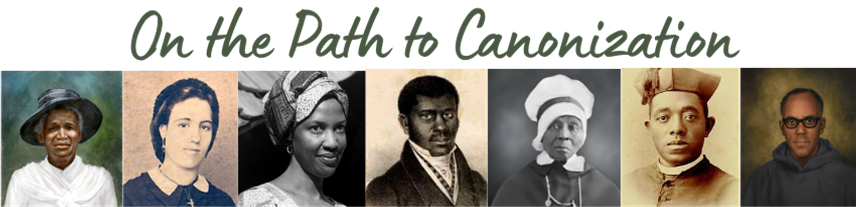
| But the question is, what about the holy men and women who not only served the marginalized, but experienced it themselves, often even among the religious they worked and lived among? Surely, we are due, or rather past due, for the first African American saint. Currently, there are seven African American candidates on this path (L to R above): | |
1. Servant of God Julia Greeley: Born into slavery in Missouri, Julia was freed by the Emancipation Act of 1865 and moved West working for white families in Colorado. She settled in the Denver area and was known to the Jesuits at Denver’s Sacred Heart Parish as an enthusiastic devotee of the Blessed Sacrament and the Sacred Heart of Jesus, evangelizing to many in the area.
2. Venerable Henriette Delille: Born in New Orleans in 1813, Delille was committed to helping those in need. Despite lack of support from the Church in forming a Black religious congregation, she fought for justice and fully lived her life devoted to the Gospel mission, finally forming the Congregation of the Sisters of the Holy Family in 1842.
| |
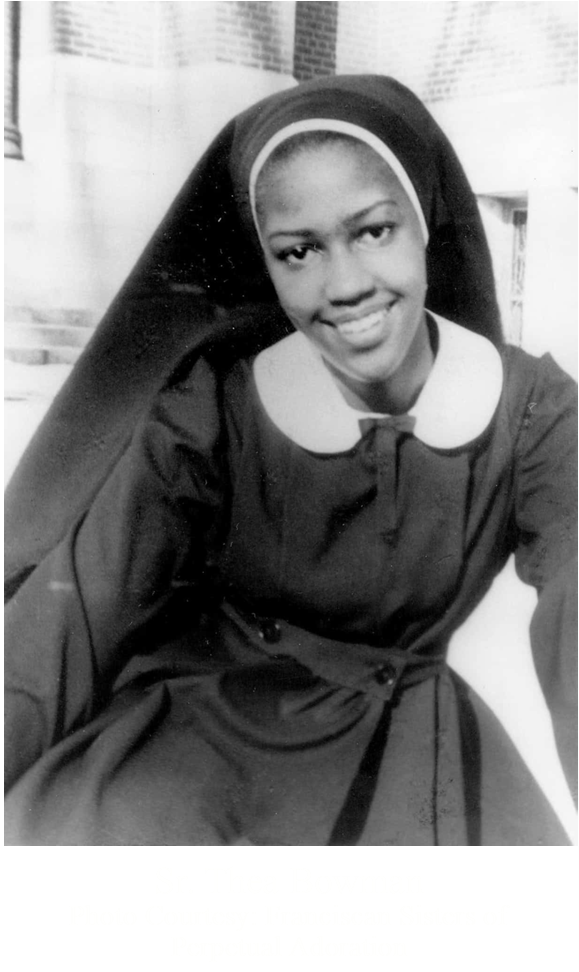
3. Servant of God Sr. Thea Bowman, FSPA: Born in 1937, Sr. Thea was educated at the Holy Child Jesus School in Canton, Mississippi, where she was inspired by the Franciscan Sisters of Perpetual Adoration to convert to Catholicism at the age of nine and become the first African American Sister at just fifteen. She went on to earn a Ph.D. in English at the Catholic University of America and spent her short life as a talented educator, speaker, singer, and evangelist positively impacting civil rights and race relations in the Church.
4. Venerable Pierre Toussaint: Born into slavery in Haiti in 1776, Toussaint was taken to New York to be the apprentice of a well-known hairstylist. Against the odds, not only was Toussaint granted freedom upon the death of his enslaver, but he also became a highly sought after stylist for women of New York, which made him a wealthy man. Rich also in generosity, he used his money to establish one of the first orphanages in New York and to help build the first cathedral in the city. He personally sheltered refugees and orphans and nursed the sick and dying during the yellow fever epidemics.
| |
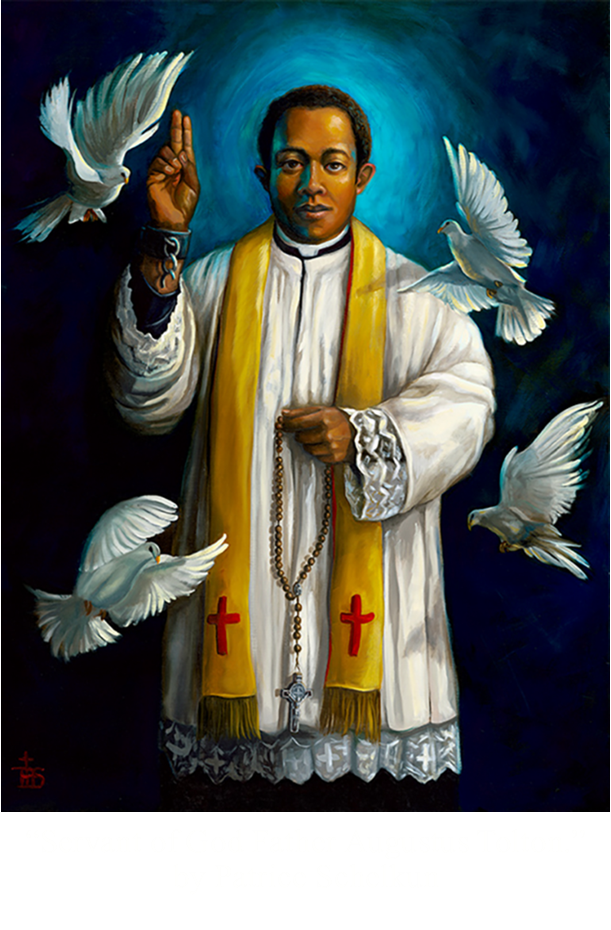
5. Venerable Fr. Augustus Tolton: He was the first U.S. Roman Catholic priest publicly known to be Black. He was ordained in 1886 at a time that it was thought impossible for a Black man to be ordained, but the fact is, he was refused formation in the United States. Once an enslaved man, Tolton was supported by just a few faithful who sent him to Rome to be formed for the priesthood. In 1889, he and Daniel Rudd began the National Black Catholic Congress in Washington D.C.
6. Venerable Mother Mary Lange: In 1829, Mother Mary Lange founded the Oblate Sisters of Providence, the first religious congregation of African American women. Their small community had a significant impact as they worked tirelessly to educate and evangelize youth, orphans, and those who had been freed from slavery. During the cholera epidemic of 1832, they nursed the elderly and terminally ill. Mother Mary Lange is closely aligned with St. John Neumann who, as bishop of Philadelphia, saved the order from being terminated.
7. Servant of God Friar Martin de Porres Maria Ward: Ward converted to Catholicism in 1940 at the age of 22. Five years later he applied to join the Conventual Franciscan Friars but warned them on his application that he was Black, a fact that commonly resulted in being denied acceptance. However, he was approved and became the first African American to join the Franciscan friars in the U.S. After his ordination in 1955, he volunteered for a mission to Brazil because he knew that U.S. bishops wouldn’t allow him to serve in their dioceses because he was Black. He ended up spending over 40 years serving the poor of Brazil and was known to be a joyous follower of Christ with a devotion to the Blessed Virgin Mary.
| |
Bishop George Murry, S.J. continued to say, “Within the Church, this reconciliation must be manifested in the development of more inclusive patterns of relationship between people of color and the Church. These patterns must allow for the full participation of Black, Hispanic, and other people of color who are faithful members of the Church in decision making as well as ministerial and social actions.”
Canonizations have grown much more arduous since the Church's first century; in fact, medical advances are making the verification of the required miracles even more elusive. The process is also expensive, easily costing $250,000. Ralph E. Moore Jr., a parishioner of St. Ann Catholic Church in Baltimore, organized a canonization letter-writing campaign to Pope Francis in 2023. He did not mince words in saying, “Not having enough money is one of the reasons there are no Black saints from the United States.” He pointed to slavery, segregation, and the “contradiction of the Gospels” by white Catholics in the U.S. that not only long prevented African Americans from the priesthood and religious life but has also left Black Catholics with far fewer resources to mobilize.
| In her 1989 address to the United States Conference of Catholic Bishops (USCCB), Sr. Thea Bowman, FSPA, said, “Black people are still trying to find ‘home’ in the homeland and home in the Church. Still struggling to gain access to equal opportunity.” That was 36 years ago, and both progress and healing are still needed. The canonization of an African American saint would be a huge step in this direction, and this is a cause not just for Black Catholics, but for all of us. | | |
|
To learn more, please join SJN’s Racial Justice Ministry for the November 7 viewing of the documentary, “A Place at the Table.”
Click on any of the prospective saints above for more information on their cause and becoming involved in the path to sainthood.
| | | |
A Feast Day for
Conscientious Objectors
by Bob More
Coordinator, Pax Christi SJN
On our nation’s secular calendar, November 11 is celebrated as Veterans Day, honoring military veterans of the United States Armed Forces. The holiday was originally established as Armistice Day, commemorating the end of World War I on November 11, 1918. It was renamed Veterans Day in 1954, changing its focus from celebrating peace to celebrating military service.
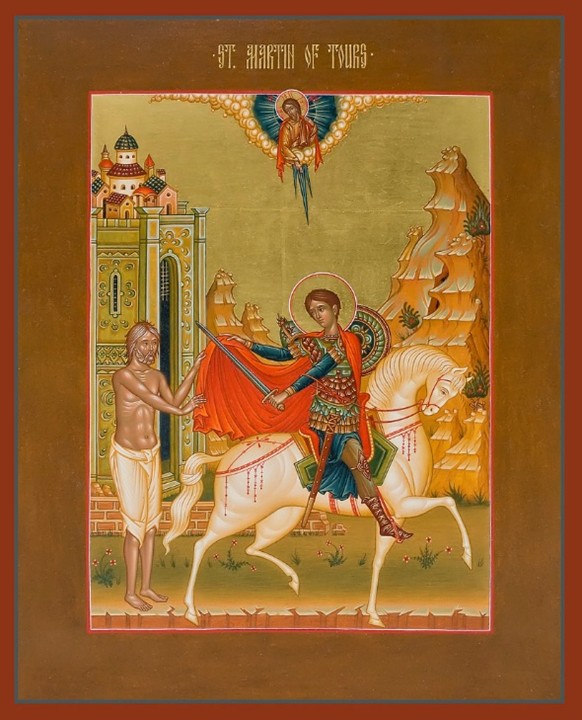
But on the Church’s calendar, November 11 is the feast of St. Martin of Tours (316-397), who is recognized as one of the Church’s first conscientious objectors.
During the Church’s first few centuries, Church teaching forbade Christians from serving in the military. The pervasive presence of idolatry in the military was one reason, but the primary reason was opposition to killing of any kind. Church writers cited Jesus’ commands to love one’s enemies and to turn the other cheek, as well as his rebuke to the disciple who drew his sword in the Garden of Gethsemane. (Ronald J. Sider, The Early Church on Killing: A Comprehensive Sourcebook on War, Abortion, and Capital Punishment, 2012, pp. 175-77.)
During this period, members of the military who wanted to become Christian were allowed to receive catechetical training, provided they renounced killing. They were not required to leave military service immediately, which would have been very difficult and costly, and many Roman soldiers never fought in military campaigns. (Ibid., 192-93.)
Martin’s father, a pagan, was an officer in the Roman army, and Martin was required to join the army at age 15. According to Butler’s Lives of the Saints,
When he was about twenty [and a catechumen], there was a barbarian invasion of Gaul. With his comrades he appeared before Julian Caesar to receive a war-bounty, and Martin refused to accept it. “Hitherto,” he said to Julian, “I have served you as a soldier; let me now serve Christ. Give the bounty to these others who are going to fight, but I am a soldier of Christ and it is not lawful for me to fight.” Julian stormed and accused Martin of cowardice, who retorted that he was prepared to stand in the battle-line unarmed the next day and to advance alone against the enemy in the name of Christ. He was thrust into prison, but the conclusion of an armistice stopped further developments and Martin was soon after discharged.
| |
Martin went on to study theology under St. Hilary of Poitiers, founded the first monastery in Gaul, and later served as bishop of Tours.
Christianity became the official religion of the Roman Empire in 380, and Christian pacifism gave way to the just war tradition as the Church’s main philosophical approach to issues of war and peace. Modern-day conscientious objectors like Ben Salmon, imprisoned by the U.S. for refusing to serve in World War I, and Bl. Franz Jägerstätter, executed by the Nazis for refusing to serve in World War II, found no support for their pacifism from their Church leaders.
But in 1965, the Second Vatican Council officially endorsed pacifism as a legitimate stance for Catholics. In Gaudium et Spes (the Pastoral Constitution on the Church in the Modern World), the Council wrote, “We cannot fail to praise those who renounce the use of violence in the vindication of their rights . . . . Moreover, it seems right that laws make humane provisions for the case of those who for reasons of conscience refuse to bear arms, provided however, that they agree to serve the human community in some other way” (¶¶ 78-79).
In The Challenge of Peace: God’s Promise and Our Response (1983), the U.S. Bishops wrote, “It is incumbent upon us to stress to our own community and to the wider society the significance of this support for a pacifist option for individuals in the teaching of Vatican II and the reaffirmation that the popes have given to nonviolent witness since the time of the council” (¶ 119). The bishops also noted their support “for legislative provision to recognize selective conscientious objectors” (¶ 118), i.e., individuals who object on moral grounds to specific wars, even if they are not opposed in principle to all wars.
On this November 11, then, let us pray for those who served their country in uniform. Pray also for an end to all wars. And, remembering St. Martin of Tours, pray for those who refuse military service for the sake of the gospel.
Image: Icon of St. Martin as a soldier sharing his cloak with a beggar, by Fr. Igumen Silouan of the Monastery of Our Lady of Mercy in New York City, licensed under CC BY-NC-ND 2.0.
| | |
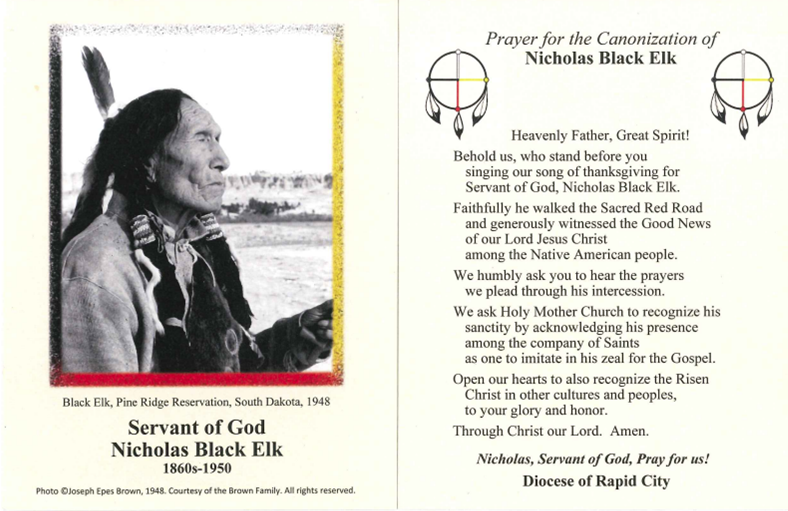
Servant of God Nicholas Black Elk
by Elizabeth Connell Wright
November is also Native American History Month, and beyond St. Kateri Tekakwitha, the truth is, we don’t hear much about Catholicism among Native Americans. But the Knights of Columbus in the Diocese of Rapid City, South Dakota, are working, and more importantly, praying to change that.
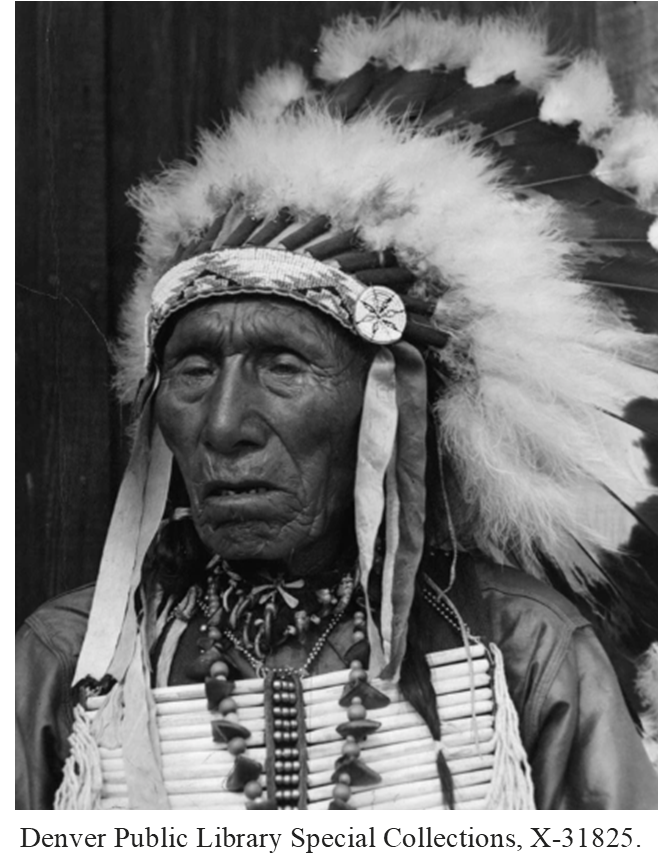
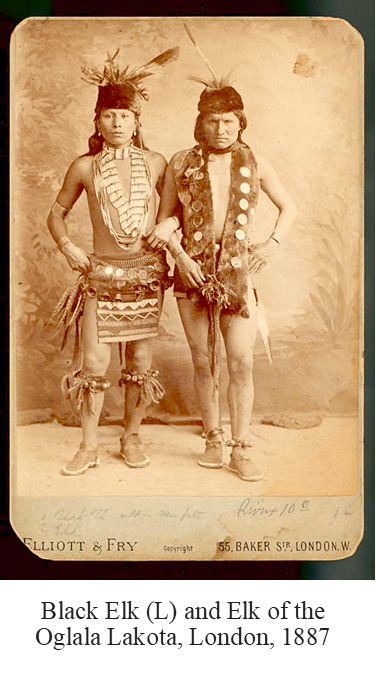
Black Elk, Heȟáka Sápa in Lakota, was born in December 1863 along the Little Powder River (in present-day Wyoming). His father, also Black Elk, and his mother, Sees the White Crow, had five daughters and two sons, including Black Elk. Their family was from a long line of Oglala Lakota healers, and Black Elk was called to be a medicine man for his people. As early as five, Black Elk began to have visions that inspired his life, and at the age of nine years old, he had a spiritual vision “from the Creator” that greatly impacted him. As he grew older, he continued to have visions and viewed these in connection with the Great Spirit.
During his lifetime, the world of his people dramatically shifted as U.S. troops and the U.S. government increasingly sought to take their land and oppress their culture. In 1876, at just 13 years old, Black Elk participated in the Battle of Little Big Horn. His family joined Lakota warrior Crazy Horse, his second cousin, in resisting a move to the reservation, and after Crazy Horse was killed, they fled to join Sitting Bull in Canada, but as the harsh winters battered them, they soon returned to warmer South Dakota.
| |
In 1887, Black Elk was recruited to join Buffalo Bill’s Wild West Show among other Oglala Lakota. He used the opportunity to better understand white men and their language. He traveled with them to New York, performing in the original Madison Square Garden, before embarking on a voyage to Great Britain where they performed before Queen Victoria in a private audience for her Jubilee celebration. Black Elk missed his return ship to the States and remained in Europe with another Wild West touring group, visiting Germany, Italy, and France until 1889. In Paris, Black Elk fell ill and had a troubling vision of his people that caused him to return immediately. When he finally arrived in South Dakota, he found them with limited food sources and ravaged by disease, fighting for their land that continued to be appropriated from them for white settlers’ use.
In December of 1890, the Lakota and other tribes were gathered by the U.S. Army near Wounded Knee Creek to be disarmed. A fight broke out that ended with the soldiers killing over 150 Native Americans, almost half women and children, with many more wounded, Black Elk among them. After the slaughter, Black Elk with the remaining Lakota, faced adapting to the new life imposed on them. On the reservation, Black Elk continued to care for his people as a medicine man, and in 1892, he married Katie War Bonnet. She was a Catholic convert, and they had three children who were all baptized in the Catholic faith. In 1903, Katie died. Soon after her death, under the guidance of a Fr. Joseph Lindebner, S.J., Black Elk converted as well and was baptized under the Christian name “Nicholas.”
| |
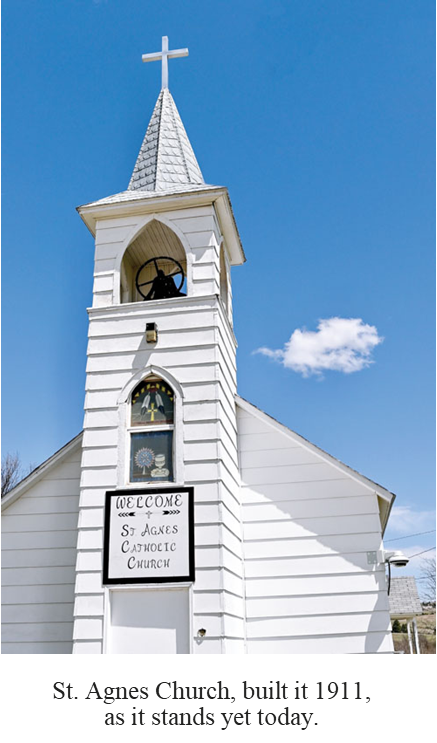
In 1905, Nicholas Black Elk married another Catholic Lakota, Anna Brings White. Soon after, he became a dedicated and prolific catechist. He immediately took to converting his people, which drove the need for a chapel on Pine Ridge Reservation. The first log version of St. Agnes Church was built in 1906, by Black Elk and others in the community, followed by an expansion in 1911 that stands yet today. As a catechist, Black Elk continued to minister to the sick as well as instruct converts, assist priests, and spread the Gospel. He devoted himself fully to his duties to the Church and even traveled the country spreading the Gospel. He helped develop the Two Roads map, which is a pictorial catechism depicting the paths to salvation. These “Catholic ladders” are tools that were once used by missionaries to overcome language and cultural differences. After contracting tuberculosis in 1916, he focused on his own community and is said to have converted over 400 people in his lifetime.
What made Nicholas Black Elk unique in his faith was that he never replaced the Lakota culture he loved with the Catholic teachings he embraced. Instead, he was able to beautifully blend his two loves into a harmony that continues yet today at Our Lady of the Sioux parish where Lakota words and a ceremonial drum intertwine with liturgy honoring the culture of his people within the tradition of the Catholic faith. Black Elk was able to bridge his people’s culture with a spiritual faith that fulfilled their search for God.
In 1932, poet John G. Neihardt published the book, “Black Elk Speaks,” based on interviews with Black Elk where he described his life and culture as a Lakota, his visions, and religious views (although it does not specifically address Catholicism). On August 19, 1950, Nicholas Black Elk died and was laid to rest at Saint Agnes Catholic Cemetery in Maderson, South Dakota. The night of his wake, a magnificent display of the Northern Lights illuminated the skies over South Dakota. Father William Siehr, one of the Jesuits at his funeral, described it: “When we came back from the wake, the sky was lit up, and everything was illumined all the way around... There were streaks of light and flashes, and it seemed like there were fireworks in between it. It had a very forceful effect on me. It was something I’d never forget.” The Lakota saw it as a sign that Black Elk was now with God.
| |
During his life, Black Elk signed the petition for the canonization of St. Kateri Tekakwitha, and it was at her canonization in Rome in 2012 that George Looks Twice, Black Elk’s grandson, took the first step toward canonization for his grandfather. In 2017, the Roman Catholic Diocese of Rapid City opened Black Elk’s cause for beatification and declared him Servant of God.
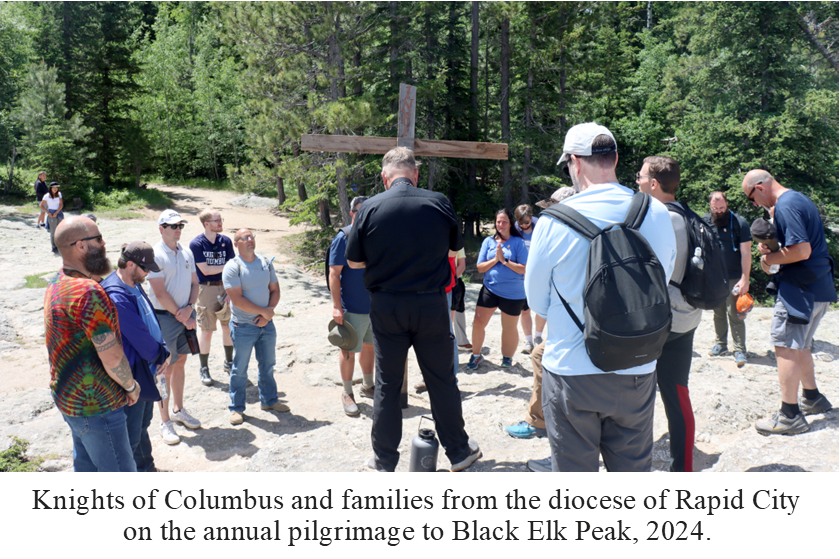
On August 11, 2016, South Dakota’s highest peak (7,242 feet), a place where Black Elk was known to regard as his sacred space where he would encounter “the Creator,” was renamed Black Elk Peak to honor the spiritual significance to both him and the Lakota people. (Previously, the peak was named for General William S. Harney, a leader in the 1855 Lakota massacre.) Each summer, Knights from the Diocese of Rapid City along with their families carry a large wooden cross branded with INRI to the gravesite of Nicholas Black Elk. From there they trek 7.5 miles roundtrip to the top of Black Elk Peak, stopping seven times on the way up and seven on the return to pray the Stations of the Cross. They hand out holy cards and pamphlets to other hikers on the trail and encourage them to pray for Black Elk’s cause for canonization so that one day, he may join St. Kateri in the ranks of canonized saints.
| | From the Holy See This Month | | | | | |
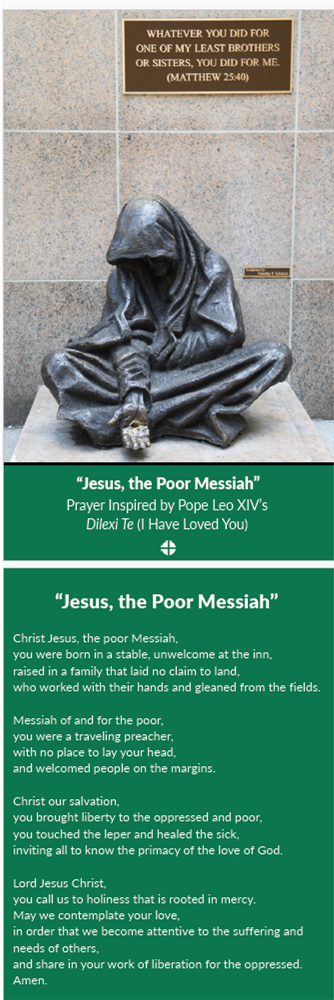
Dilexi Te
Pope Leo's first Apostolic Exhortation on Love for the Poor was released on October 9, 2025.
| |
The Pope's Intention for
Prayer and Action for November:
For the prevention of suicide
Let us pray that those who are struggling with suicidal thoughts might find the support, care, and love they need in their community, and be open to the beauty of life.
| | |
|
A Thanksgiving Prayer
O God, when I have food, help me to remember the hungry;
When I have work, help me to remember the jobless;
When I have a home, help me to remember those who have no home at all;
When I am without pain, help me to remember those who suffer,
And remembering, help me to destroy my complacency;
bestir my compassion, and be concerned enough to help;
By word and deed, those who cry out for what we take for granted.
Amen.
— Rev. Samuel F. Pugh
| |
Current Mass Times
Saturday: 5 p.m.
Sunday: 7:30 a.m., 9:30 a.m., 11:30 a.m., 2 p.m. (Spanish), 5 p.m.
Monday-Friday: 9 a.m.
Wednesday & Friday: 12:10 p.m.
Watch a livestreamed or recorded Mass
Confession
Saturday: 10 a.m.-10:30 a.m. (English)
Sunday: 3 p.m.- 4 p.m. (Spanish)
|
| | | |