October 2023 | Volume 15 Issue 10 | |
 | |
Happy Fall!
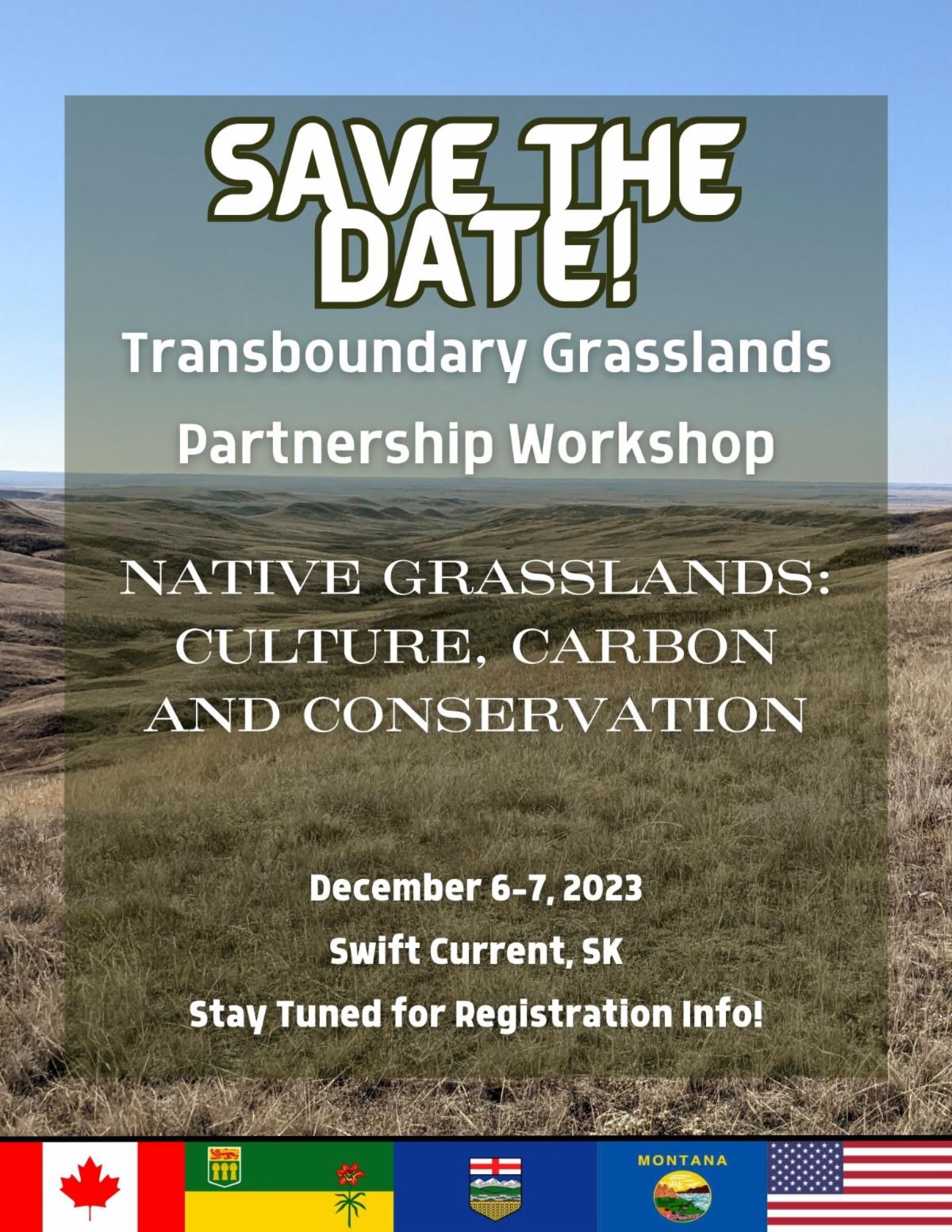
The Transboundary Grassland Partnership Workshop in Swift Current in December. Registration will be available on the SK Stock Growers Foundation website soon! Stay tuned for more information!
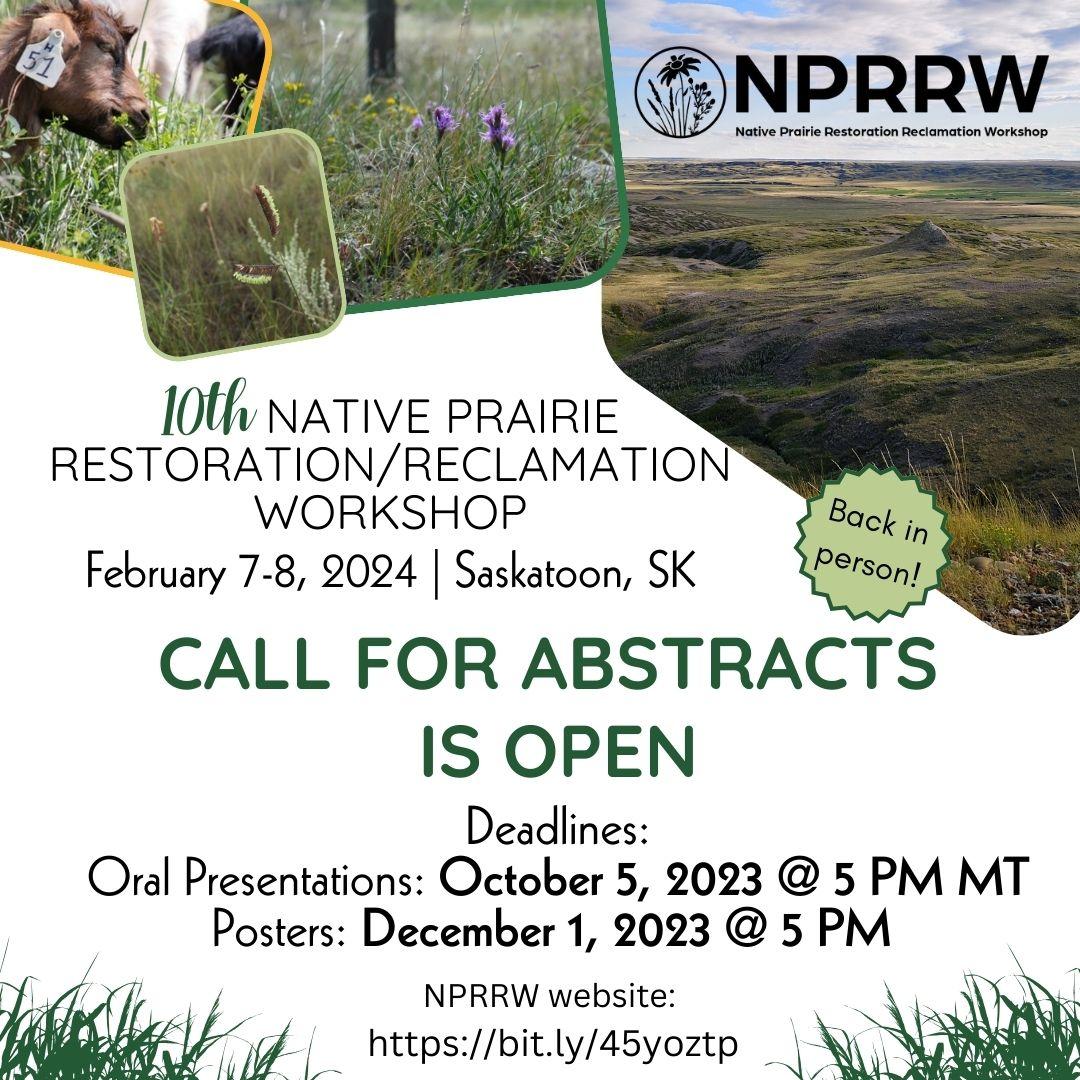
We are planning the 10th Native Prairie Restoration/ Reclamation Workshop in February 2024 in Saskatoon! The Call for Abstracts oral presentation deadline is October 5th, you can find the online form to submit an abstract, here.
The September Native Prairie Speaker Series webinar was about the Ecological Gifts Program with Aleksandra Bugajski, Wildlife Biologist with Canadian Wildlife Service, ECCC. We also had a few in-person presentations this month in Val Marie, Eastend and Consul. You can find the recordings on our YouTube Channel.
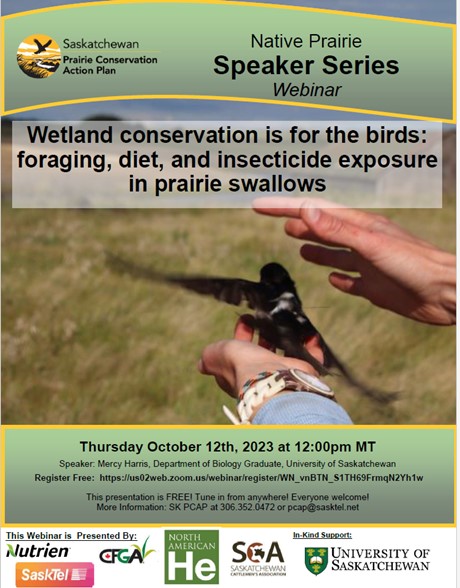
Tune in next week for a NPSS webinar about swallows by Mercy Harris from the U of S. You can register here.
And finally, we would like to thank our sponsors for their generous support: Canadian Forage and Grasslands Association, K+S Youth+Us, North American Helium, Nutrien, Saskatchewan Cattlemen's Association, SaskEnergy, SaskPower, SaskTel, SaskWater, Wildlife Habitat Canada and Environment and Climate Change Canada, as well as the continuous support of all the PCAP Partners.
Carolyn Gaudet, SK PCAP Manager
pcap@sasktel.net
| |
Mark your calendars for the 2024 Native Prairie Restoration/Reclamation Workshop!
The 10th Native Prairie Restoration/Reclamation Workshop is back in person! The workshop will take place February 7-8, 2024 at the Saskatoon Inn and Conference Centre in Saskatoon, SK.
The theme is "Building Bridges to Tomorrow: Restoration and Reclamation For the Future"
The Call for Abstracts is open! The deadline for oral presentations is October 5th, 2023, this Thursday! An extension may be granted if requests for approvals within your organization need more time. Contact Carolyn (pcap@sasktel.net) to discuss.
Call for Presentation Abstracts can be found here.
Call for Poster Abstracts can be found here.
Registration
Registration will open in early October, stay tuned for the announcement.
Early-bird Registration (until January 17th) = $325 + (GST + fees)
Regular Registration (after January 17th ) = $375 + (GST + fees)
Students and landholders = $250 + (GST + fees)
One day (Wednesday or Thursday) = $190 + (GST + fees)
Pre-workshop Event: Planning a Prairie Prescribed Fire, occurring February 6th, 2024, 1 - 5 PM. $30/person. More information will be available on the registration page.
|  | |
Employment Opportunities
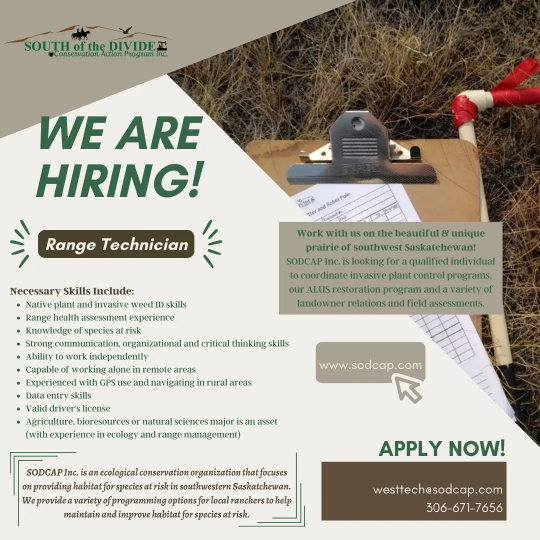
The South of the Divide Conservation Action Program Inc are hiring a Range Technician. Job posting will remain open until a suitable candidate is found. More information here.
The Wilder Institute/Calgary Zoo is looking for a Conservation Program Manager (Whooping Crane) and a Conservation Program Manager (Vancouver Island Marmot). Job postings will remain active until suitable candidates are found.
|  | |
Partner Spotlight:
Agriculture and Agri-food Canada
New project: Grassland Genomics for Greenhouse Gas Mitigation (GG4GHG)
Leads: Dr. Jon Bennet (University of Saskatchewan) and Dr. Sean Asselin (AAFC Swift Current)
AAFC researchers from the Swift Current and Agassiz Research and Development Centres are partnering with colleagues at the Universities of Saskatchewan and Manitoba on a new collaborative Genome Prairie project to apply emerging genomic tools to evaluate the ecological and economic value of biodiversity in grasslands.
Grassland systems, both natural and seeded, cover more than 16 million hectares of land in Canada and provide a number of ecological benefits. These systems provide value in the form of a variety of ecosystem services ranging from livestock forage, habitat for pollinators and birds, to the stable fixing of atmospheric carbon in soil.
Maintaining native deep-rooted perennial species and their associated soil micro-organisms they interact with is one route to reduce carbon emissions across prairie landscapes and enhance ecological goods and services. Unfortunately, many grasslands are lost every year, and many are not necessarily managed to optimize their carbon storage or greenhouse gas (GHG) mitigation potential and benefits. We seek to stem the conversion of grassland systems by improving our understanding and valuation (ecological and economic) of the services they provide and using that understanding to enhance GHG mitigation in seeded grasslands.
Increasing species and genetic diversity in grassland systems by including native species in seeded pasture can help maintain productivity in stressful years and mitigate GHGs by enhancing carbon storage. Diversity can also enhance other ecosystem services, including seasonal forage productivity, biodiversity conservation, pollination, and pest control, which can further mitigate GHGs and reduce costs by reducing fertilizer and pesticide inputs. These services develop slowly, however, and more immediate indicators of future GHG-mitigating ES are required to encourage beneficial management activities, including native species use, which can be expensive.
Microbial and insect communities change rapidly and can be used to predict future ES that will improve grazing system sustainability. Through co-development with producer groups, NGOs, and First Nations, we will be applying genomic tools to quantify how microbial and insect biodiversity relate to native plant genetic and species diversity, and how these relationships influence ES in native grassland systems, particularly those reducing GHGs. This data will be used to develop diversity targets for mitigating GHGs in degraded and restored native grasslands and in pasture systems. Additionally, we are applying artificial intelligence modeling to identify indicators that can predict GHG-mitigating ES.
Data collected from natural and seeded grasslands will be utilized to determine whether ES indicators developed in this project can be detected in newly established grasslands, allowing us to develop new tools for rapidly forecasting the ES potential of forage trials. As native species seed cost and availability can be a barrier to adoption, the project will also be engaging in producer and public surveys to better understand the perceived benefits and barriers to using native species, and the value associated with the ecosystem services they produce. This data will be used to improve economic models of ES to encourage native species adoption and thus reduce GHGs in Canadian grasslands. Layered over these models will be the economic models, which we will use to estimate the costs and benefits of management strategies or the value of the land being tested. These models will then be ported to web and mobile apps for producer and industry use. Ultimately, the sum of these research efforts will facilitate the adoption of GHG-friendly grassland management practices, helping Canada sustainably meet its climate change goals.
If you or your organization are interested in taking part please contact Dr. Sean Asselin at the Swift Current Research and Development Centre at Sean.Asselin@agr.gc.ca
| |
Stay tuned for news about our upcoming Native Prairie Speaker Series webinars! | |
Wetland conservation is for the birds: foraging, diet, and insecticide exposure in prairie swallows
Speaker: Mercy Harris, MSc Candidate, U of S
Thursday October 12 at 12 PM MT
Register here
More information
Please visit our Native Prairie Speaker Series webpage regularly for upcoming topics, dates, and registration details.
| |
SaskOutdoors has many training opportunities
October 3 - November 28
SK Cattlemen's Association Fall District Meetings
October 23-27, 2023
Various locations in SK
Nature Conservancy of Canada's Echo Creek Restoration
Oct 28, 2023
Echo Creek Property near Fort Qu'Appelle, SK
Annual MFGA Conference
Nov 13-15, 2023
Brandon, MB
Grassland Restoration Forum's Fall Information Session: "Seeds"
November 16, 2023
Claresholm, AB
Canadian Western Agribition
November 20-25, 2023
Regina, SK
Transboundary Grassland Partnership Workshop
December 6-7, 2023
Swift Current, SK
Native Prairie Restoration/ Reclamation Workshop
February 7-8, 2024
Saskatoon, SK
| |
SK PCAP has two free education programs available.
See more information here!
| |
Books to add to your reading list...
Economy of Sparrows
by Trevor Herriot
Trees Against the Wind: The Birth of Prairie Shelterbelts
by William R. Schroeder
Streams of Consequence: Dispatches from the Conservation World by Lorne Fitch
Available Oct 17, 2023
Protecting the Prairie: Lorne Scott and the Politics of Conservation by Andrea Olive
Available Nov 18, 2023
| |
2023/24 Education Programs:
Presenting Sponsors:
| |
Carolyn Gaudet, Editor, Saskatchewan Prairie Conservation Action Plan Newsletter | |
|
SK PCAP gratefully acknowledges financial support in 2023-2024 from:
Canadian Forage and Grassland Association, Ducks Unlimited Canada, Environment and Climate Change Canada, North American Helium, Nutrien, Parks Canada - Grasslands National Park of Canada, K+S youth+us, Saskatchewan Cattlemen's Association, Saskatchewan Ministry of Agriculture, Saskatchewan Ministry of Environment - Fish and Wildlife Development Fund, SaskEnergy, SaskPower, SaskTel, SaskWater, University of Regina, University of Saskatchewan - College of Agriculture and Bioresources, Water Security Agency and Wildlife Habitat Canada.
SK PCAP gratefully acknowledges in-kind support for 2023-24 from:
Agriculture and Agri-Food Canada - Science and Technology Branch, Canadian Parks and Wilderness Association, Environment Canada - Canadian Wildlife Service, Friends of the Royal Saskatchewan Museum, Meewasin Valley Authority, Native Plant Society of Saskatchewan, Nature Conservancy Canada, Nature Saskatchewan, Parks Canada - Grasslands National Park, Prairie Wind & Silver Sage, Ranchers Stewardship Alliance Inc., Redberry Lake Biosphere Region, Saskatchewan Association of Rural Municipalities, Saskatchewan Association of Watersheds, Saskatchewan Bison Association, Saskatchewan Burrowing Owl Interpretive Centre, Saskatchewan Cattlemen's Association, Saskatchewan Environmental Society, Saskatchewan Forage Council, Saskatchewan Ministry of Agriculture, Saskatchewan Ministry of Environment, Saskatchewan Ministry of Energy and Resources, Saskatchewan Ministry of Parks, Culture and Sport, Saskatchewan Stock Growers Association, Saskatchewan Stock Growers Foundation, Saskatchewan Wildlife Federation, SaskEnergy, SaskOutdoors, SaskPower, Society for Range Management - Prairie Parkland Chapter, South of the Divide Conservation Action Program Inc., University of Regina, University of Saskatchewan - College of Agriculture and Bioresources.
| | | | |