September 2022 | Volume 14 Issue 9 | |
 | |
Wow, happy September, folks! I hope everyone had a great summer! It always seems to go so fast, but I do love Fall and looking forward to slightly cooler days ahead.
The start of the school year is always bittersweet, marking the end of the summer holidays. This summer, PCAP welcomed a new Education Coordinator. Shirley Bartz is gearing up to deliver our two Education programs this Fall, Adopt A Rancher and Taking Action for Prairie, there's more information on the programs and how to contact Shirley below. You can also learn more about Shirley here. A big thank you to Julie-Anne Howe who was PCAP's Education Coordinator for the last 4 years. Julie-Anne did a great job delivering our education programs and modified them for virtual delivery during the pandemic. We will always be grateful for Julie-Anne's contributions to PCAP. Thanks for your years of service, Julie-Anne!
We had one Native Prairie Speaker Series webinar in August, where Clark Brenzil discussed invasive weeds. You can find Clark's presentation on PCAP's YouTube Channel.
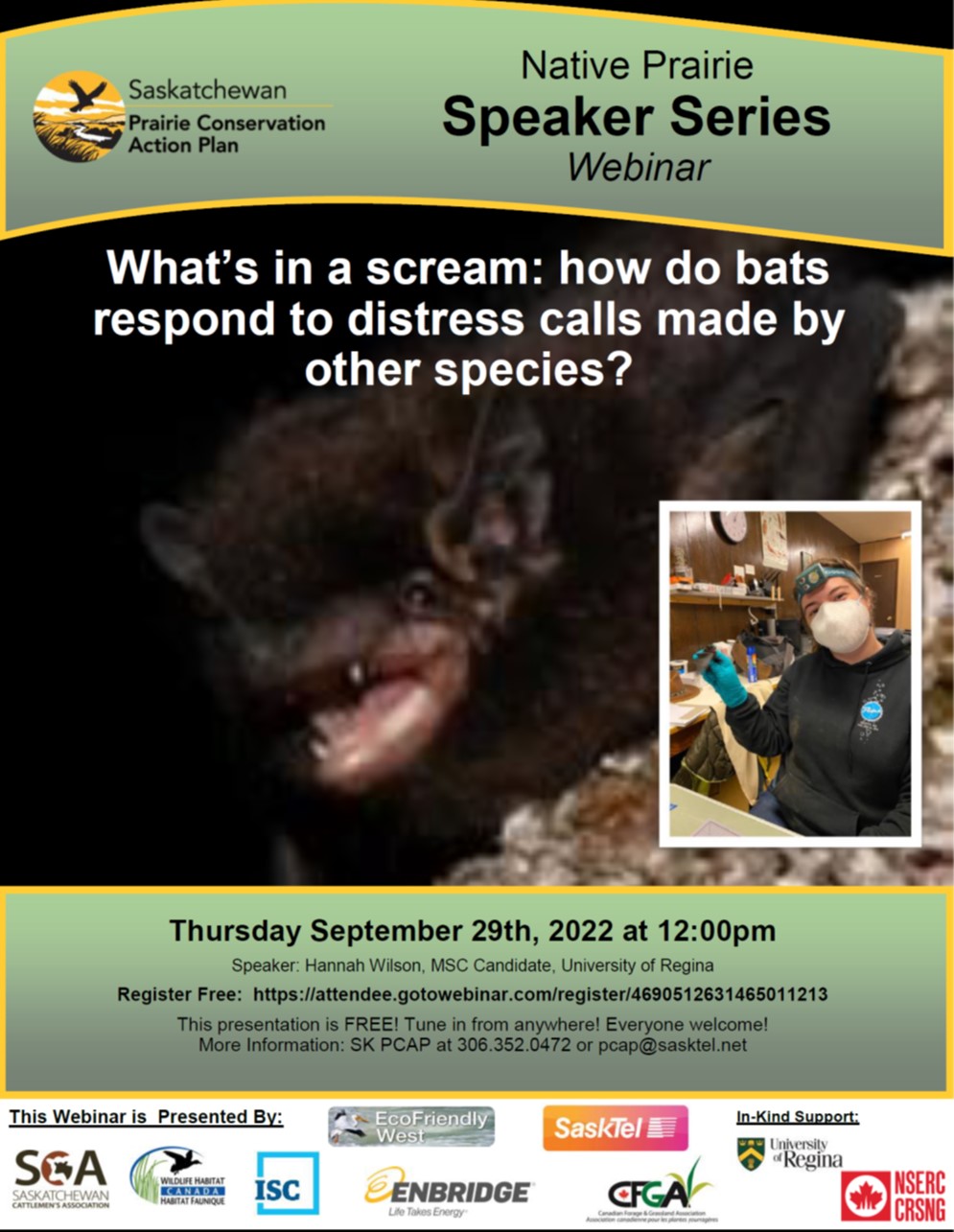
The September webinar will be Hannah Wilson, from the U of Regina, who will be discussing distress signals in bats. You can register here.
And finally, we would like to thank our sponsors for their generous support: Camp Wolf Willow, Canadian Forage and Grasslands Association, EcoFriendly West, Enbridge, Information Services Corporation, Mosaic Company, Saskatchewan Cattlemen's Association, SaskEnergy, SaskPower, SaskTel, SaskWater, Wildlife Habitat Canada and Environment and Climate Change Canada, as well as the continuous support of all the PCAP Partners.
Have a great month!
Carolyn Gaudet, SK PCAP Manager
pcap@sasktel.net
| |
PCAP's Education Programs
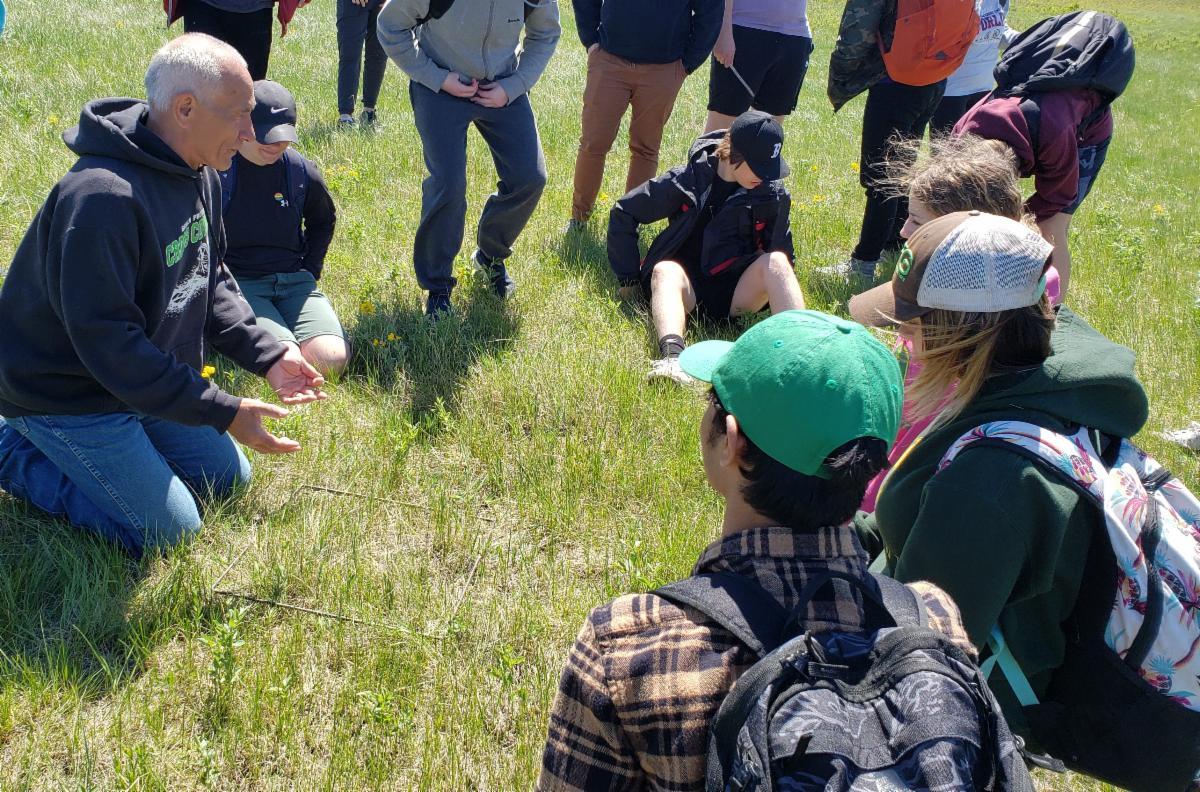
PCAP’s Adopt a Rancher program is firing up for the year! Shirley Bartz is our new Education Coordinator and she is looking to connect with ranchers in Saskatchewan. If you want to share some of your experience as a rancher and steward of native grasslands with high school students, please get in touch with Shirley. Participating in AAR means that you meet with Shirley at your ranch, fill out a ranch profile and let Shirley connect you with a science teacher at a nearby high school. At some point in the fall or spring, a group of 15 year-olds will come out to your ranch to see your pastures, your livestock and to listen to you describe how you run your grazing operation. For more details on the Adopt a Rancher program, please visit the webpage.
| |
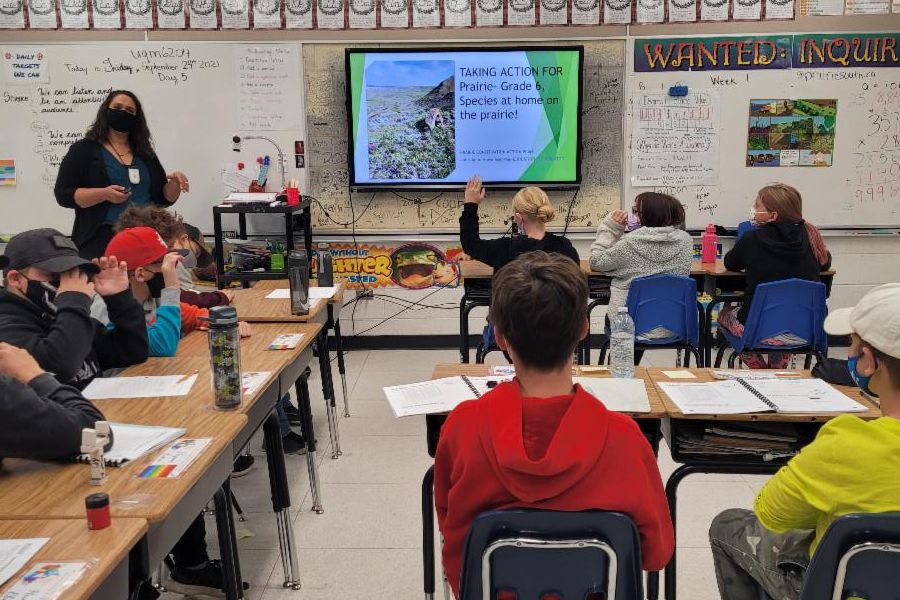
PCAP’s Taking Action For Prairie program is also starting up for the 2022-23 school year! Shirley will be contacting teachers of 6th, 7th and 8th grade students who have participated or expressed an interest in incorporating an action-oriented environmental program into their curriculum. Take Action For Prairie incorporates activities and lessons on biodiversity, native species at risk, invasive alien plant species, water quality/ conservation, ranching, ecological goods & services, climate change, sustainability, stewardship into science classes. For more details on the Taking Action For Prairie program, please visit the webpage.
If you are interested in either of PCAP's education programs, please email Shirley at pcap.education@gmail.com or call/text her at 306-450-1216!
| |
Nature Companion
Andrew & Penny McKinlay of EcoFriendly West have developed and launched the Nature Companion app. Developed for curious observers, people who are just beginning to take an interest in nature, Nature Companion is a free app/website introducing many of the plants and animals found in Canada’s four western provinces. In just one app, you’ll find basic information about over 300 common plants, trees, birds, animals, insects, reptiles, and amphibians. It’s free (no ads, no sign up) and can be accessed either on or off line. It can be installed on your phone, your tablet, or your desktop computer. Learn more here.
| |
Partner Spotlight:
Nature Saskatchewan
Submitted by Emily Putz, Nature Saskatchewan
Celebrating 20 years of Seeking Rare Plants of the Prairies
Rare and Endangered plants are an often overlooked part of conservation work, most being small and hard to find in isolated ecosystems. Nature Saskatchewan’s Rare Plant Rescue (RPR) program aims to change this, and is this year celebrating 20 years of seeking out some of the prairie ecosystem’s most elusive organisms!
Focused on targeting nine species protected federally as threatened, endangered or extirpated, and seven provincially rare species, each year search crews ask permission to search suitable habitat on private landowner properties. Once located, information is taken on the plant’s health, phenology, and individuals are mapped and counted; this helps fill important gaps in the knowledge base of where these species are, how populations are doing, and what environment they need to thrive. “The past 20 years have seen tremendous success,” Emily Putz, Coordinator for Rare Plant Rescue explains,” by partnering with landowners conserving habitat, we have been able to search and collect data on Saskatchewan’s rarest plant species, contributing to the down-listing of at least three.”
Over the decades RPR has sleuthed out 720 occurrences of federally listed plants species and recorded another 556 provincially rare plants found incidentally on surveys, all during a whopping 559 individual quarter section sites searches! Once a plant occurrence is found RPR also monitors every 3-5 years, where they are able to revisit and map out how populations have changed between years, gaining information on whether the populations have grown or shrunk, or are being pressured from threats such as invasive species. Monitoring work is also a great opportunity to visit and reconnect with the wonderful landowners who make our program possible and keeps these plant populations healthy through their ranching practices!
There are currently 92 landowners and land managers in the program, conserving nearly 260,000 acres of rare plant habitat. This habitat includes rare fragile ecosystems such as sand dune environments, prairie fens, dry prairie ephemeral wetlands, and pristine, but rapidly disappearing native prairie. “Saskatchewan has lost the vast majority of its prairie, with estimates of what is left as low as 9%,” further explains Putz, “Rare plants are very specific about their needs, they require grazing and they can’t compete against aggressive tame species, such as Smooth brome or Crested wheatgrass, nor against cropland expansion.” As habitat disappears, so do the plants, leading in turn to the further disappearance of species that rely on them such as birds, mammals, amphibians, and pollinators; species that humans also rely on. Nature Saskatchewan uses voluntary handshake agreements with landowners in an effort to conserve and collect data on target plants. The program works alongside the landowners’ existing practices, and the land continues to be used in a way that benefits the steward. “We rely on our ranchers and landowners to keep these plants thriving, if you think you have a rare plant or suitable habitat please give us a call on our toll-free Hoot Line, at 1-800-667-HOOT (4668) or email rpr@naturesask.ca,” Putz mentions. “Every rare plant recorded is helping to map ranges, monitor populations, and aid with conservation efforts.” Information provided is never shared without permission.
| |
Plan to attend our upcoming Native Prairie Speaker Series webinars! | |
What’s in a scream: how do bats respond to distress calls made by other species?
Speaker: Hannah Wilson, MSc Candidate, U of R
Thur Sept 29 @ 12 PM
Register here!
More information
| |
Meewasin Grazing Dinners
September 8 & 9, 2022
Saskatoon, SK
Hands On Grassland Assessment Training
Sept 15, 2022
Brooks, AB
Nature Saskatchewan Fall Meet
Sept 23 & 24, 2022
Duck Mountain Provincial Park, SK
Advancing Women in Conservation Summit
Nov 4-6, 2022
Saskatoon, SK
Annual MFGA Conference
Nov 14 & 15, 2022
Brandon, MB
Transboundary Grasslands Partnership Workshop
Nov 15 & 16, 2022
Medicine Hat, AB
Canadian Western Agribition
Nov 28-Dec 3, 2022
Regina, SK
Western Canada Conference on Soil Health & Grazing
Dec 13-15, 2022
Edmonton, AB
Prairie Conservation and Endangered Species Conference
February 21-23, 2023
Calgary, AB
|
2022/23 Education Programs:
Presenting Sponsors:
|
2022/23 Education Program Supporting Sponsors
Camp Wolf Willow
| |
Carolyn Gaudet, Editor, Saskatchewan Prairie Conservation Action Plan Newsletter | |
SK PCAP gratefully acknowledges financial support in 2022-2023 from:
Camp Wolf Willow, Ducks Unlimited Canada, EcoFriendlySask.ca, Environment and Climate Change Canada, Parks Canada - Grasslands National Park of Canada, Saskatchewan Cattlemen's Association, Saskatchewan Ministry of Agriculture, Saskatchewan Ministry of Environment - Fish and Wildlife Development Fund, SaskEnergy, SaskPower, SaskTel, SaskWater, University of Regina, University of Saskatchewan - College of Agriculture and Bioresources, Water Security Agency and Wildlife Habitat Canada.
SK PCAP gratefully acknowledges in-kind support for 2022-23 from:
Agriculture and Agri-Food Canada - Science and Technology Branch, Canadian Parks and Wilderness Association, Environment Canada - Canadian Wildlife Service, Friends of the Royal Saskatchewan Museum, Meewasin Valley Authority, Native Plant Society of Saskatchewan, Nature Conservancy Canada, Nature Saskatchewan, Parks Canada - Grasslands National Park, Prairie Wind & Silver Sage, Ranchers Stewardship Alliance Inc., Redberry Lake Biosphere Region, Saskatchewan Association of Rural Municipalities, Saskatchewan Association of Watersheds, Saskatchewan Bison Association, Saskatchewan Burrowing Owl Interpretive Centre, Saskatchewan Cattlemen's Association, Saskatchewan Environmental Society, Saskatchewan Forage Council, Saskatchewan Ministry of Agriculture, Saskatchewan Ministry of Environment, Saskatchewan Ministry of Energy and Resources, Saskatchewan Ministry of Parks, Culture and Sport, Saskatchewan Stock Growers Association, Saskatchewan Stock Growers Foundation, Saskatchewan Wildlife Federation, SaskEnergy, SaskOutdoors, SaskPower, Society for Range Management - Prairie Parkland Chapter, South of the Divide Conservation Action Program Inc., University of Regina, University of Saskatchewan - College of Agriculture and Bioresources.
| | | | | |