25,179 MEALS SERVED, AND COUNTING! | | |
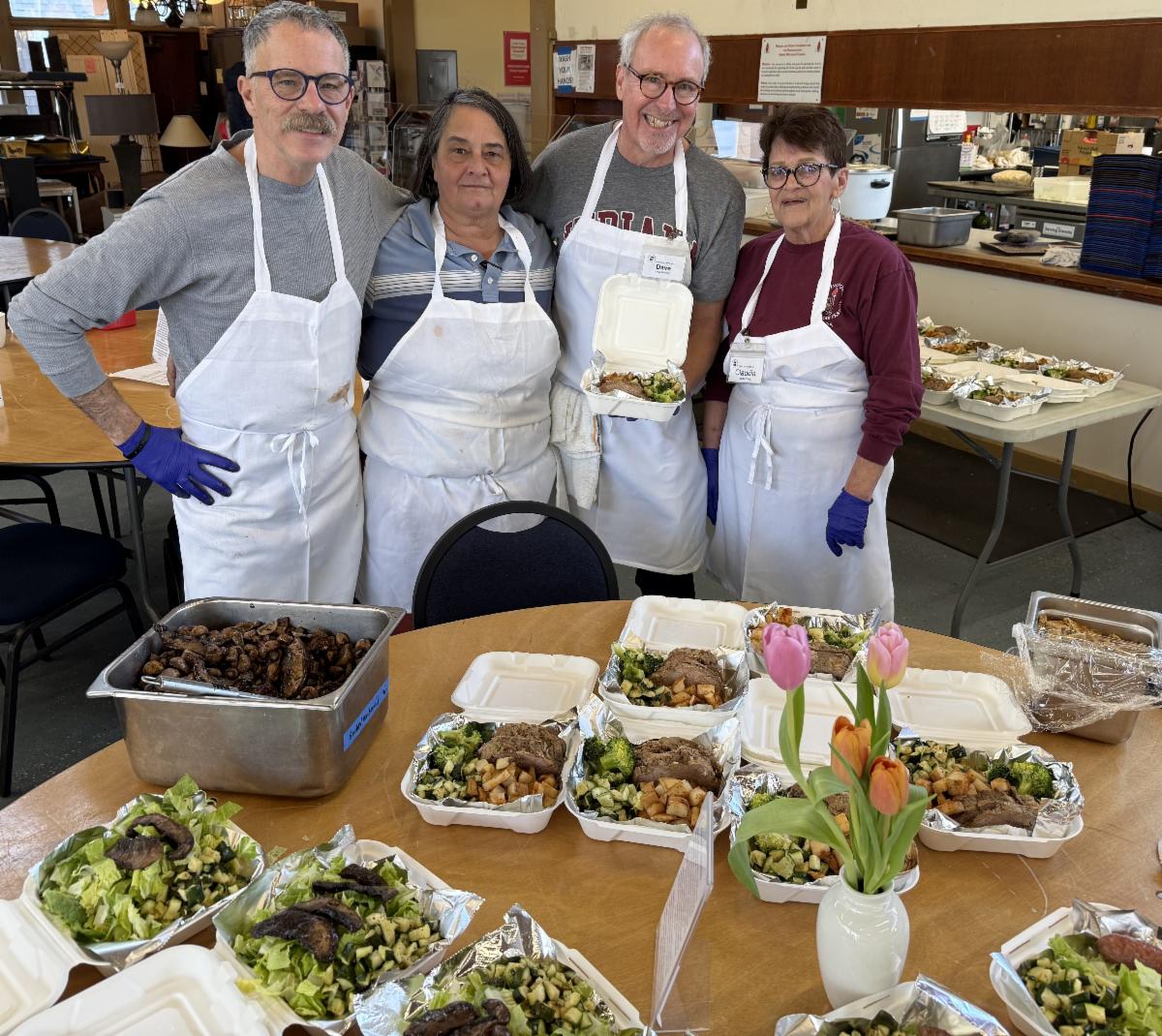
Last month, we wrapped up our dine-in season with a record-breaking BBQ celebration! In a single day, we served an incredible 393 meals including 258 burgers hot off the grill and 135 takeout meals to help carry folks through the weekend.
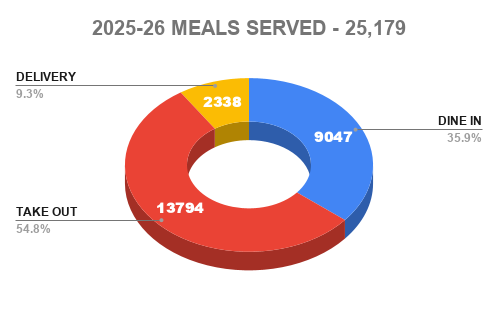
The grand total for our six-month dine-in season is 25,179 meals served! That remarkable number includes 9,047 meals served in our dining room, 13,794 takeout meals, and 2,338 home deliveries.
One important note is that in January and February, we served 1,147 fewer meals compared to last year due to closures during six snow days. Even with those weather-related interruptions, our total meal count still surpassed last year’s impressive total of 24,835 meals. This achievement reflects the resilience of our volunteers, staff, and community, especially the Truro Community Kitchen (TCK) and World Central Kitchen (WCK), who stepped in to support us during the power outages caused by the February blizzard.
Our takeout numbers are typically higher for several reasons. Approximately 14% of all takeout meals (1,967 meals) were distributed on Saturdays to help guests have meals over the weekend when our dining room is closed. In addition, second servings are counted as takeout meals, and many of our dedicated volunteers take home a meal after helping prepare and serve food to our guests. Together, these factors contribute to the strong demand for our takeout program and help ensure that nutritious meals reach people when and where they need them most.
But the work doesn’t stop when the dining room closes. Chef Gina and the SKIP team have transitioned operations to St. Mary’s of the Harbor, where we continue preparing and delivering meals to our community. Since the move, we’ve already provided more than 700 additional meals, and we’re just getting started. Thanks to your support, SKIP remains committed to ensuring that our neighbors have access to nutritious food all year long.
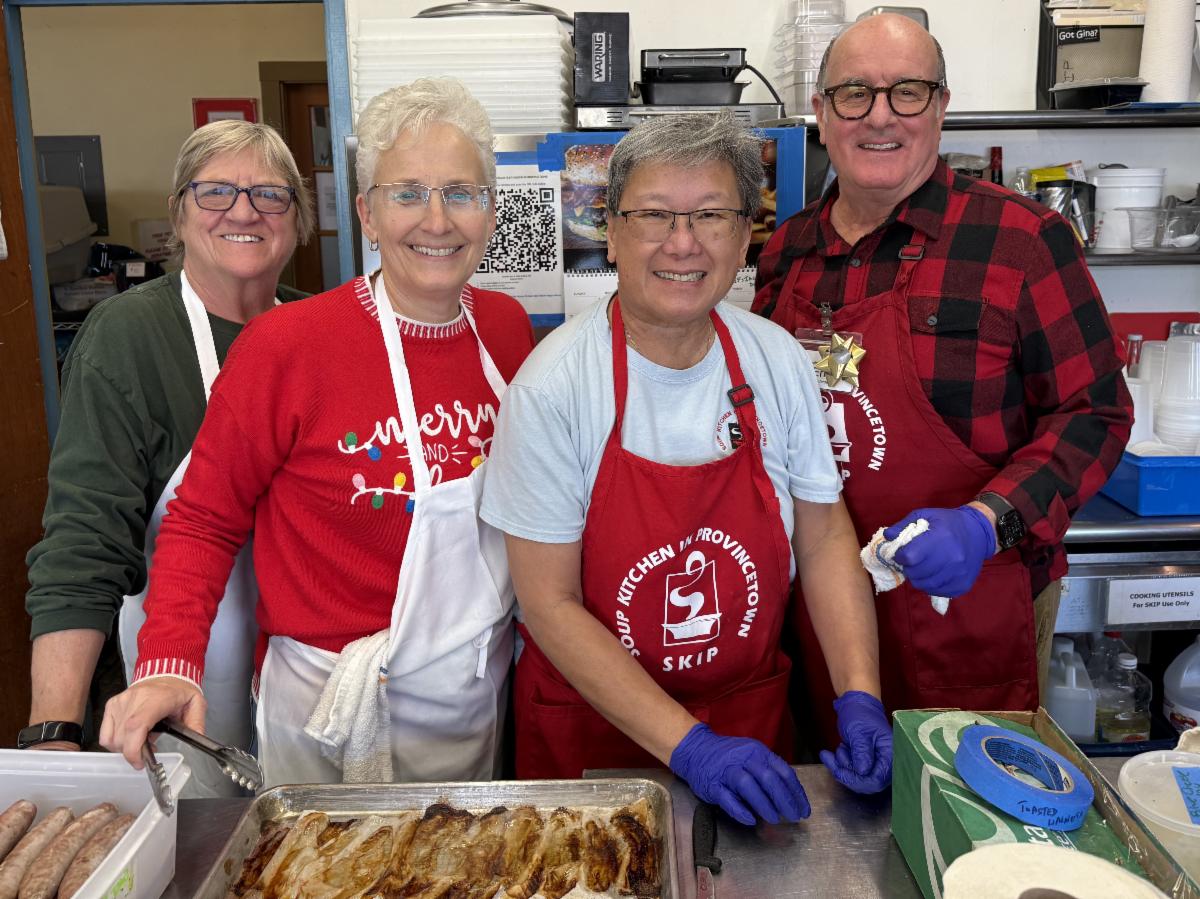
None of this would be possible without the dedication of our incredible staff —Chef Gina, Di, and John— along with our amazing volunteers who give their time and energy to support our mission every day. We are also deeply grateful to our partners, including Helping Our Women (HOW), the many local restaurants and businesses that generously donate food, and our donors and lunch sponsors whose support makes it possible for us to provide nourishing meals and a welcoming community throughout the season.
Thank you all for your support in making this another successful season. We couldn't have done it without you!
The SKIP Board of Directors
| | |
Food is at the heart of what we do at SKIP, and this season's most popular meals proved just how much our guests enjoy a delicious, home-cooked lunch. Below are the top meals for each month, a mix of comfort and ethnic food!
November - 245: Chili & Corn Bread
December - 240: Open-faced Meatloaf Sandwiches w/ Gravy
January - 250: Baked Chicken w/ Gravy & Crispy Onions
February - 251: Cuban Sandwiches
March - 284: Chicken Fried Rice
April - 269: Singapore Noodles w/ Shrimp
| |
MY 10 YEAR JOURNEY WITH SKIP
By Mark Bjorstrom
| | |
A couple of months ago, I reached two significant milestones in my journey with SKIP: my 10-year anniversary as a volunteer and becoming the longest-serving current member of the Board of Directors. My time with SKIP has been incredibly fulfilling and personally rewarding, while also helping me achieve a long-held retirement goal: giving back to my community.
Here are a few observations from my ten years as a SKIP Board member:
- SKIP has evolved tremendously. Ten years ago, SKIP wasn't quite the fine-tuned, well-oiled organization it is today. We served many guests then, as we do now, but not nearly as many and not with the same level of efficiency, organization, and reach.
- Our Board has grown stronger and more structured. Then, as now, the Board consisted of thoughtful, dedicated, and generous individuals. However, there were fewer of us—seven members compared to today's twelve—and our structure was less formal. In those early years, several Board members wore multiple hats, chaired several committees, and often stretched themselves thin. Over time, we've expanded the Board, strengthened our governance, and recruited members with specialized skills and expertise.
- Our impact has expanded dramatically. The number of guests we serve has grown substantially, and we've broadened our mission through programs such as Saturday meals, takeaway lunches, home meal delivery, supermarket gift cards, and CropSwap. Back then, seeing a line out the door was rare. Today, it's a common sight.
- Our fundraising efforts have become more robust and professional. Souper Saturday has always been a fun and vital event, but we've added initiatives like the Sponsor-a-Lunch Program, expanded our Annual Appeal, and developed additional fundraising events such as FireHouse, First Look, and others. These efforts have helped sustain and grow our services.
- Our volunteer corps has flourished. In my early years, staffing the kitchen and serving line—especially during January and February—was often a challenge. Many volunteers, myself included, regularly worked multiple shifts and frequently filled in wherever needed. Today, we are fortunate to have such a large volunteer base that most volunteers are limited to one shift per week.
- Volunteer scheduling has come a long way. In the early days, scheduling was managed with a massive Excel spreadsheet and a fair amount of improvisation. Some days we had too many volunteers; other days we didn't have enough. Our automated scheduling system has transformed that process and made operations far more efficient.
- Our administrative support has grown with the organization. For many years, our office administration was handled by one tireless, part-time workhorse—shout-out to Susan Grace! Since then, we've outsourced bookkeeping and payroll, modernized our donor database, hired a part-time Office Administrator, and better aligned administrative responsibilities across the Board. Looking back, I'm amazed at how much we accomplished with so few resources.
A lot of wonderful changes have taken place over the past ten years. What hasn't changed, however, is what drives SKIP: a dedicated team of volunteers, staff, and Board members who share a genuine desire to provide a meaningful and much-needed service to our community—all while having a heck of a good time doing it.
I am incredibly proud to have reached these milestones with SKIP and grateful to be part of an organization that continues to make such a positive difference in the lives of so many.
Mark Bjorstrom
Co-Chair & Treasurer
| |
HERBS IN POTS - A MOVEABLE FEAST
By Stephen Orr
| | |
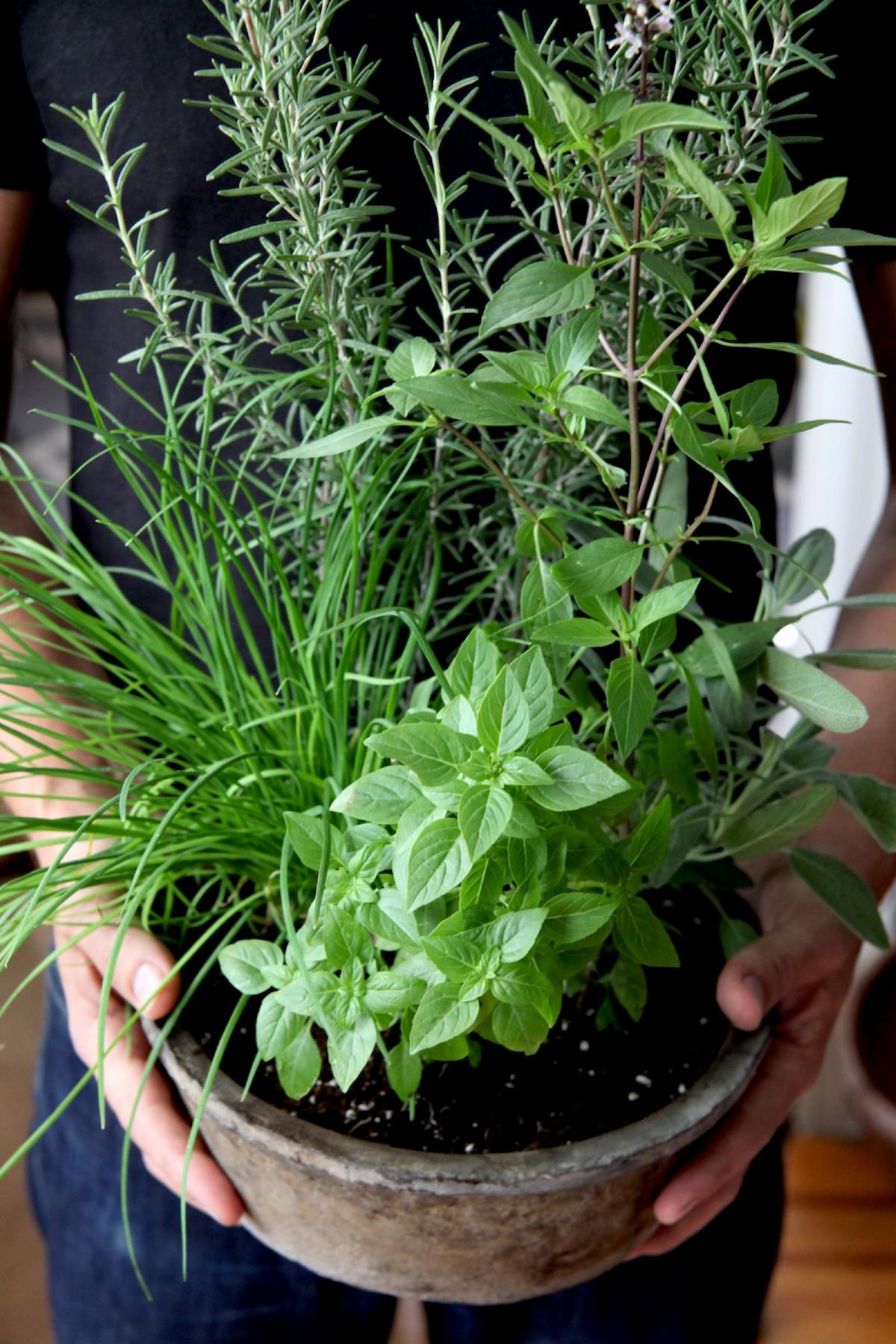
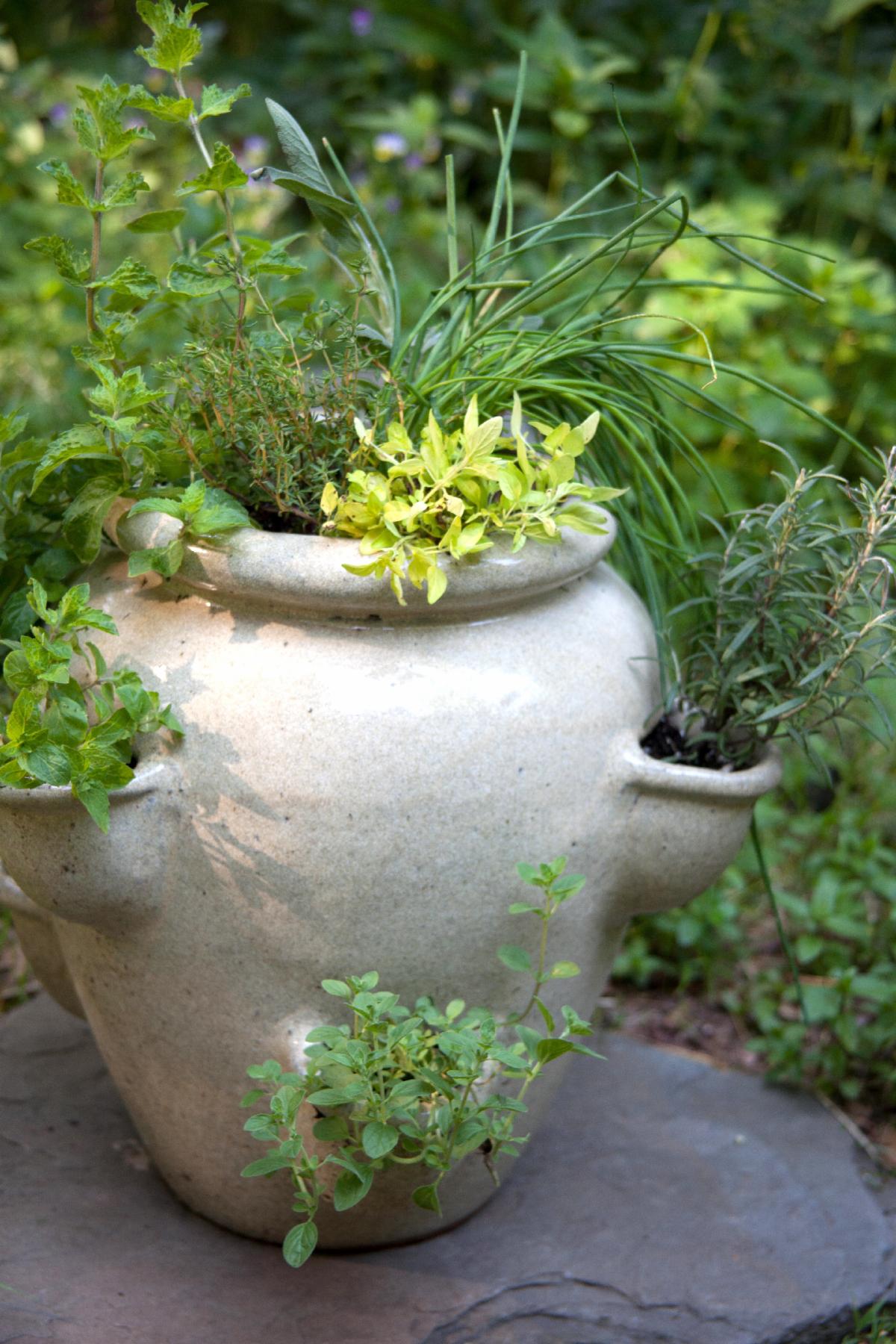
No matter how much space (or energy) you have for gardening, herbs are the plants that pack the most benefit in the smallest square footage. There’s nothing like walking outside when you’re cooking and snipping some basil or parsley to add to an omelet or roast chicken. Here are some favorites that thrive in most any gardening situation as long as they get several hours of sun and plenty of water during the hottest part of the summer. As with most container gardening, the smaller the pot the more you’ll have to tend it since smaller pots dry out more quickly. At a minimum, it’s recommended to grow plants in 8-to-10-inch diameter pots or larger. No matter where you grow them, these homegrown herbs will be fresher than anything you can buy in a plastic clamshell in the supermarket and better for you and the environment.
| | |
Basil is the taste of summer, and this annual is very much at home growing in a pot as long as it gets enough water. Look for interesting varieties such as purple basil or Greek basil that grows more vertically and has smaller leaves. Basil is extremely versatile in everything from caprese salad to basil lemonade. It is best when chopped fresh on top of the dish.
Rosemary is a woody Mediterranean plant that is more drought-tolerant than basil. Grow the upright varieties in a larger pot or plant a prostrate rosemary in mixed planter where it can dangle down the sides. On Cape Cod, rosemary is not always reliably hardy during intensely cold winters but it’s worth planting your potted rosemary in the ground near the house to see if it will come back in the spring. Rosemary can be brought indoors to overwinter, but they suffer if the interior air is too dry.
Marjoram and oregano are close relatives and figure in many Mediterranean cuisines. Oregano has a more pungent flavor while marjoram has a softer but more perfume-y taste that works well on grilled summer vegetable or grilled meat or fish.
Lemon verbena is a cold-tender tropical perennial with wonderfully lemon-scented leaves. The woody stems can grow fairly tall in a large pot in one season, producing dozens of leaves. Enjoy the flavorful foliage in tea or baked goods all summer but be sure to dry the leaves indoors before frost hits the plant and it drops it leaves in the fall.
Chives is a perennial herb that provides a milder flavor than its onion cousins. The plants can be snipped for both their hollow leaves and pincushion flowers all summer. Chives are robust growers. If it outgrows its pot, then you can divide the plant into two pots or plant it in the garden bed.
Sage adds a warm, hearty flavor to soups or grilled meats. Grow the classic sage-green culinary variety or look for varieties with colorfully variegated leaves, especially in a large container or strawberry pot of several mixed herbs. Sage is often winter hardy and will come in very handy around the holidays for stuffing or roast pork.
Thyme is another woody Mediterranean plant that is very versatile in the kitchen. English and French thyme can be used in many European dishes. Lemon thyme, both the plain green and yellow/green variegated varieties, add a fresh citrus flavor to roasted chicken or fish.
Parsley and cilantro grow well in a larger pot, but both can easily bolt (go to flower and set seed) and stop producing leaves. To halt this, try to cut back any flower stalks that pop up. At some point in the summer heat, cilantro will flower and produce seeds no matter how much you snip. Those bright green seeds (known as coriander) and are very tasty fresh or dried, so don’t let them go to waste.
Tarragon and chervil are two anise-flavored herbs that are easy to grow and indispensable in chicken salad, deviled eggs, or green goddess dressing.
Mint has a well-earned bad reputation as a rampant spreader when planted in the garden bed. But in a container, it is very well-mannered and essential for iced tea or summer salads such as tabbouleh. There are many different varieties, but favorites include spearmint, apple mint, and variegated pineapple mint. Peppermint has a more bracing flavor best reserved for tea.
Herbs that don’t do as well in pots unless the containers are quite large include dill and fennel, which need space to grow tall.
| | Stephen Orr is an American author, magazine editor, horticulturalist, and a SKIP volunteer. You've seen his wonderful flower arrangements on our dining tables! | | NOV 02: SKIP DINE-IN SEASON STARTS!! | | |
—HOMELESS PREVENTION COUNCIL. The Homeless Prevention Council has office hours in Provincetown from 10 - 2 Monday, Wednesday, & Thursday at the Provincetown United Methodist Church. For more information, please refer to their website. www.hpccapecod.org/provincetown-community-support
—CROP SWAP. Crop Swap is Ptown’s source for fresh, uncut fruits and vegetables and is open year round. Sponsored by the Ptown Health Department, the Ptown Public Library and SKIP, anyone may donate fresh fruits and vegetables, and all are welcome to take what they need. All fruits and vegetables are free. Please bring your own bag.
Crop Swap is located in the Ptown Library, 356 Commercial Street, to the left as you enter the front doors. Hours are:
Mondays & Fridays: 10-4:30
Tuesdays, Wednesdays, & Thursdays: 10 - 7:30
Saturdays & Sundays: 1 - 4:30
—FOOD GIFT CARDS. We also provide Stop & Shop gift cards for distribution by Helping Our Women (HOW) and a church largely serving the area’s Jamaican community. These organizations determine who’s qualified to receive them.
—MEAL DELIVERY. On three days each week, we home-deliver nutritious meals to those with health, mobility and other qualifying issues. Contact the SKIP office, office@skipfood.org, to set up an interview to determine qualifications.
In addition, SKIP provides input and a link to The Lower Cape Food Access Guide updated in April 2025 by Outer Cape Community Solutions (OCCS). This comprehensive list details food resources available from Provincetown to Eastham, as well as other Cape-wide services. Check out the Resources page on our website, www.skipfood.org/resources, for a link to this guide, or pick up a copy in the SKIP office at 20 Shank Painter Road.
| | |
MARY ASHLEY, Co-Chair, Secretary
MARK BJORSTROM, Co-Chair, Treas.
PETER BETIT
MARTHA FAGAN, Asst. Editor
PAT McGRATH
NANCY McLANE
| |  | |
BRETT PARSON
RACHEL PETERS
RON PLANTE
DONNA REARDON, Editor
ROGER SECOURS
| | |
GINA LARKIN, Executive Chef
JOHN STRUMWASSER, Office Coordinator
DIDIER CORALLO, Utility Person
| | SKIP Office Hours: Monday - Friday, 10-2/Phone: 508.487.8331 | | | | |