Study Highlights Risks of C-Section Deliveries in Sub-Saharan Africa
|
|
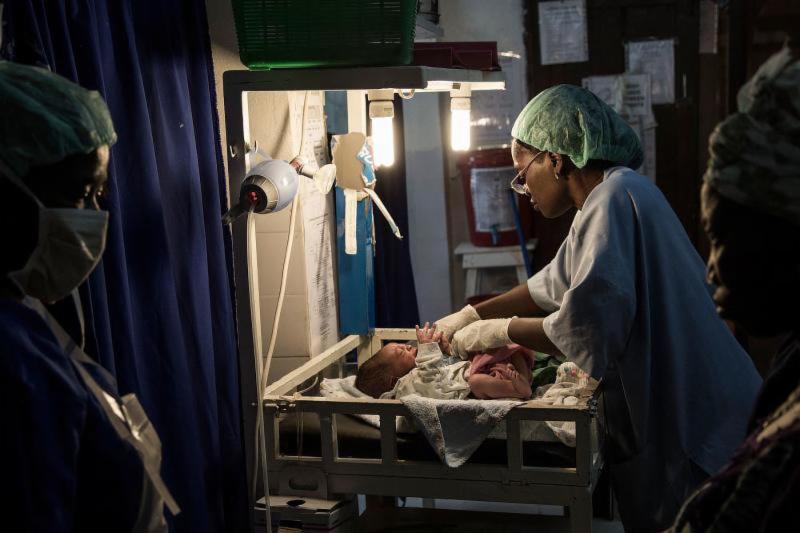
| Doctors treat a baby whose mother underwent a cesarean section in Sierra Leone. Doctors Without Borders has worked to help reduce the country's high maternal mortality rate. Photo: Lam Yik Fei/Getty Images |
A recent
study published in The Lancet found that maternal deaths in Africa following cesarean section are 50 times higher in prevalence than the rate in the UK. In a sample of 3,684 mothers in 22 African countries who gave birth via C-section, 20 did not survive and one in six developed complications such as excessive bleeding during or after the surgery. At least 10% of these deaths resulted from complications due to lack of safe anesthesia provision and the rest were due to bleeding after birth. Out of the 3,506 infants born, 153 died shortly after, which is twice the global neonatal mortality rate of 1.9%.
According to Dr. Bruce Biccard, an anesthesiologist and professor at the University of Cape Town who led the research, new and improved approaches to assess and address the challenges for pregnant women who deliver in resource- limited facilities is needed as well as additional resources, more staffing, better training and equipment.
|
"Savings Mothers, Giving Life" Works to Improve Maternal
and Newborn Health in Uganda and Zambia
|
|
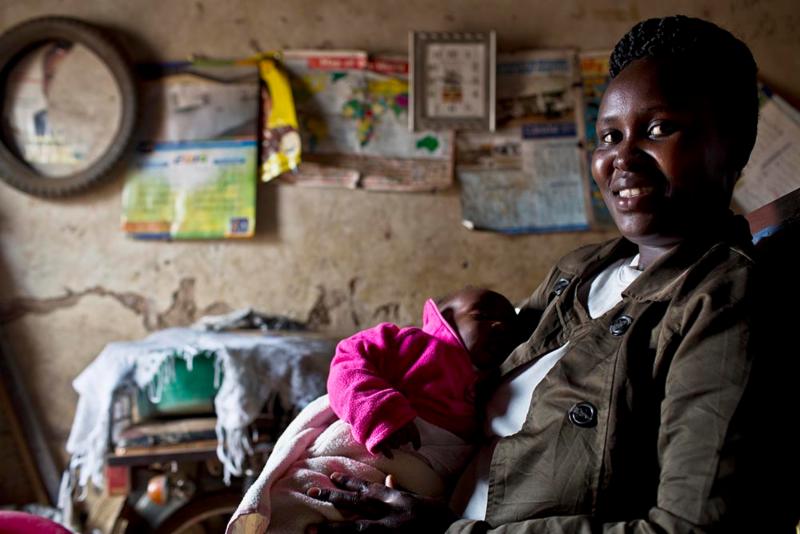
| SMGL employs a health systems approach to ensure that clean, safe childbirth services are available to every pregnant woman. Photo: Kate Holt/MCSP |
Saving Mothers, Giving Life (SMGL) is a public-private partnership supported by USAID and aimed at reducing maternal and newborn mortality in sub-Saharan African countries. As the project comes to a close and results have been disseminated, the SMGL approach has shown impressive outcomes: dropping the baseline maternal mortality rate in Uganda by 44% with SMGL interventions. In Zambia, the maternal mortality rate dropped from 480 deaths to 280 deaths per 100,000 live births in the select health facilities.
SMGL employs a health systems strengthening approach to ensure that clean and safe childbirth services are available to all pregnant women in need. The organization's interventions address delays in seeking, reaching and receiving care. "The achievements show that what is often seen as an intractable problem can be addressed with the right leadership, resources, and political will," said Dr. Florina Serbanescu, Team Lead of Global Reproductive Health Evidence for Action at the Centers for Disease Control and Prevention at the event. As of May 2018, 60% of global maternal deaths occur in sub-Saharan Africa, which is home to eight of the
10 most dangerous places to be born in the world.
|
Helping Babies Breathe with Virtual Reality
|
|
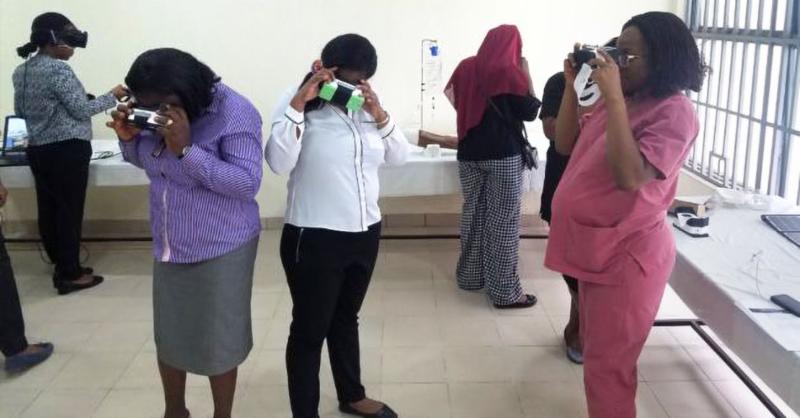
| Pediatricians and nurses use virtual reality at the College of Medicine at the University of Lagos Simulation Skills Center. Photo: Seattle Children's Hospital |
Seattle Children's Hospital and the University of Oxford have collaborated on the development of a scenario-based mobile and VR gaming platform to teach health care workers how to identify and manage medical emergencies using game-like training techniques. Each year,
280,000 babies in sub-Saharan Africa die of birth asphyxia, a condition that is responsible for 23% of all newborn deaths worldwide. There is a need for new methods to train the growing numbers of health care workers around the world, particularly for managing emergencies in children as face-to-face training is costly and knowledge retention over time is low.
LIFE trains health care workers on programs such as "Helping Babies Breathe (HBB)," which has been shown to
reduce neonatal mortality by a rate of 47%. Users can download the LIFE app onto their own smartphones to remind them when they need to refresh their training so that they can quickly test their knowledge to ensure they are always ready to act in an emergency. Intended for "low-dose, high-frequency" practice (meaning that it can be used frequently in short time blocks to refresh skills), the platform is currently being tested across 20 health care facilities and 300 health care workers in Lagos, Nigeria, and Busia, Kenya.
|
Addressing Maternal and Child Health Issues in India
with Artificial Intelligence
|
|
| Illustration courtesy: HealthX |
India's interim finance minister Shri Piyush Goyal recently announced the allocation of funds for a National Center for Artificial Intelligence (AI) and a National AI portal. The budget revision opens up new avenues for addressing maternal and child health issues throughout the country, including new AI-generated solutions, improved health care data collection and the development of algorithms for solving health challenges and accelerating India's progress to achieve the Sustainable Development Goals (SDGs).
Machine learning and AI have gained traction in the health care space across India and throughout the rest of the world in recent years with the increased understanding of its potential for impact on the future of global health.
Recognizing this potential, The Rockefeller Foundation, USAID's Center for Innovation and Impact (CII) have partnered, in close coordination with the Bill and Melinda Gates Foundation, to develop
AI in Global Health: Defining a Collective Path Forward. This report identifies opportunities for donors, governments, investors, the private sector, and other stakeholders to explore and accelerate the appropriate development and cost-effective use of AI at scale in global health around the world.
|
World Preeclampsia Day (May 22nd)
|
On May 22nd we recognize World Preeclampsia Day to raise awareness about preeclampsia (PE) and its global impact on the lives of mothers, babies and families. PE, a type of hypertensive disorder in pregnancy (HDP), is a serious condition affecting both mother and baby, often during the second half of pregnancy or in the six weeks after delivery. S
ymptoms, however, are not always noticeable.
The vast majority of maternal deaths related to HDPs are preventable
--- early symptom recognition and fast, effective response times are both key to reducing mortality rates.
Click here for more information about Ending Eclampsia, a project of the Population Council supported by USAID.
Learn more about a Saving Lives at Birth funded innovation:
Urine Congo Red Dot (CRD) Test, a preeclampsia diagnostic.
|
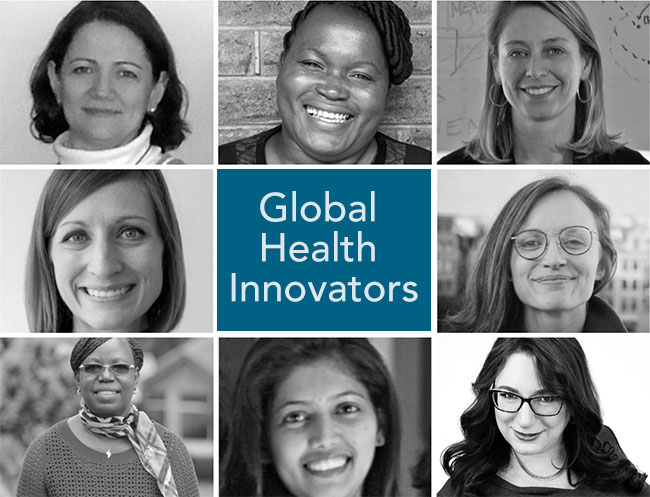
Eight Women Innovators Changing the Landscape of Global Health
|
|
|
 |
| Image: Medium.com |
|
Through programs like the
Grand Challenges for Development, USAID and its partners have tapped into the passion and creativity of some of the world's best and brightest minds across sectors and geographies to develop and test new or improved approaches that have the potential to address the world's most urgent health needs.
Many of these innovators are women who bring their diverse experience and shared vision of a future in which every woman and girl can access quality health services and lead a healthy life to their varying fields of work.
In this recent article from Medium.com, eight inspiring women pushing the boundaries of their respective fields to solve the world's toughest global health challenges, are profiled, including innovators of SL@B-funded organizations:
Shift Labs,
D-tree International and
Bempu Health.
Click here to read the article.
|
|
|
|