Saving Lives at Birth is proud to support the world's leading health technology organizations in the field of maternal, newborn, and child health. This summer has been an exciting time for the SL@B community, as many of our innovators have found themselves in the global spotlight thanks to continued efforts to reduce maternal and newborn mortality rates in the developing world, particularly in low and middle-income countries.
Be sure to read the stories below, which include mentions of SL@B Innovators:
Bempu Health,
FRE02 Foundation,
Shift Labs,
Simprints, and
Sisu Global Health.
|
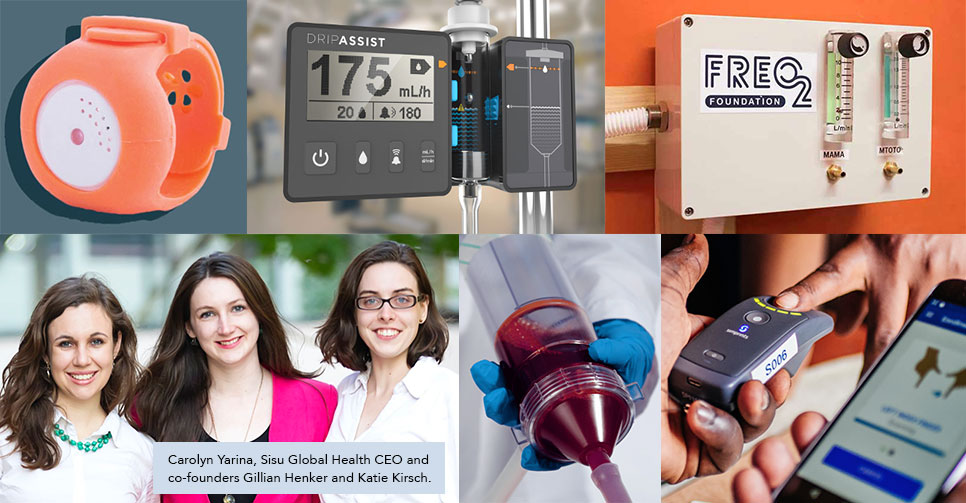
"Bempu has developed a temperature monitoring bracelet used in tracking the health of premature and low birthweight babies. Founder Ratul Narain moved to India from the US to pursue his vision to improve health outcomes in low-resource parts of the world...the startup has sold over 14,000 units of its flagship innovation, the BEMPU TempWatch, and is scaling commercially across the world."
|
"FREO2 creates technologies to supply oxygen to pneumonia sufferers. The invention, which particularly assists patients without ready access to power, could be a lifesaver if it were rolled out...FRE02's Dr Bryn Sobbott said pneumonia kills 99 percent of all its victims in developing countries...'There is very strong evidence showing the impact of oxygen [on pneumonia], a study showed a 35 percent reduction in mortality,' he said."
|
"The only player involved in this market of infusion rate monitoring is Shift Labs, Inc. The present market structure of infusion rate monitoring is expected to change with efforts and research present in clinical phase."
|
"Simprints has won the World Bank's 'Mission Billion Challenge' with an open source toolkit for enabling meaningful informed consent with audio messages delivered during the registration process...The World Bank Group's Identification for Development (ID4D) initiative launched the challenge in November to identify practical and cost-effective 'privacy by design' features that can be embedded into digital identification systems to empower users...'Privacy is incredibly important, not just for the developed world, but for everyone, everywhere."
|
"The first Women Startup Challenge to cross the Atlantic was held in London in May 2017, and UK-based Simprints took the top prize. Simprints developed an inexpensive biometric scanner, mobile app and cloud platform based on fingerprints, with the aim of becoming an identity provider for the 1.5bn people in the world without formal identification. A lack of ID can limit access to vital services, and Simprints recently signed a memorandum of understanding with Gavi (The Vaccine Alliance) and NEC Corporation on the use of biometrics to improve immunisation coverage in developing countries."
|
"Sisu Global Health is changing the landscape of medical treatment in emerging markets by creating cutting-edge, life-saving tools for doctors and patients of the developing world, with their needs in mind. Their first product, Hemafuse, gained regulatory approval in Kenya and Ghana and has been helping to combat the 50-60% donor blood shortage across Africa...Hemafuse is a device that is able to collect and filter a patient's own blood to be transfused back to the patient during surgery, without using electricity."
|
The Rising Global Cost of Preventing Women from Dying in Childbirth
|
|
|
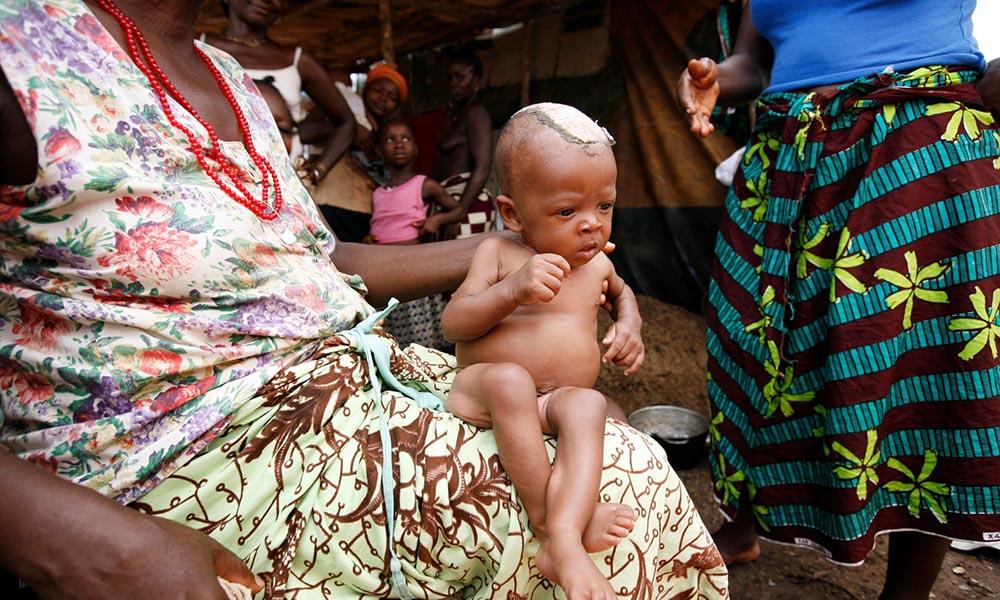
A six-month-old baby whose mother died in childbirth is cared for by his grandmother in Freetown. Sierra Leone has the world's highest maternal mortality rate. Photo: David Levene/The Guardian
|
The UN Population Fund (UNFPA) has released sobering news regarding the cost of preventing women from dying in childbirth. The current costs for direct services such as medical staff, wages, supplies, and medications spent on preventing women from dying in childbirth are currently estimated at $1.4 billion annually. According to research conducted in conjunction with Johns Hopkins University, a six-fold increase in the annual spend ($7.8 billion) would be required to achieve the goal of ending preventable maternal death worldwide by 2030.
The projected figure takes into consideration a number of different factors, including population growth, costs of current innovations and challenges associated with scaling-up services. Additionally, donor aid for maternal healthcare fell from $4.4 billion in 2013 to $3.9 billion in 2017. According to the UNFPA, the projections indicate a growing need for increased donor support and private sector funding.
|
Healthy Mothers, Healthy Babies: Taking Stock of Maternal Health
UNICEF has published an in-depth brochure detailing the challenges and needs associated with ending preventable maternal deaths, stating that while much progress has been made in the past two decades, more than 800 women continue to die every day from pregnancy-related complications, with many more mothers experiencing injuries and/or debilitating outcomes.
The brochure entitled:
Healthy Mothers, Healthy Babies, offers a detailed compilation of statistics and key research points surrounding many of the issues that have been identified as factors in preventable maternal deaths, including deliveries performed by unskilled providers, uneven access to emergency C-section, high rates of adolescent childbearing, and a lack of skilled personnel for health systems.
These factors are thought to play a key role in maternal and newborn mortality worldwide, particularly in
Nigeria and other African countries. UNICEF's call to action at the close of the booklet states the following:
"Countries and their partners need to use available evidence on the number and leading causes of maternal deaths, demographic trends, and on the strength of the health system including human resources when designing costed national plans for maternal and newborn health. Policies that ensure all women have access to affordable, high quality maternal health services, and that improve the status of women are also essential for ending preventable maternal deaths and improving the lives of mothers and their babies."
|
Why Are So Many Mothers and Newborns Still Dying?
|
|
| Photo: Money Sharma/AFP/Getty Images |
In a new op-ed for Project Syndicate (an international media organization that publishes commentary and analysis on a variety of important global topics), Sema Sgaier
--- Co-Founder and Executive Director of the
Surgo Foundation
--- offers a first-hand review of the challenges currently facing maternal, newborn, and child mortality across the globe. Per Sgaier, one of the primary issues facing mothers and children in low and middle-income countries is a combination of perceptual and contextual driving factors resulting in a lack of support, education and training for nurses, many of whom work under constant stress and are unfamiliar with many of the important tasks (outside of delivery) associated with childbirth.
Sgaier argues that the path toward improving quality of care before, during and after childbirth must involve development of new, evidence-based interventions by the global health community which identify and address reasons why health-care providers often fail to take crucial steps to prevent complications. More localized research is needed as solutions must be tailored to specific contexts, potentially saving millions of dollars for global health programs, as well as many more lives annually.
|
DevEx "Maternity Matters" Series
|
 |
|
|
Photo: DevEx |
A new online series from leading global development media platform
DevEx called
"Maternity Matters", explores how private sector approaches can help channel both the financial resources necessary for ending maternal mortality, and the knowledge and innovation necessary for creating sustainable solutions.
"Maternity Matters" features in-depth articles on leveraging private sector financing to fill the global health funding gap, as well as a helpful video with tips on how to bridge linguistic gaps in innovative financing.
Be sure to keep an eye on the
"Maternity Matters" page on DevEx.com for new and upcoming additions to the series, and don't hesitate to share your feedback via the included form at the bottom of the page!
|
USAID "Acting on the Call" Report 2019
|
|
|
|
| Photo: Karen Kasmauski/MCSP |
|
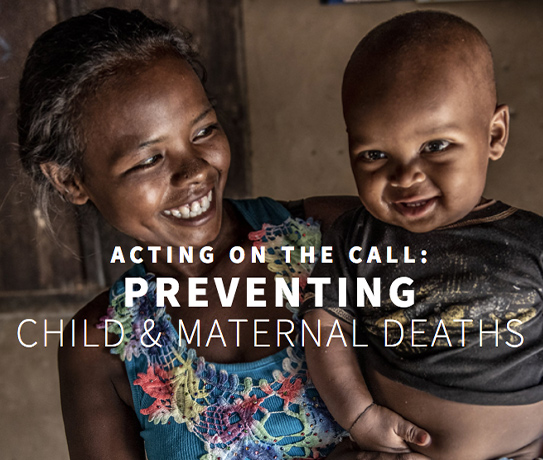
USAID is proud to announce the release of the 2019
Acting on the Call report.
Each year, 303,000 mothers and 5.4 million children die across the globe, including over 2.6 million newborns who die in their first month and almost 1 million on their first day of life. Our goal at USAID is to save 15 million children and 600,000 women between 2012 and 2020, as well as to end the need for foreign assistance as countries move along the Journey to Self-Reliance. The 2019
Acting on the Call report offers detailed insights into USAID's impact since the 2012 call to action, as well as ways in which the global health community can continue working to end preventable maternal and newborn deaths in the months, years, and decades ahead.
|
|
|
|