|
May is Mental Health Month
Going Beyond Awareness
Every May, we recognize Mental Health (Awareness) Month. You’ll likely see more posts, more conversations, and more reminders such as “it’s okay to not be okay.” And that matters. Talking about mental health openly is something many people didn’t grow up with—and reducing stigma is an important step forward.
But here’s something worth thinking about: awareness alone isn’t enough.
Research shows that while mental health awareness campaigns can help people feel less alone, they can also have some unintended effects—especially if they stop at just naming the problem. When we hear a lot about how common and serious mental health challenges are, but don’t hear as much about what helps, it can sometimes leave people feeling overwhelmed or stuck.
For some—especially young people—constant exposure to mental health content can lead to more self-focus, more comparison, and sometimes even more distress. Simply put: recognizing the struggle can be important, but it’s only part of the picture.
So what makes awareness more helpful?
It’s what comes next—and how we make meaning from what we’re experiencing.
Meaning-making doesn’t mean putting a positive spin on pain or pretending things are okay when they’re not. It means asking: What does this experience tell me about what matters? Who can I turn to? What helps me get through hard moments? It’s about connecting our struggles to purpose, values, and relationships.
As a community, we can support that by:
- Checking in on someone and really listening
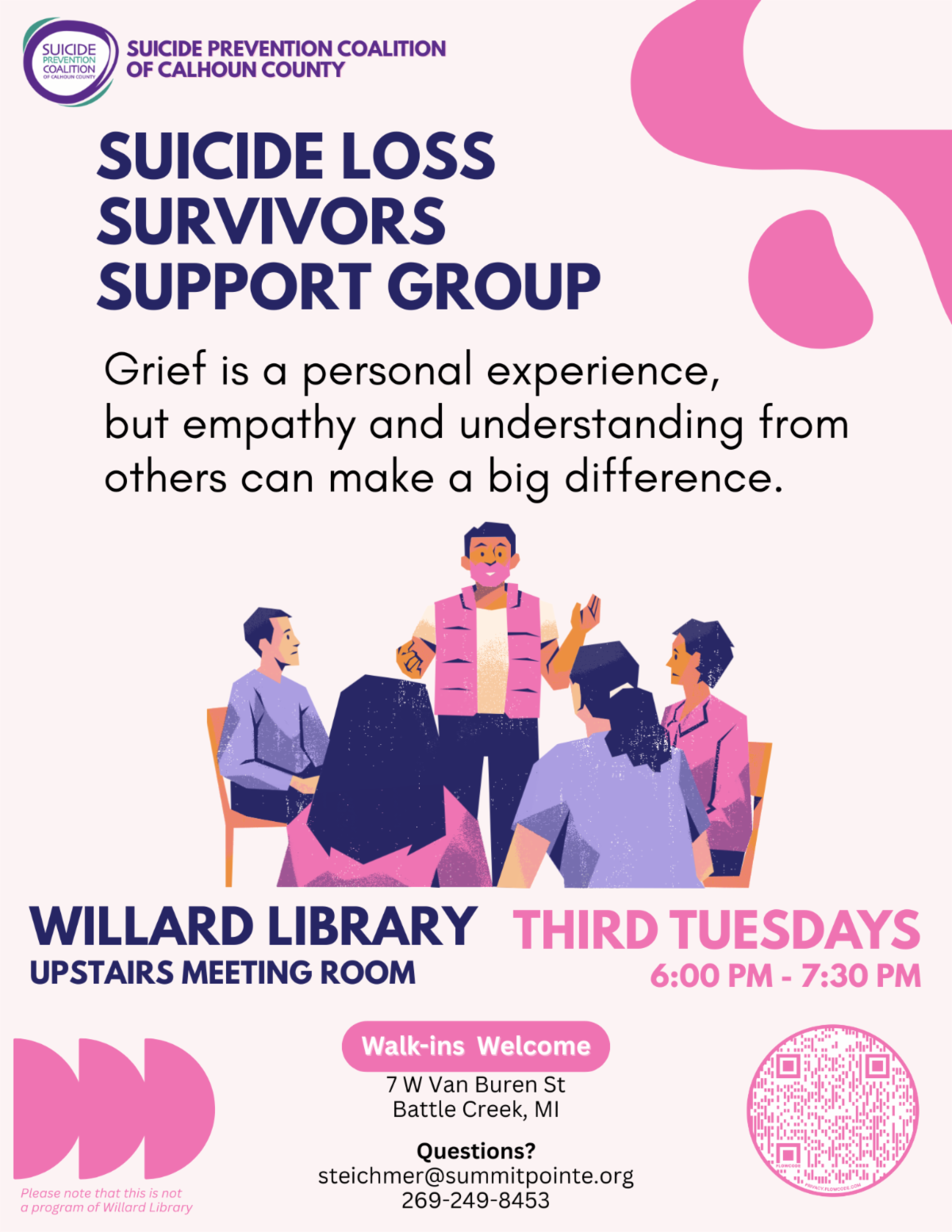
- Creating spaces where people can share their story without judgment
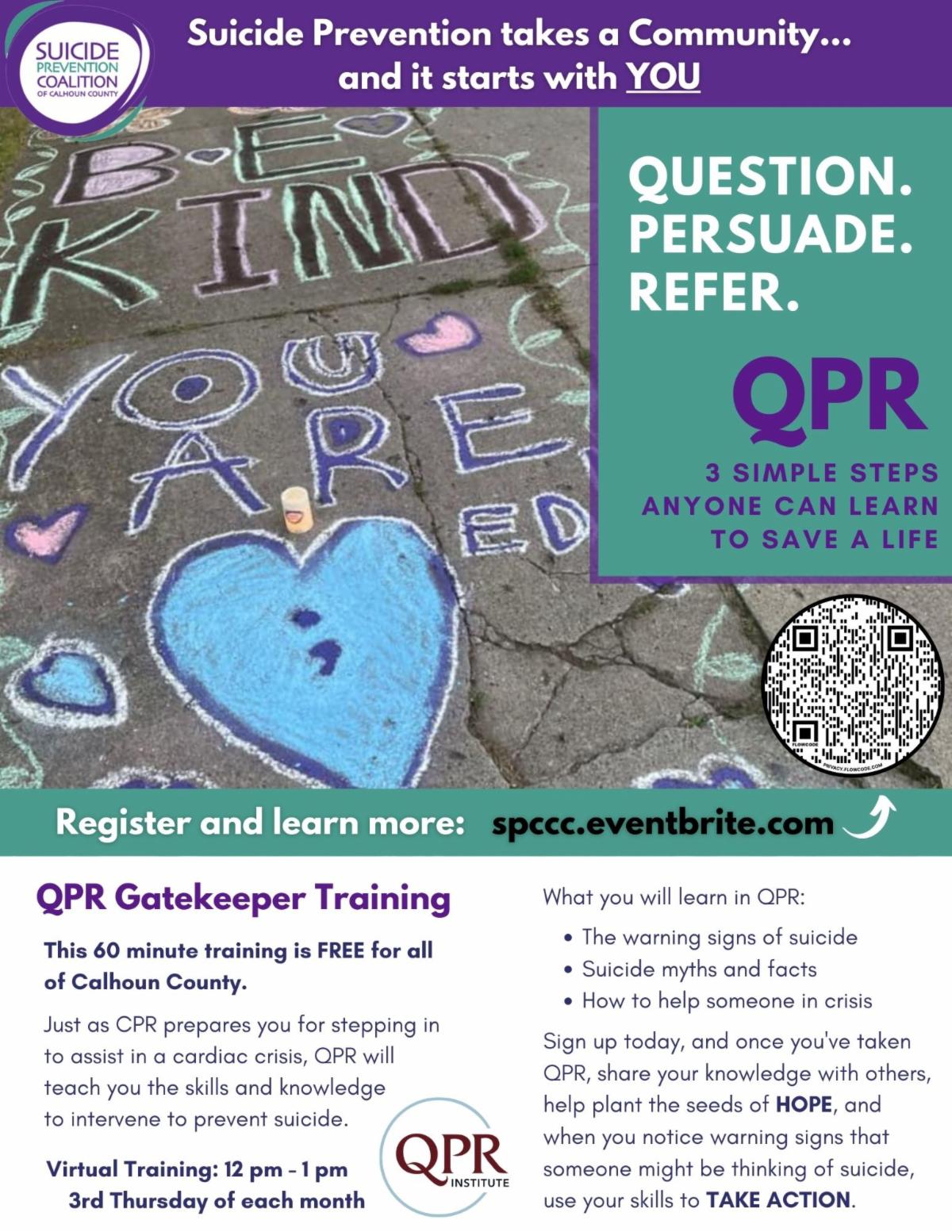
- Learning practical ways to support someone who may be struggling
-
Talking not just about pain—but also about hope, growth, and resilience
At the Suicide Prevention Coalition of Calhoun County, we believe in moving beyond awareness to building connection, skills, and a sense of purpose. Whether it’s learning how to recognize warning signs or gaining confidence to have a tough conversation, these are the things that turn awareness into real support—and help people regain their footing in life.
This month, let’s keep the conversation going—but let’s also help each other make meaning within it.
Awareness is where it starts; connection and purpose are what help us move forward.
|