> Display difficulties? View as web page

> Stay informed. Join our mailing list

> Be noticed, place an ad. Get our ad rates

> Join FSANA. Application here

FSANA Flight Training News

SPECIAL CONFERENCE EDITION - March 2, 2026

avemco ad

FLIGHT TRAINING NEWS

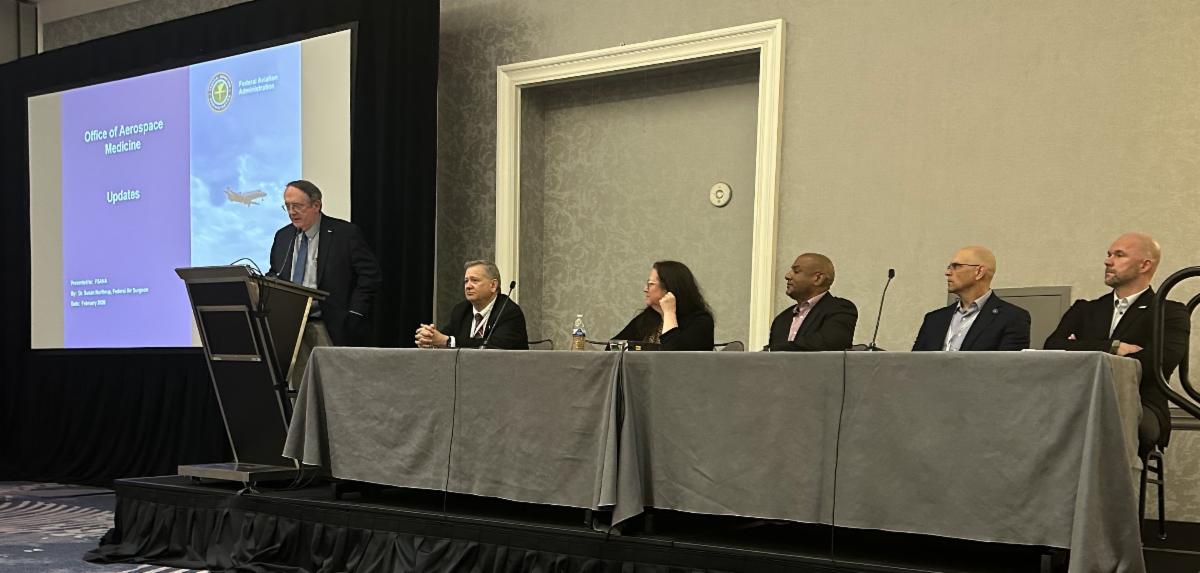
Federal Panel Kicks Off 17th Annual Flight School Operators Conference

The FSANA 17th Annual Flight School Operators Conference & Trade Show kicked off last week with updates from representatives of multiple federal agencies discussing regulatory topics that affect the flight training community.


The panel started with Dr. Susan Northrup, the FAA's Federal Air Surgeon, providing updates and a briefing on the FAA's efforts to modernize, improve, and update the medical certification process to make it easier for aviators to navigate. A key factor she highlighted was that early diagnosis and addressing potential problems are critical factors for airmen getting back into the cockpit. Pilots are often reluctant to seek medical care too frequently out of fear of the effects on their medicals, when waiting many times makes the problems worse.


She highlighted that the goal of the Federal Air Surgeon is "to return individuals to flying or controlling as soon as it is safe to do so in a manner that is timely, transparent, and consistent." She explained how the office is doing much better to make this happen quicker than it ever has before.


The FAA has gotten to the point that only about 6% of FAA medicals get deferred, with only 1-2% of those medicals being denied, and the majority of those denials are based on a failure by the airman to respond or provide information when requested at this time. Only 0.1-0.3% of medicals are currently being denied for actual cause.


A key factor that flight training providers need to work with their students on with regard to medicals, if they are in question at all, is to "pre-flight" their medical and make sure to provide information as requested to get through the medical certification process. Preparing ahead of time can, in most cases, result in uninhibited medical issuance.


Everette Rochon, Manager of the Training & Certification Group (AFS-810) under the GA & Commercial Division, which is part of Flight Standards Service, discussed what is on the horizon in the FAA's pilot training and certification activities. He started by discussing some of the trends in GA and instructional accidents.


He continued with a briefing on rulemaking and policy updates that have taken place, including the major rule implementation of MOSAIC, the potential for future development of digital airman certificates, and the angle of attack initiative intended to reduce GA fatal accident rates. He highlighted a continuing effort underway seeking input from the training industry to update and modernize FAA part 141 regulations and what changes should be made to bring this regulatory sector into the modern era.


Timothy Kray, a Frontline Manager for the FAA's Delegation & Resource Branch (AFG-970) began by discussing the current status of the FAA designee program, discussing some of the current efforts to grow the “national branch” of the designee program, where many DPEs have been transitioning from management from local FAA offices to a national team.


He provided updates on the current number of DPEs, how the FAA is working to implement new DPEs, and how the FAA is working to increase the number of DPE appointments and increase DPE authorizations while at the same time increasing DPE utilization. A quick update on policy implementations as a result of the FAA reauthorization bill mandates covering the new FAA Oder 8000.95 that is expected to be implemented in mid-2026, the implementation and requirement of DPEs to sign a new “code of conduct”, work on a DPE mentorship program, future implementation of a “DPE scheduling application” that the FAA has contracted to be guilt, and the current outstanding public comment period on the proposal to have a DPE post practical test survey.


Jiri Marousek, Chief Executive Officer for AirTera provided an update on many of the efforts that are happening in the TSA realm with regard to general aviation and aviation training. It was highlighted that there is an effort to improve standardization around the system with regard to rule implementations, the complex nature of the airspace system with multiple TFR events happening in relation to the U.S. hosting major events (such as the FIFA World Cup 2026), and the focus on industry partnership by the TSA with the flight training community.


Bill Schroeder, a VA Education Consultant for the Ohio Department of Veterans Affairs spent time discussing how flight training providers can be approved to conduct VA pilot training and what training may be approved, along with what it takes to stay approved. A key point was that the flight training provider has to have been in business for more than 2-years and that they must be a 141-approved flight school.


Wrapping up the session, Melanie Weddle, Senior Technical Advisor for the FAA's Aviation Safety ODA Office provided information about the FAA’s Organization Designation Authorization Office and the FAA’s efforts to use the services of this office to delegate authority to parties to do work on behalf of the agency. The most common places flight training providers encounter this practice are through knowledge test services and DPEs who provide testing on practical test events.


The FAA continues to work to leverage new sectors of this policy landscape for the goal of allowing more efficient service to the industry. A part of this is the new potential for entities that are 141 training-approved operations to apply for ODA authorization to conduct airman testing on behalf of the FAA. This differs from “self-examination authority” in that an approved entity could be approved, monitored by the FAA, and then implement their own testing staff by training them, overseeing them, and conducting tests.


The potential in this structure is for the FAA to be required to oversee fewer individual designees, but have the onus of management and oversight of the actual providers of the test be on the ODA holder, having “unit members” employed by them that would be the equivalent of a DPE able to serve the overall aviation community. You can learn more about this potential system at: ACLINK. There is certainly a level of organizational robustness that will need to be present to meet, be approved, and maintain that approval, so it won’t be for everyone, but there will likely be some entities that seek this approval and become available to provide testing services in the system at some point in the future. An ODA would effectively be required to operate like a managing FAA office for its testing providers. The goal of this program is to allow the FAA to provide direct oversight of fewer individual entities while effectively increasing the overall service provision in the system.


The panel of federal officials is always a highly valuable section of the FSANA conference. Few opportunities in the aviation training sector offer such a frank and open discussion with the federal agencies that integrate with the flight training operations in our national aviation system.

Cleveland ad
FLIGHT TRAINING NEWS

Committee Meetings Focus on Multiple Topics of Importance to the Flight Training Landscape

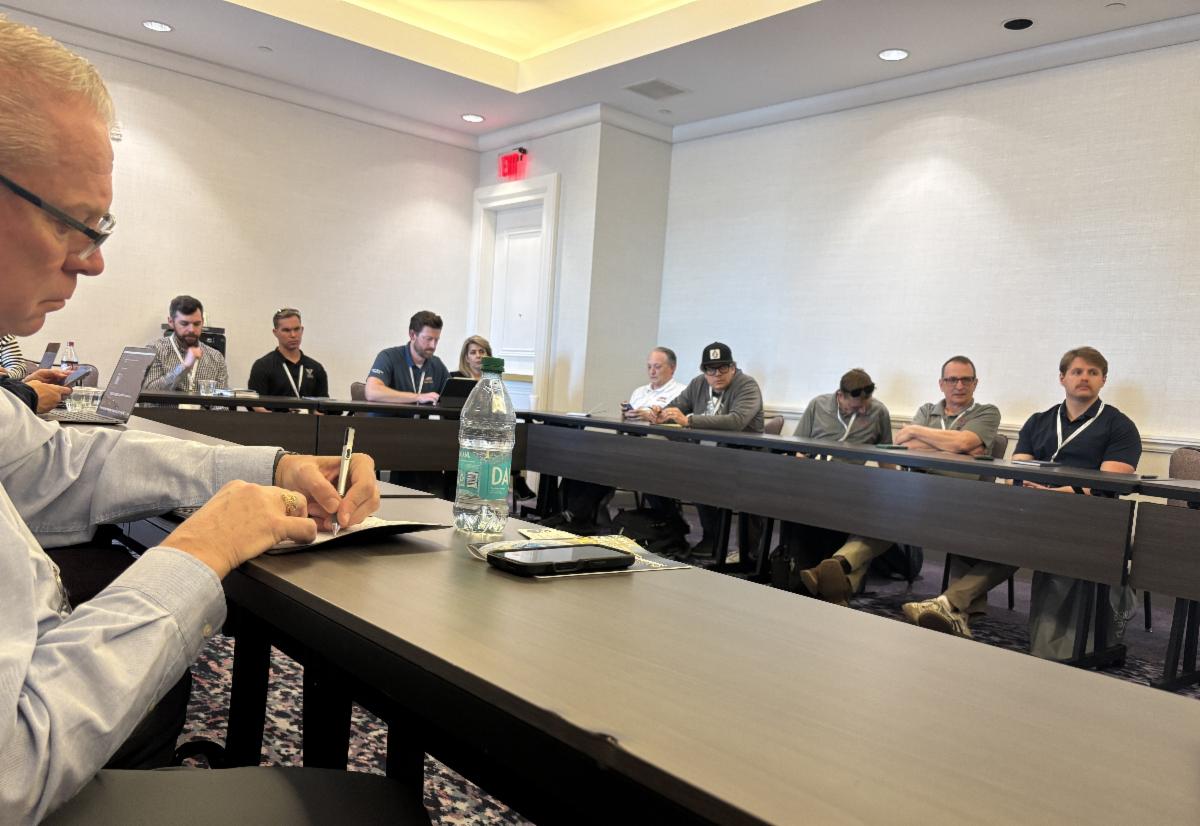
Day one of the conference began with a series of committee meetings covering topics ranging from airman health to practical testing to aviation training safety to legislative affairs topics and training aircraft within the pilot training system.


The Wellness Committee meeting had the honor of having in attendance the Federal Air Surgeon, Susan Northrup, ahead of her later presentation to the broader conference attendees, in attendance as the discussion covered topics from airman mental health concerns, FAA medical best practices, and other related airman medical topics for flight training providers.


Discussion on airman practical testing ranged from DPE availability and pricing, to knowledge testing pain points, to best practices in preparation of applicants for testing events.


The Safety Committee meeting talked about best practices in training that not only better prepare applicants for certification, but also improve overall safety in training operations.


The Legislative Affairs committee meeting talked about some of the hot topics that may affect pilot training, including the ongoing 141-modernization effort, current legislative efforts in Congress relating to ADS-B requirements, VA funding authorizations, and more. It is critical that the flight training sector of business continue to engage with legislative sectors to ensure that our voices are heard in the overall aviation sector.


The last committee meeting focused on training aircraft and what potential future developments might be available for flight training providers. FSANA works to bring manufacturers together with training providers to understand current and future product availability, and potential desires that manufacturers can respond to from the flight training committee.


These meetings are a fantastic input opportunity every year for members and attendees to share information and provide input into what focal areas FSANA needs to continue to work on over the next year.

VSE ad oct
FLIGHT TRAINING NEWS

4 Breakout Tracks for Flight Training Providers

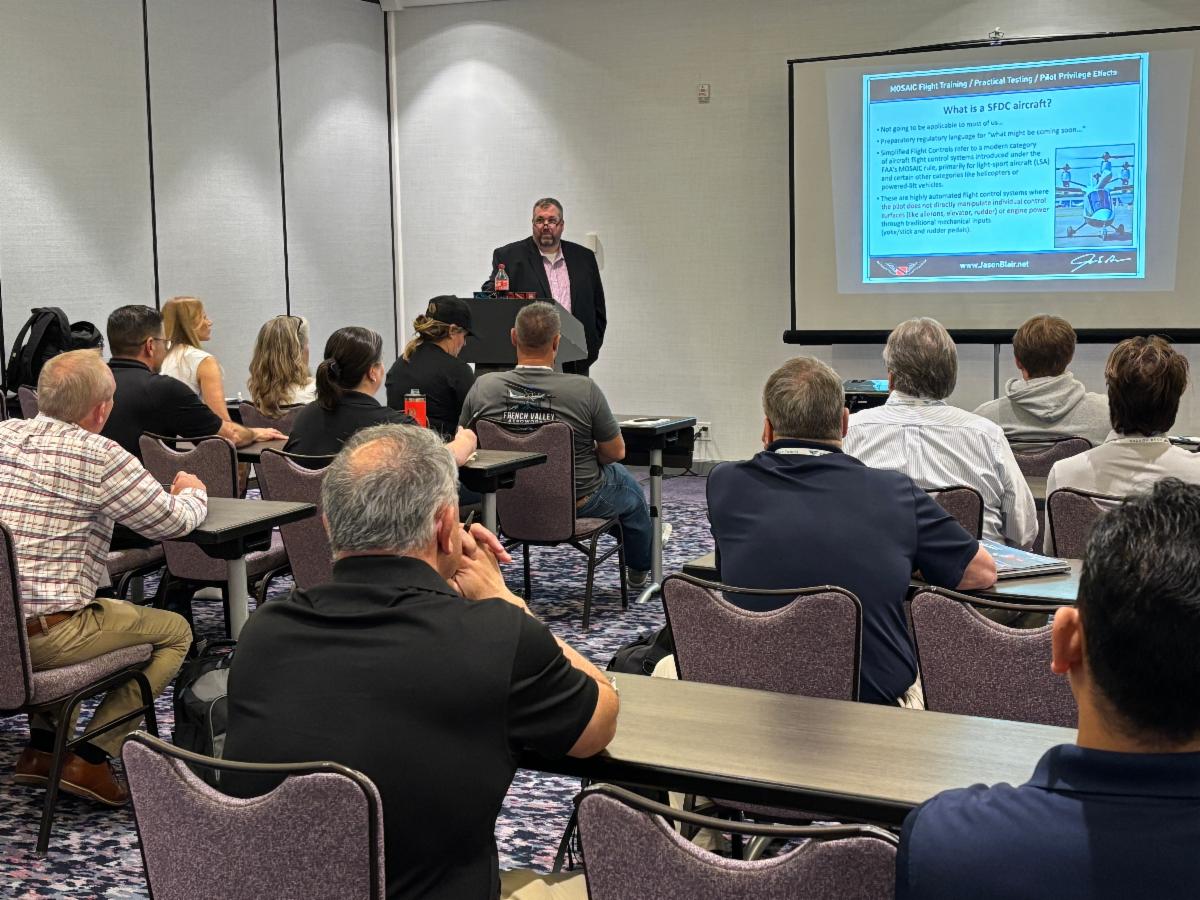
A variety of breakout track sessions were offered for attendees on the second day of the FSANA 2026 conference. Sessions ranged from maximizing use of flight simulators, vendor parts and maintenance sourcing, best practices in student enrollment, software for flight training providers, equipment financing options, best practices in standardizing training, understanding and leveraging changes from the MOSAIC regulator efforts, working with traditional aircraft manufacturers, improving ground school training operations, how flight training providers can support students in mental health considerations, financing options for students training, LSA aircraft under new MOSAIC changes, and how to work with modern students.


The multi-track offerings offered a full complement of information focused on helping flight training providers gain access to services and skills that improve their ability to provide aviation training, and efficiency in doing so for their business operations.

Right Rudder Marketing ad
symbiotics-2026mar
High Altitude Marketing 2026feb
FLIGHT TRAINING NEWS

IAAC Accrediting Commission Holds its 4th Annual Workshop

IAAC logo

This past week, in advance of the FSANA Annual Conference in San Diego, the IAAC held its fourth annual workshop for aviation schools interested in seeking accreditation. Twenty-five individuals representing 12 schools from across the country were in attendance.


Prior to the start of the conerence program on Tuesday, IAAC Executive Director Tom Kube provided an update on the Commission’s recent progress. As of this writing, two schools have received full accreditation.


There are currently twelve applicant schools in the process. One school is ready for a final decision by the Commission. Five schools are ready for their initial Readiness Visit, with two others awaiting their Full Team Visit. The remaining schools are in various stages in the process.


The Workshop is structured to orient schools to the IAAC accreditation process, the standards, and the various steps to demonstrate compliance with standards, including a comprehensive self-study. 


The Commission, originally founded by FSANA, became separate and independent in 2023 as a 501(c)(3) non-profit organization. The Commission is currently progressing through the US Department of Education’s Recognition process to be approved as a “Gatekeeper” for Federal Student Aid Programs.


Learn more about the International Aerospace Accrediting Commission at https://iaac.aero/.

Air Power Feb ad
Airtera ad
AvBrief
FLIGHT TRAINING NEWS

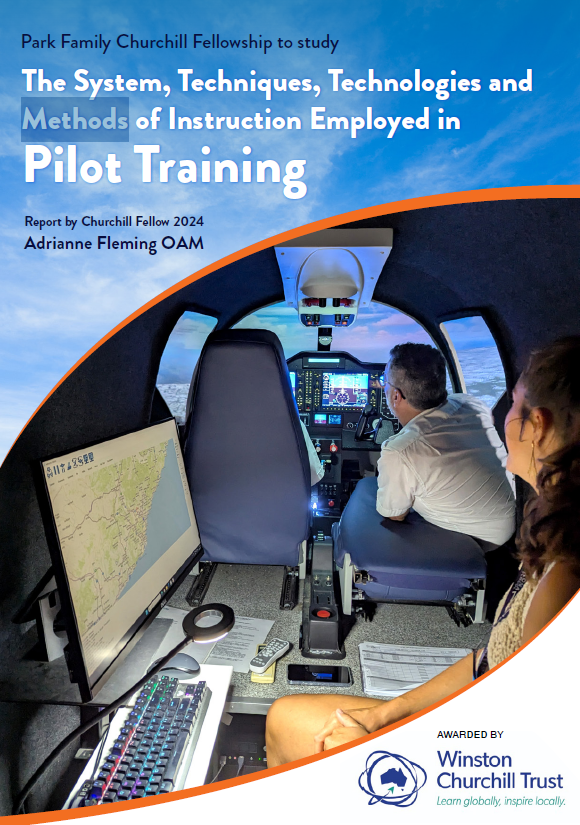
Insights from Global Skies: Adrianne Fleming's Churchill Fellowship Report on Pilot Training

In aviation's dynamic training realm, where safety and innovation drive progress, global best practices offer invaluable lessons. Adrianne Fleming OAM, a seasoned flight instructor with over 33 years of experience and co-founder of Australia's Tristar Aviation, has delivered a report on best practices from around the world in her 2024 Park Family Churchill Fellowship final report. Sponsored by the Winston Churchill Trust and the Park Family—with their deep aviation ties—Fleming's report, The System, Techniques, Technologies and Methods of Instruction Employed in Pilot Training, stems from an extensive international tour. She visited universities, airline academies, military institutions, and symposiums in the USA, UK, Spain, UAE, and Singapore, focusing on ab initio pilot training, competency-based progression, and instructor development.


Fleming's drive arose from a stark insight: while core pilot training has remained largely unchanged for 40 years, the industry has evolved dramatically. As a dedicated advocate in aviation committees, she views flight instructors as pivotal "guardians" of the "first taught, best taught" principle. Often a temporary role for low-experience pilots, instructing demands high standards to shape future aviators. Her Fellowship explored how leading nations like those under FAA and EASA regulations address this, providing a blueprint for Australian enhancements.


Adrianne Fleming's Fellowship observed pilot training environments across universities, airline academies and military organizations. It revealed how training systems, instructional methods, technologies, and organizational culture intersect to shape learning outcomes.


One theme was consistent: pilot training quality improves when systems, people, and technology operate in alignment. Schools with well-defined structures demonstrated greater clarity of expectations, reduced instructional variability, and more predictable student progression. Technology, whether simulation, VR/AR, digital learning platforms, or data-driven tools provided the greatest benefit when embedded purposefully within a coherent training framework. Adrianne will use her findings to strengthen training quality, student preparedness, and long-term workforce capability in Australia.


You can find and read the report by clicking here or the graphic of the cover page.

Flight Schedule Pro ad 2025jan
Learn to Fly Month alert
fsana hub ad
beegles ad
FLIGHT TRAINING NEWS

Upcoming TSA Monthly Flight Training Provider Webinars

The Transportation Security Administration’s (TSA) Flight Training Security Program (FTSP) will be offering Monthly Flight Training Provider (FTSP) Webinars that provide an overview of any updates with FTSP Portal changes flight training providers may want to know. 


If there are questions regarding specific training events or system functionality, please send your questions beforehand to: ftsp.policy@tsa.dhs.gov. 


The following dates will be offering webinars:


Tuesday, April 7 - Click Here for more information.


Tuesday, May 12 - Click Here for more information.


Tuesday, June 9 - Click Here for more information.

enews archive ad
 

ARTICLES OF INTEREST FROM THE INDUSTRY


FAA to Study Competency-based Pilot Training this Year, Resisting Broader Acceptance of CBTA Model


How Clashes Between Sean Duffy and Bryan Bedford Intensified FAA’s Year of Turmoil


TSB Releases Preliminary Report into Delta Crash at Toronto Pearson Airport


NTSB Final Report on DCA Collision Drops


GA: Doing More With Less


GAMA: Business Jets, Pistons Drive GA Growth In 2025


U.S. House Rejects Aviation Safety Bill after Pentagon Abruptly Withdraws Support


Congress Passes FAA Funding Bill - Prohibits ATC Privatization; Boosts Modernization, Pilot Medical Process


Trump’s U.S. Transportation Secretary Sean P. Duffy Doubles Down on Purging DEI From Our Skies, Calls on Airlines to Affirm Pilot Hiring is Merit-Based


ALPA Statement on Pilot Training and Qualification Standards


Airline Pilot Hiring Shows Renewed Momentum


DPES AVAILABLE TO TRAVEL

FSANA has been collecting DPE names who have expressed a willingness to travel to help flight training providers secure practical tests.


The latest List of Travel-Willing DPEs with contact information is available on the FSANA website. If you are a flight training provider who is finding a challenge of scheduling DPEs in your local area, feel free to reach out to these individuals. They may be able to serve some of your local testing needs.


If you are a DPE who is not on this list but would like to be, please let us know. Write us at info@fsana.com with your name, city, state, email and phone number and we will add you.


PRACTICAL TEST FEEDBACK


Have feedback concerns about FAA practical tests? Email inquiries here
Email Feedback Concerns about FAA Practical Tests to:
 

GOVERNMENT DIRECTORY


READER FEEDBACK

 
Tell us what is important to you as a school owner, manager or chief flight instructor. We will share comments in an upcoming edition of Flight Training News. Send your thoughts to info@fsana.com.
 

FSANA LEGISLATIVE ADVOCATES

Legislative Advocates are flight schools, businesses and individuals who support FSANA’s efforts to advocate for public policy that benefits the flight training industry.
 

B R O N Z E

Arizona Aero-Tech logo

FSANA SUPPORTING PARTNERS

Annual Partners are flight schools, businesses and individuals who support FSANA’s ongoing efforts to strengthen the flight training industry.

V I S I O N A R Y •• P A R T N E R S

 
Jessica Cox Motivational Services logo
 
Flying Magazine logo
 
IAAC logo
 
Avenger Flight Group


D E V E L O P E R •• P A R T N E R S

Tecnam logo
Right Rudder Marketing logo
 
Skybound logo
 
US Aviation Academy logo
Avemco logo
Lehigh Print & Data logo
 

B U I L D E R •• P A R T N E R S


Lycoming
Flight Academy Advisors logo
 
Boeing logo
CAE logo
 
VirtualFly NA logo
 
AOPA
 
Capital Technology University
Collegiate Housing Services
 
WB Parts logo
 
AES logo
 
Flight Schedule Pro logo
Wings Industry Network logo
FAAST logo
Southern Cross Aviation
 
Cleveland Wheel
 
Air Power Inc logo
 
 
NeedleNine logo
Symbiotics logo
 
Shell logo


L E A D E R •• P A R T N E R S

Training Aircraft Leasing logo
 
Avidyne logo
 
 
Elite Simulation logo
 
Four Forces logo
 
 
Airtera NATA logo
 
Hillsboro Aero Academy
 
JetPubs logo
 
Women in Aviation
Simloc logo
Deltahawk
 
 
Flycore
Travers & Associates Aviation Insurance
 
MzeroA
 
 
Redbird Flight Simulations logo
Hartzell Aviation logo
Aviation Marine logo
 
Southern Aeromedical
UpskillAir logo
Constant Contact logo
 
 
Pipistrel logo
Phoenix East Aviation
Flight School Manager logo
 
Residco logo
Textron Aviation logo
 
Simbird Montauk logo
Skymark-SMS logo
 
Wings Aero Products logo
True Course Simulations logo
 
 
Talon Systems logo
Aviatize logo
 
flitesim logo
Kore Aviation
Piper logo
 
High Altitude Marketing
 
AvBrief.com
 
Lightspeed Aviation logo
Lockwood Aviation Supply
Advanced Powerplant
Motive.aero
 
 
Gleim Aviation
H55
 
 
Old Republic Aerospace
 
Premier Aircraft
 
Bristell
 

Established in 2009, the Flight School Association of North America (FSANA) is the first association of its kind dedicated solely to the flight training industry. FSANA represents flight schools, firms that provide products and services to the flight training or aviation industry, and other supporting partners.


The Mission of the Flight School Association is to support, promote and advocate for the business of flight training; to provide knowledge, programs and services that help its members thrive and better serve their customers and communities; to foster best business practices; to educate and inspire youth; to increase the global pilot population; to improve general aviation safety; and to work in alliance with the aviation and aerospace industry.


fsana.com / 610-791-4359 / bob@fsana.com