|
|
What's new this month:
- Upcoming Webinars/Events
- Noteworthy
- SPEER Resources & Webinar Archive
- What We're Reading
| | | |
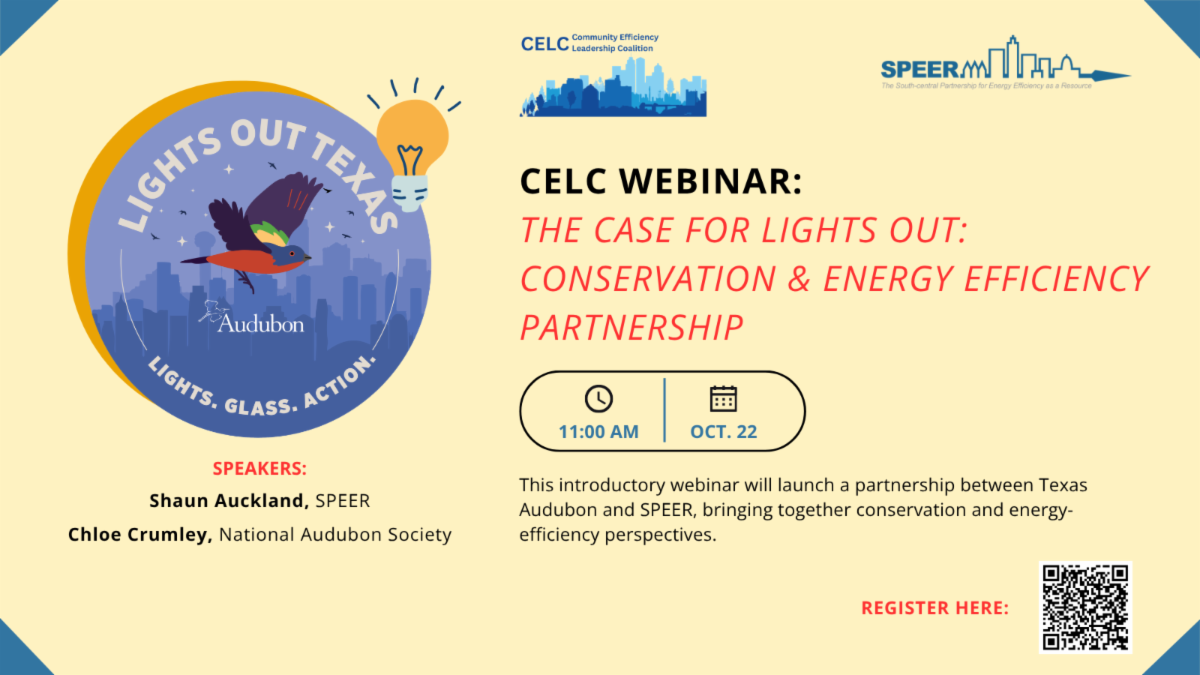
CELC/Lights Out, Texas Webinar - The Case for Lights Out: Conservation and Energy Efficiency Partnership
October 22 @ 11:00 am - 12:00 pm
Lights Out is a simple, practical action that can help protect migrating birds while reducing unnecessary energy use. This introductory webinar will launch a partnership between Audubon Texas and the South-central Partnership for Energy Efficiency as a Resource (SPEER), bringing together conservation and energy-efficiency perspectives.
Participants will learn why nighttime lighting poses risks to migrating birds, how reducing unnecessary lighting can support energy-efficiency goals, and how businesses, building owners, institutions, and communities can take meaningful action. Together, Audubon Texas and SPEER will highlight opportunities to create safer skies, more efficient buildings, and stronger conservation partnerships.
| | | |
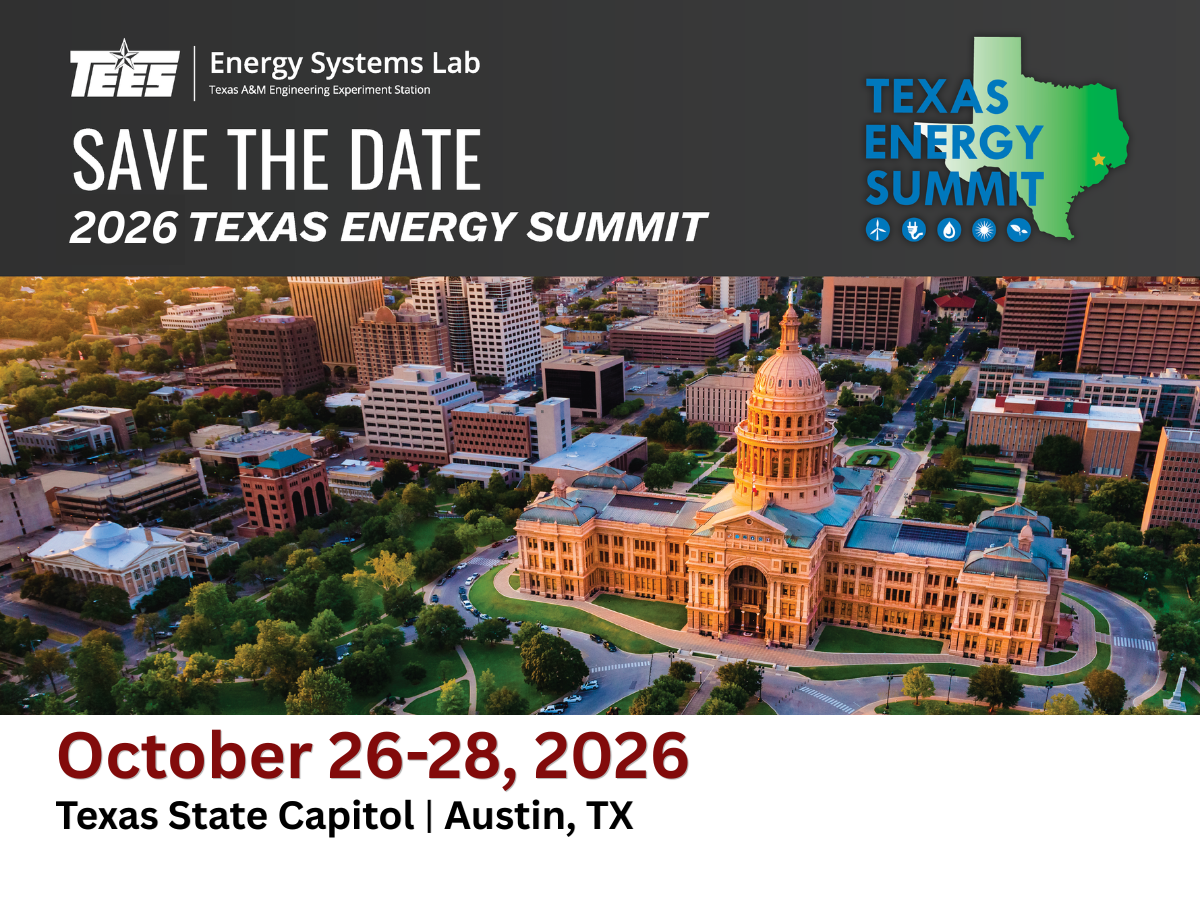
Texas Energy Summit 2026
October 26-28
SPEER is proud to be a promotional partner of the 23rd Annual Texas Energy Summit, taking place next week from October 26 - 28 at the Texas Capitol in Austin!
This dynamic event spotlights the intersection of air quality and energy systems, uniting individuals and groups from government, industry, academia, and non-profit organizations to explore and address pressing energy and air quality issues. Sessions include discussions of energy policies & the future, air quality, Texas energy leadership, and more.
You can learn more about the Summit, explore the agenda, and secure your spot here.
| | | |
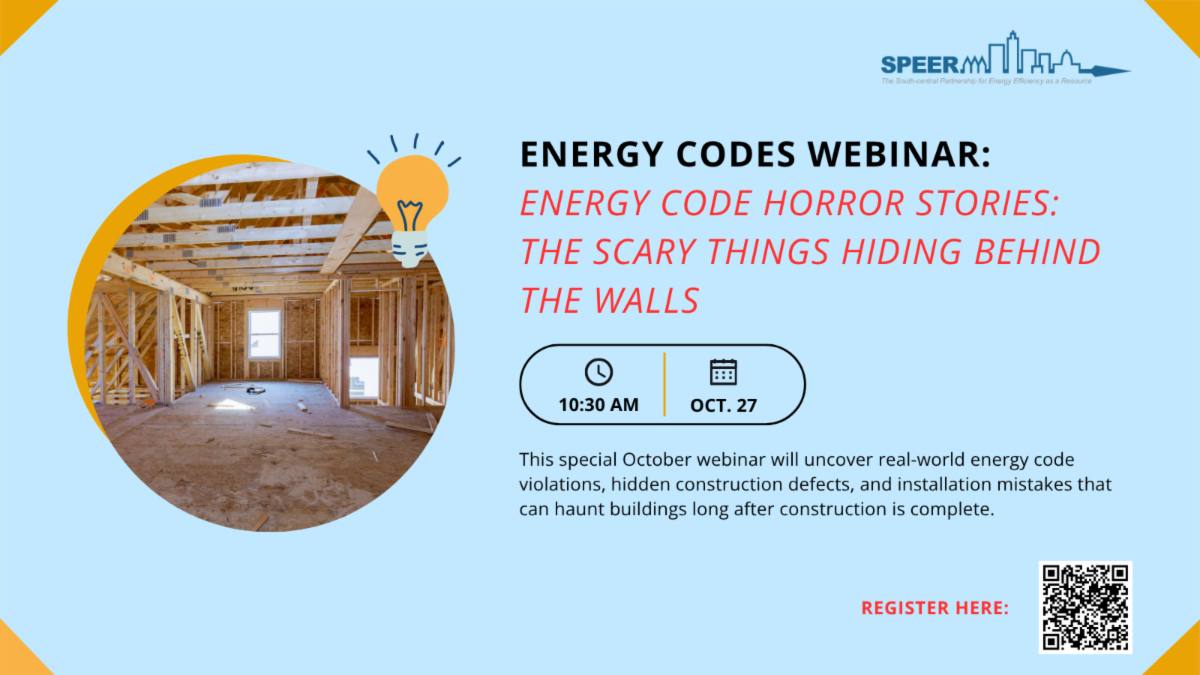
Energy Codes Webinar - Energy Code Horror Stories: The Scary Things Hiding Behind the Walls
October 27 @ 10:30 am - 11:30 am
Some of the scariest building performance problems are the ones you can’t see! Join SPEER for a special October webinar as we uncover real-world energy code violations, hidden construction defects, and installation mistakes that can haunt buildings long after construction is complete.
From missing insulation and poorly sealed building envelopes to leaky ductwork, improper HVAC installations, and ventilation nightmares, we’ll explore the common mistakes that compromise energy efficiency, occupant comfort, indoor air quality, and building durability. Through real-world examples, inspection photos, and references to the International Energy Conservation Code (IECC), attendees will learn how to recognize these hidden problems, understand their consequences, and identify practical solutions.
Whether you’re a building official, inspector, builder, contractor, or energy professional, this interactive webinar will provide valuable insights into preventing costly mistakes and ensuring energy code compliance before these problems disappear behind the drywall. Don’t let energy code horror stories come back to haunt your buildings!
| | | |
Happy Energy Awareness Month from SPEER!
This year we’re celebrating by highlighting each of our organization’s programs that allow us to pursue our efforts as a trusted regional advisor driving energy efficiency, sustainability, and resiliency in Texas and Oklahoma.
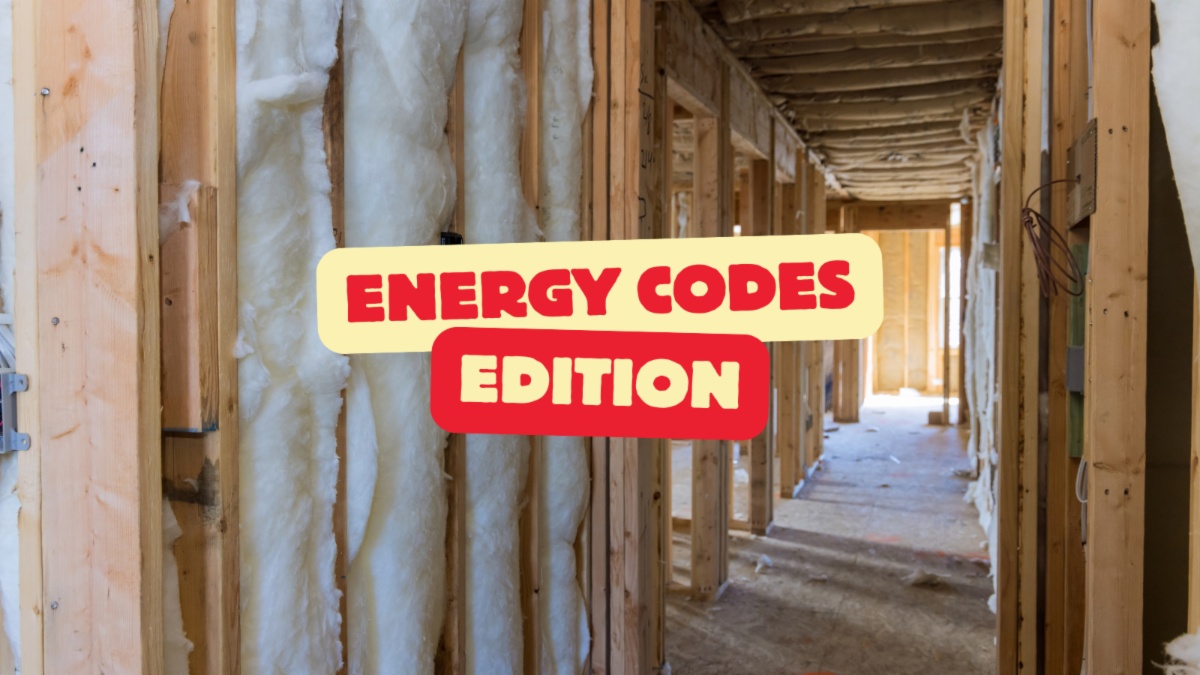
SPEER’s Energy Codes Program works with builders, contractors, inspectors, and more to advance code compliance across Texas and Oklahoma through both in-person and webinar-based education, training, resources, and outreach. This program aims to optimize energy efficiency, durability, and affordability for our region. Learn more here.
Are you caught up on our previous Codes related trainings and webinars? Dive into our archive on the SPEER YouTube Channel.
| | |
EIA Forecasts Rising Electricity Demand and Higher Energy Prices
The U.S. Energy Information Administration's October Short-Term Energy Outlook forecasts continued growth in electricity demand, particularly from commercial buildings, data centers, and industrial activity.
EIA projects average wholesale electricity prices of approximately $52 per megawatt-hour during 2026, an 11% increase compared with 2025.
A particularly hot summer contributed to a 4% increase in national electricity consumption during the third quarter of 2026. Residential consumption increased approximately 6%, while commercial consumption rose 5%.
Commercial electricity demand, including data centers, is projected to increase another 2.8% during 2027.
Read the October 2026 EIA Short-Term Energy Outlook.
| | |
NCTCOG Regional Integration of Sustainability Efforts (RISE) Quarterly Meeting
October 21 @ 9:30 am
Arlington, TX
The Regional Integration of Sustainability Efforts (RISE) Coalition, formerly the North Central Texas Stewardship Forum, works to engage interested local governments, higher education, and non-profits in peer-exchange opportunities to support sustainability and environmental initiatives.
The next quarterly meeting will be tomorrow in Arlington.
To find more information and RSVP, head here.
| | |
Call For Speakers!
SPEER is looking for others with a passion for our Energy Conservation Code and is open to hosting a webinar for you.
| | SPEER Resources & Webinar Archive | | | |
In Case You Missed It!
Did you miss our recent webinar, Beyond the Data Center: Building the Community around Data Centers?
Data centers are among the most efficient buildings ever constructed, yet they are frequently located in rural communities with limited resources for energy code enforcement, plan review, inspections, and workforce development. As these facilities attract rapid residential and commercial growth, hundreds of surrounding buildings—including homes, apartments, schools, hotels, restaurants, warehouses, and public facilities—may be constructed without the same focus on energy performance.
| | Check out all the resources we have on our website, including a link to our YouTube page with hours of video training content! | | |
The Attic Air Handler That Makes Its Own Rain
Source: Energy Vanguard | Allison Bailes | September 24, 2026
Texas homeowners are no strangers to hot attics and high humidity, but did you know that an air handler can actually create its own moisture problems?
In this article, building science expert Allison Bailes explains how condensation can form on the outside of attic-mounted air handlers when equipment surfaces fall below the surrounding air's dew point. Surprisingly, energy-efficient features such as radiant barriers can sometimes contribute to the problem by reducing the heat that would otherwise keep equipment surfaces warm.
For Texas builders, HVAC contractors, and energy code professionals, this highlights the importance of proper duct design, adequate airflow, humidity control, and thoughtful equipment placement. Poorly designed zoning systems, restrictive ductwork, and improperly managed attic conditions can lead to excessive condensation, water damage, and equipment shutdowns.
The takeaway: Energy efficiency improvements must work together as a complete system. Keeping an attic cooler is beneficial but controlling moisture and maintaining proper HVAC performance are equally important.
Read the full article on Energy Vanguard.
| | | | |