| |
STARR News & Updates
April 2026
| | |
Dr. Shishuka Malhotra Honored with the 2025 STARR Lew Yagodnik Award
The STARR Coalition has named Dr. Shishuka Malhotra as the recipient of its most prestigious individual honor — the 2025 Lew Yagodnik Award, affectionately known as "the Lewie." The award recognizes exceptional leadership, advocacy, and unwavering dedication to individuals living with mental illness.
One of The STARR Coalition's original founding members and an enduring advocate, Dr. Malhotra is the Founder and CEO of Neuro-Behavioral Clinical Research, a leading CNS research site. Over her 20-plus-year career, she has overseen more than 600 clinical trials and contributed to the development and approval of over 10 medications and therapies that have reshaped psychiatric care.
Dr. Malhotra's site was the first STARR Certified Site to hire an individual living with schizophrenia — a milestone that defined what authentic advocacy looks like in practice. She mentored that employee in both research operations and patient advocacy, ultimately supporting her in founding and leading a peer support group for others living with schizophrenia at the site. The ripple effects of that single act of inclusion continue to inspire the broader clinical research community.
Her commitment extends far beyond the clinic walls. Dr. Malhotra founded the Ohio Center for Hope, a nonprofit delivering free mental-health care to approximately 7,000 patients annually. Her team engages regularly in community outreach — health fairs, wellness education, and, this past Thanksgiving, distributing 50 complete turkey dinners to families in need.
A recognized voice on boards including NAMI, the Alzheimer's Association, and the CNS Summit, Dr. Malhotra also co-chaired the STARR Diversity Workgroup, championing equity in clinical trials.
The award was presented by Greg Hansch, then Executive Director of NAMI Texas and the 2024 Lew Yagodnik Award recipient — a meaningful passing of the torch between two champions of mental-health advocacy.
Upon accepting the award, Dr. Malhotra expressed heartfelt gratitude to The STARR Coalition, her team, and her colleagues, saying she could not have accomplished any of it without their support.❤
| | |
Honoring the Volunteers Who Power Mental Health Research
April is National Volunteer Month—a time to recognize the individuals whose generosity strengthens communities and advances causes that matter. In the world of mental health clinical research, volunteers play a particularly meaningful role. Every clinical trial depends on individuals who are willing to share their time, their experiences, and often their hope that better treatments can be developed for the future.
While scientific breakthroughs often receive headlines, the individuals who make those discoveries possible rarely do. Clinical research volunteers are the quiet partners behind every data point, every analysis, and every advancement in care. Their participation represents a powerful act of service—one that helps shape the future of mental health treatment for millions of patients and families.
For research sites, National Volunteer Month offers a meaningful opportunity to pause and recognize the people who make their work possible. Celebrating volunteers does not need to be elaborate or costly; small gestures of appreciation can reinforce the message that participants are valued partners in the research process.
Simple Ways Research Sites Can Celebrate Their Volunteers
-
Write personal thank-you notes. A short, handwritten message from investigators or study coordinators can mean a great deal to participants.
-
Create a “Research Heroes” recognition board. Display photos or messages (with consent) celebrating volunteers who contribute to advancing mental health research.
-
Provide volunteer appreciation certificates. A simple certificate acknowledging participation can help participants feel recognized for their contribution.
-
Host a small appreciation moment. Whether it’s coffee and conversation in the clinic or a short recognition during a study visit, taking a moment to say thank you matters.
-
Share stories of impact. Highlight how research participation contributes to future treatments and improved care. Understanding the broader impact of their contribution can be deeply meaningful to volunteers.
-
Recognize volunteers on social media. During National Volunteer Month, share messages that celebrate research participants and the role they play in advancing mental health innovation.
-
Invite participants to share why research matters to them. A simple message wall or feedback board can give volunteers the opportunity to reflect on their experience.
Mental health research moves forward because people are willing to step forward. Every study visit completed, every questionnaire answered, and every trial conducted represents a partnership between participants and the research teams who care for them.
This National Volunteer Month, let’s take the opportunity to recognize the individuals who make discovery possible. Their commitment fuels progress—and their contributions bring hope to the future of mental health care.
| | |
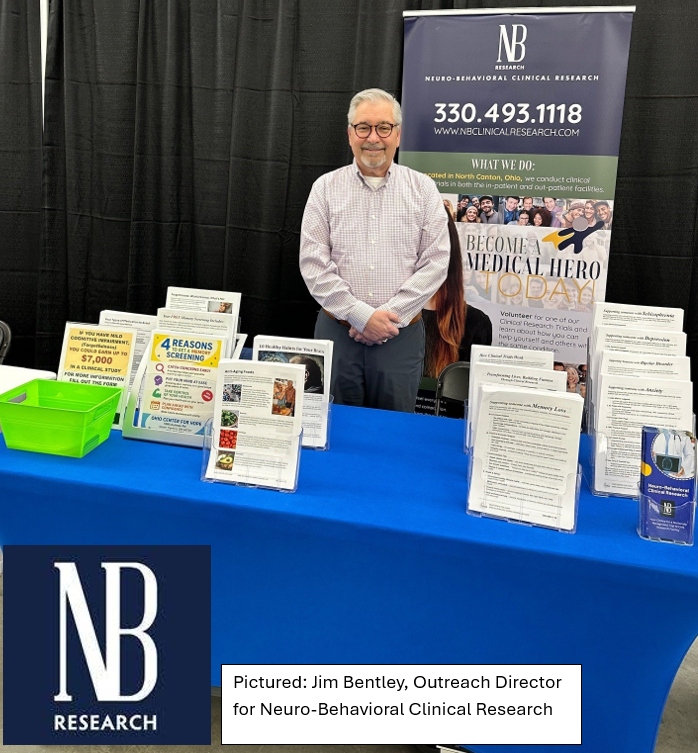
The team at Neuro-Behavioral Research (NBR) brought clinical research education to a brand-new audience at the Stark County Home Show, held at the Professional Football Hall of Fame in Canton, Ohio. The event featured a special Health and Wellness day — a first for the Home Show — giving NBR the opportunity to connect with community members who may not have been familiar with local research options. The team shared educational materials, answered questions about clinical research participation, and offered free mental health screenings. The response was enthusiastic, with many attendees surprised to learn that clinical research opportunities were available right in their own community. As one visitor put it, "I didn't know this was available here at home!" Events like these are a powerful reminder that meeting people where they are is one of the most effective ways to build awareness, reduce stigma, and expand access to care.❤
| |
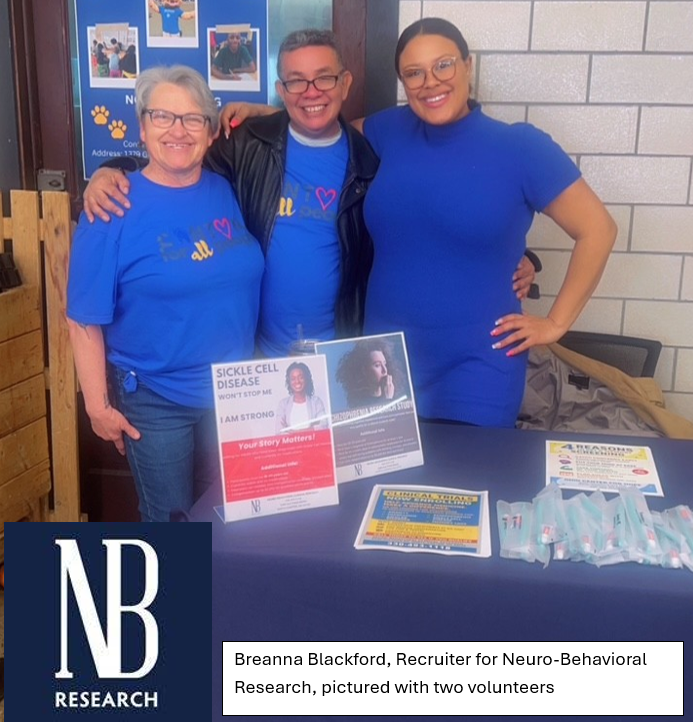
Meanwhile, NBR continued its regular community presence at the Shorb Market in Canton, Ohio, where team member Breanna Blackford connected with neighbors alongside two NBR patient volunteers. The Shorb Market — named intentionally to reduce the stigma often associated with food pantries — has become a twice-monthly touchpoint for NBR's mental health outreach team. During the event, Bre shared information about mental health resources, free screenings, and clinical research opportunities available in the community. With strong support from market organizers and growing familiarity among attendees, the Shorb Market has proven to be exactly the kind of trusted, welcoming environment where meaningful conversations about mental health and research can happen naturally.
|
| | |
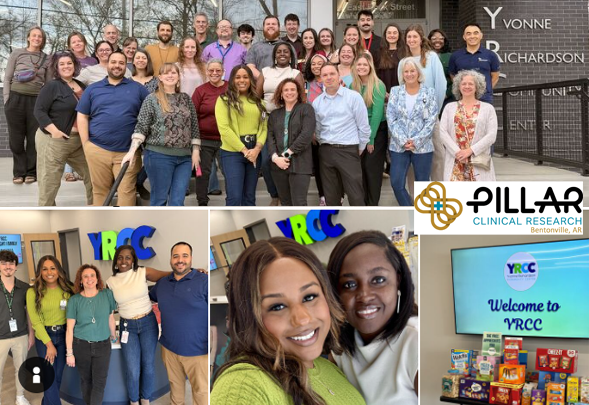
Pillar Clinical Research in Bentonville participated in the Mental Health Professionals Luncheon hosted at the Yvonne Richardson Community Center in Fayetteville, Arkansas. The event brought together mental health professionals from across Northwest Arkansas to connect, collaborate, and strengthen local partnerships. Opportunities like this help foster relationships within the community while also helping socialize clinical research as a care option. By engaging with fellow mental health providers, Pillar's rockstar outreach leader, CiCi Sanchez continues to promote awareness of research as an important pathway to advancing treatment and expanding options for patients and families.
| |
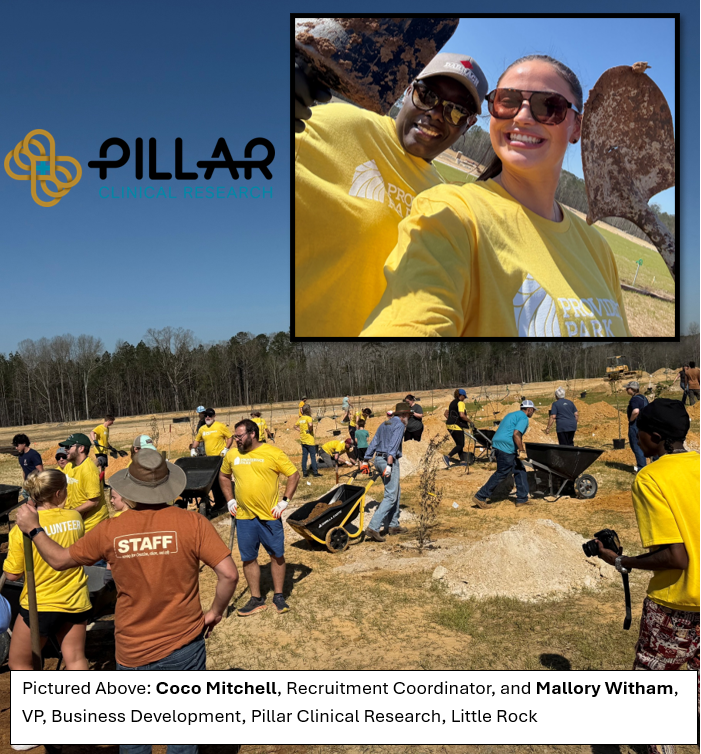
The team at Pillar Clinical Research in Little Rock showed up in a big way in March, volunteering at Providence Park, a new community designed to serve individuals facing chronic homelessness. Pillar volunteers helped build a food forest, planting over 50 trees in an orchard, learning about soil health, and supporting the community garden network that will serve future residents.
Providence Park will offer not just housing, but on-site mental health and dental resources for those it serves. "This community will have homes, mental health and dental resources, and I truly believe this is an opportunity for us to step up to support a much-needed resource," said Mallory Witham of the event. It's a powerful example of clinical research sites embedding themselves in the communities they serve — showing up not just as researchers, but as neighbors.
| | | |
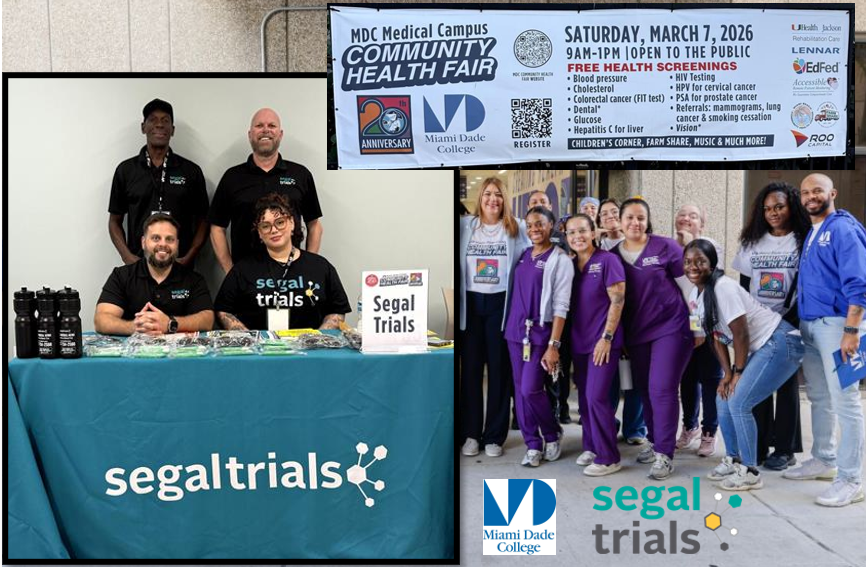
Segal Trials Outreach Team recently participated in a community Health Fair at Miami Dade College, where government agencies and private organizations came together to support and engage the local community. Throughout the event, health screenings were conducted, and a food pantry provided free groceries to attendees, creating a meaningful and supportive environment for all who participated.
The Segal Trials' team connected with individuals one-on-one to help raise awareness about clinical research, explaining its role in advancing medical knowledge and future care options. They also addressed questions, clarified common misconceptions, and emphasized that participation is always voluntary and conducted under strict medical supervision. Events like this build trust within the community while ensuring more people are informed about clinical research opportunities available to them.
| |
Segal Trials made a strong showing at the 2026 Schizophrenia International Research Society (SIRS) Congress in Florence, Italy. Chief Scientific Officer and Medical Director Dr. Rishi Kakar presented on schizophrenia neurobiology as part of a panel discussion, contributing to the global scientific dialogue advancing the field. Business Development Manager Mellissa Wilmot joined Dr. Kakar in representing Segal Trials, connecting with sponsors, CROs, and research partners from around the world. From forging new partnerships to engaging in the latest science, Segal Trials' presence at SIRS underscores their commitment to advancing schizophrenia research and strengthening the collaborative relationships that drive clinical innovation forward.
|
| | |
Be A Part of Forming the First-Ever National Mental Illness Justice Center
Join The STARR Coalition in DC on April 23 to help build the foundation of the National Mental Illness Justice Center at a gathering co-hosted by the Schizophrenia & Psychosis Action Alliance and the Treatment Advocacy Center.
Participate in a structured working session designed to define the guiding principles for the Justice Center and produce a blueprint of potential elements, including legal toolkits, model policy standards, court and law enforcement education resources, connections to legal aid and pro bono counsel, referral pathways to treatment clinics and diversion programs, and clear guidance for families seeking informed support before situations escalate.
The one-day session will take place on April 23 from 8am to 6pm in Washington, DC.
Registration is $199.
Register now to secure your spot: https://donorbox.org/events/903272/steps/choose_tickets
| |
We Need Your Help.
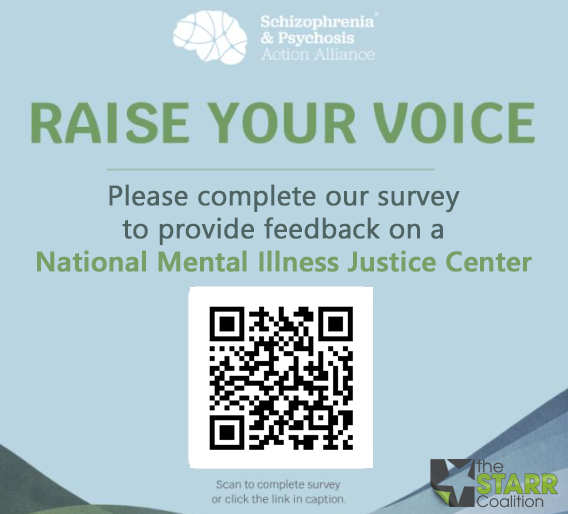
Please help us define priorities and a path forward by taking a few minutes to complete a survey
and provide input on the National Mental Illness Justice Center.
We're shaping what this Center will focus on and how it will operate, and we need input from a wide range of voices — advocates, clinical research professionals, families, people with lived experience, and others working at the intersection of mental health and justice.
| | |
LB Pharmaceuticals has initiated Phase 3 NOVA-2, a multicenter, randomized, double-blind, placebo-controlled trial of LB-102 in acute schizophrenia (~460 patients; topline data expected second half of 2027). LB-102 is a novel oral antipsychotic — potentially the first benzamide approved in the U.S. Phase 2 (NOVA-1) demonstrated statistically significant PANSS improvement at all doses, with notably low rates of movement-related side effects. Secondary endpoints include negative symptom and cognitive performance measures.
Otsuka is acquiring Transcend Therapeutics to advance TSND-201 (methylone) into Phase 3 for PTSD. A structural analog of MDMA, TSND-201 enhances neuroplasticity through monoamine transporter activity but has no activity at the 5-HT2A receptor, meaning no hallucinogenic effects, a distinction that could simplify clinical administration and avoid the blinding challenges that contributed to the FDA's rejection of Lykos' MDMA-assisted therapy. TSND-201 received FDA Breakthrough Therapy designation in July 2025, and Phase 3 recruitment is underway.
Newleos Therapeutics has dosed its first participant in a U.K. Phase 1b trial of NTX-1955 for generalized anxiety disorder. A potential first-in-class GABAA-γ1 modulator, NTX-1955 is designed to target anxiety-driving neural circuits more precisely than SSRIs or benzodiazepines. Data from three ongoing Phase 1b studies will guide Phase 2 design.
GH Research's inhaled mebufotenin shows rapid, significant results in treatment-resistant depression. A randomized Phase 2b trial found that a single-day treatment with inhaled mebufotenin (GH001) produced significant reductions in depression symptoms in patients with treatment-resistant depression. By day 8, 57.5% of patients receiving GH001 achieved remission compared to 0% with placebo, with a large effect size of 2.0. All adverse events were mild or moderate, and psychoactive effects lasted only 9 to 14 minutes. Over a six-month open-label extension, 87% of initial remitters maintained remission with infrequent retreatment.
Newron's Evenamide treatment for schizophrenia continues to build momentum. At SIRS 2026, new preclinical data offered a potential explanation for the drug's unusually sustained clinical benefits: evenamide normalized dopaminergic firing in an animal model of schizophrenia, with effects that persisted - and even increased - hours after administration despite the drug's short half-life. This suggests evenamide may drive circuit-level neuroplasticity, a pattern rarely seen with current antipsychotics. Two Phase III trials (ENIGMA-TRS 1 and 2) are now actively enrolling, bringing new opportunities for research sites working with treatment-resistant patients.
Bristol Myers Squibb presented Phase 4 data at the 2026 SIRS Congress showing that adults with schizophrenia remained stable when transitioning from an oral atypical antipsychotic to Cobenfy, the first novel mechanism for schizophrenia in decades. Approximately 86% of patients completed eight weeks of treatment, with no discontinuations due to lack of efficacy. For clinical research sites, these findings are significant: as Cobenfy adoption grows, real-world switching data helps inform study design, participant safety planning, and conversations with prospective volunteers.
Gilgamesh Pharma (a spinout following AbbVie's 2025 acquisition of bretisilocin) closed an oversubscribed $60M Series A to advance its neuropsychiatric pipeline. Key programs include blixeprodil (GM-1020), an oral NMDA receptor antagonist with positive Phase 2 results in MDD advancing to late-stage trials in 2026, and GM-3009, a cardio-safe ibogaine analog entering Phase 1 for opioid use disorder. The company also maintains an active neuroplastogen collaboration with AbbVie.
Spinogenix presented interim Phase 2 data for tazbentetol, a first-in-class oral synaptic regenerative therapy with the potential to treat all three symptom domains of schizophrenia, at the SIRS 2026 Annual Congress. In a randomized, double-blind, placebo-controlled trial, tazbentetol (300mg daily, six weeks) showed a −5.6 point PANSS total score advantage over placebo at Day 71, with improvements across positive and negative symptom subscales. EEG biomarkers showed significant normalization of gamma and alpha band activity, indicating the possibility for synaptic regeneration. Full enrollment is 32 participants (met).
Alzamend Neuro's novel lithium delivery system enters Phase 2 for Bipolar Disorder. Alzamend has initiated a Phase 2 clinical trial of AL001, a novel lithium-delivery system, in patients with bipolar disorder type 1 in collaboration with Massachusetts General Hospital. AL001 is designed to enhance lithium delivery to targeted brain regions while reducing systemic exposure — potentially addressing the toxicity and monitoring challenges that have long limited lithium's clinical utility. The crossover study will compare AL001 head-to-head with lithium carbonate using advanced neuroimaging. Topline data are expected in Q3 2026.
Northwestern University researchers identified a freely circulating brain protein, Cacna2d1, as a novel schizophrenia biomarker in CSF samples from 100+ patients. Reduced levels correlate with overactive brain circuits underlying cognitive symptoms. A synthetic peptide (SEAD1) corrected abnormal circuit activity and behavioral deficits in genetic mouse models without observable side effects. The dual biomarker-therapeutic approach could enable precision patient selection for future trials — improving success rates by targeting those most likely to respond.
MapLight's ML-007C-MA is a novel M1/M4 muscarinic agonist being developed as a potential new treatment for schizophrenia with a mechanism entirely distinct from current antipsychotics. The Phase 2 ZEPHYR trial is enrolling approximately 300 patients across the U.S.*, with topline results expected in the third quarter of 2026*. The drug is designed to activate key brain receptors linked to psychosis, negative symptoms, and cognition while minimizing side effects — representing a promising new direction for schizophrenia research.
Starting clozapine during a first psychotic episode in adolescents and young adults with early-onset schizophrenia leads to faster, more sustained symptom improvement — likely due to preserved neuroplasticity. Both first-episode and multi-episode patients achieved comparable remission at 24 months, but earlier initiation was linked to zero treatment discontinuation and sharply reduced rehospitalization and suicide attempts. The findings challenge conventional stepwise treatment approaches in adolescent psychiatry.
The Stanley Family Foundation has renewed its commitment to the Broad Institute's Stanley Center for Psychiatric Research with a new $280 million gift, bringing its total investment to more than $1 billion. The funding targets two conditions with significant unmet clinical need: schizophrenia and bipolar disorder. Broad researchers are now leveraging advanced genomic, stem cell, and neurobiological tools to develop disease models, identify biomarkers, and collaborate with industry partners.
Bristol Myers Squibb and the National Council for Mental Wellbeing have launched a collaboration to address critical gaps in schizophrenia care. Their first initiative is a white paper highlighting the value of peer support workers in improving engagement, retention, and outcomes, particularly within Certified Community Behavioral Health Clinics (CCBHCs). Two pilot programs are also underway: one expanding peer support services and another exploring predictive analytics to enhance continuity of care.
Neurocrine Biosciences presented the first expert consensus recommendations for screening, diagnosing, and treating tardive dyskinesia (TD) among older adults in long-term care settings at the PALTmed PALTC26 Annual Conference. Developed through a multidisciplinary Delphi panel, the recommendations address persistent gaps in recognizing TD in this higher-risk population, including use of the AIMS for routine screening and evidence-based use of VMAT2 inhibitors. A supporting post-hoc analysis from the KINECT-PRO study showed that once-daily INGREZZA (valbenazine) produced clinically meaningful, patient-reported improvements in TD symptoms and quality of life in adults 65 and older.
A newly published study in Molecular Psychiatry found that major depressive disorder shares key immune signatures with inflammatory skin conditions like atopic dermatitis, particularly elevated Th2 pathway activation. Researchers at Mount Sinai demonstrated in animal models that blocking the IL-4 receptor — the same target as the approved drug dupilumab (Dupixent) — prevented stress-related depressive behaviors. While clinical trials in depression patients are still needed, the findings open an intriguing new avenue for anti-inflammatory approaches to treating MDD.
Researchers at Yokohama City University have published direct evidence of how ketamine exerts its antidepressant effects, using a novel PET imaging tracer to observe AMPA receptors in the living human brain. In a clinical trial of 34 patients with treatment-resistant depression, ketamine treatment produced region-specific changes in AMPA receptor density that strongly correlated with symptom improvement. The findings not only help explain ketamine's mechanism of action but suggest AMPA receptors may serve as biomarkers for treatment response — insights that could guide development of next-generation rapid-acting antidepressants.
A new infographic on The Cost of Untreated Mental Health Care from Cover My Mental Health highlights the real-world, quantifiable impact of barriers that delay or deny treatment, from limited provider networks to claim denials, and the downstream consequences for individuals, families, and the healthcare system. As advocates for positioning clinical research as a trusted care option, understanding these access barriers is critical to our work.
| | |
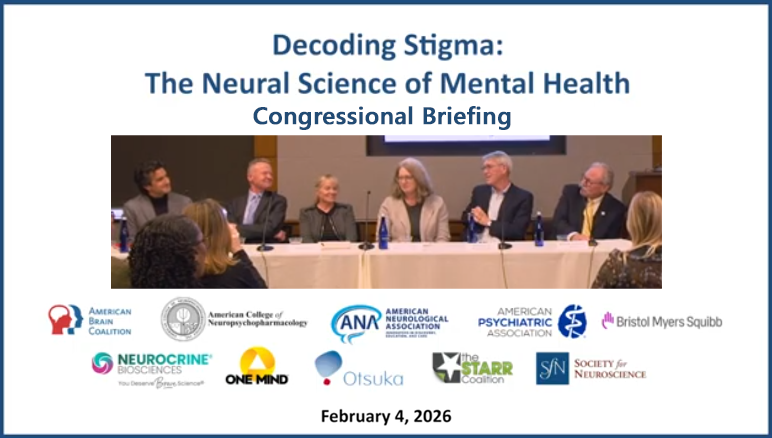
The Recording from the Congressional Briefing on Decoding Mental Health Stigma Panel Now Available!
On February 4, 2026, The STARR Coalition joined national leaders in Washington, D.C., for Decoding Stigma: The Neural Science of Mental Health, a congressional briefing hosted by the Congressional Neuroscience Caucus in cooperation with the American Brain Coalition.
The panel, moderated by Dr. Mark Rasenick, featured Dr. Andrea Beckel-Mitchener (NIMH/NIH BRAIN Initiative), Dr. Mark Rapaport (American Psychological Association), Erica Moore (The STARR Coalition), Jeff Winton (Rural Minds), and advocate Andy Dunn. Congressman Mike Thompson (D-CA) and Congresswoman Jan Schakowsky (D-IL) were in attendance.
Click HERE to check out the video from the briefing! ❤
| | |
Bristol Myers Squibb is currently enrolling a clinical study evaluating KarXT for the treatment of delusions and hallucinations in people with Alzheimer's disease. For sites active in CNS research, this study represents an opportunity to expand into an area of significant unmet need — psychosis associated with Alzheimer's — using a novel muscarinic mechanism already making an impact in schizophrenia.
Sites interested in learning more or connecting potential participants can direct them to www.NavigatingALZ.com where pre-screening takes just a few minutes.
| | |
STARR Research Ambassador Program
Research Ambassadors are individuals living with a mental illness who have participated in clinical research and are willing to talk about their personal journey, share their clinical research experience, talk about how their participation in a research trial has impacted their lives... and encourage others to join in help shaping the future of cutting-edge treatments.
| | |
The STARR Coalition Research Ambassador Program was originally established to collect testimonials from volunteers in support of mental health research, but it quickly grew into something much bigger.
Volunteers that become Research Ambassadors are engaged on a different level: they identify as a partner in research.
There are lots of ways to participate as a Research Ambassador. It's a fantastic opportunity for volunteers to get involved and contribute to various projects, as well as assist others in their journey! Volunteers' support for others also has a positive impact on their own growth and well-being! ❤
| | |
The Anxiety & Depression Association of America is holding their annual conference April 9-11, 2026 in Chicago, IL. This year's theme is "Innovations in Technology Driving Clinical Care and Research in Mood and Anxiety Disorders" and will bring together leading researchers and clinicians in the search for new treatments to improve the lives of those who are diagnosed with anxiety, depression, OCD, PTSD, bipolar disorder, and co-occurring disorders.
| |
The ASCP Annual Meeting, held May 26–29 in Miami, brings together over 1200 academic and industry investigators, research pharmacists, clinicians and representatives from regulatory agencies to discuss newer treatments and facilitate collaborations. This year’s theme, “Psychiatry and AI: Promises, Perils, and Pathways Forward,” will explore how artificial intelligence is shaping psychiatric research, treatment development, and the future of mental health care.
| |
NAMICon 2026, held May 27–30 in Atlanta, features the theme, "Advancing Connection, Community, and Caring." The annual convention brings together advocates, people with lived experience, clinicians, and community leaders to share personal stories, explore new ideas, and strengthen national efforts in mental health awareness, education, and advocacy.
| |
The CURESZ Foundation Tenth Anniversary Summit will be held July 10-11, 2026 at the Graduate Hotel in Cincinnati. Themed "Bridging the Gap Between Advances in Knowledge and Clinical Practice," the event will spotlight cutting-edge and underutilized schizophrenia treatments and introduce the Schizophrenia Colloquium, a major new scientific initiative. Attendees will have the opportunity to connect with leading researchers, clinicians, and individuals living with schizophrenia. Featured speakers include CURESZ founders Bethany Yeiser and Dr. Henry Nasrallah, keynote speaker Dr. Rajiv Tandon, and Dr. Jonathan Meyer. For more information and to register, visit the CureSZ website HERE.
| |
APA 2026, taking place August 6-8 in DC, brings together psychologists, researchers, clinicians, educators, and advocates to share the latest advances in psychological science and clinical practice. Each year, the convention highlights emerging research, innovative treatment approaches, and opportunities to strengthen collaboration across the mental-health community. Registration opens April 22.
| |
Psych Congress will hold their 39th Annual Meeting from September 15-19, 2026 in New Orleans, LA. The nation's leading conference on practical psychopharmacology and a community of passionate mental health clinicians, this is one of our favorite meetings of the year!
| |
Mental Health America will hold their conference from October 8-9, 2026. The 2026 Mental Health America Conference will focus on the theme More Good Days, Together. Through this theme, the conference will explore how to make more good days possible for all by connecting people to the right support at the right time and recognizing that “good” is defined by unique mental health experiences and goals. Show your support for mental health and connect with thought leaders, innovators, and decision-makers.
| |
The National Federation of Families 36th Annual Conference will be held October 13–15, 2026, in Orlando. The event will bring together hundreds of researchers, administrators, policymakers, clinicians, youth, family leaders, and other stakeholders working to strengthen supports for children and families affected by mental health challenges.
| |
Site Solutions Summit will be held from October 15-18, 2026 in Orlando, FL. The Summit provides a unique hub where sites, sponsors, CRO executives, and regulators come together to discuss best practices and ideas while developing strategic partnerships through ideation sessions, workshops, and focus groups. Whether your priority is networking with sponsors and CROs or learning best practices built for research sites, the Summit provides a valuable experience.
| |
The American Neurological Association (ANA) will hold their 151st Annual Meeting ANA2026 from October 17-20, 2026 in San Diego, CA. The Annual Meeting has been designed to foster discussions among investigators in academia, industry, and foundations toward the common goal of furthering translational science..
| |
The CNS SUMMIT 2026 will be held November 1-4, 2026 in Boston at Encore Boston Harbor. The Summit brings together decision makers 1from pharma, biotech, CROs, investigator sites, technology, investors and other stakeholders.
| |
Neuroscience 2026 will be held November 14-18, 2026 in Washington DC. Each year, scientists from around the world congregate to discover new ideas, share their research, and experience the best the field has to offer. Attend so you can: present research, network with scientists, attend session and events, and browse the exhibit hall at the premier global neuroscience event.
| | |
Next Month Is Mental Health Awareness Month... It's Time to Make Your Plans!
May is packed with opportunities to raise awareness, take action, and show your commitment to mental health. Whether you're a site, advocate, or community partner, now is the time to start planning.
The month kicks off strong with Children's Mental Health Awareness Week (May 3–9) and Tardive Dyskinesia Awareness Week (May 3–9) running simultaneously — a powerful reminder that mental health touches people of all ages and that conditions like TD deserve greater visibility and routine screening.
May 14 is Mental Health Action Day, a chance to move beyond awareness and into doing. Consider hosting a community event, joining a local NAMI Walk, or organizing an educational session at your site or organization. There's still time to sign up and rally your team.
On May 20, Clinical Trials Day highlights the role research plays in advancing treatment — and a perfect moment to position clinical research as a trusted care option.
World Schizophrenia Day on May 24th offers an opportunity to show your support for the patients and families living with schizophrenia by sharing resources, starting conversations, and reinforcing that recovery is possible and help is available.
Start planning now. The impact you make in May starts with the steps you take in April.
| |
Tardive Dyskinesia Awareness Week: May 3–9
Each year, Tardive Dyskinesia (TD) Awareness Week shines a light on this often-overlooked movement disorder and the people it impacts. TD affects an estimated 800,000 adults in the U.S., yet approximately 60% remain undiagnosed. For individuals already navigating a serious mental health condition, the uncontrollable movements of TD can add another layer of stigma, self-consciousness, and isolation.
To support your awareness efforts, Teva Pharmaceuticals has developed a digital toolkit featuring infographics, videos, social media assets, and educational resources — including content from the IMPACT-TD Registry and a powerful caregiver perspective. The toolkit is designed for use during TD Awareness Week and throughout 2026, and additional assets may be added in the lead-up to May.
Access the toolkit here (Password: 5fFXv5Xp04qb).
To learn more about TD, visit www.soundsliketd.com.
| | |
The STARR Stop the Stigma Champion: Celebrating Young Leaders in Mental Health
Every year, The STARR Coalition's Stop the Stigma Champion award recognizes a high school student who has made an outstanding contribution to destigmatizing mental health and fostering a supportive environment within their school community. Past champions have shown remarkable courage — sharing personal stories, raising funds for mental health organizations, and inspiring their peers to have open, honest conversations about mental wellness.
This year, we're thrilled to announce our 2026 Stop the Stigma Champion on Mental Health Action Day, May 14 — a fitting moment to celebrate a young person turning awareness into action. Stay tuned for the big reveal in next month's newsletter!
Know a student making a difference? Nominations for future champions are always welcome. Visit thestarr.org/stopthestigma to learn more.
| | | |
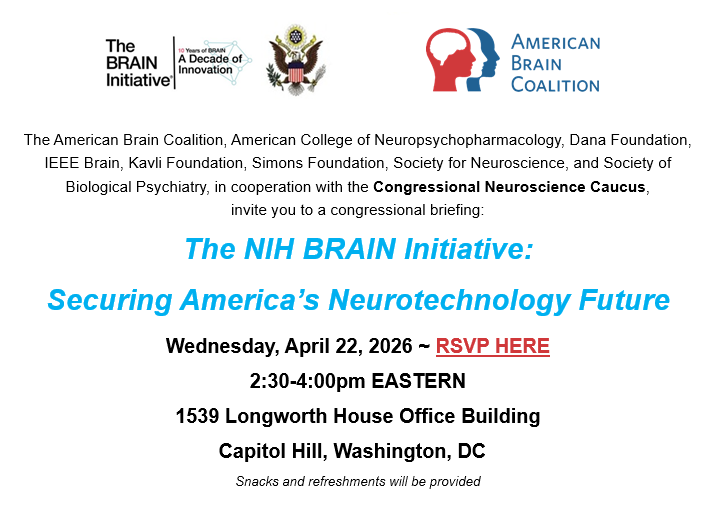
Since its launch, the BRAIN Initiative® has accelerated the development of transformative tools to map, monitor, and modulate brain activity. These advances are not only expanding scientific knowledge, but they are also powering a new generation of American neurotechnology companies.
This briefing will examine how federal investment through the BRAIN Initiative is translating into startup formation, commercialization of novel technologies, and strengthened U.S. competitiveness in the global biomedical landscape. Experts will outline how sustained support for brain research ensures that scientific breakthroughs, economic growth, and patient benefits remain rooted in the United States.
| | |
Thank you for reading!
If you have questions, comments, or would like to submit an item to be included in an upcoming newsletter, please email erica@thestarr.org.
| | |
The STARR Coalition | www.thestarr.org
LEAD WITH HEART.
| |
| How did you like this email? | | | | | | |