| |
STARR News & Updates
December 2025
| | |
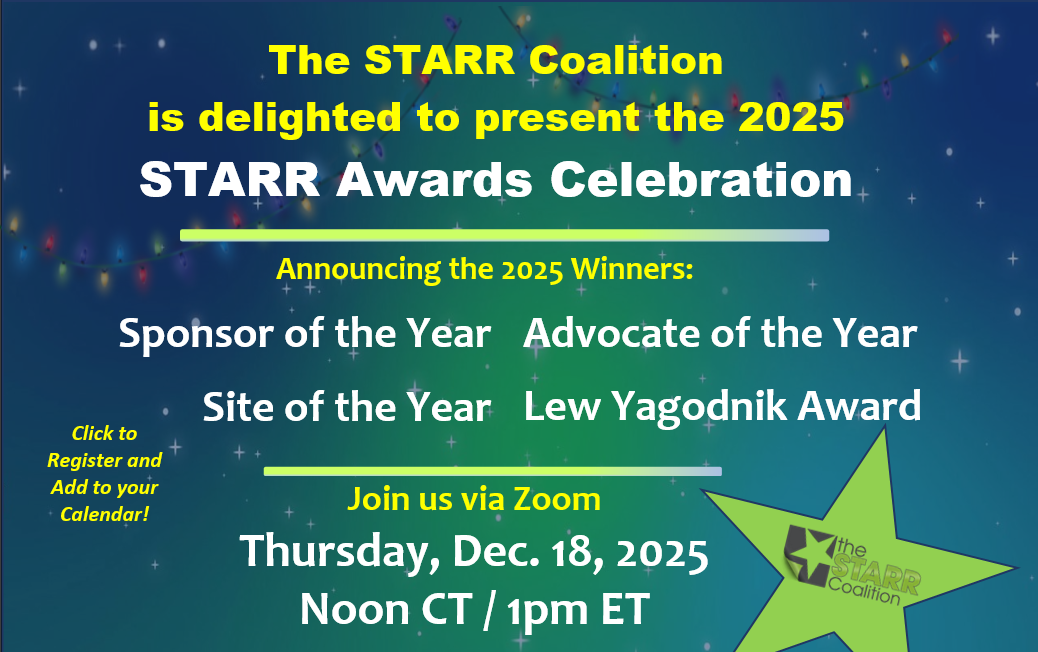
We invite everyone to join the STARR Annual Awards Celebration on Thursday, December 18th!
This year's zoom event will be hosted by the ever-festive Adam Simmons and will be a great way to celebrate 2025 and the holidays with friends and colleagues from the STARR community!
Please register in advance and join us on
Thursday, December 18th at 1pm ET via zoom.
Register in advance and add to your calendar HERE.
| | |
At The STARR Coalition, we believe that trust is built where research meets community. The STARR Site Certification program was designed around this principle -- recognizing that clinical research thrives not just on scientific excellence, but on compassion, transparency, and connection.
Certified sites across the country are proving that community engagement creates lasting impact well beyond the clinic walls. This holiday season, many STARR Certified Sites are finding meaningful ways to give back -- organizing coat and food drives, partnering with local nonprofits to support individuals experiencing homelessness, and creating safe spaces where people can connect, share, and feel seen.
These acts of kindness do more than spread holiday cheer -- they strengthen relationships between sites, participants, and the communities they serve. When people see research sites giving back, they begin to see the research sites as trusted neighbors committed to improving mental health for all.
Through community engagement, we create ripple effects of goodwill that foster understanding, break down stigma, and build the foundation for a more compassionate research ecosystem. That’s the power of connection -- and it’s what makes STARR Certified Sites shine all year long.
| | |
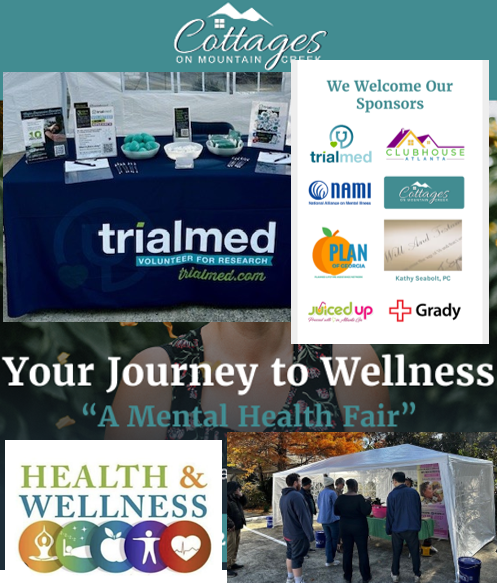
Trialmed Atlanta participated in a mental health fair at The Cottages on Mountain Creek, a supportive residential community designed for individuals living with mental illness. The event brought together residents, families, and care providers for a day of connection, learning, and wellness-focused activities.
Trialmed team members spent the day meeting residents, answering questions, and sharing information about mental health research and the role clinical trials can play in expanding future treatment options. These conversations help build understanding and reduce stigma—demonstrating how research and care communities can work together to support recovery, empowerment, and hope.
| | | |
CenExel Florida is spreading kindness this season with a Holiday Food Drive to support families in the local community. The site is collecting non-perishable food items throughout the month, inviting staff, volunteers, and visitors to contribute to a beautifully decorated donation tree that serves as the centerpiece for the effort.
The CenExel Hollywood team is energized by the generosity already emerging and looks forward to delivering a meaningful donation that will bring warmth and support to neighbors in need. This initiative is another example of CenExel’s dedication to giving back and strengthening the communities they proudly serve—both inside and beyond the clinic walls.
| | | |
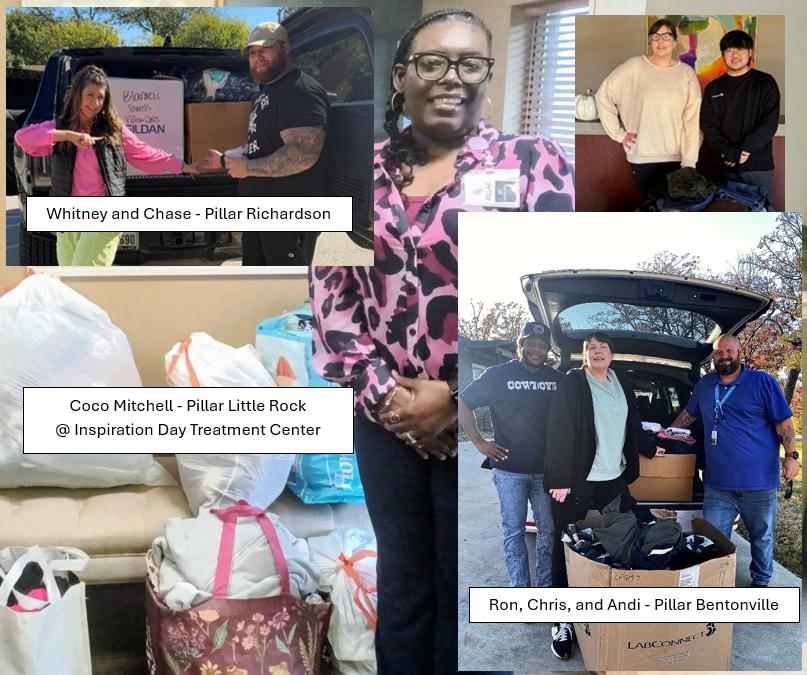
Pillar Clinical Research continued its commitment to community care this season, completing its third annual series of clothing drives across the Bentonville, Chicago, Little Rock, and Richardson sites. Together, the teams collected more than 1,400 essential items—the largest donation total since the initiative began.
Contributions included fleece blankets, warm outerwear, hats and gloves, socks, sweaters, robes, jeans, men’s clothing, dresses, and other winter essentials. These items were distributed to local nonprofit partners making a direct impact in their communities: New Beginnings of Northwest Arkansas (Bentonville), La Salle Church (Chicago), Inspirations Day Treatment (Little Rock), and the Austin Street Shelter (Richardson).
Each year, Pillar’s clothing drives reflect the organization’s deep commitment to compassion and connection—ensuring that individuals and families facing hardship receive warmth, comfort, and support when it’s needed most. This year’s record collection highlights the generosity of Pillar’s staff and their dedication to uplifting the communities they proudly serve.
| |
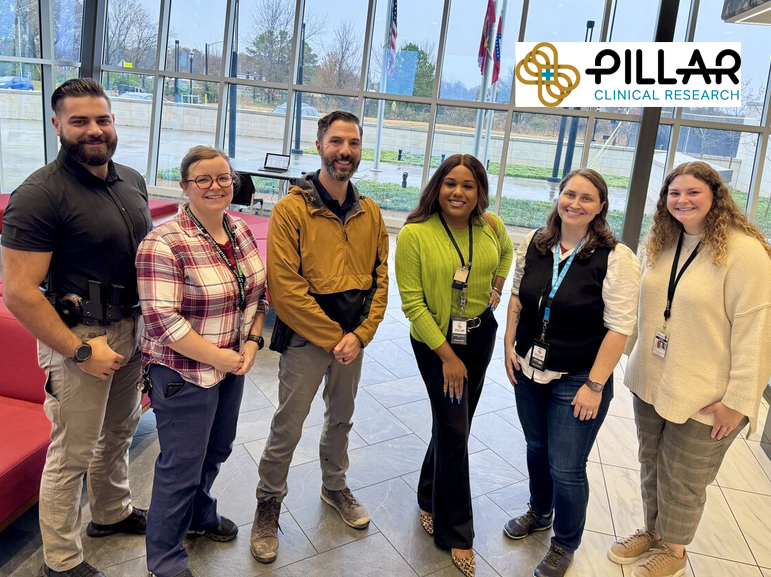
Pillar Bentonville hosted a Lunch & Learn with the City of Fayetteville, Arkansas Police Department’s Crisis Intervention Response Team (CIRT), a group doing remarkable work to support individuals experiencing mental health challenges in the community. Whitley Cates and the Pillar team appreciated the opportunity to share how clinical research can serve as an additional resource for care and support across Northwest Arkansas.
The Pillar team looks forward to continued collaboration with the CIRT team and to serving as a trusted partner for mental health research, education, and community support. The team extends its gratitude to Fayetteville’s CIRT for the critical work they do and for the meaningful time spent together. 💙
| | | |
Neuro-Behavioral Research and the Ohio Center for Hope team spent quality time at the Shorb Market, connecting with community members and sharing resources to support mental wellness. In addition to offering healthy snacks, meaningful conversations, and information about ongoing research efforts, the team also distributed 50 complete turkey dinners—each including sides and dessert—bringing comfort and care to families ahead of the holiday season. Half of the dinners were shared onsite at Neuro-Behavioral, with the other half delivered through the Shorb Market pantry.
The Shorb Market and Connection Center is a true community gem, providing fresh, healthy foods at no cost four days a week, along with a community classroom, local resources, and a welcoming space where neighbors can learn, connect, and grow. The Neuro-Behavioral team was grateful for the opportunity to support this vital community hub and to continue building relationships that strengthen mental health and wellbeing across the region. ❤
| | | |
CenExel Georgia is kicking off the holiday season with a community essentials drive supporting Bridge of Light, an Atlanta nonprofit serving individuals who are unhoused or living in poverty. The site is collecting urgently needed items including new socks and underwear, hoodies, blankets, toiletries, and hygiene supplies. By partnering with Bridge of Light, CenExel Decatur is helping provide warmth, dignity, and care to neighbors in need during the winter season.
This initiative reflects CenExel’s ongoing commitment to serving the broader community—and to strengthening the connection between clinical research and the people and neighborhoods it supports all year long.
| |
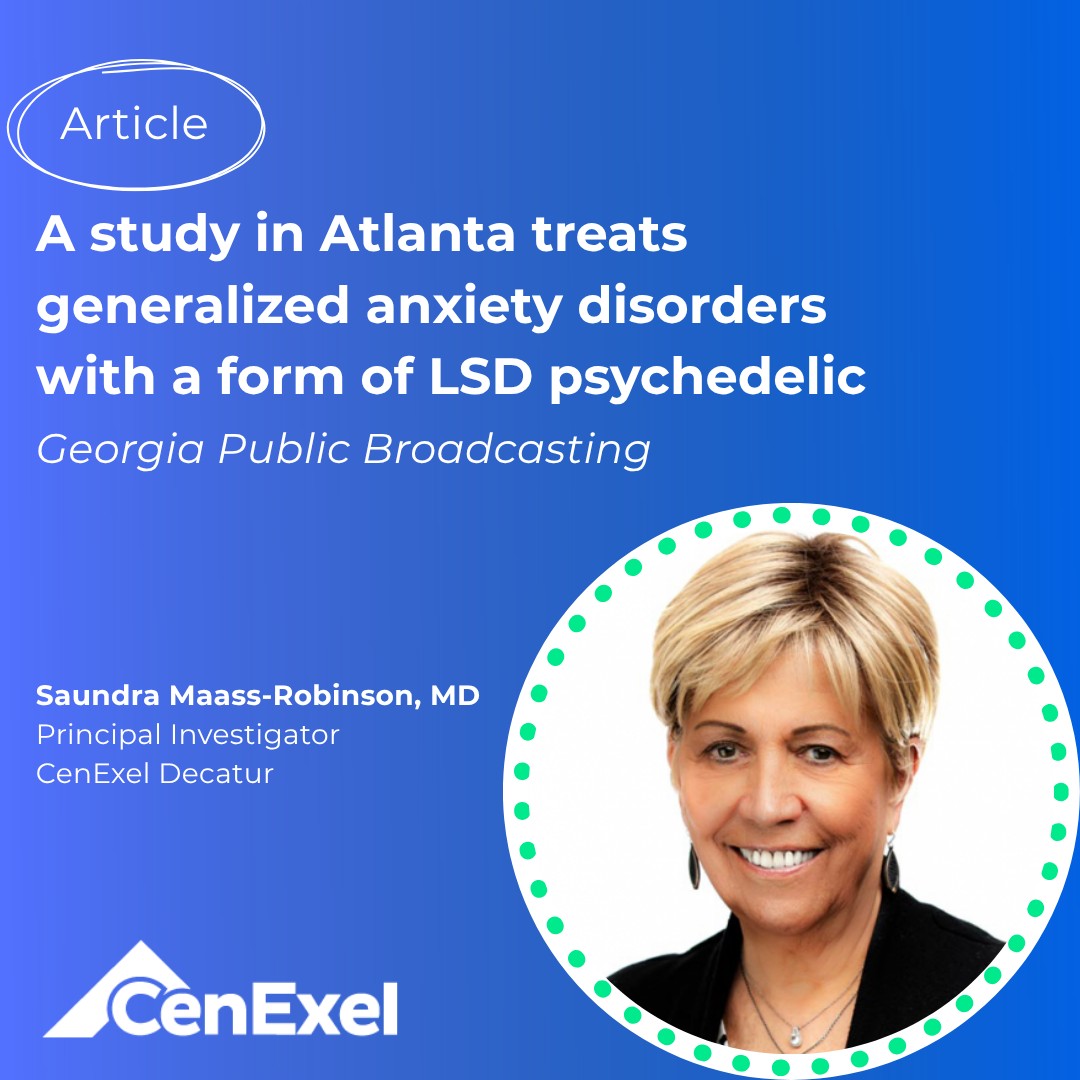
CenExel Georgia's Saundra Maass-Robinson, MD, was featured by Georgia Public Broadcasting in a story highlighting their MM120 study—coverage that plays an important role in breaking stigma and increasing public understanding of mental health clinical research. By helping communities see the care, safety, and intention behind this work, media stories like this build trust, encourage participation, and strengthen the connection between research and the people it serves.
| | | |
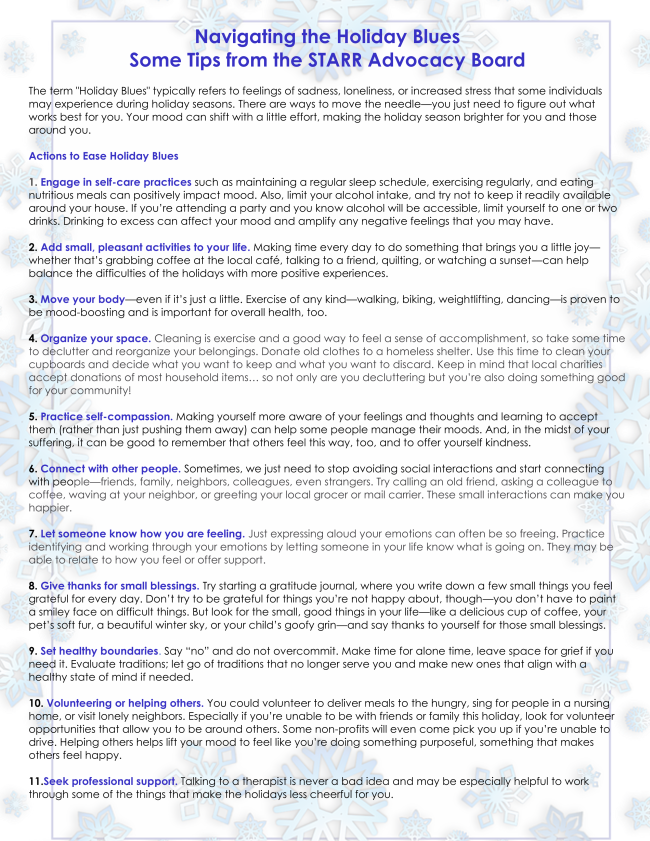
Navigating the Holiday Blues
The holidays are often portrayed as a joyful season, but for many, this time of year can bring stress, loneliness, or emotional overwhelm. If you’re feeling the “holiday blues,” you are not alone — and small, intentional steps can make the season feel more manageable and meaningful.
Shorter days, financial pressures, grief, and social expectations can all contribute to a dip in mood. This year, many people are also reporting social media fatigue, finding that constant comparison and curated perfection heighten holiday stress.
| |
Here are a few simple ways to support your well-being this season:
- Prioritize the basics — rest, nourishing meals, and a little movement each day.
- Set realistic expectations and healthy boundaries.
- Create small daily rituals that bring joy and calm.
- Reach out to supportive people — even a quick text or call can make a difference.
- Limit social media if it leaves you feeling drained, and focus on real, grounding moments instead.
- Look for purpose through kindness or giving back — even small acts of service can lift your spirits.
Most importantly, remember this: your feelings are valid, and it’s okay to ask for support.
👉 Read the full article for more strategies and resources.
| | |
The FDA approved CAPLYTA® (lumateperone) as an adjunctive therapy with antidepressants for the treatment of major depressive disorder (MDD) in adults. The approval – the first under J&J leadership following its acquisition of Intra-Cellular Therapies, Inc. – marks the fourth indication for CAPLYTA®, the first and only FDA-approved treatment for bipolar I and II depression in adults, as an adjunctive and monotherapy; also approved for the treatment of schizophrenia in adults.
Compass Pathways accelerates toward approval of COMP360 psilocybin therapy, completing enrollment in its second Phase 3 trial and receiving encouraging FDA feedback that supports a potential rolling NDA submission. Together with positive results from its first Phase 3 study, Compass is now positioned to launch 9–12 months earlier than expected—bringing a novel treatment option for treatment-resistant depression closer to reality. This marks a historic step for psychedelic-based therapeutics and a significant milestone in mental health innovation.
Atai Life Sciences and Beckley Psytech have merged to form AtaiBeckley, creating a new global player focused on transformative mental-health therapies. The combined pipeline includes Phase 3–ready BPL-003 (a 5-MeO-DMT–based intranasal therapy), VLS-01 (DMT buccal film), EMP-01 (R-MDMA), and next-generation non-hallucinogenic neuroplastogens. With experienced leadership, financing projected through 2029, and multiple clinical milestones ahead, AtaiBeckley is positioned to accelerate innovation for people living with serious mental-health conditions.
Neurocrine Biosciences provides an update on its Phase 2 study of NBI-1070770, reporting that while the investigational compound did not meet its primary endpoint in major depressive disorder, the trial delivered valuable insights to guide future development. The treatment was well tolerated, and exploratory findings will help refine dose, patient selection, and study design. Neurocrine emphasized its continued commitment to advancing innovative treatments in neuroscience—reinforcing steady progress in an area of high unmet need.
Cognitive changes in older adults receiving pharmacotherapy for treatment-resistant depression were examined in a secondary analysis of the OPTIMUM RCT. Across augmentation and switch strategies (aripiprazole, bupropion, lithium, nortriptyline), global cognition did not differ over 10 weeks. However, aripiprazole (vs bupropion) and nortriptyline (vs lithium) showed modest benefits in inhibitory control, independent of mood improvement. For late-life TRD, these data suggest clinicians can prioritize antidepressant effectiveness without major trade-offs in overall cognitive function.
Swiss regulators wrote the psychedelic playbook — and now Europe is following. Switzerland’s long-standing, tightly regulated compassionate-use program for psychedelic-assisted therapy is becoming a model for other European countries exploring MDMA- and psilocybin-based treatments. As EU agencies consider standardized pathways, experts point to Switzerland’s controlled protocols, therapist training requirements, and safety measures as foundational. The shift signals growing international momentum—and a need for research leaders to prepare for broader integration of psychedelic therapies into clinical and regulatory frameworks.
Could a common antibiotic reduce schizophrenia risk? A new study suggests that minocycline, a widely used antibiotic with anti-inflammatory properties, may lower the likelihood of developing schizophrenia when taken during adolescence or early adulthood. Researchers found reduced risk among individuals prescribed minocycline compared with other antibiotics. While not definitive, the findings point to inflammation as a potential intervention target and open avenues for future prevention-focused research in serious mental illness.
Many patients can’t navigate patient portals, according to a new study showing that even commonly used portals are too complex for large portions of the population. Researchers found that older adults, individuals with limited health literacy, and those managing chronic conditions struggled most with accessing test results, messaging providers, and interpreting medical information. The findings underscore the need for simpler digital tools and more accessible communication strategies to ensure equitable engagement in care and research.
Green spaces are tied to fewer mental health hospitalizations, according to a large multinational study. Analyzing 11.4 million psychiatric admissions across seven countries from 2000–2019, researchers found that higher exposure to greenery was associated with a 7% reduction in hospitalization risk overall, with even greater effects for substance use, psychotic disorders, and dementia. For mental health researchers, these findings highlight the importance of environmental factors in prevention, study design, and patient-support strategies.
Speech pattern changes over time are tied to cognitive decline, according to new data presented at the 2025 Alzheimer’s Association International Conference. Researchers found that subtle shifts in speech—such as reduced vocabulary diversity, slower pacing, and increased pauses—were strong predictors of early cognitive impairment, even before traditional clinical symptoms appeared. The findings highlight the potential of speech-based digital biomarkers to support earlier detection, longitudinal monitoring, and more precise clinical trial stratification.
Emergency department visits for altered mental status often miss an underlying cause, according to new research presented at the American Epilepsy Society meeting. Among more than 1,800 ED patients evaluated, nearly half had no clear diagnosis, and many underlying neurologic or psychiatric conditions went unrecognized. Misdiagnosis was most common in older adults. These findings highlight critical gaps in acute mental status evaluation and the need for better screening tools, training, and cross-disciplinary coordination.
Texas voters approved Proposition 14, a ballot measure that enables a historic $3 billion state investment in brain disease research over the next decade. With this vote, Texas takes a decisive step toward transforming the future of brain health and establishing itself as a model for other states and the federal government. The passage of Proposition 14 marks the first time a U.S. state has committed funding on this scale to power and expand neurodegenerative disease research.
Pennsylvania Governor Josh Shapiro (D) signed the state’s annual budget into law, which included $5 million in new funding for neurodegenerative disease research. With this investment, Pennsylvania joins a growing number of states directly funding research on Parkinson’s, Alzheimer’s, ALS and other brain diseases. In addition to the $5 million investment, the state’s budget also authorizes the creation of the Neurodegenerative Disease Research Program. The new program will be operated by the Pennsylvania Department of Health, which is expected to use the money to fund research grants to support scientists driving critical discoveries at academic clinical medical centers across the state.
State legislatures are rapidly influencing the regulatory landscape for mental-health–related AI. Among 793 bills reviewed, 143 could affect MH-AI: 28 directly addressed mental health uses, while 115 had indirect implications. Yet most legislation treats mental health as secondary to broader AI or healthcare policy, and few bills incorporate clinician or patient perspectives—leaving significant gaps in MH-AI–specific guidance.
The FDA aims to streamline biosimilar drug development, announcing new efforts to reduce redundancy, clarify approval pathways, and accelerate access to lower-cost alternatives. Updated guidance will emphasize more targeted clinical studies, expanded use of advanced analytics, and clearer expectations for demonstrating biosimilarity. These changes could shape future trial design and regulatory strategy across therapeutic areas, creating opportunities for more efficient development timelines and greater affordability of biologic treatments. The draft guidance aimed at speeding up biosimilar drug development was officially published on November 20, 2025, and comments will be accepted until January 20, 2026.
| | |
Teva launched “The Other TD”, a powerful national awareness campaign designed to shed light on the often overlooked realities of tardive dyskinesia (TD). While many educational efforts focus on the physical symptoms of TD, this campaign highlights “the other TD”—the emotional, social, and psychological toll the disorder takes on individuals and their loved ones.
Through personal stories, educational resources, and opportunities for open dialogue, The Other TD underscores how stigma, isolation, and misunderstanding can profoundly affect quality of life. The initiative encourages people living with TD, caregivers, and clinicians to recognize the full impact of the condition and to seek support, understanding, and appropriate care.
| |
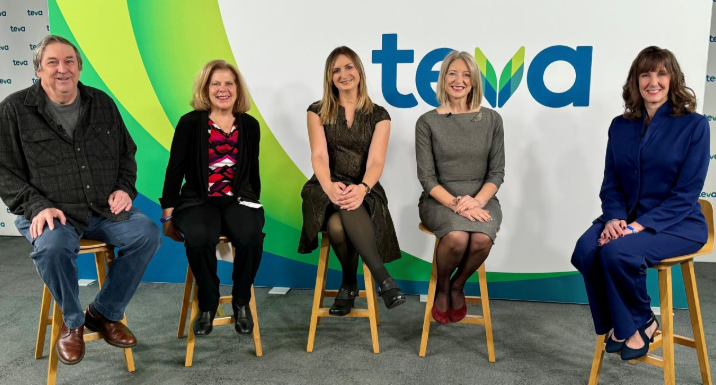
In other Teva news, the Teva patient advocacy team highlighted the vital role of families and caregivers in treatment and recovery, hosting a National Family Caregivers Month panel featuring caregivers and individuals living with conditions such as Huntington’s disease and schizoaffective disorder. The discussion underscored the power of lived experience, the importance of advocacy, and the value of partnership in addressing unmet needs. Teva emphasized that truly patient-centric research requires understanding how treatments affect daily life—insights that continue to inspire and guide their scientific teams.
| |
Rural Minds has released a deeply moving video that highlights the urgent mental health challenges facing rural communities—challenges often overlooked, misunderstood, or hidden in silence. The video shares one family’s tragic loss and the extraordinary effort that followed: a national movement to ensure that no rural resident faces mental health struggles alone.
Through personal storytelling and honest reflection, the video shines a light on the barriers rural Americans encounter when seeking care—stigma, isolation, lack of services, and limited crisis support. It also amplifies a message of hope, showing how one family’s advocacy has inspired communities nationwide to take action, increase awareness, and build stronger pathways to care.
By elevating real voices and real experiences, Rural Minds continues to break down stigma and open conversations that save lives. This video is a powerful reminder of the importance of connection, compassion, and community—and a call to all of us to do more to support mental health in rural America.
| |
The American Foundation for Suicide Prevention (AFSP) has launched their official podcast channel featuring three insightful series that clinical research teams can share with volunteers and community partners. Ask Dr. Jill offers clear, evidence-based guidance from Dr. Jill Harkavy-Friedman, AFSP’s Senior Vice President of Research, who breaks down complex topics and answers real-world mental health and suicide prevention questions. Strong Talk, hosted by Vic Armstrong, AFSP’s Vice President for Health Equity and Engagement, explores mental health through the lens of equity, representation, and culturally responsive care. Elevating Voices brings together members of diverse communities in a roundtable format to discuss lived experiences, challenges, and culturally grounded solutions for suicide prevention.
Together, these series provide accessible, credible information that supports meaningful conversations about mental health, research, and community wellbeing. You can check out the AFSP podcasts HERE.
| |
The Depression and Bipolar Support Alliance (DBSA) has introduced a new initiative aimed at redefining wellness for people living with mood disorders. The Transform the Definition of Wellness campaign emphasizes that wellness is more than symptom reduction—it includes purpose, relationships, stability, autonomy, and supportive communities.
For clinical research teams, this perspective reinforces the importance of viewing volunteers as whole individuals and centering quality of life in conversations about recovery. It’s a valuable resource to share with participants, caregivers, and community partners. Learn more HERE.
| | |
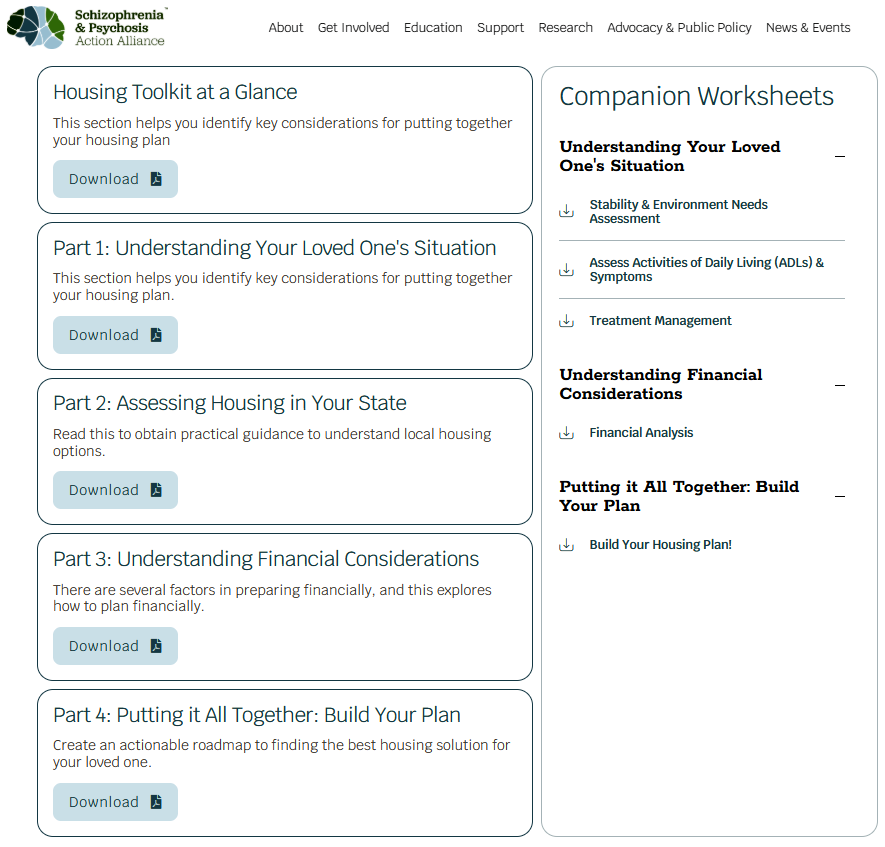
Schizophrenia & Psychosis Action Alliance (S&PAA) has released a comprehensive Housing Resources Toolkit designed to help individuals living with serious mental illness—and those who support them—navigate one of the most challenging aspects of recovery: finding stable, safe, and affordable housing. This easy-to-use toolkit brings together national, state, and local housing supports, including guidance on rental assistance programs, emergency housing options, legal protections, and strategies for advocating for one’s needs.
For clinical research teams, this resource can be especially valuable. Many of your study volunteers face housing instability or related stressors that impact their wellbeing, daily functioning, and ability to engage fully in care. Sharing tools like this not only connects individuals with essential supports but also strengthens trust and reinforces the message that research sites care deeply about the whole person—not just their participation in a study.
The toolkit is written in accessible language and includes practical steps, links, checklists, and templates that individuals, families, and providers can use right away. It is a helpful resource for volunteer support, community outreach, and collaboration with local mental health organizations.
Clinical research staff are encouraged to review the toolkit and share it with patient volunteers, caregivers, and community partners who may benefit.
Access the Housing Resources Toolkit at https://sczaction.org/toolkits/housing-resources/
| | |
Thank you for reading!
If you have questions, comments, or would like to submit an item to be included in an upcoming newsletter, please email erica@thestarr.org.
| | |
The STARR Coalition | www.thestarr.org
LEAD WITH HEART.
| | | | |