| |
STARR News & Updates
May 2026
| | |
Every May, communities across the country turn their attention to mental health through education, storytelling, and open conversation. For mental health clinical research sites, this month is more than a national campaign -- it's one of the best opportunities of the year to step forward as trusted partners in care and to help your community understand that research is part of the mental health support system, not separate from it.
Clinical research sites are uniquely positioned during Mental Health Awareness Month. You see firsthand what progress looks like — the patients who gain access to new treatment options, the science that moves forward because real people chose to participate, and the hope that comes with advancing care. Sharing that perspective with your community helps reduce stigma, build trust, and open the door for people who may never have considered research as a care option.
Here are a few ways sites can make the most of the month:
| |
- Show up wherever your community already gathers - churches, schools, town hall meetings, etc..
- Connect with NAMI chapters, Clubhouses, CMHCs, support groups, and faith-based programs hosting May events.
- Offer to speak, share resources, or simply be present. Visibility builds familiarity, and familiarity builds trust.
| |
- Explain what research participation actually looks like or share how research has advanced care in your therapeutic area.
- Host or co-host an event. A coffee-and-conversation session, a Q&A on informed consent, or a myth-busting discussion about clinical trials can turn curiosity into engagement.
- Partner with advocacy organizations.
| | |
Mental Health Awareness Month amplifies every voice in the space. Aligning with advocacy partners expands your reach and reinforces that research belongs in the broader mental health conversation.
Mental Health Awareness Month is a chance to remind your community of something important: clinical research is care, researchers are care providers, and participation is a meaningful path forward. Your site is the bridge.🎗
| | |
Why Clinical Research Sites are the Partners CBHCs Need Right Now — and How to Build that Bridge
The $50 billion Rural Health Transformation Program (RHTP), created alongside the One Big Beautiful Bill Act's nearly $1 trillion in Medicaid cuts, has been widely described as a lifeline for rural health care. But for mental health providers, the reality is more complicated.
The program explicitly prohibits funds from replacing lost Medicaid revenue. Only 15% of each state's award can go toward direct patient care payments, meaning the vast majority of funding is directed toward technology, workforce pipelines, and system transformation. For behavioral health providers and community mental health centers that depend on Medicaid for 60 to 80% of their operating revenue, that distinction is not a footnote. It's an existential threat.
Rural mental health providers are already operating on the margins. The cuts don't create a new crisis; they accelerate one already in motion. And unlike general hospitals, behavioral health facilities have fewer alternative revenue streams and smaller margins to absorb the shock.
This is where clinical research sites have a real opportunity and a responsibility.
Research sites have something CBHCs desperately need right now: a revenue model that doesn't depend on Medicaid. The opportunity is to bring that stability into the community through genuine partnership rather than operating in parallel to it.
Meanwhile, CBHCs are sitting on something invaluable: established trust, existing patient relationships, and deep community roots. A collaborative model where the research site brings the infrastructure and expertise while the CBHC serves as a community access point and referral partner creates shared value for both organizations. The CBHC gains a new revenue stream and expanded care options for its patients. The research site gains access to a population it would otherwise struggle to reach.
If you're a clinical research site ready to build that bridge:
- Lead with mission alignment, not the science — frame the partnership around expanded care access for patients who might otherwise go untreated.
- Offer a shared-staffing or co-investigator model that minimizes burden on clinic staff.
- Start with observational or lower-complexity studies that don't require significant infrastructure investment on the CBHC's part.
- Make clear that a research partnership can coexist with — and actively strengthen — their existing Medicaid-funded programming.
The funding gap is real. But so is the opportunity for clinical research to show up as a genuine community partner — and build something more resilient in its place.
| | |
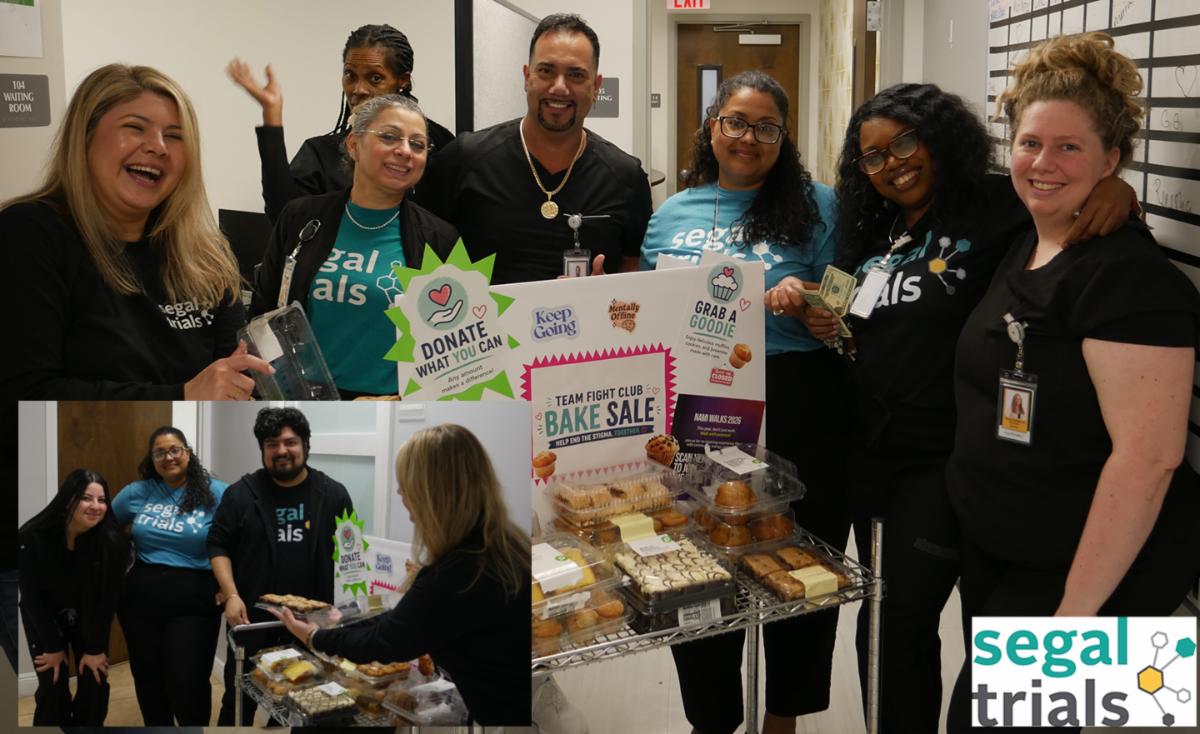
Segal Trials brought sweetness to mental health advocacy with an office bake sale fundraiser supporting NAMIWalks Miami. Employees contributed baked goods, snacks, and treats — and more importantly, showed up for a cause that matters. The event was a reminder that stigma reduction isn't just policy work or clinical work; sometimes it looks like a team rallying together, treat by treat, because they genuinely care about the people they serve.
| |
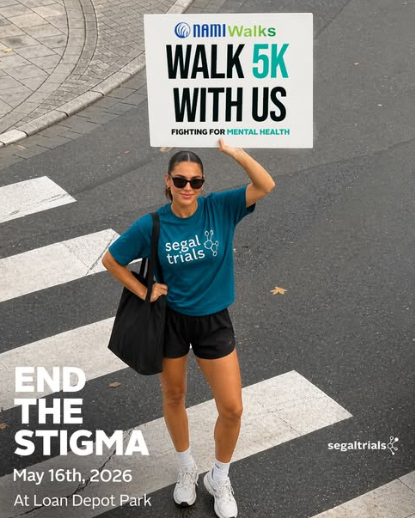
Segal Trials is building momentum ahead of NAMIWalks Miami! They have been a familiar and celebrated presence at NAMIWalks Miami for years and this year, they're taking their commitment to another level. Known for showing up strong and making an impact, Segal Trials is building toward this year's walk with the kind of intentionality that sets them apart.
It starts with an internal challenge called "Preparing for the Walk." Each week, employees track their walking and running miles, submit screenshots every Friday, and compete on a team leaderboard — all while staying active and connected in the lead-up to the big day. It's a simple idea with real impact: turning individual effort into shared energy and keeping the mission front and center well before the walk begins.
NAMIWalks events are more than fundraisers — they are some of the best opportunities available to connect with community members who are deeply invested in mental health awareness, advocacy, and support. For a site like Segal Trials, that kind of connection is invaluable. It's where relationships are built, trust is deepened, and the message that clinical research is a meaningful care option reaches the people who need to hear it most.
| |
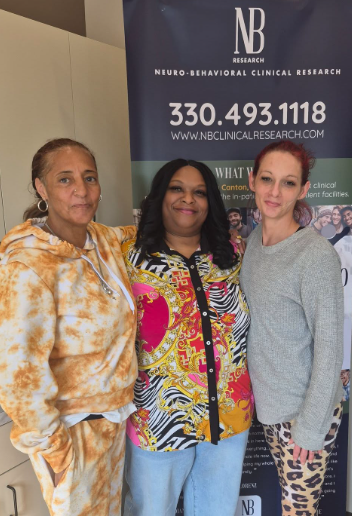
Neuro-Behavioral Research (NBR) and the Ohio Center for Hope hosted Lakiksha Metcalf for a powerful session with their inpatient community — a reflection of NBR's ongoing commitment to meaningful community engagement. Rather than limiting connection to the clinical setting, NBR continues to bring voices, stories, and lived experiences directly to the people they serve. Metcalf spoke candidly about mental health struggles, centering her message on two core pillars: resilience and faith. She helped residents reframe setbacks as opportunities for growth, explored how spiritual grounding can sustain hope in difficult moments, and offered practical strategies for navigating daily challenges with grace and determination.
Metcalf's vulnerability and passion left a lasting impression — planting seeds of hope and reminding residents that recovery is possible. This is community engagement done right: human, intentional, and built on trust.
|
| | |
Pillar Clinical Research Bentonville site's Cici Sanchez attended the Butterflies & Blooms Luncheon benefiting Saving Grace NWA, an organization providing safe housing, mentorship, and life-skills support for young women aging out of foster care or facing housing instability. The event's theme, "Coming to the Table," was a fitting reflection of how Pillar approaches its own work: showing up with intention, investing in community, and recognizing that meaningful change happens when people gather around a shared purpose. This is the kind of community presence that reminds us why the work we do — and the connections we build — matter far beyond the clinic walls.
| | | |
CenExel Decatur joined the 3rd Annual H3 Caregivers Conference on April 18, hosted by Zion Baptist Church of Marietta — a gathering designed to uplift, equip, and celebrate the caregivers who show up every day for their loved ones. The team connected directly with attendees, sharing information about clinical research opportunities that may benefit the communities caregivers serve. Events like this are exactly where meaningful engagement happens — in trusted spaces, among people already invested in the health and well-being of those they love. By meeting caregivers where they are, CenExel Decatur continues to demonstrate that clinical research is not separate from community — it's part of it.
| |
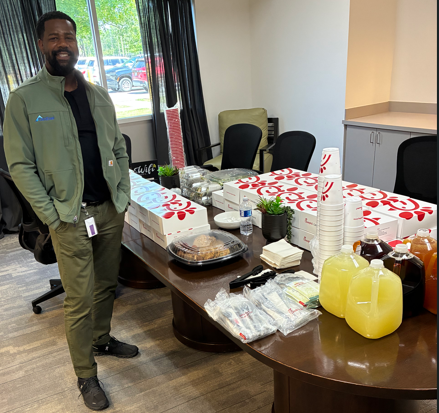
Meanwhile, CenExel Decatur's Community Outreach Manager Kelvin Thompson accepted a special delivery during Nurse Appreciation Week — Chick-fil-A meals for the entire staff, courtesy of Herzing University. The gesture is a small but meaningful reflection of the partnership CenExel Decatur has been building with Herzing University in support of their surgical studies. Community relationships like this one are built over time, and moments like these remind us why investing in them matters.
| |
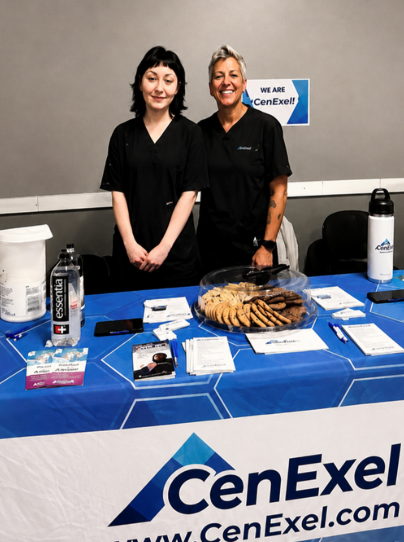
CenExel Savannah's Michelle Lagares and Morgan Walsh joined the Habersham YMCA for their AOA Health & Wellness Day. CenExel's participation in the YMCA Wellness Day provided a valuable opportunity to connect directly with individuals already engaged in their health and wellness. By meeting attendees face-to-face, the team was able to educate the community about clinical research, answer questions, and help dispel common misconceptions. Being present in a trusted setting like the YMCA also reinforced CenExel's commitment to community involvement and patient- centered outreach.
In addition to raising awareness, the event helped strengthen CenExel's visibility and build a pipeline for future study participation through both direct interest and referrals. Engaging with the community in this setting not only supports recruitment efforts but also positions CenExel alongside other respected healthcare organizations, highlighting its role as a trusted partner in advancing medical research. ❤
|
| | |
The STARR Coalition Joins in Founding a National Mental Illness Justice Center
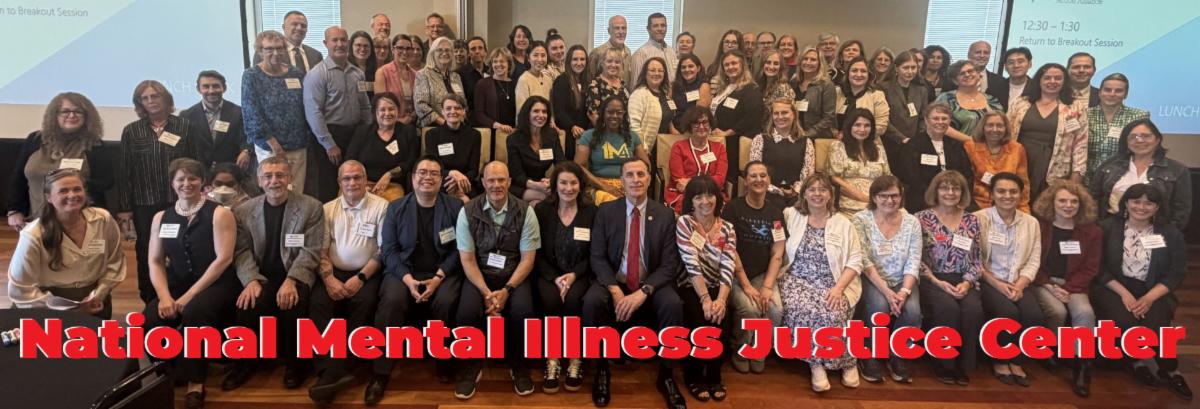
Last month in Washington, D.C., STARR was proud to serve as a founding partner in the launch of the S&PAA National Mental Illness Justice Center — a first-of-its-kind national hub designed to meet communities where the justice system and serious mental illness collide.
Alongside judges, clinicians, researchers, policymakers, and people with lived experience, STARR joined the Schizophrenia & Psychosis Action Alliance (S&PAA) and the Treatment Advocacy Center (TAC) for Navigating the Justice System for Our Community — a day of candid dialogue, intensive breakout sessions, and action planning that produced a real working framework. Every participant left as a Founding Advocate and member of the Justice Center Champion Collective.
For STARR, this work carries a specific imperative: ensuring that people living with serious mental illness who are incarcerated have access to quality care and treatment — including clinical research.
| | |
J&J announced that the FDA has approved a supplemental New Drug Application (sNDA) for CAPLYTA® for the prevention of relapse in schizophrenia, based on new long-term data evaluating its safety and efficacy. CAPLYTA® (lumateperone) demonstrated a 63% reduced relapse risk in adults with schizophrenia — with 84% of patients remaining relapse-free over six months.
Axsome Therapeutics receives FDA approval for Auvelity (dextromethorphan/bupropion) for agitation associated with Alzheimer's disease, making it the first non-antipsychotic treatment approved for this indication. The clearance adds another indication to Auvelity's label, which the US regulator approved for major depressive disorder (MDD) in 2022.
Axsome Therapeutics acquires exclusive global rights to balipodect (TAK-063), a potentially first-in-class oral selective PDE10A inhibitor, from Takeda. The clinical-stage asset is being developed for schizophrenia and Tourette syndrome and plans to begin Phase 3 trial-enabling activities for the schizophrenia indication in 2026.
Spinogenix's tazbentetol is one to watch — a potentially first-in-class synaptic regenerative therapy that could represent a fundamentally new approach to treating schizophrenia. In a new video update, David Walling, PhD, Chief Clinical Officer for Psychiatry at CenExel, reviews Phase 2 interim findings — including signals of improvement across cognition and both positive and negative symptom domains — and contrasts tazbentetol's mechanism of dendritic spine restoration with dopamine, serotonin, and muscarinic-targeting agents. Full Phase 2 data are expected later this year.
MapLight Therapeutics completed enrollment in its Phase 2 ZEPHYR trial evaluating ML-007C-MA for schizophrenia (307 participants), and announced the final patient visit in its Phase 2 IRIS trial evaluating ML-004 for autism spectrum disorder. Topline results from both trials are expected by mid-August 2026.
The FDA has issued National Priority Vouchers (CNPVs) to three psychedelic programs, fulfilling a key provision of a recent Executive Order. The vouchers — designed to compress NDA review timelines to as little as one to two months — were awarded to Compass Pathways (psilocybin for TRD), Usona Institute (psilocybin for MDD), and Otsuka/Transcend (methylone for PTSD). FDA also announced that it will release its final guidance for sponsors developing psychedelics “imminently”.
Seaport Therapeutics completes its IPO, raising $254.9 million through the sale of 14.2 million shares priced at $18 — the top of its range. The PureTech Health spinout is advancing neuropsychiatric medicines via its Glyph platform, including SPT-300, an oral formulation of allopregnanolone in Phase IIb testing for major depressive disorder. Seaport is led by former Karuna head Steven Paul, MD, Daphne Zohar of PureTech, and Antony Loebel, MD, as Chief Medical Officer and President of Clinical Development. Also, just joining the Board is Sharon Mates, the Co-Founder and former Chairman and CEO of Intra‑Cellular Therapies. Note to sites: keep an eye on Seaport Therapeutics!
Newleos Therapeutics doses the first participant in its Phase 1b study of NTX-2001, a potentially first-in-class TAAR1 partial agonist for alcohol use disorder (AUD). The randomized, double-blind, placebo-controlled trial is being conducted in collaboration with Yale School of Medicine.
Newron Pharmaceuticals announces the FDA has placed a hold on new patient enrollment at U.S. sites in its Phase III ENIGMA-TRS 2 study of evenamide for treatment-resistant schizophrenia (TRS) — following the reported sudden death of a participant at a non-U.S. site, assessed by the investigator as unrelated to study treatment. The news comes shortly after promising preclinical data presented at SIRS 2026 suggested evenamide may drive circuit-level neuroplasticity, a pattern rarely seen with current antipsychotics. The global ENIGMA-TRS 1 study continues with over 400 patients enrolled across 21 countries.
A recent JAMA-published randomized controlled trial found that AI-assisted therapy outperformed group therapy in reducing anxiety and improving overall well-being. Both approaches produced comparable depression outcomes — each significantly better than no treatment. Neither intervention produced significant PTSD improvements. Notably, participants rated the AI's therapeutic warmth and competence on par with human therapists.
A randomized clinical trial published in JAMA Psychiatry finds that oral semaglutide significantly improved motivation in adults with major depressive disorder, reducing the perceived cost of effort relative to reward — the first study to evaluate a GLP-1 receptor agonist's effects on reward-related dysfunction in an MDD population. Researchers note implications extending beyond MDD to multiple neuropsychiatric conditions characterized by reward dysfunction.
A systematic review finds that functional unblinding is pervasive in psychedelic randomized clinical trials — with blinding failure rates exceeding 90% in psilocybin, LSD, and ayahuasca studies, and 85% in MDMA trials. Despite this, fewer than 30% of the 112 trials reviewed formally assessed blinding integrity, underscoring the need for standardized assessment methods and improved trial designs to ensure valid efficacy evaluations.
A new cohort study published in JAMA Psychiatry finds that dementia in severe, extremely treatment-resistant schizophrenia presents as a distinct clinical entity — differing in cognitive profile from Alzheimer's, frontotemporal, and Lewy body dementia, and not explained by comorbid neurodegeneration, medications, or cardiovascular risk factors. Nearly half of the 155 participants met criteria for severe dementia, reinforcing that cognitive decline may be a direct outcome of schizophrenia itself.
A new paper published in JAMA Psychiatry argues that mental health providers should routinely ask patients whether and how they are using AI chatbots for emotional support, just as they ask about sleep, diet, exercise, and substance use. As more people turn to tools like ChatGPT for mental health support, the authors suggest that these conversations can also surface topics patients may be reluctant to raise with their providers directly.
JAMA launches JAMA+ Trials, a new online platform dedicated to clinical trial research, celebrating trials across the JAMA Network with multimedia features, curated resources on trial design and reporting, and a searchable collection of recent trial publications. Designed for trialists, clinicians, patient partners, and advocates alike, the platform aims to bridge the clinical trial community with the broader medical world and foster honest dialogue about the challenges trials face.
| | |
FDA Request for Information: FDA Launches Real-Time Clinical Trial Monitoring Pilot
The FDA launched a pilot program giving the agency access to aggregated clinical trial data in real time — before sponsors complete their own analysis and documentation prep. The goal: eliminate administrative "dead time," which Commissioner Marty Makary says accounts for 45% of drug development time, and cut years off approval timelines.
Critically, the program does not involve raw patient data. The FDA receives only aggregated signals — adverse event rates, tumor response percentages — with individual records staying with trial sponsors.
Early pilots are already underway with AstraZeneca (mantle cell lymphoma, mid-stage) and Amgen (limited-stage small cell lung cancer, early-stage).
The FDA is actively soliciting perspectives on pilot design, participant selection, and evaluation metrics. Comments must be received by May 29, 2026.
| |
CMS Proposes Major Updates to Prior Authorization for Drugs
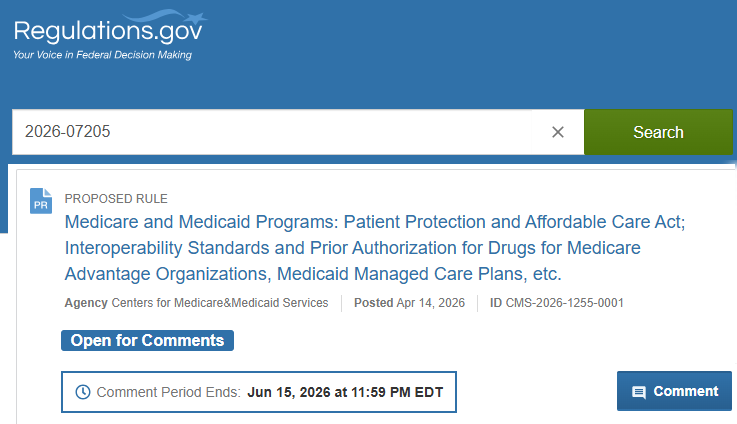
On April 10, 2026, CMS released a proposed rule (CMS-0062-P) that would significantly expand electronic prior authorization requirements to include drugs covered under both medical and pharmacy benefits — and establish new decision timeframes for drug PA requests across Medicare Advantage, Medicaid, CHIP, and qualified health plans. The rule would also require payers to provide specific reasons for drug PA denials and publicly report PA metrics. A key Request for Information seeks stakeholder input on streamlining step therapy through technology and data sharing.
For mental health clinical research sites, these changes have real implications — particularly around step therapy requirements that can delay patient access to the right treatment.
Comments are due June 15, 2026. For more information and to submit comments, visit our webpage HERE. Make your voice heard.
| | |
A Resource Worth Sharing with Your Patients
If you work in schizophrenia research, you know that keeping participants engaged between visits isn't always easy. Isolation, fragmented support, and the day-to-day weight of managing symptoms can all affect adherence — and outcomes.
Teva's newly launched Home Ground™ Schizophrenia Community is a free online platform offering peer-driven insights, symptom tracking tools, emotional wellness resources, independent living guides, and community events — all in one place, at no cost.
What makes it worth sharing? It was built with people living with schizophrenia and their care partners, not just for them. That peer-informed foundation makes it more likely to resonate — and more likely to be used.
For clinical research sites, Home Ground™ is a practical tool to offer participants outside the clinic walls. Supporting the whole person strengthens trust, improves retention, and reinforces that your site sees participants as more than a data point.
Share it. It's free. It matters. homegroundschizophrenia.com
| | |
Tardive Dyskinesia Awareness Week: May 3–9
Each year, Tardive Dyskinesia (TD) Awareness Week shines a light on this often-overlooked movement disorder and the people it impacts. TD affects an estimated 800,000 adults in the U.S., yet approximately 60% remain undiagnosed. For individuals already navigating a serious mental health condition, the uncontrollable movements of TD can add another layer of stigma, self-consciousness, and isolation.
To support your awareness efforts, Teva Pharmaceuticals has developed a digital toolkit featuring infographics, videos, social media assets, and educational resources — including content from the IMPACT-TD Registry and a powerful caregiver perspective. The toolkit is designed for use during TD Awareness Week and throughout 2026, and additional assets may be added in the lead-up to May.
Access the toolkit here (Password: 5fFXv5Xp04qb).
To learn more about TD, visit www.soundsliketd.com.
| | |
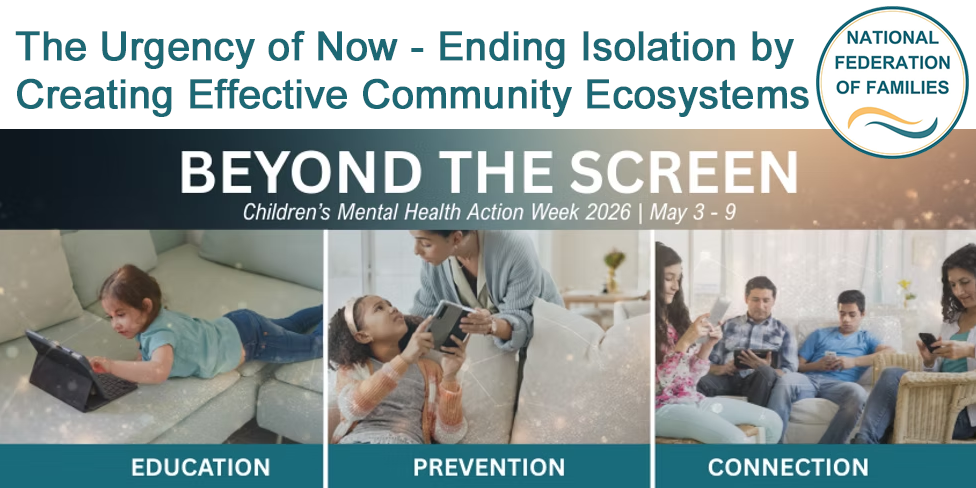
Each year, during the first full week of May, the National Federation of Families takes the lead in celebrating the mental health of children and youth. This year, the Children's Mental Health Action Week (CMHAW) theme is Beyond the Screen: Education, Prevention, Connection. During CMHAW and throughout Mental Health Month in May, NFF will explore the relationship between technology, family life, and the mental health of our children and youth. They share current research, important trends, resources for parents and caregivers, and strategies to protect, preserve, and promote family relationships and vital human bonds that support the mental health of our children and youth. Mark your calendars for May 3rd-9th for CMHAW and plan to join NFF as they look beyond the screen.
Learn more about the National Federation of Families 2026 campaign HERE and take ACTION this month! ❤
| | |
Meeting Farmers Where They Are: A New Resource for Rural Mental Health
The mental health needs of farming and agricultural communities are real, persistent, and often invisible. Long hours, financial uncertainty, weather-driven stress, and geographic isolation create a unique burden — one that too rarely gets addressed with the same urgency as physical health.
That's why we're spotlighting the work of our colleagues at Rural Minds, whose newly launched Farmers Mental Health Resilience Program is a free online hub offering resources, conversation tools, and practical support designed specifically for farmers, ranchers, and rural communities. The program meets people where they are with approachable, stigma-reducing tools built around the realities of agricultural life.
At STARR, we know that trust is the foundation of any meaningful health intervention. Rural Minds is building that trust where it matters most — in the communities that feed us, and that too often suffer in silence.
Explore Rural Minds' Farmers Mental Health Resilience Program HERE.
| | |
Get STARR Certified — Get Found, Get Connected, Get Supported
Pharma companies and CROs actively search the STARR Certified Sites list when identifying sites for their studies. Certification signals that your site is experienced, community-connected, and backed by the STARR Coalition network — all of which translates to better enrollment and stronger trial performance.
But the real value goes deeper than visibility.
| | |
Once certified, STARR gets to work for you. We identify community organizations within 30 miles of your site, open the door on your behalf, and provide a warm introduction — the kind of relationship-building that typically takes years. Then we track events those organizations are hosting so your team knows exactly where to show up to keep that momentum going.
Add practical, proven training tools — suicide prevention, empathy training, stigma reduction — and you have a certification that strengthens your team from the inside while expanding your reach in the community.
As for the $2,500 annual fee? Think of it as a marketing investment with a measurable return. The certification fee is tax-deductible — and for many sites, it’s coverable by pharma partners as part of a study marketing budget. What you’re funding: the infrastructure, introductions, and resources STARR builds on your behalf, year-round.
Start your pre-assessment today at thestarr.org/pre-assessment. It takes just a few minutes.
| | | | |
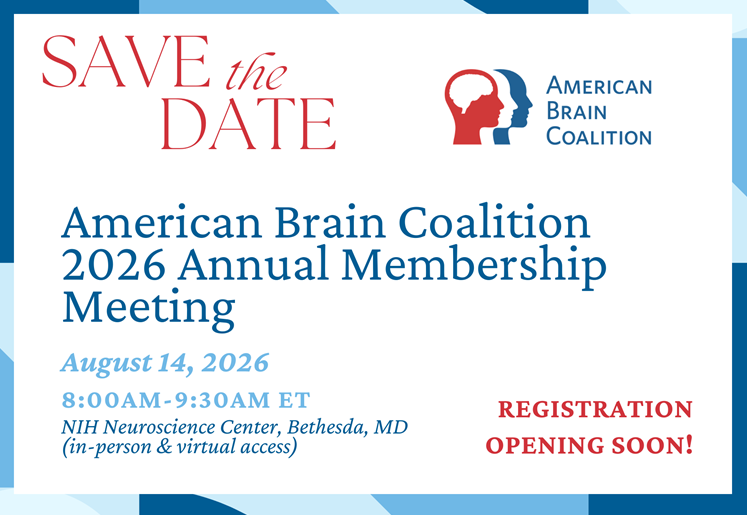
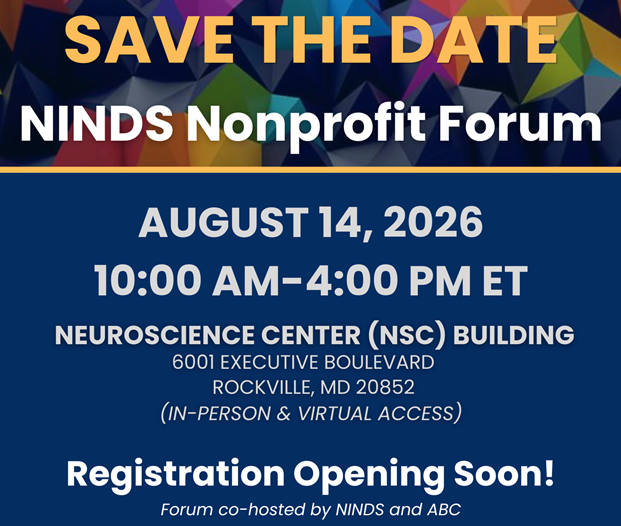
American Brain Coalition (ABC) has launched its new Community Engagement Platform, a member-driven initiative designed to strengthen interdisciplinary collaboration and expand access to shared resources across the brain health field.
The platform empowers ABC members to enhance their advocacy, research, and community engagement efforts.
Learn more about the platform HERE.
| | |
The ASCP Annual Meeting, held May 26–29 in Miami, brings together over 1200 academic and industry investigators, research pharmacists, clinicians and representatives from regulatory agencies to discuss newer treatments and facilitate collaborations. This year’s theme, “Psychiatry and AI: Promises, Perils, and Pathways Forward,” will explore how artificial intelligence is shaping psychiatric research, treatment development, and the future of mental health care.
| |
NAMICon 2026, held May 27–30 in Atlanta, features the theme, "Advancing Connection, Community, and Caring." The annual convention brings together advocates, people with lived experience, clinicians, and community leaders to share personal stories, explore new ideas, and strengthen national efforts in mental health awareness, education, and advocacy.
| |
The CURESZ Foundation Tenth Anniversary Summit will be held July 10-11, 2026 at the Graduate Hotel in Cincinnati. Themed "Bridging the Gap Between Advances in Knowledge and Clinical Practice," the event will spotlight cutting-edge and underutilized schizophrenia treatments and introduce the Schizophrenia Colloquium, a major new scientific initiative. Attendees will have the opportunity to connect with leading researchers, clinicians, and individuals living with schizophrenia. Featured speakers include CURESZ founders Bethany Yeiser and Dr. Henry Nasrallah, keynote speaker Dr. Rajiv Tandon, and Dr. Jonathan Meyer. For more information and to register, visit the CureSZ website HERE.
| |
APA 2026, taking place August 6-8 in DC, brings together psychologists, researchers, clinicians, educators, and advocates to share the latest advances in psychological science and clinical practice. Each year, the convention highlights emerging research, innovative treatment approaches, and opportunities to strengthen collaboration across the mental-health community. Registration opens April 22.
| |
Psych Congress will hold their 39th Annual Meeting from September 15-19, 2026 in New Orleans, LA. The nation's leading conference on practical psychopharmacology and a community of passionate mental health clinicians, this is one of our favorite meetings of the year!
| |
Mental Health America will hold their conference from October 8-9, 2026. The 2026 Mental Health America Conference will focus on the theme More Good Days, Together. Through this theme, the conference will explore how to make more good days possible for all by connecting people to the right support at the right time and recognizing that “good” is defined by unique mental health experiences and goals. Show your support for mental health and connect with thought leaders, innovators, and decision-makers.
| |
The National Federation of Families 36th Annual Conference will be held October 13–15, 2026, in Orlando. The event will bring together hundreds of researchers, administrators, policymakers, clinicians, youth, family leaders, and other stakeholders working to strengthen supports for children and families affected by mental health challenges.
| |
Site Solutions Summit will be held from October 15-18, 2026 in Orlando, FL. The Summit provides a unique hub where sites, sponsors, CRO executives, and regulators come together to discuss best practices and ideas while developing strategic partnerships through ideation sessions, workshops, and focus groups. Whether your priority is networking with sponsors and CROs or learning best practices built for research sites, the Summit provides a valuable experience.
| |
The American Neurological Association (ANA) will hold their 151st Annual Meeting ANA2026 from October 17-20, 2026 in San Diego, CA. The Annual Meeting has been designed to foster discussions among investigators in academia, industry, and foundations toward the common goal of furthering translational science..
| |
The CNS SUMMIT 2026 will be held November 1-4, 2026 in Boston at Encore Boston Harbor. The Summit brings together decision makers 1from pharma, biotech, CROs, investigator sites, technology, investors and other stakeholders.
| |
Neuroscience 2026 will be held November 14-18, 2026 in Washington DC. Each year, scientists from around the world congregate to discover new ideas, share their research, and experience the best the field has to offer. Attend so you can: present research, network with scientists, attend session and events, and browse the exhibit hall at the premier global neuroscience event.
| | |
What Matters Most When Interacting with Study Participants
The foundation is trust. Everything else builds from there.
Dignity and Respect Come First
Participants in mental health research often carry histories of stigma, dismissal, or trauma within healthcare systems. Every interaction should communicate: you are a person, not a data point. Language matters. Tone matters. Eye contact matters.
Informed Consent Is a Conversation, Not a Signature
True informed consent in mental health research means:
- Using plain, accessible language (not clinical jargon)
- Confirming understanding — not just completion
- Revisiting consent throughout the study, not just at enrollment
- Ensuring participants know they can leave without consequence
-
Being explicit that honest reporting is what makes research meaningful — participants should feel free to say the treatment isn't working, feels neutral, or has unwanted effects. The goal is truth, not a positive outcome. When participants feel pressure to please, or believe they should be getting better, it compromises the data and ultimately delays real progress for the communities we're trying to serve.
Consistency Builds Retention
Participants stay when they feel known. Consistent staff contact, predictable communication, and follow-through on commitments reduce dropout and strengthen the relationship between participants and the research process.
Acknowledge the Whole Person
Mental health conditions don't exist in isolation. Participants may be navigating housing instability, caregiving responsibilities, or co-occurring challenges. Sites that recognize this — and reduce friction accordingly — see better outcomes.
Communicate Research as Care
Participants should never feel like they're doing researchers a favor. The framing should be clear: participation is a meaningful healthcare option that may benefit them directly and advances options for others like them.
The bottom line: participants who feel respected, informed, and consistently supported become advocates — for the study, for research participation, and for the sites that treated them well.
| | |
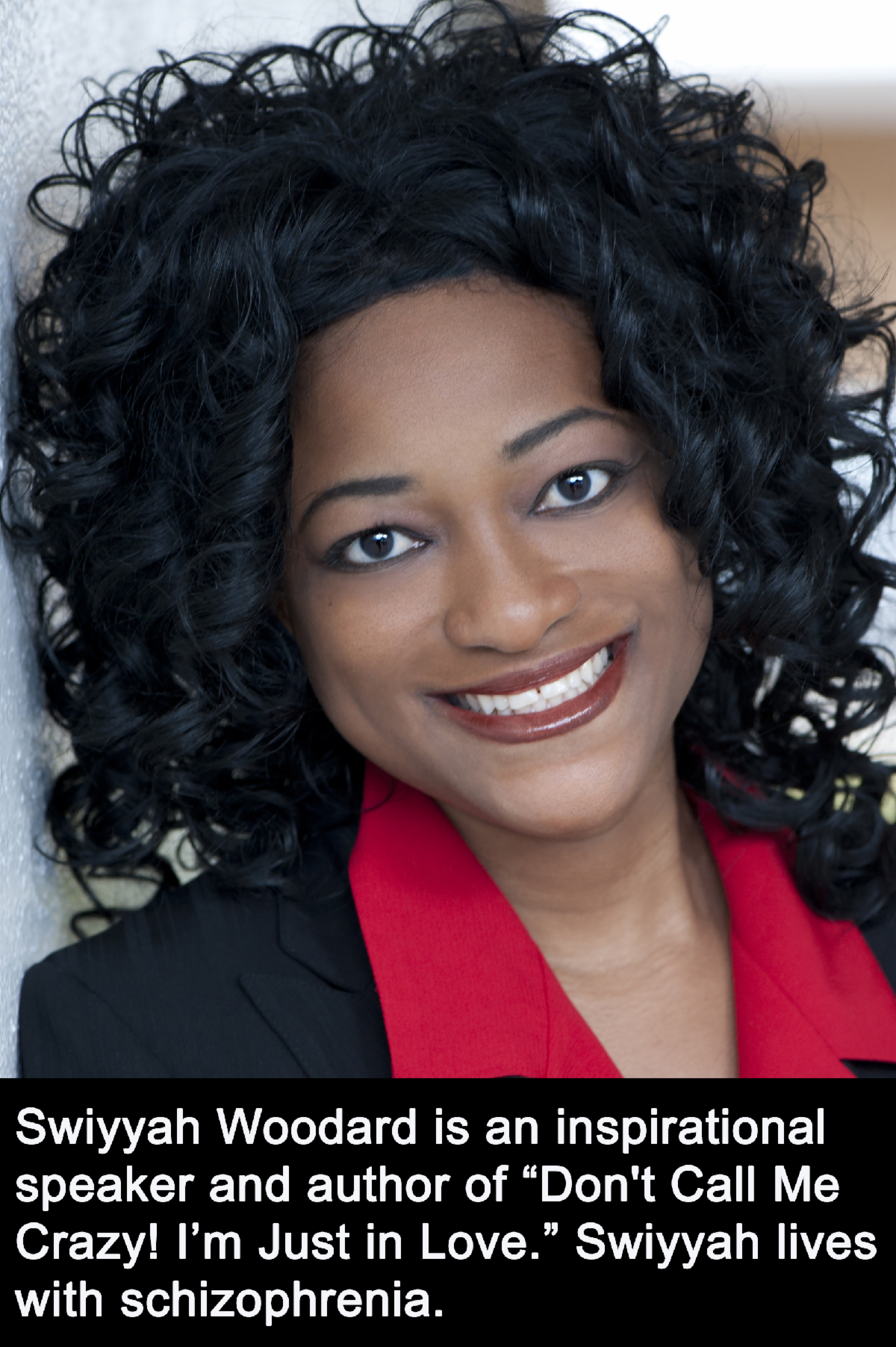
In honor of World Schizophrenia Awareness Day, May 24th, 2026, we are pleased to feature a note from Swiyyah Woodard, author and speaker.
In my experience, schizophrenia is the most misunderstood diagnosis in the world.
My journey began in May 2001, when I earned my BA in Psychology. Just two years later, I found myself hospitalized and diagnosed with what is often considered the most debilitating mental illness: paranoid schizophrenia. Initially, I refused medication because I held a false image of what mental illness "looked" like. I eventually learned that there is no single "look" to this disorder, and I believe these misconceptions are exactly why so many people resist the help they need.
My past was defined by trauma—growing up in the projects, surviving abuse, and losing my oldest brother to suicide. However, I refused to let my history dictate my future. I dedicated myself to learning everything possible about my disorder to improve my life and the lives of others. I made it my mission to change the narrative.
Today, the world is finally waking up to mental health awareness. Even Hollywood is taking note; Tyler Perry’s recent film, "Straw," gave audiences a glimpse into the reality of living under severe psychological stress. I believe that sharing our authentic stories is the single most powerful tool we have to end the stigma.
I was once told by a psychiatrist that I was a genius, and by a pharmacist that I was simply mentally exhausted. What I’ve discovered is that many people living with schizophrenia just want to be heard. As I wrote in my book, "Let’s Be Inspired: Undefeated Despite Schizophrenia": “Always listen to your clients or loved ones. Let them ramble while you listen intently. Sometimes we may sound psychotic, but we are often just trying to get things off our chest so we can heal. The only way to truly know is to listen.” ❤
| | |
May Mental Health Awareness Dates
May 3–9: Children's Mental Health Awareness Week - Mental health doesn't discriminate by age. If your site runs pediatric studies, this is a meaningful moment to recognize your young participants and their families. A thank-you note, a small appreciation gesture, or a family info session can go a long way toward building lasting trust and retention.
May 3–9: National Anxiety & Depression Awareness Week - Anxiety and depression are among the most common — and most treatable — mental health conditions. Yet barriers to care remain. Use this week to connect your community with resources, reduce stigma, and reinforce that effective options exist.
May 3–9: Tardive Dyskinesia Awareness Week - TD is underdiagnosed, underscreened, and too often dismissed. If you're working with schizophrenia patients, there's a good chance TD is in the room. Use this week to educate patients who may not recognize their symptoms and share resources with your broader community.
May 7: Childhood Depression Awareness Day - Depression in children often looks different than it does in adults, and it's frequently overlooked. This is a good moment to share educational resources with families and caregivers and to ensure your site and community partners are equipped to recognize the signs.
May 7: National Children's Mental Health Awareness Day - Children's mental health is foundational — not secondary. Take time today to amplify resources for families, connect with pediatric-focused partners, and reinforce that early support changes long-term outcomes.
May 7: Older Adult Mental Health Awareness Day - Older adults are among the most underserved in mental health care. Take a moment to consider how your site engages this population and whether your outreach is reaching them.
May 10–16: SAMHSA's National Prevention Week - A natural extension of Mental Health Action Day momentum — use this week to amplify prevention messaging in your community and with your networks.
May 14: Mental Health Action Day - Awareness is a starting point and action is the goal. Host an event. Bring an educational session to your site or community. And mark your calendars: STARR will be announcing the winner of the Stop the Stigma Champion Award. Keep the momentum going into the weekend — NAMIWalks events are happening across the country on May 16.
May 20: Clinical Trials Day - Research doesn't just advance medicine. It changes lives. Use this day to share why clinical trials matter and help reframe research as a trusted, viable care option for the people you serve.
May 24: World Schizophrenia Day - Recovery is real. Help is available. Share resources, lift up voices, and push back against the stigma that too often stands between people and the support they need.
May 27–30: NAMICon 2026 - NAMI's annual conference brings together advocates, clinicians, and community members from across the country. If you're attending, connect with us there!
| | |
Thank you for reading!
If you have questions, comments, or would like to submit an item to be included in an upcoming newsletter, please email erica@thestarr.org.
| | |
The STARR Coalition | www.thestarr.org
LEAD WITH HEART.
| |
| How did you like this email? | | | | | | |