| |
STARR News & Updates
September 2026
| | |
Every week in the US, more than 120 young people take their own lives. Kids. Teenagers. Young adults barely getting started. In many cases, these deaths could have been prevented.
That's why Suicide Prevention Awareness Month matters. Awareness efforts give individuals and families real resources and support. They give communities the tools, education, and advocacy to make a difference. Suicide is preventable.
In mental health clinical research, this work carries real weight. The people who join mental health studies generally live with conditions that raise suicide risk. Building trust with them is at the heart of what we do. So is offering hope. Research into serious mental illness gives something powerful to people who may have very little of it left: a reason to believe tomorrow can look different. Every study is a signal that their condition is worth solving and that better treatments are on the way.
Prevention is a year-round job. September just turns up the volume: help is available, lives can be saved, and research remains a cornerstone of progress. For the people we serve, that progress is not abstract. It is hope, and hope is what keeps people here. ❤
| | |
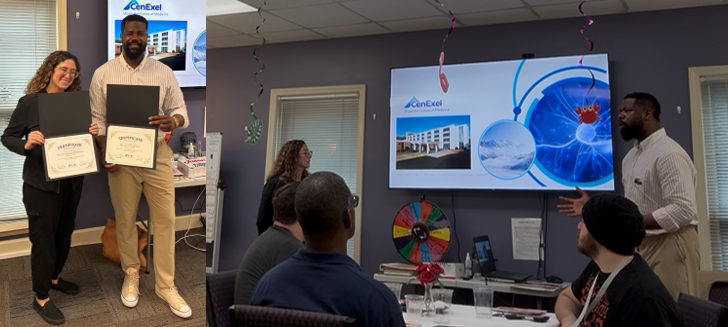
CenExel Atlanta teamed up with Clubhouse Atlanta to support adults living with severe and persistent mental health conditions. The two organizations share a goal: helping people build meaningful, independent lives. Dr. Elyssa Barron, psychiatrist and Principal Investigator at CenExel Atlanta, joined a Lunch & Learn with Clubhouse members. She introduced the site, walked through its clinical trials, and explained how research participation can advance mental health treatment. Barron called the experience deeply fulfilling. CenExel Atlanta plans to keep growing the partnership and finding new ways to reach its community.
| | | |
|
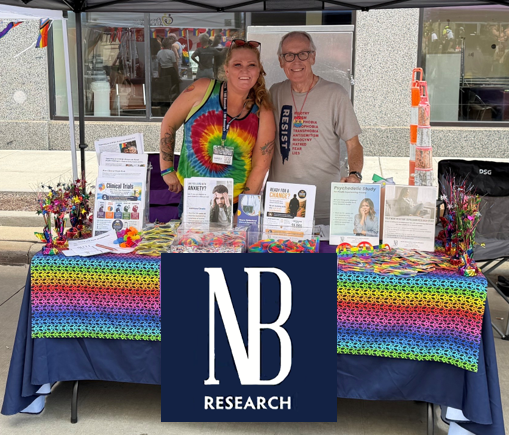
Neuro-Behavioral Clinical Research (NBR) and Ohio Center for Hope were proud to participate in the Akron Pride Festival, which welcomed nearly 40,000 attendees. The event featured a spirited, enthusiastic crowd and provided an excellent opportunity to connect with the community while sharing information about their programs and clinical research opportunities. Their outreach efforts resulted in 45 individuals signing up to be screened for potential research study participation. Even two heavy cloudbursts couldn't dampen the enthusiasm. Despite ankle-deep water flooding the street, the team remained committed and engaged throughout the event. A big thank-you goes out to everyone who stopped by the booth.
| | | |
|
CenExel Marlton NJ took the booth to the neighborhood for this year's National Night Out in Evesham, NJ. The annual event is built around community and connection, drawing families, local organizations, law enforcement partners, and vendors for an evening of food, fun, and real conversation. The CenExel team was there to share mental health resources, answer questions, and talk about how clinical research fits into the bigger care picture. Nights like this do quiet, important work. They put a friendly face on research and make good information easy to reach. ❤
|
| | |
Segal Trials had a meaningful day at The Latina Expo Miami, joining CISCRP for an important conversation about clinical research, representation, and the power of being informed about one's health.
Danielle Recasens, Segal Trials' Director of Recruitment & Retention, and Michelle Bello, Clinical Research Rater, joined the panel "Taking Control of Our Health: Information that Empowers," helping make clinical research more approachable and highlighting why representation matters in advancing medicine for everyone. Segal Trials is proud to participate in opportunities like this to connect with the community, build trust, and make clinical research information more accessible.
| |
CenExel Tampa has moved into a new space built around one idea: participants deserve the best. The site now spans 30,000 square feet of dedicated research facilities, with equipment and surroundings chosen to keep people safe and comfortable through every visit. Inside, an on-site, full-service pathology lab and imaging capabilities keep more of the work under one roof, while ambulatory blood pressure machines add another layer of precise, real-world monitoring. It's a state-of-the-art setting that reflects how seriously the team takes both the science and the people at the center of it.
| | | |
|
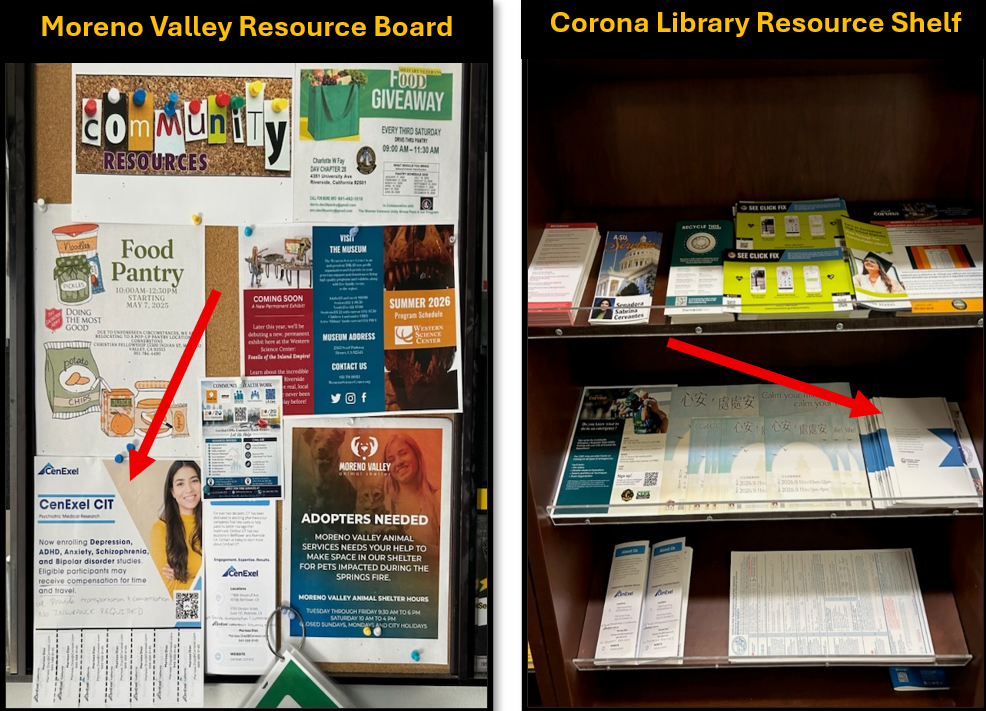
CenExel California has been meeting people right where they already gather... the local library! Libraries are still some of the busiest spaces a community has: places to find resources, join events, or just cool off during a heat wave. The site now contributes to several library community resource walls, stocking brochures and flyers about its clinical research services and local mental health resources. You can find them at the Corona Public Library, Louis Rubidoux Library, Moreno Valley Library, and other neighborhood spots. It's a simple way to put mental health information in reach and help the community turn the page toward better care.
|
| | |
The FDA approved Otsuka's Simtriyo (centanafadine), the first norepinephrine-dopamine-serotonin reuptake inhibitor for ADHD, in adults and children 6 and older. Beyond boosting norepinephrine and dopamine like stimulants, it blocks serotonin reuptake, which may help co-occurring anxiety and emotional dysregulation. Experts call it moderately effective, with an effect size near 0.4, but with milder side effects than stimulants. The drug carries black-box warnings and awaits DEA scheduling later this year.
Definium Therapeutics just posted its second Phase 3 win with its LSD-based pill, DT120, cutting anxiety scores 5.4 points beyond placebo in adults with generalized anxiety disorder. A single 100-microgram dose worked fast, with improvements showing up by day two and holding through 12 weeks. Side effects stayed mild and short-lived. A third trial reads out in September. The data adds fresh momentum to psychedelic research for mental health.
The FDA granted Breakthrough Therapy designation to Definium Therapeutics' DT120, a lysergide (LSD) orally disintegrating tablet, for major depressive disorder. It is the program's second such designation, following one in generalized anxiety disorder. The designation was backed by the Phase 3 Emerge study, where a single 100 µg dose produced a statistically significant 8.1-point placebo-adjusted MADRS improvement at week 6, with durable efficacy through week 12. Definium is also developing DT120 for PTSD.
Compass Pathways reported 52-week topline data from the open-label Part C of its Phase 3 COMP005 trial of COMP360 psilocybin for treatment-resistant depression. Participants originally in the 25 mg arm who received an additional dose showed deeper benefit, averaging a 13-point MADRS reduction from baseline at one year. Across all Part C patients, 40% to 45% responded and about 30% remitted. A rolling NDA submission remains on track for Q4.
Adjunctive IV ketamine significantly reduced depression symptoms in patients with treatment-resistant bipolar I or II depression, a double-blind randomized trial in Ontario, Canada, found. In the Ket-BD study, 68 adults received four ketamine or midazolam infusions over two weeks alongside a stable mood stabilizer or antipsychotic. At day 14, MADRS scores fell 7.3 points more with ketamine. No mania, hypomania, or psychosis occurred in either group, and ketamine was well tolerated.
A study of 28 psychedelic-naive adults found that a single high dose (25 mg) of psilocybin altered brain neuroanatomy and improved cognition and well-being up to a month later. A 1 mg control dose produced none of these changes. Published in Nature Communications, it is the first time anatomical changes have been observed in humans, with denser white matter connecting the prefrontal cortex to inner brain regions. Researchers stress the findings remain correlational.
BioVie completed the last on-treatment visit in its Phase 2 ADDRESS-LC trial evaluating bezisterim (NE3107) for the neurological symptoms of long COVID, including brain fog and fatigue. The oral drug crosses the blood-brain barrier to reduce neuroinflammation and improve insulin sensitivity without suppressing the immune system. The randomized, placebo-controlled trial enrolled about 200 adults and is fully funded by a US Department of War grant. Topline results are expected before the end of September 2026.
Protagenic Therapeutics said the FDA raised no clinical-hold issues in its pre-IND meeting responses for PT00114, a first-in-class neuropeptide for generalized anxiety disorder. The agency did not object to the planned three-part Phase 1 design or identify deficiencies that would preclude an IND. PT00114 targets the teneurin C-terminal associated peptide pathway to modulate the brain's stress response. The company plans to submit an IND by the end of 2026, with first dosing expected in early 2027.
Clearmind Medicine announced the US publication of a patent application covering a combination of MDMA and N-acylethanolamines, such as palmitoylethanolamide (PEA), for treating PTSD, anxiety, and eating disorders. The filing positions PEA as a modulator meant to enhance MDMA's potency, reduce dosing, and limit adverse effects. Developed with NeuroThera Labs, it adds to a 13-application portfolio. The move follows the FDA's July 2026 guidance formally including MDMA within its definition of psychedelic drugs.
Insilico Medicine's rentosertib, the first drug discovered and developed with generative AI to treat lung fibrosis shows anti-aging benefits. In a new Nature Biotechnology analysis, six independent proteomic aging clocks detected signals of biological rejuvenation in treated patients, with the largest effect showing patients appearing 2.7 to 3.5 years younger by week four. Researchers caution the study included just 42 IPF patients over 12 weeks, and the anti-aging effect needs testing in people without fibrosis.
Axsome Therapeutics dosed the first patient in its Phase 3 SUMMIT trial evaluating AXS-05 (dextromethorphan-bupropion) for smoking cessation in adults. Marketed as Auvelity for major depressive disorder and Alzheimer disease agitation, AXS-05 is an oral NMDA receptor antagonist and sigma-1 agonist. The randomized trial assigns active smokers 1:1:1 to AXS-05, bupropion, or placebo for about 12 weeks, with abstinence at week 12 as the primary endpoint. Its mechanism differs from nicotinic-targeted drugs like varenicline.
A JAMA Psychiatry network meta-analysis compared the five FDA-approved atypical antipsychotics used to augment antidepressants in major depressive disorder. Across 22 short-term trials and 10,962 participants, lumateperone showed the highest efficacy, followed by aripiprazole, brexpiprazole, cariprazine, and quetiapine XR. Aripiprazole ranked highest for acceptability, or lowest all-cause discontinuation. The authors, led by Roger McIntyre, MD, noted that efficacy and tolerability should be weighed together, and that maintenance efficacy data remain a knowledge gap.
A single-center, randomized, placebo-controlled trial in Sweden found that pramipexole, a dopamine agonist used for Parkinson disease, improved anhedonia in patients with mood disorders. Researchers led by Daniel Lindqvist, MD, PhD, added flexible-dose pramipexole or placebo to ongoing treatment for nine weeks in 85 adults with major depressive disorder, dysthymia, or bipolar depression and significant anhedonia. Pramipexole produced a significantly greater reduction in SHAPS scores, with gains sustained through a six-month open-label extension.
A JAMA Psychiatry cross-sectional study of nearly 187,000 adults found diverging trends in substance use disorders from 2021 to 2024. Cannabis use disorder rose across age and sex groups, while alcohol use disorder held steady or declined. Moderate-to-severe cannabis use disorder increased among males (3.1% to 4.1%) and females (1.7% to 2.5%). The authors, led by Beth Han, MD, PhD, said the findings challenge the idea that cannabis has low addictive potential.
A Phase 4 open-label trial of viloxazine ER (Qelbree) found improvements in ADHD, depression, and anxiety among adults with all three, presented at the Southern California Psychiatry Conference. Designed to reflect real-world practice, it enrolled patients with comorbid mood and anxiety symptoms and allowed nicotine and cannabis use. By week 14, clinician-rated ADHD symptoms fell 45.3% and self-rated symptoms 50.9%, with depression and anxiety scores also improving. The drug carries a boxed warning for suicidal thoughts.
In a Psychiatric Times report, clinicians at a Massachusetts community hospital shared their experience prescribing xanomeline/trospium (Cobenfy) to more than 100 acute inpatients with schizophrenia. About 40% responded, and enriching for predictors like prominent negative symptoms and a stimulant-use history nearly doubled that rate; intellectual disability signaled lower likelihood of benefit. The authors describe an "awakening" phenotype, a rapid emergence from negative symptoms within 48 to 96 hours, though they caution these are uncontrolled observations.
The American Professional Society of ADHD and Related Disorders (APSARD) announced that its US Adult ADHD Guidelines have entered Stage 3, the final review phase before publication. The guidelines are the first of their kind in the US and aim to provide evidence-informed recommendations for the screening, diagnosis, and treatment of ADHD in adults. Stage 3 draws on feedback from a broad range of disciplines involved in ADHD care, as well as individuals with lived experience, following 2 years of work by 3 subcommittees covering screening and diagnosis, medication and medical treatments, and psychosocial and nonmedical interventions.
The National Institute on Drug Abuse awarded PleoPharma a $6.5 million, three-year grant to advance its pivotal Phase 3 CAN-004 trial of PP-01, an investigational treatment for cannabis withdrawal in adults with cannabis use disorder. The once-daily oral drug targets suppressed CB1 receptors and reward-pathway dysregulation, and could be first-in-class. No FDA-approved treatments exist for cannabis use disorder, which affects more than 19 million Americans. The first patient was dosed in June 2026.
The US Department of Veterans Affairs launched a clinical trial evaluating psilocybin for major depression in veterans, including those with concurrent PTSD. The randomized, controlled study, called PIVOT, will enroll veterans with treatment-resistant depression and compare two psilocybin dosage levels across five sites in Alabama, Oregon, Philadelphia, and Seattle. It follows a Trump administration executive order on accelerating psychedelic research. The VA says it is involved in 20 active clinical trials on psychedelic therapies.
A Military Times report details why FDA approval alone doesn't get a mental health treatment into VA practice, a distinction that matters for anyone developing therapies for this population. VA official Dr. Ilse Wiechers described added hurdles: veteran-specific evidence, formulary and Criteria for Use reviews, safety monitoring, and delivery feasibility. For sponsors, that means an approved drug can face separate prescribing conditions or exclusion inside VA, and emerging options like psychedelics must clear veteran-focused trials before reaching routine care.
HHS Behavioral-Health Funding: More Money, but Not Across the Board. HHS's recent behavioral-health grants can look like a windfall, but the numbers tell a subtler story. That $96.7 million in August mostly funds established SAMHSA programs, not new money. Agency funding did rise 2.1% for 2026, though it's still below 2024. The real story is where dollars are headed: CCBHC expansion, crisis services, suicide prevention, and recovery. The opportunity for advocates is making sure those streams reach community-based organizations.
A bipartisan group of six senators introduced a bill to reform the 340B Drug Pricing Program, which lets hospitals buy outpatient drugs at steep discounts to fund care for low-income patients. The bill would lock in hospitals' use of contract pharmacies, add transparency and compliance rules, and bar manufacturers from restricting 340B access. It would also end HHS's contested rebate pilot within a year, replacing it with a national data clearinghouse to catch duplicate discounts.
| | |
Teva Pharmaceutical launched Teva Rise, its first global open innovation platform, inviting startups to solve seven pervasive industry challenges spanning R&D, manufacturing, commercialization, and supply chain stability. One challenge targets the patient experience with long-acting injectables, a topic central to Teva's schizophrenia portfolio, which includes extended-release risperidone (Uzedy) and a long-acting olanzapine in development. Teva is seeking digital health tools, smart devices, and behavioral science solutions to improve adherence. The company expects at least 100 applications, plans to select pilot companies in March, and will commit tens of millions of dollars to promising solutions.
| |
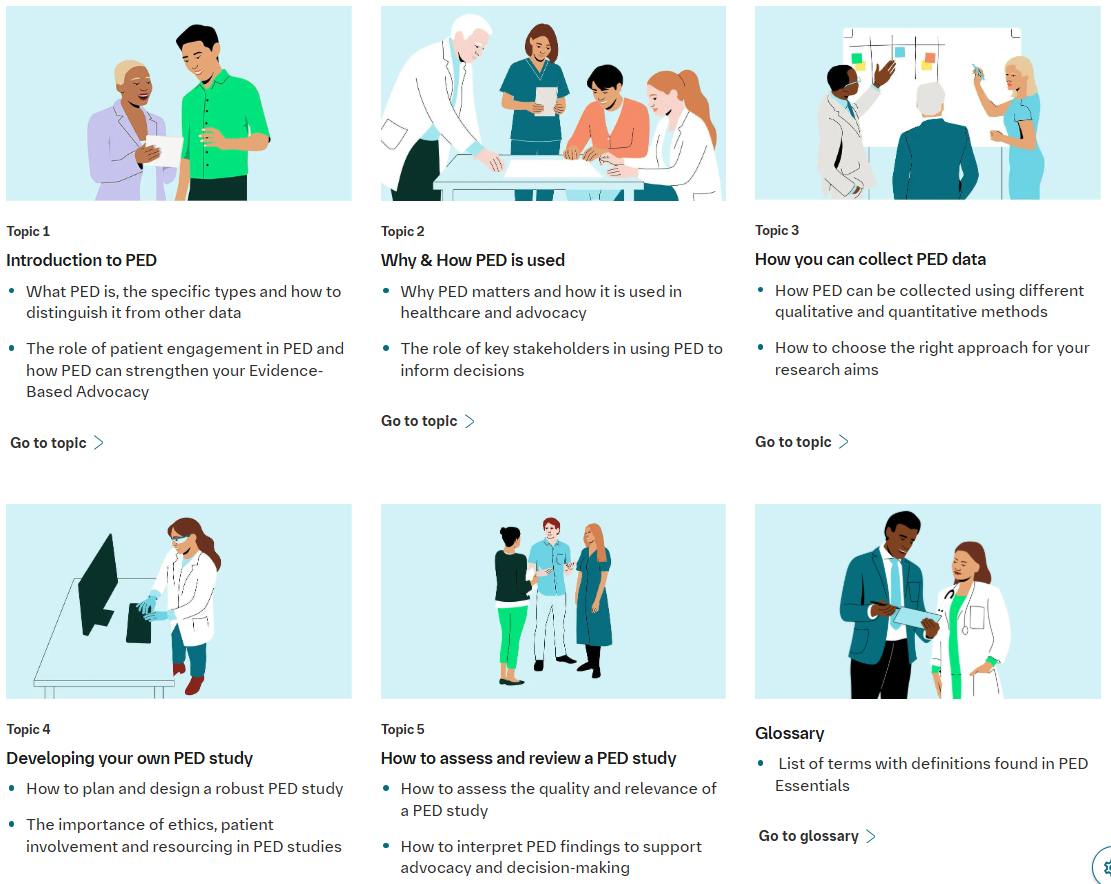
Boehringer Ingelheim launched PED Essentials, a free online learning hub on Patient Experience Data (PED) for patient experts, advocates, and patient organization leaders. Created during the company's Patient Month through its Global Patient Partnership Initiative, the hub responds to a common concern: interest in patient experience data is growing, but existing learning resources remain scattered and incomplete. PED Essentials aims to build knowledge and confidence in understanding, generating, and analyzing PED, helping patient organizations turn lived experience into evidence that informs healthcare decisions and improves care. A launch webinar is set for September 17.
| |
Rural Minds, the national nonprofit focused on rural mental health, launched its Rural Youth Mental Wellness Program to address a youth suicide crisis. The centerpiece is a set of free, anonymous digital Single Session Interventions adapted with Northwestern University's Lab for Scalable Mental Health and delivered on a platform built by Koko. The self-guided, roughly 10-minute modules teach teens to understand and cope with depression, anxiety, and stress, with no clinician needed. That design matters where providers are scarce, and the CDC reports rural youth suicide rates run 74% higher than urban peers. Built with input from a teen advisory committee following a pilot in Pennsylvania and New York, the online hub also offers resources on substance use, suicide prevention, and LGBTQ+ youth, plus a toolkit for parents and teachers.
| |
The American Foundation for Suicide Prevention and The Jed Foundation announced their intent to merge as equals, forming the nation's largest nonprofit dedicated to suicide prevention across the lifespan. Pending New York State Attorney General approval, the combined AFSP/JED will carry an annual operating budget of roughly $75 million and net assets near $140 million. JED CEO John MacPhee will lead the new organization. The merger is expected to close by fall 2026.
| |
STARR 988: Turning a Screening into a Lifeline
Every September, for Suicide Prevention Month, we host STARR 988 Suicide Prevention Training with our Certified Sites. The one-hour virtual session walks clinical research staff through how to recognize and respond to suicidal ideation during screening. The goal is simple. When someone screens ineligible, they should leave with more than an "ineligible for the trial" notice. They should get a compassionate, potentially life-saving response.
STARR 988 gives staff a clear script and protocol. When a prospective volunteer expresses suicidal thoughts, the screener pivots to the STARR 988 script and offers the National Suicide Prevention Lifeline's contact information. When it's appropriate, they can make a warm handoff directly to a trained specialist.
That small shift changes everything. A person in crisis who reaches out to a research site is no longer just a screening. The interaction becomes a real step on the suicide prevention pathway.
This September, we're expanding. We're organizing additional STARR 988 sessions across the STARR community so more sites are equipped to act quickly and meaningfully when someone in distress reaches out.
Why does this matter so much for mental health clinical research? Because our work touches lives, not just data. Site staff don't only screen volunteers and record results. They meet people in crisis. STARR 988 makes sure compassion and connection are built into those moments.
Suicide prevention shouldn't be a September initiative. It should be a lasting commitment woven into the fabric of clinical research. Together, we can make that happen.
Contact The STARR Coalition to schedule a STARR 988 training for your staff.
| | FOR OUR SPONSORS PARTNERS: | | |
Certify a Site. Strengthen the Trial.
Your timeline lives or dies at the site. A slow start, avoidable screen failures, participants who drift away at week six: most of it traces back to one thing, how well a site knows and is trusted by the community it recruits from. That is the exact gap STARR Site Certification is built to close.
| | |
When you invest in a site's Certification, you are not paying for a badge. You are investing in performance.
STARR spends the year building real relationships on that site's behalf. We identify community organizations within 30 miles, open the doors, and track where the community already gathers so the site knows exactly where to show up.
That kind of groundwork usually takes years. It is the difference between a site that posts a flyer and a site the community already trusts.
Trust shows up in the numbers you care about. Sites rooted in their community tend to start faster, enroll participants who better reflect the population your study needs, and keep them engaged longer. Certification also gives you a consistent signal across your network. Instead of guessing which sites are community-ready, you can see it at a glance.
At $2,500 per site each year, certification is one of the smallest lines in a study marketing budget... and it's tax-deductible. Set that against the price of a single delayed study or one under-enrolled site, and the decision makes itself.
Want to support certification for your priority sites? Reach out to the STARR Coalition team at action@thestarr.org and we will build a plan that fits your portfolio.
| | |
Psych Congress will hold their 39th Annual Meeting from September 15-19, 2026 in New Orleans, LA. The nation's leading conference on practical psychopharmacology and a community of passionate mental health clinicians, this is one of our favorite meetings of the year!
| |
|
The International Society for Bipolar Disorders (ISBD) 28th Annual Conference will be held September 28–30, 2026 at The Westin Bayshore in Vancouver, Canada. The conference brings together over 600 international researchers, clinicians, and scientists for keynote lectures, workshops, and symposia focused on advancing treatment and improving outcomes for those living with bipolar disorder and related conditions.
| |
|
Mental Health America will hold their conference from October 8-9, 2026. The 2026 Mental Health America Conference will focus on the theme More Good Days, Together. Through this theme, the conference will explore how to make more good days possible for all by connecting people to the right support at the right time and recognizing that “good” is defined by unique mental health experiences and goals. Show your support for mental health and connect with thought leaders, innovators, and decision-makers.
| |
The National Federation of Families 37th Annual Conference will be held October 13–15, 2026, in Orlando. This is one of the largest family mental health and substance use gatherings in the U.S. It brings together families, family leaders, family peer specialists, youth peers, advocates, researchers, providers, and national leaders to address today's most pressing challenges and strengthen the movement for community-based mental health and/or substance use support. It’s a rare chance to connect directly with decision-makers and families in one place. Click HERE for more information and to register. For exhibit opportunities and information, HERE.
| |
Site Solutions Summit will be held from October 15-18, 2026 in Orlando, FL. The Summit provides a unique hub where sites, sponsors, CRO executives, and regulators come together to discuss best practices and ideas while developing strategic partnerships through ideation sessions, workshops, and focus groups. Whether your priority is networking with sponsors and CROs or learning best practices built for research sites, the Summit provides a valuable experience.
| |
The American Neurological Association (ANA) will hold their 151st Annual Meeting ANA2026 from October 17-20, 2026 in San Diego, CA. The Annual Meeting has been designed to foster discussions among investigators in academia, industry, and foundations toward the common goal of furthering translational science..
| |
The CNS SUMMIT 2026 will be held November 1-4, 2026 in Boston at Encore Boston Harbor. The Summit brings together decision makers from pharma, biotech, CROs, investigator sites, technology, investors and other stakeholders.
| |
The NEI Fall Congress, held November 5-8, 2026 in Colorado Springs, is for mental healthcare professionals dedicated to advancing their knowledge and skills. Designed for all members of the mental healthcare team to help clinicians make informed decisions by breaking down complex concepts through animation and a unique visual language exclusive to the NEI.
| |
Neuroscience 2026 will be held November 14-18, 2026 in Washington DC. Each year, scientists from around the world congregate to discover new ideas, share their research, and experience the best the field has to offer. Attend so you can: present research, network with scientists, attend session and events, and browse the exhibit hall at the premier global neuroscience event.
| | |
The National Federation of Families (NFF) is the nationwide advocacy organization with families as its sole focus, playing an important role in helping parents, caregivers, and families and their loved ones whose lives are impacted by mental health and/or substance use disorders.
2026 has opened with unprecedented challenges for families whose loved ones experience mental health and/or substance use challenges. Across the country, a troubling resurgence of calls to return to mass institutionalization is taking hold. This renewed push toward institutional care, driven by workforce shortages and gaps in effective treatment, threatens to reverse decades of progress. NFF believes the most powerful antidote to this trend is an informed, mobilized, and well-supported network of families, community leaders, policymakers, and frontline professionals.
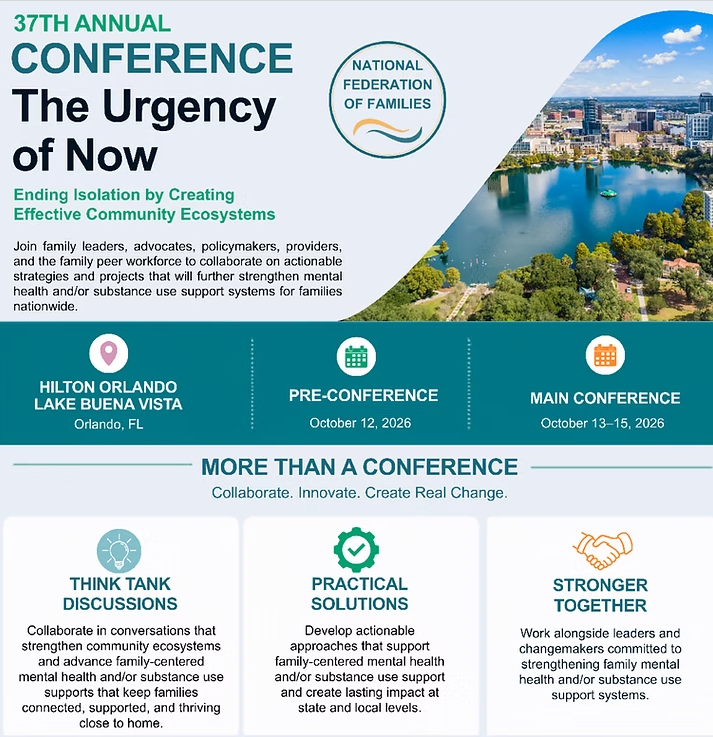
So, please joing us: NFF is hosting its 37th Annual Conference: The Urgency of Now – Ending Isolation by Creating Effective Community Ecosystems on October 13-15th at the Hilton Orlando Lake Buena Vista in Florida. This gathering will bring together families, family leaders, family peer specialists, youth peers, advocates, researchers, and national leaders to confront the challenges ahead and strengthen the movement for community-based mental health and/or substance use support.
| |
NAMI New York State Annual Education Conference 2026
Be part of NAMI New York State’s Annual Education Conference, taking place November 13–15, 2026, at the Marriott Hotel in Albany, New York.
Join advocates, professionals, and community leaders from across the state for the 2026 NAMI NYS Annual Education Conference: Mental Health for All: Uplifting Each Other Through Support and Advocacy.
This year’s conference will focus on strengthening connections, amplifying lived experience, and advancing equitable access to mental health care for all New Yorkers—while addressing the ongoing challenges facing our communities and the action needed to move forward. The dynamic agenda will feature national leaders in mental health, innovative practitioners, passionate advocates, and influential voices committed to expanding awareness, reducing stigma, and driving meaningful change.
For more information and to register, visit NAMI NYS EdCon 2026!
| | |
Thank you for reading!
If you have questions, comments, or would like to submit an item to be included in an upcoming newsletter, please email erica@thestarr.org.
| | |
The STARR Coalition | www.thestarr.org
LEAD WITH HEART.
| |
| How did you like this email? | | | | | | |