The Montana Girls STEM Collaborative seeks to unite and support educators, parents, professionals and other champions of STEM so we can engage and inspire the next generation! | |
The National Girls Collaborative Project (our parent organization) has been bringing together leaders and experts in STEM and sharing knowledge across organizations for 20 Years. Congratulations! | |
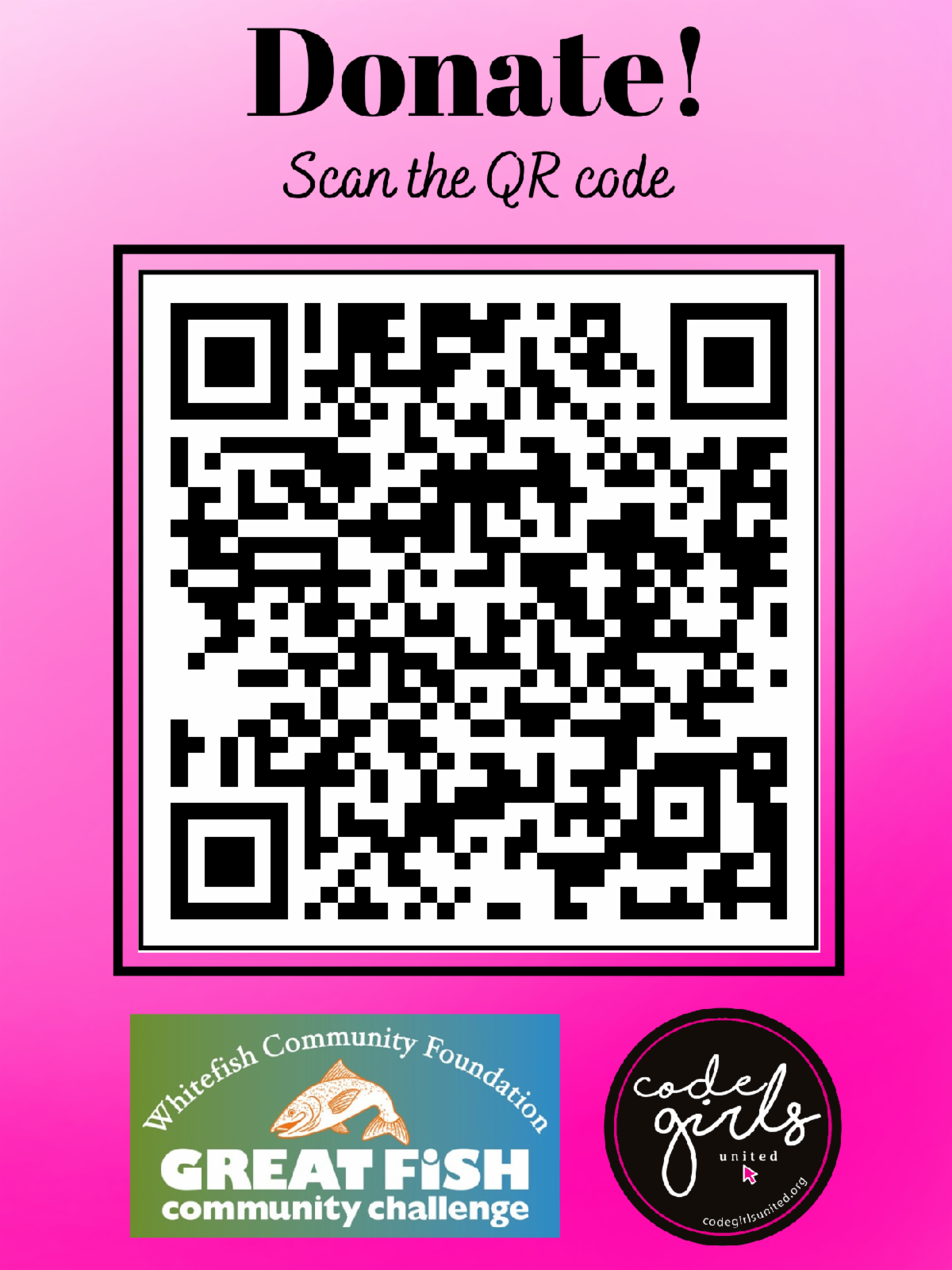
Code Girls United is in 20+ locations in Montana AND online! | |
Registration is now open for Montana's own Code Girls United’s free after-school programs starting on Monday, Sept. 12. In addition to in-person programs at more than 20 locations across the state, there will also be two online options held on Mondays from 5:30 - 6:30 p.m. and Thursdays from 4:00 - 5:15 p.m.
Code Girls United teaches girls from grades 4-8 how to code
and create apps while also instilling the lifelong skills of teamwork and self-confidence. The girls also have the opportunity to participate in the NW Regional App Challenge with the chance to win team scholarship prizes of $5000, $2500, or $1000, as well as the International Technovation Challenge and the Congressional App Challenge.
To see the variety of programs Code Girls United offers and to find an after-school program
near you, visit www.codegirlsunited.org.
If you would like to bring one of Code Girls United’s programs to your school, library, or after
school organization please contact Brenda Reiter, program director, at b.reiter@codegirlsunited.org. Code Girls United provides training, curriculum in a Google Classroom, support, a stipend for teachers, and OPI renewal credits.
| |
Find out how to become a TinkerLab! | |
|
Techbridge Girls is excited to announce that applications for TinkerLabs site partners are open. All out-of-school time (OST) program partners who serve Black, Indigenous, and Latina girls and gender-expansive youth are encouraged to apply. Selected applicants will become official Techbridge Girls TinkerLabs.
TinkerLabs will help us gain deeper insight into the experiences of youth and educators in the OST field and receive first access to the newest, cutting-edge Techbrige Girls curriculum and training resources. TinkerLabs will also participate in curriculum and resource facilitation, development, and feedback.
Benefits of this program include STEM curriculum and kits, classroom technology, and stipends. Applications are due Oct. 28; an informational webinar is on Sept. 28. Learn more.
| |
|
Cool job opportunities with Big Sky Watershed Corps, Montana Afterschool Alliance and National Girls Collaborative!
Big Sky Watershed Corps
BSWC places young professionals with partners throughout Montana. The program works with nearly one hundred different partners (host sites) including federal/state agencies, Tribal Nations, Conservation Districts, nonprofits, and other community-based conservation organizations to create community-based initiatives to protect, preserve and restore local watersheds. The BSWC program is seeking passionate individuals who are looking to gain experience in the natural resources while making a measurable impact in communities throughout Montana. Apply and find more info here.
Montana Afterschool Alliance
Engagement Coordinator: Half-time. This position will oversee MTAA’s outreach, including website, social media, and newsletter. The Engagement Coordinator will work with the MTAA team to develop and implement a communications strategy of partners across the state.
RFP/LEA Consultant: The consultant will support MTAA’s work with schools and local education agencies (LEAs) in advancing afterschool and summer learning for Montana’s youth. The Consultant can be an individual, team, or a partner organization.
Learn more about these MTAA positions.
National Girls Collaborative Project
Program and Events Coordinator. This position supports projects and events that increase access to equitable STEM opportunities, and will also support the entire organization administratively. The position closes on Sept. 22 with a start date of Nov. 1 or earlier if possible. Learn more.
| |
STEM Scholarships and competitions | |
|
Montana’s STEM/Healthcare Scholarship Program is designed to provide an incentive for Montana high school students to prepare for, enter into, and complete degrees in postsecondary fields related to science, technology, engineering, mathematics and healthcare. The goal of this program is to increase the number of STEM/Healthcare degree recipients participating in Montana’s workforce.
Applications Open Dec. 1, 2022. Learn more about this opportunity.
| | |
|
American Mathematics Competitions coming this fall
The MSU Science Math Resource Center will host the AMC competitions this November (for high school students) and in January 2023 for 8th graders. These competitions are free and offer cash prizes and scholarships.
To be notified when these contests are open, sign up for the SMRC newsletter.
| | |
Opportunities for Teachers | |
|
Montana Teachers: Apply to be a part of STEM in the Rockies October 7-8, 2022. Applications due Sept. 15
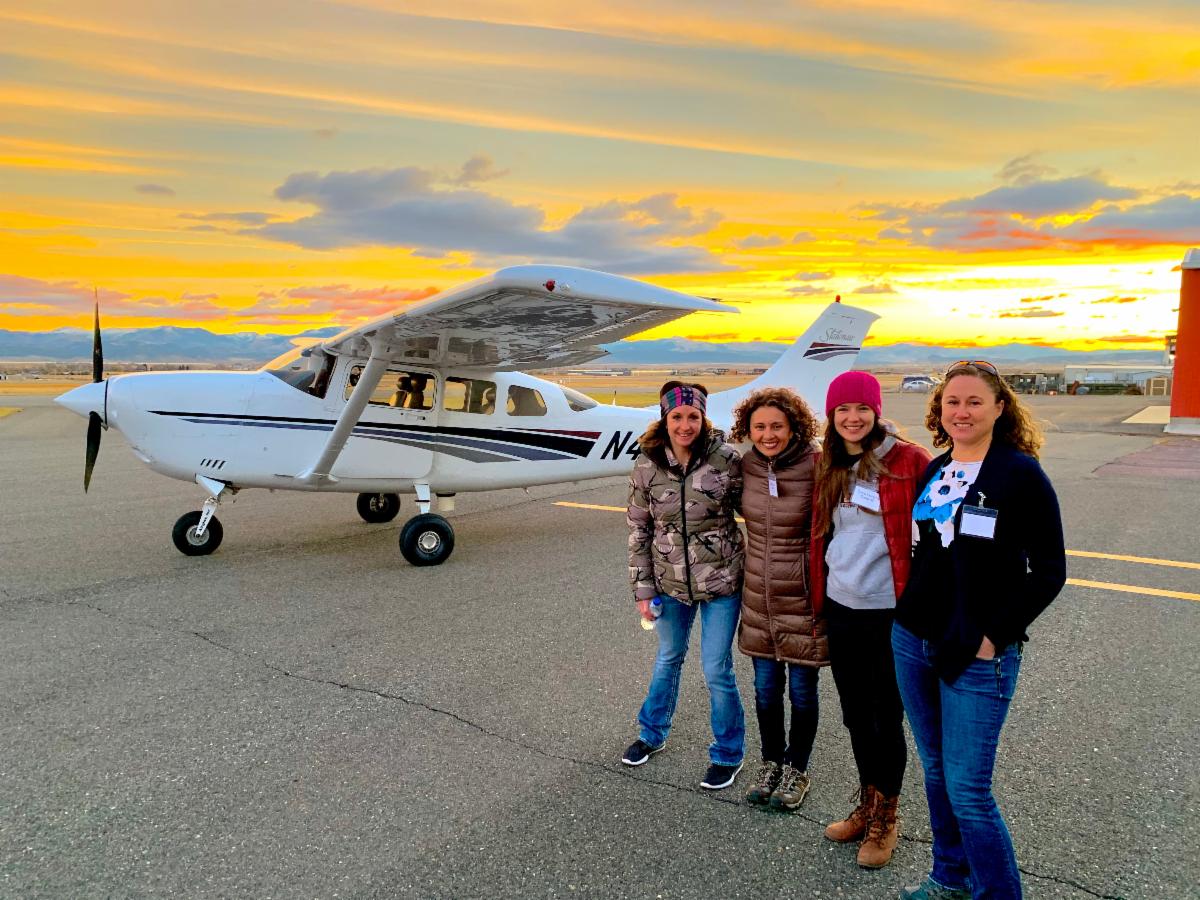
The Montana Department of Transportation - Aeronautics Division is teaming up with the Montana Learning Center to offer an aviation-based, engaging hands-on curricula that will get teachers and their students students excited about science, technology, engineering, and mathematics in aviation. This STEM in the Rockies workshop includes an introductory flight in one of the Aeronautics Division’s aircraft, tours of military and civil aviation facilities, classroom giveaways, and lodging/meals at the Montana Learning Center.
Participating teachers will earn 20 Montana Office of Public Instruction renewal units and return home with an array of aviation-themed student activities.
Space is limited to 18 participants, so apply today! Applicants must be STEM teachers who work in formal classrooms in Montana. Applications are due September 15th, and applicants will be notified of acceptance shortly after.
The STEM in the Rockies workshop is proudly designed and delivered by Montana pilots and teachers. Taught by award-winning science instructors Dr. Walt Woolbaugh and Ryan Hannahoe, this course is fully funded by the Montana Department of Transportation - Aeronautics Division.
| | |
Free MSU online workshop for high school teachers Sept. 22: Meet Biochemist Emily Dieter
Montana high school science teachers are invited to attend a free workshop on Thursday, Sept. 22 called MSU Research in Action.
This is the first in a monthly series hosted by the MSU Science Math Resource Center, and it features MSU Biochemist Dr. Emily Dieter. The workshop is free and online, Thursday, Sept. 22 at 4-5pm.
Each monthly Research in Action workshop features a Montana State University STEM researcher. You will not only hear about the work they do, but you will hear about their own STEM pathway. We will then have facilitated discussion to think about how you can bring the information into the classroom.
While the September session is best for high school teachers, future sessions will be great for teachers of younger grades.
Registration is limited to 30 participants. OPI renewal units are available.
More info and the link to register is here.
If you can’t attend but want to be notified of future SMRC workshops, you can sign up here
| |
|
Registration open for Classroom Observatory online class
Montana Learning Center and Montana State University offer a free, non-credit online course for high school teachers interested in using a state-of-the-art robotic telescope and integrate image-capturing and research capabilities into their curriculum.
This course gives teachers and their students unprecedented access to a world-class research facility, and teachers will learn how to use the observatory and capture images for student projects. The course will run from Oct. 3 through Nov. 22 and registration is available now. Contact Ryan Hannahoe at MontanaLearningCenter@gmail.com for more information.
| |
|
Meet Montana Women in STEM:
Teagan Leitzke, Montana Tech
| |
|
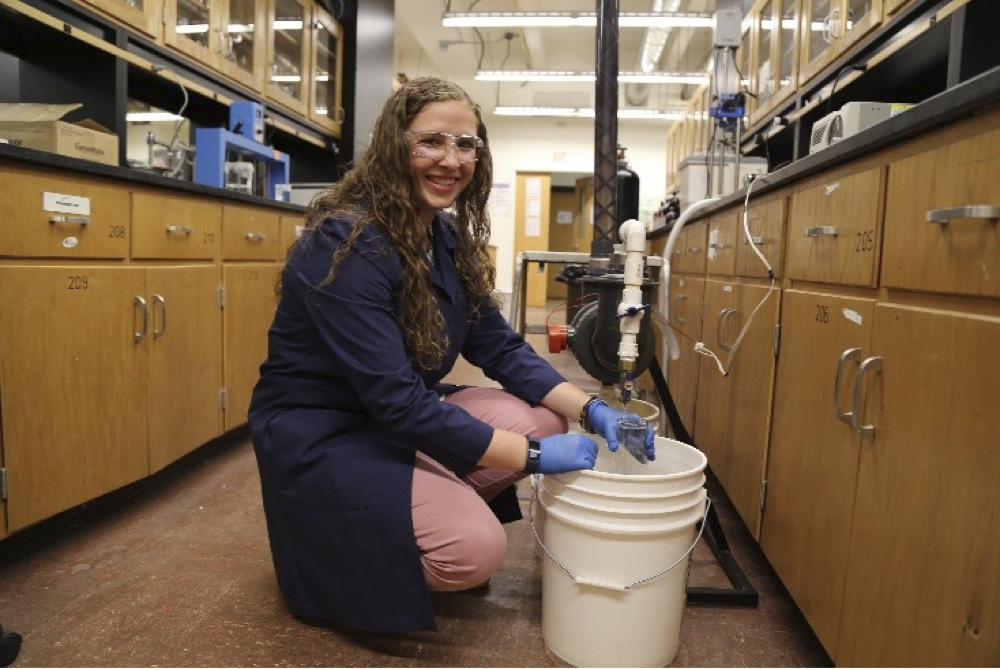
Meet Teagan Leitzke, a PhD student at Montana Technological University and a member of the EPSCoR Track 1 research team. Teagan works on a team to improve water quality in the Upper Clark Fork River, developing a system to remove contaminants, such as copper and lead, from waters.
What did you like to do as a young person? At what age and how did you know you wanted to be a scientist?
I enjoyed being transported to new worlds and going on daring adventures through reading and baking the world a better place by making goodies for my family and friends. I also enjoyed time outside and the peace and quiet that came with a walk through the neighborhood.
By the time I was in fifth grade, I knew I wanted to pursue science, but at that age, I wanted to explore the universe and be an astronaut. As I got older, being exposed to science demonstrations in school and watching shows like Bill Nye the Science Guy and MythBusters kept me passionate about science. These activities left me wanting to put on a lab coat (and safety glasses, of course!) and do experiments, exploring the limits of what we could achieve.
While my dream of being an astronaut may not have happened yet, my education has taken me in many directions that I never expected. I started out in high school loving my physics class and decided to get a Bachelor of Science in physics.
From there, I really wasn’t sure what I wanted to do, so I applied to a bunch of different graduate programs that had projects I was interested in, leading me to the materials science program at Montana Tech. I never thought I would be working with such a big group of people, trying to improve the environment in Montana, but it has given me some great experience and taught me a lot about research environments in an academic setting.
Read the full interview here.
Learn more about this and other EPSCoR-supported research at mtnsfepscor.org
| |
About the Montana Girls STEM Collaborative | |
The Montana Girls STEM Collaborative was founded as an outreach program of Montana NSF EPSCoR and has co-leaders at Montana State University and the University of Montana as well as volunteer board members across the state. This material is based upon work supported in part by the National Science Foundation EPSCoR Cooperative Agreement OIA-1757351. Any opinions, findings, and conclusions or recommendations expressed in this material are those of the author(s) and do not necessarily reflect the views of the National Science Foundation.
| | | | | |