6 REASONS TO INTRODUCE ROBOTICS TO ELEMENTARY-AGED LEARNERS IN YOUR OUT-OF-SCHOOL TIME PROGRAMS
Robotics offers an exciting and engaging way to introduce coding and the fun of STEM/STEAM learning to kids in PreK-upper elementary, especially in Out-of-School Time settings, including afterschool programs, enrichment centers, and summer camps. When using robotics in these informal settings, kids can get creative, practice problem solving, and engage in critical thinking in a hands-on way, while having a blast at the same time.
With robotics, kids learn to code by combining creative STEAM learning with collaboration and creation with arts and crafts, gaming, science projects, storytelling, and more.
So Why is Coding so Important?
We teach children to read and write because it opens new doors for them, gives them new ways to think about the world and offers new ways to express themselves. The same is true for coding. When we learn to code, we learn to think sequentially, to solve problems logically, and express our ideas through symbolic representation.
6 Benefits of Introducing Coding to Your Learners:
- Coding Teaches the Literacy of the 21st Century – Teaching children to code gives them fluency in a new set of tools for self-expression.
- Coding Develops Computational Thinking Skills – Computational thinking reinforces the cognitive skills developed in early childhood.
- Technology Becomes the Playground – Technology-rich experiences for children should be modeled on the idea of a playground, full of opportunities for creative play, social negotiation, and discovery.
- Robotics Makes Coding Tangible and Concrete – Children think and learn best when moving, playing, building, and engaging with concrete objects.
- Using Technology Breaks Down Engineering Stereotypes – Even in early childhood, children are already beginning to form opinions and stereotypes about which tools and technologies are better suited for boys.
- The Engineering Design Process Encourages Persistence – Children identify a problem, imagine, and plan a solution, build and test their creations, and share their work with peers.
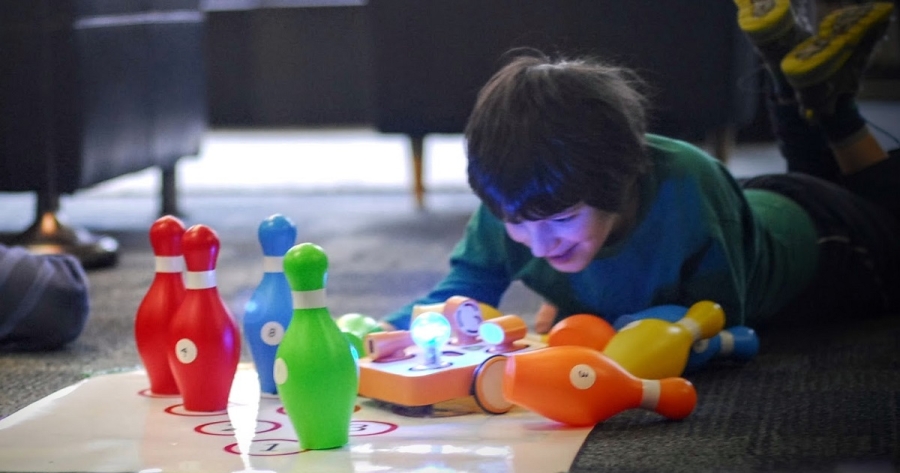
One way to introduce robotics to your elementary learners is with KIBO, the screen-free, hands-on STEAM robot. KIBO offers a fun and creative way to learn to code, but the kids will think it’s just play! Backed by 20+ years of child development research, KIBO has proven efficacy in engaging students to learn STEAM concepts while collaborating, laughing, moving, and learning.
The dynamic learning environment of an afterschool program, summer camp, and enrichment program gives children the perfect opportunity to benefit from all these aspects of robotics. Afterschool educators need to engage a wide range of children’s interests. With the diverse activities that coding supports – building, storytelling, gaming, decorating, roleplay – robotics makes for a perfect foundation.
The kids won’t want to stop coding and won’t want to leave!
Learn More
Learn more about the benefits of coding and robotics and how easy it is to integrate an age-appropriate STEAM robot like KIBO into your out-of-school time programs. Download the Free White Paper “The Case for KIBO – The Importance of Screen-Free Coding and Robotics” at https://kinderlabrobotics.com/naa/.
|