|
November Newsletter Highlights:
Learn how federal funding shifts are prompting local changes, note the upcoming in-person Continuum of Care Board meeting, volunteer for the 2026 Point-in-Time Count, apply for new funding, and much more!
| | | |
Last week, on October 28, elected officials from across Sacramento came together to discuss goals and strategies to strengthen partnerships on resolving homelessness. The meeting focused on the urgency of coordination, accountability, and shared commitment to lasting solutions.
As we build on that momentum, our focus must turn to concrete actions that help our community remain stable amid shifting federal policies and funding.
The government shutdown already has begun to disrupt critical support for food security benefits, Medicare, and housing programs. Additionally, the U.S. Department of Housing and Urban Development (HUD) is expected to propose a major shift in federal homelessness funding by capping the share of Continuum of Care (CoC) dollars that can support permanent housing at 30%.
How do federal funds support Sacramento?
Sacramento currently dedicates nearly 87% of the $40.5 million in federal funding awarded in 2024 to permanent housing, supporting 2,197 people in 1,592 subsidized housing units.
- Those living in these homes are among our community’s most vulnerable: approximately 70% live with a disability, 21% are seniors, and 30% are youth.
- Nearly 54% of these individuals have maintained their homes with federal subsidies for more than five years, and almost one in three for over a decade.
What would reduced funding mean?
A shift in funding will affect our community’s capacity by:
- Significantly limiting Permanent Supportive Housing (PSH) and Rapid Rehousing (RRH) units that move individuals out of homelessness.
- Reducing rental assistance and supportive services that enable housing stability.
- Compromising partnerships with landlords that make units available.
More specifically, Sacramento could lose funding for nearly 65% of its current capacity, directly impacting 1,431 individuals and families who rely on these programs for stability.
In addition to the proposed funding shift, delays in the release of federal CoC program funds will strain local programs and disrupt payments to housing providers.
How is Sacramento responding?
With local partners, Sacramento Steps Forward is working to protect housing stability, preserve progress, and advocate for resources that meet the needs of our community. By collaborating, we can most efficiently, effectively, and creatively tackle these issues by:
- Advocating for stable state and federal funding.
- Developing contingency strategies that sustain housing and services.
- Identifying vulnerable individuals and families and providing support that prevents them from falling into homelessness.
We recognize the immense uncertainty of this time and the stress on providers, landlords, outreach staff, and, especially, on those who are unhoused.
We see this moment as an imperative to further invest in a strong homelessness response system for Sacramento, where decisions are data-driven, partnerships are strong, progress is measurable, and our approaches remain compassionate.
In partnership,
Lisa Bates
Chief Executive Officer, Sacramento Steps Forward
|
| | |
Federal Shutdown Impacts on SNAP: Local Resources and Ways to Help
A recent federal court ruling has allowed limited funding for CalFresh (California’s SNAP program), meaning most recipients should receive a portion of their November benefits. However, service disruptions and a gap in federal support may continue to strain families and local food programs.
Sacramento residents can find current information and local assistance through 2-1-1, the Sacramento Food Bank & Family Services Food Finder, and the County Department of Human Assistance.
We encourage community members to support local food banks or give through the Sacramento Food Bank and Family Services which will make donated dollars stretch further through bulk purchasing of food. Giving Tuesday, on December 2, also provides an opportunity to donate to our regional providers to help them increase services and support for the community.
| | | | |
Continuum of Care Meetings
Upcoming CoC Meetings
Become involved in and learn more about our local Continuum of Care (CoC), which leads our regional planning, coordination, and funding to resolve homelessness:
-
CoC Board: In-person on Wednesday, November 11 at 8:00 a.m.
-
Coordinated Access System Committee: Thursday, November 13 at 2:30 p.m.
-
Point-In-Time (PITC) Count Committee: Thursday, November 20 at 9:00 am
| | |
October 2025 Board Meeting Recap
The October Continuum of Care (CoC) Board meeting provided a forum for continued discussion on regional homelessness response governance structure. The presentation and conversation enabled the sharing of a wide range of perspectives, insights, and recommendations. The CoC Board meeting minutes and materials are available here.
What to Expect at the November Board Meeting
This meeting will be held in-person at 2425 Sierra Blvd, Sacramento, CA 95825. Free, on-site parking will be available. Agenda items will include continued discussions on shared governance of local homelessness response, along with updates on the Sacramento County Social Health Information Exchange, CoC Program Competition Notice of Funding Opportunity, Point-in-Time Count, and Problem Solving Access Point Request For Proposals. Find the most up-to-date meeting information on our calendar.
| | | | |
2026 Point-in-Time Count:
Volunteer Now
Are you ready to better understand homelessness in Sacramento? Do you want to volunteer in a way that has big impact for how we are able to respond to homelessness as a community? Good news: You can now officially register to volunteer for the 2026 Point-in-Time Count. No experience or expertise is required. All you need is reliable transportation and a pair of walking shoes.
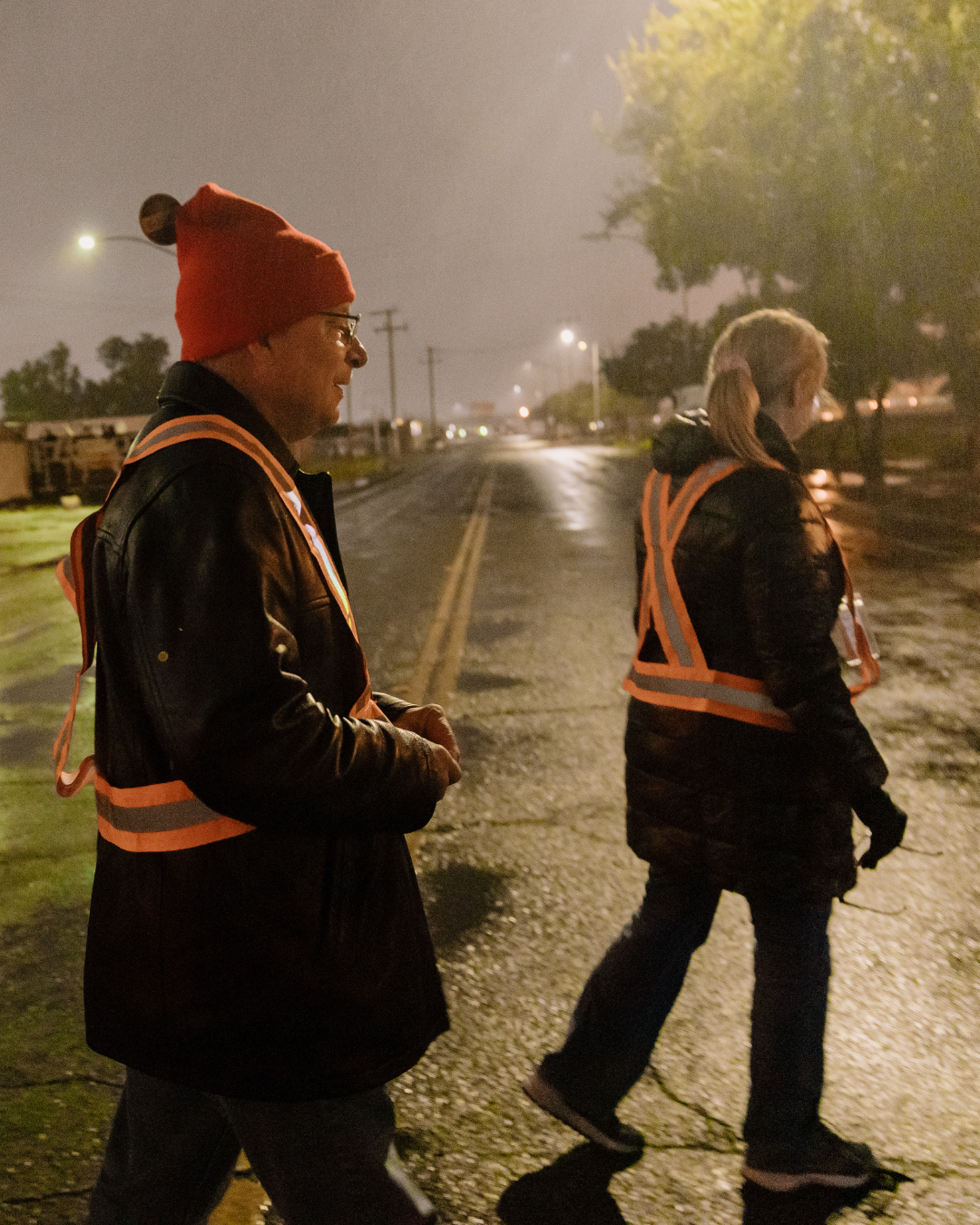
The 2026 Point-in-Time (PIT) Count will be happening on January 26–27, 2026, with volunteers surveying each night from 5:00–11:00 p.m., starting from the Scottish Rite Masonic Center in Sacramento.
What is the PIT Count? Every two years, volunteers spread out across Sacramento for one or more nights to count and engage with people experiencing homelessness. The information gathered helps our community understand where support is needed most and how to improve local housing and service programs. This year, we’re aiming to recruit 1,000 volunteers to take part.
| | | |
Trainings for Anyone Interested in Resolving Homelessness
Did you know? We host and promote a wide range of trainings, from local sessions on accessing services to national webinars on housing and homelessness, outside of our more targeted training series for CAS Assessors and CoC partners. Explore our newly revamped More Trainings for Service Providers and Partners webpage to find trainings like CalAIM for Homelessness Response System Providers, Sacramento County Housing and Disability Advocacy Program, Disability Rights California, and more. These sessions are open to anyone, and help deepen understanding of programs that connect people to healthcare, disability assistance, and housing stability.
| | | |
The Frontline Learning Collaborative
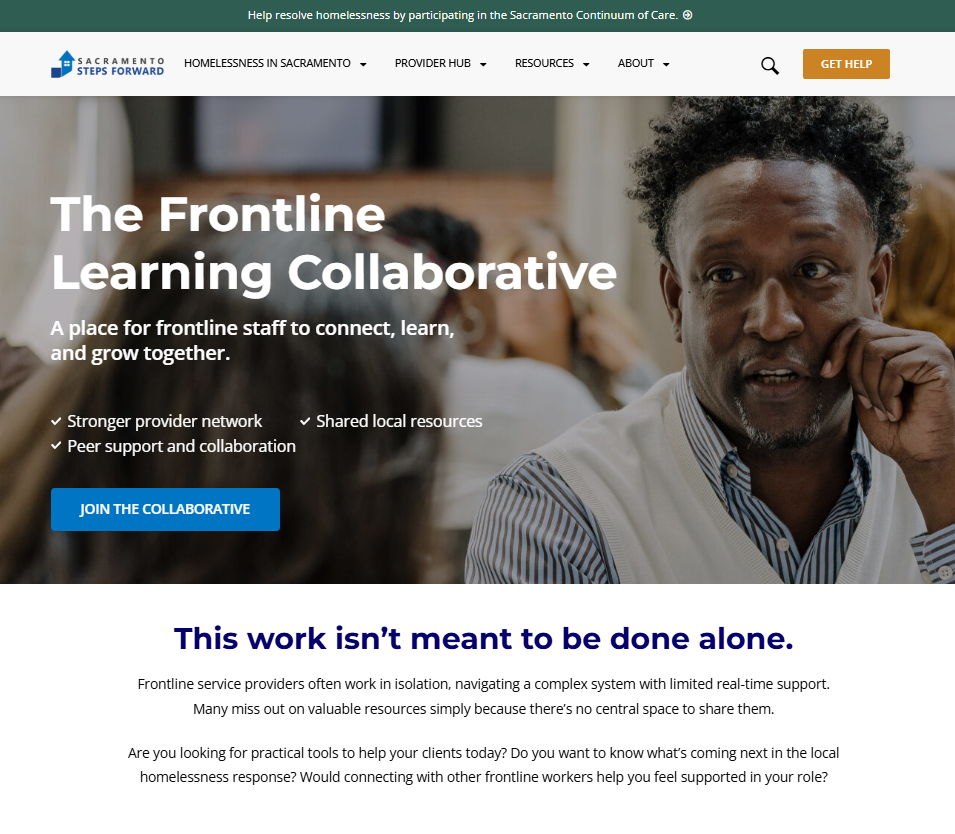
Mark your calendars for the last Frontline Learning Collaborative of 2025, featuring the Bay Area Community Services (BACS) on proven methods to address homelessness and behavioral health.
The meeting will take place on Thursday, November 20, 10:00 a.m.–12:00 p.m. at the Rose Family Creative Empowerment Center. There will be no meeting in December, but the collaborative will pick back up in 2026.
| | Updates & Progress Points | | | |
Sacramento's State of Homelessness: Language Updates and September 2025 Data
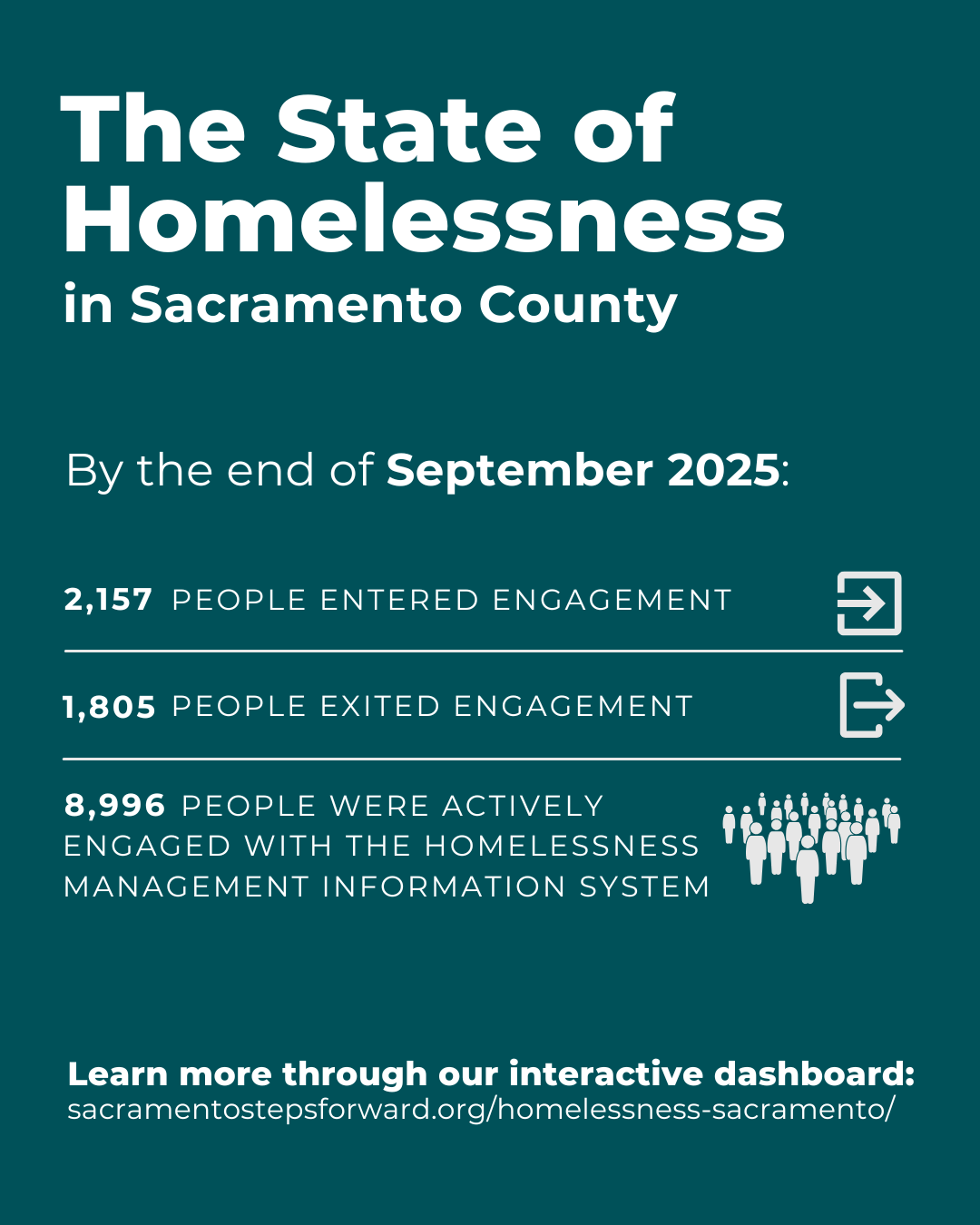
According to data gleaned from our Homeless Information Management System, by the end of September 2025:
-
8,996 people were actively engaged within our homelessness response system,
-
2,157 people entered engagement,
-
1,805 people were no longer engaged,
-
1,009 was the net increase of people engaging with our local homelessness response system.
To get the most out of the dashboard, check out the how-to video to discover functions you might not notice at first glance.
Note: You may notice that some terms have been updated in the State of Homelessness dashboard. The dashboard now uses language such as “people actively engaged with the homelessness response system,” “entered engagement,” and “no longer engaged.” These updates more accurately reflect what our Homeless Management Information System (HMIS) captures: people experiencing homelessness who are connected to services and support within our community. While the phrasing has changed, the data represents the same consistent, community wide picture of homelessness in Sacramento.
| | | |
Sacramento's Coordinated Access System: Stories and Data from September
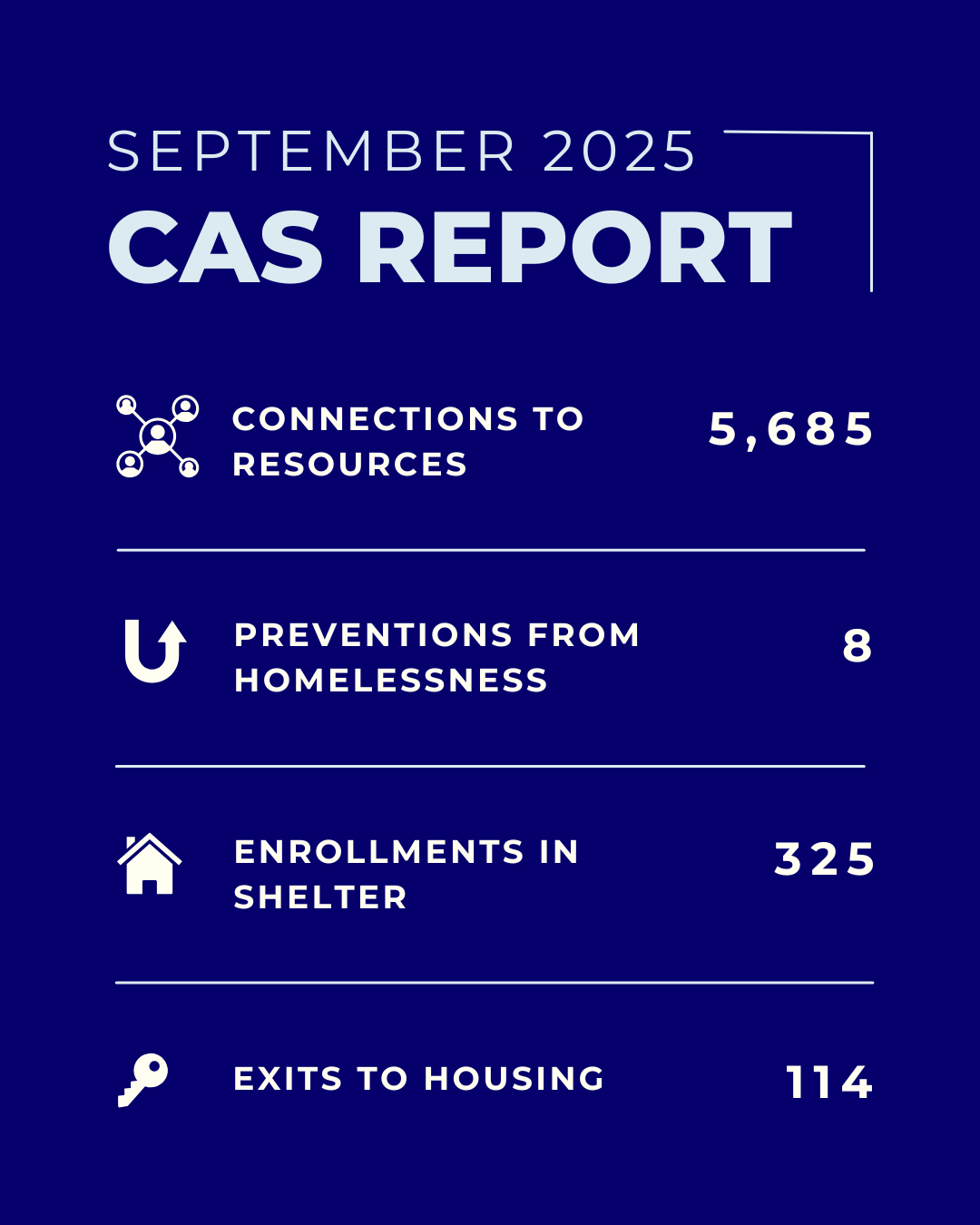
Sacramento's Coordinated Access System (CAS) is our community's door to homelessness and housing services. In September, it connected 5,925 people to support. The CAS helped prevent homelessness for 14 people, supported 214 to become housed, and enrolled 101 in shelter. The following is just one of these many stories:
"After facing homelessness, a woman came to the 2-1-1 team seeking help securing shelter where she could stay with her emotional support dog, her constant companion and source of comfort through incredibly difficult times. . . .
Understanding how important that bond was, we worked together to identify pet-friendly shelter options. In a short time, I was able to get her placed in a shelter where she and her dog could stay together.
With shelter secured, she’s been able to reestablish a routine, explore next steps for employment, and begin putting her life back on track."
To access the CAS, call 2-1-1 and press 8.
| | | | |
New Law Protects Those Helping People Experiencing Homelessness
Governor Gavin Newsom signed SB 634 on October 10, 2025. This new state law protects service providers, faith groups, and community members who support people experiencing homelessness. It makes clear that offering food, water, medical care, or legal assistance cannot be treated as a crime, affirming that helping others meet basic needs is an essential part of our community. Read more from the National Alliance to End Homelessness below.
| | | | |
Waking the Village Selected to Support Youth Action Board
Sacramento Steps Forward is excited to award Waking the Village with funding to support youth-led solutions to homelessness in Sacramento County. The contract runs through August 2027.
Chosen for their strong track record in youth engagement and trauma-informed services, Waking the Village will provide the infrastructure for the Sacramento Continuum of Care Youth Action Board (YAB) to expand opportunities for transitional age youth to shape system decisions, develop leadership pathways, and launch youth-led initiatives addressing the root causes of homelessness.
This project, supported through the California state Homeless Housing, Assistance, and Prevention (HHAP) program, reflects our shared commitment to centering youth voices and advancing community-driven change.
| | Opportunities & Information | | |
New Funding Opportunity: Black Child Legacy Campaign Expands to Rancho Cordova
The Center at Sierra Health Foundation and the Steering Committee on Reduction of African American Child Deaths have announced new funding to expand the Black Child Legacy Campaign into Rancho Cordova. One community-based organization will be selected as the eighth Community Incubator Lead site, receiving up to $100,000 over six months to strengthen local efforts that keep children safe and healthy. Applications are due December 1, 2025.
| | | |
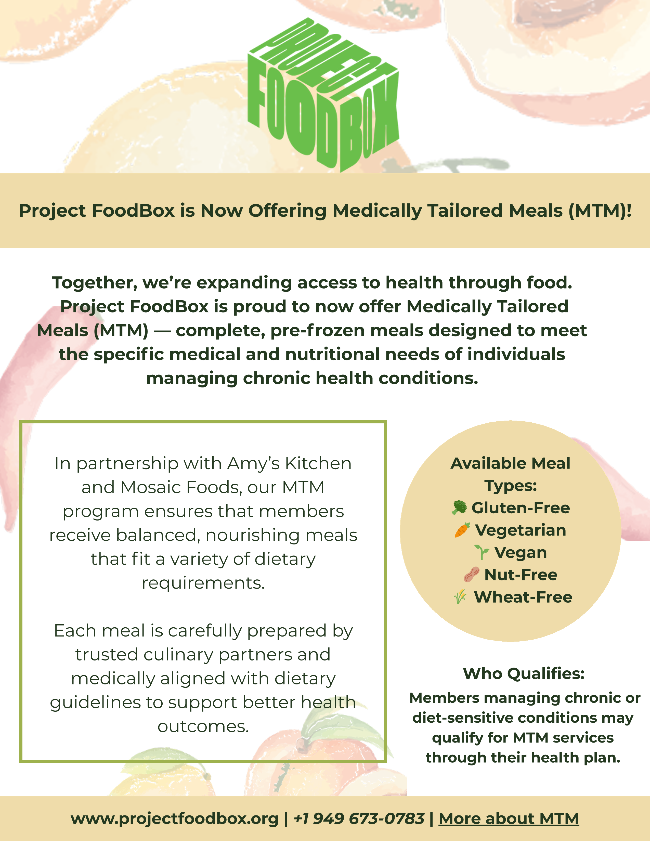
Project FoodBox is Now Offering Medically Tailored Meals!
Project FoodBox is now offering Medically Tailored Meals (MTM) for individuals managing chronic or diet-sensitive health conditions. In partnership with Amy’s Kitchen and Mosaic Foods, the program provides pre-frozen, nutritionally balanced meals that meet medical and dietary needs, including gluten-free, vegetarian, vegan, nut-free, and wheat-free options. Members may qualify for MTM services through their health plan.
| | | | |
Micro-Communities and Safe Parking Informational Resources
The City’s Department of Community Response (DCR), in collaboration with Councilmember Vang, has compiled a set of resources to help residents continue learning and stay informed about local micro-community and affordable housing projects . These materials include:
All resources are available on their website, linked below.
| | | |
Share Your Work: Be Featured as a Provider
Help us highlight the great work happening across Sacramento! We’re inviting providers to share their progress, challenges, and opportunities for collaboration to be featured in our upcoming newsletters and other communications. This is a chance to showcase your impact, inspire new partnerships, and help shape the conversation around homelessness response. Fill out the form below to share your story and connect with the broader community.
| | | | | |