September 2026

SACRAMENTO STEPS FORWARD

MONTHLY NEWSLETTER


September Newsletter Highlights:

Learn about Sacramento's Problem-Solving Access Point approach to resolving and preventing homelessness, participate in upcoming conferences, events, and trainings, learn about upcoming hour changes to the Coordinated Access System, and more.


A Problem-Solving Approach to Preventing and Resolving Homelessness 


A Message from Tlaltzin Muro Gomez,

Program Administator, Sacramento Steps Forward


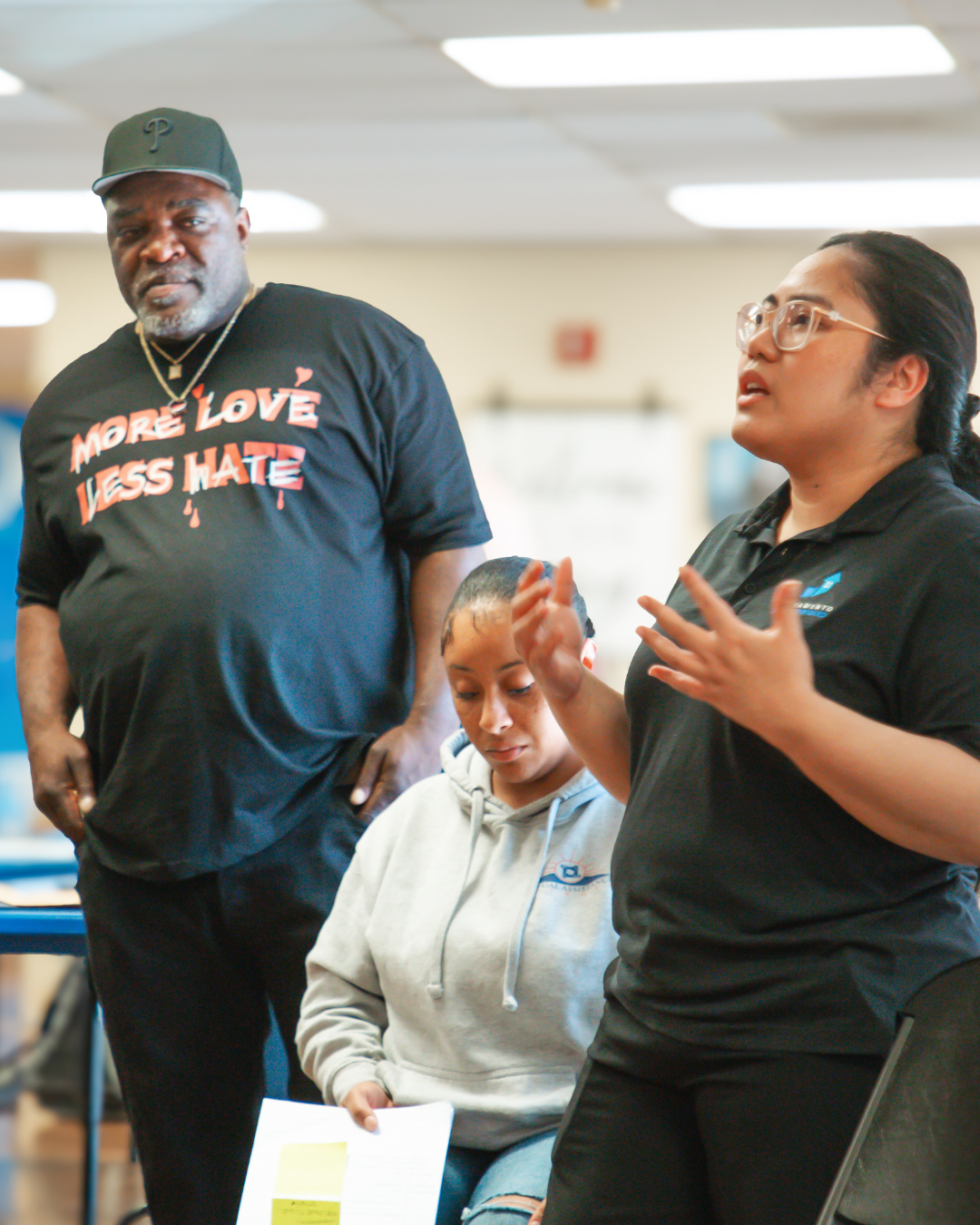
When a family receives an eviction notice, falls behind on a utility bill, or can't cover move-in costs required to secure stable housing, one-time financial assistance can help them keep their home or get quickly housed. That's the concept of Housing Problem Solving and the opportunity of the Problem-Solving Access Point (PSAP) program, an effort that is ramping up in reach and impact here in Sacramento. 


Housing Problem Solving (HPS) is a person-centered, housing-focused approach to resolving housing crises. It starts with a conversation that centers a household’s strengths, relationships, and support networks to identify solutions that can help them remain housed or quickly return to housing. Depending on the household’s needs, HPS may include connections to community resources, conflict resolution, landlord negotiation, or financial assistance. 


Sacramento Steps Forward (SSF) developed the Problem-Solving Access Point (PSAP) program around this HPS philosophy as part of the community’s broader homelessness response framework. Since 2022, the PSAP program has helped more than 1,000 households secure permanent housing, connecting eligible households with trained navigators who help identify housing solutions, connect to community supports, and access financial assistance when appropriate. 


SSF supports the PSAP network through two partnership models with provider agencies: contracted partnerships and Memorandums of Understanding (MOUs). Both partnership models provide access to PSAP services, with the primary difference being how households connect to providers. Contracted PSAP providers are selected through a competitive Request for Proposals (RFP) process and receive referrals through the 2-1-1 CAS Specialist team, while MOU partners connect with households through their own community outreach and existing networks.  


In 2026, Sacramento Steps Forward completed a competitive Request for Proposals process to expand the PSAP network across Sacramento County. Contracts were awarded to Community Health Works (COHEWO) and United Way California Capital Region (UWCCR). Together, these organizations now provide six staff members to support PSAP services.  


In its first four months of expanded operations (April–July 2026), the PSAP program provided financial assistance to 160 households. On average, $2,984 was provided per household, with an average resolution time of 14 days, measured from notification of a completed financial assistance request to the release of payment to the landlord or vendor. Together, these early results highlight the PSAP program's ability to provide targeted financial assistance to help households address housing crises quickly and efficiently. 


Eligible community members can access PSAP referrals Monday through Friday by calling 2-1-1 and selecting option 8 to speak with a CAS Specialist and complete a Crisis Assessment. Eligible participants are then connected to an available PSAP provider who will reach out and schedule an intake appointment within 24 hours. 


Sacramento’s continued investment in prevention and problem-solving is an important part of building a stronger, more effective community response to homelessness. Providers interested in becoming a PSAP partner can reach out to our team psaps@sacstepsforward.org to learn more. 


With appreciation,


Tlaltzin Muro Gomez


Events & Invitations


Continuum of Care Meetings


Get involved in our local Continuum of Care (CoC), which leads our regional planning, coordination, and funding to resolve homelessness. This month's upcoming meetings include:


What to Expect at the September CoC Board Meeting


The Sacramento Continuum of Care (CoC) Board meeting will include updates on the work of the Housing and Homelessness Ad Hoc Task Force and a deep dive into the Unified Funding Agency Designation and what it would mean for Sacramento. It will also provide opportunity for in-person public comment.


View the meeting online or participate in-person ➜


You're Invited: Fall 2026 Sacramento Stand Down


The Fall 2026 Sacramento Stand Down will take place September 24–26 at the Volunteers of America Veterans Service Center in Mather. Sacramento Stand Down brings together government agencies, nonprofit organizations, and other service providers to connect veterans experiencing homelessness or at risk of homelessness with a coordinated network of support.


The three-day event will run 9:00 a.m.–2:00 p.m. Thursday and Friday and 9:00 a.m.–1:00 p.m. Saturday. Services and resources will be available all three days on a first-come, first-served basis.


Interested in participating as a community partner? View the Community Partner Flyer for information about providing services or resources at the event.


Share Your Expertise at Housing California’s 2027 Annual Conference


Housing California is now accepting session proposals for its 2027 Annual Conference, taking place May 4–6 in Sacramento. This year’s theme, Growing Our Movement to Meet the Moment, will highlight innovative, interactive sessions focused on lessons learned, practical solutions, and strategies for systems-level change.


Local providers and partners are encouraged to consider submitting a proposal, particularly for Track 7: Strengthen Organizations & Leaders in the Movement, to share local experience and expertise from Sacramento’s homelessness response system.


Session proposals are due by October 9, 2026.


Housing Problem-Solving Training: Building Practical Skills with Sacramento Providers


Sacramento Steps Forward leads training on Housing Problem Solving to equip providers with practical, person-centered skills to help people experiencing or at risk of homelessness explore housing options based on their strengths, relationships, and goals.


Feedback from our latest session shows that providers are leaving with greater confidence in having those conversations and helping clients identify realistic next steps. That includes exploring immediate housing options, supporting clients in making their own choices, and approaching each conversation with culturally responsive, trauma-informed practices. The next two-day HPS training will take place October 14–15, and openings are still available but limited.


Updates & Progress Points


Task Force Begins Work on Regional Governance Planning 


Representatives of regional governments and the Continuum of Care began meeting in early August to work on a new plan for managing Sacramento's homelessness response system. The group, known as the Sacramento Housing and Homelessness Ad Hoc Task Force, plans to finalize a recommendation by early 2027. 


The final plan will include details on the CoC's board composition and charter, roles and responsibilities, and implementation steps. It will require approval by all participating jurisdictions. Learn more about the task force and what it means for Sacramento in the full update below.


Senate Bill 802: Status and What We Know 


As a local task force works on reframing governance of our homelessness response system, Senate Bill 802, authored by Sen. Angelique Ashby (D-Sacramento), has been approved by the state Legislature and is waiting for the Governor’s signature. 


The intention of the bill is to require Sacramento County and local cities to establish and participate in a Joint Powers Authority (JPA), a new legal entity, to coordinate housing and homelessness efforts across the county and give direction to the region's Continuum of Care (CoC) and its lead agency, Sacramento Steps Forward (SSF). 


Here is what we do and don’t know at this stage: 


  • Structure and Cost: The bill doesn't specify how the new JPA would oversee the CoC and SSF. At this time, we cannot estimate how that oversight would impact reporting, staffing, administrative structure, or associated costs. 
  • CoC Board: Federal regulations require Continuums of Care to maintain a board, and state law cannot override that. It is unclear at this time how the JPA and its new board would relate to our existing CoC Board. 
  • Funding decisions: SB 802 directs the new JPA to align regional funding while also stating that local jurisdictions retain final control and approval over local, state, and federal funds. How those two provisions work together in practice hasn't been spelled out yet. 


We will continue to monitor the status of the bill as it nears the September 30 deadline for the Governor’s decision. 


2-1-1 Will Update Hours to Concentrate Coverage During Peak Demand


Beginning October 1, 2-1-1’s Coordinated Access System will shift to core operational hours of Monday through Saturday, 7:00 a.m. to 7:00 p.m. The change is designed to better align staffing with peak demand and the hours when shelters and housing programs are most available for intake.


Community members will continue to be able to reach 2-1-1 and access the Coordinated Access System 24/7/365. Focused CAS Specialist staffing during core hours will help ensure more people receive timely, comprehensive assistance when demand is highest and housing and shelter resources are most accessible.


Staff Spotlight: Welcoming Dr. Ayanna McGee as Chief Implementation Officer


We’re pleased to congratulate Dr. Ayanna McGee on stepping into her new role as Chief Implementation Officer at Sacramento Steps Forward. In this role, Ayanna will lead system-level efforts to strengthen and integrate the systems of care that support people experiencing homelessness, helping translate regional priorities into coordinated implementation across partners and programs.


Ayanna brings deep experience in public health, program implementation, evaluation, and community engagement, along with a strong commitment to building systems that work better for people experiencing homelessness.


Ayanna succeeds Dr. Trent Simmons in the role following his appointment as SSF’s Chief Executive Officer. We’re grateful for the strong foundation Trent built and look forward to Ayanna bringing her own leadership, expertise, and perspective to this important work.


The Coordinated Access System:

July Data


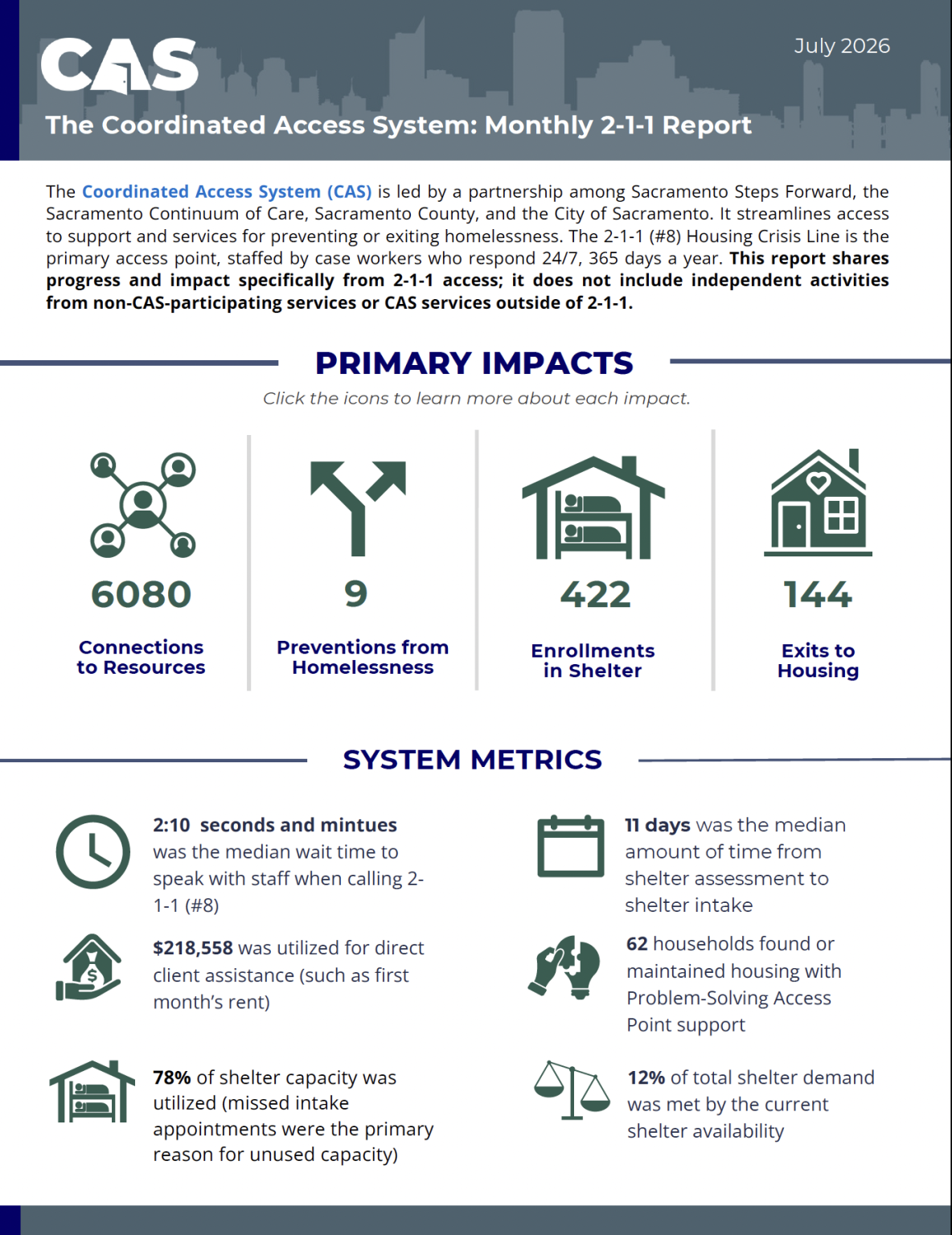
July was another strong month for helping individuals move toward greater stability. Connections to resources increased to 6,080 from 5,832 in June, and Problem-Solving Access Points (PSAPs) helped 62 households find or maintain housing, up from 49 in June. The direct client assistance utilized for PSAPs also increased substantially, to $218,558 in July up from $127,368 in June.


This direct assistance supported people facing a range of housing challenges, including individuals experiencing homelessness for the first time, college students, and families moving into new homes after experiencing homelessness. We saw across the board how timely, flexible assistance can help meet different needs and remove barriers to housing stability.


Shelter enrollments also increased to 422, up from 383 in June, primarily because clients had to be exited and re-enrolled when moving between shelter locations. Overall, July’s results reflect the continued role of problem solving and direct assistance in helping people navigate housing crises and move toward a place they can call home.


Want to learn more about the CAS? Sign up for our CAS newsletter!


From Sacramento County: Progress, Challenges, and the Work Ahead for Homelessness Services


Sacramento County has released a new FY 2025–26 update drawing on HMIS data from County-funded homelessness programs. The results point to continued progress: 6,662 unduplicated people were served, and 43% of participants who exited programs moved to permanent housing.


The update also offers a broader look at shelter use, participant needs, and how County investments are supporting the work.


Opportunities & Resources


Coming Soon: Sacramento Youth Resource Guide Mobile Mobile App


A new mobile resource is coming this September to help Transition-Age Youth (TAY) more easily find and connect with services across Sacramento. The Sacramento Youth Resource Guide (SYRG) app will bring housing, food, employment, health care, education, transportation, and other resources into one centralized, mobile-friendly platform.


Developed collaboratively by the Sacramento Continuum of Care’s Youth Action Board, SkyClutch, 2-1-1 Sacramento, and Sacramento Steps Forward, the app will allow TAY to browse services by category, search for nearby resources, and connect with live referral and support specialists when additional help is needed.


California Releases Draft Affordable Housing Finance Regulations


California’s Housing Development and Finance Committee has released draft regulations proposing a more coordinated approach to affordable housing funding. The changes include a single application, coordinated review process, aligned award timelines, and more consistent standards across programs.


For affordable housing developers and providers, the draft is worth watching because it would shape how several state funding sources are accessed and coordinated. Public feedback is open through September 18, with additional review and implementation steps planned before the first funding round opens in early 2027.

Review the draft regulations and learn how to provide feedback below.


New Report and Tool: Life After Supportive Housing


A new tool from the National Alliance to End Homelessness can help equip Permanent Supportive Housing residents to self-assess their readiness to transition to independent living. Providers can use this tool to provide consistent, structured help to people who are interested in leaving PSH. Check out the report and the Alliance-supported research that informed it below.


September Wellness Tip: Name What You’re Carrying


Some workdays leave you feeling unsettled without an obvious reason. After a difficult day, try taking a moment to put a specific name to what you are feeling: frustrated, disappointed, overwhelmed, worried; something else that goes deeper than "stressed."


This simple practice is known as "affect labeling," or putting feelings into words. Identifying and naming an emotion can help reduce immediate emotional reactivity and create a little more space between the feeling and your response.


You do not need to solve the feeling or talk yourself out of it. Sometimes identifying what is there can make the experience feel a little more manageable.


What helps you recognize and work through the emotions that can come with this work? We’d love to hear about it! Use the button below to share what works for you.


Share Your Work: Be Featured as a Provider


Help us highlight the great work happening across Sacramento! We’re inviting providers to share their progress, challenges, and opportunities for collaboration to be featured in our upcoming newsletters and other communications. This is a chance to showcase your impact, inspire new partnerships, and help shape the conversation around homelessness response. Fill out the form below to share your story and connect with the broader community.


Facebook  Instagram  LinkedIn  X